saph wrote:
Unfortunately a whole mission to Mars a couple decades ago was lost due to confusion over the metric vs. the traditional systems. And reading through this also reminded me how critical those specifications for software interfaces are.
The primary cause of this discrepancy was that one piece of ground software supplied by Lockheed Martin produced results in a United States customary unit, contrary to its Software Interface Specification (SIS), while a second system, supplied by NASA, expected those results to be in SI units, in accordance with the SIS. Specifically, software that calculated the total impulse produced by thruster firings produced results in pound-force seconds. The trajectory calculation software then used these results – expected to be in newton seconds (incorrect by a factor of 4.45)[16] – to update the predicted position of the spacecraft.[17]
A magnificent autumn day in Knysna 31* C (88*F). We had a braai (Siphiwe) barbecue and as the day shortened the mist came from the sea over the far hills. Stunning sight. 80-200 f4 80mm @f16
I am going to give a lesson on the concept of the mechanical rangefinder and keep the interest in photography going in the down time. Seems to me wildlife biology and photography are a great match.
The job search has begun to bridge time until a funded graduate research program opens back up. I am sure he will be in a culture shock of not having to stay up burning the late night oil of studies.
George,put him in touch with Jose (Asiostigius) - they will have immdiate rapport for sure.
Very interesting to hear Jay that you worked on it! I was looking through the list of objectives on wikipedia, it would have been a very fruitful mission. But that's how humanity progresses - by learning from setbacks.
HCE HCE wrote:
Oh the memories, I worked on the design of an attitude sensor that was on board, got paid anyway.
Our units were radians.
graytrekker wrote:
Yesterday, I went out with the family to a lake in the next valley to the east of us called Holland Lake. At the east end of the lake there is a nice waterfall, Since it faces west, the late afternoon light was "kind". However, any reasonable composition from the bottom was just too wet with spray. My daughter and I climbed up the rough rocks on the side in search of a better viewpoint. It was steep with loose footing so was rather harrowing at times. In the end, I didn't really like anything I shot.
On the way back there were some very pleasant views on the backside of the mountains behind my house - still loaded in snow, but now facing into the late afternoon sun, so, again, very challenging light. It required both a little HDR and photo stacking (due to the removed foreground element).
It would have been great to stay here for sunset - however, even though that was only about 10 - 15 miles as the crow flies (16 - 24 km for Colin's benefit ), it was a 2 hour drive around the mountain chain with a 2 year old. I need to come back here now that I have scouted it out.
I tried to get "cute-sie" with a foreground element which didn't work. So, I cropped it out making this more like a 70mm view. This is probably the cropping limit for the Df's 16 MP. All in all - great to get out, nice drive, but a less than satisfying photography trip. I am certain my daughter's images are better - they usually are!
Oosty wrote:
A magnificent autumn day in Knysna 31* C (88*F). We had a braai (Siphiwe) barbecue and as the day shortened the mist came from the sea over the far hills. Stunning sight. 80-200 f4 80mm @f16
graytrekker wrote:
Yesterday, I went out with the family to a lake in the next valley to the east of us called Holland Lake. At the east end of the lake there is a nice waterfall, Since it faces west, the late afternoon light was "kind". However, any reasonable composition from the bottom was just too wet with spray. My daughter and I climbed up the rough rocks on the side in search of a better viewpoint. It was steep with loose footing so was rather harrowing at times. In the end, I didn't really like anything I shot.
On the way back there were some very pleasant views on the backside of the mountains behind my house - still loaded in snow, but now facing into the late afternoon sun, so, again, very challenging light. It required both a little HDR and photo stacking (due to the removed foreground element).
It would have been great to stay here for sunset - however, even though that was only about 10 - 15 miles as the crow flies (16 - 24 km for Colin's benefit ), it was a 2 hour drive around the mountain chain with a 2 year old. I need to come back here now that I have scouted it out.
I tried to get "cute-sie" with a foreground element which didn't work. So, I cropped it out making this more like a 70mm view. This is probably the cropping limit for the Df's 16 MP. All in all - great to get out, nice drive, but a less than satisfying photography trip. I am certain my daughter's images are better - they usually are!
Nice view! Pity you didn't get the images you were anticipating but sounds like a great day out.
I have had a quiet day. I over did it yesterday replacing fence posts and felling/cutting/shredding a small tree yesterday.
The UK is a mixed up place. Imperial and metric sytems run in parallel across many things.
However, on the roads we still use miles for distance and mph for speed signs.
...However, on the roads we still use miles for distance and mph for speed signs...
Colin
But you drive on the wrong side of the road!
I spent 8 weeks working in Southampton one year and was the designated driver for the group and had the rental car. Once I got back to the states, my wife picked me up at the airport. I got in the car to drive home and when leaving the airport pulled out on the wrong lane! She made me get over
saph wrote:
Try as I might, with all the various lenses and cameras, I just can't get to Curtis' level with flowers. I gave up long ago, and just enjoy his postings.
Subodh, you're too kind. And thanks Doug for your kind words as well. I'm often embarrassed to keep dropping flower photos on the thread when folks are posting such interesting scenes from their lives. All I have going for me are abundant flowers in the neighborhood and some very nice manual focus lenses. (I guess I should also be grateful for good eyesight and a steady hand since I don't use a tripod...) Yes, I have developed a post processing workflow, but except for re-sizing, converting from 16 to 8 bits, final sharpening and saving the JPG file in Photoshop, everything is done in Lightroom 6. The only NIK software I use is Silver Efex Pro 2. No magic here at all.
Trust me... if I lived in San Francisco you'd been seeing very different photos from me. And I'd be doing exactly what Doug is doing if I lived in that gorgeous part of the world. But here I am, sheltering in place, walking the streets of my small town nestled against the north slopes of Mount Tamalpais with abundant flowers of Spring available... and more lenses than I know what to do with...
graytrekker wrote:
Yesterday, I went out with the family to a lake in the next valley to the east of us called Holland Lake. At the east end of the lake there is a nice waterfall, Since it faces west, the late afternoon light was "kind". However, any reasonable composition from the bottom was just too wet with spray. My daughter and I climbed up the rough rocks on the side in search of a better viewpoint. It was steep with loose footing so was rather harrowing at times. In the end, I didn't really like anything I shot.
On the way back there were some very pleasant views on the backside of the mountains behind my house - still loaded in snow, but now facing into the late afternoon sun, so, again, very challenging light. It required both a little HDR and photo stacking (due to the removed foreground element).
It would have been great to stay here for sunset - however, even though that was only about 10 - 15 miles as the crow flies (16 - 24 km for Colin's benefit ), it was a 2 hour drive around the mountain chain with a 2 year old. I need to come back here now that I have scouted it out.
I tried to get "cute-sie" with a foreground element which didn't work. So, I cropped it out making this more like a 70mm view. This is probably the cropping limit for the Df's 16 MP. All in all - great to get out, nice drive, but a less than satisfying photography trip. I am certain my daughter's images are better - they usually are!
Your description of the process is certainly well known to all of us since most settings have their challenges, whether in terms of lighting or perspective. We make the best decisions we can in the field in terms of framing the shot with the gear we have available. I'm a big fan of the Df so I always expect it will give me a file that is pliable. Then we get into the digital darkroom and engage in another round of decision making. We have to decide at the beginning how to frame the image... rotating the image to find level, then cropping it judiciously. I know the REAL photographers do all the framing in the viewfinder and consider working on the composition in post to be a sacrilege... but they come from the days of film when working in post was much more challenging. In the digital darkroom we have awesome tools at our fingertips.
I mention all of that simply to say Doug, you did well with what you had available to you. And yes, when we find something special, we will return. My friend George Ward talks about getting up at 3:00 a.m. to walk up the mountain to the place where he knows he'll capture a glorious sunrise, lugging his tripod and camera gear as he goes. I have nothing but respect for everyone who is that dedicated... but it isn't me...
So I made an effort yesterday to compare images produced at 200mm in both the 35-200 f/3.5-4.5 AI-s that George so graciously made available to me, and my old workhorse, the 80-200 f/4.5 AI... both wide open. I mounted George's lens on the Df and my lens on the D700. Sounds good, right. Well, actually not because I end up comparing not only two lenses, but also two camera sensors, the 16 megapixel one from the D4 found in the Df, and Nikon's first full frame sensor at 12 megapixels originally found in the D3 and D700. The D700 was my introduction to Nikon digital camera and it so inspired me that I began buying manual focus Nikon lenses and eventually started this thread. I used that camera for many years and loved it so much that I bought a second, low mileage camera which I still own... and which has just over 26,000 shutter actuations. I simply couldn't let it go despite the appreciation I've developed for the Df.
So I'll share a few images, but as you'll see in the first two, the combination of lens and sensor yields very different colors for example. The 35-200 is on the left. I rotated, adjusted exposure, darkened the background and sharpened in Lightroom... did nothing in Photoshop except resize and convert from 16 to 8 bit for saving.
In terms of sharpness, it is difficult to determine whether we're talking about differences in lenses or my technique. I shot each set of images sequentially with two cameras hanging from my neck... trying not to strangle myself in doing so...
Here are two early shots. Actually, at reduced size it is difficult to see the difference in sharpness... the 35-200 on top, the 80-200 at the bottom. Yes, a different color cast and I know from working with the full images that the 80 is sharper... but, technique or lens? Am I going to need a tripod and live view? Not going to happen.
I'll likely share a few more photos in a subsequent post. I'll mention that George's beautiful lens has a very long zoom/focus ring that is well dampened while my lens has a narrower ring that has a mind of its own. What that does when shooting, is make it a bit easier to nail focus with my lens. Long for George's lens involves extending the ring, mine involves holding the ring close to the mount. I even found myself getting confused, shooting wide with my lens then noting my mistake. This is an adventure for sure, but one thing I know... the 35-200 is a very fine lens that will serve anyone who longs to be free of the need to change lenses while rambling about. The jury is still out over the question of whether I need lens number 48... and if I do, whether this is the one...
CGrindahl wrote:
Your description of the process is certainly well known to all of us since most settings have their challenges, whether in terms of lighting or perspective. We make the best decisions we can in the field in terms of framing the shot with the gear we have available. I'm a big fan of the Df so I always expect it will give me a file that is pliable. Then we get into the digital darkroom and engage in another round of decision making. We have to decide at the beginning how to frame the image... rotating the image to find level, then cropping it judiciously. I know the REAL photographers do all the framing in the viewfinder and consider working on the composition in post to be a sacrilege... but they come from the days of film when working in post was much more challenging. In the digital darkroom we have awesome tools at our fingertips.
I mention all of that simply to say Doug, you did well with what you had available to you. And yes, when we find something special, we will return. My friend George Ward talks about getting up at 3:00 a.m. to walk up the mountain to the place where he knows he'll capture a glorious sunrise, lugging his tripod and camera gear as he goes. I have nothing but respect for everyone who is that dedicated... but it isn't me...
Haha - Thanks for the compliment. I think I am more of the latter. I try to get it as close to right in the field. But you are right about today's tools - no way I could have pulled a final image like that with film with that light yesterday. It would have been "that's beautiful - appreciate it for what it is - and must come back when the light is better".
If I had actually brought the 35-200 yesterday I could have zoomed in a bit more and not had to crop in post. But I consciously decided to go prime only. That's the trade off, right?
And I have done my fair share of getting up early to get somewhere down the trail for a sunrise. Unfortunately its often in grizzly country (Glacier NP) at a time of year when they're hungry (fall)! That's why I am sometimes late for the sunrise (but alive )!
A couple of other observations... I checked settings and found only one difference. In picture style the Df was set to Neutral and the D700 to Standard. White balance was the same. We know, of course, that base ISO for the Df is 100 while for the D700 is 200 which will require a bit higher shutter speed when shooting in Aperture Priority. I tended to shoot with enough light that this difference likely wouldn't matter if I nailed focus without strangling myself...
CGrindahl wrote:
So I made an effort yesterday to compare images produced at 200mm in both the 35-200 f/3.5-4.5 AI-s that George so graciously made available to me, and my old workhorse, the 80-200 f/4.5 AI... both wide open. I mounted George's lens on the Df and my lens on the D700. Sounds good, right. Well, actually not because I end up comparing not only two lenses, but also two camera sensors, the 16 megapixel one from the D4 found in the Df, and Nikon's first full frame sensor at 12 megapixels originally found in the D3 and D700. The D700 was my introduction to Nikon digital camera and it so inspired me that I began buying manual focus Nikon lenses and eventually started this thread. I used that camera for many years and loved it so much that I bought a second, low mileage camera which I still own... and which has just over 26,000 shutter actuations. I simply couldn't let it go despite the appreciation I've developed for the Df.
So I'll share a few images, but as you'll see in the first two, the combination of lens and sensor yields very different colors for example. The 35-200 is on the left. I rotated, adjusted exposure, darkened the background and sharpened in Lightroom... did nothing in Photoshop except resize and convert from 16 to 8 bit for saving.
In terms of sharpness, it is difficult to determine whether we're talking about differences in lenses or my technique. I shot each set of images sequentially with two cameras hanging from my neck... trying not to strangle myself in doing so...
Here are two early shots. Actually, at reduced size it is difficult to see the difference in sharpness... the 35-200 on top, the 80-200 at the bottom. Yes, a different color cast and I know from working with the full images that the 80 is sharper... but, technique or lens? Am I going to need a tripod and live view? Not going to happen.
I'll likely share a few more photos in a subsequent post. I'll mention that George's beautiful lens has a very long zoom/focus ring that is well dampened while my lens has a narrower ring that has a mind of its own. What that does when shooting, is make it a bit easier to nail focus with my lens. Long for George's lens involves extending the ring, mine involves holding the ring close to the mount. I even found myself getting confused, shooting wide with my lens then noting my mistake. This is an adventure for sure, but one thing I know... the 35-200 is a very fine lens that will serve anyone who longs to be free of the need to change lenses while rambling about. The jury is still out over the question of whether I need lens number 48... and if I do, whether this is the one... ...Show more →
Wow, quite a difference, to my eye anyway. The 80-200 is much sharper.
I think we all would have expected that Leighton. As Doug mentioned, he's never shot with his 35-200 wide open and that after YEARS of using it. I wouldn't buy the lens to shoot with it as I do the 80-200 or the 50-135 for that matter. It would be simply to have the wide range available. Of course, I've been very comfortable rambling with only a prime. When in the Netherlands the first time I visited Rinie my most used lens was the 28 f/2.8 AI-s. When I was in Turkey a few years later it was the 28 f/2 AI-s. A 28, 55 and 105 really gives me everything I need for both wide and close work if I'm traveling.
Now I need to try the macro feature to see what that does for me. I think I'll also shoot a bit wider with the lens stopped down. I expect it to perform well used that way. It is all for fun...
yes - to be expected. This isn't the greatest lens at the 200 end, especially wide open.
As the 1001 nights article you sent me:
"(4) Telephoto 200-mm focal length
Maximum aperture f/4.5 to f/5.6
The image exhibits flare beginning at the center of the frame, and resolution is poor. Flare gradually increases and resolution decreases closer to frame edges. There is also a small amount of color bleed."
So maybe its not a "Jack of all trades..." at all lengths - maybe it's more like a 8 of clubs full open at 200?
graytrekker wrote:
Yesterday, I went out with the family to a lake in the next valley to the east of us called Holland Lake. At the east end of the lake there is a nice waterfall, Since it faces west, the late afternoon light was "kind". However, any reasonable composition from the bottom was just too wet with spray. My daughter and I climbed up the rough rocks on the side in search of a better viewpoint. It was steep with loose footing so was rather harrowing at times. In the end, I didn't really like anything I shot.
On the way back there were some very pleasant views on the backside of the mountains behind my house - still loaded in snow, but now facing into the late afternoon sun, so, again, very challenging light. It required both a little HDR and photo stacking (due to the removed foreground element).
It would have been great to stay here for sunset - however, even though that was only about 10 - 15 miles as the crow flies (16 - 24 km for Colin's benefit ), it was a 2 hour drive around the mountain chain with a 2 year old. I need to come back here now that I have scouted it out.
I tried to get "cute-sie" with a foreground element which didn't work. So, I cropped it out making this more like a 70mm view. This is probably the cropping limit for the Df's 16 MP. All in all - great to get out, nice drive, but a less than satisfying photography trip. I am certain my daughter's images are better - they usually are!


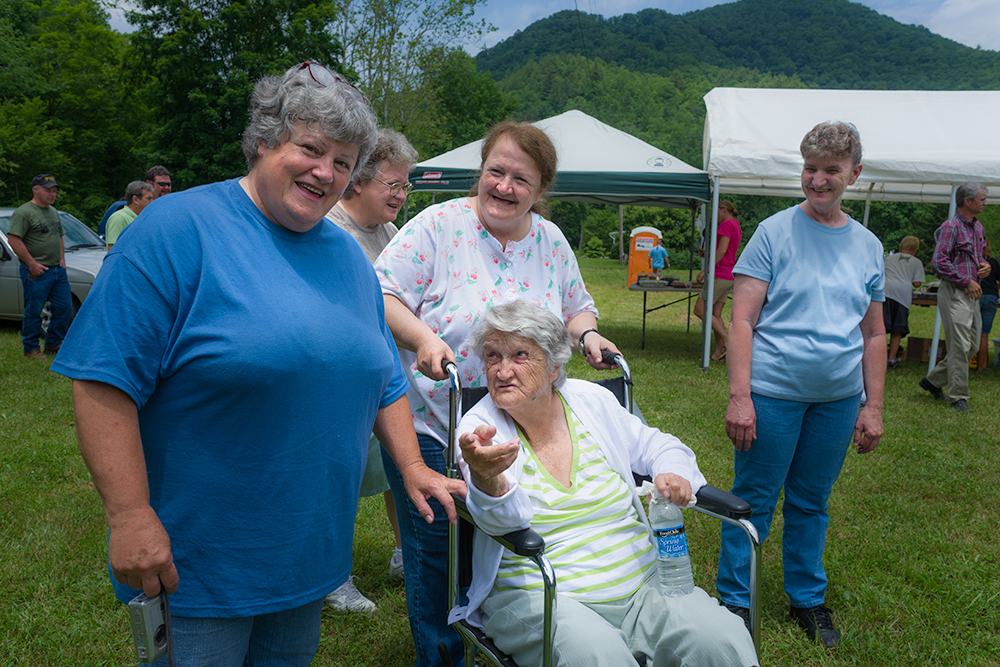


 Not going to happen.


