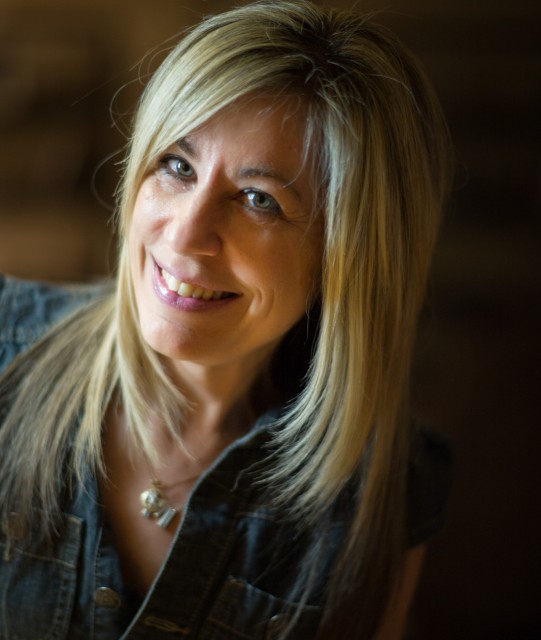
KatieInTexas wrote:
So I take it most shoot RAW? I have always only ever shot RAW and am currently using LR4. Is this compatible with the M-E or will I need to upgrade (yet again) to 5?
LR4 works perfectly fine with the M-E (LR3 as well BTW).
KatieInTexas wrote:
So, tell me if you think I am doing the right thing. I have children and animals and like to shoot PJ style - but can I live without AF on my main camera? I don't know... Will the quality make it worth it? I don't know...
Since you are ready to buy, you already know about the nice features of the M9/ME and the excellent performance at low ISO. However, the camera also has some unexpected features that you should be aware of and decide if they are an issue for you or not.
High ISO performance, especially from artificial light is not good. Probably any other modern camera with APS or bigger sensor provides better high ISO images. With many of my higher ISO images I ended up converting them to B&W where the noise was more acceptable.
Color in mixed light is not natural. At leas not for my eye. I haven't seen anybody else complaining about it, so take it as my personal opinion, but the colors that this camera generates in mixed artificial light differs from what my eyes think is right.
Slow operations. Want to review currently taken shot? You gonna have to wait longer than with other cameras. Writing to card is also slow. Fast cards do not make any difference and are just waste of money.
Bad 100% preview. If you zoom in to 100%, the image looks interpolated and can't be used for evaluation of sharpness. Even if you nailed the focus, the images in preview will look a little blurry.
Bad battery life. I am not sure if this is bad design or nature of the CCD sensor, but the camera does not have good battery life.
No live view. I found it a bit strange to invest into a system that has some of the best lenses around, but the focusing is dependent on the rangefinder only. The rangefinder is not 100% reliable with longer lenses. With something like 90mm, I really do not see enough difference in the focusing patch to nail the focus precisely. The other problem is that the RF focusing requires focus and recompose, which usually leads to back focus.
Thank you thank you! Keep it coming! I don't want to be caught off guard by anything. So far, there are NO deal breakers yet.
I primarily shoot B&W, so converting will more than likely be happening at high and low ISO. Also, for tricky High ISO situations, I always have the option of the X100 (or even pushing film!).
I never used live view - other than to focus using adapted lenses (as that was the only way to do it on the Fuji).
I'm not sure what to think about the battery life - get a second battery I suppose?
Mirek Elsner wrote: KatieInTexas wroteSo, tell me if you think I am doing the right thing. I have children and animals and like to shoot PJ style - but can I live without AF on my main camera? I don't know... Will the quality make it worth it? I don't know...Color in mixed light is not natural. At leas not for my eye. I haven't seen anybody else complaining about it, so take it as my personal opinion, but the colors that this camera generates in mixed artificial light differs from what my eyes think is right.
+1 And not easy to get it to neutral.
BTW, I don't feel I need AF for my personal need. but I am not sure how far you can go with it professionally, at least not as sole system to cover all the needs.
KatieInTexas wrote:
Hi all - I am seeking advice and or reassurance as to a deal I am about to make...
I currently shoot 50/50 film/digital and my film cameras are: Bessa R4A, Bessa R3A and Mamiya 7 with 43 and 150. My digital setup is an XP1 kit (with both zooms) and an X100. The deal I am about to make is to trade my Fuji X Pro 1 kit (+cash) for a Leica ME. I have been wanting to consolidate systems for some time now, and love my CV lenses which I currently use on both the Bessas and the XP1 (with adapter). My worries are that I won't have the convenience of AF anymore with any of my cameras (except the X100, as I am keeping it for a walk around everyday camera). Please tell me that the image files I will get from the ME will blow the Fuji XP1 files out of the water. I don't dislike the X trans files, but have to say that I am not in love with them; or the use of the XP1. I find all the settings, dials, buttons, and options to be overwhelming and needless. I never shoot video and find myself not needing to use lenses longer than 85mm now. I plan to sell the Mamiya 7 setup to fund the difference between the XP1 and the ME. I am hesitant to do this, but like to not purchase without a sale to cover the same $$. I could easily become way too invested in equipment, and need to keep myself in check if you know what I mean...
So, tell me if you think I am doing the right thing. I have children and animals and like to shoot PJ style - but can I live without AF on my main camera? I don't know... Will the quality make it worth it? I don't know...
Help.
I've already talked with Ryan - who has helped me, but am just a hesitant buyer I guess. I'm exited, too....Show more →
I have/had all the cameras you mentioned.. I'd do it if I were you.
The Xpro will give you better ISO, but the M-E will give you a better user experience. As far as better image quality, it's more subjective then anything else, but to be realistic the files will look less muddy/mushy on the M-E. I believe that if you have the x100 for walk around, then it'll be enough to warrant using the M-E for everything else, until you get good enough with the M-E, then you'll probably not use the x100, unless you're just being lazy. Or of course if you hate range finders (some people do, I have a love hate relationship with them, but that stems more from the fact that I'm lazy).
rscheffler wrote:
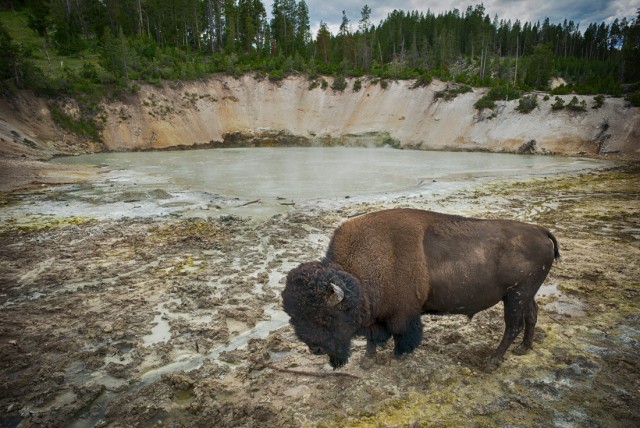
Thanks for the comments everyone. Cool image Gary. At first I thought you stumbled on a sci-fi movie set. There's something about it that looks like a stage prop.. difficult to really determine the scale of it.
Katie, I would think the core M-E shooting experience will be very similar to the Bessas. Have you been able to get by with those in the situations you expect to use the M-E?
As for image quality... At base ISO 160 you'll get very sharp files. I haven't used the Fuji cameras personally and can only go by the many images I've seen in various threads and forums. That said, my impression has often been of a waxiness to the images. You won't see that with the M-E unless you crank up noise reduction in post. I think if you're tolerant of some fine luminance noise, even at base ISO, you'll like the M-E's files. Leica's color is also very good, reminiscent of slide films, though some have struggled with skin tones, which can be quirky, especially in mixed lighting. In this camera generation (M9/M-E), Leica is very hands-off with noise reduction and the higher ISO settings will look messier than what you see OOC from something like the XP1. And considering Fuji probably has the best Jpeg engine on the market, you might find yourself spending more time in post tweaking the M-E's files, because there are very few in-camera image optimization settings. How you expose with the M-E might need adjusting vs. the XP1. The M-E/M9 will blow highlights fairly easily and the files don't have as much highlight recovery leeway as those from other cameras (notably Sony sensors). But you can open shadows quite aggressively. It won't be noiseless, but 2-3 stops is no problem. Therefore the typical approach here is to protect highlights, which often results in underexposed mid tones and shadows, requiring recovery in post.
I think it boils down to the Leica system being more hands-on. This is true both while shooting and in post. There are fewer bells and whistles, fewer safety nets, allowing easier, more direct control over the core settings but also letting you crash and burn more easily.
Without doubt, Leica's digital M cameras have quirks that over time you'll need to become familiar with in order to tweak how you work with it vs. other systems. All I can say in this regard is to give it enough time. I know other participants in this thread had rocky starts with their Leica transition, but persevered and found approaches that worked for them. Not to say it always will work as you expected......Show more →
Ok should have just read this response first.. Ron's got it nailed, listen to him.
rsolti13 wrote:
Katie, a little more....if you want a simplistic system such as you mention, there is no better system than a Leica. It has everything you need and nothing you don't. On the M9, M9-P and M-E there is no video and the files are as good or better than anything you can get at 35mm or smaller. A few years ago I bought my first Leica, the M8. At the time I still had my Nikon D700 with all pro lenses such as 24 f/1.4, 85 f/1.4, 70-200 AF-S...etc. The files I was getting from the M8 at base ISO were far more impressive than anything I could get from the D700. I loved it...however, couldn't afford two systems and ultimately went back to Nikon. After that, I realized my preferred system for shooting was rangefinder, I pretty much stopped shooting anything. I then broke down and bought an M9 about two years ago and got right back in the swing of things and shot everything from children to pets to landscapes. Couldn't have been happier. 2nd mistake, I decided to get into other hobbies and sold my M9 thinking I could get by with cheaper DSLR / m4/3 system...totally stopped shooting anything for a year or so again (when will I learn? ). I used to think I needed the fastest AF to shoot my 2 and 6 year old....found out it is almost easier to shoot manual. It doesn't sound like it would be, but it is. The rangefinder system is just a blast, the files are....can't put into words coming from DSLR, really that good. Here are some samples shooting my kids with Leica...my hit rate is probably 90-95% on lenses outside fast telephoto. Even shooting wide open with the Voigtlander 35 f/1.2, Leica 35 f/1.4, Leica 50 f/1.4 and Voigtlander 50 f/1.5 my hit rate is in the 90% range.
Edit: Really the only thing that took some getting used to was the minimum focus distance is generally about .7m. I was used to getting closer with my DSLR
warning, lots of pics for you
I have many....thousand....more. I would obviously recommend in a heartbeat ...Show more →
rsolti13 - First off there should be a limit to how many awesome pictures you could post in one go
Second, what 75 and 90 lenses are you using? I forget (75lux and 90rit?)
Mirek Elsner wrote: KatieInTexas wroteSo, tell me if you think I am doing the right thing. I have children and animals and like to shoot PJ style - but can I live without AF on my main camera? I don't know... Will the quality make it worth it? I don't know...Since you are ready to buy, you already know about the nice features of the M9/ME and the excellent performance at low ISO. However, the camera also has some unexpected features that you should be aware of and decide if they are an issue for you or not.
High ISO performance, especially from artificial light is not good. Probably any other modern camera with APS or bigger sensor provides better high ISO images. With many of my higher ISO images I ended up converting them to B&W where the noise was more acceptable.
Color in mixed light is not natural. At leas not for my eye. I haven't seen anybody else complaining about it, so take it as my personal opinion, but the colors that this camera generates in mixed artificial light differs from what my eyes think is right.
Slow operations. Want to review currently taken shot? You gonna have to wait longer than with other cameras. Writing to card is also slow. Fast cards do not make any difference and are just waste of money.
Bad 100% preview. If you zoom in to 100%, the image looks interpolated and can't be used for evaluation of sharpness. Even if you nailed the focus, the images in preview will look a little blurry.
Bad battery life. I am not sure if this is bad design or nature of the CCD sensor, but the camera does not have good battery life.
No live view. I found it a bit strange to invest into a system that has some of the best lenses around, but the focusing is dependent on the rangefinder only. The rangefinder is not 100% reliable with longer lenses. With something like 90mm, I really do not see enough difference in the focusing patch to nail the focus precisely. The other problem is that the RF focusing requires focus and recompose, which usually leads to back focus.
Also all very true.. But she uses Bessa cameras and is fine. So just treat the ME like a film camera that you can develop film for at home by putting an SD card into your computer, and all the above mentioned points sound less annoying. Aside from the mixed lighting bit, which is more dependent on how/what you shoot.
adamdewilde wrote: rsolti13 wroteKatie, a little more....if you want a simplistic system such as you mention, there is no better system than a Leica. It has everything you need and nothing you don't. On the M9, M9-P and M-E there is no video and the files are as good or better than anything you can get at 35mm or smaller. A few years ago I bought my first Leica, the M8. At the time I still had my Nikon D700 with all pro lenses such as 24 f/1.4, 85 f/1.4, 70-200 AF-S...etc. The files I was getting from the M8 at base ISO were far more impressive than anything I could get from the D700. I loved it...however, couldn't afford two systems and ultimately went back to Nikon. After that, I realized my preferred system for shooting was rangefinder, I pretty much stopped shooting anything. I then broke down and bought an M9 about two years ago and got right back in the swing of things and shot everything from children to pets to landscapes. Couldn't have been happier. 2nd mistake, I decided to get into other hobbies and sold my M9 thinking I could get by with cheaper DSLR / m4/3 system...totally stopped shooting anything for a year or so again (when will I learn? ). I used to think I needed the fastest AF to shoot my 2 and 6 year old....found out it is almost easier to shoot manual. It doesn't sound like it would be, but it is. The rangefinder system is just a blast, the files are....can't put into words coming from DSLR, really that good. Here are some samples shooting my kids with Leica...my hit rate is probably 90-95% on lenses outside fast telephoto. Even shooting wide open with the Voigtlander 35 f/1.2, Leica 35 f/1.4, Leica 50 f/1.4 and Voigtlander 50 f/1.5 my hit rate is in the 90% range.
Edit: Really the only thing that took some getting used to was the minimum focus distance is generally about .7m. I was used to getting closer with my DSLR
warning, lots of pics for you
I have many....thousand....more. I would obviously recommend in a heartbeat rsolti13 - First off there should be a limit to how many awesome pictures you could post in one go
Second, what 75 and 90 lenses are you using? I forget (75lux and 90rit?)
Thanks Adam. Only 75 I ever used was the 75 Lux....the lens I have had the most difficulty with focusing. Got rid of it. The 90 is the Elmarit-M. My favorite tele lens to date though has been the Canon 100 f/2. If you want ultimate sharpness and excellent microcontrast in a small package, the 90 elmarit is the lens for you
Thank you very much Mitch, Edward, Ryan and everyone for the likes
Edward and Ryan, Zigi is one of two Burmese cats we have. I have reduced the number of animals we now have to 3 cats, 1 dog and 3 horses! I use to have 3 cats, 3 dogs , 25 horses and 5 birds.
Gary, beautiful rich colors!
Ryan, excellent series!!!
Edward, I am really enjoying your series from Lebanon
Katie, welcome!!! There has been so much great advice on whether to jump ship, and experience the manual focusing with RF. Only caveat is that the system, that is M-E, lenses and eyepiece need to be calibrated well, and sync'd, otherwise this will frustrate you to no end. Manual focusing is very quick to learn, so long as everything well sync'd. Otherwise you will be second guessing, whether it is your technique or the gear. If the RF method of manual focusing gels, it is faster and more accurate, than most AF systems, particularly with fast lenses. I had no end of grief with the 5DII with the 50 f/1.2, and 85 f/1.2, even with the MFA. It is will take some time, but I personally love the style of having an optical VF, that you can see outside of the composition. Finally, probably the most important is, that I love the take out M-M/M240 and choose the style of rendering I wish for a day's shoot.
Your question of 75 or 90 will depend on your budget, but I find the 75mm framelines and MFD of 0.7m, for both the 75 Lux/75 Cron is a great advantage. The 90 FL's, is starting get small, and IMO harder to compose shots and more importantly harder to focus via the RF.
Shot last night with the M240 75 Lux @f/1.4 2500 ISO with an ICE light.
Jabberwockt wrote:
..the M9 has plenty of drawbacks: The tech is a few years old now and high ISO is really nothing to write home about, the LCD is just horrid...
Mirek Elsner wrote:
...High ISO performance, especially from artificial light is not good. Probably any other modern camera with APS or bigger sensor provides better high ISO images. With many of my higher ISO images I ended up converting them to B&W where the noise was more acceptable....
Katie, the above represents the conventional wisdom that I mentioned earlier, which states the M9/M-E is a poor camera for high-ISO. In my view, the M9 in fact is an excellent camera for night photography if a certain technique is used because it produces, in my view, superior color rendition, better than that of cameras that are famous for their high-ISO performance. If you're interested in high-ISO shooting you should read this thread. Based on extensive tests described in the thread, the technique for the M9/M-E is to increase ISO in-camera up to ISO 640, but from that point on increase Exposure in LR4/5 rather than in-camera and you will get less noise and better image quality.
Night Photography: Shooting at ISO 640 and Pushing in Post
The thread on this technique that I linked above, lists the following steps for Exposure and Processing:
Exposure
At ISO 640 start (with the Elmarit 21mm ASPH) by exposing at f/2.8 and a shutter speed of 1/60 or 1/90, and (with a Summicron-28) by exposing at f/2.0 and a shutter speed of 1/120 or 1/180, although I tend to use this lens at f/2.8 at night for the greater depth-of-field. The aim is not to blow out the highlights. On a dark night, I find that I don't need much depth of field because of the rapid drop-off in light intensity.
Lightroom 4/5 Post-Processing
1. Click Auto in the Exposure Panel and use this as the starting point.
2. Adjust the Exposure Slider to the point at which you like the look.
3. Press "J" and see whether any of the highlights are blown out.
4. If necessary (from Step 3), pull back on the Highlights Slider.
5. I like to pull back the Black Slider to negative numbers so that picture has a look that I like.
6. Click White Balance Eye Dropper in an area you want to be neutral grey, but I don't like to neutralize the colors completely because I want a "real" look from the lights in the picture.
7. Try moving the Clarity Slider between +10 – +30. (I find that increasing Clarity creates a good feeling of light in a high contrast scene, but sometimes this may not be necessary or even may not look good.
8. If you increased Clarity, you can probably pull back a bit on the Exposure.
9. In the Noise Reduction panel, after setting the View to 100%, move the Color Slider to the right until the color noise disappears.
10. Still at 100% View, move the Luminance Slider to the right if necessary to remove more noise, but be careful no to go too far. Some pictures will not need any Luminance Slide increase.
In the 10 post-processing steps listed above, step 5 is pull back the Black Slider to negative numbers so that picture has a look that you like. In the three pictures below, when I pressed Auto in the Basic Panel, the Black Slider went to +26 — and the pictures looked a bit washed out and flat; I pulled the Black Slider back to –26 for Nos. 1–2 and to –10 for No. 3. I find that pulling the Black Slider to the left to get negative number provides a look consistent to the rapid fall-off of light in partially lit, dark scene.
Now, in post-processing, starting with the list of steps for post-post processing above, there are many possibilities, including "selective pushing" (equivalent to dodging). In No. 5 below I have used the new LR5 facility of the Radial Filter to push the face area by 4 stops (equivalent ISO of 10,240). I'm also including No. 4 because it's my favorite night picture, although I doubt many people like it.
No. 1 | Elmarit-21 ASPH | ISO 640 pushed 0.9 stops | f/2.8 | 1/60 sec Hua Hin
No. 2 | Elmarit-21 ASPH | ISO 640 pushed 1.8 stops | f/2.8 | 1/60 sec Pak Nam Pran
No. 5 | Summicron-28 | ISO 640 pushed 4 stops [on face] | f/4.0 | 1/60 sec Hua Hin
KatieInTexas wrote:
So I take it most shoot RAW? I have always only ever shot RAW and am currently using LR4. Is this compatible with the M-E or will I need to upgrade (yet again) to 5?
Yes, I only shoot raw. LR5 is preferable to LR4 because it has a new Radial Filfer that, together with feathering, allows you to dodge and burn much better than using the Adjustment Brush in LR5. If you buy a new M-E you can download LR5 free from the Leica website, Someone recommended buying a used M9 — I would much prefer to buy a new M-E, which has a two-year warranty, so that you don't have to worry about what sort of problems the seller of the used camera may have had. Also, you'll be getting one of the latest cameras coming off the assembly line, which will have any of the unannounced manufacturing improvements that Leica occasionally makes.
Charles, thank you for your comments and I apologize from Zigi for having mistaken him for a Siamese. I know it's a sensitive issue
The portrait of your wife is very beautiful by the way.
I also agree that well calibrated RF is far more accurate than manual focusing with a DSLR. When I go back to my photos taken on the 1Ds2 and Zeiss lenses, I realize how bad was my focusing accuracy, and how much better is the M9 even with the Sonnar 85.
Katie, I'll second Gary's suggestion to get two spare batteries. Lately I've added two more for a total of 5 and it covers me for most day-long events, though I still always bring the charger too.
Charles brings up a great point about rangefinder calibration and also getting eyepiece diopter correction if you have less than perfect eyesight. I found this made a significant improvement for me, to the point where I stopped using a viewfinder magnifier. If the rangefinder/viewfinder is properly calibrated, the double image of the focus patch will 'snap' into alignment quite clearly.
Katie, one more thought that I came across on the Leica User's Forum by a fine professional photographer with a good eye for color: "I do think that the higher iso's on the M9 are vastly underrated, and in general much prefer the image quality of the M9 to the M240. The M9 (and Monochrom by de facto) imo are truly two of the most unique digital cameras out there when it comes to the quality of the image. Not the "best" on paper but they have a look, an "umami" as the Japanese might say, that no other 35mm digital camera, comes close to." That reflects my view as well.
Edward, the two people in that cave shot really make the photo lively. I love it.
Charles, What a nice portrait. I love that lens more and more. I know it is great as I have the 80lux now
Mitch, thanks for sharing your process flaw, I really like that #4. #5 seems too much NR there and color information seems no longer there. I would use it as BW.
Gray, that is really a nice shot. Love the composition, color and subject.
zhangyue wrote:
...Mitch, thanks for sharing your process flaw, I really like that #4. #5 seems too much NR there and color information seems no longer there. I would use it as BW...
Zhangye, thanks, but my view on #5 is the opposite: it's a photo that I like a lot, both in terms of what it expresses and the color, not to speak that the "grain" both at 50% and 100% views is attractive; also, I don't see that the color information is "no longer there". The post in question is a repost of one some 10+ pages earlier, which a number of people liked, similarly on my flickr site. I reposted on this page for Katie, in case she was concerned about a couple people having said that the M9 is a poor at high-ISO, which I've also dealt with in p.771 #12.
Edward, the first 50 Planar shot on the prior page is very neat with the people showing just how massive that rock formation is. Nice series overall of Lebanon, I admit I haven't seen many photos from there
Charles, very nice shot with the 75 Lux and Ice light. Still fiance or did you get married?
Mitch, nice examples and write-up of high-iso shooting with M9
Gary, you are making me think about some buffalo burgers for lunch .
Michael, awesome shots both of them, but #2 is fantastic. Great perspective. Did you get in the water with the M9? Now that I don't know if I have balls for...insurance or not


 There's something about it that looks like a stage prop.. difficult to really determine the scale of it.
 ). I used to think I needed the fastest AF to shoot my 2 and 6 year old....found out it is almost easier to shoot manual. It doesn't sound like it would be, but it is. The rangefinder system is just a blast, the files are....can't put into words coming from DSLR, really that good. Here are some samples shooting my kids with Leica...my hit rate is probably 90-95% on lenses outside fast telephoto. Even shooting wide open with the Voigtlander 35 f/1.2, Leica 35 f/1.4, Leica 50 f/1.4 and Voigtlander 50 f/1.5 my hit rate is in the 90% range.