Yes Phil, hardly any right angles and difficult to figure out 'correct' perspective here.
Gary, they're all shot at f/1.4. The last set look fine at web rez, but you can see a bit of sharpness falloff because of insufficient depth of field in the full rez files. Those I could have stopped down more because there was enough light, but it's actually pretty dark in some of the ROM spaces like the stairwell in the earlier set. For those I wedged the camera against the edge of the wall (it was literally hanging over the edge) and managed to get by with slow shutter speeds. I left the ISO at 160... but could have raised it to 640.
A couple more with the 21 Lux wide open:
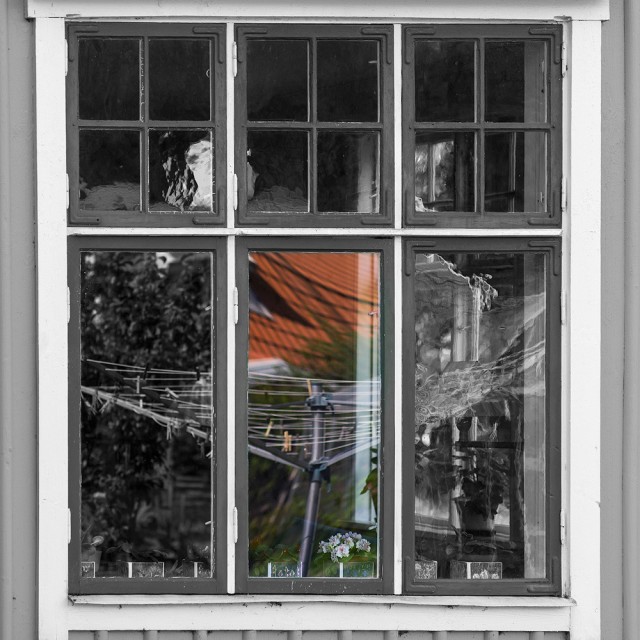
For the second image I just put the WB to something really low and on the blue side for an intentionally 'wild' look. In person it looks like a white stairwell, but it's a difficult thing to photograph because there's a huge mix of lighting, some of it intentionally tinted. For the earlier set looking down I completely desaturated the entire image and recovered color wherever there was a figure in the scene in order to get a very clean look.
rscheffler wrote:
Mitch...Hopefully not opening a can of worms here, but some of this has to be related to Leica's choice of color 'look' for the M9, which has been stated before, was intended to emulate Kodachrome...I think I can sympathize with you about hitting focus in such situations. It can be tricky and the extra depth of field can be beneficial. But I think I agree with Adam that for some a wider aperture and less need to push in post would probably have resulted in richer/purer colors that would in turn have complemented the scenes...From a technical consideration, we discussed here a while ago whether there is any real benefit to shooting the M9 at higher ISOs vs. ISO 160 and pushing in post. Jim Kasson wrote up a fairly technical look into this with various cameras, including the M9. IIRC, he determined shooting between 160-640 was pretty much a wash, with perhaps a slight edge to in-camera ISO adjustment, but above that, there was some benefit to pushing in post vs. in-camera......Show more →
Ron, thanks so much for providing the link to Jim Kasson's excellent discussion on the idea of pushing in post-processing rather than increasing the ISO in camera, which is, in effect, increasing the gain. As mentioned earlier, I had read posts by douglas3f on this but never got around to trying this and your post finally made me do it — and now have found that it works very well. I shot the pictures below at ISO 640 and then pushed in Lightroom 5, as needed. There are several advantages:
1. There is less noise when pushing later than in shooting at speeds like ISO 1250 and 2500 in the camera.
2. As you're shooting at ISO 640 all the time, there is no need to keep on changing ISO, at night in the type of scenes below, would require changing firm ISO 640 to 800, 1250, 1600 and 2500 —and back — frequently; in reality this would mean that you often wouldn't change ISO and would often end up exposing at the higher ISOs when not necessary.
3. When pushing the exposure in post-processing, you need only to push the minimum necessary, which means that often you end up using a lower effective ISO than you would had you shoot setting the camera to, say, ISO 1250 or 2500.
4. When using the higher ISO set in the camera there is less dynamic range, which means that hitting the right exposure is more difficult. In comparison, when gradually pushing up the exposure in Lightroom the image will usually have better exposure. On the question, of how to expose when shooting at ISO 640, you can start with what the exposure would be at ISO 640 and if the aperture is too large for the depth of field that you want, or the minimum shutter speed is slower than you need, you adjust these two settings to to a point that will require the least pushing when processing. Actually, this is a good way of shooting for the type of night street photography in the pictures below because measuring or estimating the "correct" is difficult with the in-camera meter or even a separate spot meter; and you cannot use an incident light meter because it would mean walking over to the main subject to take a reading and then walking back to the shooting position, which for obvious reasons does not work for street photography.
For my taste, the noise in the image below is fine, but you may recall that I wrote earlier that I like the M9 noise at ISO 640 and feel it looks film-like. Thorsten Overgaard's in his review of the M240 wrote, "One of the reasons CCD looks so film-like is that the noise pattern is completely randomised. On CMOS it is uniform and you can always notice the fixed pattern of noise imprinted on the image. A CCD sensor has grain like film and it moves in the same way as film grain." QUESTION: Anyone know whether this is really true and, if so, why the is the CCD noise pattern randomised and the CMOS one uniform?
Here are the pictures, with an indication of how much pushing I did in processing. They're roughly in the order that like them. I like the colors one can get at night and also the contrast as well as rapid fall-off of light — the intensity of light decrease in proportion to the square of the distance. Picture No. 1 is taken in a very dark scene with bright light falling on the young woman in the university uniform.
Ryan, very nice! Great shots of your daughter.
Phil, wonderful images with M-M!
Edward, love the streets from Bangkok I am suffering withdrawal symptoms!
Ron, amazing series of shots! Particularly the last two
Mitch, wonderful series, and love the PP'ing!
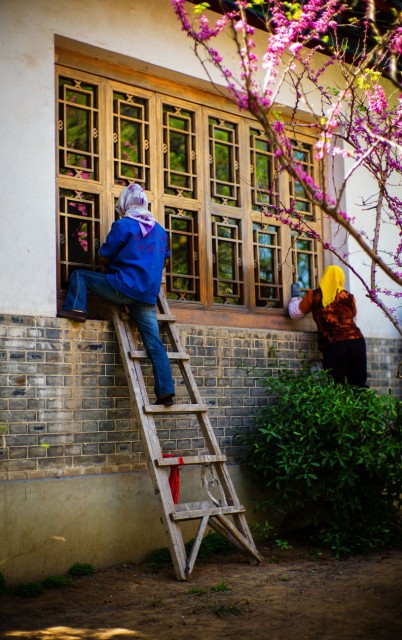
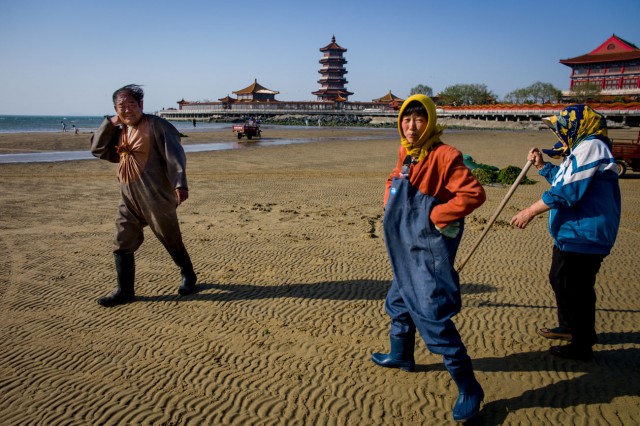
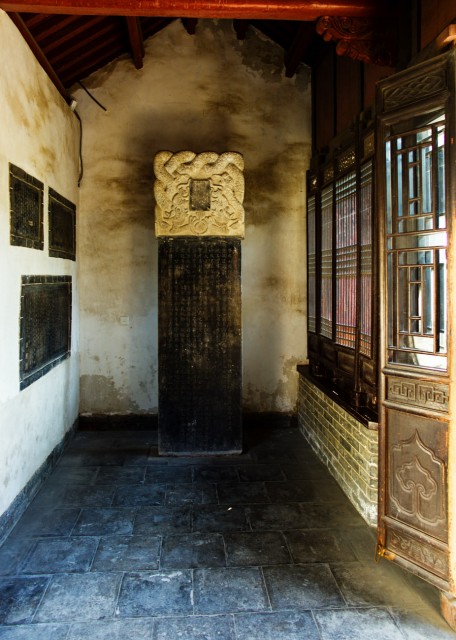
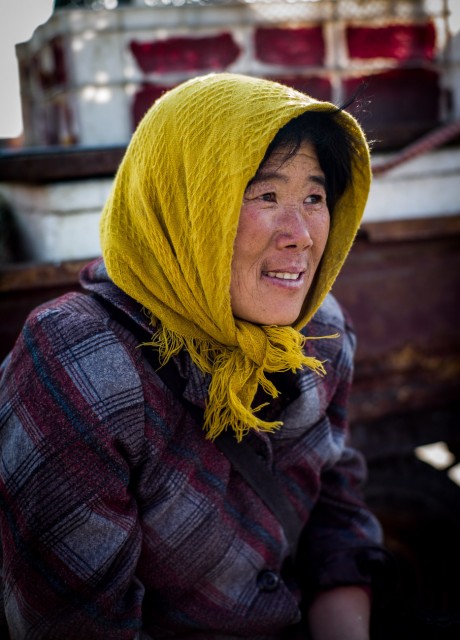
Some shots from Penglai, Shandong district in China. M9P 50 Nocti f/1.0 and 24 Lux.
Rsolti, thanks for the comments. the first portrait is astonishing.
Jonathan, welcome. Nice shots!
Peter, I like both b/w shots. For this subject, b/w works better imo.
Ron, thank you! Very nice job with the 21 lux. I really like the set p.735 #17.
Phil, beautiful composition and tonality.
Charles, welcome back! I have been following you on Facebook, but it's nice to see you posting here. I really like 1, 2 and 4, with 4 being my favourite.
Joakim, 1 and 3 are really nice. I love the 3D in shot no. 1 and the abstract reflection in no. 3.
Tag, nice set, with 1 and 3 being outtstanding.
Bruno, nice moment there.
Great to see you posting again Charles! Very nice pics.
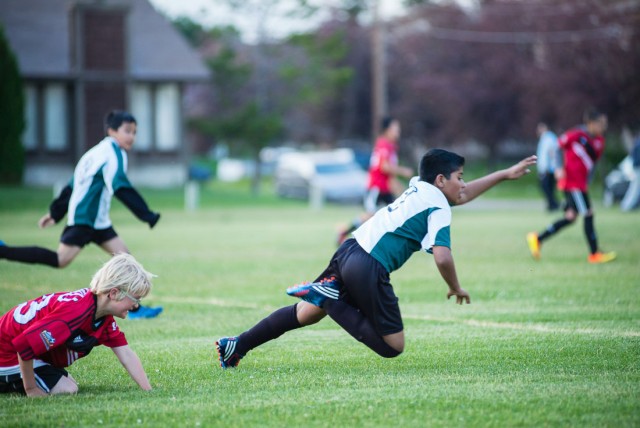
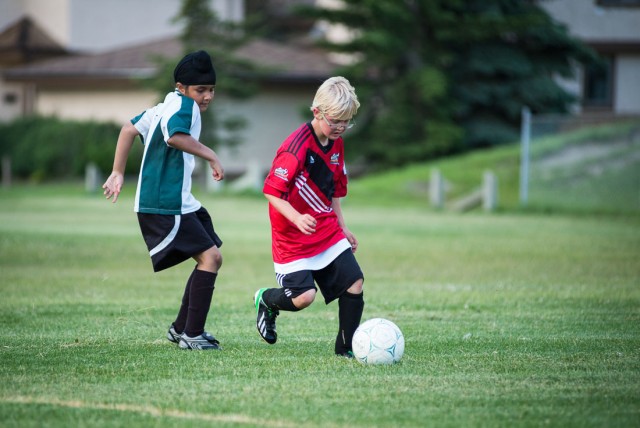
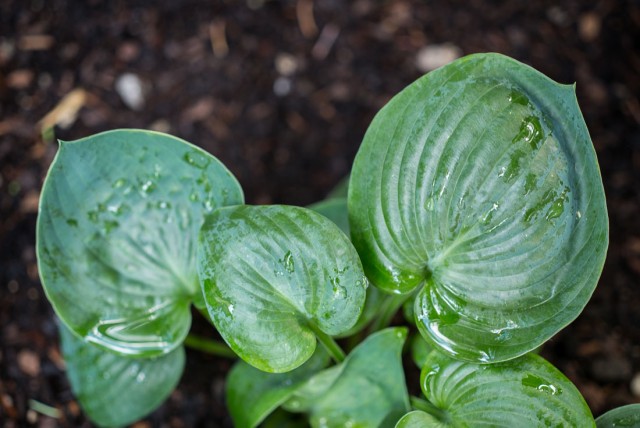
Here is a few recent pics. The first couple are attempts at shooting sports with the Nikon 80-200mm f/2.8 (@2.8) using the EVF. Yes, it can be done but it sure was challenging. I am not a big fan of using EVF's (even the better ones) and time was no exception. I only tried for about 15mins and then I had enough. Maybe with more effort and practice, the keeper rate would improve. Also shooting WO was challenging and the low evening light proved troublesome for the EVF. Anyway - I will keep trying but soccer is something I would likely do only with my DSLR. I also bought a cheap Micro-Nikkor 55mm f/3.5 lens of the bay and it works great. Next time I will do it properly and use a tripod for more accurate focusing.
Ron, superb set of pics from the museum! Love all those angles and hints of color. Yes, I probably need to make a trip up North soon BTW, not sure if the prints were Ilford GFS as those are for inkjet prints, it could well be Ilfobrom fiber if he still uses the wet process. http://www.ilfordphoto.com/Webfiles/2006130195422907.pdf
Phil, another excellent shot with the CV21 1.8. Did you use the auto perspective control in LR5? Looks really good.
Mitch, excellent shots, #1, 3, 5 & 6 are my favorites from this set. did you consider adding vignetting or darkening the corners on #2 and 4 to reduce the grain/noise?
Charles, excellent shots, Nocti portrait is superb. Hope to see you back here soon!
Scott, nice day out on the 4th!
Bruno, you have really cool friends!
Edward, nice shot! I prefer one which is in between both of those? Am looking at these on a work monitor but #1 looks slightly greenish while #2 a little magenta? I do prefer the skin tones on #2.
Gary, sports on Leica M! Those looks good, #2 is excellent!
Gary, it's amazing that you can nail focus on moving subjects with the EVF. I tried it before with the GXR and it was a disaster.
Joe, I know what you mean, but these shots are not post processed, just using the profiles with equivalent WB settings. First is with Leica profile, second with adobe. Leica profile seems to produce nice greens while adobe produces better blues. I would love to have an in-between profile I read that the DXO profile is the best for the M9 but the price is a bit expensive.
Haven't tried the DXO software myself, but I think the Leica profile color tint seems to mimic slide film a little more than the Adobe profile? If it were me, I would probably choose #1 with the Leica profile and use the brush to lift luminance on the skin tones slightly. Sometimes I find a slight green tint on my Leica lenses, even with Adobe profiles. Best is to shoot a WB or color card but I know its troublesome.