rscheffler wrote:
...Mitch, what I like about these is you didn't try to neutralize the white balance much, if at all. Adam mentioned a cinematic feel to them, which for me is more personal reminiscence of shooting medium speed E6 unfiltered under fluorescent lighting. The yellows and greens in the skin tones work for me here, whereas I am usually quite bothered by such a color shift (ingrained in me by client work, as Adam mentioned, where the most flattering effect is desired). I think your approach here effectively underscores the feeling of walking through an Asian night market, the sights, sounds, smells.. it's never a 'sanitary' experience, and the color balance enhances that effect/mood. Hopefully not opening a can of worms here, but some of this has to be related to Leica's choice of color 'look' for the M9, which has been stated before, was intended to emulate Kodachrome....Show more →
Ron, thanks for looking so closely and widely, and for taking the time to write your comments, which I find interesting and useful. On the white balance, you're right: going over my Lightroom 5 files, I see that I adjusted the white balance only in no. 6 (beauty parlor) — and that was a minor tweak. Generally, for daylight shots, I adjust the white balance to various degrees; but in these night shots the M9-P gave me essentially the color rendition that I wanted. Human perception of color is a complex matter in terms of what image is formed on the retina and what adjustments are made by the brain that gives us the actual perception. And even more complicated is our memory, say, of the colors of a face we see in candlelight or fluorescent light and what we may remember from seeing that face in the daylight from a window facing north. I think you get what I mean: to get the feeling of nighttime and the actual ambient light it's necessary to retain some of the "color shifts" that occur. A lot of ink has been spilled on this ever since the Impressionists started thinking about the actual colors that can be seen in shadows and on subjects lit by various types of light. Also, after reading your posting I search the internet for paintings that used these type of color shifts, and the best examples I found were Rembrand's famous self portrait and his Night Watch, but also some portraits by Lucien Freud are interesting to look at in this respect.
Your reference to the fact that Kodachrome was the model for for the color rendition of the M9 warms the cockles of my heart, for I think that Kodak and Leica did a great job in this respect. The issue of the color rendition of the M9 vs the M240 is a hornets' nest, because many people who have the new camera feel strongly that it's only a matter of appropriate profiles and processing. Perhaps after there is a firmware upgrade from Leica and some better raw processing profiles they may be proven right and the color output of the M9 and the M240 may become very similar. Although I don't want to fuel any fires, I am still skeptical and am glad that I have the M9-P because, having looked at a lot of people's output from the M240 and having processed some DNGs as well, my feeling is that there is a difference in color rendition that may remain. I realize that this may not be entirely a CCD vs a CMOS issue, and that the color filter may be involved as well. In any case, my mind is not closed on the subject.
Browsing through your Flickr stream again, and I was really drawn (again) to the photo of the girl in the bus window, which has a very similar color mood. Then I reacquainted myself with your earlier B&W market images and was really torn. I felt a number of those were more dynamic and pulled me into them more successfully than these, either due to composition or the ability to explore the layers of details in them... The images in this series are 'quieter' and underscore a feeling I often had in large cities in Taiwan, that while there are always people around, it's not necessarily always overwhelmingly busy and one can find moments of solitude....Show more →
Of course B&W and color are very difference in the nature of the expression, which is why the idea of the M-Monochrom — as well it's implementation — is so good: so that one can think and feel differently when shooting with a B&W and a color camera. I'll take the liberty of posting here the picture of the girl in the bus window because it may be the best picture that I've taken with the M9-P. It was taken in Paris in mid-February on a cold, gray day with the light overall being somewhat blueish. Again, on checking the file in Lightroom 5, I see that i didn't adjust the white balance. I was sitting on a bus and shooting through my bus window at the bus that was passing us in the other direction less than two feet away. You can just make out the lettering on my bus window that says, "ISSUE DE SECOURS".
The images that pull me back for more study are 2, 3, 6 and 7. I like the apparent interaction between the two men in #2 and how the arm positioning/gesture is repeated somewhat in the poster in the background. I'd probably have to see the image in print to say whether or not the grain bothers me. Maybe some chroma noise reduction, but still, I think it works for me as is. #3 has a feeling of serenity and a certain elegance among chaos that I like. The WB really works well, I think, and ties in the surroundings with the stark greens of the veggies. #6 has me imagining what they're gossiping about. #7's appeal for me is a lot like #3 and the loose framing puts him in the context of his environment. I think my favorites are #3 and 7. #4 also works well in terms of the mood and lighting, just doesn't pull me in as much as the others with people in them. I have mixed feelings about #5. There is something about the moment that intrigues me, the spontaneity, yet I'm unable to fully eliminate my technical dislike for the missed focus and overall murkiness of the image....Show more →
Basically, I like #5 but have the same mixed feelings as you do about the missed focus. On the other hand, I am not sure it would work for me if the woman was in sharp focus. Perhaps if there were some other pictures in the series that were intentionally in soft focus…Come to think of it, I'm vacillating about this picture because I have much more trouble in color than in B&W in trying to get away from an "exquisite" look that I don't want in order to achieve something more expressive.
You didn't say anything about #1, which I bring up here because I was much taken when I processed it by the chiaroscuro and the colors in the umbrellas. Essentially, this picture was correctly exposed, but I brought up the exposure by 0.7 stops and burned in the light coming from the left edge of the frame to bring the viewers eye more to the right side of the frame. Do you have any thoughts on this picture?
I think I can sympathize with you about hitting focus in such situations. It can be tricky and the extra depth of field can be beneficial. But I think I agree with Adam that for some a wider aperture and less need to push in post would probably have resulted in richer/purer colors that would in turn have complemented the scenes. This is what I like about the color in #4 of the chickens, and #3.
From a technical consideration, we discussed here a while ago whether there is any real benefit to shooting the M9 at higher ISOs vs. ISO 160 and pushing in post. Jim Kasson wrote up a fairly technical look into this with various cameras, including the M9. IIRC, he determined shooting between 160-640 was pretty much a wash, with perhaps a slight edge to in-camera ISO adjustment, but above that, there was some benefit to pushing in post vs. in-camera......Show more →
Yes, interesting: I saw some posts by "douglas3f" on the idea of shooting the M9 at ISO 640 and then pushing one or two stops when developing. As mentioned, I intend to go back to the location of these pictures at night and try shooting at ISO 640. However, I didn't understand from douglas3f's posts how to expose at the ISO 640 speed. I suppose he means exposing to the right as much as possible without hitting the right side of the histogram; but, if so, what is the best way of exposing in the dynamic situation of street photography when you don't have the time for a test shot? In any case, the image on the LCD will not help since it will show underexposure by one or two stops.
Ron - The second and third shot with the tree branches, really awesome!
I'd say the second shot gets points for having so many branches adding to the interesting texture of the bokeh, but the third shot gets the points for composition.
Go back with a ladder, and got the third shot from a higher angle
Mitch - I don't remember ever seeing the bus shot?! I've looked through this whole forum at least twice over in the past few years.
joakim wrote:
Edward, very nice. I prefer the first one.
+1! But I prefer the 2nd
used the new Voigtlander 50 f/1.5 over the weekend. They say it has a slight change in the formula, but that slight change made for a great improvement in sharpness and bokeh if you ask me. I have seen some say it has similar look to pre-ASPH 50 f/1.4 but I don't think so at all. Wide open in the center the Nokton is very sharp at all distances. The pre-ASPH is NOT. The pre-ASPH also has more of a swirl to the bokeh. The Nokton is far more modern looking and dare I say, resembles the ASPH a lot more than the pre-ASPH. The corner to corner sharpness isn't quite up to the ASPH (more than good enough, though), but stopped down it is VERY close in sharpness to the ASPH. Distortion is definitely there, though nothing LR4/LR5 can't fix
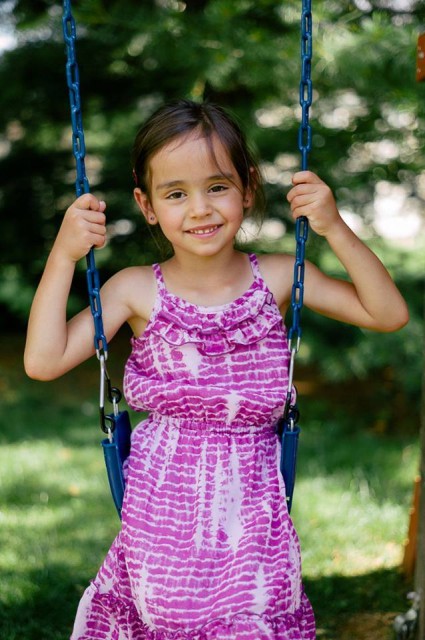
First shot below wide open (focus on closest eye) hand held with a 100% crop (UNEDITED)
Mitch, excellent low light shots with the M9. #1,3 & 7 are my favorites. Good use of your 50Lux pre-ASPH.
Peter, what a hike, love those shots and views. Stunning.
Shuko, welcome, excellent work, #3 & 5 are my favorites.
Ron, love the first one with the Sonnar 5cm 1.5.
Edward, beautiful sunset!
Ryan - The new 50 1.5 reminds me of the old LTM one. I have the same issues with yours that I did mine. My issues based on your images, and the memory of my old LTM, was that I found the bokeh to be very distracting at half to full body distances, similar to your images, but up close and personal it has a really neat softness to a what should be sketchy bokeh. BTW, the last shot is awesome (tad out of focus, due to her head tilt and DOF limitations, so if you soften up the flower and band in her hair the eye will be drawn to her eye, and it'll just have that calm softness of film).
Mitch - Really weird, the only images that were showing up for me when I seen that page a week or so ago was the vespa and the girl in pink walking against the flow. And when I clicked on the links last week, flickr was being crazy, n I couldn't click next (I did just now though, some excellent captures).
Edward, Both great, only if 2nd one correct perspective distortion will be even better. In the first case, slightly distortion actually helps the subject
Ryan, Congr for Nocton, Very beautiful set of portraits, the crop looks great, sharp enough for me for sure. VC usually has CA problem, how about this one. (I know it can be removed by LR.)
Tagfun, beautiful!
Shuko: nice set, I like 3+4 the most, welcome to the thread
Ron: from your last set I like the first the most, but for me personal, the many "burned" highlights a bit distracting.
Edward: Both are really sweet, but if I have to choose one, it would be the second.
rsolti13:1+2 are very lovely, my favorite is the last one, but her soft left eye distracts me a bit
joe: thanks for the kind words
TAGfan: I love her natural expression, very nice!
Edward - nice sunsets! Tough to pick between the two. In the second my eye is immediately drawn to the ferris wheel. Not necessarily a bad thing, but if it's a matter of simply enjoying the sunset, then I prefer the moodiness of the first one.
Scott - looks good - and a good chance to compare against the CV in Ryan's photos. The Zeiss is definitely a bit edgier in background rendering.
Ryan - great set! The CV has very pleasing color and contrast. A very good balance. I'm not so sure there's any difference in the optical formula other than perhaps the coatings? Here's a post on LUF comparing the CV against the Lux ASPH as well as the older version. The only difference I see in his samples is better flare/contrast control in the new version vs. old. But that's a good thing because it's what I didn't really like about the older one - a sometimes slightly bland color/tonality quality. But purple fringing still happens, and may or may not be a problem for some.
Mitch - the idea of the 'ISO-less' approach when using the M9 was originally you set the ISO to 160 and when possible, make normal looking exposures. As light levels drop and you need to maintain higher shutter speeds or stop down for more depth of field, simply use what you need to make the photo and then push the DNG file accordingly in post. The technical analysis by Kasson found that you can actually do this up to ISO 640 in-camera without seeing a real difference in post. I'm not sure Doug was advocating a traditional ETTR approach, but in any case, my take on it is I try to get a pleasing looking exposure when possible, but if I can't, then I just ensure I don't clip the highlights. This goes for nighttime shooting, or full sun in the middle of the day.
Down by the water again last evening. While the sunset wasn't 'perfect' the clouds were relatively interesting...
50 Lux ASPH:
Nikkor 10.5cm f/2.5 LTM:
This time out I made an effort to shoot the Nikkor stopped down more in the f/4-5.6 range, and I somewhat retract my earlier misgivings about it for across frame sharpness compared to modern lenses. By this point it's already sharp across about 90% of the frame. Wide open it falls off quite substantially in the outer 1/3, which is where a lens like the modern 90 Summarit performs better.
I also shot a lot of the 50mm scenes with the Lux ASPH rather than the Zeiss Sonnar, and many of those were at or near wide open (the first above is wide open and the second is stopped down to f/2-2.8), primarily to blur the water in the foreground as much as possible. What you don't see at web-rez is that the landscape on the horizon is sharp across the frame, which impresses me a lot about this lens. It's simply a lens you can use wide open at all distances and get good results across the frame, without fuss, if that's what you want.
Thanks guys. muc_marlin, the left eye I agree is VERY distracting....hmm.....
Ron, really like #2, fantastic colors. Like the low profile view
Michael, the fringing is VERY minimal. Those shots above were shot either wide open or f/2, no CA adjustments made in pp. I think a great improvement of CV lately has been coating enhancements. Take the CV 35 f/1.2 II, the flare and CA control when the lens is shot at very wide apertures is a great improvement over the first version. It looks like that was also an area of great concentration with the new 50 f/1.5 Nokton. That being said, still not Lux ASPH absent and I would assume that the situations the Lux struggles in the Nokton would do far worse
Adam, I would agree with a lot of what you say, but the majority of where I have seen the Nokton exhibit 'busy' bokeh where the Lux ASPH would really show its true colors is the first shot above. Busy areas about 10-15 feet behind the subject. When the background is about 20 feet or greater back it is very smooth, see below...shot wide open. BUT, at 1/4th the price of the LUX Asph its a hell of a deal. The sharpness on the focus area is excellent
Ron, excellent link. That just shows the perfection of the Lux ASPH and how special of a lens it is. The smoothness of the Lux bokeh looks to be the main difference....I guess the question for potential buyers, how much is it worth to you? I have seen some say same optical formula and then quote Kobayashi as saying 'minor changes' to the formula. I'm not sure as I don't have the original and haven't seen a good controlled comparison yet, but the diameter of the lens is less and is in a more compact build. I would think some changes to the formula occurred, however minor. I would agree though that the majority of change is with the coating. If you look at that link you sent where it compares at f/5.6 there is a major difference in flare control with the old/new version. I am also surprised to see that the new CV looks to be contrastier than the Lux ASPH.
Very nice Ryan, CV50 1.5 is tempting for me not because of sharpness, but because it looks so cool and retro in chrome version!
Scott, nice one with the ZM50P
Ron, another excellent set, the last ray of light on the 3rd shot is beautiful!
Ryan, I agree with you about CV's latest lenses and coatings. The 21/1.8 really impressed with its image quality/control. When viewed at certain angles, it was as though there wasn't any glass in the lens; the coating reflections were so minimal.
I still have the original CV 50/1.5 - should we meet for a shootout? Joking aside, the coatings on my copy are yellow-green, green, orange and magenta-orange, as viewed from the front (with one element farther back that has a nearly white reflection). What do you see looking into your glass?
Nikkor 10.5cm f/2.5 LTM:
Thanks Joe! I agree, the styling is very cool, especially in chrome.