Mitch Alland wrote:
@mzbe@ - Good tonality. Are you running Nik SilverEfex 8 under Photoshop or Lightroom? Apparently, it has a lot more flexibility under Photoshop.
For my Leica Monochrom files, I've never quite clicked with Lightroom's rendering, so I've developed a process that bypasses it entirely.
My goal is to start with a "blank slate" and build the tones myself. Here's what that looks like for my favorite images:
Prep: I first automatically render all DNGs in my input folder as a completely flat 16-bit TIFF (using the free RawTherapee app in command line mode). This gives me maximum data and avoids any baked-in interpretation. For higher ISOs, I'm also processing that folder with Image Restore AI to Denoise.
Foundation: In Photoshop, I manually apply a custom tone curve (Ctrl+M) to set the global contrast.
Refinement: From there, it's about shaping the light. I apply capture sharpening, then (sometimes) do my dodge & burn work - with a light touch, done in a few seconds. I occasionally use a couple of Nik tools here, like "Detail Extractor" on a luminosity mask to pull back highlight details (the only tool that works well for me with monochrome files). Linear gradients (in Nik Color Efex or Adobe Camera Raw as a filter) are sometimes handy to rescue 'drowned' shadow areas.
Character: I then send it to Nik Silver Efex 8. I use a modified Tri-X 400 preset (no grain) as a starting point and use "Dynamic Brightness" to dial in the final feel.
Finishing: Once back in Photoshop, a final, automated touch from Dehancer (another plug-in) adds a tiny bit of grain and bloom.
It’s a very hands-on process, averaging 1-2 minutes per photo, so it's definitely not for bulk editing! For anything that requires speed, I switch over to Capture One and can fly through 5-10 images a minute.
Curious to hear what workflows other Monochrom shooters are using!
mzbe wrote:
For my Leica Monochrom files, I've never quite clicked with Lightroom's rendering, so I've developed a process that bypasses it entirely...My goal is to start with a "blank slate" and build the tones myself...Character: I then send it to Nik Silver Efex 8. I use a modified Tri-X 400 preset (no grain) as a starting point and use "Dynamic Brightness" to dial in the final feel...
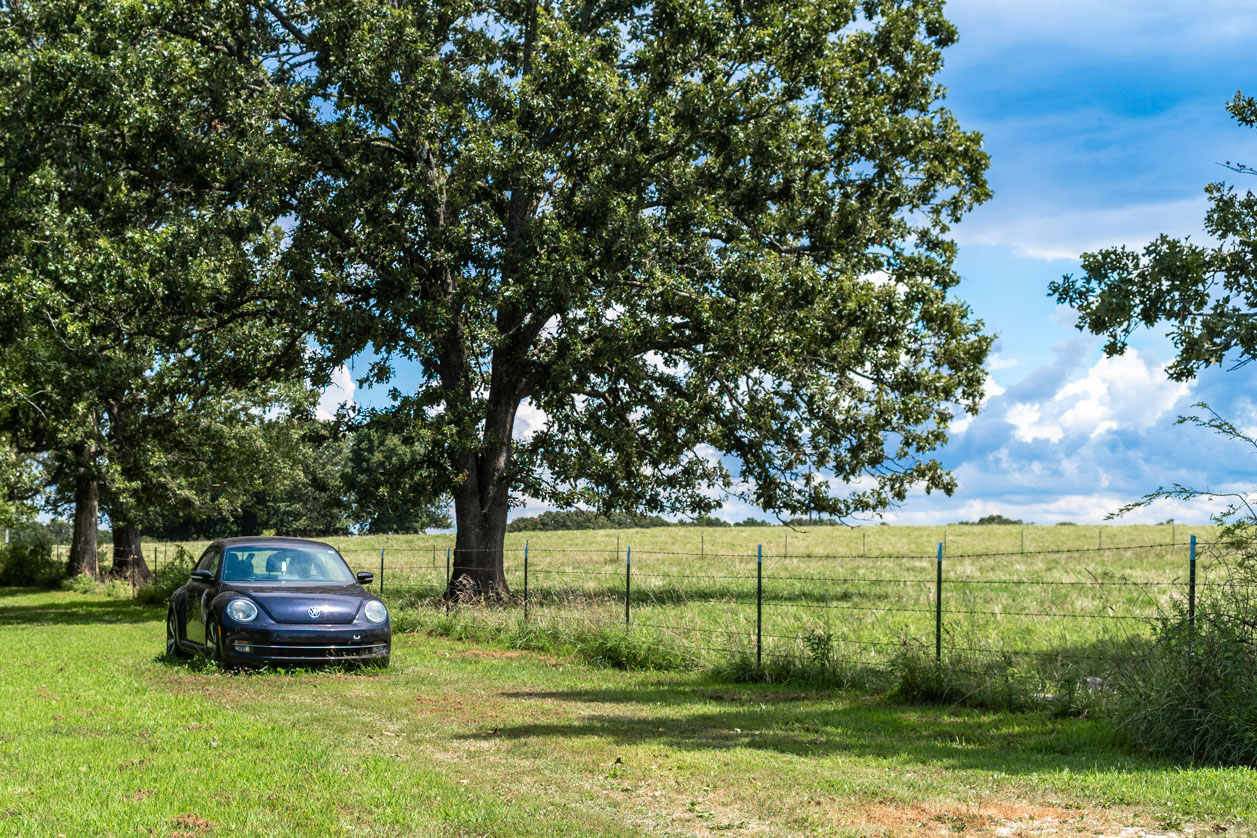
Thanks for describing your processing. I used to use a "super-flat preset" to create a consistent input for further processing (in SilverEfex or ColorEfex), but eventually gave it up when I started using the Cobalt-Image film emulations. Most of the color images that I posted here recently were done with the Elite Kodak Portra800 NB profile. I noticed that you wrote the following under another image:
I've used the Elite Classic BW Kodak Tmax emulation for some images, as well as a Cobalt-Image Neopan emulation. But when I want a particularly high-contrast, gritty B&W look I tend to go to SilverEfex. What do you think of the Cobalt-Image B&W emulations?
BTW, you may want to start another thread on the processing for people who want to discuss this in detail.
The Zeiss Makro-Planar T* 2/100 ZF.2 is one of my favorite adapted lenses. Close to perfection on a M Monochrom. 40cm close focus - solves the 'how to shoot macro with an M' in a reasonable way. Not rangefinder coupled (obviously) - needs EVF.
Reposting a favorite shot from years ago: I was sitting in a bistro near Montparnasse Cemetery in Paris, shooting out of the window behind the man in the picture, where the light was so bright that my shutter speed was 1/2000 sec. As I was swinging around to face forward, I saw the couple next to me on the right and only had time to refocus to about 1.5m as I pressed the shutter for a “no finder shot.” The image was underexposed by four stops, but lifting the shadows in Llighroom worked well.
Leica M9 Monochrom | Summilux-M 50mm pre-ASPH | ISO 320 | f/4.0 | 1/2000 sec Paris