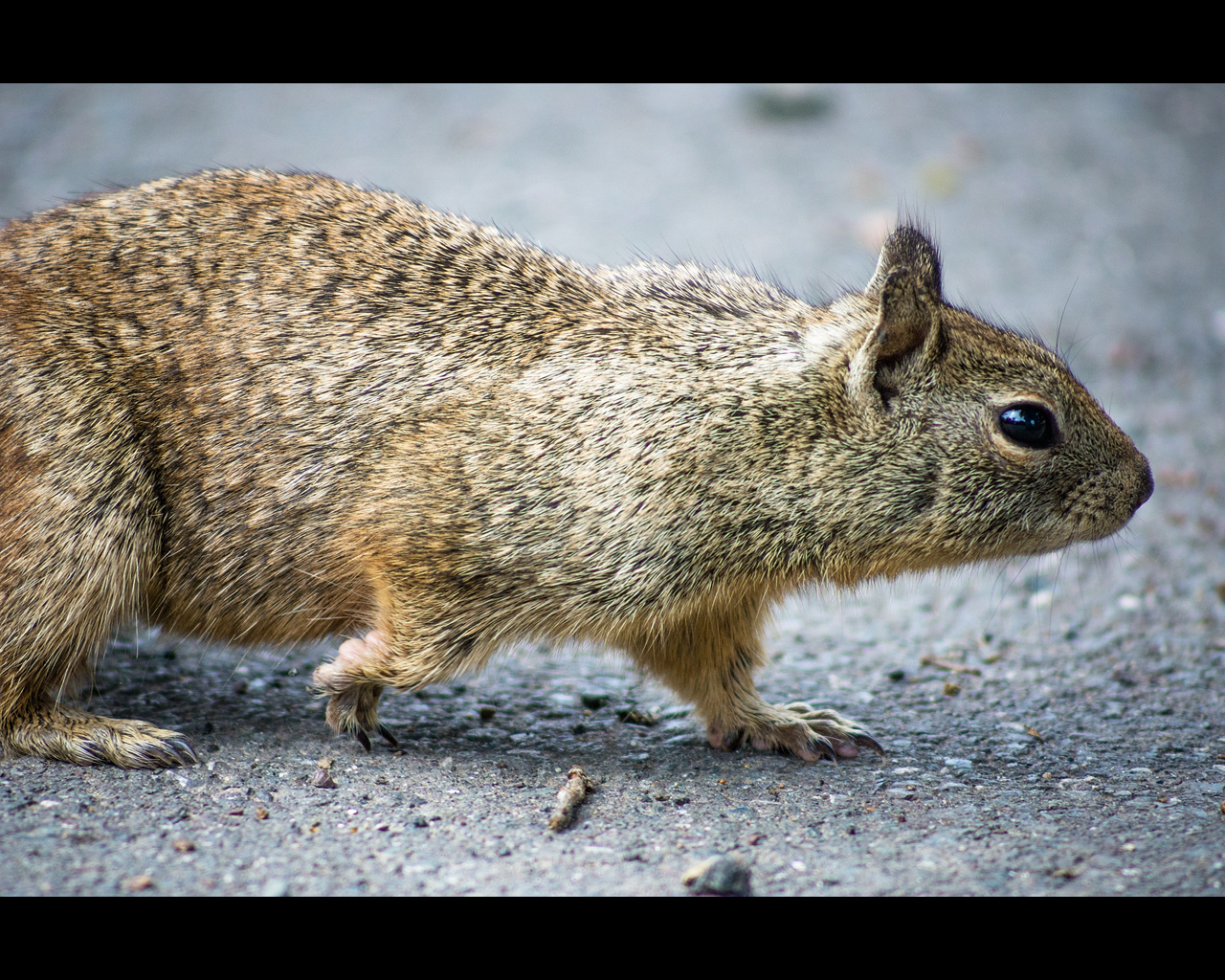
Greg, the 60 Macro is a nice lens, and relatively cheap. Nice portraits as always,
Sebboh, like the first bird especially. Is it a warbler? Last must be a nuthatch (don't know american birds...)
cyra wrote:
Greg, the 60 Macro is a nice lens, and relatively cheap. Nice portraits as always,
Sebboh, like the first bird especially. Is it a warbler? Last must be a nuthatch (don't know american birds...)
I was toying about the idea of a m43 camera and some of the R glass. The Fuji is a m43 camera, correct(?), despite having a different (proprietary x-mount) mount than say, an Olympus m43 mount?
Also, what is the apparent focal length of your 60mm macro elmarit on the fuji, 120mm?
Alpha_Geist wrote:
I was toying about the idea of a m43 camera and some of the R glass. The Fuji is a m43 camera, correct(?), despite having a different (proprietary x-mount) mount than say, an Olympus m43 mount?
Also, what is the apparent focal length of your 60mm macro elmarit on the fuji, 120mm?
The Fuji X-trans is an APS-C sensor. It's a 1.5x crop factor, so a 60 provides a FF-equivalent of a 90mm FOV on this camera, unless a Metabones Speed Boost adapter is used, in which case it's 64mm but one stop faster (ƒ/2 in the case of the Leica 60 R Makro Elmarit). The MTF is likewise improved.
For the µ4/3 mount and Leica R glass, straight mount is almost pointless unless you're looking for the long reach. You're better off acquiring a Metabones R >> µ4/3 Speed boost. The adapter, just like the APS-C version, contains a highly-corrected element with a magnification factor of 0.71. Afterwards, there's the sensor crop factor; so a 50 becomes a 35.5mm and the the 2x crop brings to to 71mm effective focal length. The lens also gathers in more light too, so an ƒ/2 becomes effectively an ƒ/1.4.
j.liam wrote:
The Fuji X-trans is an APS-C sensor. It's a 1.5x crop factor, so a 60 provides a FF-equivalent of a 90mm FOV on this camera, unless a Metabones Speed Boost adapter is used, in which case it's 64mm but one stop faster (ƒ/2 in the case of the Leica 60 R Makro Elmarit). The MTF is likewise improved.
For the µ4/3 mount and Leica R glass, straight mount is almost pointless unless you're looking for the long reach. You're better off acquiring a Metabones R >> µ4/3 Speed boost. The adapter, just like the APS-C version, contains a highly-corrected element with a magnification factor of 0.71. Afterwards, there's the sensor crop factor; so a 50 becomes a 35.5mm and the the 2x crop brings to to 71mm effective focal length. The lens also gathers in more light too, so an ƒ/2 becomes effectively an ƒ/1.4....Show more →
Ah! Thank you for the clarity of the mounts and their differences. As for the micro µ4/3 speed boosted metabones mount, will the DoF for and f/2 remain the same after boosted to f/1.4? I'm assuming that the boost only affects the amount of light gathered and not the DoF as well?
Alpha_Geist wrote:
Ah! Thank you for the clarity of the mounts and their differences. As for the micro µ4/3 speed boosted metabones mount, will the DoF for and f/2 remain the same after boosted to f/1.4? I'm assuming that the boost only affects the amount of light gathered and not the DoF as well?
Scroll down to the FAQ on depth of field at the Metabones website. The short answer is that it provides about the same DOF as if it were used on a FF sensor. The site goes into more detail as to why,
Alpha_Geist wrote:
Ah! Thank you for the clarity of the mounts and their differences. As for the micro µ4/3 speed boosted metabones mount, will the DoF for and f/2 remain the same after boosted to f/1.4? I'm assuming that the boost only affects the amount of light gathered and not the DoF as well?
A Speed Booster (or other .7x focal converter) actually changes the specifications of the lens. A 50mm f/2 lens on a Speed Booster is a 35mm f/1.4 lens--not equivalent to it, but actually is it. This works as the magnification of the lens system is reduced (shortening the focal length) without affecting the size of the entrance pupil, so the relative aperture (f number = focal length / entrance pupil diameter) changes as well.
So a Speed Boosted Summicron-R 35 becomes a 25mm f/1.4 lens that has the same brightness and depth of field characteristics of any other 25mm f/1.4 lens, such as the Panasonic/Leica offering on m4/3. So, using Leica R lenses on m4/3 will generally work for normal and longer lenses, but won't provide any wide angles.
Alpha Geist, for the 60 Macro the 1.5 crop factor on the Fuji is rather welcome, making it a 90mm equivalent. I am also thinking about a metabones speed booster for my Zeiss lenses on the X-E1, but appart from the price tag, they seem not to be easy to find over here.
JonPB wrote:
A Speed Booster (or other .7x focal converter) actually changes the specifications of the lens. A 50mm f/2 lens on a Speed Booster is a 35mm f/1.4 lens--not equivalent to it, but actually is it. This works as the magnification of the lens system is reduced (shortening the focal length) without affecting the size of the entrance pupil, so the relative aperture (f number = focal length / entrance pupil diameter) changes as well.
So a Speed Boosted Summicron-R 35 becomes a 25mm f/1.4 lens that has the same brightness and depth of field characteristics of any other 25mm f/1.4 lens, such as the Panasonic/Leica offering on m4/3. So, using Leica R lenses on m4/3 will generally work for normal and longer lenses, but won't provide any wide angles.
I did a little reading up on their site, the Speedbooster only changes (physically) the focal length, which then affects the f/no. in turn.
Per your example, on a m4/3 system, a 35 Cron-R boosted will turn the 35mm equivalent focal length to 24.85mm (35mm x .71), but the 2x crop from the sensor will ultimately change the equivalent focal length to 49.7mm (24.85mm x 2).
So no wide angles like you mentioned, however, how much will the m4/3 affect the f/no. in addition to the Speedboster (if the 35mm Cron-R f/2 is boosted to a f/1.4)? Will the f/no. of the Speedboosted 35mm Cron-R still remain f/1.4 or slightly smaller, ie. ~1.8, 2 , 2.2, etc.
Maybe I should be looking at the Fuji APS-C (1.5x) crop sensor instead...
My rational is this: The Leica APO Macro-Elmarit-R 100mm is very $$$ at the moment. The 60mm Macro Elmarit-R is going anywhere from 1/2 to 3/4 of the 100mm's price (depending on condition). If the 60mm Macro Elmarit-R is adapted to a APS-C crop body (with EVF!!!), then I could gain little more working distance from my subject. Close to the 100mm focal length. Factoring whether or a Speedbooster is necessary...I'd have to think that over.
cyra wrote:
Alpha Geist, for the 60 Macro the 1.5 crop factor on the Fuji is rather welcome, making it a 90mm equivalent. I am also thinking about a metabones speed booster for my Zeiss lenses on the X-E1, but appart from the price tag, they seem not to be easy to find over here.
Cyra! It's because of your posts that the little Macro seed has been planted in my brain. :P
I've never had any experiences with m4/3, but have played with some (canikon) APS-C cameras in my past. I need to look into the Fuji system as a compliment to my A7. Hmmm, now where did my wallet go.
so sorry, Alpha Geist
The Fuji X-E1 is incredibly cheap new and used. A lot of bang for the buck. Metabones speed booster will cost you more. I have just bought a very cheap used X-E1 for my Leica R Lenses, and these are litterally my first images. So I can't say much yet, except that it is very pleasant to work with the combo.
zhangyue wrote:
I continue enjoy the fine process through bright OVF and ‘shallow DOF’
Shoot these at f2.8 will ruin everything for me. IMHO
BLUE
BLUE <-- Yesss!!!
Shoot these at f2.8 <-- yes again!
I continue enjoy the fine process through bright OVF <-- Similar, but through EVF with 10x magnification!






 and ‘shallow DOF’