Jon Buffington wrote:
That delta3200 looks nice! What did you meter it at?
By the way, I always enjoy your work as I feel like I am immersed into a culture that is completely foreign to me. Very intriguing
Thank you for the kind words Jon. I shot those Delta 3200 images with the meter set at ISO1600. I try to keep under ISO3200 if at all possible. With f/4.5 and f/3.5 lenses, sometimes that's not possible.
Right now my bags are packed and ready to go to fly off to my next destination. 7 days in beautiful Kyoto Japan. I expect to come back with a good 40-50 rolls of film shot. Hopefully a few good images in there.
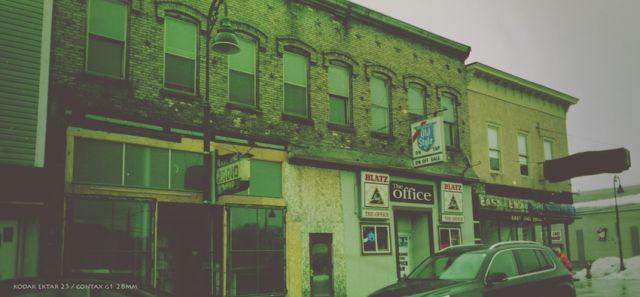
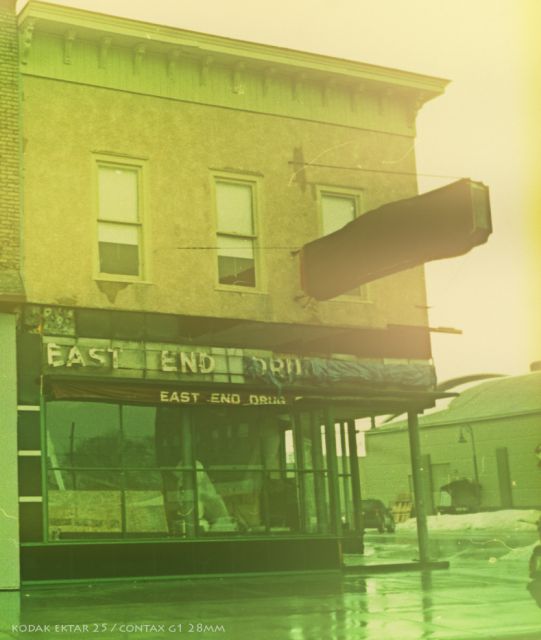
Headed back for trip #3 to Big Bend National Park in 3 weeks. Figured I would share a few that I haven't processed before. Canon ae-1, ektar100, walgreens processed, pakon scanned, LR5
Just got through this thread and am quite impressed. What kind of gear are you all using to scan your negatives? Any tips on what commonly needs to be done with the scans before they can be brought into Lightroom or Photoshop?
Lots of different options. Some send off to labs to be scanned, some use Epson flatbeds (v500/600/700 etc), others plusteks or coolscans. I use a Kodak pakon f135+ for 35mm and Epson flatbed for MF. Lately, I am solely shooting 35mm as my scanner has made life scanning 35mm easy and enjoyable. I scan as TIFF, import into LR5. You probably see, many on here list the gear used including workflow.
Hi Kevin,
I scan my slides and negatives with a Nikon Coolscan 5000ED. I make RAW (tif) scans with Vuescan and import them in Photoshop with a plug-in called ColorPerfect. They have lots of useful info on their site.
Thanks Paul and Jon. I have a long term loan of a Nikon Coolscan 5000ED and I just figured out how to get Windows 7 to see it. If I can get Linux to see it right, I will be golden.
i'd rather not scan but sometimes necessary and a good way to view negatives before printing in the darkroom. So I use a cheaper Epson 4990 which is adequate for my needs and can do up to 8x10 film but largest I've scanned is 5x7 film. I use a film cleaner spray by Tetenal to clean film good of all water marks and dust before starting as I find the computer enabled dust removal tends to blur/soften the image before you even start.
kwoodard wrote:
Just got through this thread and am quite impressed. What kind of gear are you all using to scan your negatives? Any tips on what commonly needs to be done with the scans before they can be brought into Lightroom or Photoshop?
My D7000 + Tamron 90mm f2.5 macro or Tamron adaptall macro zoom 35-80 f2.8-3.6. Here is a thread I started and DSLR scan is the way to go, once you understand it all. I only DSLR scan my medium format negatives. For 35mm, I use Plustek 8100. There aren't good options for scanning medium format unless you are ready to spend more than $2k for a mid end slow-ass scanner. For $500, I can get a 24mp DSLR and getting over 6000 pixel resolution on the long end.
BTW, the capture part isn't hard. What is hard is the inversion process. First, you need a reference point to determine what your inversion should look like. What your film curves are supposed to look like. For that, I use ColorNeg for C41 inversion. For black and white, I used Vuescan. You can load a tif file negative image to Vuescan and to use the software inversion without even needing hooking up to a scanner. ColorNeg is a Photoshop plug in and contains more than 100 color film profiles. So, you don't go guessing around how much blue or green you should have on your shots.
While were busy scanning negatives others are learning how to make digital negatives...lol were going in circles now.
First roll thru the Konica Off Road camera, it has a lever by the viewfinder for taking panorama shoots, basically just a mask that makes it appear longer but actually same width, but you get same view in finder window.