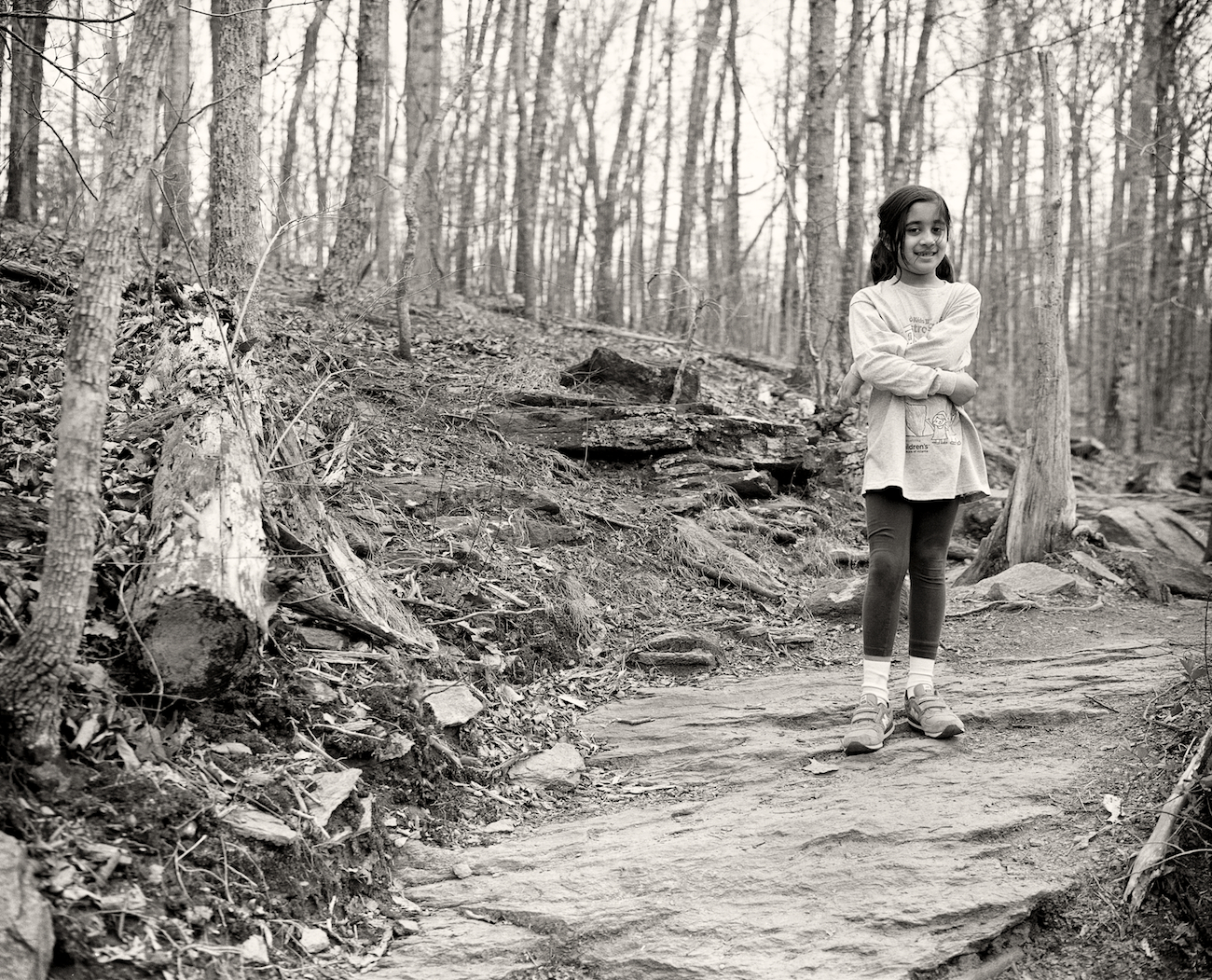
Some new scans from old (from this fall) Provia. 501CM/ 50FLE.
I also finally got around to fixing a water bath I inherited about a year ago. Hadn't done any color processing myself in over 7 years. Apparently this whole chemistry thing still works the same.
Portra 160, 501Cm.50FLE. Jobo c41 press kit developed/ hand tank.
rattymouse wrote:
Great shots Lovesong! One day I'll develop my own color too.
Thanks.
Developing color is technically much simpler than B&W. You have fewer steps, shorter development times, and no variations (meaning c41 development/blix steps for all films use the same chemicals and steps, unlike B&W processing where it varies based on the developer/film combo). All you need is a way to bring 2 chemical bottles up to a set temp, and hold them there.
Lovesong wrote:
Thanks.
Developing color is technically much simpler than B&W. You have fewer steps, shorter development times, and no variations (meaning c41 development/blix steps for all films use the same chemicals and steps, unlike B&W processing where it varies based on the developer/film combo). All you need is a way to bring 2 chemical bottles up to a set temp, and hold them there.
Can you explain how you control temperature? Is it more involved than a water bath? Do you need a thermostat and heater?
Lovesong wrote:
Thanks.
Developing color is technically much simpler than B&W. You have fewer steps, shorter development times, and no variations (meaning c41 development/blix steps for all films use the same chemicals and steps, unlike B&W processing where it varies based on the developer/film combo). All you need is a way to bring 2 chemical bottles up to a set temp, and hold them there.
Fill a medium or large sink with water, and let the containers stand there for a while. If the sink is large enough, and you let everything get to the right temperature and stand for a while, it works quite well. You just need an accurate thermometer. I use Pyrex glass containers for pouring the chemicals once mixed, and they are heavy enough to stand solidly in the water, and conduct heat well enough.
Lovesong wrote:
It can be as simple as a sink full of water, as Carsten said.
Some users on Rangefinderforum use a large aquarium heater to keep their temperature steady.
I'm fortunate enough to work in the sciences, and was basically given one of these:
I just leave my bottles in for about 45 mins before I develop.
The basic idea is to keep your temperature at a steady 39C for as long as you can throughout the process. The rest is cake.
That's just it. It is a huge difference in process to use a regulated water bath compared to filling up a sink with 39 C water. I develop my black and white film in my sink @ 20 C without any problems. I am not sure if doing my black and white process at 39 C with color chemicals will be as successful. If a temp regulator is needed, then my current process is not useable.
Another question, I thought only the developing part of the process was temp critical at 39 C. Similar to black and white, only the first batch of chemicals needs careful setting of the temp, with the stop, fix, and rinse done at room temp.
rattymouse wrote:
That's just it. It is a huge difference in process to use a regulated water bath compared to filling up a sink with 39 C water. I develop my black and white film in my sink @ 20 C without any problems. I am not sure if doing my black and white process at 39 C with color chemicals will be as successful. If a temp regulator is needed, then my current process is not useable.
Another question, I thought only the developing part of the process was temp critical at 39 C. Similar to black and white, only the first batch of chemicals needs careful setting of the temp, with the stop, fix, and rinse done at room temp.
Thanks for the info.
...Show more →
Sorta. The developer is designed to be used at 39 for a set time (3:30). That is really the most critical step, and most of the development occurs during the initial 30 secs or so (it's a log curve). Water (and ergo water based solutions) have ridiculously high specific heats ( it takes a lot of juice to move the temp around). It's thus really not as dire, difficult, or as critical as it sounds- basically the initial hit needs to be at 39. The rest of the time you can leave it out of the bath with no ill effects. In the 3.5 minutes, your temp will change by a fraction.
There are 3 steps that are actually temp sensitive (well 4 actually). The first is the initial rinse, which is done at 39, for a min with no agitation. The development step is next, followed by the blix. The blix should be around 39 give or take 3 degrees (much less significant, as you are fixing for 6.5 mins). The last temp step is the 3 min rinse with ~39 degree water, but that's really lax. My hot water went out halfway through my last film wash, and it turned out fine. The last step is the stabilizer, which is at RT.
Hope this helps. I would encourage you to blow the 20 bucks on a kit, shoot a throw away roll, and develop it to see how easy it can be. Good luck.
rattymouse wrote:
3.5 mins is nothing for water to hold its temp so I agree that this is really not that difficult.
I'm more interested in E-6 than C41 though. Still as easy?
Yup. I haven't done E-6 in ages (maybe 7 years), but it's just as simple- there is an extra step, in that there are 2 developers, then blix, then stabilizer, but it's pretty straight forward as well. The times are longer, if I remember correctly (I think it's 6+wash, 6+ wash, then another 6 and wash), but still not that bad. E-6 chemistry does tend to be a bit more pricey, but there's nothing quite like watching those slides come to life in front of you.
The GF670 is a nice camera for a hike... although, if you don't know what you're going to come across, you can run out of your 10 frames too quick!
HP5+/HC-110
Or some Ektachrome... These were at David Lindley's house. For anyone who doesn't know Lindley, he's the guy who played steel guitar for Jackson Browne and sang the falsetto break on Stay from Jackson's live record. RZ. Ektachrome of some sort. Drum scanned. Of course.
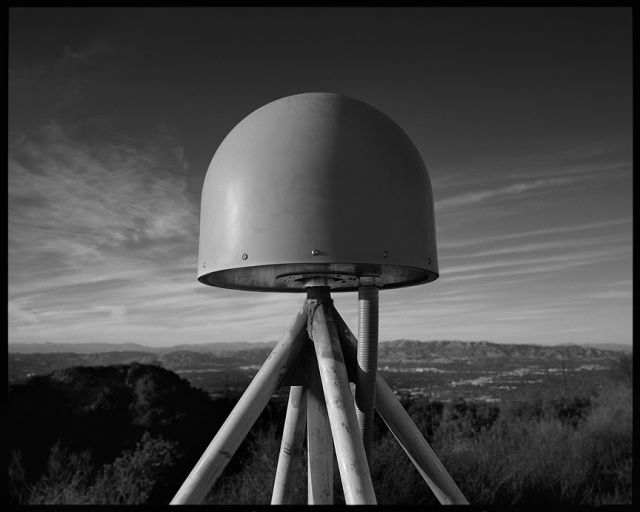
This is what a seismic sensor looks like, at least the ones here in southern California. This is in the Santa Monica Mountains. Mamiya 7. 65mm lens f/11. T-Max100. 25A Red filter.
Seismic Sensor, Santa Monica Mountains, Los Angeles, Ca.