I've got my own Howtek 8000 and 7500, although the 7500 is not working right now, so the answer is in my studio in L.A. I've done a bunch of scans for Corposant and just finished moving into my new studio. Still getting things set up and working, but should be able to start scanning again next week.
I should add that the scan is just the beginning. It's what you do after that makes or breaks your image. There was a lot of tonal manipulation in that image to get it where I wanted it to be, but at least it started with a good piece of film and a great scan.
After having printed wet prints for, well, over forty years, I've found that especially on difficult negs, but even on not so difficult ones, I can make better looking final prints drum scanning the original neg, manipulating it in Ps and then outputting to a nice fine art inkjet paper on my Epson 9900. I have much better overall control over both global and local contrast and the prints just seem very rich to me.
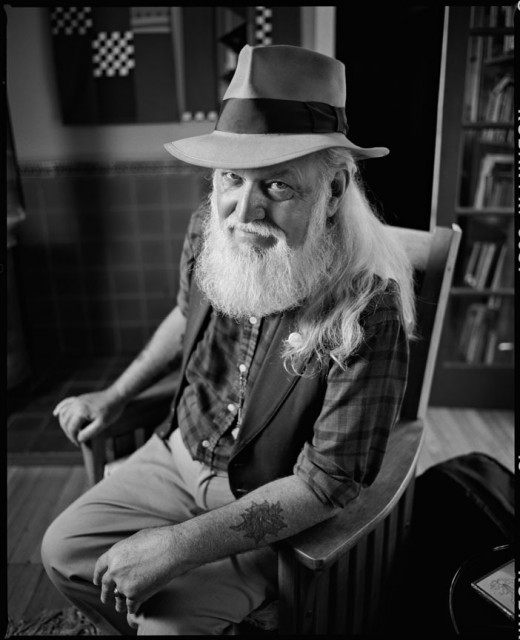
Here's a portrait of The Golden Voice of the Great Southwest, U. Utah Phillips, shot in his living room in Nevada City, Ca. RZ67, probably a 50mm or maybe a 65mm, Plus-X or T-Max100, I think, but the same basic treatment I do on everything.
I'd guess it's the 65mm, based on the relatively low distortion. The 65 KL was one of my favorite lenses on the RB67. I wish Pentax 67II had one -- their 75/2.8 ASPH is my favorite, but next is a big jump to 55/4.
I've never been very good about recording that kind of information. Probably stems from working for someone years ago where I had to take fastidious notes on every detail of every shoot. Not me. Both the 50 and 65 are great lenses, but the 65 is somewhat greater.
I had a Pentax 67 system prior to the RB/RZ, and it was a great camera, but it was the low sync speed and easy Polaroid back that pushed me to the Mamiya.
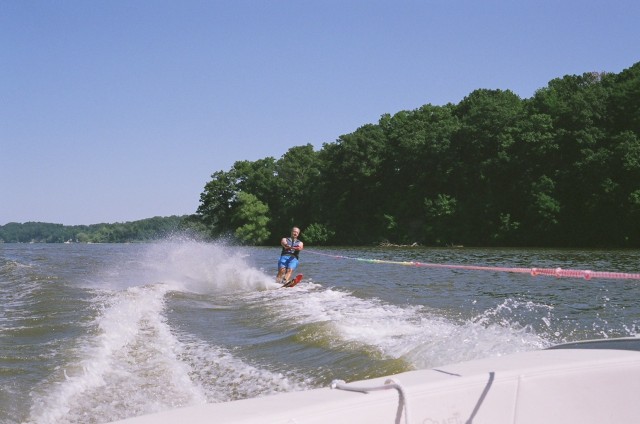
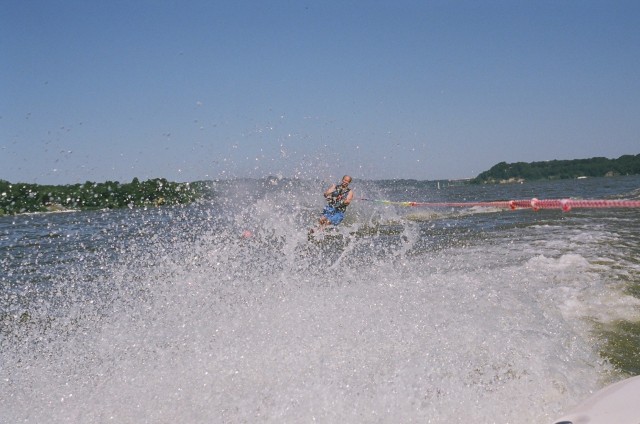
Newly discovered rangefinder for sports photography Taken with Contax G2 with 45/2 set to Full Auto with Portra 400. It's what I used when my X100 battery went belly up and I didn't want to change it out while in the boat. Skier is my son, Mark.
Anthony, very nice shots but beware of underexposure. All Contax cameras underexpose to protect highlights but in this case Portra doesn't like underexposure. In this case I would have dialled in a +2 EV.
Peter Figen wrote:
Here's a portrait of The Golden Voice of the Great Southwest, U. Utah Phillips, shot in his living room in Nevada City, Ca. RZ67, probably a 50mm or maybe a 65mm, Plus-X or T-Max100, I think, but the same basic treatment I do on everything.
edwardkaraa wrote:
Anthony, very nice shots but beware of underexposure. All Contax cameras underexpose to protect highlights but in this case Portra doesn't like underexposure. In this case I would have dialled in a +2 EV.
Edward, thanks so much. I don't know squat about the G2 and its settings, especially in interaction with specific film types. Just beginning to learn film and so I really appreciate your advice.
anthonysemone wrote:
Edward, thanks so much. I don't know squat about the G2 and its settings, especially in interaction with specific film types. Just beginning to learn film and so I really appreciate your advice.
My pleasure, Anthony! Just keep in mind that the G2 meter will try to turn everything into 18% grey. So depending on the scene, you will have to adjust the exposure compensation, mostly adding +1 EV or more.
Peter, nice portrait. That looks like the 50 to me though. I like both, and prefer the 65 for environmental portraits usually. They really are both excellent, very little distortion, etc. The RZ is such a nice complete system, it lacks very little as far as medium format rigs go.
Peter Figen wrote:
Here's a portrait of The Golden Voice of the Great Southwest, U. Utah Phillips, shot in his living room in Nevada City, Ca. RZ67, probably a 50mm or maybe a 65mm, Plus-X or T-Max100, I think, but the same basic treatment I do on everything.





 Taken with Contax G2 with 45/2 set to Full Auto