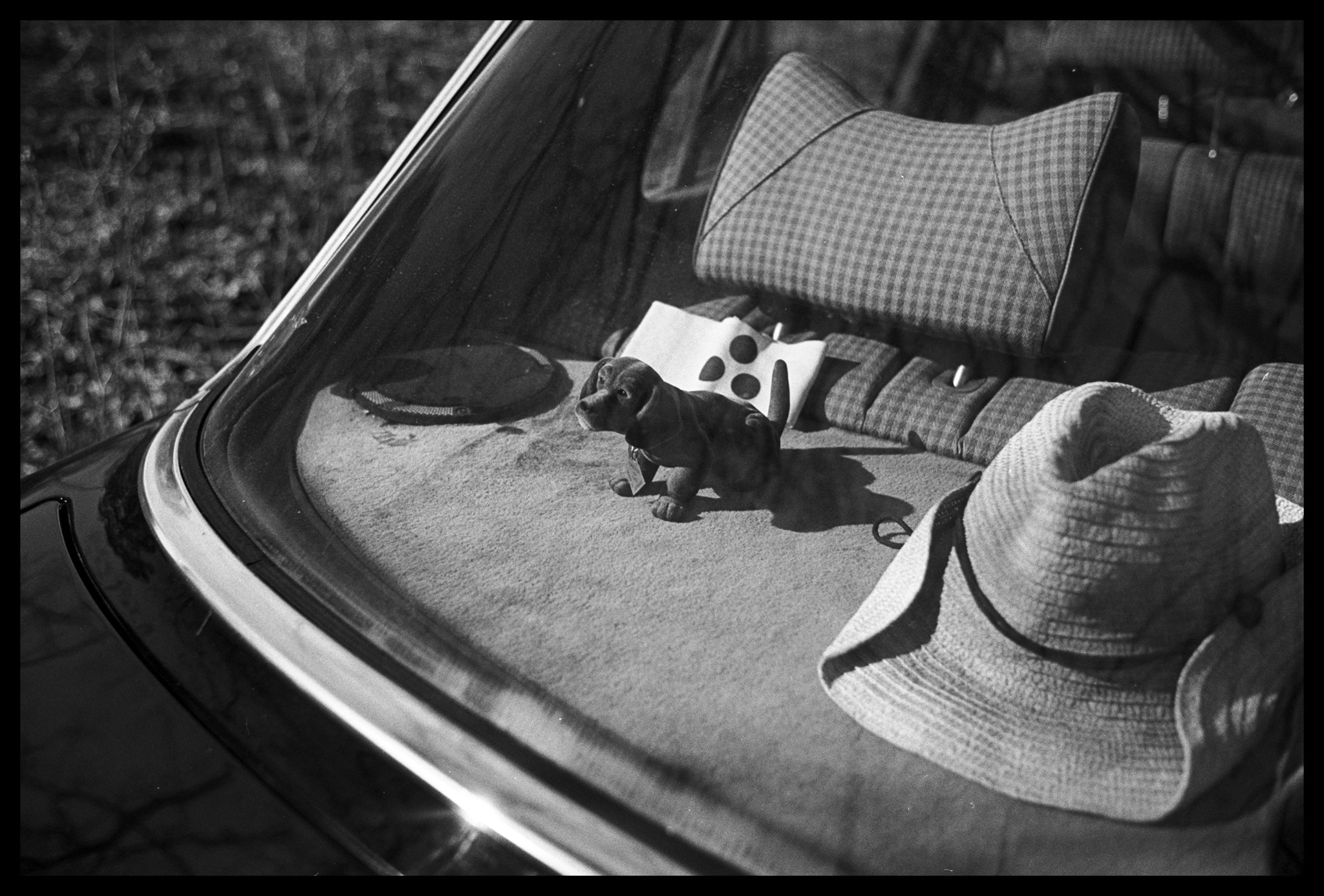
Sorry for the slow response. I just had time to really start investigating the whole meter discussion a bit more, in particular regarding external light meters. Thanks both for your helpful comments—I think at this point I have to research more before I buy. I don’t really understand what the differences and what not are among light meters well enough. Ideally, I want something tiny that can reflect and incident meter that is under $200—not sure how practical that is/if that product exists.
The basic concepts I understand well. And I have used and am familiar with both the zone system and the Sunny16 recently. I do think I need more precise control regarding reading the light for optimally exposed photos—I don’t often shoot slide films. When I have in the past, I just used the spot meter on my digital camera and with a +/- EV.
And the XG-1 is cheap SR mount camera from Minolta. It was actually gifted to me with a Mino 50/1.7 from a pawnshop. The light seals were shot, so I ordered some off eBay and it’s been fine once replaced. The metering is forced (that's the only option) average, which for scenes with high contrast tends to be poor/lead to missed exposures. Which is why I Sunny 16 that camera as well, getting better but not pinpoint results. It takes my Mino 58/1.2 which I love on film even more than digital.
Any recs or further input regarding light meters for film are welcome as well....Show more →
This is probably the dumbest lens I own...yet...I will keep trying with it...
Dad by Jim Fischer, on Flickr
I swear he's probably in focus.
Smith Tower Apartments by Jim Fischer, on Flickr
at 5.6...at a considerable distance...and yet the focus shift is so strong the front of the building isn't in focus.
Tyler by Jim Fischer, on Flickr
Zeiss Ikon ZM, Artizlab 35mm f/1.4 Classic, Eastman-5222, Rodinal 1:50
madNbad wrote:
Brad, those are very nice! I'm so used to using Tri-X at one stop under, maybe I'll try one stop over!
What developer did you use?
Thanks! I used 510 Pyro at 1:100 for 29.5 minutes, using their recommended semi-stand approach (the only option in their data sheet for pushing Tri-X).
I did this once before and liked the results better last time, although those were full-frame and these were half-frame.
I pushed the film because I took some photos at a dance in pretty low light, but once I was done with those photos (only about 15-20 shots) I was sentenced to using ISO 800 for the rest of the roll....which with half-frame is a very long sentence. I finally finished the roll this morning, about a month after I started it.
A funny story: the place where I buy my Tri-X has only had 24-exposure rolls in 35mm for ages, they haven't been able to get the 36-exposure rolls. I picked up two rolls late last year and they gave me their usual warning that there were only 24 exposures. I put one in my half-frame camera and shot it, stopping dutifully after 48 frames. I developed the roll, and when I pulled it out of the reel I had a long strip of blank film and I thought "oh no, what I did I do wrong?" But then the photos started appearing: it turned out that this was a roll of 36 exposures, not 24, and I was only charged for a 24-exposure roll. I checked the other roll and it was 36 exposures as well.