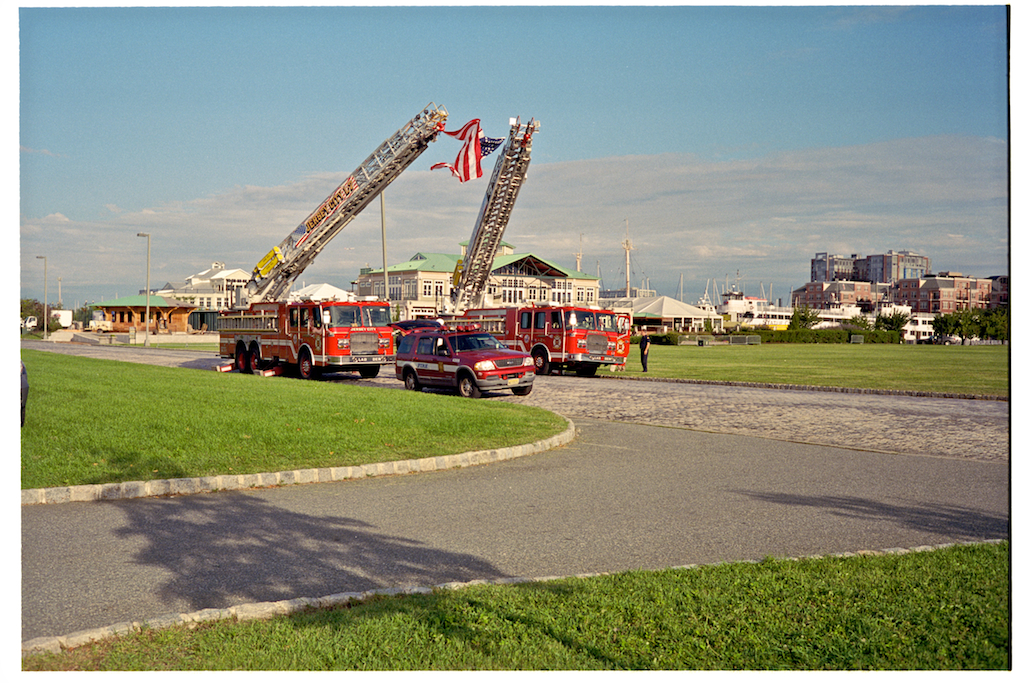
I must say that I absolutely love this thread! So many great images from so many great photographers.
Was out on a drive about a month ago and stumbled upon this old log cabin that was not inhabited.
first time out shooting cheapo fuji 200 and am quite pleased with the film.
lighting by a window just outside the frame
looking back in from outside through a window
basically straight scans with a very slight levels adjustment on 1 or 2 and cloning out a few of the more obnoxious dust spots. Shot with a minolta srt201 and a rokkor 50 1.7. Wide open on the chair shots. Scanned on an epson 4690
thrice wrote:
Martin, excellent abstract/detail shots, your film shots always look really good, which scanning software do you use?
Thanks! I'm using Epson Scan, but I scan B&W as if it was slide film and then I do everything from there manually. It takes a lot of time (which is one of the reasons I seldom shoot 135 film these days), but you can get pretty good results.
thrice wrote:
I use the V700, and have it pushed as hard as possible when scanning positives. I have no problems scanning negatives..
Sounds a bit weird! Even my underexposed first slides were much easier to get decent colors out of than color negatives. A nice tip is to scan as "flat" as possible (turn off all automation except for embedding the color profile of the scanner itself) and then open the TIFF in ACR. There you can set white balance, use noise reduction and everything.
You are probably still underdeveloping your slides. Crank up your temp for the first developer 1°C or so, or prolong development with 1-2 minutes.
I also find metering for slides a PITA. I got myself a handheld Gossen Digiflash, but I think you need a spot meter for accuracy when shooting slides.
--------------------
Now for some more B&W! This is from the same roll of Tmax 100 as in my last post, but this time with the Nikkor 24/2.8 AI, wide open.
I wrote a post on my blog (in swedish) that describes what I've done to it. Even if you don't understand swedish, the images will still probably give you an idea of the workflow from the "raw" scanned file, after inverting it.
As you can see, the raw scan is terribly flat. But instead of letting the scanner software do everything for you, you can take control and get much nicer results, after a couple of minutes of work per frame. The most important thing is to understand that you get high contrast where the curve is steep, and you can place that locally high midtone contrast anywhere you like. Your software will never know what you want, so you better do it yourself.
Edit: That shot was overexposed at least 1 stop and developed normally, by the way. That's the reason for the look of the histogram.
Thanks ken.vs.ryu, I've looked at those sites and they offer a few different types of chemicals, tanks, and reels. My biggest fear is loading film onto reels-I always found this very difficult. I've just watched some more videos and think I will try the newer plastic reels because I hated loading those steel ones. So I guess I would like to hear from people which reels, and tanks they prerfer and why, and also best chemistry for Kodak portra/ektar. Thanks, jd
camershy wrote:
Thanks ken.vs.ryu, I've looked at those sites and they offer a few different types of chemicals, tanks, and reels. My biggest fear is loading film onto reels-I always found this very difficult. I've just watched some more videos and think I will try the newer plastic reels because I hated loading those steel ones. So I guess I would like to hear from people which reels, and tanks they prerfer and why, and also best chemistry for Kodak portra/ektar. Thanks, jd
I've got two tanks that I use for different purposes. One Paterson plastic tank with plastic reels, that I use for 120 color film and 135 film, and one stainless steel tank for 120 B&W film.
The reason for using 120 color film in the Paterson tank is that it goes much faster to pour the chems in and out. The reason for using the stainless steel tank for 120 B&W film is that the plastic reels can hold air bubbles that gives artefacts on the film. This is not the case with C-41 and E-6 chemicals though, which I believe is because of different surface tension.
Loading plastic reels is very easy, if you cut the corners of the film end to a 45° angle. With 135 film, you can do this in daylight before loading the reel, which is nice.
Steel reels works fine but you have to practice some. The videos on youtube often show people loading films that have been laying around after taken off the spool, and therefore isn't at all as curly as the one you take out of your camera and load right from the spool in the dark.
---------------
Developing B&W is straightforward and easy since it's carried out at room temperature. You just adjust the time if it's too hot or cold at home. But C-41 and especially E-6 needs a water bath and preheating the chemicals. I do this at home with fairly good results, but I would recommend getting used to B&W development first. Color chems also have limited durability, while B&W developer often can be disposed of after every development, or at least used only a few times, because of low cost and low toxicity.
Thanks Makten for sharing your film developing knowledge. I went ahead and purchased my developing equipment today-kept the cost down with some used equipment. I went for the plastic reels-they look much easier than the metal ones-we''ll see. I agree that it is probably wiser to start with B/W however, after doing 20 years of b/w film in the 70-80's my brief stint with digital still has me hooked on color-I'm seeing too much color all around me to ignore it (especially with the fall colors coming)-maybe this winter I will do more b/w. I will use some cheaper films and not shoot anything important while I practice. jd
c00kiem0nster wrote:
@ jon: i really like the second picture. the lighting is great!
@ nate: the first panorama is to die for...this surely would make a great print!
as for the second shot, did you drink the vodka?
Thank you and yes I drank it.