Desmolicious wrote:
Forgot to ask - did you use the central ND filter with the 45mm lens?
An ND central filter? In this economy??
I actually don't have one, I've been quite happy without it for my 45mm and 90mm lenses. I understand that if you use the 30mm lens, they're pretty essential.
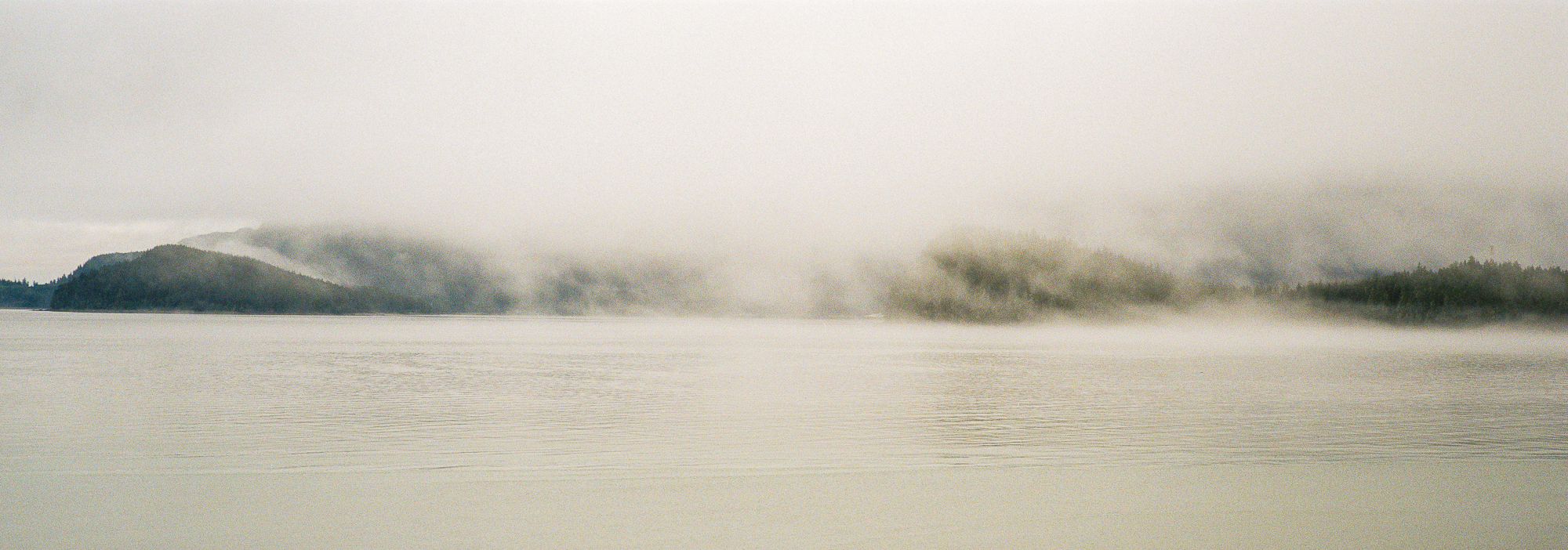
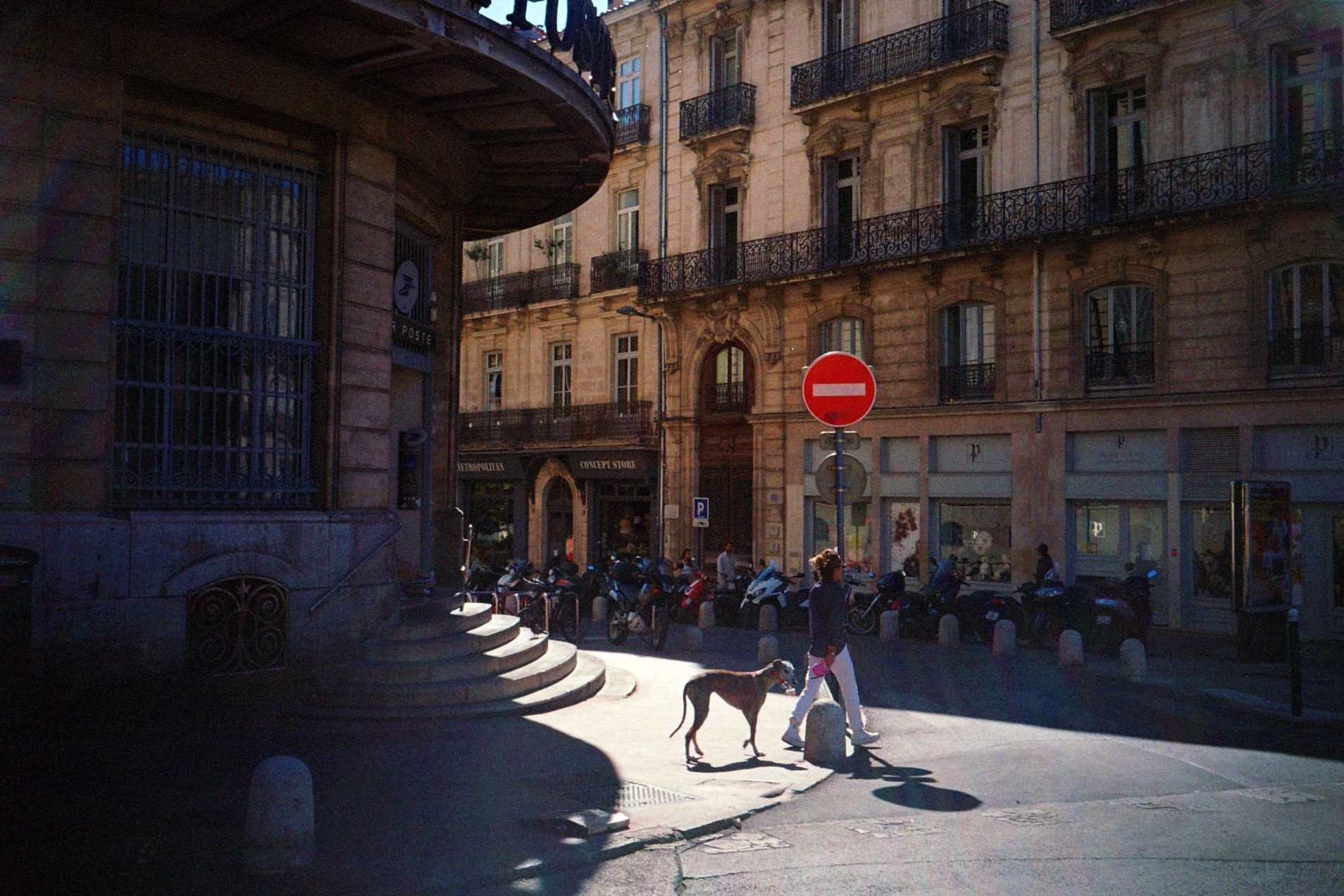
Here's a landscape - it's possible that a central ND could have helped, but it wasn't worth losing a stop over, as I was shooting Gold 200 wide open in low light.
adnan76 wrote:
An ND central filter? In this economy??
I actually don't have one, I've been quite happy without it for my 45mm and 90mm lenses. I understand that if you use the 30mm lens, they're pretty essential.
Here's a landscape - it's possible that a central ND could have helped, but it wasn't worth losing a stop over, as I was shooting Gold 200 wide open in low light.
Very cool! I always use it on my 45mm because I was told you needed to, and the only lens that doesn't need it is the 90.
But as you say, you lose light. And your results look great w/o it so I think I will shoot a roll w/o the filter and see the results.
These lenses are slow enough as it is!
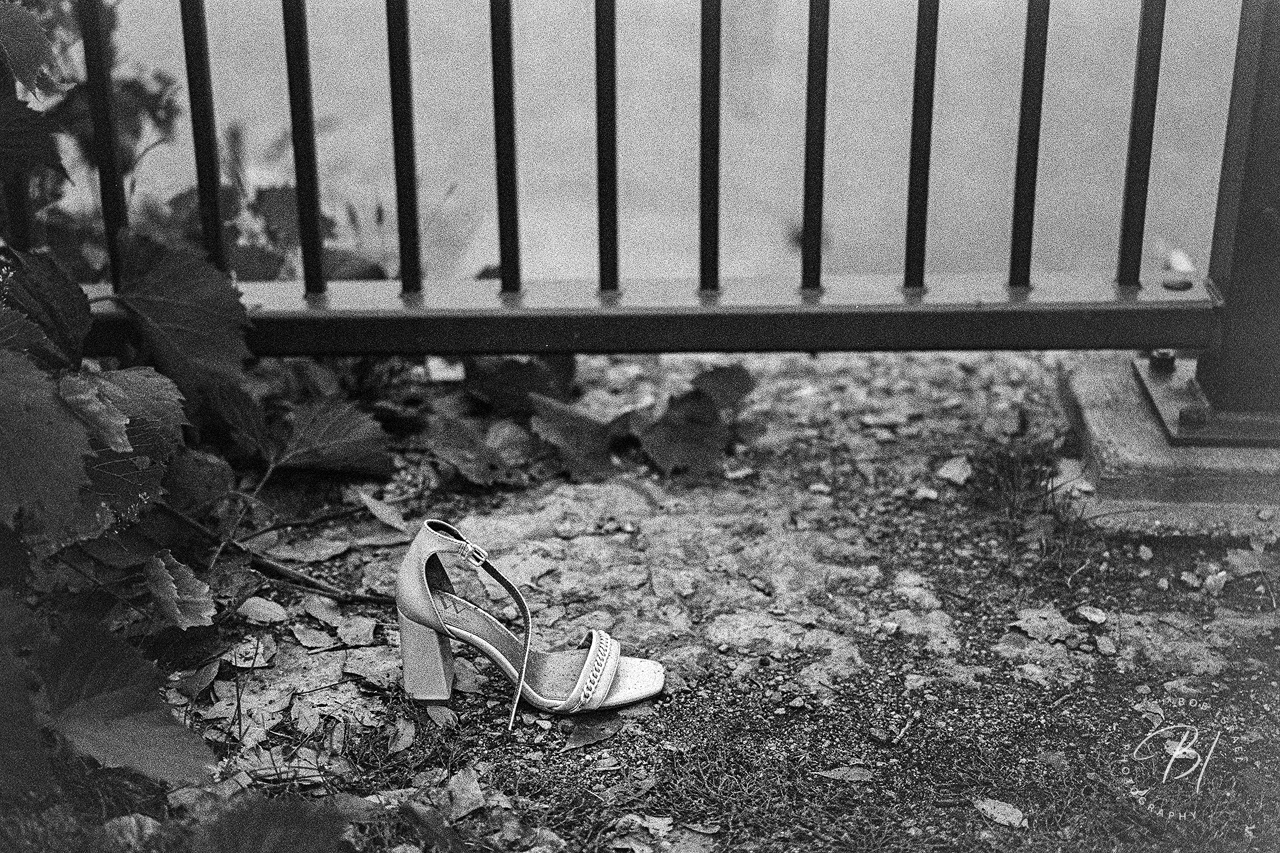
And a couple of B&W multiple exposures from multiple cameras: this roll was when I was having trouble getting film to load properly in my Leica M2R (turned out to be operator error) and I must have loaded and reloaded it six or seven times, taking a few shots and then noticing that the film wasn't advancing. So I then took it out and loaded it in my Minolta SRT 303b. Ilford FP4+
About a month ago I bought a Kodak Retina 1 (Type 013) off of eBay. Sent it to Paul Barden in Corvallis, Oregon for service. It looks and works like new. I was able to find a Kodak Retina 1 yellow filter (it came from the Netherlands) loaded some Tri-X and decided to try it out.
I was worried about the scale focus but found if I relied on the green circles, set the aperture at F8 and everything from seven to fifteen feet, the other from eleven to infinity, is in focus. What I didn't know was the Compur-Rapid shutters on the pre and early post war Retinas have a tendency to drift from their settings. The ring is rather loose and moves easily. The problem being, there are a lot of steps before taking a picture. Set the aperture, set the shutter speed, check the distance scale and cock the shutter. Along with the chance of bumping the shutter speed dial during that process, there is always the possibility of moving it unexpectedly during regular handling. Several times I would set the speed to 1/250th or 1/100th only to find it had shifted down to 1/25th. Most likely by my finger when cocking the shutter. Now I know to make checking the shutter speed the final step.
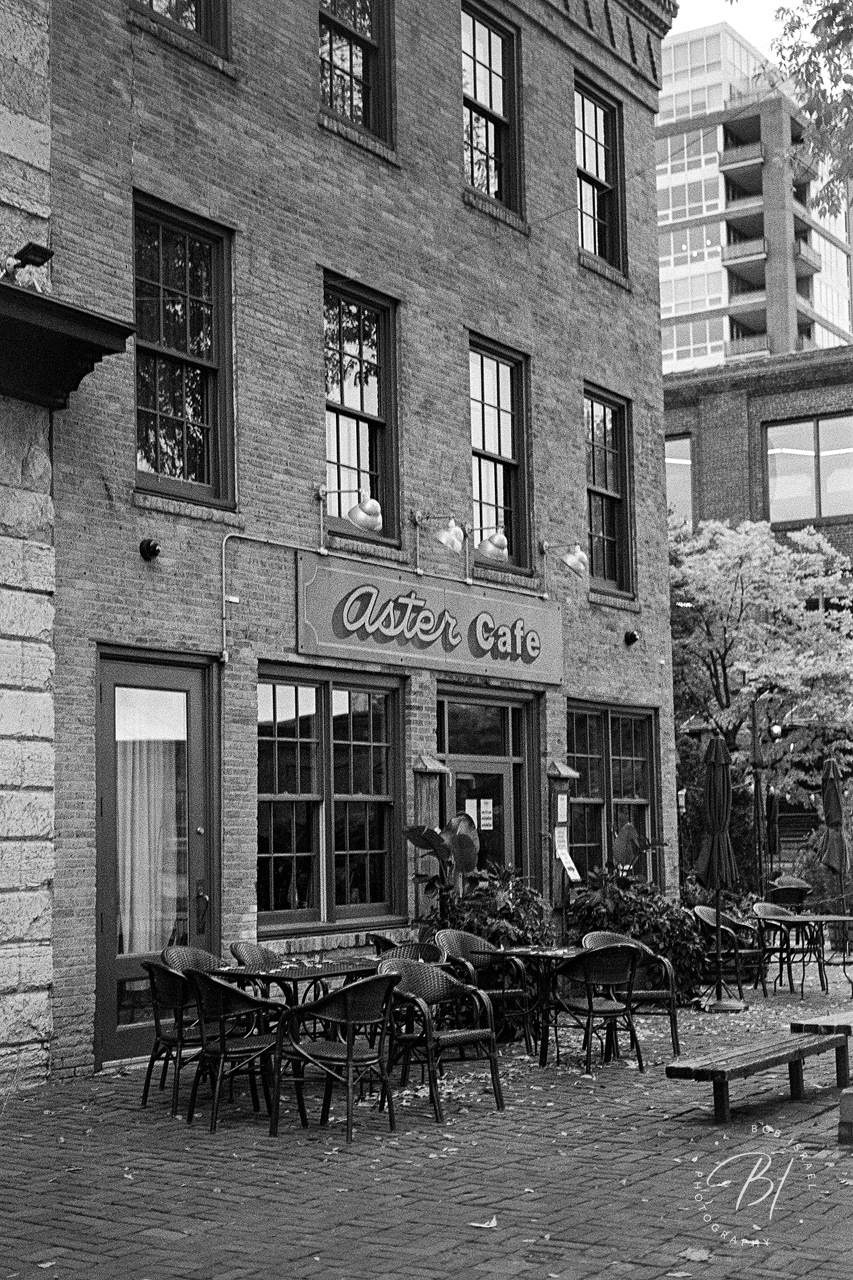
Here are a few from Multnomah Village. Kodak Tri-X @ ISO 200, Film Photography Project FPP-76 1+1 for 10 minutes. It's also the first roll through Negative Lab Pro and it's much faster than my previous method. The images have a little more digital magic than I normally add but the negatives themselves were not the best to work with:
I liked the results from the FPP-76 at 1+1, next time I'll skip the Reveni spot meter and the little Kodak and use the Sekonic 308 and the M4-2.
I'll be Leicaless for a while, as my M2R is out for a complete overhaul and my dual-range Summicron is being CLAd to remove haze. When I was testing the Summicron on the M2R, I got this portrait (which would have been better without the haze but it adds some atmosphere) on some grainy Fomapan 400 at EI 200.
bjhurley wrote:
I'll be Leicaless for a while, as my M2R is out for a complete overhaul and my dual-range Summicron is being CLAd to remove haze. When I was testing the Summicron on the M2R, I got this portrait (which would have been better without the haze but it adds some atmosphere) on some grainy Fomapan 400 at EI 200.