helimat wrote:
Time to join Huss in some half-frame fun.
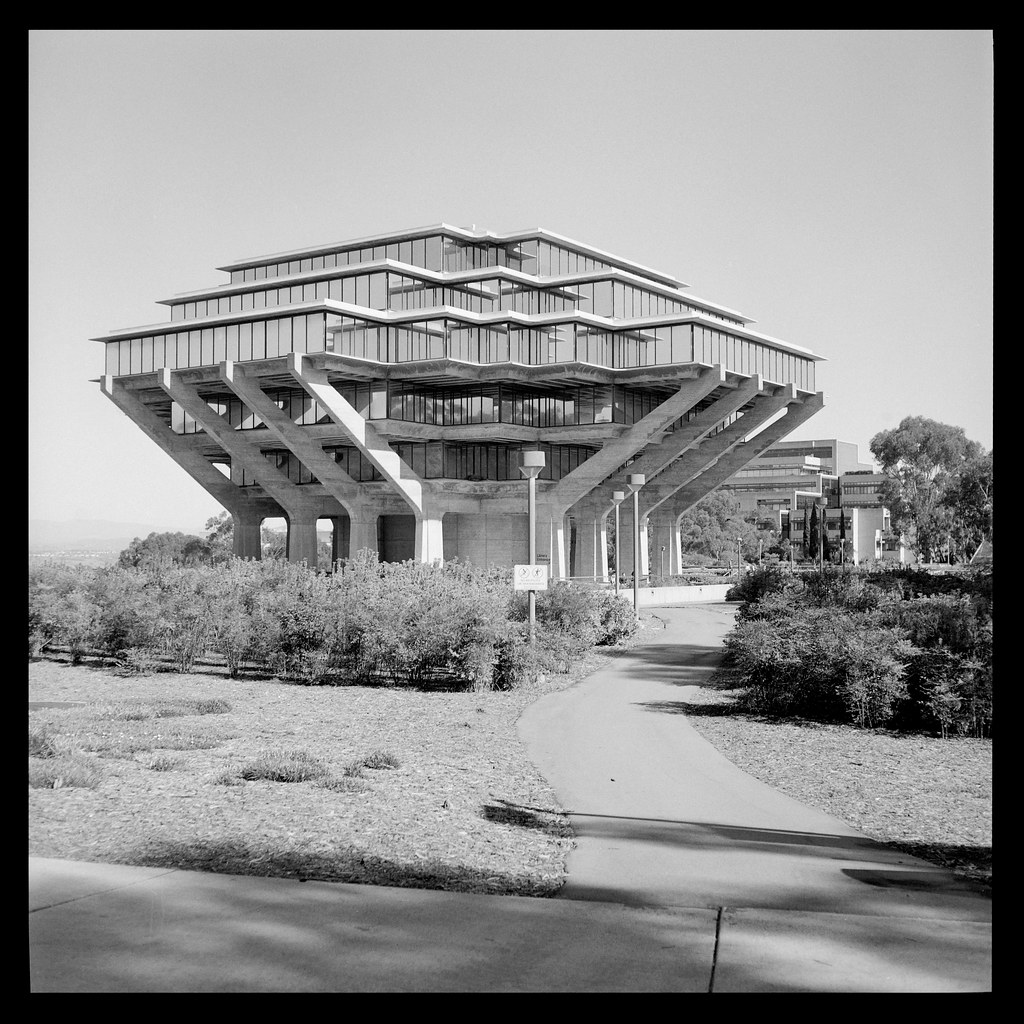
Ektar H35 + Kentmere 400
Noice! I should reload my Ektar H35 but for the last week or so it has been very grey down here. I like using it in the sunshine with some ProImage 100. Or c200.
Don't have anything to post at the moment, but I did recently finish a roll of Ilford HP5 and just bought 2 rolls of Kodak Gold 200 and one roll of Cinestill 800T. Very excited to shoot it all since my Sony A7RIV is in for repair at the moment.
Alan Parker wrote:
Don't have anything to post at the moment, but I did recently finish a roll of Ilford HP5 and just bought 2 rolls of Kodak Gold 200 and one roll of Cinestill 800T. Very excited to shoot it all since my Sony A7RIV is in for repair at the moment.
I'm finding my return to film a lot of fun but frequently frustrating. Exposure is my big challenge; when I shot film I mainly shot slide film which has a narrow exposure tolerance and I never had any problems. Colour negative film is very different and I'm training myself to overexpose it by at least a stop or two; for Portra 400 I'm setting the meter at ISO 320 since I've seen that recommended by a few photographers, but even that might not be enough. There's a lot of trial and error, and I seem to be in the error phase.
bjhurley wrote:
I'm finding my return to film a lot of fun but frequently frustrating. Exposure is my big challenge; when I shot film I mainly shot slide film which has a narrow exposure tolerance and I never had any problems. Colour negative film is very different and I'm training myself to overexpose it by at least a stop or two; for Portra 400 I'm setting the meter at ISO 320 since I've seen that recommended by a few photographers, but even that might not be enough. There's a lot of trial and error, and I seem to be in the error phase. ...Show more →
Easiest way to ease back into film is to
get one of those af 35mm slrs. Super cheap, perfect results w no messing, lets u get back into the groove. All the big players made versions of this and I use Nikon N/F80s. I like them so much I have two and use them more than my F6. Why two? They were only $20 each last year!
bjhurley wrote:
I'm finding my return to film a lot of fun but frequently frustrating. Exposure is my big challenge; when I shot film I mainly shot slide film which has a narrow exposure tolerance and I never had any problems.
Do you have a light meter for your Canon P? I bought one for mine and and it has made things a lot more user friendly for me at least.
Alan Parker wrote:
Do you have a light meter for your Canon P? I bought one for mine and and it has made things a lot more user friendly for me at least.
I have two, actually, which give very different readings. For now I've settled on the first one I bought, the Hedeco Lime II, which fits beautifully on the cold shoe and looks like it was made for the camera. It's impossible to read in bright light, but I adjusted the settings so it retains the last reading, and then I cup my hand over it to see (by default this would change the meter reading, but you can change that behaviour in the settings).
Desmolicious wrote:
Easiest way to ease back into film is to get one of those af 35mm slrs.
Yep, I did that too! At the same time I bought my Canon P (for my LTM lenses) I bought a Minolta SRT 303b for my Rokkors. I also got apparently the very last MR-9 battery adapter in the US, which allows you to use a modern 1.5 volt battery and it steps down the voltage to 1.3 volts for the light meter (this is a fully mechanical camera and the battery is used only to run the meter).
The only catch is that the meter is underexposing; my first roll with that camera was a mess. So I'm setting the ISO lower to compensate; we'll see how my next roll comes out.
The SLR experience is certainly more familiar (I shot a Pentax ME-Super for about 30 years) but I like the rangefinder experience because it's so different -- with the Canon P I have to use my imagination more, think about parallax (no in-camera correction), compensate for filters (since there's no TTL metering) etc. All of that gives me a bit more sense of accomplishment when I actually get good photos from it.
bjhurley wrote:
I'm finding my return to film a lot of fun but frequently frustrating. Exposure is my big challenge; when I shot film I mainly shot slide film which has a narrow exposure tolerance and I never had any problems. Colour negative film is very different and I'm training myself to overexpose it by at least a stop or two; for Portra 400 I'm setting the meter at ISO 320 since I've seen that recommended by a few photographers, but even that might not be enough. There's a lot of trial and error, and I seem to be in the error phase. ...Show more →
Back in the film days I used an incident light meter a lot. Practically all the time, even though my cameras had relatively sophisticated multi-segment metering systems. But it is one more thing to carry around. And light on the meter and on the subject has to be the same if you can't walk up to the subject to take a reading. I generally found incident light metering more 'foolproof' than interpreting reflective light readings (deciding what the correct mid tone gray should be, or how far off a scene might be from mid tone gray).
rscheffler wrote:
Back in the film days I used an incident light meter a lot.
Yes! I actually have a small made-in-Canada one (from Reveni Labs) and am planning to use it for that; it has both a reflective meter (on the front) and an incident meter (on the top) and is well designed with nice easy-to-read numbers. I'm having problems with it as a reflective meter but am doing some tests to see what's causing its readings to be so far off from my other meters (including my camera); I've been in touch with the developer about it and he's very responsive.
I bought it to do incident light readings for portraits but it'll be useful as a general-purpose incident meter for landscapes and other outdoor use as well so I'll see how that goes. It's very small and straps to your fingers so you can keep it on your hand while using the camera.
rscheffler wrote:
Back in the film days I used an incident light meter a lot.
bjhurley wrote:
Yes! I actually have a small made-in-Canada one (from Reveni Labs) and am planning to use it for that; it has both a reflective meter (on the front) and an incident meter (on the top) and is well designed with nice easy-to-read numbers. I'm having problems with it as a reflective meter but am doing some tests to see what's causing its readings to be so far off from my other meters (including my camera); I've been in touch with the developer about it and he's very responsive.
I bought it to do incident light readings for portraits but it'll be useful as a general-purpose incident meter for landscapes and other outdoor use as well so I'll see how that goes. It's very small and straps to your fingers so you can keep it on your hand while using the camera. ...Show more →
Maybe run some tests with it in incident mode against a digital camera to determine how close exposures will be.
bjhurley wrote:
Yep, I did that too! At the same time I bought my Canon P (for my LTM lenses) I bought a Minolta SRT 303b for my Rokkors. I also got apparently the very last MR-9 battery adapter in the US, which allows you to use a modern 1.5 volt battery and it steps down the voltage to 1.3 volts for the light meter (this is a fully mechanical camera and the battery is used only to run the meter).
The only catch is that the meter is underexposing; my first roll with that camera was a mess. So I'm setting the ISO lower to compensate; we'll see how my next roll comes out.
The SLR experience is certainly more familiar (I shot a Pentax ME-Super for about 30 years) but I like the rangefinder experience because it's so different -- with the Canon P I have to use my imagination more, think about parallax (no in-camera correction), compensate for filters (since there's no TTL metering) etc. All of that gives me a bit more sense of accomplishment when I actually get good photos from it....Show more →
No I mean a modern AF film slr. The last generation were pretty much totally sorted. Your SRT has issue because it is old so you don’t know if the meter cell is going bad, or if the voltage converter is working correctly etc. It is also way more expensive than an af slr - because it is cool. . Take advantage of the uncool factor to get one totally capable and easy to use camera for cheap so you have that as a baseline, and also have the old mechanical stuff.
made this one handed while my other hand was holding my nachos! (Hence being swarmed by them). And it came out exactly as I wanted as the camera did all the work.
Desmolicious wrote:
Take advantage of the uncool factor to get one totally capable and easy to use camera for cheap so you have that as a baseline, and also have the old mechanical stuff.
Ah well, I have something like that already, it's called a digital camera. :-)
I'm enjoying the challenge, although in the beginning it means I'm wasting a lot of film. Once I've got everything sorted I'll settle down, probably no more than 1 roll per month but we'll see.
I'm less motivated to shoot film per se than I am to use my existing vintage lenses on the cameras they were designed for. Since I already know those lenses very well, it's a whole new experience. So far I think they look far better on digital but I do like how they look on film...it's just different.




 . Take advantage of the uncool factor to get one totally capable and easy to use camera for cheap so you have that as a baseline, and also have the old mechanical stuff.
