p.1 #1 · Leica Elmarit-M 28mm f/2.8 v4 (11809) on Canon R5 Mark II - any experience?
Hi!
I’m considering the Elmarit-M 28mm f/2.8 fourth version (11809, pre-ASPH) on a Canon EOS R5 Mark II with a M-to-RF adapter.
Has anyone used this exact lens, or other 28mm M lenses, on the R5 Mark II? I'm mainly interested in:
1. Color shift (magenta/purple corners) - does it show up, and does it persist when stopped down to f/5.6-f/8?
2. Corner smearing at f/5.6-f/8, focused at infinity.
3. Whether the R5 Mark II's sensor stack differs from the original R5 (reportedly around 1.25 mm), given its new back-illuminated stacked sensor.
I shoot mostly at f/5.6 to f/11, so wide-open corner softness is less of a concern than color shift and corner resolution at distance.
I currently have the Elmarit-R 28mm f/2.8 but I would love to make my setup a little smaller and lighter, whilst keeping the vintage rendering of a Leica Elmarit lens.
As far as I have learnt, it's all about the angle of the light beams hitting the sensor that might cause issues, using the M, but this seems to have been improved with Canon's new sensor.
p.1 #2 · Leica Elmarit-M 28mm f/2.8 v4 (11809) on Canon R5 Mark II - any experience?
My understanding is peripheral colour shift is dependent on sensor design (depth and size of the pixel wells) combined with microlens presence and design.
I believe sensor cover glass thickness does not affect this except for uneven IR light blocking/absorption with short exit pupil distance lens designs. Off-axis light passing through the stack at an acute angle travels farther through the glass and more IR is blocked/absorbed than on-axis light passing through the glass perpendicular to the glass surface. This results in cyan-blue edge colour shift. Sensor-induced color shift (rather than cover glass thickness) tends to be 'Italian flag' or red/magenta in character.
Based on my limited experience with a few Canon R cameras - R6II and R5II - and based on what others have commented in the past, you will get edge colour shift with many of Canon's non-BSI sensors, including the R6II from my own experience. The exception appears to be the R5 for whatever reason, even though it's apparently not a BSI design. The R5II in contrast, as a BSI design, does not exhibit edge colour shift with the handful of M-mount lenses I have very briefly tried.
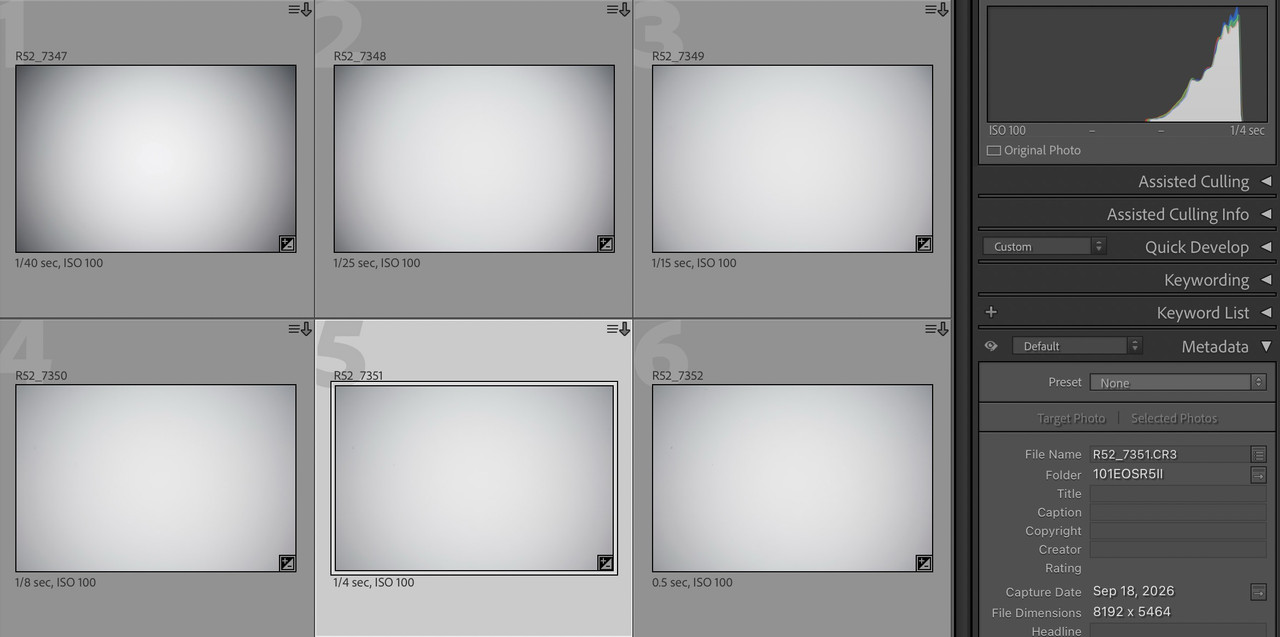
For example, this was the R5II with the VM 28/2 v2:
As you can see, it's very neutral.
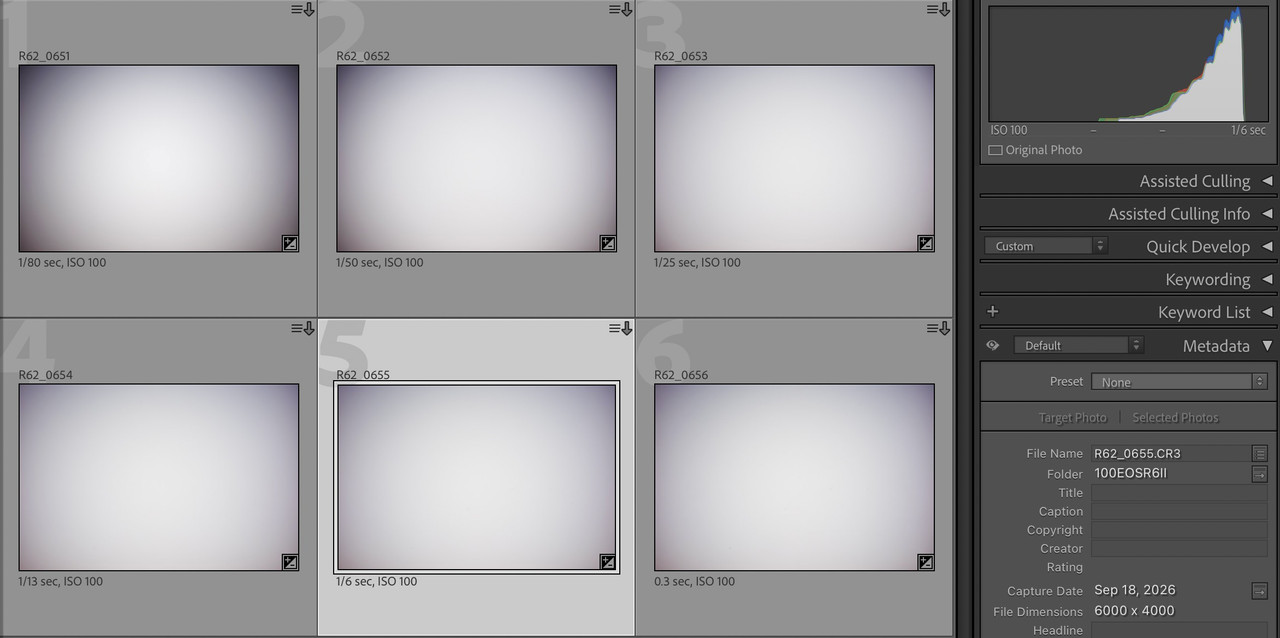
This was the same lens on the R6II:
Beside the colour shift, the R6II images also showed darker/stronger vignetting, suggesting that peripheral pixels did not receive as much light as those in the BSI R5II. This can be seen visually in the images and that the R6II histogram extends farther to the left.
I have not yet gotten around to checking my M-mount lenses on the R5II for peripheral image sharpness loss, which is directly related to cover glass thickness. But I did see some signs of it with the R6II. However, if you're mostly shooting stopped down, it will probably be minimal.
p.1 #3 · Leica Elmarit-M 28mm f/2.8 v4 (11809) on Canon R5 Mark II - any experience?
Thank you very much for the thorough explanation and the side-by-side test!
That clears up a lot about where edge colour shift actually comes from, and it's reassuring to see how neutral the R5 Mark II stays.
One follow-up question: do you happen to have the Elmarit-M 28mm f/2.8 v4 (11809) in your collection? I'm asking because its rear element sits at a different distance from the sensor than the Voigtländer's, so its behaviour on the R5 II might differ.
I almost feel confident enough to go for it and buy the lens, but this slight difference in distance still seems to hold me back.
p.1 #5 · Leica Elmarit-M 28mm f/2.8 v4 (11809) on Canon R5 Mark II - any experience?
I do have the Elmarit-R on my R5ii and I really like the results in terms of colour rendering and use of the manual focus/aperture way of shooting. The Elmarit-M would make the combination a few centimetres shorter and also lighter.