Artizlab 50mm f/1.4 Classic-M E43
p.2 #1Artizlab 50mm f/1.4 Classic-M E43
This won't be as popular because it doesn't have Mandler in the name......
Oct 01, 2026 at 09:47 AM
p.2 #2Artizlab 50mm f/1.4 Classic-M E43
I was so close to ordering the Mander 50mm as a general "beater" lens until I saw this... That this one also has close focusing makes the choice a bit harder...
Oct 01, 2026 at 01:51 PM
p.2 #3Artizlab 50mm f/1.4 Classic-M E43
damonnomonon wrote:
[...] My LLL version focuses to 1m. 😳
endergemini wrote:
It sure looks a lot like the Peace Lens I have. [...]
How do you like shooting with them, respectively? Are they glued to your cameras or are you finding something is left to be desired?
The fact that this new crop of "homage" lenses try to improve on old formulas but still retaining some classic character, in theory, would make them fun, do-everything lenses, but I wonder how that translates to everyday practical use.
Oct 01, 2026 at 02:08 PM
p.2 #4Artizlab 50mm f/1.4 Classic-M E43
cary.z wrote:
How do you like shooting with them, respectively? Are they glued to your cameras or are you finding something is left to be desired?
The fact that this new crop of "homage" lenses try to improve on old formulas but still retaining some classic character, in theory, would make them fun, do-everything lenses, but I wonder how that translates to everyday practical use.
If it weren’t brass it would be my daily carry. Being brass it’s too front heavy for me to comfortably hold. That’s my only negative.
damonnomonon wrote
[...] My LLL version focuses to 1m. 😳endergemini wrote
It sure looks a lot like the Peace Lens I have. [...]The fact that this new crop of "homage" lenses try to improve on old formulas but still retaining some classic character, in theory, would make them fun, do-everything lenses, but I wonder how that translates to everyday practical use.
If it weren’t brass it would be my daily carry. Being brass it’s too front heavy for me to comfortably hold. That’s my only negative.
Oct 02, 2026 at 03:34 AM
p.2 #5Artizlab 50mm f/1.4 Classic-M E43
cary.z wrote:
How do you like shooting with them, respectively? Are they glued to your cameras or are you finding something is left to be desired?
The fact that this new crop of "homage" lenses try to improve on old formulas but still retaining some classic character, in theory, would make them fun, do-everything lenses, but I wonder how that translates to everyday practical use.
I have the Peace Lens 50mm pre-asph v2 in aluminum and it's been my go to 50 since I bought it. I honestly really like it and the main reason I'm looking at other lens are due more to ergonomics than rendering. If the mandler doesn't perform as well it'll be used long enough to make a video and out the door.
damonnomonon wrote
[...] My LLL version focuses to 1m. 😳endergemini wrote
It sure looks a lot like the Peace Lens I have. [...]The fact that this new crop of "homage" lenses try to improve on old formulas but still retaining some classic character, in theory, would make them fun, do-everything lenses, but I wonder how that translates to everyday practical use.
I have the Peace Lens 50mm pre-asph v2 in aluminum and it's been my go to 50 since I bought it. I honestly really like it and the main reason I'm looking at other lens are due more to ergonomics than rendering. If the mandler doesn't perform as well it'll be used long enough to make a video and out the door.
Oct 02, 2026 at 08:25 PM
p.2 #6Artizlab 50mm f/1.4 Classic-M E43
The Mandler 50mm e46 focuses to .5 meters. The Artizlab .45. Both close focus.
cary.z wrote:
I was so close to ordering the Mander 50mm as a general "beater" lens until I saw this... That this one also has close focusing makes the choice a bit harder...
cary.z wrote:
I was so close to ordering the Mander 50mm as a general "beater" lens until I saw this... That this one also has close focusing makes the choice a bit harder...
Oct 04, 2026 at 09:34 AM
p.2 #7Artizlab 50mm f/1.4 Classic-M E43
I've just received the Artizlab E43 and compared with my Peace Lens E43. Unfortunately I don't have the ability to post comparison photos here.
The Artizlab is ever so slightly more gunmetal gray, rather than the classic light aluminium color of the Peace Lens. The Artizlab looks slightly better. The Peace Lens has a slight purple/blue lens coating, while the Artizlab is more clear.
The Artizlab feels more tightly and reassuringly constructed but both lenses have slight play in their apertures. The Artizlab has more definite clicks in the aperture, while the Peace Lens has a slightly abrasive/gritty feel to the aperture ring. The Artizlab feels much better.
Both focus smoothly, although the Peace Lens is smoother. Of course we can't compare them in this respect since the Peace Lens has been "worn in", and I expect the feel of the Artizlab to improve with time. The distance scale on the Artizlab closer than 0.7m is painted in grey.
The Artizlab focuses much closer (0.45 vs 0.7), and has a subtle tactile stop at 0.7m. It shouldn't bother mirrorless users, and is easily enough appreciated to work with Leica M.
The rendering superficially seems rather similar, but the Artizlab lacks the full bokeh outlining on the side of the bokeh ball closest to the edge of the frame.
Overall the Artizlab feels better built, looks nicer, and has the advantage of close focus while retaining the 0.7m tactile indicator, so I can also use it with confidence on both my film and digital Leica M bodies. I'll compare them both optically next, but can't provide photos.
Oct 29, 2026 at 06:21 AM
p.2 #8Artizlab 50mm f/1.4 Classic-M E43
cary.z wrote:
The fact that this new crop of "homage" lenses try to improve on old formulas but still retaining some classic character, in theory, would make them fun, do-everything lenses, but I wonder how that translates to everyday practical use.
Mandler’s 1962 design represents a near-perfect balance. Without adding extra elements or aspherical surfaces, any modification within the standard formula will break it.
Push for higher sharpness? You get a distinctly warmer tint.
Reduce chromatic aberration? You compromise on field curvature.
This is the exact trap today's replicas are falling into.
Oct 29, 2026 at 07:15 AM
p.2 #9Artizlab 50mm f/1.4 Classic-M E43
Mandler's design philosophy clearly incorporates rapid ongoing development. He would be delighted to see what the Chinese makers have achieved within his contribution, carrying on his legacy as they are. Leica held him back.
'There are only a few letters by Mandler in the Leica archives and the contents give the impression of a passionate man, who feels slightly frustrated by the slow progress made by Leitz and the fast improvements made by the Japanese.
He clearly saw that without fundamental changes Leica could not compete in the long run. But Leitz was in those days already living on borrowed money. His ELCAN designs were by nature less cost oriented and the knowledge gained here could be transferred to the photographic department.'
He pioneered CAD over 50 years ago, and pushed glass development hard, nothing was static:
'Mandler's chief contribution to the optical engineering was his pioneering works in application of computer aided design in optical engineering. Mandler employed sophisticated combinations of special glasses in his apochromatic and high-speed designs, and many of these glasses were original Leitz formulas manufactured by Schott or Corning.'
https://en.wikipedia.org/wiki/Walter_Mandler
Why Schott and Corning?
Ever the pioneer, Mandler had been pushing the in-house Leitz glass lab hard, and as the end of his tenure approached, finance was assuming ever greater prominence - Leitz eventually closed up the lab in 1989.
https://gmpphoto.blogspot.com/2021/11/the-leitz-leica-glass-research.html
The glass selections and processing methodologies cannot be replicated within the legal framework of the EU, which Leica abides by, along with almost all other makers. Everything progresses in manufacture and fabrication, tolerances and machinery, rendering it pure folly to restrict ANY 'vintage' lens to the narrow confines of replicas.
You either buy an original lens or something irrevocably rather different.
Adherence to the design philosophy is what matters, therefore. Pragmatism is the defining characteristic of Chinese design, and it's matched here by their love of high end cultural products. Were Mandler alive, the farmer's son would likely be a strong advocate for setting up the Leitz design facility in Shenzhen. He was a pragmatist too.
Oct 29, 2026 at 02:53 PM
p.2 #10Artizlab 50mm f/1.4 Classic-M E43
The appearance of Chinese lenses of serious quality is causing conniptions across the broad swathe of Leica-land. The pearl clutching and hand-wringing, by itself, provides strong testimony of the quality they present to the market.
Leaving aside the nastier side of it, at heart this phenomenon probably has to do with two things:
The realisation that one has to look very hard for serious flaws in these lenses, allied to the very unwelcome fact that Leica lenses themselves have serious flaws that can most certainly be improved upon. And these are too numerous to list here, but they include things like the failure of cementing in the much-loved pre-asph v3 Summilux, trashing the lens for the poor unfortunate who owns it.
We are progressing through the release phase of another new 'threat lens' in the Mandler thread right now, where the sleuths are working overtime. The trouble is the number of serious reviewers across the web absolutely love the lens and its fine images are plain for all to appreciate.
https://mandler.shop/blogs/photography-wall
The problem then worsens and morphs into overreach, where antagonists stretch credulity to the extreme. Many don't realise that for every writer here, there are thousands of readers who mull over the accuracy and value of their contributions, and weigh them against other commentary obtained elsewhere.
The second thing is money. Each person who is entirely satisfied with the new lenses is one less potential buyer of any source Leica lens, potentially causing rapid depreciation in its value. If your Leica lens led to this unwelcome outcome, of what value was that lens in the first place?
So a hastily cobbled together defence appears, as a sleight of hand: since the Leica lens is deemed paramount, a golden idol that is simply unapproachable, and is indeed the gold standard, we see comments like:
'it's 90% of the Leica lens'. Don't be fooled, it's a distraction to conscript more people into the cult. And it's the very antithesis of science; every lens must be assessed on its performance in a straight comparison. We don't (or shouldn't) revere any lens beyond its value as a tool.
Oct 29, 2026 at 03:25 PM
|
p.2 #12Artizlab 50mm f/1.4 Classic-M E43
p2#8 has some claims regarding lens design, presumably with reference to the Chinese optics. Let's look at them.
'Push for higher sharpness? You get a distinctly warmer tint.'
No, higher sharpness is not a cause of a warmer tint in photographic lenses. Optical sharpness and color tint are caused by two entirely separate and independent physical properties of a lens. While a lens can be both sharp and warm, one characteristic does not cause the other.
Optical sharpness is determined by a lens's ability to resolve fine detail and maintain contrast. This relies on the precision of the glass grinding, the optical formula (the shapes and arrangement of the glass elements), and the correction of geometric and chromatic aberrations.
What causes color tint (warmth or coolness): Color rendition is primarily determined by chemical lens coatings and the specific chemical composition of the optical glass formulations (such as high-refractive index or extra-low dispersion glass).
Even though there is no causal link, photographers sometimes associate the two. Brand Bias and Character: Historically, certain manufacturers engineered lenses with specific "looks." For example, vintage Leica or Minolta lenses are often famous for having a beautifully warm, organic color palette.
'Reduce chromatic aberration? You compromise on field curvature.'
Optical engineering rarely leaves a blatant defect unresolved; instead, designers use specific strategies to balance or mitigate this compromise:
Adding Elements (Complexity): Highly corrected lenses often require a large number of elements. Some of these elements are dedicated entirely to color correction, while a separate group near the rear of the lens (a field flattener) is added specifically to counteract the resulting field curvature.
Aspherical Surfaces: Using aspherical elements allows a single lens surface to correct multiple geometric aberrations simultaneously, freeing up other elements to focus on chromatic correction.
Specialized Materials: Utilizing expensive materials like anomalous partial dispersion glass or fluorite crystals allows designers to correct secondary chromatic aberration (secondary spectrum) without requiring the extreme element geometries that ruin field flatness.
This all leaves aside the common fact that designers actively aim for such aberrational effects. If only the world was a more simple place. It's a concern that complex matters are so often reduced to one liners in online forums. Such is life, however.
Oct 29, 2026 at 03:39 PM
p.2 #13Artizlab 50mm f/1.4 Classic-M E43
philip_pj wrote:
p2#8 has some claims regarding lens design, presumably with reference to the Chinese optics. Let's look at them.
'Push for higher sharpness? You get a distinctly warmer tint.'
No, higher sharpness is not a cause of a warmer tint in photographic lenses. Optical sharpness and color tint are caused by two entirely separate and independent physical properties of a lens. While a lens can be both sharp and warm, one characteristic does not cause the other.
If you have experience in optical analysis, you'll know these trade-offs are real and directly connected.
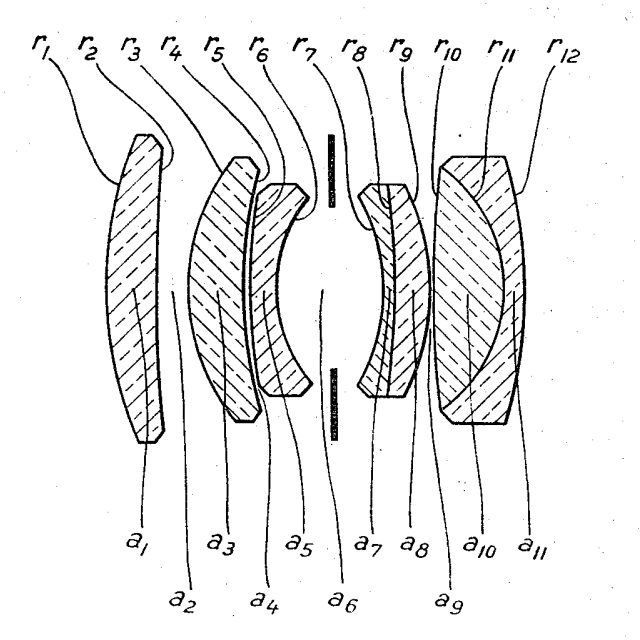
p2#8 has some claims regarding lens design, presumably with reference to the Chinese optics. Let's look at them.
'Push for higher sharpness? You get a distinctly warmer tint.'
No, higher sharpness is not a cause of a warmer tint in photographic lenses. Optical sharpness and color tint are caused by two entirely separate and independent physical properties of a lens. While a lens can be both sharp and warm, one characteristic does not cause the other.
If you have experience in optical analysis, you'll know these trade-offs are real and directly connected.
Oct 30, 2026 at 06:00 AM
p.2 #14Artizlab 50mm f/1.4 Classic-M E43
Available November 16 for $399:
https://www.instagram.com/artizlab_official/p/DfiNpniI7gD/
Their website is ready too:
https://myfunleader.com/products/artizlab-classic-m-50mm-f1-4
https://www.instagram.com/artizlab_official/p/DfiNpniI7gD/
Their website is ready too:
https://myfunleader.com/products/artizlab-classic-m-50mm-f1-4
Nov 09, 2026 at 06:52 PM
p.2 #15Artizlab 50mm f/1.4 Classic-M E43
Whichever (between this and Mandler) I can find first, locally, I will probably get. Both look great.
Nov 09, 2026 at 07:06 PM
p.2 #16Artizlab 50mm f/1.4 Classic-M E43
The hood on this is atrocious. I’m assuming there are alternatives.
Nov 09, 2026 at 11:47 PM
p.2 #17Artizlab 50mm f/1.4 Classic-M E43
RomanMF wrote:
The hood on this is atrocious. I’m assuming there are alternatives.
I believe the hood is a replica of the original E43 Summilux one. It's the same style as the one that comes with the Peace Lens as well. I do believe there was a second alternate version for the E43 and I think squarehood style ones as well.
Nov 10, 2026 at 06:37 AM
p.2 #18Artizlab 50mm f/1.4 Classic-M E43
Oh nice, I saw these popping up on aliexpress hours before their announcement and thought I was going crazy. Excited to see some test results 😎
Nov 10, 2026 at 10:56 AM
p.2 #19Artizlab 50mm f/1.4 Classic-M E43
RomanMF wrote:
The hood on this is atrocious. I’m assuming there are alternatives.
Haven't copped yet cause I was waiting on the Mandler to drop but this one is available. Saw some similar ones on ebay, but I won't front, the way it doesn't look smooth does irk me a little. I can look at it and see it doesn't line up properly lol.
https://shop.tahusa.co/products/square-lens-hood-for-leica-summilux-50mm-e43-black-aluminum
Nov 10, 2026 at 11:08 AM
p.2 #20Artizlab 50mm f/1.4 Classic-M E43
This lens is $340 on aliexpress with rush shipping (next week) and no tax for US
Nov 11, 2026 at 05:56 AM