Pentax or Mamiya 645 to adapt to GFX; what about Mamiya RB67 lenses?
p.1 #1Pentax or Mamiya 645 to adapt to GFX; what about Mamiya RB67 lenses?
I currently use my GFX100s mostly for 1x1 and panoramic shots and mostly with the 35-70mm lens. I also have the Fuji 50mm and the 63mm.
Bought the Canon EF 70-200mm f/2.8 III before I left the US to use both as a long lens on the GFX and on my Canon R5. Thing is I use the R5 mostly for model shoots with just the RF 50mm f/1.2 and I've only used the 70-200mm with the Fuji on one trip. (I generally take my MFT gear and the Fuji on landscape-oriented trips and the Canon gear stays home).
So, I'm thinking of selling the Canon lens and using a longish (200mm and up) Mamiya or Pentax 645 with the GFX. I don't want to buy too many adapters, so I'm curious which brand offers the more interesting longer lenses, Pentax or Mamiya? And what are the greatest lenses, both for landscape and portraits within those brands?
I also have the vaunted 127mm f/3.8 lens for the Mamiya RB67 that I want to try on my Fuji, but I understand it can be a bit of a hassle adapting those lenses. Anyone with experience?
Thanks.
Sep 02, 2026 at 11:19 AM
p.1 #2Pentax or Mamiya 645 to adapt to GFX; what about Mamiya RB67 lenses?
I don't have experience adapting the Mamiya RB67. But I do routinely use the Contax 645 140/2.8 with a Fringer and love that lens. Also have the Mutar 1.4X for it and the 210/4 which is also a great lens. But these are auto focus lenses and like most AF lenses, they aren't that much fun to manual focus (with exception of the MF Contax 120/4 macro which is a MF dream to use).
Sep 02, 2026 at 11:42 AM
p.1 #3Pentax or Mamiya 645 to adapt to GFX; what about Mamiya RB67 lenses?
Fringer sells a P645-GFX AF adapter that works pretty well, so if AF matters, that might be a consideration.
Pentax has a decent and fairly small/light 150-300 5.6, a rather large 400mm 5.6 that AF, and a very good AF 150mm 2.8. The MF 150mm 3.5 is small and sharp as well. Generally, the P645 AF and MF 200mm f/4 aren't terribly well regarded.
Pentax has a decent and fairly small/light 150-300 5.6, a rather large 400mm 5.6 that AF, and a very good AF 150mm 2.8. The MF 150mm 3.5 is small and sharp as well. Generally, the P645 AF and MF 200mm f/4 aren't terribly well regarded.
Sep 02, 2026 at 01:41 PM
p.1 #4Pentax or Mamiya 645 to adapt to GFX; what about Mamiya RB67 lenses?
I have the Mamiya 210/4 for the 645 system and it's a very nice lens. However, since I also have the GF 100-200 I never use the Mamiya. I do use the Mamiya 150/3.5 though that is much smaller, but not as good. The 210 is awkwardly long with the adapter and quite front heavy. But it's a dirt cheap lens, so I still recommend it.
There is also a 300/5.6 that is nice and not much larger IIRC. Also dirt cheap. Both that and the 210 have veeeery long MFD. I suppose that is common with old telephoto lenses with unit focusing.
From what I've seen, Pentax 645 lenses might perform slightly "better", but they also often give a lot of lateral CA while the Mamiyas don't.
Sep 02, 2026 at 01:46 PM
p.1 #5Pentax or Mamiya 645 to adapt to GFX; what about Mamiya RB67 lenses?
No experience with any of these on digital, but one thing to note is you can also use Pentax 67 lenses on Pentax 645 mount with an additional adapter.
Sep 02, 2026 at 05:04 PM
|
p.1 #6Pentax or Mamiya 645 to adapt to GFX; what about Mamiya RB67 lenses?
So, I dug out the old Mamiya 210/4 for fun. It's smaller than I remembered!
Optically it's a mixed bag: Very low contrast, quite a bit of purple fringing wide open, but at the same time phenomenal bokeh. And that at every distance! Resolution is good but there is no real "bite".
You'll have to ignore that the first one has some motion blur since it was shot hand-held at waaaay to slow shutter speed. But it shows the remarkable bokeh.
Edit: Also, MFD is 2.5 meters!
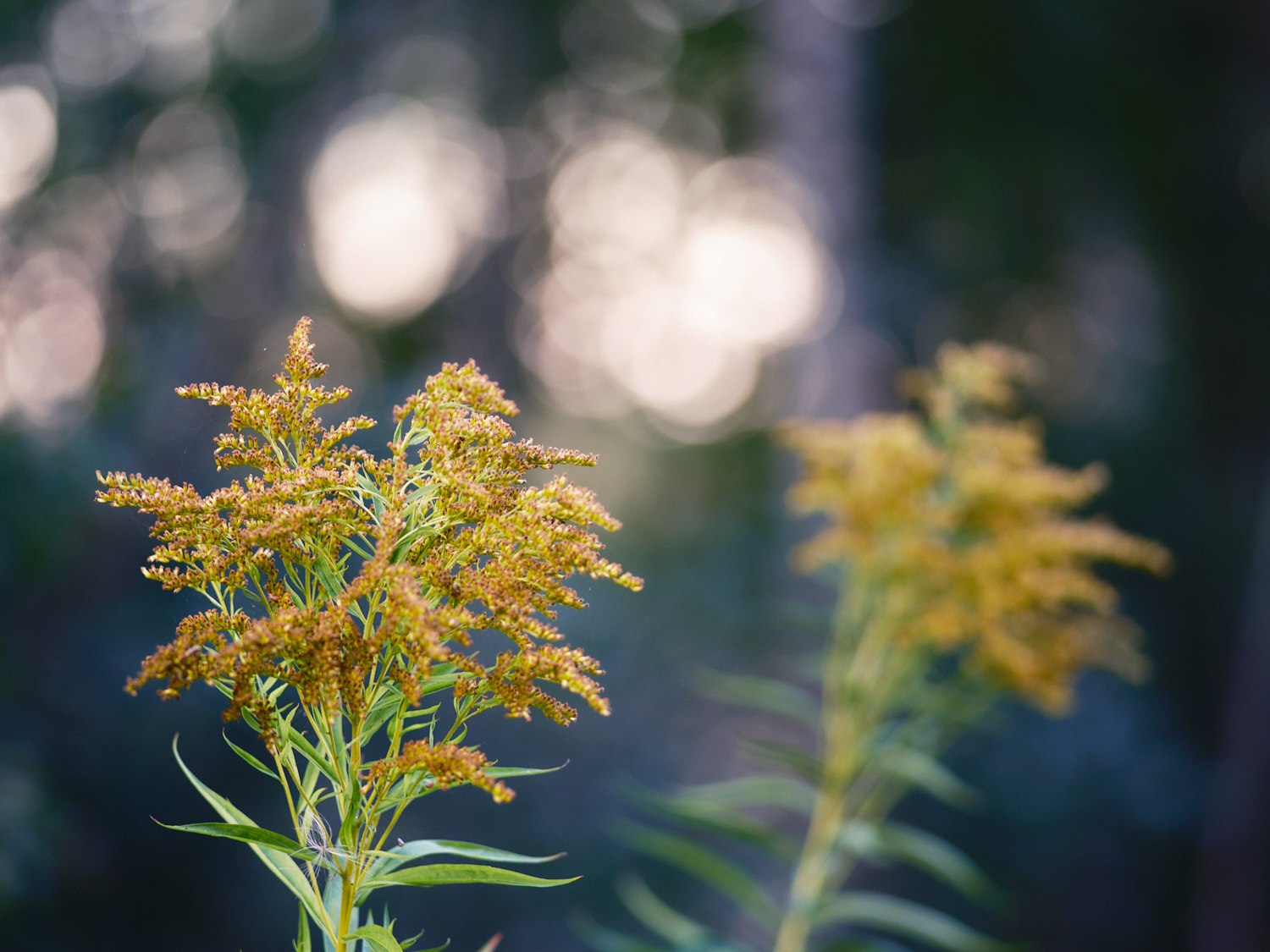
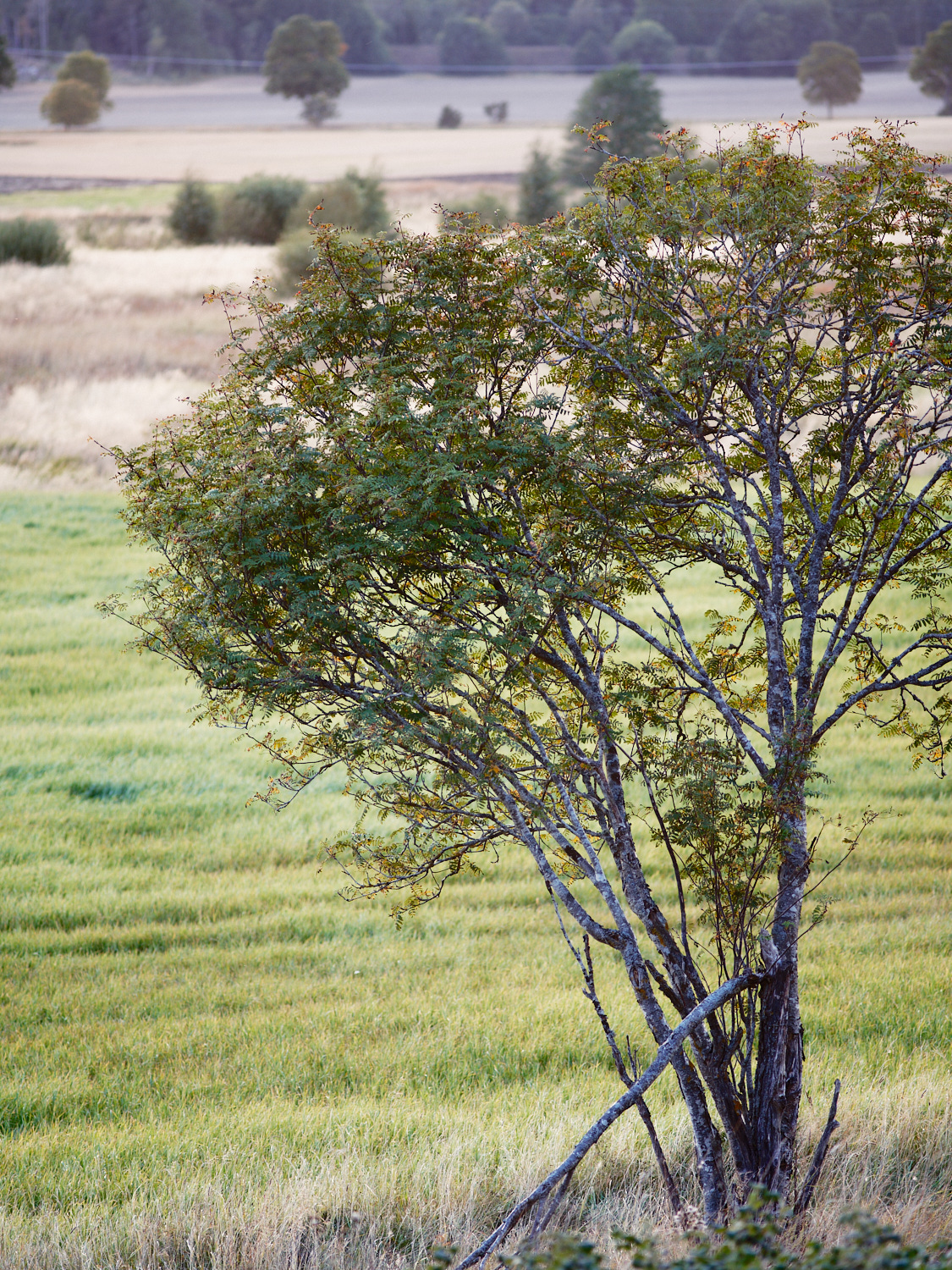
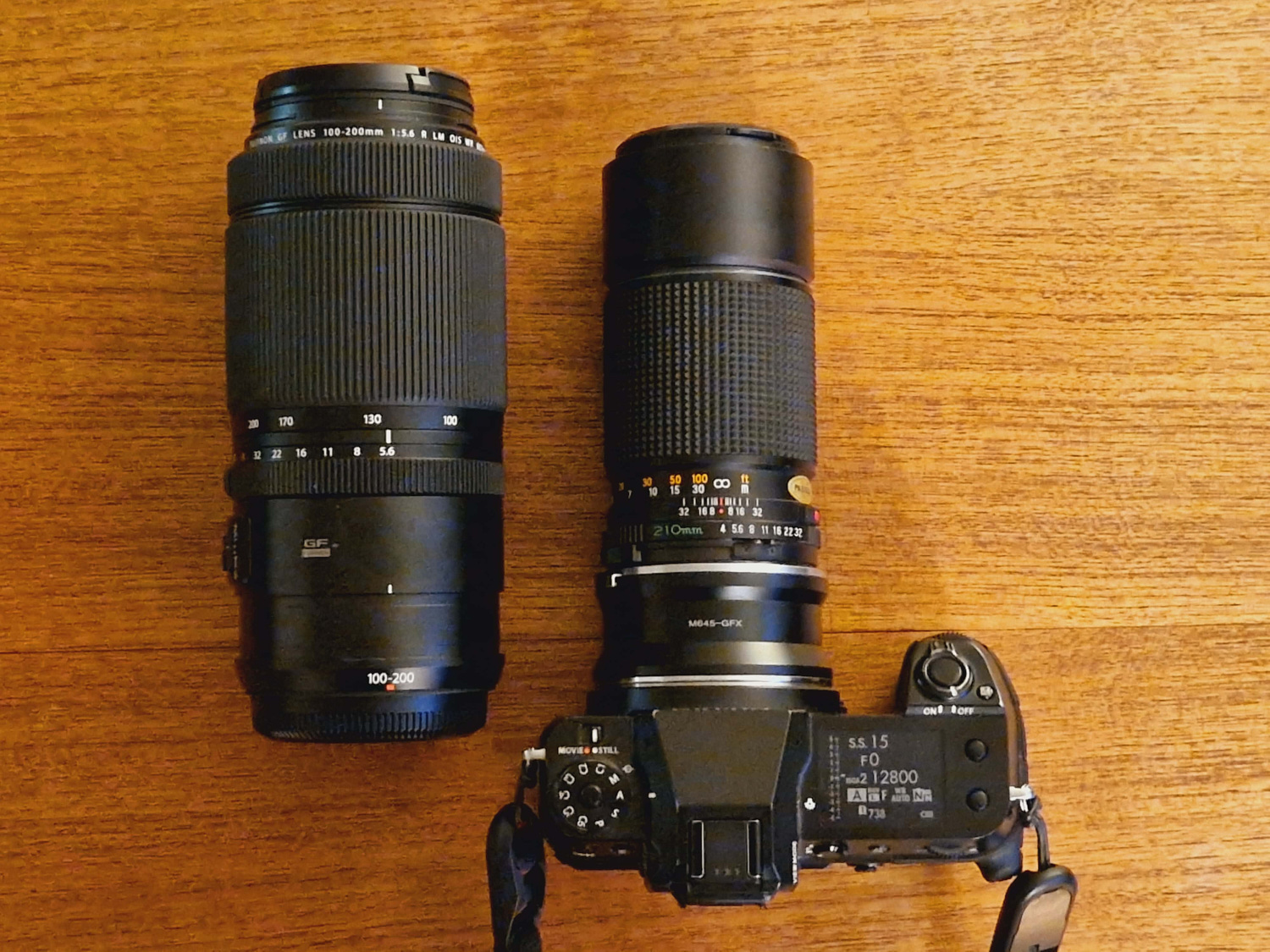
Optically it's a mixed bag: Very low contrast, quite a bit of purple fringing wide open, but at the same time phenomenal bokeh. And that at every distance! Resolution is good but there is no real "bite".
You'll have to ignore that the first one has some motion blur since it was shot hand-held at waaaay to slow shutter speed. But it shows the remarkable bokeh.
Edit: Also, MFD is 2.5 meters!
GFX50S II Mamiya 210/4 lens 210mm f/1.0 1/8s 500 ISO 0.0 EV
GFX50S II Mamiya 210/4 lens 210mm f/1.0 1/15s 500 ISO +0.3 EV
Sep 04, 2026 at 01:17 PM
p.1 #7Pentax or Mamiya 645 to adapt to GFX; what about Mamiya RB67 lenses?
I have a bunch of Pentax 645 lenses. I would rate the FA 80-160mm F4.5, the FA 100-300 f5.6 and the FA 200mm F4 as being all very good, but I doubt they are as good as native Fuji GFX lenses if you are into pixel peeping.
The FA 200mm f4 makes for a fairly small set up. The other two lenses are quite large, but consistent with the overall size of the GFX system.
The FA 75mm f2.8 is quite good too but benefits from stopping down a stop or two at which point it's not faster nor smaller with adapter than the Fuji 35-70mm.
The Fringer 645 AF adapter works well enough for static shots, but forget it for tracking anything. AF is like the first generation screw drive AF systems from the late 80s - noisey and not very fast, but fairly accurate.
Sep 04, 2026 at 04:52 PM
p.1 #8Pentax or Mamiya 645 to adapt to GFX; what about Mamiya RB67 lenses?
 GFX 50sii, Pentax 645 FA 150-300 f5.6 by Geoff F, on Flickr
Shot with the FA 645 150-300mm f5.6.
Sep 04, 2026 at 05:04 PM
p.1 #9Pentax or Mamiya 645 to adapt to GFX; what about Mamiya RB67 lenses?
Geoff D F wrote:
Shot with the FA 645 150-300mm f5.6.
That's beautiful. Have you tried that lens with a Fringer AF adapter?
Shot with the FA 645 150-300mm f5.6.
That's beautiful. Have you tried that lens with a Fringer AF adapter?
Sep 05, 2026 at 12:58 PM
p.1 #10Pentax or Mamiya 645 to adapt to GFX; what about Mamiya RB67 lenses?
SGinNorcal wrote:
That's beautiful. Have you tried that lens with a Fringer AF adapter?
Thanks. Yes it was shot with the Fringer AF adapter. It works well for static subjects.
Geoff D F wrote
Shot with the FA 645 150-300mm f5.6.Thanks. Yes it was shot with the Fringer AF adapter. It works well for static subjects.
Sep 06, 2026 at 03:05 PM