fredmiranda.com
Login

Moderated by: Fred Miranda
  

FM Forums | Post-processing & Printing | Join Upload & Sell


Browser-based RAW editing — how important is the editing experience vs. ...


MattzDev
Online

Upload & Sell: Off
p.1 #1 · Browser-based RAW editing — how important is the editing experience vs. the RAW engine?


I've been experimenting with a browser-based RAW workflow and I'd love to get some opinions from photographers here.

One thing I've been thinking about is how much of the editing experience people actually care about versus the RAW processing/rendering itself.

For example:

color rendering
highlight recovery
shadow detail
white balance
responsiveness
local adjustments
export quality

I've been building a small browser-based RAW editor while exploring these questions.

If anyone is interested in testing the current version and giving me some brutally honest feedback, I'd appreciate it.

https://rawnd.app

Especially interested in hearing from people who have used Lightroom, Capture One, DxO, etc. and can tell me where a browser workflow still falls short.

Thanks!


Aug 23, 2026 at 06:26 PM
ruthenium
Online
• • • •
Upload & Sell: On
p.1 #2 · Browser-based RAW editing — how important is the editing experience vs. the RAW engine?


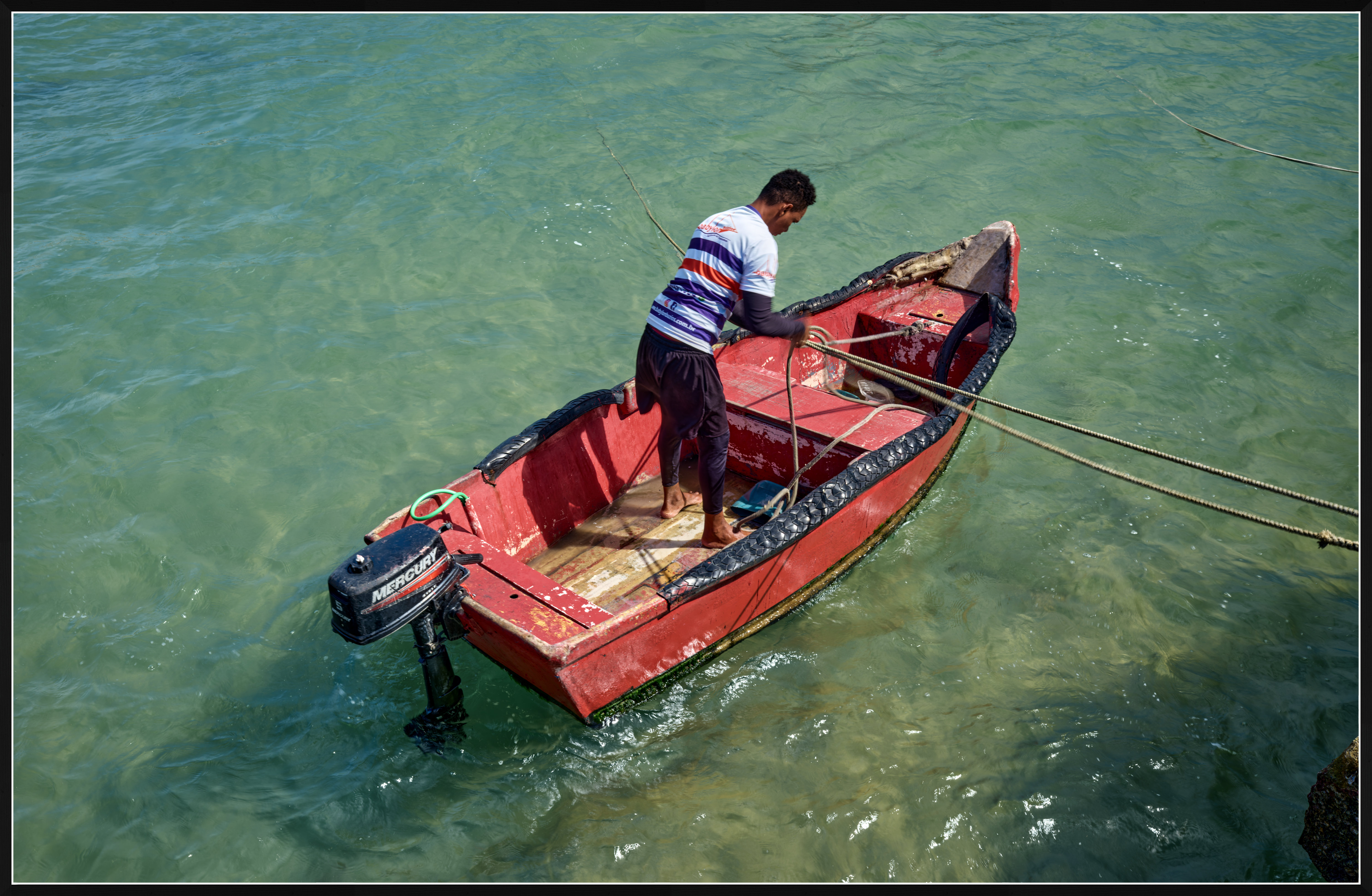
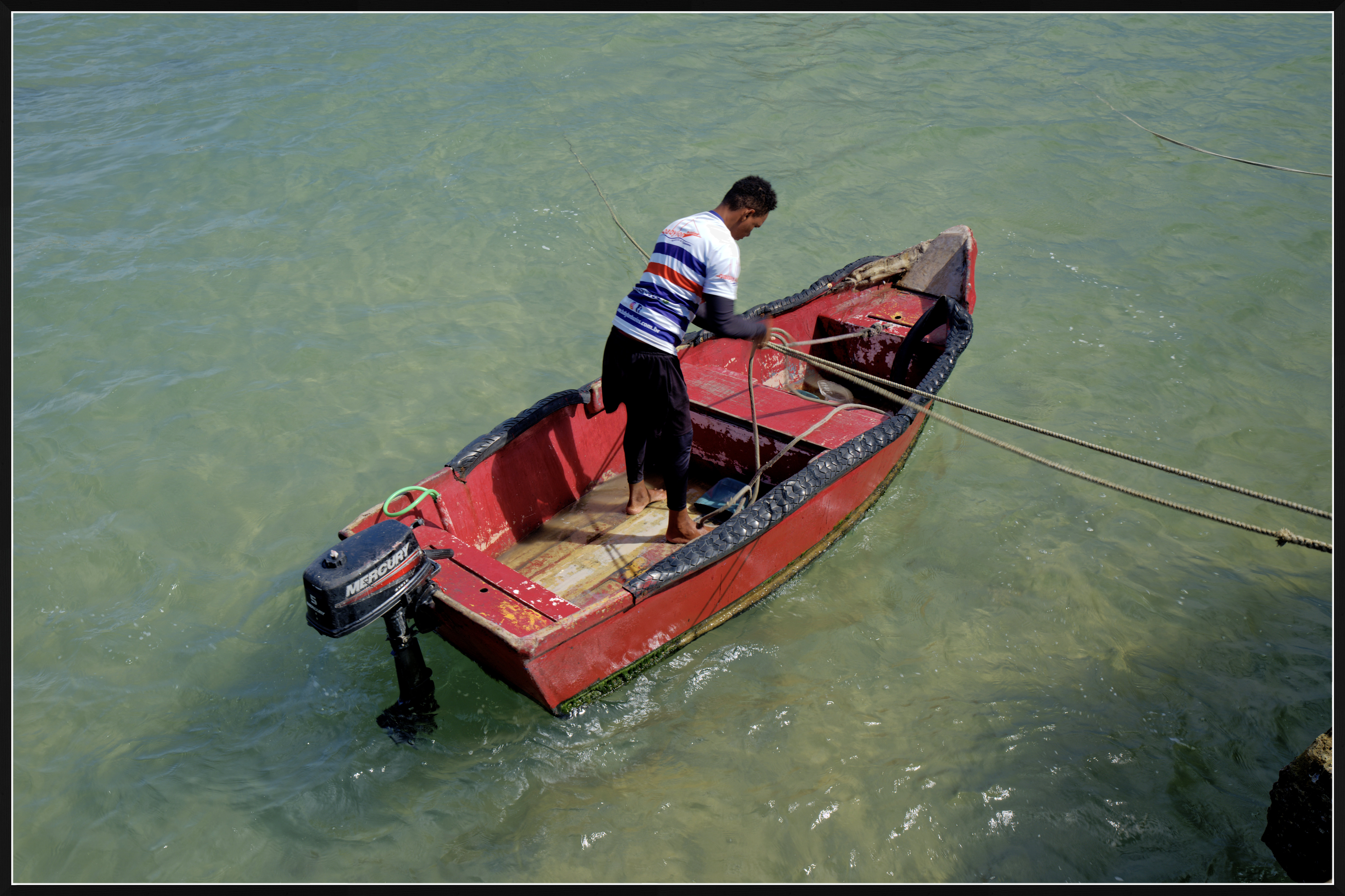
Attached are two jpegs: first from Capture One and the second from your Rawnd.

One difference that I experienced was that light adjustments (White, Black, etc.) in Rawnd were less selective than those in Capture One. For example, Black in Capture One applies very narrowly to the blackest blacks and doesn't touch the Shadows. The same can be said about White, that doesn't affect the Highlights (and the Highlights don't change the Midtones).
Such highly selective nature of the adjustments in Capture One allows adjusting exposure often without masking.

In Rawnd, lifting the Black tones affected the overall contrast. I could not lift the black tones in Rawnd (you can see this if you compare the two jpegs). In general, the adjustments felt more "crude", less selective.

A minor point: can you make double-clicking on a slider reset this slider?

Is the Curve tool RGB or Luma?

It seems that all EXIF information is lost on export from Rawnd. Also it seems that there is no choice of a color space. I believe the exported jpeg is sRGB.

What makes you think that processing in a browser should be more convenient than in an app? I mean, why wouldn't you develop an app?


  GFX100S II    GF20-35mmF4 R WR lens    35mm    f/10.0    1/28s    80 ISO    0.0 EV  


Aug 23, 2026 at 07:18 PM
MattzDev
Online

Upload & Sell: Off
p.1 #3 · Browser-based RAW editing — how important is the editing experience vs. the RAW engine?


Hi ruthenium,

Thank you — this is the most useful feedback i've had. You've found something real, and you've diagnosed it correctly, so let me answer precisely rather than reassuringly.

Tone selectivity — you're right, and here is exactly why

Blacks and Whites in Rawnd are not selective at all today. They're a levels-style remap: Blacks subtracts a black point in linear light, Whites divides by a white point, and the whole scale is renormalised between the two. No tonal mask is involved, so by construction the adjustment rescales the entire tonal range. That is precisely the global contrast shift you saw. In Capture One, Black is a narrow, feathered adjustment that tapers to nothing before it reaches the Shadows. Ours has no taper at all.

Highlights and Shadows do have masks, but they're far too wide: each ramps from middle grey out to its own end of the scale. Shadows covers everything below middle grey, Highlights everything above — half the picture each, meeting in the middle. Hence "crude". C1's are much tighter.

The specific thing you noticed — not being able to lift the blacks — has a second cause stacked on top. Rawnd applies a base curve measured from the camera's own rendering, and that curve has a toe that darkens the bottom fifth of the range. So you lift the black point in linear light, and then the toe puts most of it back. The control is fighting the curve underneath it.

What we're changing: give Blacks and Whites their own narrow, tapered masks confined to the ends of the scale, so Blacks stops before the Shadows and Whites before the Highlights; and narrow the Highlights/Shadows ramps so they fall to zero before reaching the midtones. Being able to grade exposure without reaching for a mask is the entire point of those controls, and today ours don't earn it. This is at the top of the list.

Double-clicking a slider to reset

Fair. Double-click already resets — but only on the slider's label, which isn't discoverable. (The label is also a scrub handle, by the way: drag it left/right for much finer control than the track gives you, Shift for 5× finer.) Extending double-click to the track and the handle is a small change and we'll do it.

Is the Curve RGB or Luma?

RGB. One composite curve, applied to R, G and B through the same lookup table, in display-referred space after the base curve and contrast. So it behaves like Photoshop's composite RGB curve: an S-curve raises saturation along with contrast. There's no Luma mode and no per-channel R/G/B curves yet. Both are planned — Luma especially, since it's the one you want when shaping contrast without touching colour.

EXIF and colour space

Both correct, and both worth being blunt about.

EXIF: Rawnd reads it — camera, lens, shutter, aperture, ISO, focal length, exposure compensation, capture date, orientation; it's in the info bar. But the export path encodes through the browser's canvas encoder, which writes pixels and nothing else. The metadata is in hand, we simply don't write it back into the file. That's a bug, not a decision, and a fixable one.

Colour space: exported JPEGs are sRGB — the pipeline converts camera-native to linear sRGB through the camera matrix and encodes sRGB at the end. Slightly worse than you assumed, though: the file is untagged sRGB, with no ICC profile embedded, so a colour-managed application has to guess. Embedding the sRGB profile is the immediate fix. Offering Display P3 and Adobe RGB is the real one, and it requires carrying a working space through to the encoder instead of hardcoding sRGB.

Why a browser rather than an app?

The honest answer is that we built the app first. Rawnd started as a Rust desktop application (Tauri). When we looked at what the native shell was actually contributing, the answer was: a window. The RAW decoder, the render engine, the shaders, the whole UI already ran inside a webview. Fifty-nine of sixty-two source files moved to the browser build unchanged. We weren't trading native performance for convenience — the "native" app was a web app in a costume.

What that buys:

Nothing is uploaded, ever. The decoder is a WebAssembly module running inside your page; your edits live in local browser storage. There is no server that sees your files. People assume the opposite, so it's worth saying plainly.
No installer, no update cycle, no per-platform builds. You open a URL and you're editing.
It still installs as an app if you want one. Rawnd is a PWA: install it and it runs fully offline, registers itself for fifteen RAW extensions, and double-clicking a .NEF opens it. Same icon in your dock, no app store.
What we give up, and I'd rather tell you than let you find it: we reach the GPU through WebGL2 rather than Metal or CUDA; a browser tab has a memory ceiling a native process doesn't; and we have no access to your display profile — which is the same limitation sitting behind the sRGB-only export. For very large batches, a native app still wins.

For the work Rawnd is actually for — getting through a shoot, culling, grading — the browser costs nothing that matters and removes a lot of friction. And if we ever hit a wall where it does matter, the engine is portable. It ran in a native shell once already.

Thank you again, genuinely. Comparing two JPEGs and locating the difference in where the adjustments act is a far more useful report than "it looks worse". If you're willing, I'd like to send you a build once the tone controls are reworked, and hear whether it holds up against C1 on your own files.

Best,
Matthieu


Aug 24, 2026 at 05:54 AM
ruthenium
Online
• • • •
Upload & Sell: On
p.1 #4 · Browser-based RAW editing — how important is the editing experience vs. the RAW engine?


Matthieu, thank you for the detailed response. I should add to my previous comments that I looked at Rawnd only briefly and superficially by moving the sliders to get a sense of what corrections are available and what they do. I haven't tried denoising, masking, and it seems there's a full auto correction option that I haven't tested - all my adjustments were manual.
The way how the tonal adjustments (Black, White, etc) work in Rawnd closely reminded me the corresponding adjustments in DxO Photolab - a very nice app in many ways, yet with this one major flaw that made me adopt Capture One for most of my processing from raw. The tonal adjustments in Capture One are superb by being surgically precise.

One positive thing about my experience with Rawnd that I should have mentioned: the responsiveness was very good on the large 102MP raw file - everything I tried worked without delay - at least it felt that way.

I did have a slight uncomfortable feeling about allowing access to the raw file on my computer. There are increasingly sophisticated ways of criminal ciberactivity. I am afraid that today the cyber criminals are ahead of most people and the only way to avoid trouble is by not allowing any external access to files and folders. Using Rawnd made me feel somewhat vulnerable (perhaps for no good reason, but this feeling is subconscious). Your professional response was reassuring - you need to gain trust to be successful.

One last suggestion: Capture One has a very useful tool - Levels. It is particularly useful in the Auto mode when Capture One auto adjusts the Black and White levels (and sets the Midtones). This is an easy way to correct flat images where the tonal range is not wide enough. I regularly use Auto Levels in Capture One and think of this as an essential basic adjustment.
And the last thought- you are effectively competing with established successful software products from Adobe, Capture One, DxO, and several others. You may find this challenging reaching the sophistication level of the apps they offer (at least in short-term). Thus, you may want to differentiate your product somehow. There must be something about Rawnd to make it a compelling option, otherwise few photographers would use it.
Dmitri


Aug 24, 2026 at 07:20 AM


Search in Used Dept. 

MattzDev
Online

Upload & Sell: Off
p.1 #5 · Browser-based RAW editing — how important is the editing experience vs. the RAW engine?


Hi Dmitri,

Thank you — and the caveat changes nothing. Moving the sliders is what everyone does first.

The tonal adjustments. You were right, and the measurement was worse than the impression. Blacks and Whites weren't a weak version of Capture One's — they were a levels remap, an affine transform of the whole scale, so they couldn't be selective even in principle. Whites at −50 moved the midtone by 14.4 display points and white itself by 13.4. An exposure slider under another name.

All four are now confined to their own zones, and your three sentences are three tests in our suite. Happy to send you a build.

Levels. You've put your finger on the missing half. Capture One separates the global job (Levels) from the selective one (the HDR panel), and that separation is why its adjustments can be surgical. We had the two conflated in the worst way; fixing it gave us the selective half and left nothing doing the global one. Levels with Auto is next — and the auto-correct button you haven't tried belongs on it.

Speed. Thank you, 102 MP is the test that counts. Decoding is WebAssembly in the page, rendering is on your GPU. Nothing crosses a network.

File access. That instinct is right and you shouldn't take my word for it. Rawnd installs and runs fully offline: disconnect from the internet and keep working — open a RAW, develop it, export a JPEG. If anything were leaving your machine, that couldn't work. And the browser only grants what you picked, for that session. There's no filesystem to roam.

Differentiation. We won't out-render Capture One and shouldn't try. The bet is complementary: cull and pre-develop in the browser on any machine, export XMP, finish in C1. Trying costs a link and leaving costs nothing — the opposite of everything else on that list.

Thanks again. Second time your feedback has moved something real.

Matthieu


Aug 24, 2026 at 07:51 AM
RoamingScott
Online
• • • • • •
Upload & Sell: Off
p.1 #6 · Browser-based RAW editing — how important is the editing experience vs. the RAW engine?


Holy AI.


Aug 24, 2026 at 09:08 AM
MattzDev
Online

Upload & Sell: Off
p.1 #7 · Browser-based RAW editing — how important is the editing experience vs. the RAW engine?


I'm a developer and I've been passionate about photography for years. I got tired of Lightroom, so I decided to build my own app.

And yes, of course I used AI to help me build it. 😄

AI is incredibly powerful when you actually know what you're doing. I'm a professional developer in my day job, so I know how to build software and what I'm asking the AI to do.

Without AI, honestly, I probably wouldn't have had the time or the budget to build this on my own — especially with all the development, RAW support, and photography metadata involved.

So yes, I use AI to work faster. But that's exactly what I do for a living. 😉


Aug 24, 2026 at 09:15 AM


FM Forums | Post-processing & Printing | Join Upload & Sell


Welcome back
Log in to your account