Fred Miranda wrote:
I don't own the Elmar, but with only four elements and being a much older design, I don't think it will perform as well as this lens. I may be able to test it at some point, but I can't promise it'll happen soon.
Something worth considering: the Voigtlander's native magnification (without any adapter) is almost 0.3x, while the Leica Elmar's native magnification is only 0.15x. With the Macro Adapter at its longest extension, the Elmar's magnification jumps to 0.5x, a gain of about 0.35x.
Since both lenses share the same 90mm focal length, that same physical extension should add roughly the same gain in magnification to the Voigtlander as well. If that holds true, the Voigtlander mounted on the same Macro Adapter should land somewhere around 0.63x, well beyond the Elmar's 0.5x. We don't know this for sure since it hasn't been tested yet, but the math suggests the Voigtlander could end up considerably ahead of the Leica when using the same adapter....Show more →
The lens is relatively cheap as lenses go, if it does the macro job well with Leica adapter I already have that clinches the deal for me, it gives me a 90 macro....... that has possible uses.
EMH2025 wrote:
The lens is relatively cheap as lenses go, if it does the macro job well with Leica adapter I already have that clinches the deal for me, it gives me a 90 macro....... that has possible uses.
It's cheaper than the Leica macro adapter and most of your other lenses, so what do you have to lose?
Here's the Google Drive link from Juha when he tried the lens at CP+ (I happen to have this link handy and it's easier to share directly than finding Juha's original post with the link).
rscheffler wrote:
It's cheaper than the Leica macro adapter and most of your other lenses, so what do you have to lose?
Here's the Google Drive link from Juha when he tried the lens at CP+ (I happen to have this link handy and it's easier to share directly than finding Juha's original post with the link).
how true ! I'll just give it a try, as someone who does much more outdoors a very light macro is something of use to me, flowers, bugs, all sorts of things become possible,
Plzenaak wrote:
Diffraction sets in quickly. I'll wait to see what the price is here. My enthusiasm has faded a little.
Visible diffraction always starts around f8 to f11 on any lens.
Of course, if a lens starts at f1.4 - there are 5 stops before you get to f8,
if you start at f4 there are only two stops before you reach f8.
But this does not make the f4 lens inferior in the range between f4 and f8.
Plzenaak wrote:
Diffraction sets in quickly. I'll wait to see what the price is here. My enthusiasm has faded a little.
Diffraction is simply a consequence of the physics of light passing through an aperture rather than a characteristic of the lens itself. Every lens show diffraction, and it increases gradually as you stop down the aperture. We tend to notice it more with high MP sensors and with lenses that are exceptionally sharp (like this APO lens) at their optimal apertures because there are fewer optical aberrations to mask its effects. In other words, you can't really blame the lens for making diffraction visible...it's an unavoidable trade-off that applies to every lens.
For instance, if we eventually have a 300MP full frame sensor, diffraction will become noticeable at even wider apertures, such as f/4 or f/5.6. The diffraction was always there. The higher resolution sensor simply has enough resolving power to reveal it sooner. In other words, neither the sensor nor the lens is creating more diffraction. The higher resolution sensor is simply revealing an existing physical limit that was always there.
Another way to look at it is that when I shoot this lens with my M10-P (24MP), I don't see much difference between f/5.6 and f/8. On a higher resolution sensor, that subtle difference becomes easier to detect.
I was expecting a very flat field curvature shape for the Voigtlander 90mm f/4 APO-Lanthar, and the lens delivers on that. There's a very slight outward curvature at close distance and inward curvature at infinity, though it's small enough to be barely significant. That said, it's likely the reason the lens benefits slightly from stopping down to f/5.6, even though the resolution and contrast gains are minor.
All in all, this is a pretty flat field curvature, exactly what we'd expect from a 90mm APO lens with quasi-macro capabilities.
This sequence, a GIF animation made from several frames, shows how the field curvature shape evolves from minimum focusing distance to infinity.
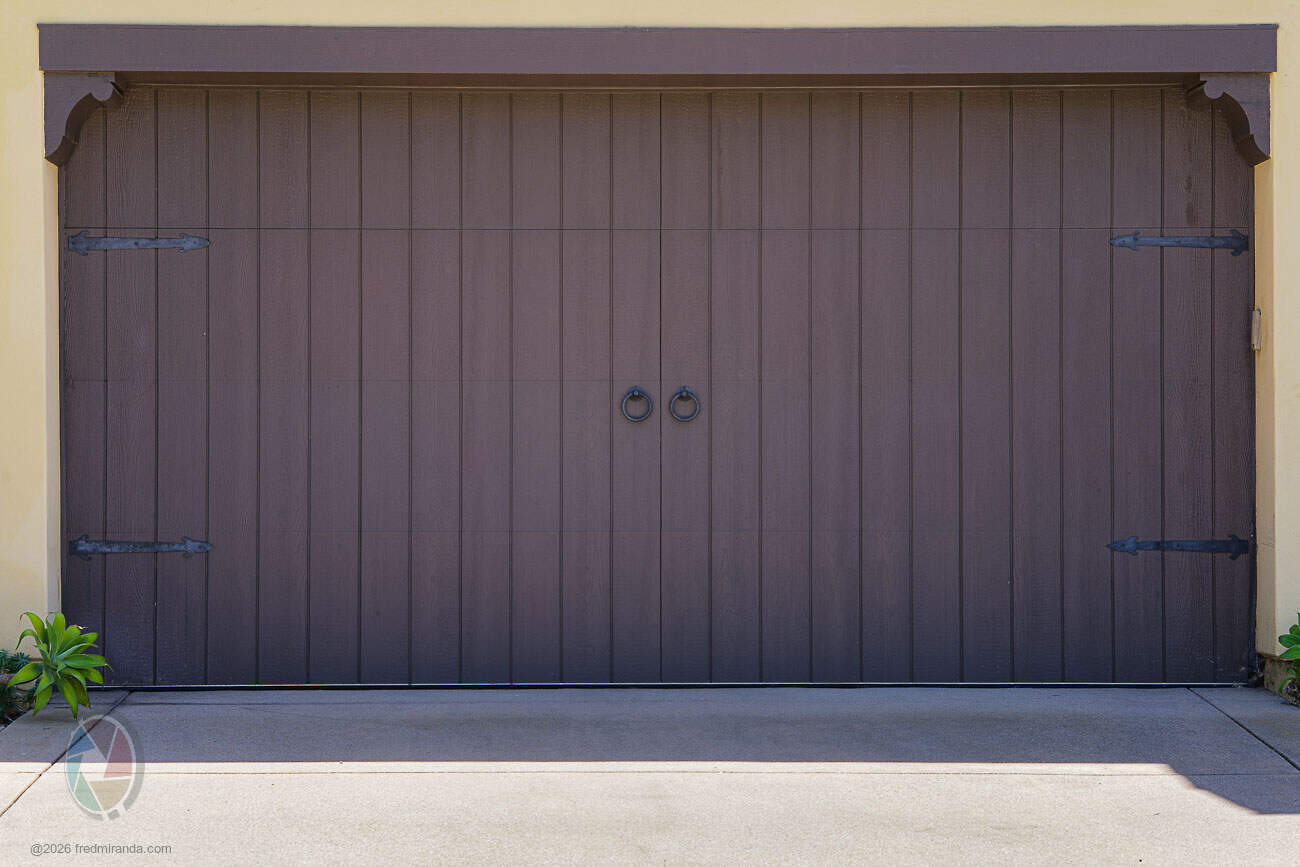
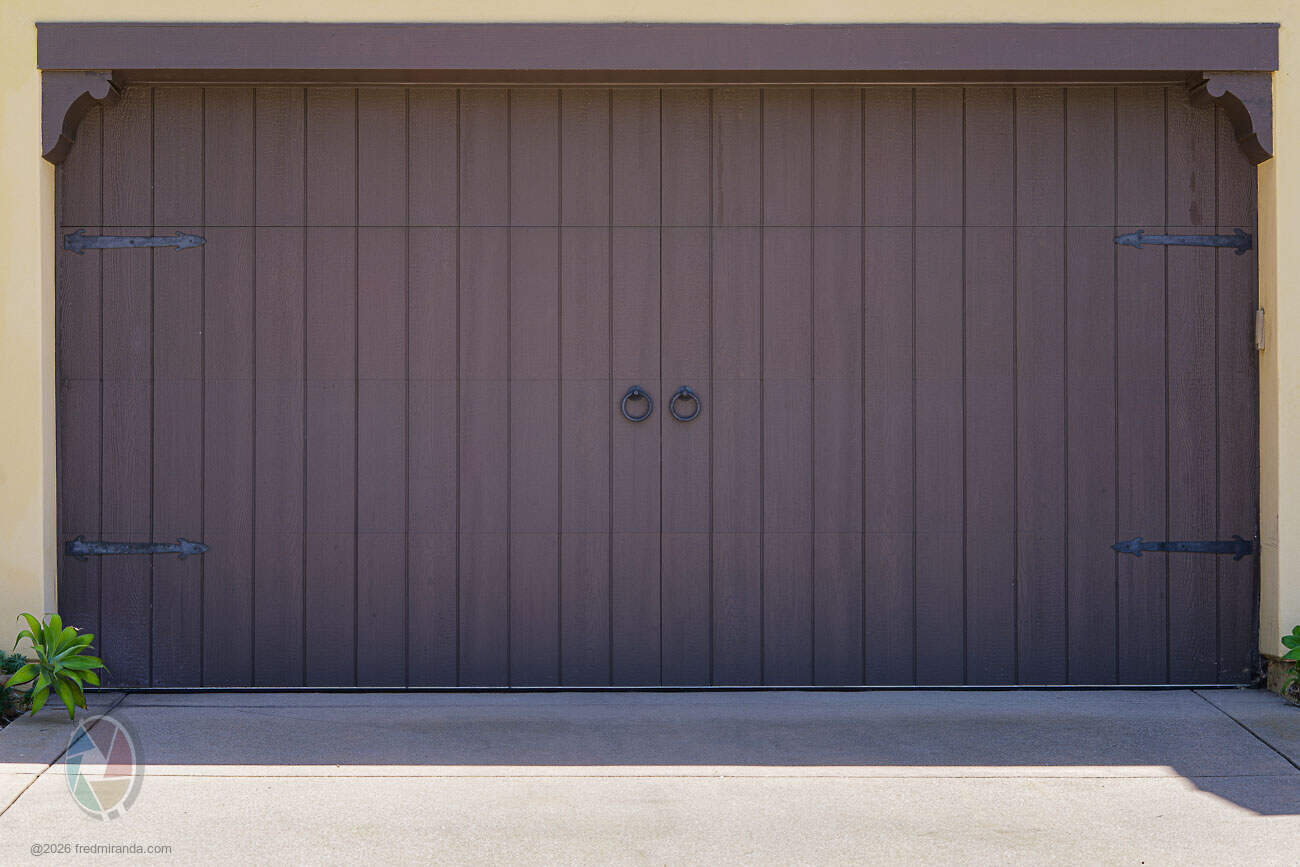
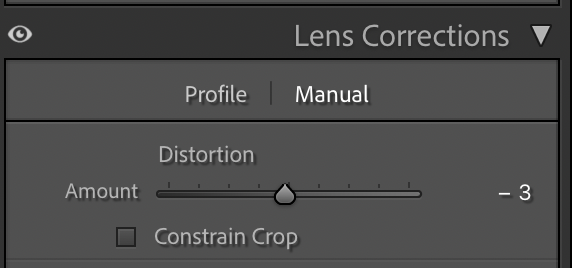
Most telephoto lenses show some degree of pincushion distortion due to their optical design, and the Voigtlander 90mm f/4 APO-Lanthar is no exception. Straight out of the camera, distortion is minimal but still noticeable. For an absolutely clean image, I'd apply about a -3 pincushion correction in Lightroom. I wanted to be able to call this lens distortion-free, but that's not quite the case, there's a very slight pincushion distortion present.
Below are two images: one straight out of camera, and the other with a -3 pincushion correction applied.
No correction
LEICA M10-RVoigtlander 90mm f/4 APO-Lanthar lens90mm1/100s100 ISO0.0 EV
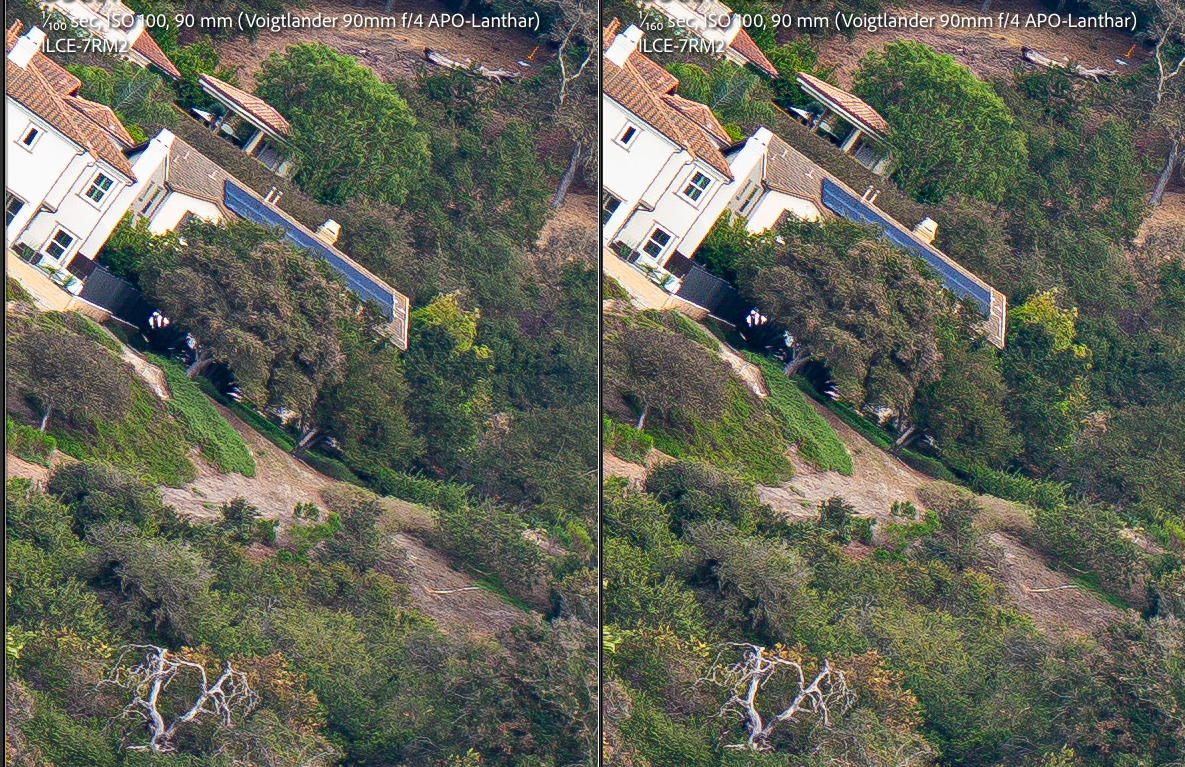
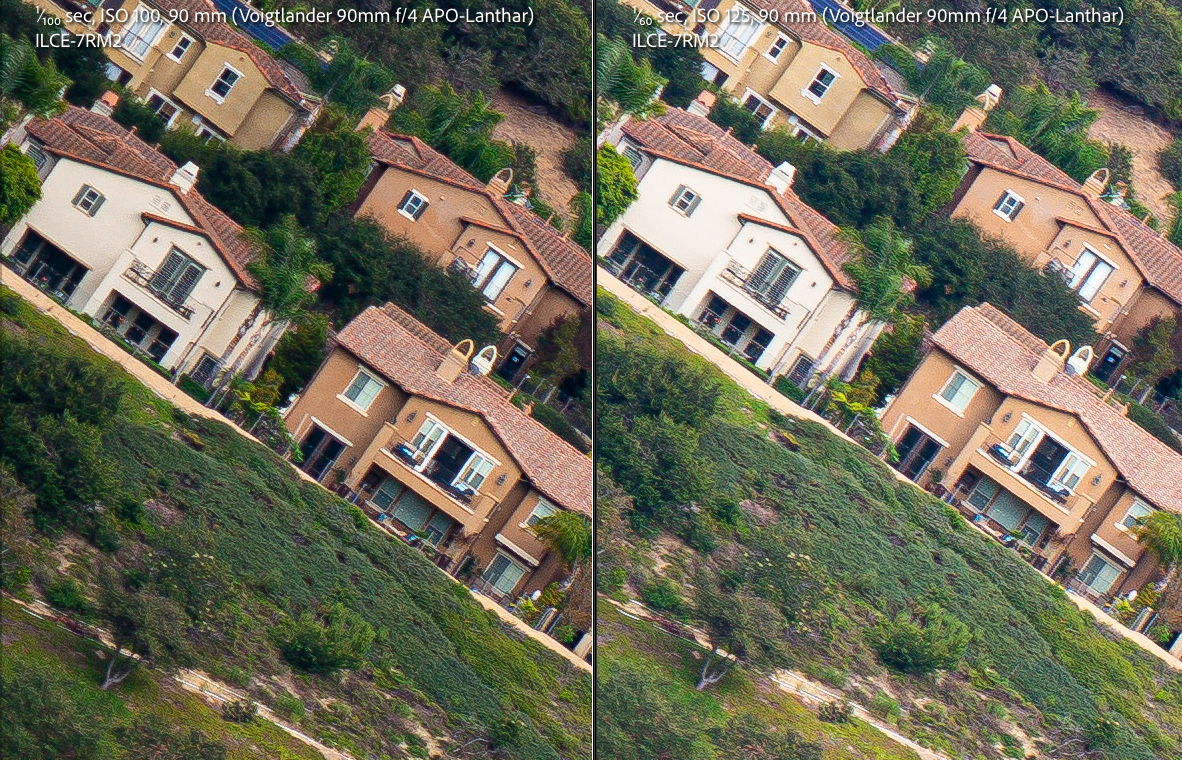
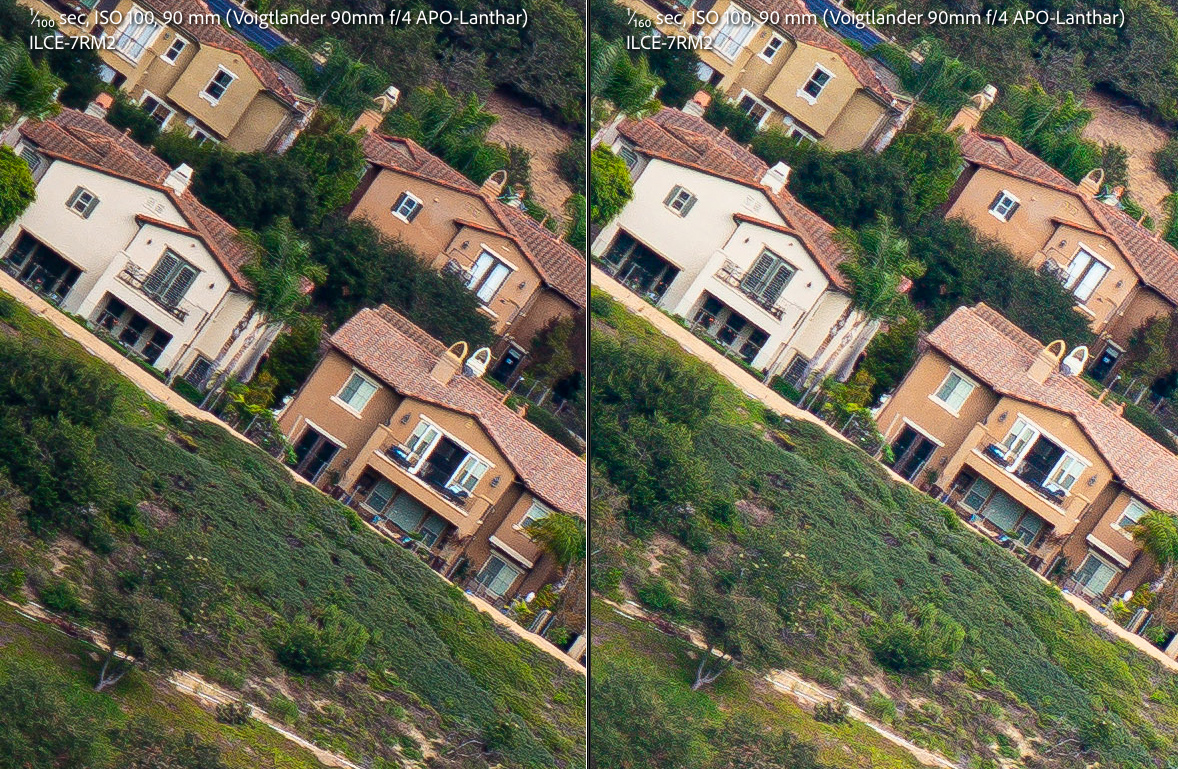
Infinity Resolution and Contrast on stock Sony A7R II (42MP)
Great news: the Voigtlander 90mm f/4 APO-Lanthar performs well on the stock Sony A7R II. Sony's sensor uses a thicker cover glass than Leica M bodies, which can be an issue for certain lenses, but here the longer 90mm focal length and relatively slow f/4 aperture work in the lens's favor, keeping it compatible across mirrorless systems without any noticeable hit to image quality.
In practice, I can't detect any loss in resolution even at the pixel level. Lenses starting at f/3.5 or slower also tend to be far less affected by this cover glass difference in general.
Voigtlander 90mm f/4 APO-Lanthar
Distance: Infinity
Focus: Center - Best of three shots at maximum magnification
White Balance: Daylight
Both lenses are perfectly centered, as verified with my decentering test.
Software used: Lightroom with FM Default Landscape Sharpening; all other settings are at default.
PS: Vignetting, Chromatic Aberration (CA), and distortion were not corrected either in post-processing or in-camera.
Center Resolution and Contrast Infinity Resolution and Contrast on stock Sony A7R II (42MP)
Most telephoto lenses show some degree of pincushion distortion due to their optical design, and the Voigtlander 90mm f/4 APO-Lanthar is no exception. Straight out of the camera, distortion is minimal but still noticeable. For an absolutely clean image, I'd apply about a -3 pincushion correction in Lightroom. I wanted to be able to call this lens distortion-free, but that's not quite the case, there's a very slight pincushion distortion present.
Below are two images: one straight out of camera, and the other with a -3 pincushion correction applied.
It looks a little heavier than what you'd get with the Elmarit-M 90 or Contax G 90, but not by much, and it's nicely even, so correction is simple.
That said, I don't think the CV 90/4 APO-Lanthar is actually worse than the APO-Ultron here. In this review's comparison, the APO-Ultron was stopped down two stops, from f/2 to f/4, so naturally it looks brighter at that point. It's not quite a fair fight since we're not comparing them at their respective wide-open apertures.
Aspheres are used on several longer high-end regular focal length telephotos, the better ones.
Sony GM 135/1.8; Nikon Plena 135/1.8; Leica 90/2 APOs (both M qand SL); and the Otus 100/1.4. All these are special.
Many add vignette to 'enclose' the image and redirect the viewing eye to the interior of the frame - a cine technique. It seldom offends.
philip_pj wrote:
Aspheres are used on several longer high-end regular focal length telephotos, the better ones.
Sony GM 135/1.8; Nikon Plena 135/1.8; Leica 90/2 APOs (both M qand SL); and the Otus 100/1.4. All these are special.
Many add vignette to 'enclose' the image and redirect the viewing eye to the interior of the frame - a cine technique. It seldom offends.
Good point about aspheres in those high-end teles, definitely a special category of lens.
Usually when I see tonal vignetting, I also start watching for optical vignetting, since the two tend to travel together. Optical vignetting affects the shape of highlights toward the edges of the frame, and the stronger the tonal vignetting, the more likely you'll also see stronger cat's-eye shaping and swirl in those edge highlights. So for me, it's not purely a shading concern, it also shapes the overall rendering aesthetic of the lens.