p.1 #1 · Will a 85mm 1.2 or a 135mm 1.4 produce the biggest bokeh? It depends of the background distance
Hi everyone,
I was looking into reviews of the new Sigma 135mm f/1.4 lately and kept seeing references to its '100mm entrance pupil' making it the bokeh king. In comparison, a 85mm f/1.2 has an entrance pupil of 'only' 71mm, 30% less.
I decided it was time for me to properly understand what determines bokeh size (i.e. the size of the circle of confusion) in practice. I designed this interactive simulator to compare lenses (and cameras): https://romaincr-git.github.io/bokeh-simulator/
It has 2D and 3D previews which allows you to play with the distance of the subject and the background. It also includes light grids at two distances: the distance of the background, and infinity. These grids display the size of the bokeh (aka the circle of confusion / blur disk) and give the answer to the question I asked in the subject of the thread.
Basically: the entrance pupil (which is simply the focal length divided by the aperture, e.g. 135/1.4=96) does determine the size of the bokeh at infinity. So longer focal lengths and larger apertures play an equal role. Additionally, the size of bokeh increases linearly from the subject (the focal plane) to its maximum, creating a cone.
However, this is only relevant if you compare two lenses focusing at the same distance. If you compare two lenses at the same framing (e.g. a headshot), a lens with a shorter focal length (or the same lens on a larger sensor) will be closer to the subject and have a wider cone, and thus a larger bokeh, if the aperture permits.
The simulator shows that a 85mm f/1.2, despite having a much smaller entrance pupil, has a slightly larger bokeh when the background is near. However the 135mm has a significantly larger bokeh at infinity. Said differently, the near background is blurrier on the shorter lens and infinity is blurrier on the longer lens.
Now, the difference is small at short background distance and large at infinity so in real life the 135mm will likely 'win'.
My takeaway is that in practical shooting situations with a background a few meters from the subject, the difference in bokeh between a 85mm f/12. and a 135mm f/1.4 will be smaller than what the entrance pupil suggests.
Hopefully this little simulator will be useful to others as well. I developed it with these two lenses in mind but it it also useful to compare whole systems (e.g. full frame versus 6x7).
Happy to have feedback for improvements. Let me know if you spot any error.
p.1 #2 · Will a 85mm 1.2 or a 135mm 1.4 produce the biggest bokeh? It depends of the background distance
This is wrong.
If you frame the shots the same 135/1.4 will always have way more bokeh
The problem with 135 is that you need to stand further back to frame the shots the same
Romain wrote:
Hi everyone,
I was looking into reviews of the new Sigma 135mm f/1.4 lately and kept seeing references to its '100mm entrance pupil' making it the bokeh king. In comparison, a 85mm f/1.2 has an entrance pupil of 'only' 71mm, 30% less.
I decided it was time for me to properly understand what determines bokeh size (i.e. the size of the circle of confusion) in practice. I designed this interactive simulator to compare lenses (and cameras): https://romaincr-git.github.io/bokeh-simulator/
It has 2D and 3D previews which allows you to play with the distance of the subject and the background. It also includes light grids at two distances: the distance of the background, and infinity. These grids display the size of the bokeh (aka the circle of confusion / blur disk) and give the answer to the question I asked in the subject of the thread.
Basically: the entrance pupil (which is simply the focal length divided by the aperture, e.g. 135/1.4=96) does determine the size of the bokeh at infinity. So longer focal lengths and larger apertures play an equal role. Additionally, the size of bokeh increases linearly from the subject (the focal plane) to its maximum, creating a cone.
However, this is only relevant if you compare two lenses focusing at the same distance. If you compare two lenses at the same framing (e.g. a headshot), a lens with a shorter focal length (or the same lens on a larger sensor) will be closer to the subject and have a wider cone, and thus a larger bokeh, if the aperture permits.
The simulator shows that a 85mm f/1.2, despite having a much smaller entrance pupil, has a slightly larger bokeh when the background is near. However the 135mm has a significantly larger bokeh at infinity. Said differently, the near background is blurrier on the shorter lens and infinity is blurrier on the longer lens.
Now, the difference is small at short background distance and large at infinity so in real life the 135mm will likely 'win'.
My takeaway is that in practical shooting situations with a background a few meters from the subject, the difference in bokeh between a 85mm f/12. and a 135mm f/1.4 will likely be insignificant.
Hopefully this little simulator will be useful to others as well. I developed it with these two lenses in mind but it it also useful to compare whole systems (e.g. full frame versus 6x7).
Happy to have feedback for improvements. Let me know if you spot any error....Show more →
p.1 #3 · Will a 85mm 1.2 or a 135mm 1.4 produce the biggest bokeh? It depends of the background distance
Do you mean that the simulator is wrong or that my interpretation is wrong?
The simulator shows the the 85 can have a larger bokeh at very short distance behind the subject (arguably the bokeh is still small there so the real-life difference is not really significant). After that I agree that the 135mm quickly gains. However, it also shows that the difference is not as pronounced as what one would think if considering only the entrance pupil (i.e. the 135mm does not produce 96/71=1.35 times larger bokeh in situations where the background is a few meters behind).
p.1 #4 · Will a 85mm 1.2 or a 135mm 1.4 produce the biggest bokeh? It depends of the background distance
I think it's worth stopping the use of the term bokeh for this.
Bokeh is the quality of blur. There is no such thing as amount bokeh.
You are discussing the amount of blur.
Thread is only 4 posts, including mine. It's likely to become cluttered and or derailed with "no such thing as amount bokeh" posts. Yes, I see the irony.
p.1 #5 · Will a 85mm 1.2 or a 135mm 1.4 produce the biggest bokeh? It depends of the background distance
Romain wrote:
Do you mean that the simulator is wrong or that my interpretation is wrong?
The simulator shows the the 85 can have a larger bokeh at very short distance behind the subject (arguably the bokeh is still small there so the real-life difference is not really significant). After that I agree that the 135mm quickly gains. However, it also shows that the difference is not as pronounced as what one would think if considering only the entrance pupil (i.e. the 135mm does not produce 96/71=1.35 times larger bokeh in situations where the background is a few meters behind).
I’ll change “bokeh” to “background blur” since there are some concerns
I think this statement is correct: “the 135mm does not produce 96/71=1.35 times larger bokeh in situations where the background is a few meters behind”
However practically for a headshot the 135/1.4 should always have “more background blur” when the background is “a few meters behind”, even if we interpret “a few meters” to be 2m or more.
I feel the main issue with a 135mm is that you need so much working distance to use it. A full body portrait needs 15m? Quite often this is not practical…
Jul 21, 2026 at 07:05 AM
Steve Spencer Offline • • • • • • • Upload & Sell: On
p.1 #6 · Will a 85mm 1.2 or a 135mm 1.4 produce the biggest bokeh? It depends of the background distance
Romain wrote:
Do you mean that the simulator is wrong or that my interpretation is wrong?
The simulator shows the the 85 can have a larger bokeh at very short distance behind the subject (arguably the bokeh is still small there so the real-life difference is not really significant). After that I agree that the 135mm quickly gains. However, it also shows that the difference is not as pronounced as what one would think if considering only the entrance pupil (i.e. the 135mm does not produce 96/71=1.35 times larger bokeh in situations where the background is a few meters behind).
Thank you for the simulator. I think it is nicely set up and illustrated and it is helpful. Allow me to oversimplify.
With regard to where you position yourself when taking a shot:
1) If you position yourself at the same spot a longer focal length at the same aperture will get you a tighter framing of the target and more background blur at the same aperture.
2) If you position yourself with the same framing of the target the aperture will primarily determine the background blur (larger apertures more background blur) and the focal length will determine the amount of the background that is in the frame and have little effect on the amount of blur.
With regard to where you position the target if you can:
Moving the target further from the background will strongly effect blur and the further the background is away the greater the background blur. This effect is not linear. A few feet if the background is close matters a lot more than a few feet if the background is far away.
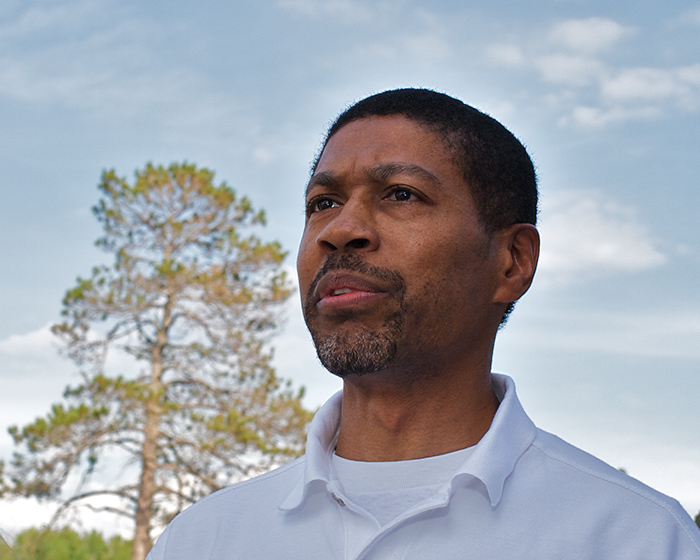
I am attaching a shot an an example. It is one of my favorite portraits. It was taken with a lowly Canon EF 35 f/2 at I believe f/8, on a crop camera no less. So, a short focal length and a narrow aperture and yet is has, IMO, quite decent background blur because the background is a few hundred yards away.
p.1 #9 · Will a 85mm 1.2 or a 135mm 1.4 produce the biggest bokeh? It depends of the background distance
aCuria wrote:
I’ll change “bokeh” to “background blur” since there are some concerns
I think this statement is correct: “the 135mm does not produce 96/71=1.35 times larger bokeh in situations where the background is a few meters behind”
However practically for a headshot the 135/1.4 should always have “more background blur” when the background is “a few meters behind”, even if we interpret “a few meters” to be 2m or more.
I feel the main issue with a 135mm is that you need so much working distance to use it. A full body portrait needs 15m? Quite often this is not practical…...Show more →
Yes I agree with you that the working distance is the main issue with a 135mm. As much as I like my 135mm 1.8, I find it difficult to use it in practice.
The 135mm 1.4 does have larger blur (circle of confusion) with background a few meters behind but the difference with a 85mm 1.2 is not as large as I would have expected. As this is the most common type of scenario I shoot in, the working distance (and lens weight) becomes the main deciding factor, so now I will wait for the sigma 85m 1.2 instead of buying the 135mm 1.4
p.1 #10 · Will a 85mm 1.2 or a 135mm 1.4 produce the biggest bokeh? It depends of the background distance
Steve Spencer wrote:
Thank you for the simulator. I think it is nicely set up and illustrated and it is helpful. Allow me to oversimplify.
With regard to where you position yourself when taking a shot:
1) If you position yourself at the same spot a longer focal length at the same aperture will get you a tighter framing of the target and more background blur at the same aperture.
2) If you position yourself with the same framing of the target the aperture will primarily determine the background blur (larger apertures more background blur) and the focal length will determine the amount of the background that is in the frame and have little effect on the amount of blur.
With regard to where you position the target if you can:
Moving the target further from the background will strongly effect blur and the further the background is away the greater the background blur. This effect is not linear. A few feet if the background is close matters a lot more than a few feet if the background is far away.
I am attaching a shot an an example. It is one of my favorite portraits. It was taken with a lowly Canon EF 35 f/2 at I believe f/8, on a crop camera no less. So, a short focal length and a narrow aperture and yet is has, IMO, quite decent background blur because the background is a few hundred yards away....Show more →
Yes the blur depends on the distance between the camera, the subject (plane of focus) and background. Standing very close to the subject and having a background far away will blur the background more. Because we need to stand closer with a shorter lens, if the distance between the subject and the background remains fixed, we can achieve greater background blur with a shorter lens because the blur cone will be wider (assuming equal aperture).
From the perspective of the camera, the rate of increase in blurriness (angle of the cone) depends on the focal lens, aperture, and focus distance. However, the rate of increase is linear, it is a cone, not a funnel. Unless I misunderstood what you meant.
p.1 #12 · Will a 85mm 1.2 or a 135mm 1.4 produce the biggest bokeh? It depends of the background distance
Romain wrote:
Hi everyone,
I was looking into reviews of the new Sigma 135mm f/1.4 lately and kept seeing references to its '100mm entrance pupil' making it the bokeh king. In comparison, a 85mm f/1.2 has an entrance pupil of 'only' 71mm, 30% less.
I decided it was time for me to properly understand what determines bokeh size (i.e. the size of the circle of confusion) in practice. I designed this interactive simulator to compare lenses (and cameras): https://romaincr-git.github.io/bokeh-simulator/
It has 2D and 3D previews which allows you to play with the distance of the subject and the background. It also includes light grids at two distances: the distance of the background, and infinity. These grids display the size of the bokeh (aka the circle of confusion / blur disk) and give the answer to the question I asked in the subject of the thread.
Basically: the entrance pupil (which is simply the focal length divided by the aperture, e.g. 135/1.4=96) does determine the size of the bokeh at infinity. So longer focal lengths and larger apertures play an equal role. Additionally, the size of bokeh increases linearly from the subject (the focal plane) to its maximum, creating a cone.
However, this is only relevant if you compare two lenses focusing at the same distance. If you compare two lenses at the same framing (e.g. a headshot), a lens with a shorter focal length (or the same lens on a larger sensor) will be closer to the subject and have a wider cone, and thus a larger bokeh, if the aperture permits.
The simulator shows that a 85mm f/1.2, despite having a much smaller entrance pupil, has a slightly larger bokeh when the background is near. However the 135mm has a significantly larger bokeh at infinity. Said differently, the near background is blurrier on the shorter lens and infinity is blurrier on the longer lens.
Now, the difference is small at short background distance and large at infinity so in real life the 135mm will likely 'win'.
My takeaway is that in practical shooting situations with a background a few meters from the subject, the difference in bokeh between a 85mm f/12. and a 135mm f/1.4 will be smaller than what the entrance pupil suggests.
Hopefully this little simulator will be useful to others as well. I developed it with these two lenses in mind but it it also useful to compare whole systems (e.g. full frame versus 6x7).
Happy to have feedback for improvements. Let me know if you spot any error....Show more →
I'll add another curve just to show how dumb I am... at first, when you mentioned size, I assumed you meant the size of the bokeh balls, not the amount of background blur.
Calculating the actual measured difference in ball size is probably a different kettle of fish, because I think some of this would be a moving target since light sources will vary a lot from a string of tiny led lights to large bulbs or even just reflected light off of a water drop or flora. But... you should at least be able to calculate which lens will make the larger/smaller ball for a controlled environment. Given same pin point light source at same distance or scene crops for 2 identical focal length lenses with different min F stop's, that is just simple math and I think the faster lens always wins, but to be able to compare bokeh balls of different focal length lenses with same or even different min F stops would be an interesting addition to the simulator, for people looking to maximize or minimize ball sizes for different style shots.
p.1 #13 · Will a 85mm 1.2 or a 135mm 1.4 produce the biggest bokeh? It depends of the background distance
I'm not a technical guy and I think the bokeh/background blur of those lenses are roughly the same. I have the Canon 85/1.2 as well as the Sony 135/1.8 GM. Both of these are my favourite lenses for the respective systems. My deciding factors are: do I have enough room to operate and do I want to take a lot of headshots. If so I prefer to take the 135mm but not always.