douter wrote:
' Liking this one a lot, Jack, it has all the elements!
Douglas
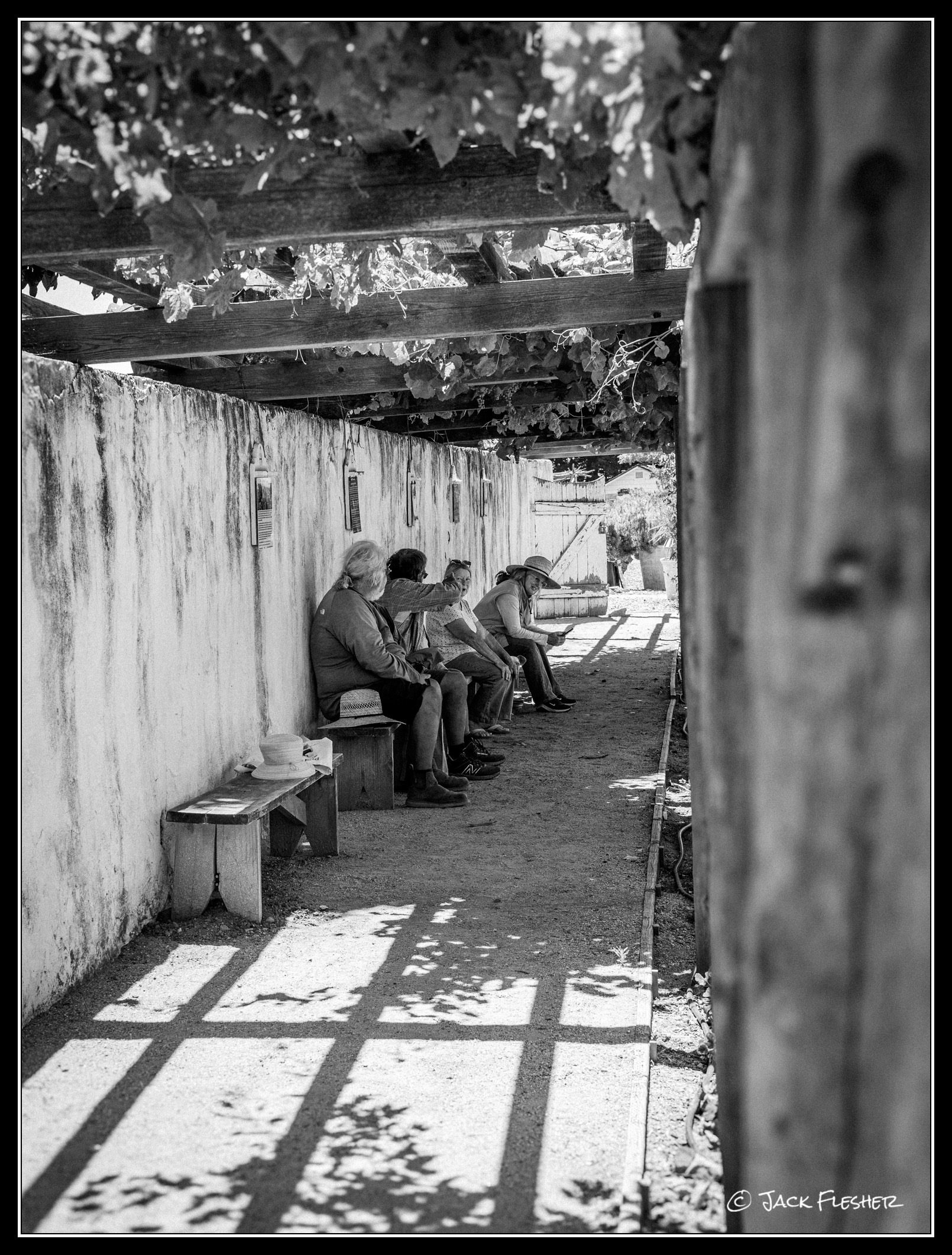
Thank you Douglas. I processed it out in both color and B&W. It works well for both, but they’re distinctly different.
I’ve been trying to emulate what I remember Tri-X processed at 320 looked like — I loved the clean, moderate contrast crispness it rendered. But I finally realized I will never get back there... Mainly because the lenses I have today are all orders of magnitude more optically perfect than anything I used back then and digital just doesn’t render like reversal film did; and hence the results are too clean or pure, almost sterile. Oh well, time to move on and embrace the new.
Jack Flesher wrote:
Thank you Douglas. I processed it out in both color and B&W. It works well for both, but they’re distinctly different.
I’ve been trying to emulate what I remember Tri-X processed at 320 looked like — I loved the clean, moderate contrast crispness it rendered. But I finally realized I will never get back there... Mainly because the lenses I have today are all orders of magnitude more optically perfect than anything I used back then and digital just doesn’t render like reversal film did; and hence the results are too clean or pure, almost sterile. Oh well, time to move on and embrace the new. ...Show more →
Very nice!!
Regarding Tri-x, there have been couple old threads where folks have mentioned strategies for emulating. One thing I occasionally do is to add a layer where I apply some Gaussian blur to just the highlights; this can emulate the halation that Tri-x could give especially to specular highlights. (+ another layer for grain, of course). It doesn't quite get there, but it's reasonably close.
photonoclast wrote:
Very nice!!
Regarding Tri-x, there have been couple old threads where folks have mentioned strategies for emulating. One thing I occasionally do is to add a layer where I apply some Gaussian blur to just the highlights; this can emulate the halation that Tri-x could give especially to specular highlights. (+ another layer for grain, of course). It doesn't quite get there, but it's reasonably close.
Thank you, I appreciate your comment! I’ve tried multiple different halation techniques, even applied using a luminosity gradient, but unfortunately they leave me mostly unconvinced. A few of them do a good job of emulating a net diffusion filter though, and that’s sometimes useful.