Learning the Leica M6,Leica IIIf and shooting film
p.3 #1Learning the Leica M6,Leica IIIf and shooting film
1bwana1 wrote:
Some more from the first batch of film. Capturing the street life in Parma in an authentic style that matches the esthetics of our city was the primary driver of my experiments with film. I just can't get this out of digital.
Steve, these are so good!
Some more from the first batch of film. Capturing the street life in Parma in an authentic style that matches the esthetics of our city was the primary driver of my experiments with film. I just can't get this out of digital.
Steve, these are so good!
Jun 12, 2026 at 06:56 PM
p.3 #2Learning the Leica M6,Leica IIIf and shooting film
Desmolicious wrote:
1bwana1 wrote
Some more from the first batch of film. Capturing the street life in Parma in an authentic style that matches the esthetics of our city was the primary driver of my experiments with film. I just can't get this out of digital.Thanks Huss. I am glad you are enjoying the images.
Jun 12, 2026 at 08:08 PM

p.3 #4Learning the Leica M6,Leica IIIf and shooting film
Desmolicious wrote:
FYI Kentmere 400 not only is excellent and cheap, but pushes really well using Cinestill DF96 Monobath. I would also try it with your monobath - you may have similar results.
Here at ISO 1600:
https://live.staticflickr.com/65535/54042737263_babdc6aeb6_o.jpg
I will try some as my next roll and report back.
Jun 13, 2026 at 02:58 PM
p.3 #5Learning the Leica M6,Leica IIIf and shooting film
As predicted I aquired a 105mm f2.8 Sigma macro lens today. I traded in another L mount Sigma lens that hadn't been on my camera in over a year. So, net cost was very low. I now have 1:1 full 60mpx scans of my film. Quality improvement is obvious and worth the small investment.
Jun 13, 2026 at 03:02 PM
p.3 #6Learning the Leica M6,Leica IIIf and shooting film
Who wants to give me odds that he’s going to own a Rolleiflex in 2 weeks? 3 weeks? 😆
Jun 13, 2026 at 08:01 PM
p.3 #7Learning the Leica M6,Leica IIIf and shooting film
corposant wrote:
Who wants to give me odds that he’s going to own a Rolleiflex in 2 weeks? 3 weeks? 😆
Not happening. Too much on my plate already right now.
Jun 13, 2026 at 11:00 PM
p.3 #8Learning the Leica M6,Leica IIIf and shooting film
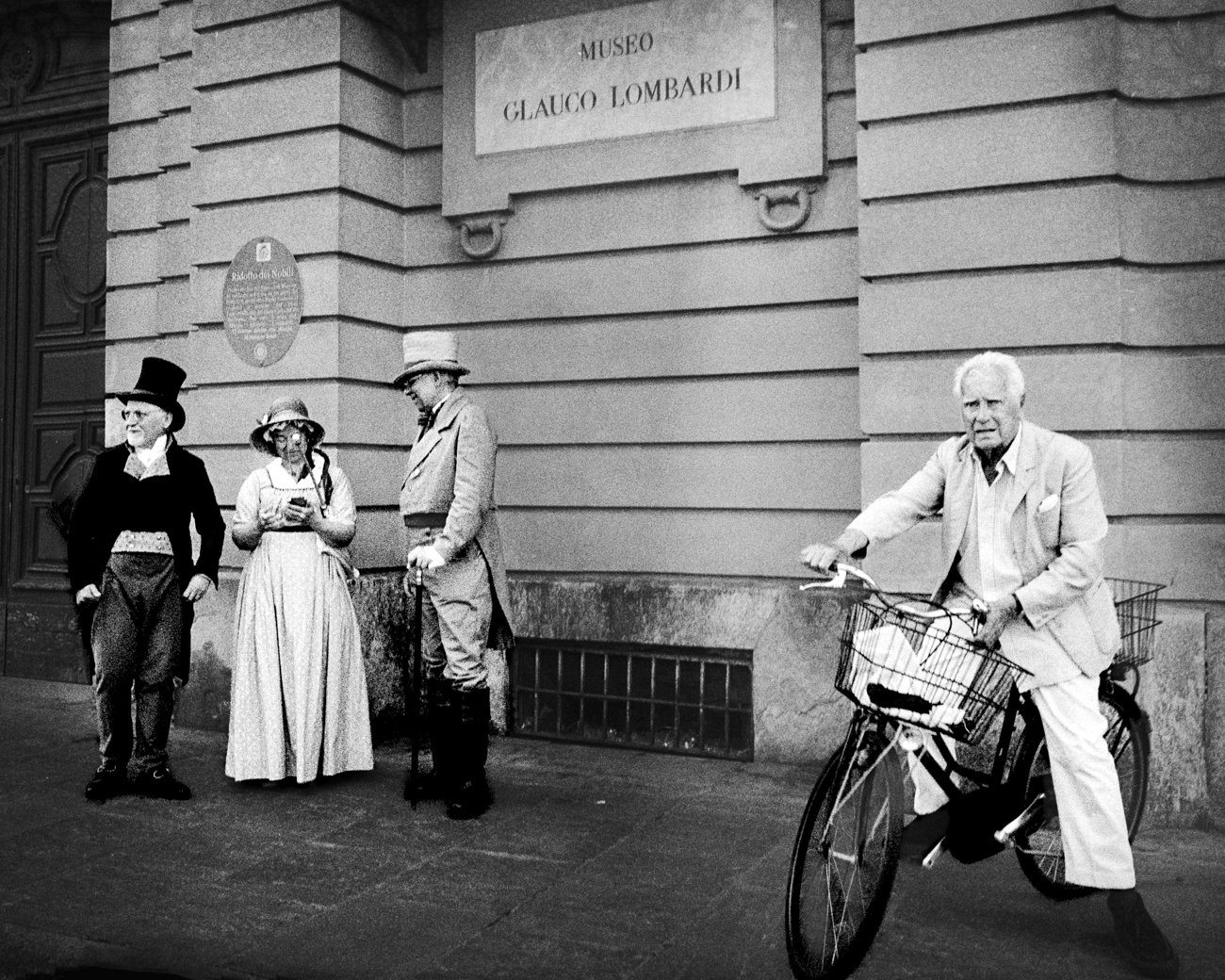
The first image from scanning with my new macro lens. It gives a perfect 1:1 60mpx resolution. At least when editing this lack of crop does seem to improve grain and texture. Also this Sigma lens is flatter, with less distortion and sharper in the corners than the non macro lenses with I tries with extenders that could also provide 1:1 full resolution scans. better results, with the small additional expense.
Jun 14, 2026 at 04:01 AM
p.3 #9Learning the Leica M6,Leica IIIf and shooting film
1bwana1 wrote:
The first image from scanning with my new macro lens. It gives a perfect 1:1 60mpx resolution. At least when editing this lack of crop does seem to improve grain and texture. Also this Sigma lens is flatter, with less distortion and sharper in the corners than the non macro lenses with I tries with extenders that could also provide 1:1 full resolution scans. better results, with the small additional expense.
Hm I think there's still some room for improvement in the workflow. Assuming the negative is well-exposed it's likely the editing and export for uploading.
There's a lack of details even at the resolution you posted. Also almost no shadow detail (e.g. boots of the guy in the middle, pants of the guy on the left). And almost looks like posterization? My guess is something a bit off with contrast settings and too high JPG compression? To be fair some people like heavily crushed blacks so maybe it's a choice, but then even more important not to overcompress as JPG compression affects dark parts of the image more heavily.
Here are two examples scanned on 24mp (first one Leica Minilux, 2nd one Canon 3000N + OM 28mm) - your setup should yield at least similar resolution and gradation, maybe better:
 Tuscany x Minilux by Felix, auf Flickr
 Amalienburg II by Felix, auf Flickr
The first image from scanning with my new macro lens. It gives a perfect 1:1 60mpx resolution. At least when editing this lack of crop does seem to improve grain and texture. Also this Sigma lens is flatter, with less distortion and sharper in the corners than the non macro lenses with I tries with extenders that could also provide 1:1 full resolution scans. better results, with the small additional expense.
Hm I think there's still some room for improvement in the workflow. Assuming the negative is well-exposed it's likely the editing and export for uploading.
There's a lack of details even at the resolution you posted. Also almost no shadow detail (e.g. boots of the guy in the middle, pants of the guy on the left). And almost looks like posterization? My guess is something a bit off with contrast settings and too high JPG compression? To be fair some people like heavily crushed blacks so maybe it's a choice, but then even more important not to overcompress as JPG compression affects dark parts of the image more heavily.
Here are two examples scanned on 24mp (first one Leica Minilux, 2nd one Canon 3000N + OM 28mm) - your setup should yield at least similar resolution and gradation, maybe better:
Tuscany x Minilux by Felix, auf FlickrAmalienburg II by Felix, auf FlickrJun 14, 2026 at 07:09 AM
|
p.3 #10Learning the Leica M6,Leica IIIf and shooting film
fjablo wrote:
Hm I think there's still some room for improvement in the workflow. Assuming the negative is well-exposed it's likely the editing and export for uploading.
There's a lack of details even at the resolution you posted. Also almost no shadow detail (e.g. boots of the guy in the middle, pants of the guy on the left). And almost looks like posterization? My guess is something a bit off with contrast settings and too high JPG compression? To be fair some people like heavily crushed blacks so maybe it's a choice, but then even more important not to overcompress as JPG compression...Show more →
Thanks for taking the time to offer constructive advise. That is always appreciated. Yes, I have a lot to learn about both B&W film selection, shooting, scanning, and processing. I am probably adding too much contrast at this point.
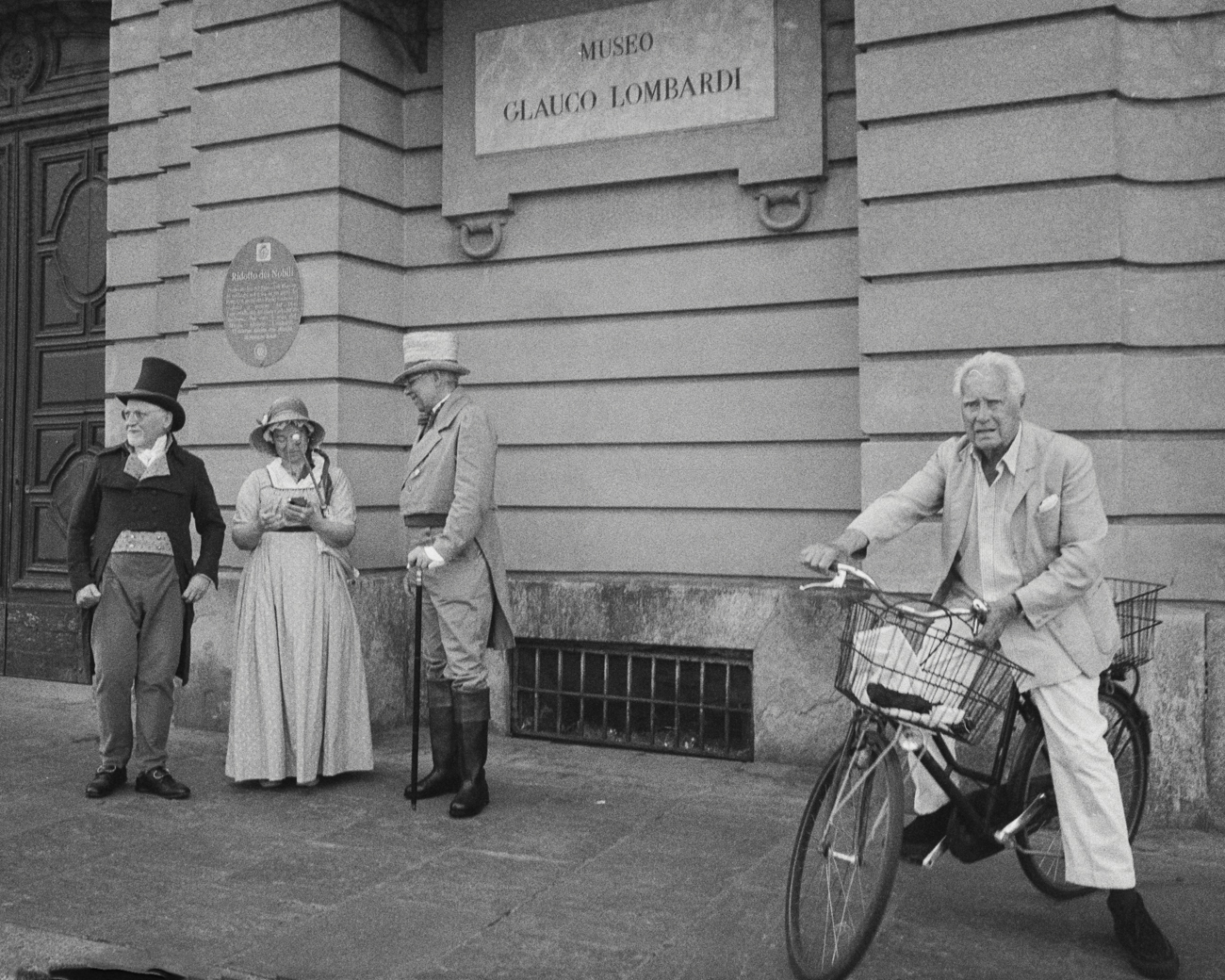
Here is the image directly as exposed with no editing except a small crop, leveling, and convert to positive by inverting the tone curve. It looks to me like the exposure is close with plenty of detail in the shadows.
1bwana1 wrote
The first image from scanning with my new macro lens. It gives a perfect 1:1 60mpx resolution. At least when editing this lack of crop does seem to improve grain and texture. Also this Sigma lens is flatter, with less distortion and sharper in the corners than the non macro lenses with I tries with extenders that could also provide 1:1 full resolution scans. better results, with the small additional expense.There's a lack of details even at the resolution you posted. Also almost no shadow detail (e.g. boots of the guy in the middle, pants of the guy on the left). And almost looks like posterization? My guess is something a bit off with contrast settings and too high JPG compression? To be fair some people like heavily crushed blacks so maybe it's a choice, but then even more important not to overcompress as JPG compression...Show more →
Thanks for taking the time to offer constructive advise. That is always appreciated. Yes, I have a lot to learn about both B&W film selection, shooting, scanning, and processing. I am probably adding too much contrast at this point.
Here is the image directly as exposed with no editing except a small crop, leveling, and convert to positive by inverting the tone curve. It looks to me like the exposure is close with plenty of detail in the shadows.
Jun 14, 2026 at 07:53 AM
p.3 #11Learning the Leica M6,Leica IIIf and shooting film
1bwana1 wrote:
Hm I think there's still some room for improvement in the workflow. Assuming the negative is well-exposed it's likely the editing and export for uploading.
There's a lack of details even at the resolution you posted. Also almost no shadow detail (e.g. boots of the guy in the middle, pants of the guy on the left). And almost looks like posterization? My guess is something a bit off with contrast settings and too high JPG compression? To be fair some people like heavily crushed blacks so maybe it's a choice, but then even more important not to overcompress as JPG compression affects dark parts of the image more heavily.
Here are two examples scanned on 24mp (first one Leica Minilux, 2nd one Canon 3000N + OM 28mm) - your setup should yield at least similar resolution and gradation, maybe better:
https://live.staticflickr.com/65535/54683679782_11a7b02f84_h.jpgTuscany x Minilux by Felix, auf Flickr
https://live.staticflickr.com/65535/53900820632_0ed69a2311_h.jpgAmalienburg II by Felix, auf FlickrThanks for taking the time to offer constructive advise. That is always appreciated. Yes, I have a lot to learn about both B&W film selection, shooting, scanning, and processing. I am probably adding too much contrast at this point.
Here is the image directly as exposed with no editing except a small crop, leveling, and convert to positive by inverting the tone curve. It looks to me like the exposure is close with plenty of detail in the shadows.
Yep looks well exposed. Contrast is of course personal preference, but I think it was the interaction between the added contrast and how it interacted with compression that I didn't love on the previous version.
It's also a tricky scene in terms of contrast because the light is relatively flat and it's hard to make the subjects stand out without the overall scene becoming quite crunchy.
Looking forward to more of your results!
fjablo wrote
1bwana1 wrote
The first image from scanning with my new macro lens. It gives a perfect 1:1 60mpx resolution. At least when editing this lack of crop does seem to improve grain and texture. Also this Sigma lens is flatter, with less distortion and sharper in the corners than the non macro lenses with I tries with extenders that could also provide 1:1 full resolution scans. better results, with the small additional expense.There's a lack of details even at the resolution you posted. Also almost no shadow detail (e.g. boots of the guy in the middle, pants of the guy on the left). And almost looks like posterization? My guess is something a bit off with contrast settings and too high JPG compression? To be fair some people like heavily crushed blacks so maybe it's a choice, but then even more important not to overcompress as JPG compression affects dark parts of the image more heavily.
Here are two examples scanned on 24mp (first one Leica Minilux, 2nd one Canon 3000N + OM 28mm) - your setup should yield at least similar resolution and gradation, maybe better:
https://live.staticflickr.com/65535/54683679782_11a7b02f84_h.jpgTuscany x Minilux by Felix, auf Flickr
https://live.staticflickr.com/65535/53900820632_0ed69a2311_h.jpgAmalienburg II by Felix, auf Flickr
Here is the image directly as exposed with no editing except a small crop, leveling, and convert to positive by inverting the tone curve. It looks to me like the exposure is close with plenty of detail in the shadows.
Yep looks well exposed. Contrast is of course personal preference, but I think it was the interaction between the added contrast and how it interacted with compression that I didn't love on the previous version.
It's also a tricky scene in terms of contrast because the light is relatively flat and it's hard to make the subjects stand out without the overall scene becoming quite crunchy.
Looking forward to more of your results!
Jun 14, 2026 at 12:30 PM
p.3 #12Learning the Leica M6,Leica IIIf and shooting film
fjablo wrote:
1bwana1 wrote
fjablo wrote
1bwana1 wrote
The first image from scanning with my new macro lens. It gives a perfect 1:1 60mpx resolution. At least when editing this lack of crop does seem to improve grain and texture. Also this Sigma lens is flatter, with less distortion and sharper in the corners than the non macro lenses with I tries with extenders that could also provide 1:1 full resolution scans. better results, with the small additional expense.There's a lack of details even at the resolution you posted. Also almost no shadow detail (e.g. boots of the guy in the middle, pants of the guy on the left). And almost looks like posterization? My guess is something a bit off with contrast settings and too high JPG compression? To be fair some people like heavily crushed blacks so maybe it's a choice, but then even more important not to overcompress as JPG compression affects dark parts of the image more heavily.
Here are two examples scanned on 24mp (first one Leica Minilux, 2nd one Canon 3000N + OM 28mm) - your setup should yield at least similar resolution and gradation, maybe better:
https://live.staticflickr.com/65535/54683679782_11a7b02f84_h.jpgTuscany x Minilux by Felix, auf Flickr
https://live.staticflickr.com/65535/53900820632_0ed69a2311_h.jpgAmalienburg II by Felix, auf Flickr
Here is the image directly as exposed with no editing except a small crop, leveling, and convert to positive by inverting the tone curve. It looks to me like the exposure is close with plenty of detail in the shadows.
It's also a tricky scene in terms of contrast because the light is relatively flat and it's hard to make the subjects stand out without the overall scene becoming quite crunchy.
Looking forward to more of your results!
Ok, I will try a different edit that attempts to add interest, contrast, yet retains, details.
Jun 14, 2026 at 12:46 PM
p.3 #13Learning the Leica M6,Leica IIIf and shooting film
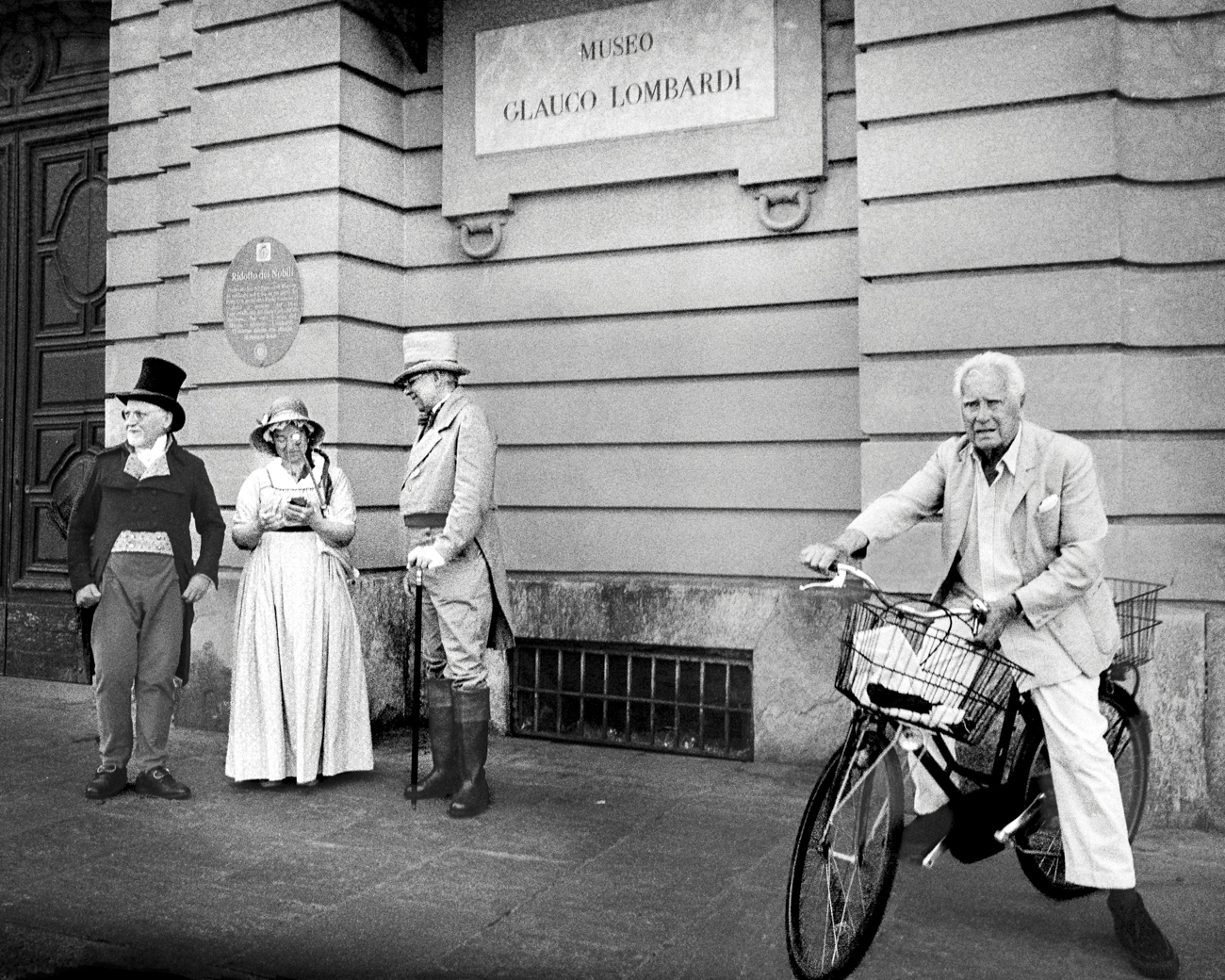
Here is a more detail rich edit of the image Fjablo and I have been discussing. It is improved thanks to his input which is always appreciated.
The DR and malleability of a high resolution of the 1:1 scanning and the DNG file from is proving to be an asset of the Valoi Easy35 system as I had anticipated.
Comments of course welcome as we extend this learning experience.
The DR and malleability of a high resolution of the 1:1 scanning and the DNG file from is proving to be an asset of the Valoi Easy35 system as I had anticipated.
Comments of course welcome as we extend this learning experience.
Jun 15, 2026 at 12:56 AM
p.3 #14Learning the Leica M6,Leica IIIf and shooting film
If you don't mind me hijacking this post to ask a related question -
What are the functional and aesthetic differences between TIFF and JPEG when it comes to film development + scanning?
I was under the impression that color grading is like the process of iteratively tuning the chemical development process by incrementally developing, checking how the photo comes out, recalibrating, rinse and repeat.
That is distinct from scanning which is the process of taking a developed film (in my/most cases, a 35mm film strip) and putting it through a digital scanner. I am assuming that such scanners can emit different file types, TIFF and JPEG being among them.
My assumption is that TIFF files are more conducive to post (e.g., Lightroom), sort of like RAW but for film. Is that correct?
Jul 20, 2026 at 02:16 PM
p.3 #15Learning the Leica M6,Leica IIIf and shooting film
sean_s wrote:
My assumption is that TIFF files are more conducive to post (e.g., Lightroom), sort of like RAW but for film. Is that correct?
In my experience at least I see almost no difference. I scan my film negatives as high-resolution TIFFs but export them as JPEGs for editing, and whenever I've tried editing the TIFFs directly I end up going back to the JPEGs because the results are just as good. Note that I'm editing only for the purposes of posting online, not printing; TIFFs might make a difference if you print from digital files.
Obviously you want JPEGs with reasonably high resolution. I can't seem to push my TIFF files any further than I can push my JPEGs before the image starts to degrade; there's less information in a film scan compared with standard raw files taken with a digital camera, even if you are scanning your negatives with a digital camera and saving them as raw files.
Before I started developing and scanning my own film, my lab once sent me their very highest resolution TIFF files by mistake. They were huge, but I found them no more flexible for editing than the regular JPEGs that they normally send, and the resulting edited files looked no different to my eyes. I imagine I could have printed them larger, but I never print.
Jul 21, 2026 at 08:34 AM
p.3 #16Learning the Leica M6,Leica IIIf and shooting film
bjhurley wrote:
In my experience at least I see almost no difference. I scan my film negatives as high-resolution TIFFs but export them as JPEGs for editing, and whenever I've tried editing the TIFFs directly I end up going back to the JPEGs because the results are just as good. Note that I'm editing only for the purposes of posting online, not printing; TIFFs might make a difference if you print from digital files.
Obviously you want JPEGs with reasonably high resolution. I can't seem to push my TIFF files any further than I can push my JPEGs before the image starts to...Show more →
Thanks for sharing, @bjhurley! You may have just saved me ~$5/spool. My lab charges a little more for TIFF. I'll try JPEG next time and see how they come out. Similarly, I don't ever print. I just care about resolution because I like to publish them uncropped on my blog.
sean_s wrote
My assumption is that TIFF files are more conducive to post (e.g., Lightroom), sort of like RAW but for film. Is that correct?Obviously you want JPEGs with reasonably high resolution. I can't seem to push my TIFF files any further than I can push my JPEGs before the image starts to...Show more →
Thanks for sharing, @bjhurley! You may have just saved me ~$5/spool. My lab charges a little more for TIFF. I'll try JPEG next time and see how they come out. Similarly, I don't ever print. I just care about resolution because I like to publish them uncropped on my blog.
Jul 21, 2026 at 09:03 AM
p.3 #17Learning the Leica M6,Leica IIIf and shooting film
sean_s wrote:
In my experience at least I see almost no difference. I scan my film negatives as high-resolution TIFFs but export them as JPEGs for editing, and whenever I've tried editing the TIFFs directly I end up going back to the JPEGs because the results are just as good. Note that I'm editing only for the purposes of posting online, not printing; TIFFs might make a difference if you print from digital files.
Obviously you want JPEGs with reasonably high resolution. I can't seem to push my TIFF files any further than I can push my JPEGs before the image starts to degrade; there's less information in a film scan compared with standard raw files taken with a digital camera, even if you are scanning your negatives with a digital camera and saving them as raw files.
Before I started developing and scanning my own film, my lab once sent me their very highest resolution TIFF files by mistake. They were huge, but I found them no more flexible for editing than the regular JPEGs that they normally send, and the resulting edited files looked no different to my eyes. I imagine I could have printed them larger, but I never print.Thanks for sharing, @bjhurley@! You may have just saved me ~$5/spool. My lab charges a little more for TIFF. I'll try JPEG next time and see how they come out. Similarly, I don't ever print. I just care about resolution because I like to publish them uncropped on my blog.
I've only ever exported scans as jpegs - whether from a lab or self scanning. Never had any issues. I tried TIFFS when I started to scan myself using NLP for the conversion - and I did not see any improvement in flexibility/adjustability of the files. They just became huge.
bjhurley wrote
sean_s wrote
My assumption is that TIFF files are more conducive to post (e.g., Lightroom), sort of like RAW but for film. Is that correct?Obviously you want JPEGs with reasonably high resolution. I can't seem to push my TIFF files any further than I can push my JPEGs before the image starts to degrade; there's less information in a film scan compared with standard raw files taken with a digital camera, even if you are scanning your negatives with a digital camera and saving them as raw files.
Before I started developing and scanning my own film, my lab once sent me their very highest resolution TIFF files by mistake. They were huge, but I found them no more flexible for editing than the regular JPEGs that they normally send, and the resulting edited files looked no different to my eyes. I imagine I could have printed them larger, but I never print.
I've only ever exported scans as jpegs - whether from a lab or self scanning. Never had any issues. I tried TIFFS when I started to scan myself using NLP for the conversion - and I did not see any improvement in flexibility/adjustability of the files. They just became huge.
Jul 21, 2026 at 11:07 AM
p.3 #18Learning the Leica M6,Leica IIIf and shooting film
Once you'll get the hang of development process you might want to try separate developer and fixer for better control.
HC-110 and Ilfotec HC (pretty much the same thing) are super economical, convenient and last forever.
HC-110 and Ilfotec HC (pretty much the same thing) are super economical, convenient and last forever.
Jul 21, 2026 at 04:02 PM