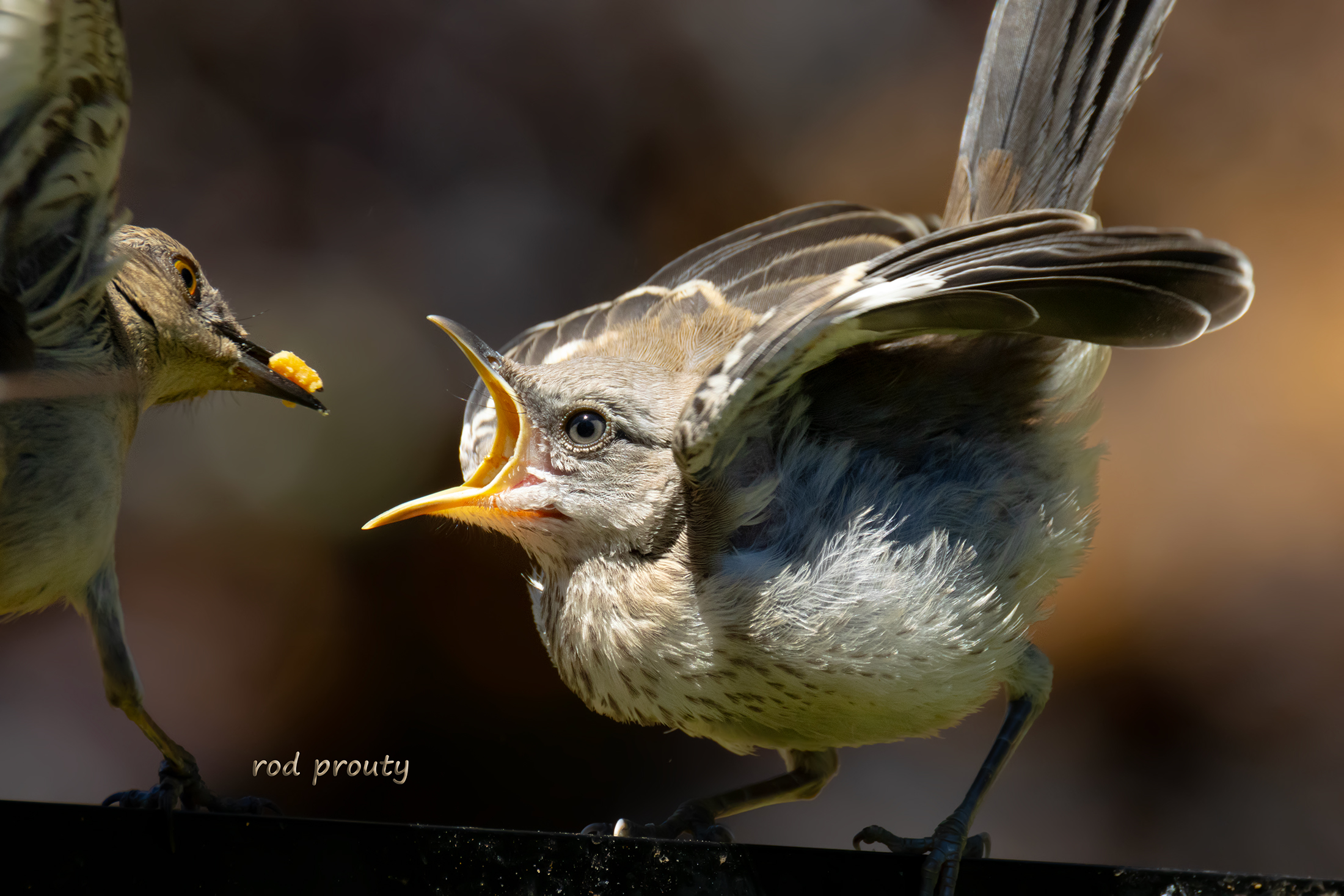
Very nice. It's fairly difficult to handhold at 800 mm, let alone 1120 too. Getting better at it.
I'm finding that while it's not quite an L grade lens in terms of features, it is quite competent and shows very good image quality. Looks like it takes the 1.4x nicely as well.
I have used the 200-800 + 1.4x for piling pixels on flying eagles for identification this season. The distances and angle of light are usually wrong to get art. But the details are there to get positive identifications of individual eagles.
This morning I got the 1120mm out to capture one of my favourites, the Spotted Flycatcher. Perhaps not the most colourful bird, but the posture, this bird has style! It has halfgrown chicks above the door now and expressed its utter despise for my presence, zrrr tec tec! At these distances, 6-10m, atmospherics are mostly not an issue, so the results were as in the image above. Those tiny feathers surrounding the eye and all. This with an R52. Yes there are some signs of diffraction at f/13 or f/14. But no one will notice them as the amount of detail is very high indeed and the bokeh total. A very useful lens combo this is!
Tom_W wrote:
Very nice. It's fairly difficult to handhold at 800 mm, let alone 1120 too. Getting better at it.
Some days I find 35mm difficult to handhold; I am consistently envious of everyone here who has sufficient technique to handhold birding-distance telephotos.
nightnight wrote:
Some days I find 35mm difficult to handhold; I am consistently envious of everyone here who has sufficient technique to handhold birding-distance telephotos.
IS helps a lot. And some shutter speed. Because if you let that drop, even stationary objects are hard to hold still.
I’ve generally been disappointed with the 200-800 lens with and w/o a extender. Recently, I’ve switched over to the 100-500L with and w/o a extender; the results are much better. Nice photo btw.
shutterbug guy wrote:
I’ve generally been disappointed with the 200-800 lens with and w/o a extender. Recently, I’ve switched over to the 100-500L with and w/o a extender; the results are much better. Nice photo btw.
Yes, with such an extreme tool as the 200-800, especially with 1.4x or 2x, there are more ways to get less satisfactory results than keepers. I would prefer the 100-500 too as it is optically better. But the 800mm FL with a lens good enough makes the 200-800 the prefered lens when high PPD will bring the goods home. Yes, the 100-500 can be good with the converters too providing more pixels per duck than the plain lens. My experience with the 2x is that I do prefer the plain 200-800 or add the 1.4x.
Perhaps you had a bad copy of the 200-800? Perhaps we perceive "much better" differently. I would say the optical differences between the 100-500 and 200-800 as mostly slight with only minute importance on the final result. The 200-800 can struggle with pure whites bleeding and be less than stellar against the light at some angles. But it, at least my copy, has its L-quality focal lengts from around 600mm f/8 to just ower 700mm. If the atmospherics allow.
With any lens, and perhaps more importantly with the slightly lesser than L-quality lenses it is beneficial to work with the strengths of the lens. Few lenses deliver their best results in every situation. Yes, the 100-500 is close. For a zoom lens.
Z250SA wrote:
Yes, with such an extreme tool as the 200-800, especially with 1.4x or 2x, there are more ways to get less satisfactory results than keepers. I would prefer the 100-500 too as it is optically better. But the 800mm FL with a lens good enough makes the 200-800 the prefered lens when high PPD will bring the goods home. Yes, the 100-500 can be good with the converters too providing more pixels per duck than the plain lens. My experience with the 2x is that I do prefer the plain 200-800 or add the 1.4x.
Perhaps you had a bad copy of the 200-800? Perhaps we perceive "much better" differently. I would say the optical differences between the 100-500 and 200-800 as mostly slight with only minute importance on the final result. The 200-800 can struggle with pure whites bleeding and be less than stellar against the light at some angles. But it, at least my copy, has its L-quality focal lengts from around 600mm f/8 to just ower 700mm. If the atmospherics allow.
With any lens, and perhaps more importantly with the slightly lesser than L-quality lenses it is beneficial to work with the strengths of the lens. Few lenses deliver their best results in every situation. Yes, the 100-500 is close. For a zoom lens....Show more →
yes, I found the 200-800 significantly better than the 100-500 for birds at a distance but I suppose the 100-500 is more versatile.
I haven't tried the 200-800 with a teleconverter / extender
I'm liking the 200-800 on the R5 better than the 100-500 on the R7.
Why? Well, better AF for one. But the bigger reason is not just more pixels per duck but more SQ-CM of sensor per duck. I collect more lumens in each picture so that despite the slower aperture of the lens (800 at f/9 vs 500 at f/7.1), I still get a cleaner image to work with. I can go that extra stop in ISO meaning a little more shutter speed.
I think the 100-500 is a superior lens - slightly more rugged, a few more features, and a half notch higher in ultimate IQ - but it's not better enough to offset the advantages of shooting with the 5-series instead of the 7.