p.1 #1 · Planning a Maned Wolf camera trap recon in Bolivia
I'm planning a reconnaissance expedition into the southern sector of Noel Kempff Mercado National Park in Bolivia, and as part of it I'll set up a small camera-trap proof of concept focused on the maned wolf. This park is the site of a Smithsonian study (Emmons et al.) that ran 2001–2011 and hasn't had a follow up study since.
I wrote up some background on the species and the study:
p.1 #4 · Planning a Maned Wolf camera trap recon in Bolivia
Well, this maned wolf character is getting some serious free rent in my mind. The plan is starting to obsess a bit on this animal to the point where I’m close to making it all about them.
I’ll make the call in the coming week and post an update article, once I’ve made my decision… stay tuned!
p.1 #7 · Planning a Maned Wolf camera trap recon in Bolivia
A follow-up to the first piece I posted, above, back in May.
Short version: the trip changed. What started as a photographic expedition to look for maned wolves in Noel Kempff has turned into something closer to a monitoring reconnaissance — six trail cameras, an actual methodology, and a working relationship with the Bolivian museum that hosted the original study fifteen years ago. I'm not a biologist and I say so plainly in the piece. That's been the interesting part.
I still want the photograph. It's just no longer the reason.
p.1 #8 · Planning a Maned Wolf camera trap recon in Bolivia
I read this while I was away on a short trip and had to come back to comment. I really enjoyed your writing style and found the whole article very interesting. Good luck with your future endeavors !
Gary
p.1 #9 · Planning a Maned Wolf camera trap recon in Bolivia
Thank you, Gary, I appreciate your kind words. Really, these stories are easy to tell… the people and the support they are providing for this project (not to mention the subject matter) are thoughtful and sincere, in a world where much is not.
Since posting the article this week, I’m considering a delay — two fractured metatarsals (paired with one 7kg 120-300 lens!) are giving me pause. Not too concerned about the lowlands which I can get around pretty much in a 4x4, but the planned 2000’ ascent to the plateau is just not realistic in an orthopedic boot…
p.1 #10 · Planning a Maned Wolf camera trap recon in Bolivia
imoretti wrote:
Thank you, Gary, I appreciate your kind words. Really, these stories are easy to tell… the people and the support they are providing for this project (not to mention the subject matter) are thoughtful and sincere, in a world where much is not.
Since posting the article this week, I’m considering a delay — two fractured metatarsals (paired with one 7kg 120-300 lens!) are giving me pause. Not too concerned about the lowlands which I can get around pretty much in a 4x4, but the planned 2000’ ascent to the plateau is just not realistic in an orthopedic boot…
Well that's understandable. I prefer to look at everything these days as "A work in progress". I try not to pressure myself into; I NEED to do this or that. I prefer to let things come along a bit more naturally these days. You seem to have a great head start on this project and if nothing else you've gained some perspective and knowledge. Hope you see it to completion one day.
Gary
p.1 #11 · Planning a Maned Wolf camera trap recon in Bolivia
So true about works in progress! And, to me, that’s key… I’m more about ‘getting there’ than ‘got there’. Not that the objective is irrelevant, of course
p.1 #12 · Planning a Maned Wolf camera trap recon in Bolivia
An update on the maned wolf project since I last posted the “study that stopped” piece, above.
First, on the method and the thinking behind it — how a non-biologist (me) ends up building the thing carefully: the camera-trap design is the animal’s own ecology turned into a map — the most encouraging sighting I have is of a juvenile spotted on a road, plus the (unglamorous!) GIS work that makes the cams relocatable so a future season can be compared to this one. (I’m using Mergin Maps.) The cameras are a donation to the park and the data will go to the museum that anchored the original study.
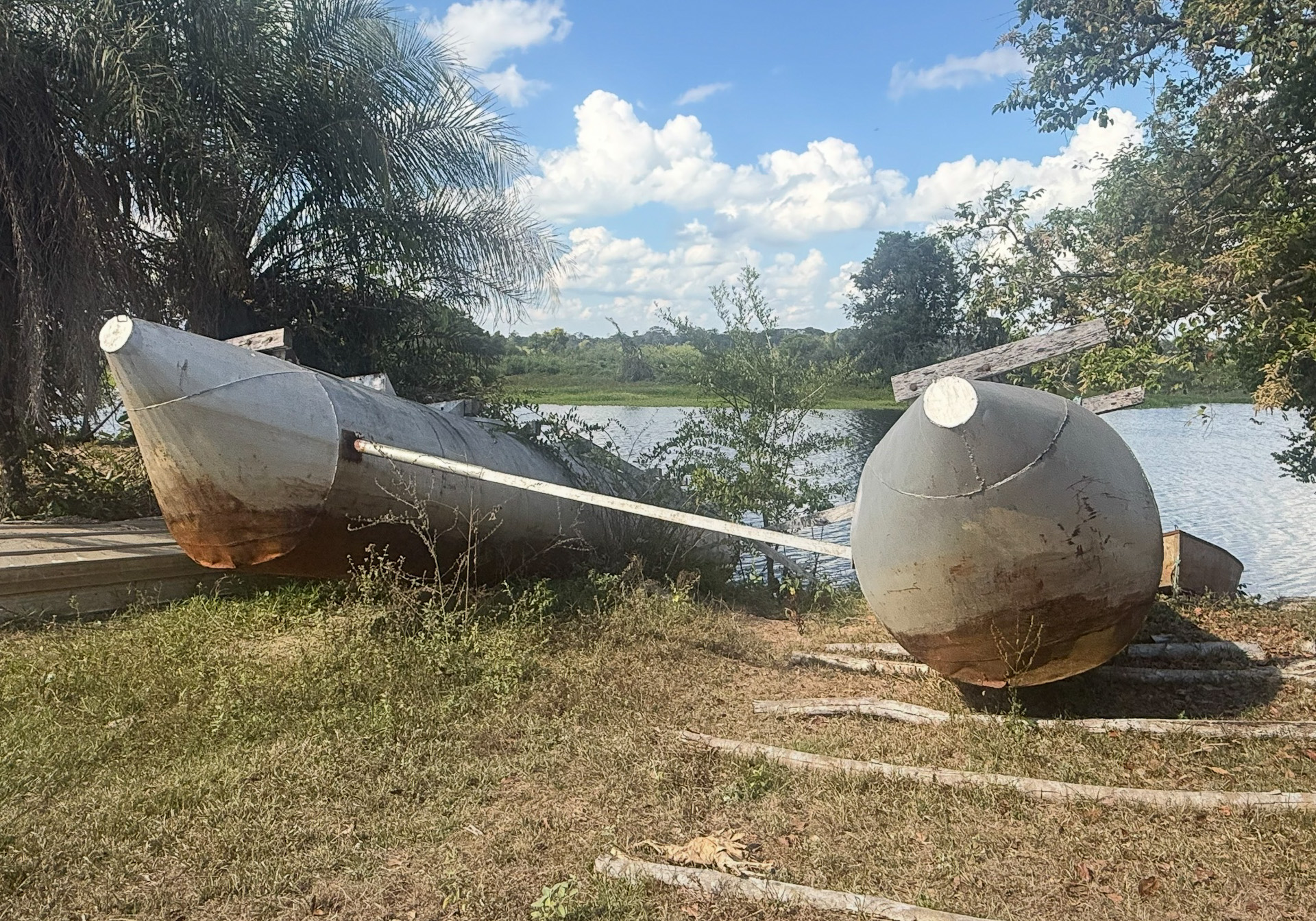
Second, the reconnaissance trip itself — the overland route to the park’s edge last week, the access realities (the only vehicle crossing is a broken pontoon), and what October’s deployment will actually ask. No park entry yet; this was learning the ground.