What is the point of digitally post-processing film?
p.3 #1What is the point of digitally post-processing film?
old_hikingman wrote:
The original image was a 6x6cm Ektachrome transparency that was taken 59 years ago. The Berkeley, CA Kodak lab at the time often screwed up the processing of my 6x6 film and this image had a color cast issue from the get go and deteriorated more in my possession.
Thank you for the reply, and again for the conservation work. (Tens of winters have passed since I visited RNF.)
I've had my Z5ii since last autumn so I'm a newbie when it comes to processing digital pics, especially from color film. (FWIW, I also use a Tamron 90mm macro, F-mount w/FTZ to scan film.) My Ektachrome slides from 50+ years ago still look the way I remember them, and scan to be accurate. It does make a difference if White Balance isn't correct, but in most cases, especially with outdoor pics, the Auto-0 setting works just fine. In the film itself I've never seen color shifts as dramatic as yours, in fact none at all that I can detect.
For fun, here are three pics from 1971, 55 years ago. Sequoia NP, not Redwood, but similar enough. Scanned last October. IIRC, these are all Ektachrome but I might be wrong.

(I'm the skinny guy on the left. The guy on the right is my twin.)


On the road heading west. The VW van is a retired school bus so the color is accurate.
Negatives are a different game however. Subtle changes in the base color correction make visible changes in the final positive. That's why I wondered about yours.
The original image was a 6x6cm Ektachrome transparency that was taken 59 years ago. The Berkeley, CA Kodak lab at the time often screwed up the processing of my 6x6 film and this image had a color cast issue from the get go and deteriorated more in my possession.
Thank you for the reply, and again for the conservation work. (Tens of winters have passed since I visited RNF.)
I've had my Z5ii since last autumn so I'm a newbie when it comes to processing digital pics, especially from color film. (FWIW, I also use a Tamron 90mm macro, F-mount w/FTZ to scan film.) My Ektachrome slides from 50+ years ago still look the way I remember them, and scan to be accurate. It does make a difference if White Balance isn't correct, but in most cases, especially with outdoor pics, the Auto-0 setting works just fine. In the film itself I've never seen color shifts as dramatic as yours, in fact none at all that I can detect.
For fun, here are three pics from 1971, 55 years ago. Sequoia NP, not Redwood, but similar enough. Scanned last October. IIRC, these are all Ektachrome but I might be wrong.
(I'm the skinny guy on the left. The guy on the right is my twin.)
On the road heading west. The VW van is a retired school bus so the color is accurate.
Negatives are a different game however. Subtle changes in the base color correction make visible changes in the final positive. That's why I wondered about yours.
Jul 29, 2026 at 01:37 PM
p.3 #2What is the point of digitally post-processing film?
Desmolicious wrote:
Absolutely lovely Dave! I actually like both - they just have a different vibe.
My only criticism is the sky in the second one looks too cyan/saturated on my monitor. I would see if reducing the saturation a little and adding a little pink tone helps.
And you will be fine this fall! I predict many more happy and productive years! Especially since you have now joined us here
Thank you for guaranteeing an extension of my life - I've been looking for a good medicine man
I see the cyanish aspect in the sky you refer to. As time allows I will try and polish the rough edges!
Dave
Jul 29, 2026 at 02:08 PM
p.3 #3What is the point of digitally post-processing film?
jimmuller wrote:
On the road heading west. The VW van is a retired school bus so the color is accurate.
Negatives are a different game however. Subtle changes in the base color correction make visible changes in the final positive. That's why I wondered about yours.
You have some spotting left to do on that sky
No doubt that my preoccupation with just getting scans done and some major correcting work finished, has left me with some "errors" you guys are quick to notice - Good job!
Here are a few more of my scans to show a bit more of the scope of my project. Only showing the "corrected" version.
1) A majority of my work is actually B&W and are aerials. In this example early road building and logging above Redwood National Park 5 years after creation
2) Color aerial showing nearly completed clearcutting to boundary of new park. Originals were grossly red
3) Eroded slope above a small side stream flowing into the new park
4) When I had opportunity for human scale, I tried to use it. Here a woman stands down in a cat track
5) Shot negative film a few times, which resulted in better color recovery. Log truck emerging from the fog. Finding neutral color in the fog and on dusty log road helped find the right balance for the scene
EDIT: I confess that a couple of these are scans by an Epson V750 Pro and processed first in Silverfast, then photoshop. In some instances, I've found no need to go further but I've gotten far better results in most instances using my Z7ii camera.

Photo taken June 11, 1973 of east slope Redwood Creek

Photo taken May 1971

Photo taken Oct 25, 1971 ln afternoon sometime

Photo taken Nov 06, 1971. Ground is wet so soil is darkened

Photo taken in the am on October 25, 1971
On the road heading west. The VW van is a retired school bus so the color is accurate.
Negatives are a different game however. Subtle changes in the base color correction make visible changes in the final positive. That's why I wondered about yours.
You have some spotting left to do on that sky
No doubt that my preoccupation with just getting scans done and some major correcting work finished, has left me with some "errors" you guys are quick to notice - Good job!
Here are a few more of my scans to show a bit more of the scope of my project. Only showing the "corrected" version.
1) A majority of my work is actually B&W and are aerials. In this example early road building and logging above Redwood National Park 5 years after creation
2) Color aerial showing nearly completed clearcutting to boundary of new park. Originals were grossly red
3) Eroded slope above a small side stream flowing into the new park
4) When I had opportunity for human scale, I tried to use it. Here a woman stands down in a cat track
5) Shot negative film a few times, which resulted in better color recovery. Log truck emerging from the fog. Finding neutral color in the fog and on dusty log road helped find the right balance for the scene
EDIT: I confess that a couple of these are scans by an Epson V750 Pro and processed first in Silverfast, then photoshop. In some instances, I've found no need to go further but I've gotten far better results in most instances using my Z7ii camera.
Photo taken June 11, 1973 of east slope Redwood Creek
Photo taken May 1971
Photo taken Oct 25, 1971 ln afternoon sometime
Photo taken Nov 06, 1971. Ground is wet so soil is darkened
Photo taken in the am on October 25, 1971
Jul 29, 2026 at 03:51 PM
p.3 #4What is the point of digitally post-processing film?
old_hikingman wrote:
Negatives are a different game however. Subtle changes in the base color correction make visible changes in the final positive. That's why I wondered about yours.You have some spotting left to do on that sky
No doubt that my preoccupation with just getting scans done and some major correcting work finished, has left me with some "errors" you guys are quick to notice - Good job!
Here are a few more of my scans to show a bit more of the scope of my project. Only showing the "corrected" version.
1) A majority of my work is actually B&W and are aerials. In this example early road building and logging above Redwood National Park 5 years after creation
2) Color aerial showing nearly completed clearcutting to boundary of...Show more →
Love these pics, keep ‘em coming!
jimmuller wrote
On the road heading west. The VW van is a retired school bus so the color is accurate.Negatives are a different game however. Subtle changes in the base color correction make visible changes in the final positive. That's why I wondered about yours.
No doubt that my preoccupation with just getting scans done and some major correcting work finished, has left me with some "errors" you guys are quick to notice - Good job!
Here are a few more of my scans to show a bit more of the scope of my project. Only showing the "corrected" version.
1) A majority of my work is actually B&W and are aerials. In this example early road building and logging above Redwood National Park 5 years after creation
2) Color aerial showing nearly completed clearcutting to boundary of...Show more →
Love these pics, keep ‘em coming!
Sep 18, 2026 at 09:17 AM
p.3 #5What is the point of digitally post-processing film?
Desmolicious wrote:
Love these pics, keep ‘em coming!
OK - 3 more aerials taken with Hasselblad 500C and 80mm Planar lens with Kodak 125 Plus-X ASA125
BACKGROUND: Original Redwood NP established in 1968 but left huge intact forested ares just upslope of a narrow strip being protected along Redwood Creek. The 3 photos are of the clearcutting that took place on lands that should have been protected. 10 years later, the park was expanded to take in ecologically sound boundaries. But not in time to save areas shown.
Photo 1 - Large expanse of clearcutting which clearly shows almost total disruption of the original deep soils.
Photo 2 - Heavy equipment like log trucks served to help viewers relate those dimensions to the landscape.
Photo 3 - The famous Tall Trees bend on Redwood Creek, where in 1964 the 1st, 3rd and 6th tallest known trees were found.
Those rankings are no longer and actually the "new" tallest tree - Hyperion - is just at or slightly off image at bottom, in a side canyon.
Photos 2 & 3 have been widely publicized.
Dave
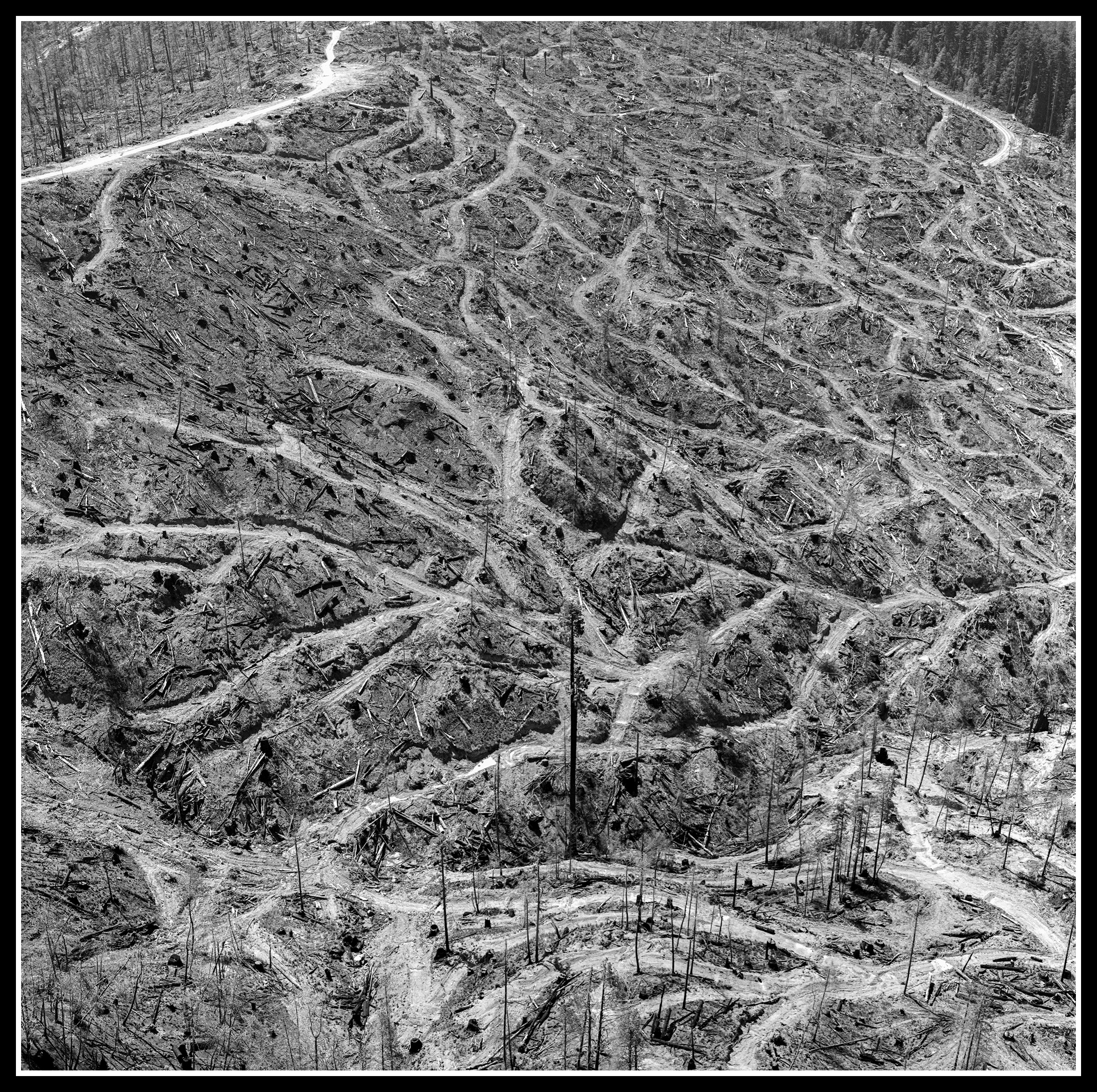
June 11, 1973
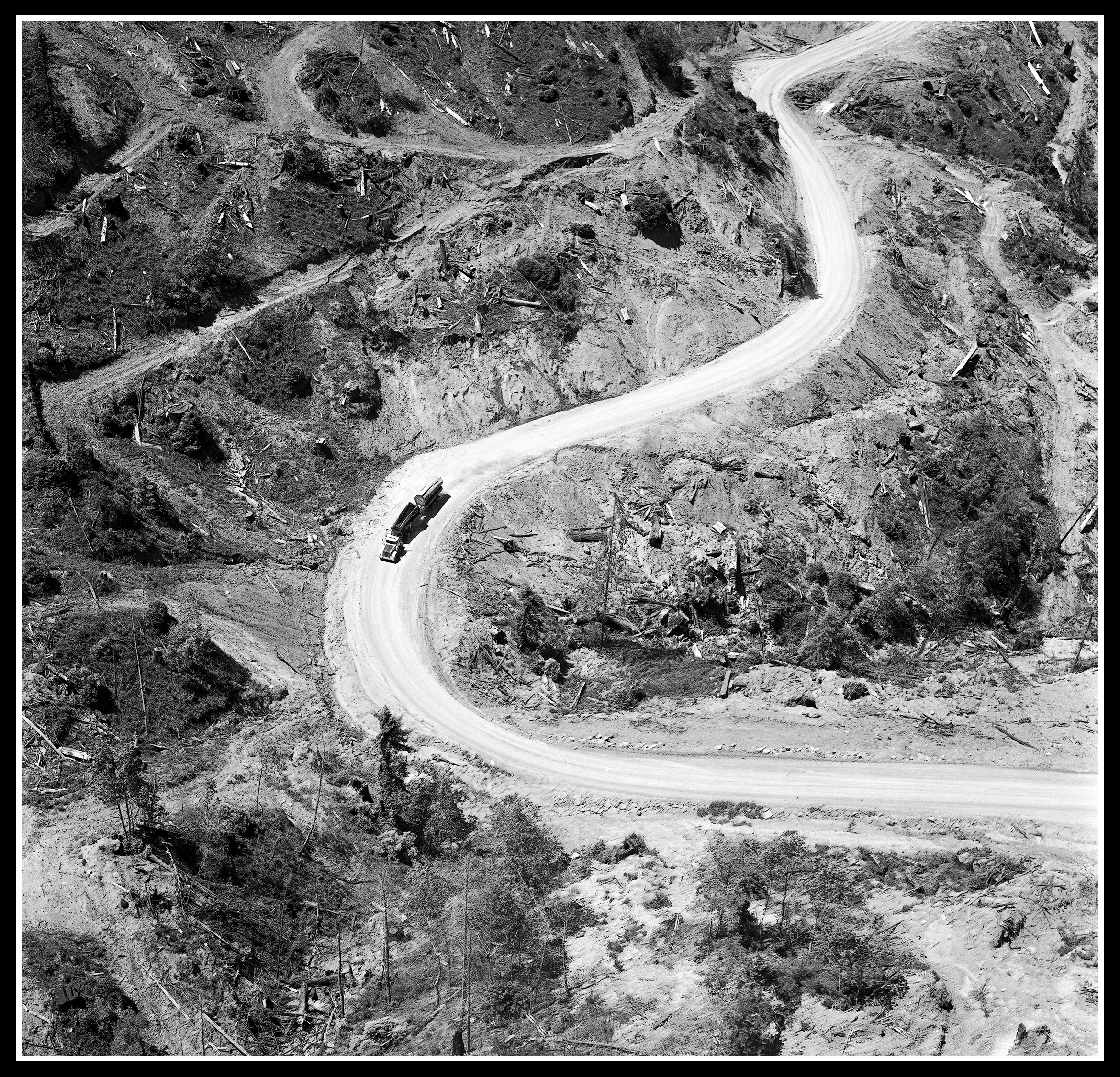
June 11, 1973. Shows land slippage details
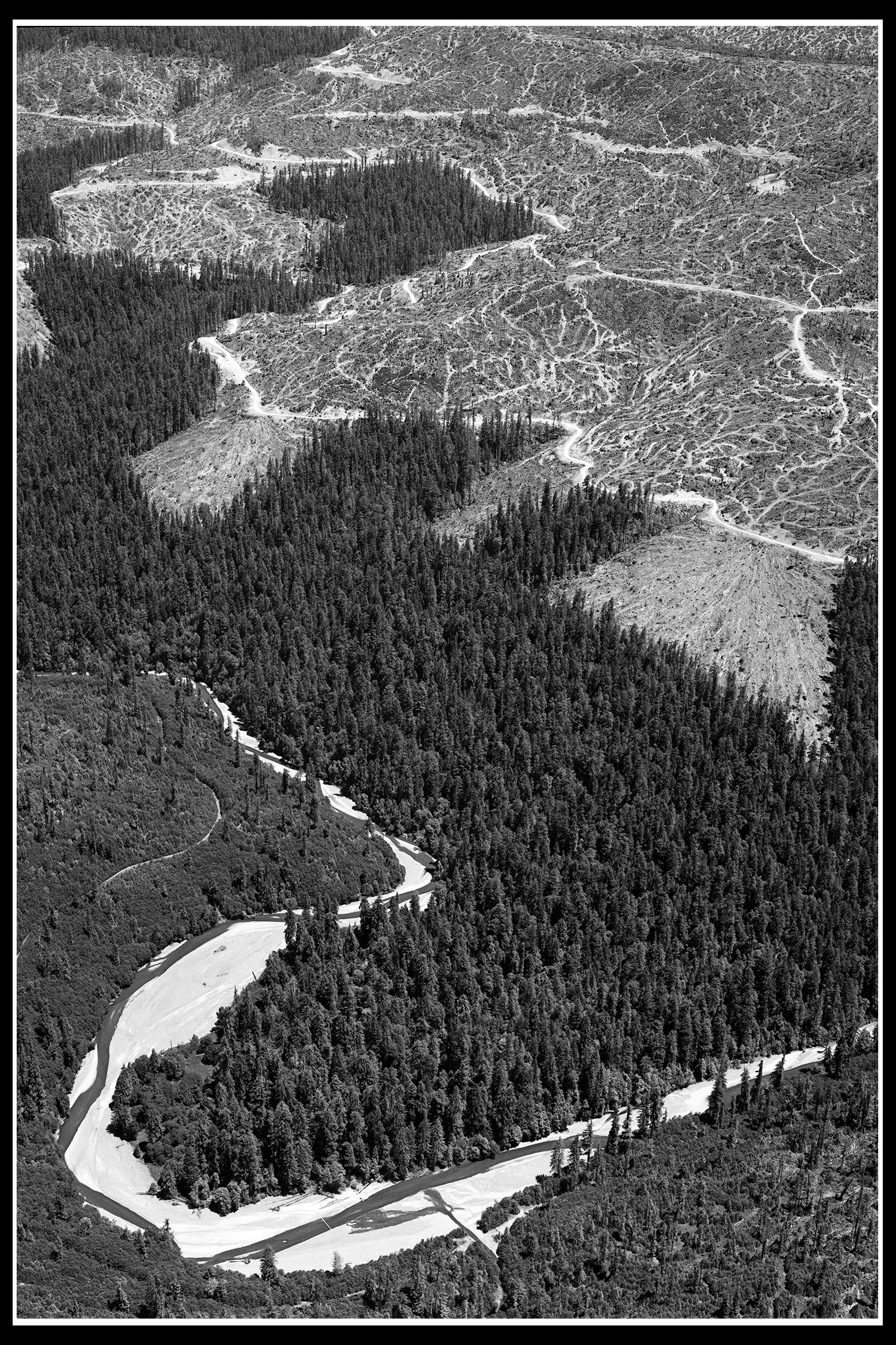
June 25, 1976. Not long after, camera was stolen in San Francisco
Love these pics, keep ‘em coming!
OK - 3 more aerials taken with Hasselblad 500C and 80mm Planar lens with Kodak 125 Plus-X ASA125
BACKGROUND: Original Redwood NP established in 1968 but left huge intact forested ares just upslope of a narrow strip being protected along Redwood Creek. The 3 photos are of the clearcutting that took place on lands that should have been protected. 10 years later, the park was expanded to take in ecologically sound boundaries. But not in time to save areas shown.
Photo 1 - Large expanse of clearcutting which clearly shows almost total disruption of the original deep soils.
Photo 2 - Heavy equipment like log trucks served to help viewers relate those dimensions to the landscape.
Photo 3 - The famous Tall Trees bend on Redwood Creek, where in 1964 the 1st, 3rd and 6th tallest known trees were found.
Those rankings are no longer and actually the "new" tallest tree - Hyperion - is just at or slightly off image at bottom, in a side canyon.
Photos 2 & 3 have been widely publicized.
Dave
June 11, 1973
June 11, 1973. Shows land slippage details
June 25, 1976. Not long after, camera was stolen in San Francisco
Sep 18, 2026 at 02:18 PM

p.3 #6What is the point of digitally post-processing film?
Do you think that’s lead poisoning? Talking about the Commercial Printer’s developing the “shakes”
old_hikingman wrote:
A dear 90 year old friend passed away recently and I will have access to his film gear (Nikon 35mm & Linhof 23 roll film) so I wandered over to the film forum and got interested in this thread. I have personally gone digital since 2002 but before that ran a small commercial custom printing business and a majority of the work was Cibachrome, using my own custom developers to reduce the extreme contrast of the process. Dodging and burning and the like was done on almost every exposure. An early 80's recession did me in!
I do not see...Show more →
Sep 19, 2026 at 08:43 AM
p.3 #7What is the point of digitally post-processing film?
Surfnsun wrote:
Do you think that’s lead poisoning? Talking about the Commercial Printer’s developing the “shakes”
In the 60's - 80's, even my Humboldt Bay area of about 100,000 people had numerous film labs bulk developing B&W and maybe color too. I frankly don't know what differences there were with those chemistries vs. what I did in my own well equipped mini-lab where I could work with paper sizes up to 20 x 24 inch.
For me personally, it was the B&W fixer that got to me the most and Cibachrome bleach, which I used by the quart full in a Merz processor. I could open a door and stand outside in fresh air as the fumes moved out
Back to the commercial guys I knew - it must have been something in those B&W chemistries, I'm sure, that got to them eventually as they were at it over 3 to 4 decades and color wasn't as common yet. But that is just a guess. Unfortunately, I don't know what those chemistries contained.
I now recall a story that was related to me by the owner of what became the last major film processing business up here and he was 2nd generation Kodak after his father who worked for Kodak all his life. His father was part of a survey of over 37,000 retired employees in the Rochester industrial area that made the Kodak chemistries, IIRC. Average life after retirement was a little more that 2 years!!!!! Again, IIRC.
It speaks to the results of being exposed way too long to some pretty potent stuff.
Dave
Sep 19, 2026 at 12:07 PM
p.3 #8What is the point of digitally post-processing film?
Lightroom works very well with scanned b/w film as well. I have an underexposed negative salvaged by moving a few sliders around. I wouldn’t have been able to save in a darkroom.
Also I have no access to a darkroom so I give them to friend who is an expert inkjet printer. The prints do not disappoint. It’s not a unique look like on Portriga Rapid warm tone fiber but even that is possible for the skilled.
Also I have no access to a darkroom so I give them to friend who is an expert inkjet printer. The prints do not disappoint. It’s not a unique look like on Portriga Rapid warm tone fiber but even that is possible for the skilled.
Sep 19, 2026 at 01:57 PM
p.3 #9What is the point of digitally post-processing film?
hkrazerx wrote:
Lightroom works very well with scanned b/w film as well. I have an underexposed negative salvaged by moving a few sliders around. I wouldn’t have been able to save in a darkroom.
Exactly! I scanned 1,500+ 6x6cm negs on a flatbed 8-10 years ago and found Lightroom the quickest good way to make positives and "fix" my frequent tendency to underexposure
Dave
Sep 19, 2026 at 02:17 PM
p.3 #10What is the point of digitally post-processing film?
In my view, it's always been a crutch for those people who don't know the basics of photography.
Post-processing is used to fix up overexposure under exposure blowouts and anything else that the guy couldn't do at the point of the shutter.
Film on the other hand, forces you to take your time forces you to make decisions because unless you have your own dark room, you're going to wait a couple of weeks to get your images back and only then will you know if you know what you're doing.
Sep 21, 2026 at 08:27 PM
|
p.3 #11What is the point of digitally post-processing film?
dpsaiz wrote:
In my view, it's always been a crutch for those people who don't know the basics of photography.
Post-processing is used to fix up overexposure under exposure blowouts and anything else that the guy couldn't do at the point of the shutter.
I know this thread has been dormant for a while but I'll respond anyway.
Post processing is more than just adjusting exposure, certainly more than "the basics of photography". Cropping is a good example. Every time I go out with the camera I ask myself what lenses to carry for what I expect to see. Sometimes I guess wrong. Use to short a FL and you get stuff on the edges you didn't want.
The dynamic range of your film is whatever it is. It may not always balance light and dark areas the way you want, but you can adjust exposure only so much by playing with reciprocity. If you aren't doing your own printing or aren't printing at all, post-processing a scanned image can help you get what the film couldn't give you.
Color saturation is whatever the film gives you. The roll you selected for last week's shots may not appropriate for this week's, if your goal requires that much subtlety.
And some of us even after 50+ years at the game aren't skilled or experienced enough to "get it right on the film" every time in the first place.
Oct 17, 2026 at 06:02 AM
p.3 #12What is the point of digitally post-processing film?
old_hikingman wrote:
In the 60's - 80's, even my Humboldt Bay area of about 100,000 people had numerous film labs bulk developing B&W and maybe color too. I frankly don't know what differences there were with those chemistries vs. what I did in my own well equipped mini-lab where I could work with paper sizes up to 20 x 24 inch.
For me personally, it was the B&W fixer that got to me the most and Cibachrome bleach, which I used by the quart full in a Merz processor. I could open a door and stand outside in fresh air as the fumes...Show more →
I have always wondered about the health aspect. I have worked in a commercial studio for 37 years and other small photo places since High School. At the studio I work at, which has been around for 61 years, I know of at least 7 of us have had prostate cancer. I always wondered if there was a connection or if we all just like to much red meat : ).
The black and white fixer is a powerful thing. We ran 3.5 gallon deep tanks for our Black and White line. The person I took over from, his lungs would get heavy when he took off the floating lids. He started to wear a respirator after that started. I always wore one and gloves from the start.
The project you are working on looks amazing. I truly hope that when I am your age I will still be going strong at this like you are.
Bill K
Surfnsun wrote
Do you think that’s lead poisoning? Talking about the Commercial Printer’s developing the “shakes”For me personally, it was the B&W fixer that got to me the most and Cibachrome bleach, which I used by the quart full in a Merz processor. I could open a door and stand outside in fresh air as the fumes...Show more →
I have always wondered about the health aspect. I have worked in a commercial studio for 37 years and other small photo places since High School. At the studio I work at, which has been around for 61 years, I know of at least 7 of us have had prostate cancer. I always wondered if there was a connection or if we all just like to much red meat : ).
The black and white fixer is a powerful thing. We ran 3.5 gallon deep tanks for our Black and White line. The person I took over from, his lungs would get heavy when he took off the floating lids. He started to wear a respirator after that started. I always wore one and gloves from the start.
The project you are working on looks amazing. I truly hope that when I am your age I will still be going strong at this like you are.
Bill K
Oct 25, 2026 at 06:48 PM
p.3 #13What is the point of digitally post-processing film?
dpsaiz wrote:
In my view, it's always been a crutch for those people who don't know the basics of photography.
Post-processing is used to fix up overexposure under exposure blowouts and anything else that the guy couldn't do at the point of the shutter.
Film on the other hand, forces you to take your time forces you to make decisions because unless you have your own dark room, you're going to wait a couple of weeks to get your images back and only then will you know if you know what you're doing.
You should see the amount of post processing Ansel Adams did to get his final prints.
“I have often said that the negative is similar to a musician's score, and the print to the performance of that score. The negative comes to life only when "performed" as a print.”
Oct 26, 2026 at 09:30 AM
p.3 #14What is the point of digitally post-processing film?
Desmolicious wrote:
You should see the amount of post processing Ansel Adams did to get his final prints.
“I have often said that the negative is similar to a musician's score, and the print to the performance of that score. The negative comes to life only when "performed" as a print.”
Yes, and I think this link has been posted on this thread earlier but worth posting again as it shows some typical darkroom "post-processing" decisions at the print stage by a master printer for some Magnum photographers:
https://www.magnumphotos.com/theory-and-practice/famous-faces-from-the-darkroom/
Oct 26, 2026 at 11:49 AM
p.3 #15What is the point of digitally post-processing film?
bjhurley wrote:
“I have often said that the negative is similar to a musician's score, and the print to the performance of that score. The negative comes to life only when "performed" as a print.”Yes, and I think this link has been posted on this thread earlier but worth posting again as it shows some typical darkroom "post-processing" decisions at the print stage by a master printer for some Magnum photographers:
https://www.magnumphotos.com/theory-and-practice/famous-faces-from-the-darkroom/
Those Magnum photographers were hacks who could not get the basics of film photography down.

p.s. thanks for posting that link - fascinating! The photo of HCB? If it was me, I would have kept his face a bit lighter as in the 'original '.
Desmolicious wrote
You should see the amount of post processing Ansel Adams did to get his final prints.“I have often said that the negative is similar to a musician's score, and the print to the performance of that score. The negative comes to life only when "performed" as a print.”
https://www.magnumphotos.com/theory-and-practice/famous-faces-from-the-darkroom/
Those Magnum photographers were hacks who could not get the basics of film photography down.
p.s. thanks for posting that link - fascinating! The photo of HCB? If it was me, I would have kept his face a bit lighter as in the 'original '.
Oct 26, 2026 at 02:22 PM
p.3 #16What is the point of digitally post-processing film?
And shooting store-bought film is a crutch too. ~Real photographers~ make their own emulsion, shoot with the camera they build, and use optics they ground/polished.
Oct 27, 2026 at 07:04 AM
p.3 #17What is the point of digitally post-processing film?
theHUN wrote:
And shooting store-bought film is a crutch too. ~Real photographers~ make their own emulsion, shoot with the camera they build, and use optics they ground/polished.
Pffft. Imagine needing to use optics.
And shooting store-bought film is a crutch too. ~Real photographers~ make their own emulsion, shoot with the camera they build, and use optics they ground/polished.
Pffft. Imagine needing to use optics.
Oct 27, 2026 at 07:15 AM
p.3 #18What is the point of digitally post-processing film?
tile_86 wrote:
Pffft. Imagine needing to use optics.
~Real photographers~ use pinholes.
theHUN wrote
And shooting store-bought film is a crutch too. ~Real photographers~ make their own emulsion, shoot with the camera they build, and use optics they ground/polished.~Real photographers~ use pinholes.
Oct 27, 2026 at 07:16 AM
