Voigtlander 75mm f/2.8 APO-Skopar Review
p.1 #1Voigtlander 75mm f/2.8 APO-Skopar Review
|
Now in stock!
CameraQuest: Black | Silver
B&H Photo: Black and Silver
Review Quick Links:
- About the lens
- Infinity Resolution and Contrast on Leica M10-R (41MP)
- Infinity Resolution and Contrast adapted to Sony A7R II (42MP)
- Field Curvature
- Distortion
- Minimal Focus Distance: Resolution and Contrast
- Sunstar rendering, Flare resistance and Vignetting
- Rendering compared to MS Optics 73mm f/1.5 Sonnetar at f/2.8
- Chromatic aberration control: Purple Fringing, Axial and Lateral CA
- Flare Resistance
- Final Thoughts
- Samples 1: At various distances and lighting
- Samples 2: A few portraits at various distances
- Samples 3: Various lighting and subjects
- Samples 3: Various lighting and subjects II
Voigtlander 75mm f/2.8 APO-Skopar - Intro:
Is the Voigtlander 75mm f/2.8 APO-Skopar the most compact, high-performing telephoto lens ever made?
 |
||
 |
||
|
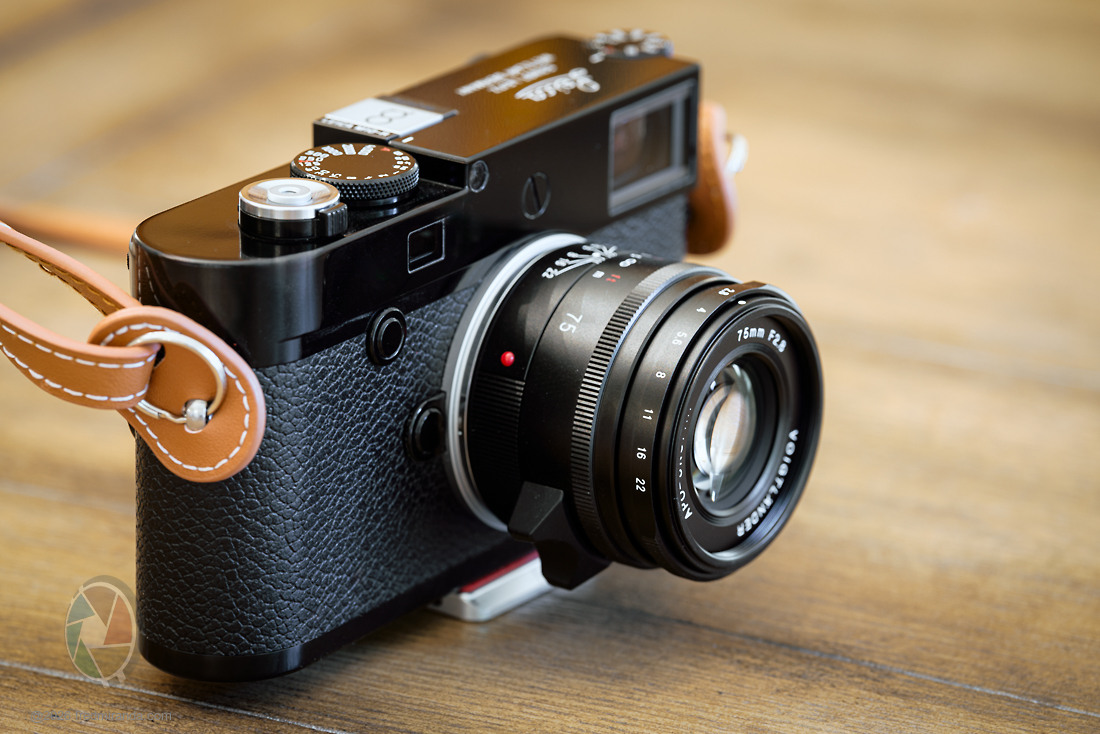
Cosina officially announced the Voigtlander 75mm f/2.8 APO-Skopar for a May release after its early showing at CP+, and on paper it’s a bit of a standout. It’s the smallest 75mm lens ever made for the Leica M system, yet it brings an apochromatic design aimed at reducing axial chromatic aberration to near-zero. That combination alone raises expectations.
|
||
 |
||
|
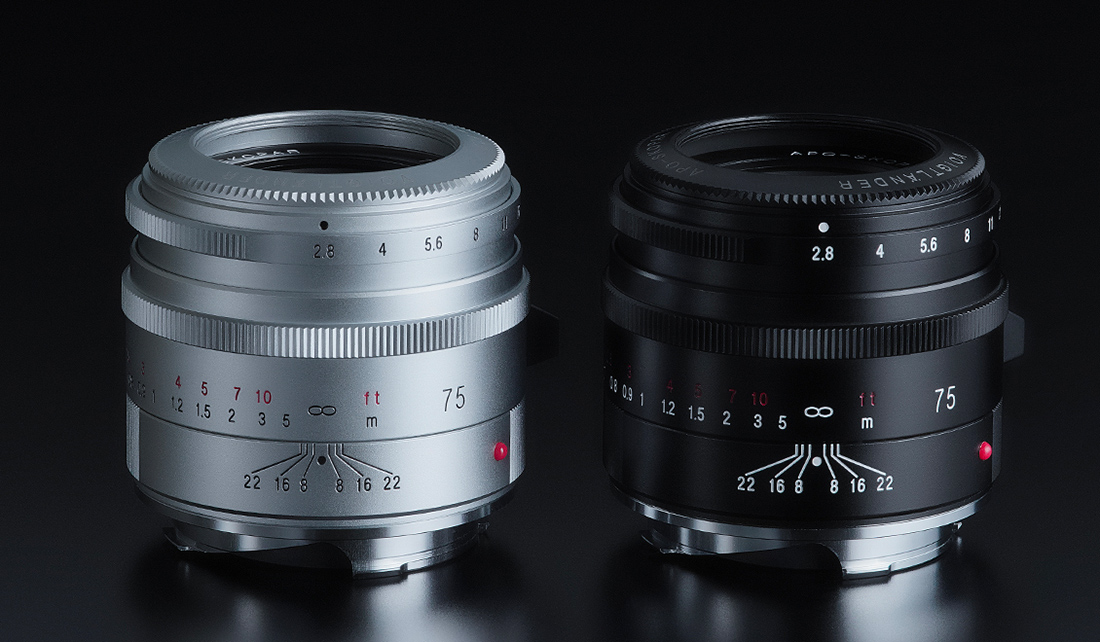
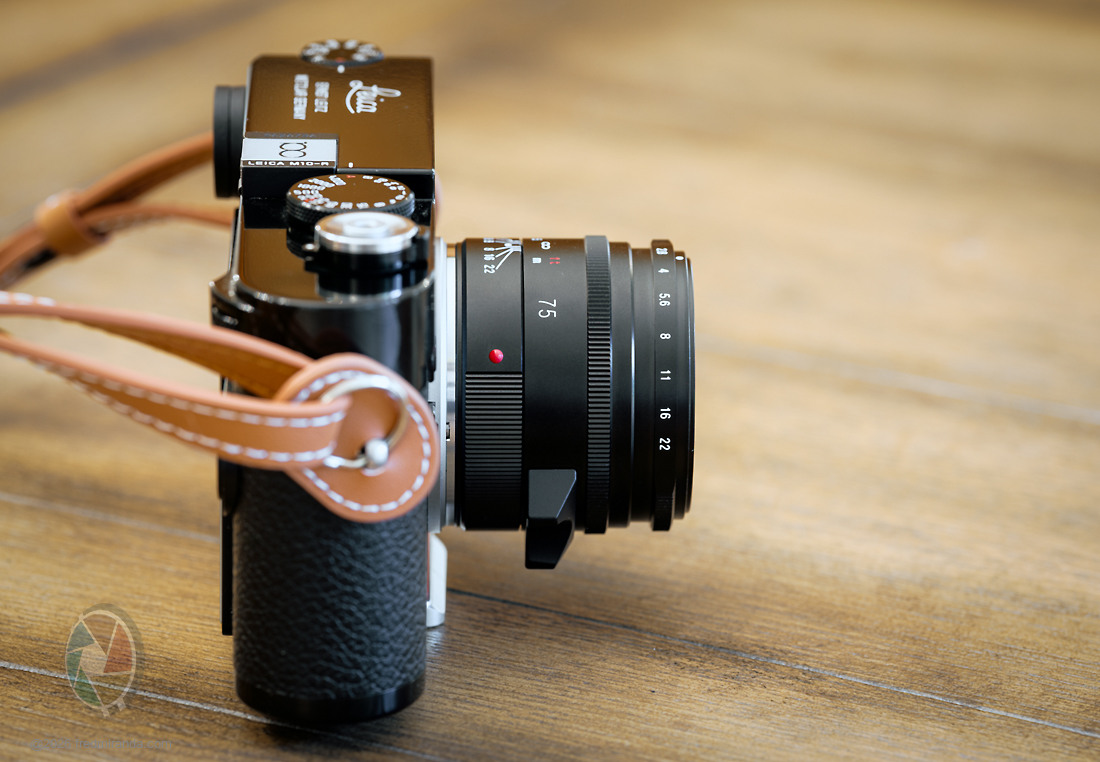
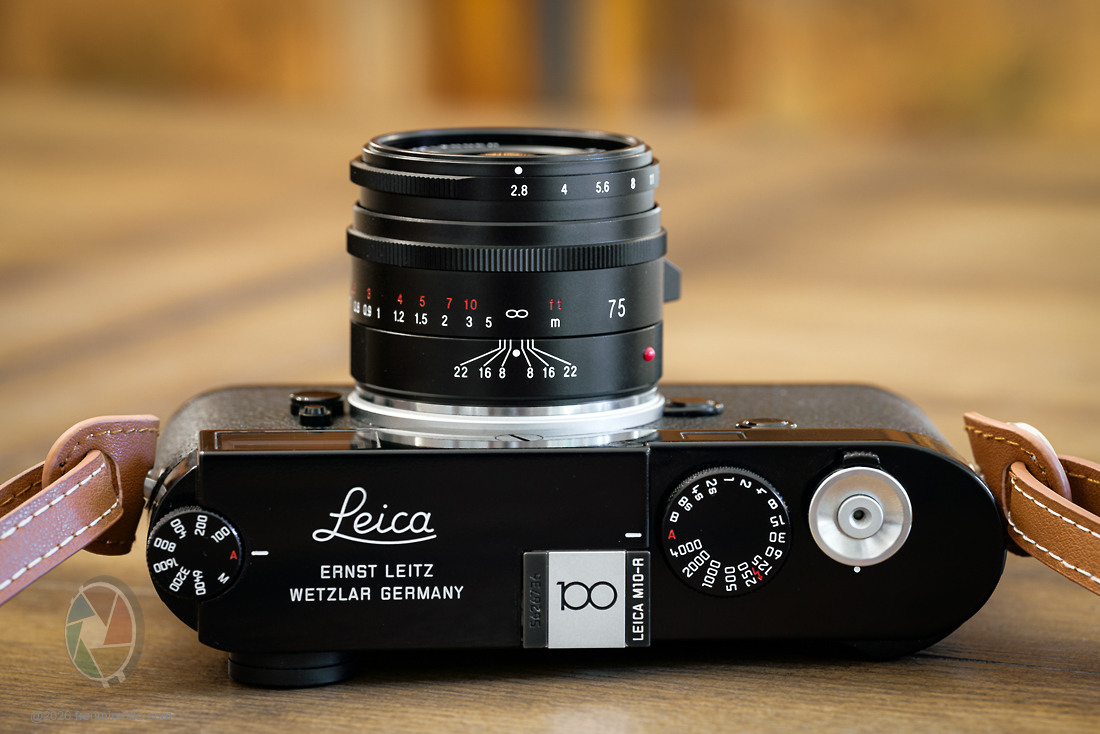
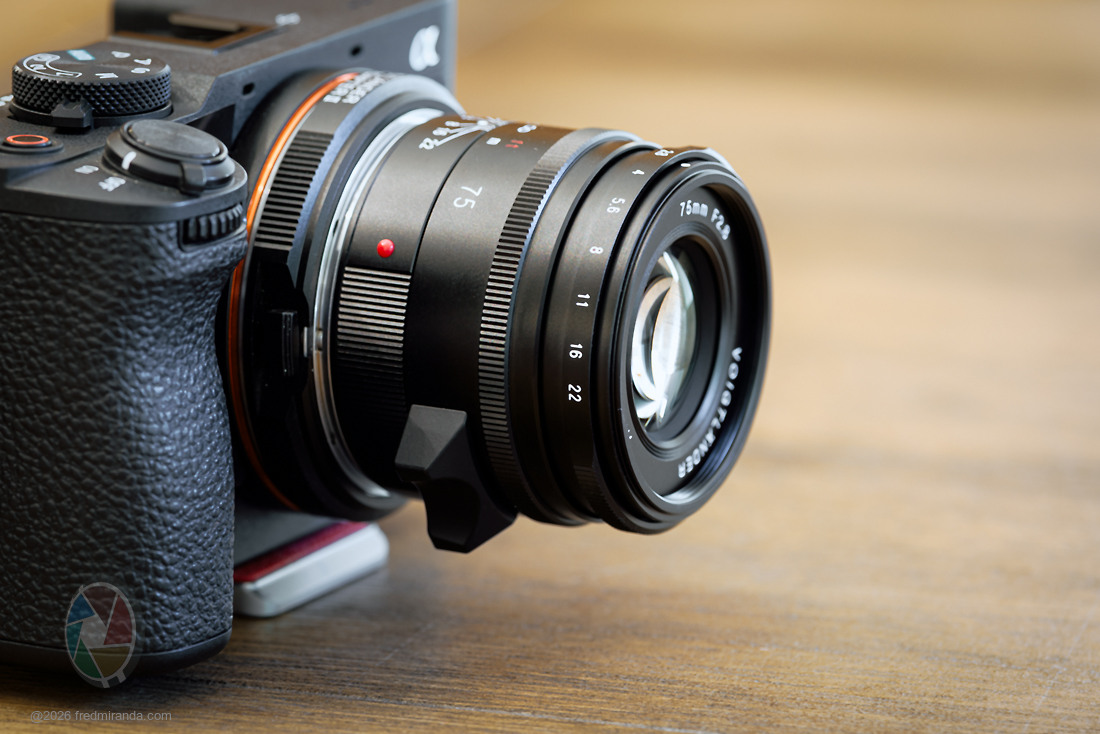
What makes this lens particularly interesting is how clearly it was designed around the rangefinder experience. Despite its f/2.8 aperture, it does not block the 75mm framelines, even with the included low-profile hood. In use, it behaves more like a compact 50mm than a typical telephoto, something you can't say about most 75mm lenses.
|
||
 |
||
|
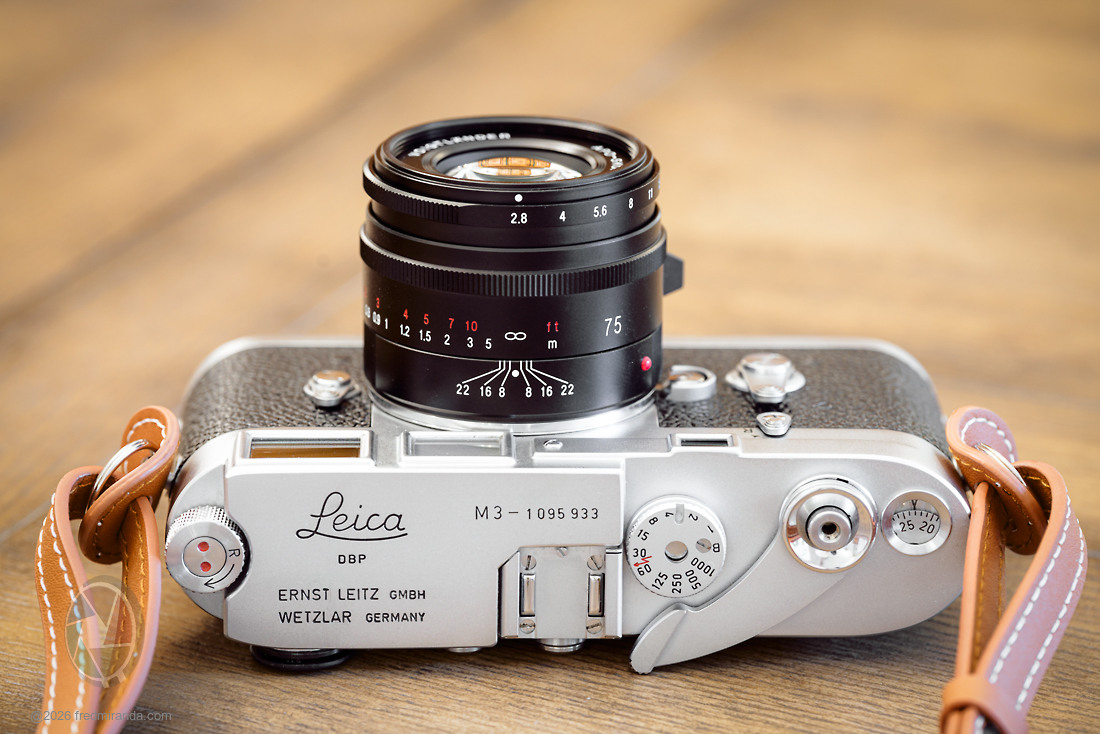
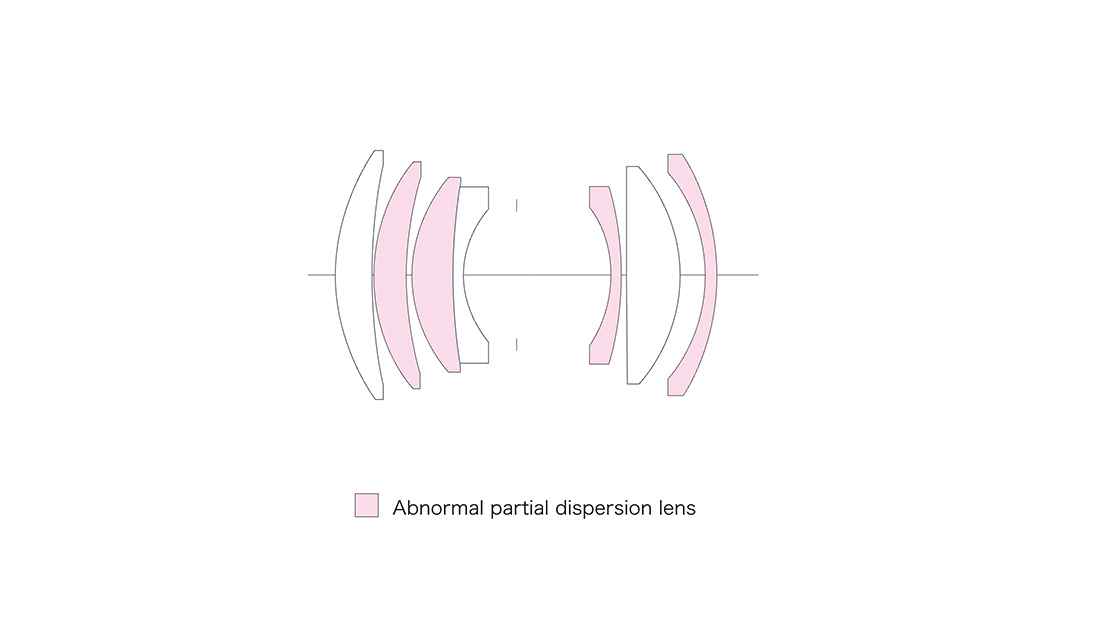
The optical formula is simple, 7 elements in 6 groups, with four elements made from anomalous partial dispersion glass to control color fringing. Just as important, Cosina avoided aspherical elements, likely because they are less critical in a short telephoto design, and to preserve smoother rendering while avoiding the harsher structure sometimes seen in specular highlights. The design leans toward a more classic, symmetrical approach, prioritizing rendering consistency over optical tricks.
|
||
 |
||
|
That level of compactness does come with a trade-off. The minimum focus distance (MFD) is limited to 0.7m, which is also the practical limit of the rangefinder coupling system. Modern designs, however, often push closer MFD when relying on live view focusing.
|
||
 |
||
|
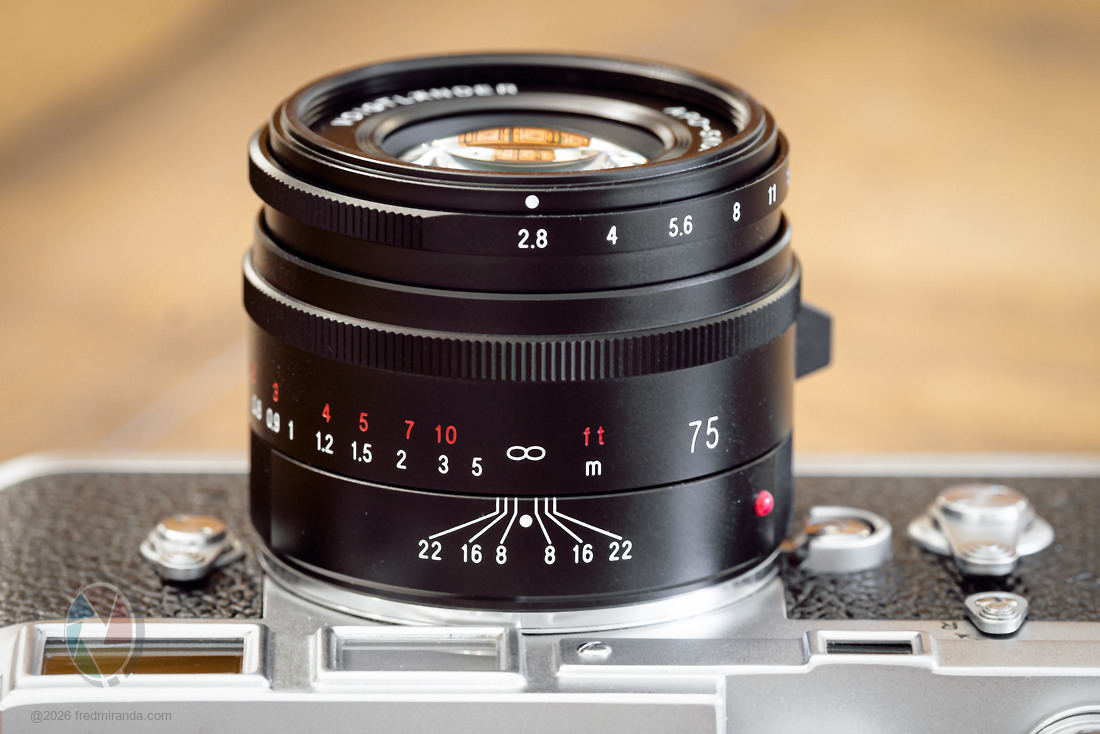
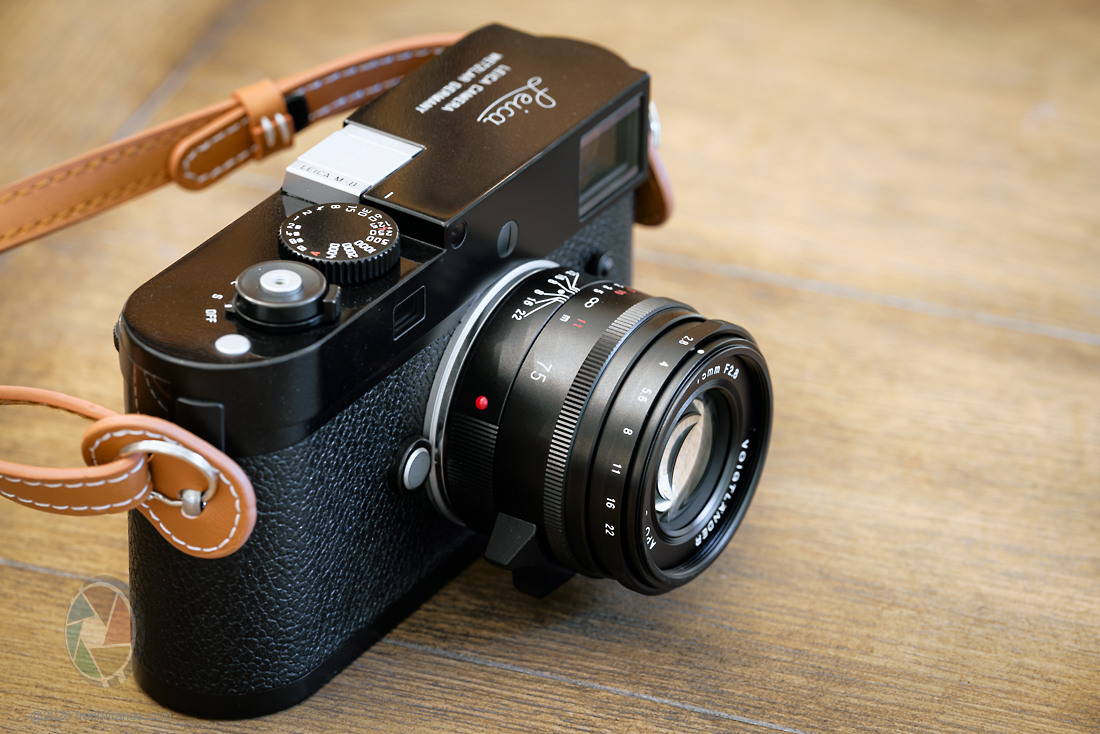
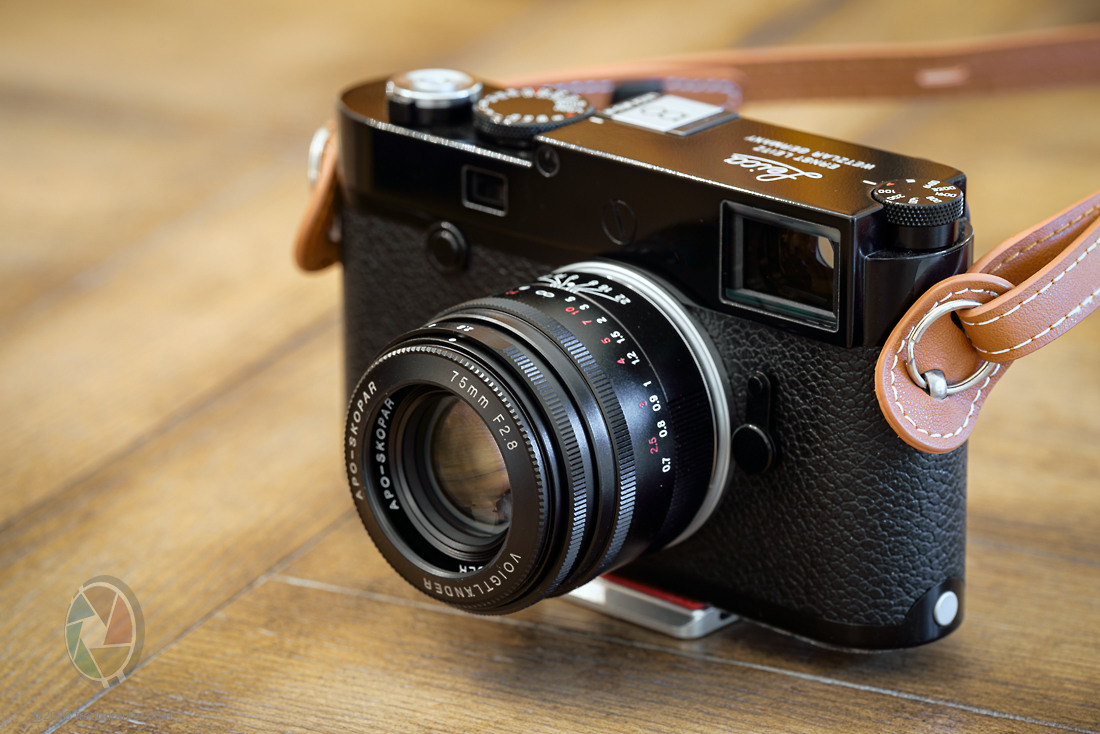
Like previous Cosina lenses, the Voigtländer 75mm f/2.8 APO-Skopar features all-metal construction and a robust helicoid. The focus ring is smooth and well damped, allowing precise adjustments by rotating the ring or using the welcome focus tab.
Cosina's build quality continues to impress me. After years of testing Voigtlander lenses, I've never encountered a loose aperture ring, sticky focus, or any mechanical play. Tolerances are consistently high for a third-party manufacturer and now come very close to Leica standards. Just as important, every recent sample I've tested has been perfectly aligned with the rangefinder, which gives real peace of mind for rangefinder shooters.
|
||
 |
||
|
The aperture ring rotates in half-stop increments from f/2.8 to f/22, with precise and firm clicks.
It pairs naturally with Leica M bodies and hardly feels like a telephoto in use. It handles more like a 50mm lens, helped by the inclusion of a focusing tab, which is rare for this focal length.
The aperture uses a 10-blade design, producing well-defined 10-point sunstars.
|
||
 |
||
|
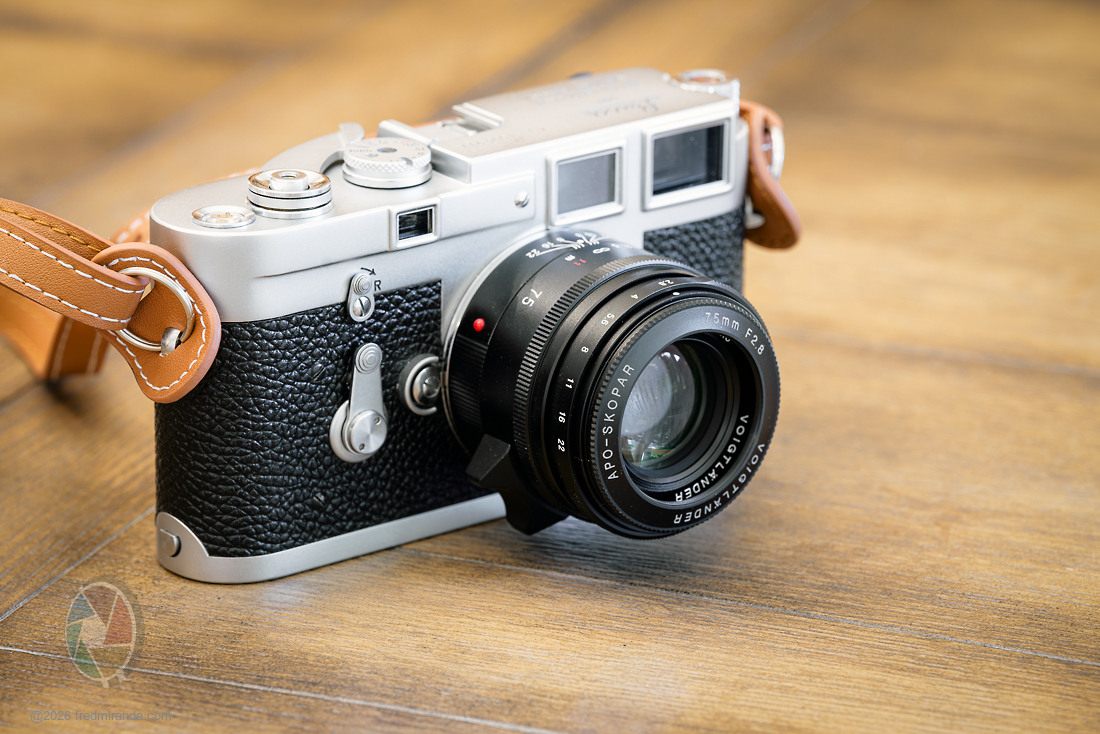
This review copy is perfectly centered and aligned with my rangefinder.
|
||
 |
||
|
Voigtlander Voigtlander 75mm f/2.8 APO-Skopar Specifications:
- Focal Length: 75mm
- Maximum Aperture: f/2.8
- Minimum Aperture: f/22
- Angle of View: 32.7°
- Minimum Focus Distance: 0.7m
- Optical Design: 6 groups 7 elements
- Special Glass: 4 elements of anomalous partial dispersion glass (low dispersion)
- Filter Size: 43mm
- Aperture blades: 10 (straight)
- Dimensions (ø x L): φ54.0×44.0mm
- Weight: 190 grams (measured)
- Hood: a super compact 4mm screw-in domed hood that matches the lens finish
|
||
 |
||
|
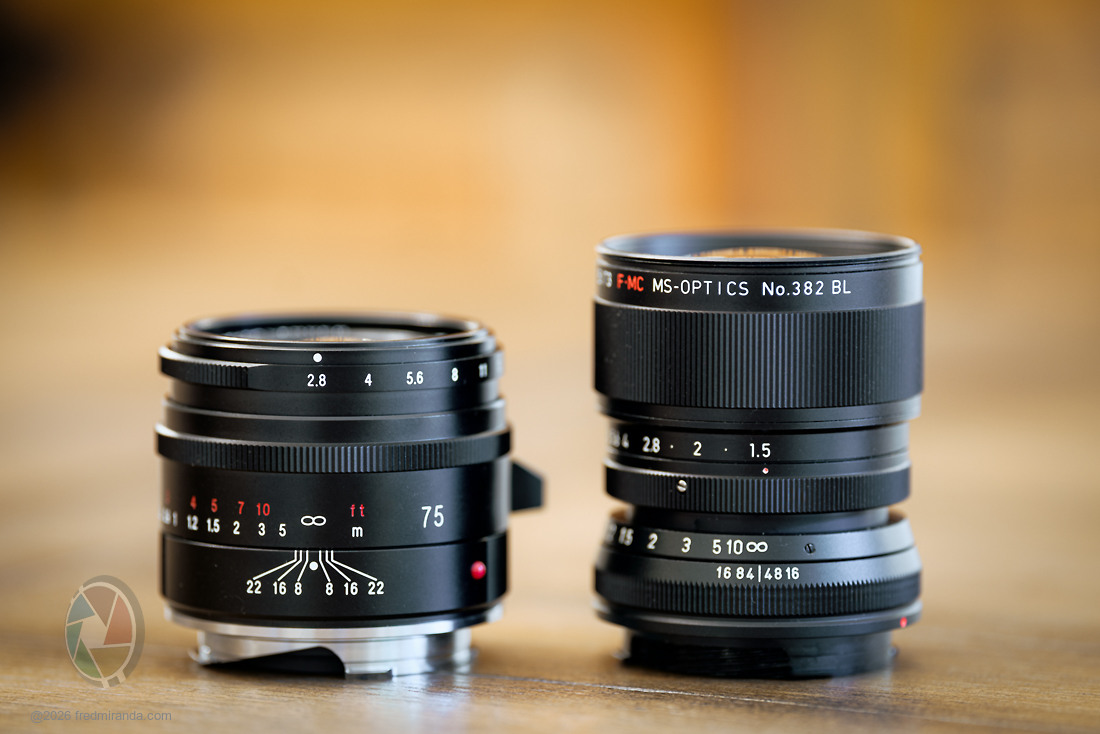
In this review, I will take a close look at how the 75mm f/2.8 APO-Skopar performs in real use, including resolution, contrast, aberration control, and overall rendering. I will also compare it directly against another compact option, the 73mm f/1.5 Sonnetar stopped down to f/2.8, focusing specifically on rendering differences when size and performance converge.
|
||
 |
||
|
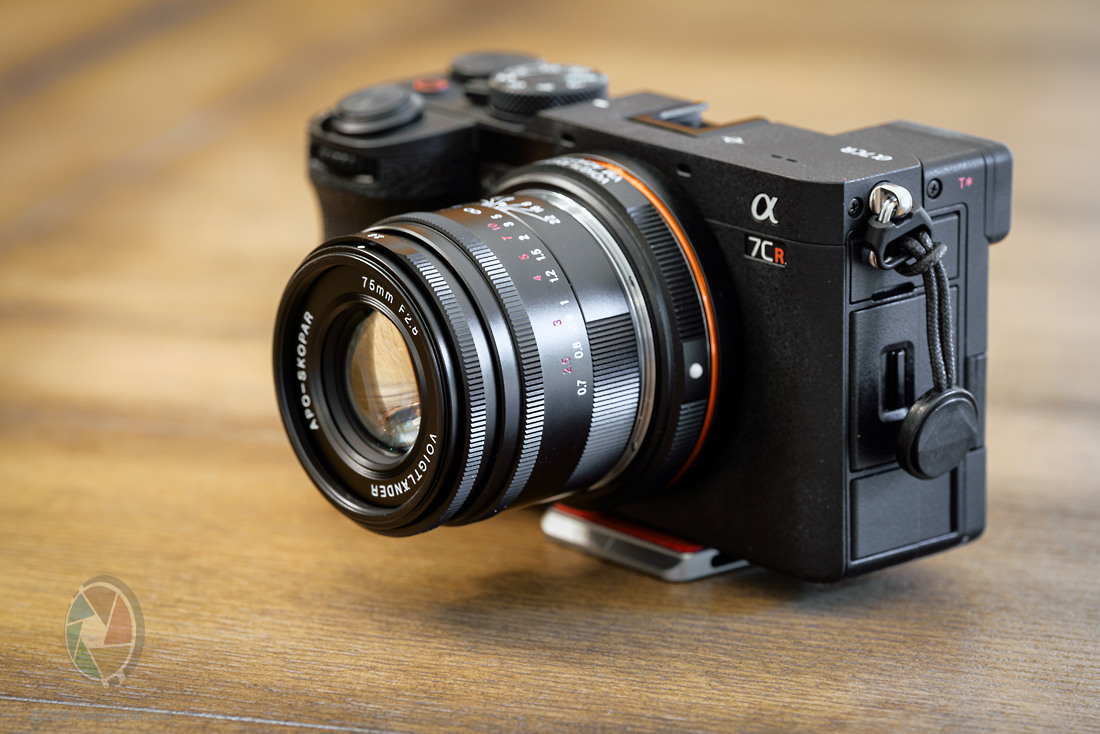
I will also test the Voigtlander 75mm f/2.8 APO-Skopar adapted to the Sony A7R II and Nikon Zf mirrorless cameras to see if thicker sensor stacks introduce any performance penalty compared to Leica M bodies.
|
||
 |
||
|
Apr 29, 2026 at 08:41 PM
p.1 #2Voigtlander 75mm f/2.8 APO-Skopar Review
Looks great mounted on the camera, can't wait to see your test shots.
Apr 30, 2026 at 06:05 AM
p.1 #3Voigtlander 75mm f/2.8 APO-Skopar Review
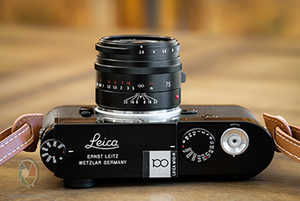
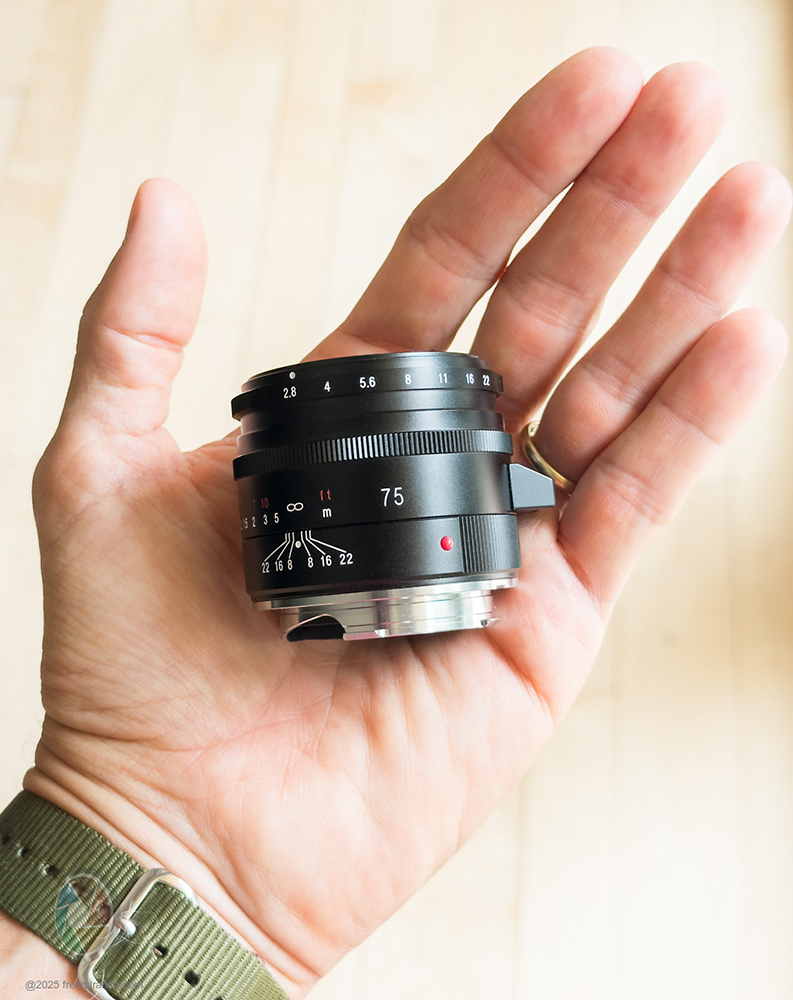
I already shared this image in the official thread, but it's worth posting again here because it really shows just how small this lens is for a short telephoto.
 |
||
 |
||
|
Apr 30, 2026 at 11:44 AM
p.1 #4Voigtlander 75mm f/2.8 APO-Skopar Review
Back to Quick Links
Infinity Resolution and Contrast on Leica M10-R (41MP)
The Voigtlander 75mm f/2.8 APO-Skopar delivers excellent resolution, strong contrast, and very well controlled chromatic aberration, although I do see some hints of LaCA. With its modest f/2.8 maximum aperture, it still performs impressively, especially from f/4 onward.
At close inspection, there is a bump in high frequency detail starting at f/4, which is the sweet spot. You'll see the improvement across the entire frame, center, mid-zone, and corners. For landscape work, shooting wide open is absolutely usable, but stopping down to at least f/4 gives you the best this lens can offer. At f/8, I see clearly signs of diffraction which is expected.
Stopping down to f/4 or f/5.6 also cuts vignetting significantly. Given its ultra compact size, relatively simple optical formula, and no use of aspherical elements, Cosina clearly did their homework with this lens.
 |
||
 |
||
|
|
||
 |
||
|
- Distance: Infinity
- Focus: Center - Best of three shots at maximum magnification
- White Balance: Daylight
- Both lenses are perfectly centered, as verified with my decentering test.
- Software used: Lightroom with FM Default Landscape Sharpening; all other settings are at default.
PS: Vignetting, Chromatic Aberration (CA), and distortion were not corrected either in post-processing or in-camera.
Center Resolution and Contrast
Infinity Resolution and Contrast on Leica M10-R (41MP)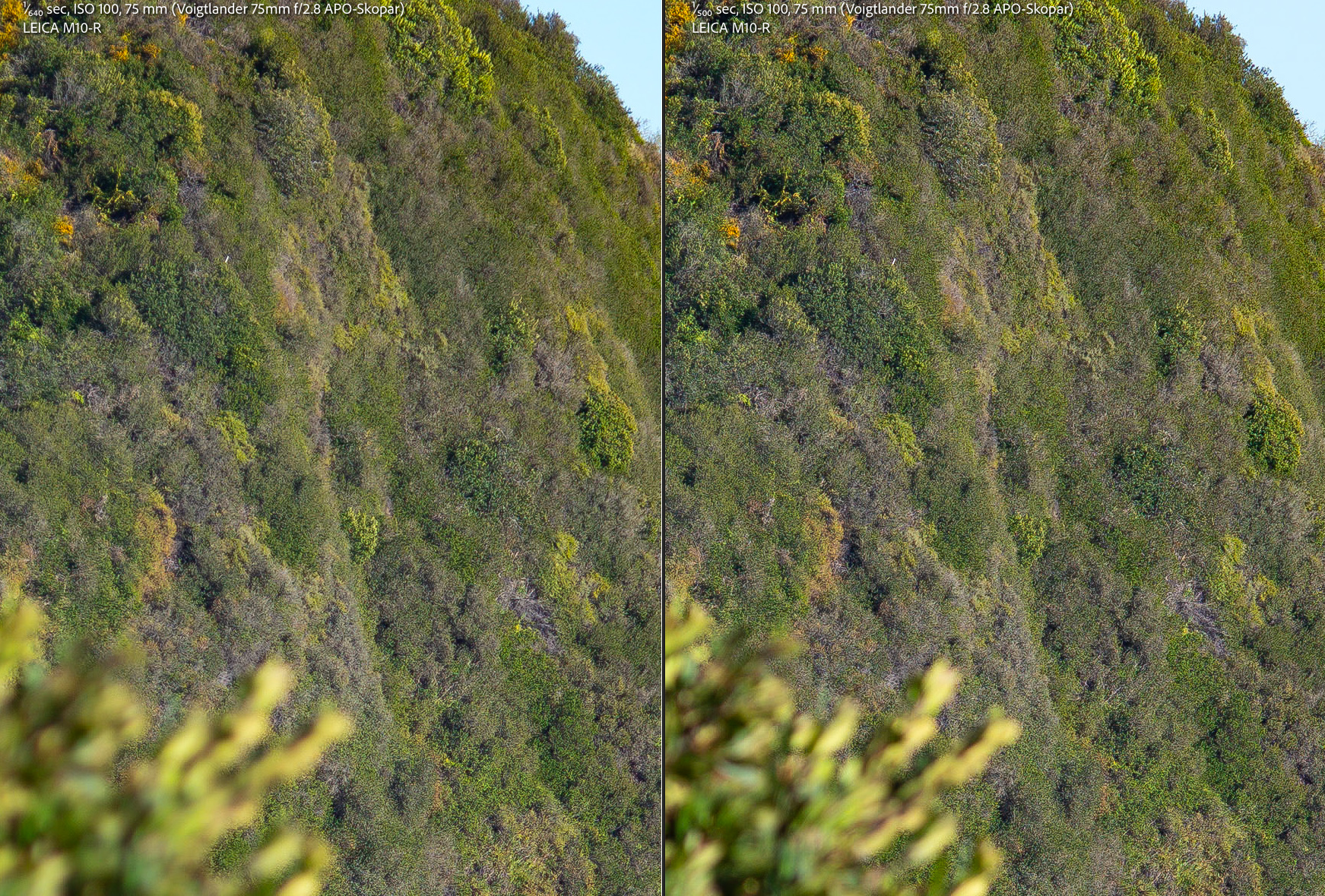
Center: f/2.8 (LEFT) | f/4 (RIGHT)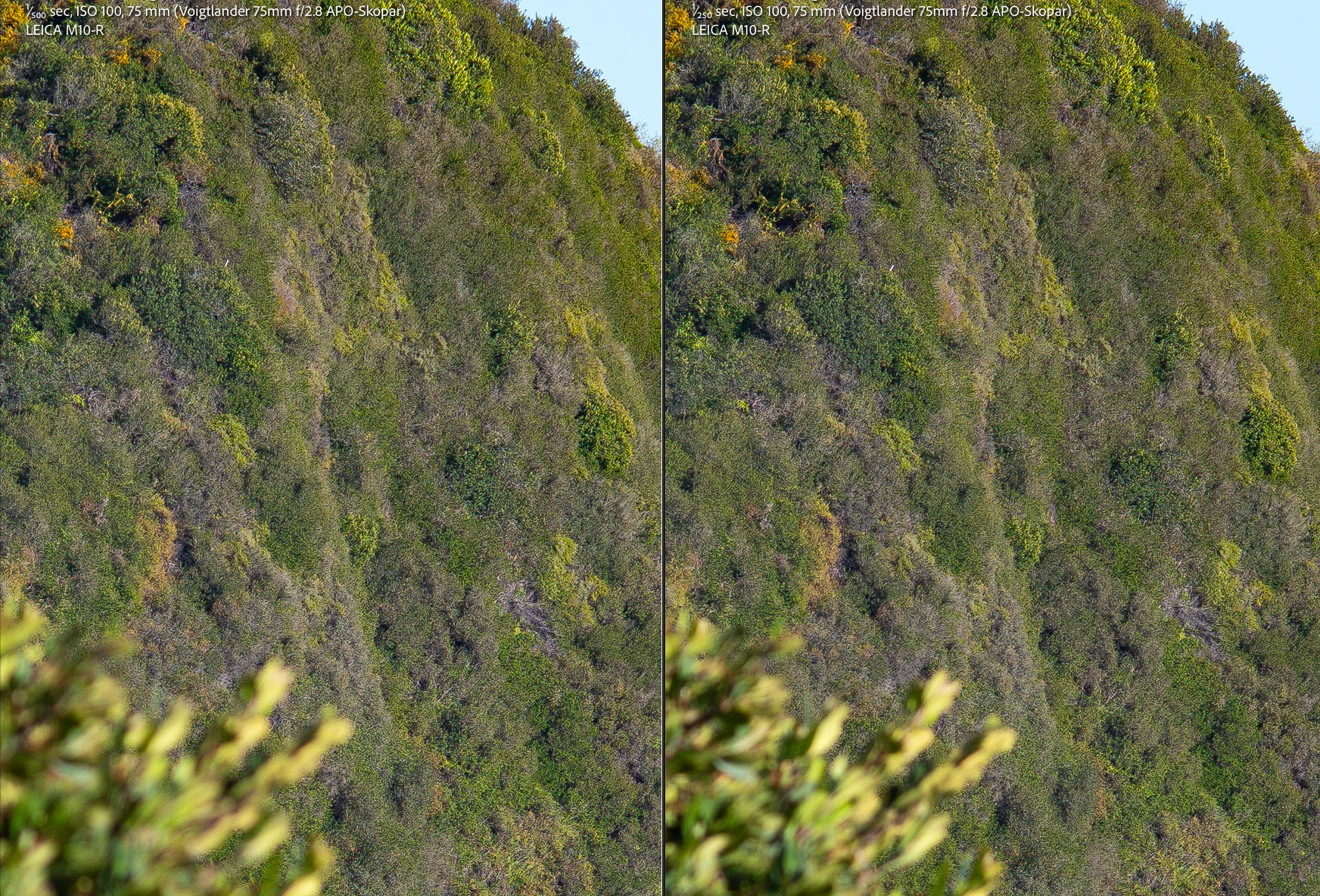
Center: f/4 (LEFT) | f/5.6 (RIGHT)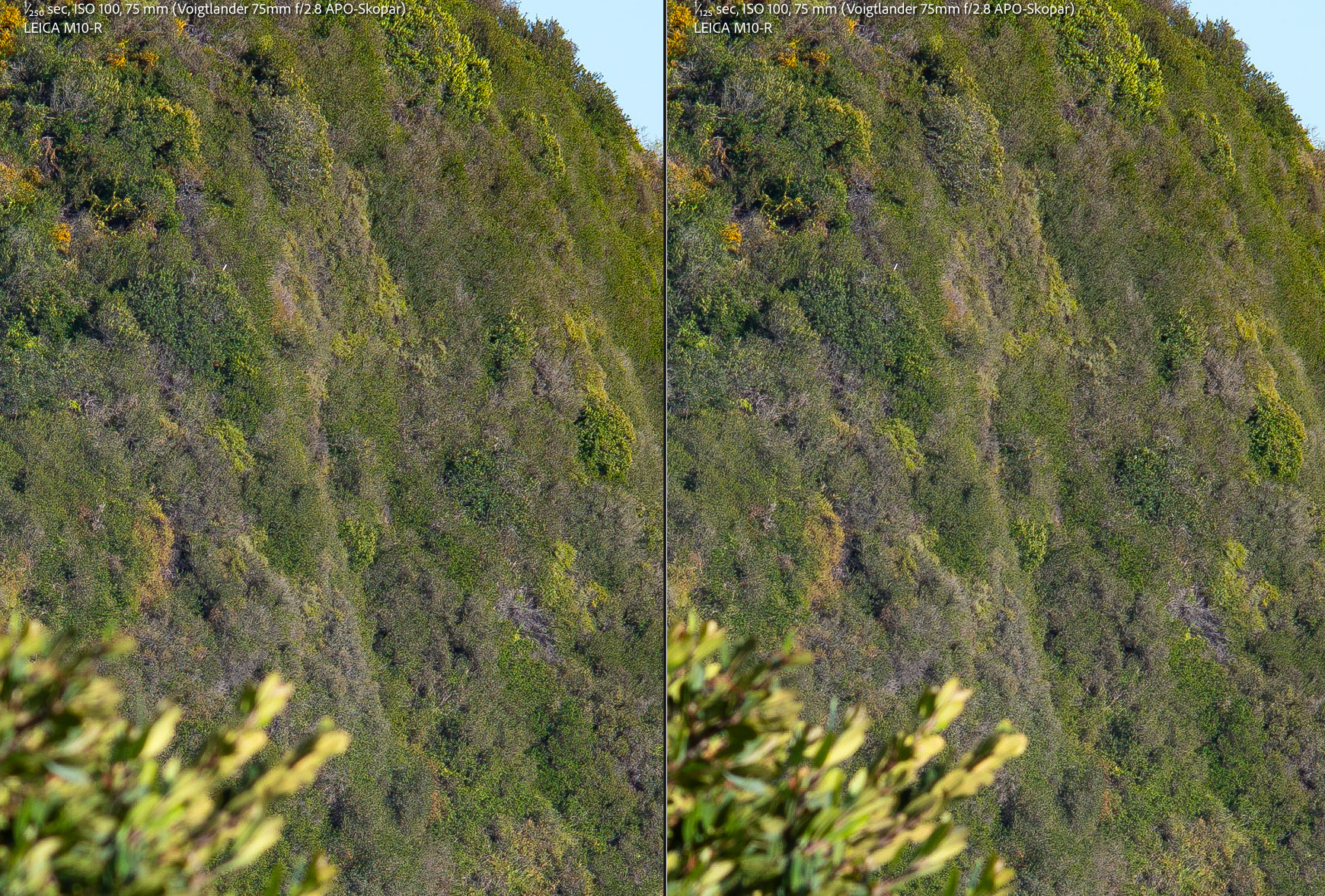
Center: f/5.6 (LEFT) | f/8 (RIGHT)
May 01, 2026 at 02:10 PM
p.1 #5Voigtlander 75mm f/2.8 APO-Skopar Review
Mid-field Resolution and Contrast
Infinity Resolution and Contrast on Leica M10-R (41MP)
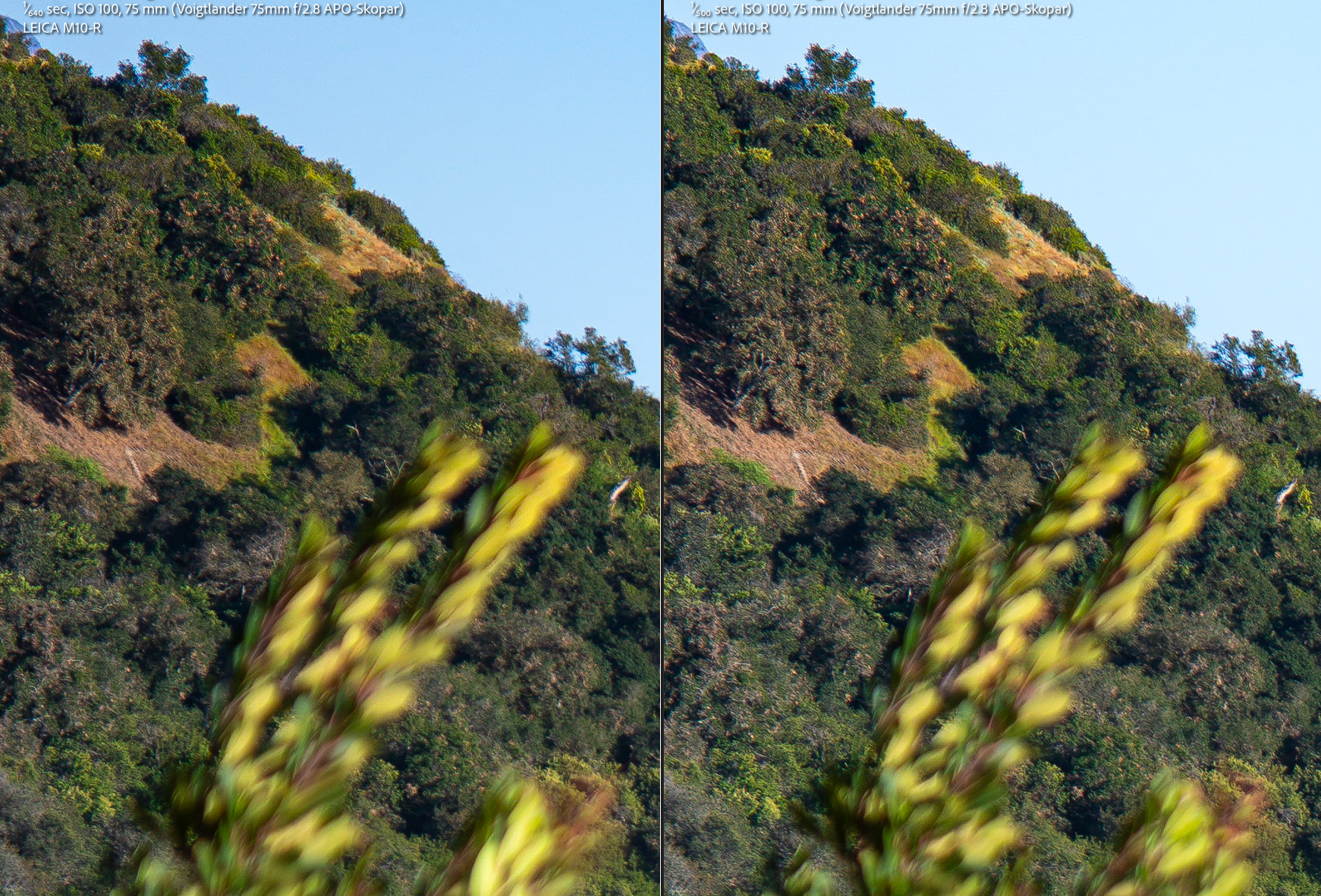
Mid-field: f/2.8 (LEFT) | f/4 (RIGHT)
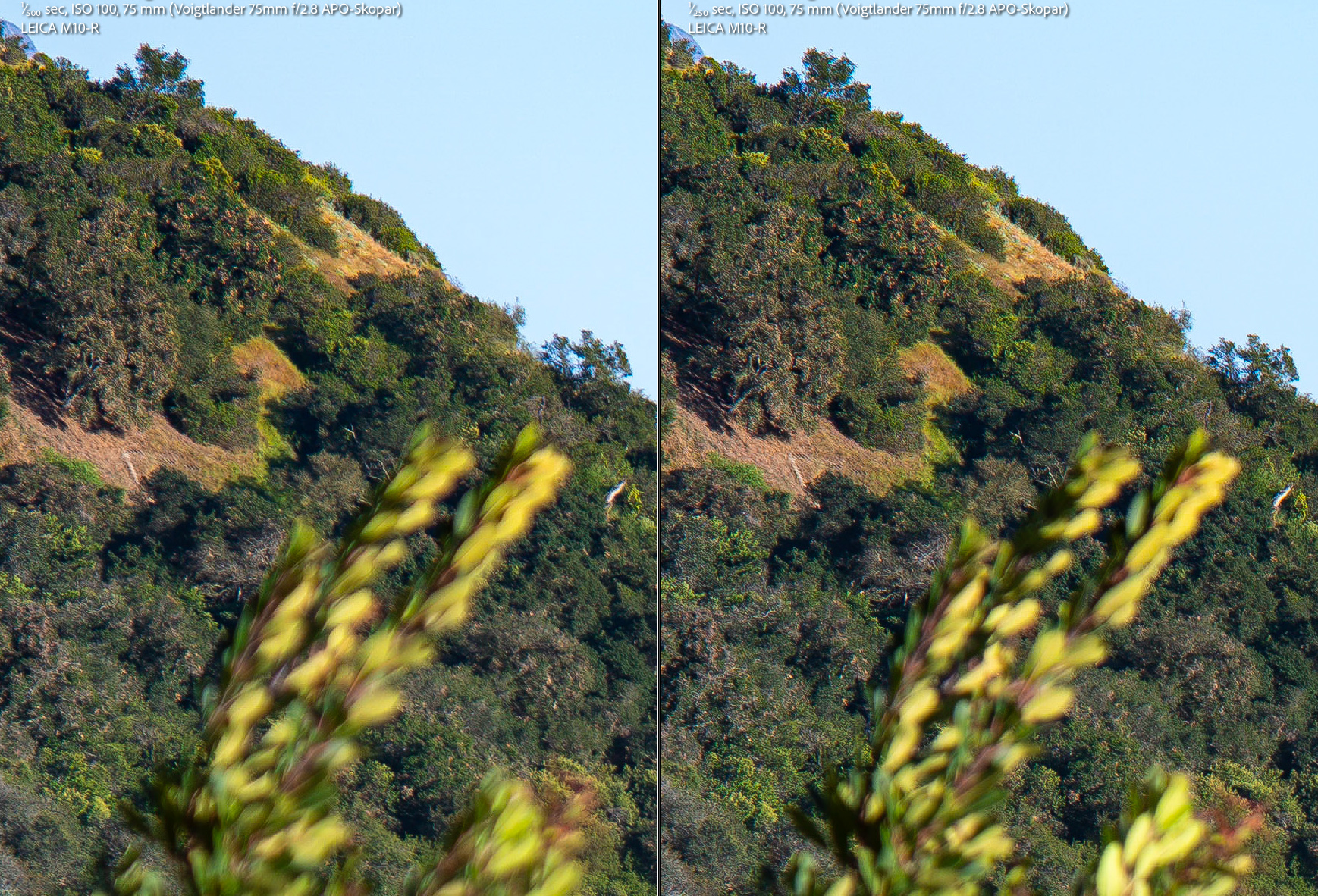
Mid-field: f/4 (LEFT) | f/5.6 (RIGHT)
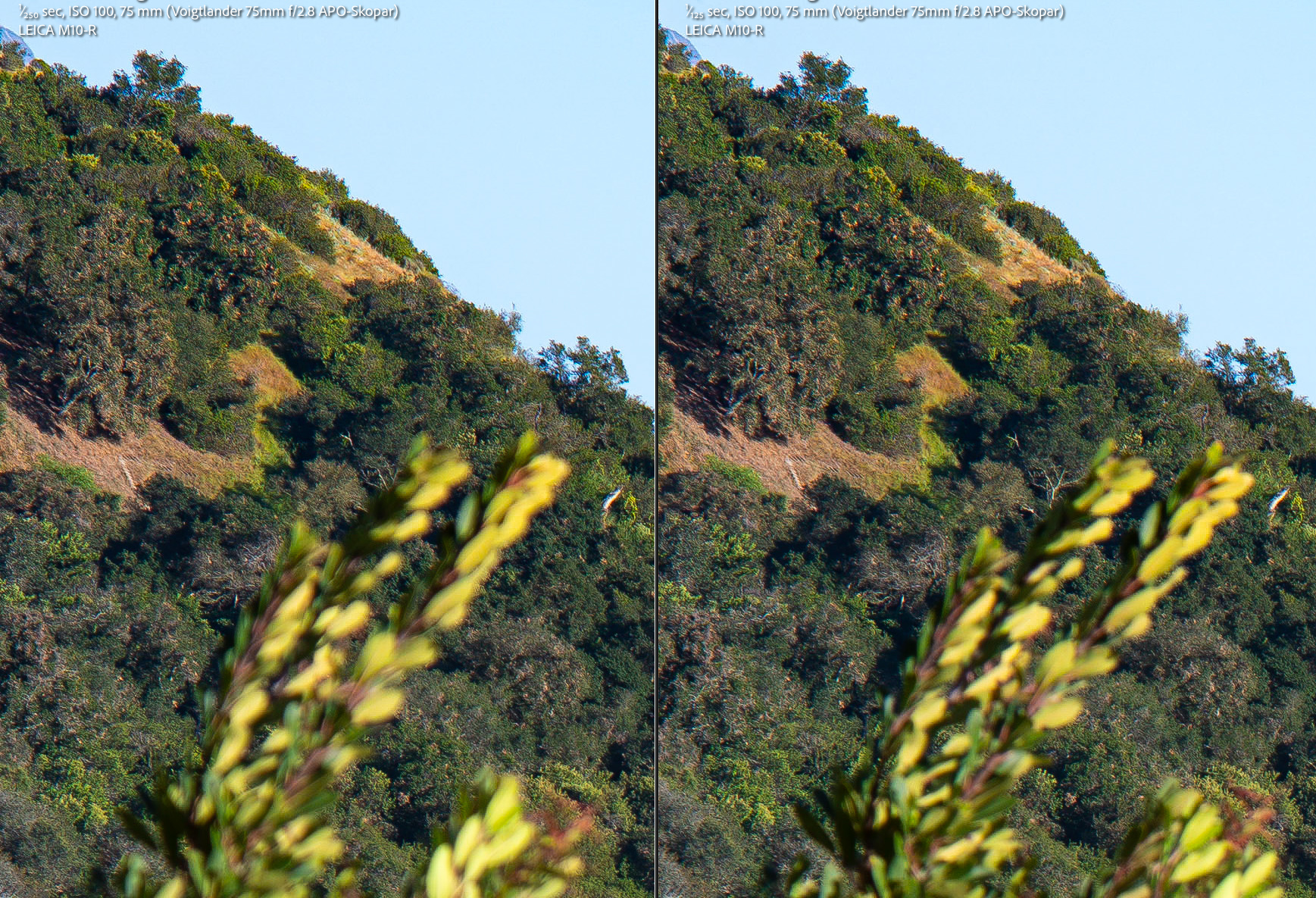
Mid-field: f/5.6 (LEFT) | f/8 (RIGHT)
Infinity Resolution and Contrast on Leica M10-R (41MP)
Mid-field: f/2.8 (LEFT) | f/4 (RIGHT)
Mid-field: f/4 (LEFT) | f/5.6 (RIGHT)
Mid-field: f/5.6 (LEFT) | f/8 (RIGHT)
May 01, 2026 at 02:12 PM
p.1 #6Voigtlander 75mm f/2.8 APO-Skopar Review
Extreme Corner Resolution and Contrast
Infinity Resolution and Contrast on Leica M10-R (41MP)
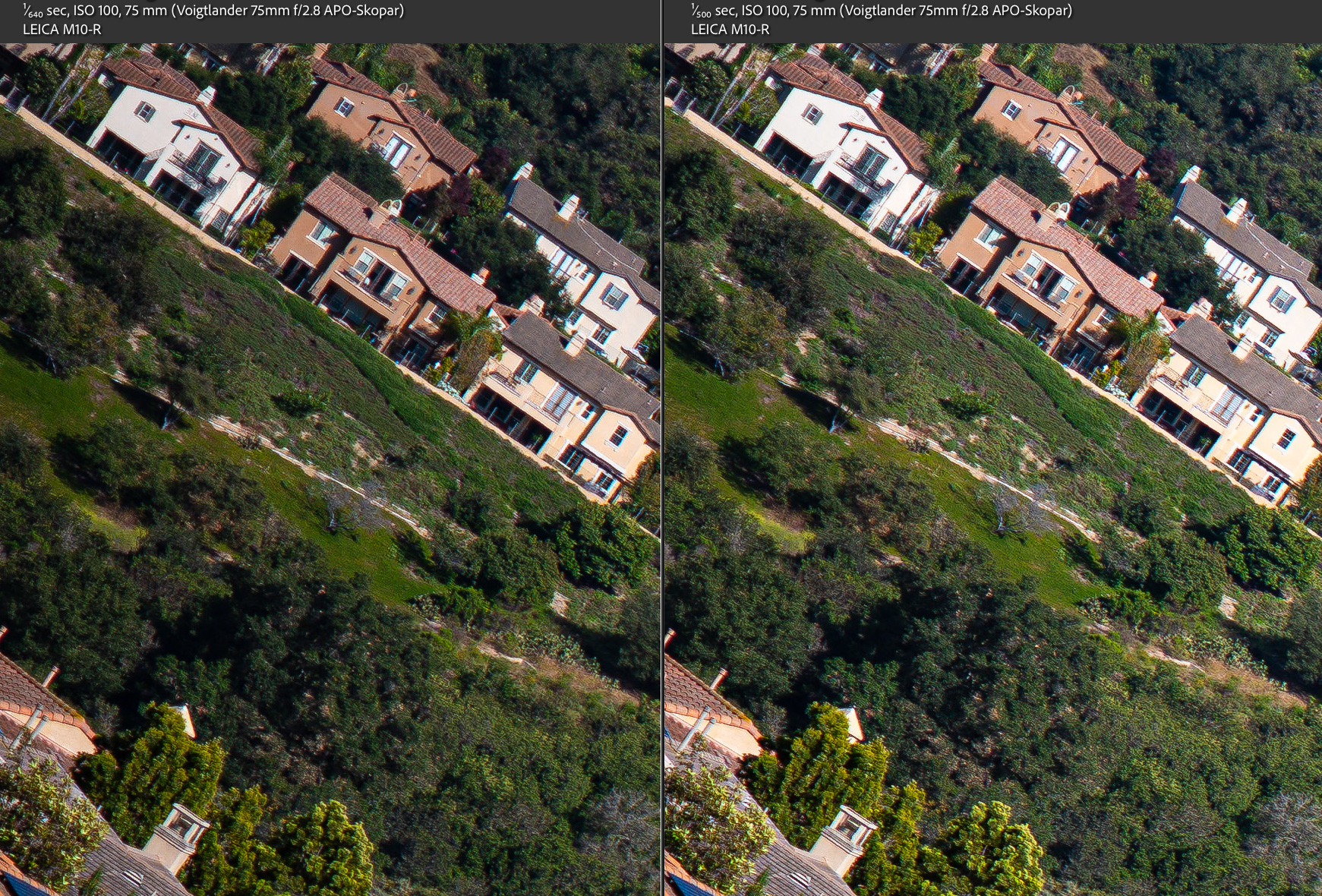
Extreme Corner: f/2.8 (LEFT) | f/4 (RIGHT)
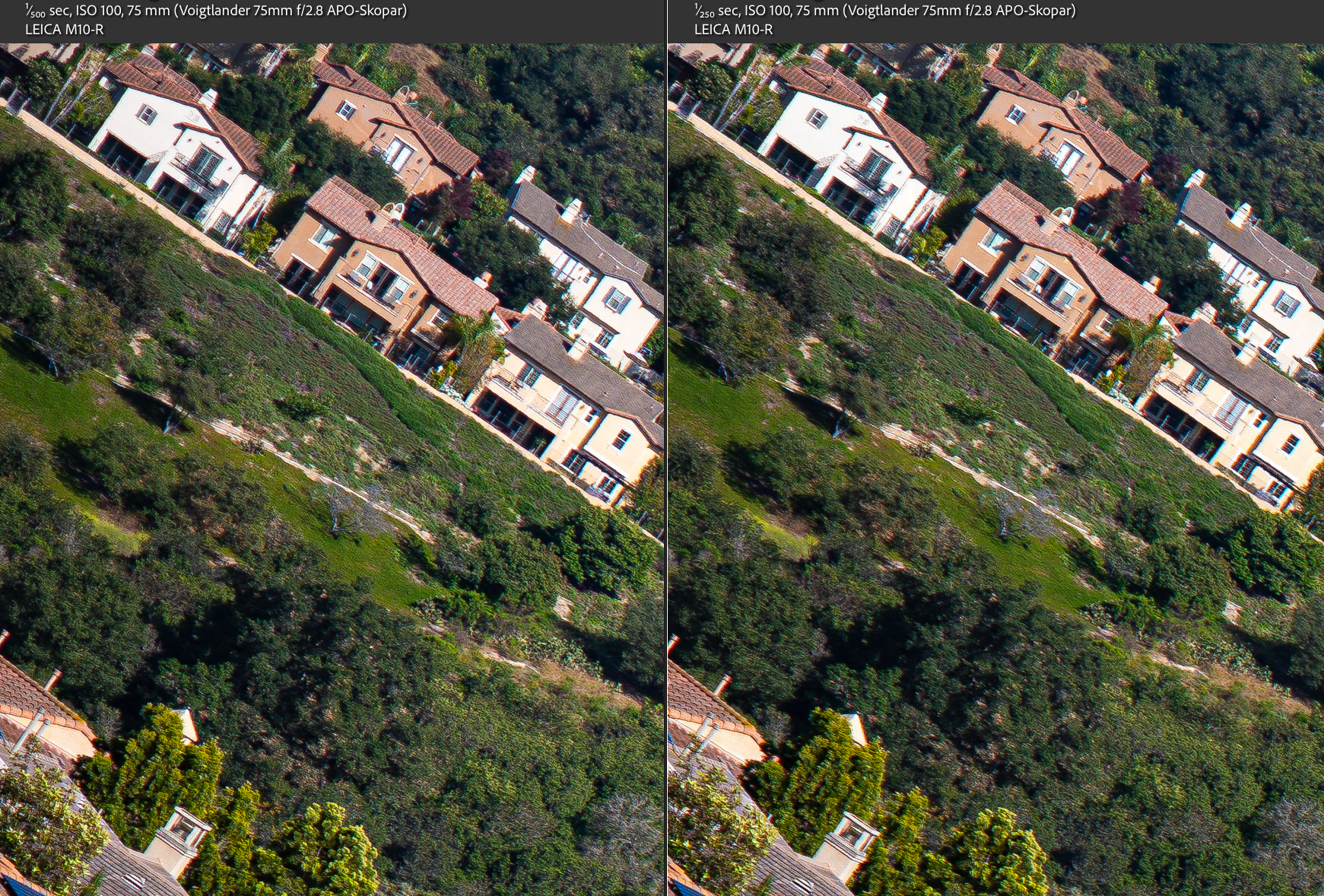
Extreme Corner: f/4 (LEFT) | f/5.6 (RIGHT)
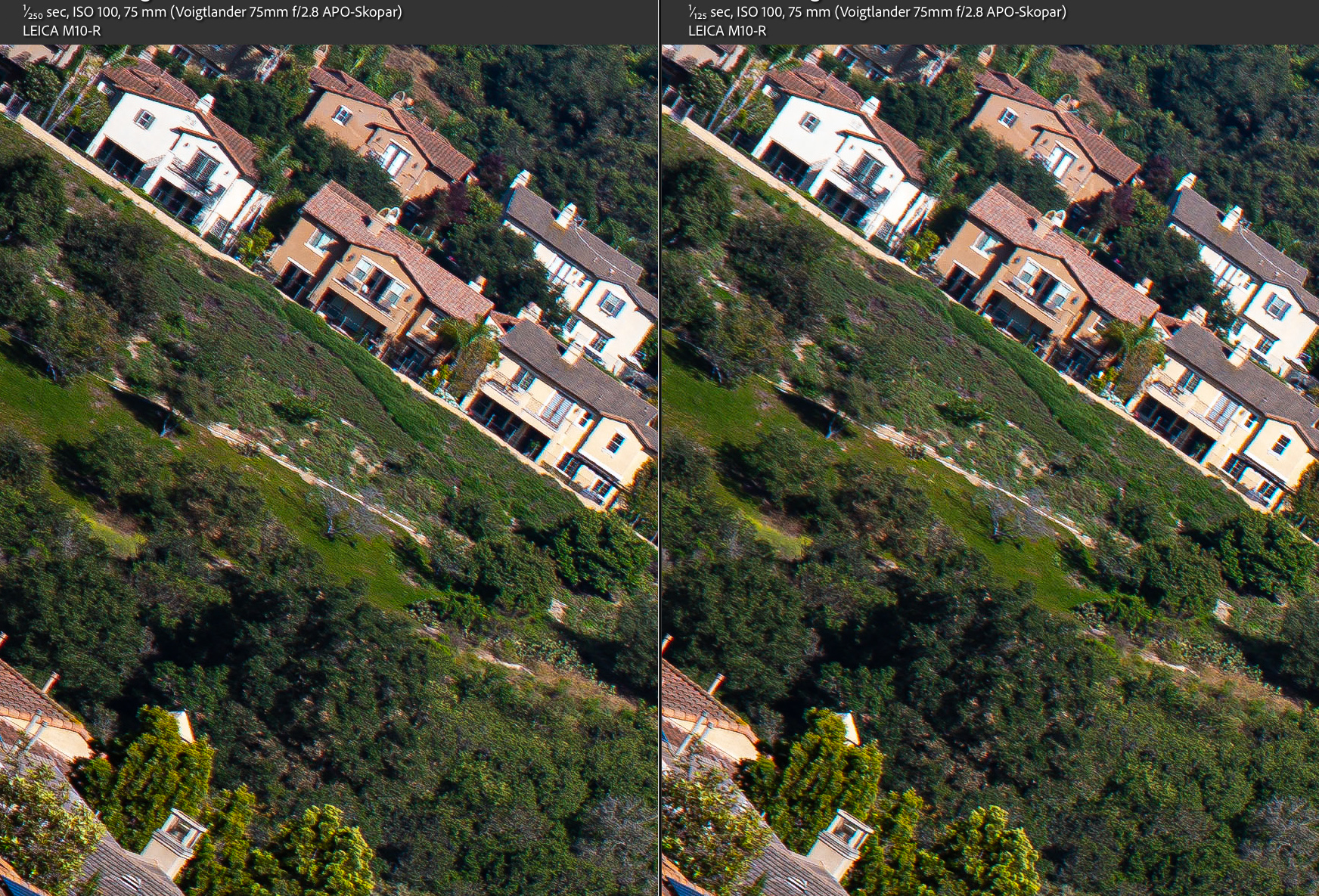
Extreme Corner: f/5.6 (LEFT) | f/8 (RIGHT)
Infinity Resolution and Contrast on Leica M10-R (41MP)
Extreme Corner: f/2.8 (LEFT) | f/4 (RIGHT)
Extreme Corner: f/4 (LEFT) | f/5.6 (RIGHT)
Extreme Corner: f/5.6 (LEFT) | f/8 (RIGHT)
May 01, 2026 at 02:13 PM
p.1 #7Voigtlander 75mm f/2.8 APO-Skopar Review
Back to Quick Links
Field Curvature
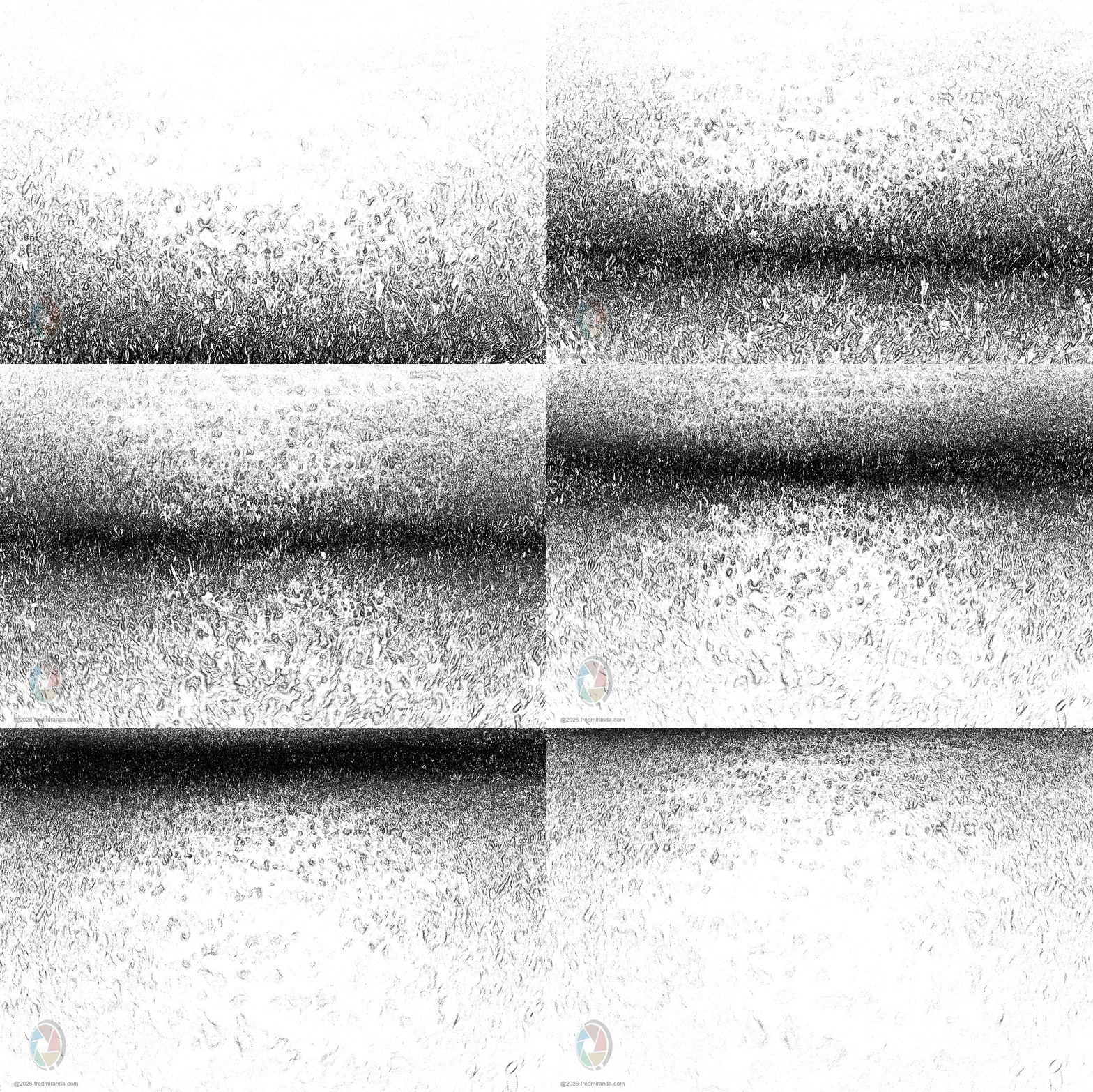
The Voigtlander 75mm f/2.8 APO-Skopar keeps a very flat field from close focus all the way to infinity. Most 75mm lenses show some outward field curvature, but Cosina managed to keep this one compact without giving that up. If there's any curvature here, it's extremely minor and barely noticeable across the focus range. That kind of consistency is exactly what you want from a high-performance lens.
Below is a GIF showing the focus plane moving from minimum focus distance to infinity in multiple steps. You will notice the depth of field isn't overly thin, which makes sense given the f/2.8 aperture.
|
||
 |
||
|
May 01, 2026 at 03:41 PM
p.1 #8Voigtlander 75mm f/2.8 APO-Skopar Review
Back to Quick Links
Infinity Resolution and Contrast on stock Sony A7R II (42MP)
Great news. The Voigtlander 75mm f/2.8 APO-Skopar performs well on the stock Sony A7R II. Sony's sensor uses a thicker cover glass compared to Leica M bodies, which can affect certain lenses, but in this case the longer 75mm focal length and relatively slower f/2.8 aperture work in its favor, keeping the lens compatible across mirrorless systems without any noticeable impact on image quality.
In practice, I don't see any meaningful loss in resolution even at pixel level, and lenses starting at f/2.8 or slower also tend to be far less affected.
This is in contrast to the Voigtlander 75mm f/1.9 Ultron, which did not perform as well on other mirrorless bodies unless stopped down significantly.
|
||
 |
||
|
|
||
|
||
|
- Distance: Infinity
- Focus: Center - Best of three shots at maximum magnification
- White Balance: Daylight
- Both lenses are perfectly centered, as verified with my decentering test.
- Software used: Lightroom with FM Default Landscape Sharpening; all other settings are at default.
PS: Vignetting, Chromatic Aberration (CA), and distortion were not corrected either in post-processing or in-camera.
Center Resolution and Contrast
Infinity Resolution and Contrast on stock Sony A7R II (42MP)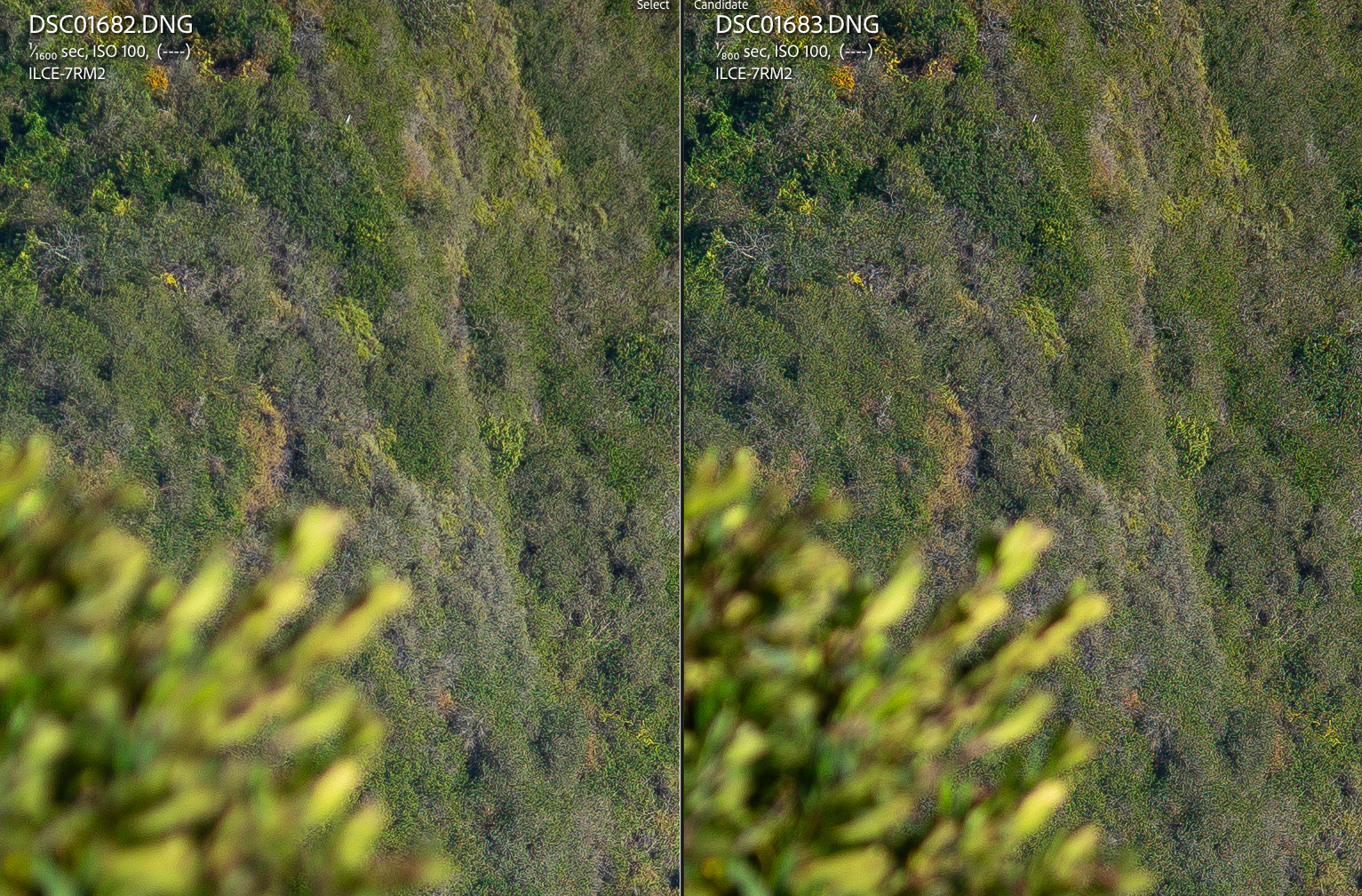
Center: f/2.8 (LEFT) | f/4 (RIGHT)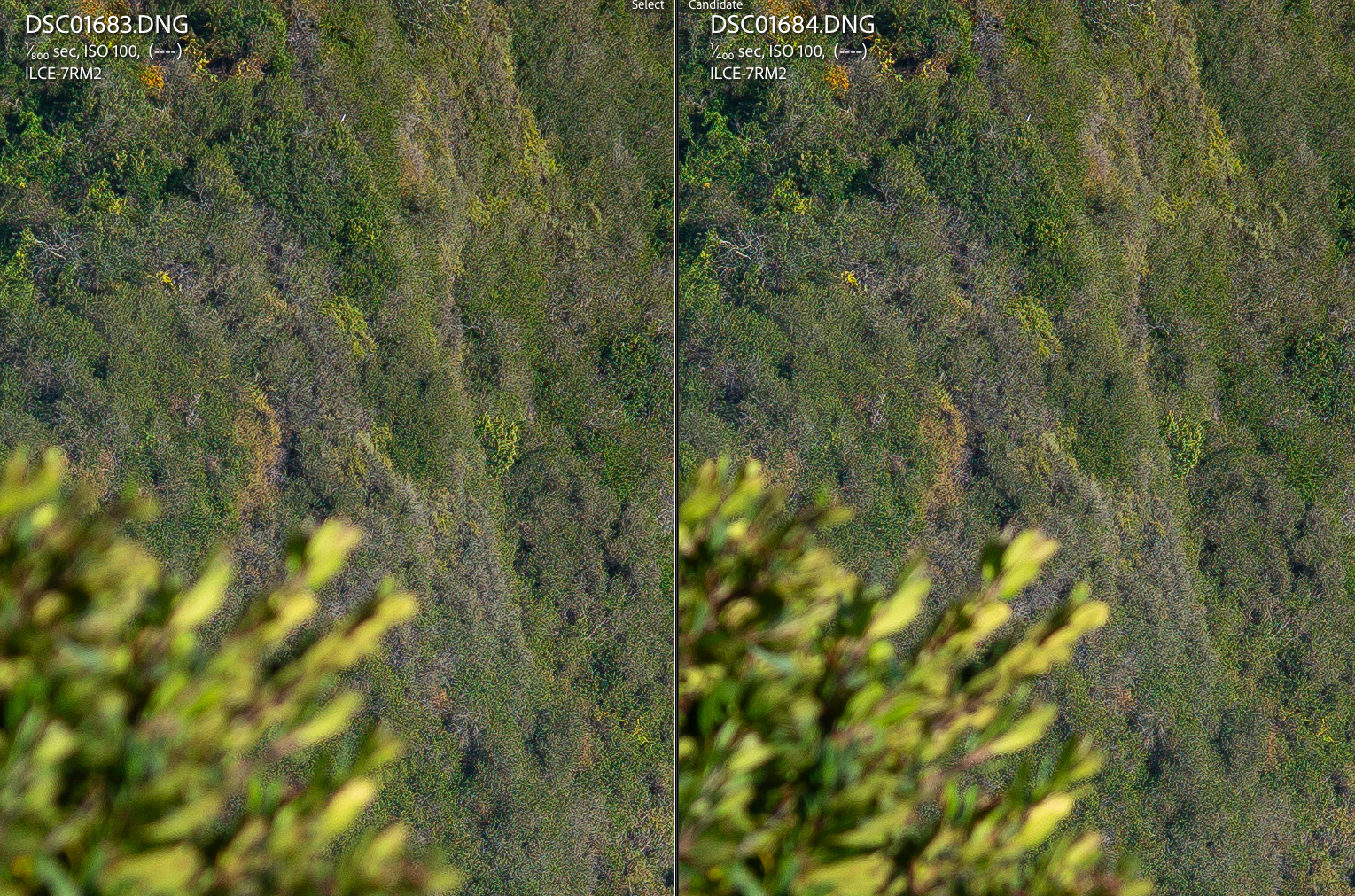
Center: f/4 (LEFT) | f/5.6 (RIGHT)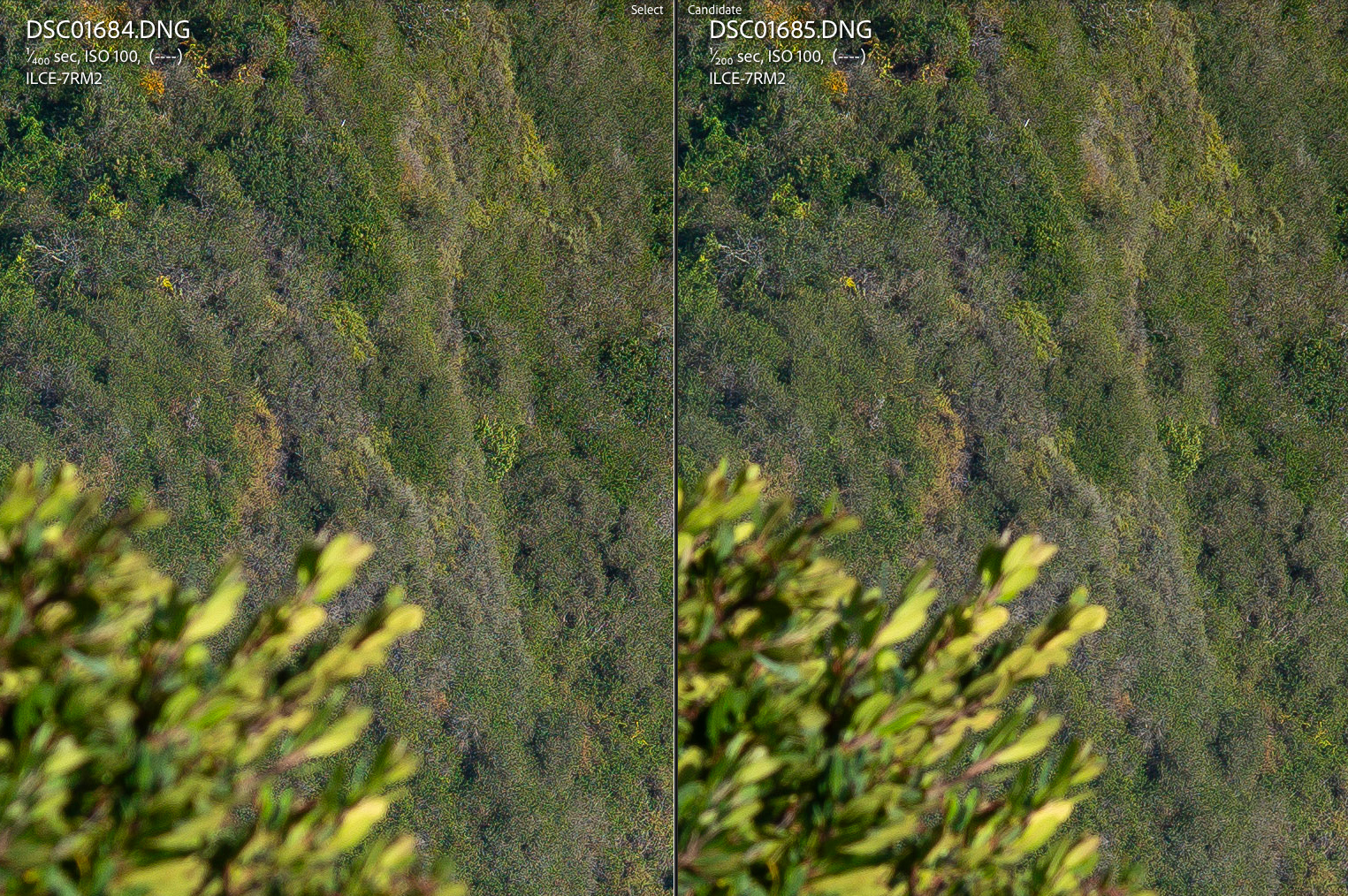
Center: f/5.6 (LEFT) | f/8 (RIGHT)
May 01, 2026 at 06:24 PM
p.1 #9Voigtlander 75mm f/2.8 APO-Skopar Review
Mid-field Resolution and Contrast
Infinity Resolution and Contrast on stock Sony A7R II (42MP)
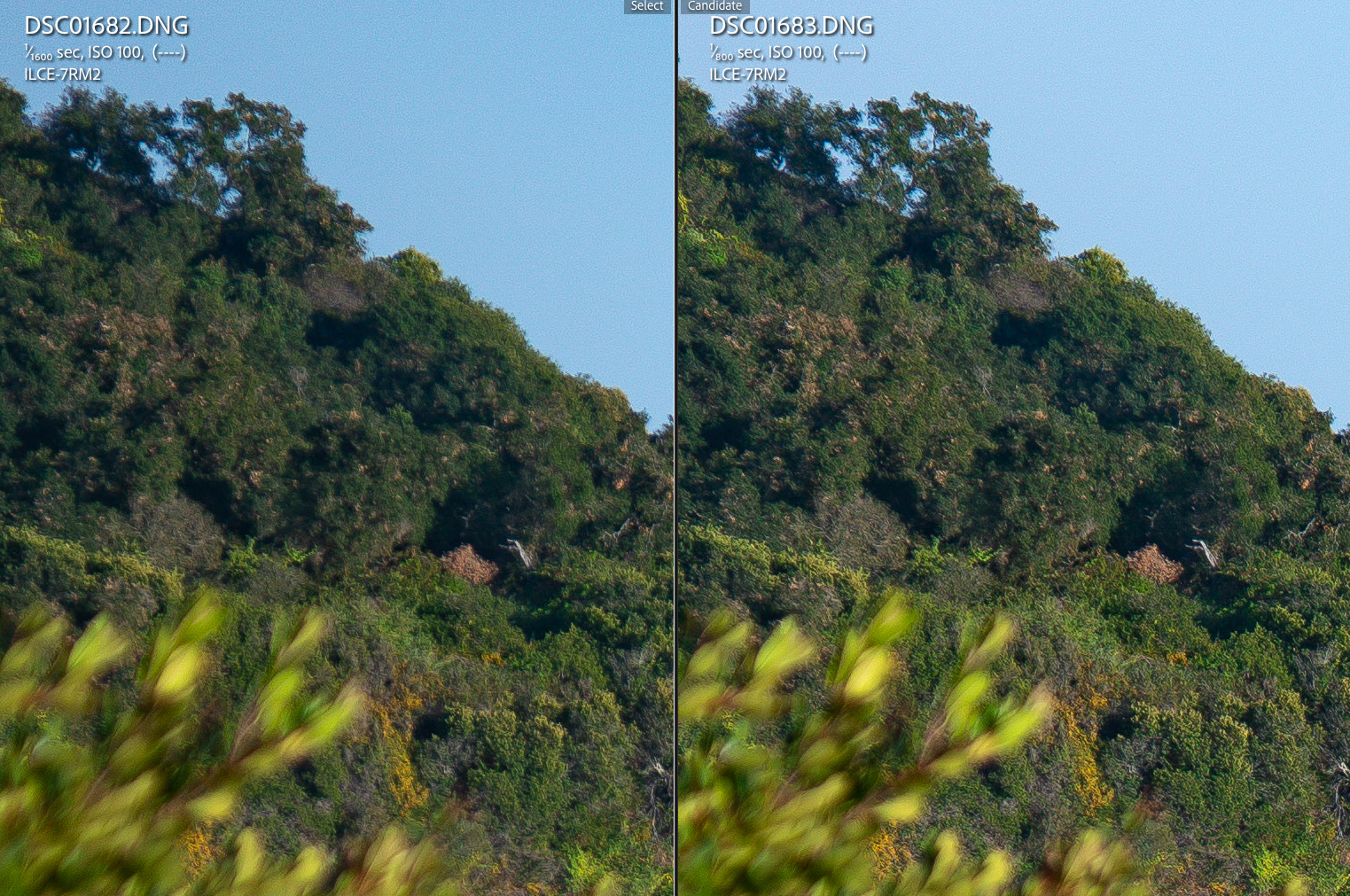
Mid-field: f/2.8 (LEFT) | f/4 (RIGHT)
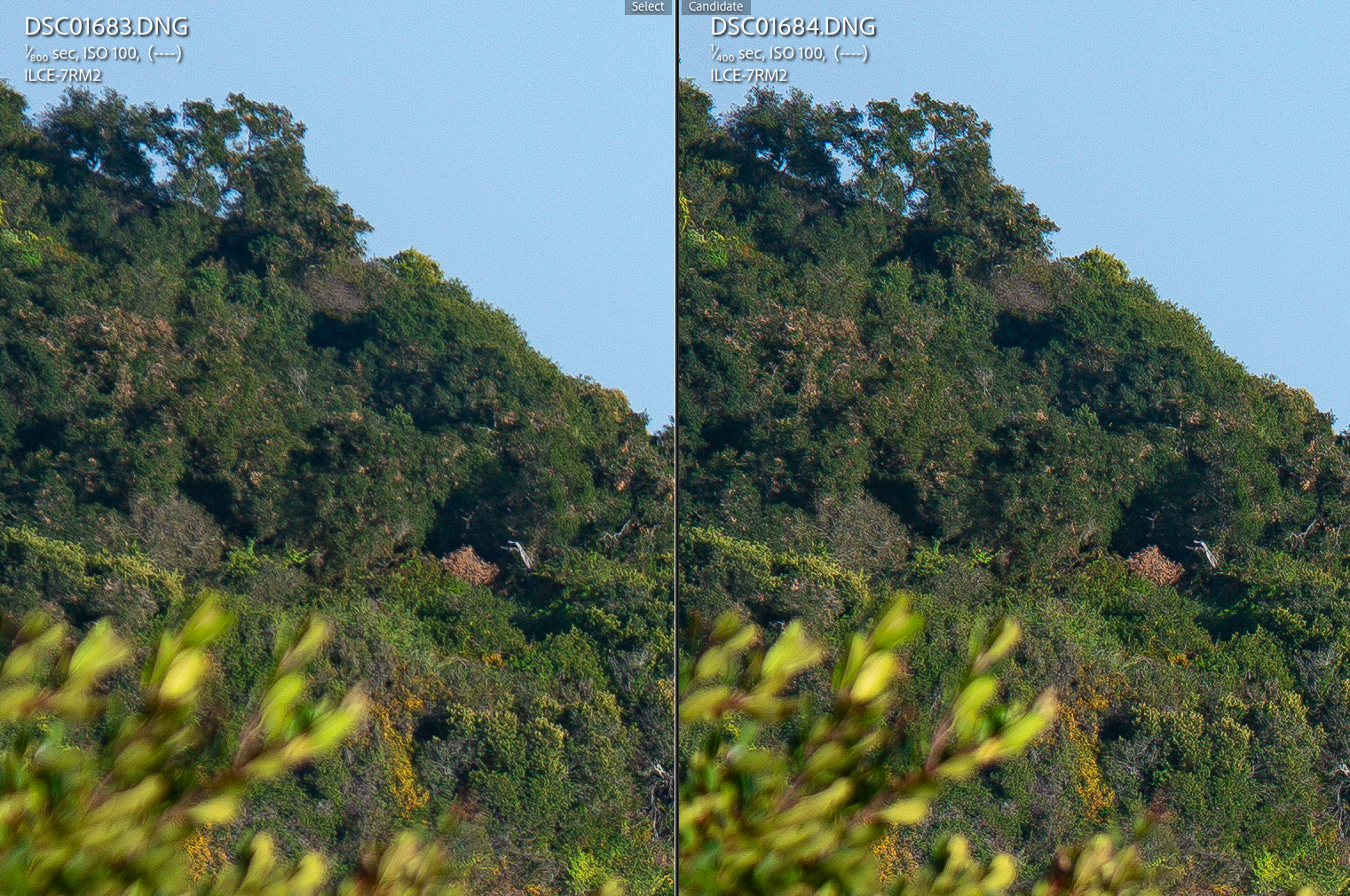
Mid-field: f/4 (LEFT) | f/5.6 (RIGHT)
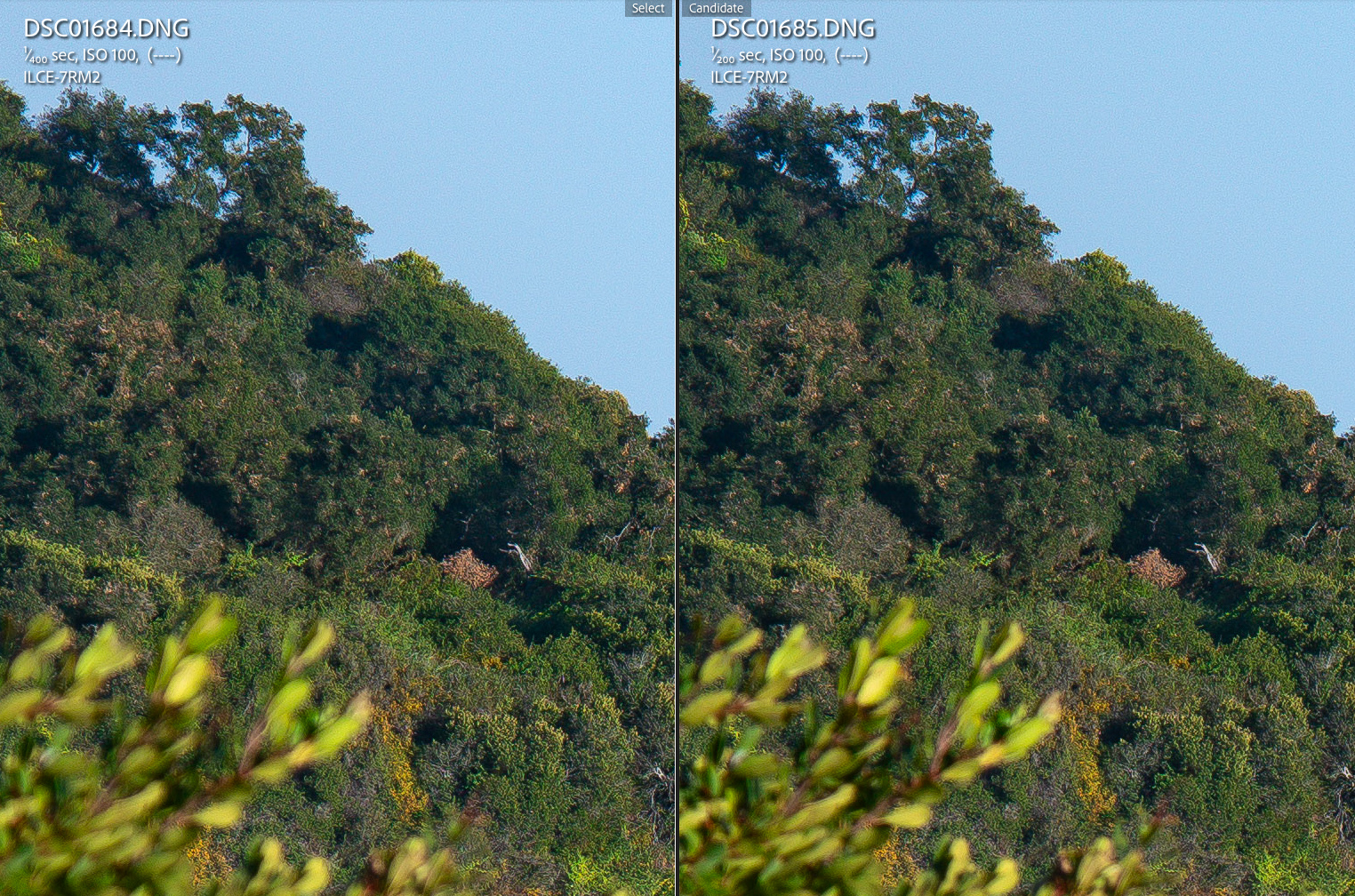
Mid-field: f/5.6 (LEFT) | f/8 (RIGHT)
Infinity Resolution and Contrast on stock Sony A7R II (42MP)
Mid-field: f/2.8 (LEFT) | f/4 (RIGHT)
Mid-field: f/4 (LEFT) | f/5.6 (RIGHT)
Mid-field: f/5.6 (LEFT) | f/8 (RIGHT)
May 01, 2026 at 06:25 PM
p.1 #10Voigtlander 75mm f/2.8 APO-Skopar Review
Extreme Corner Resolution and Contrast
Infinity Resolution and Contrast on stock Sony A7R II (42MP)
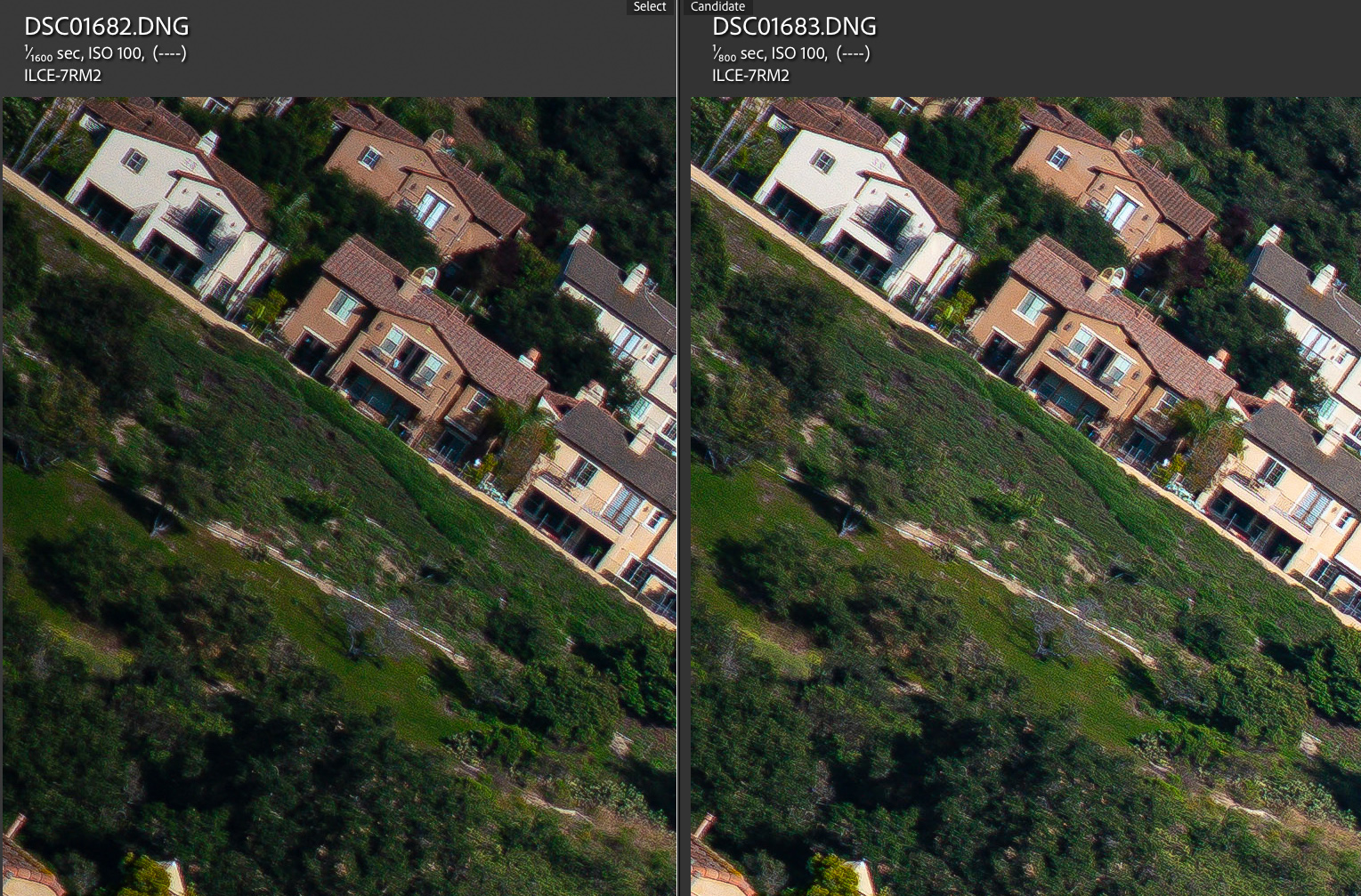
Extreme Corner: f/2.8 (LEFT) | f/4 (RIGHT)
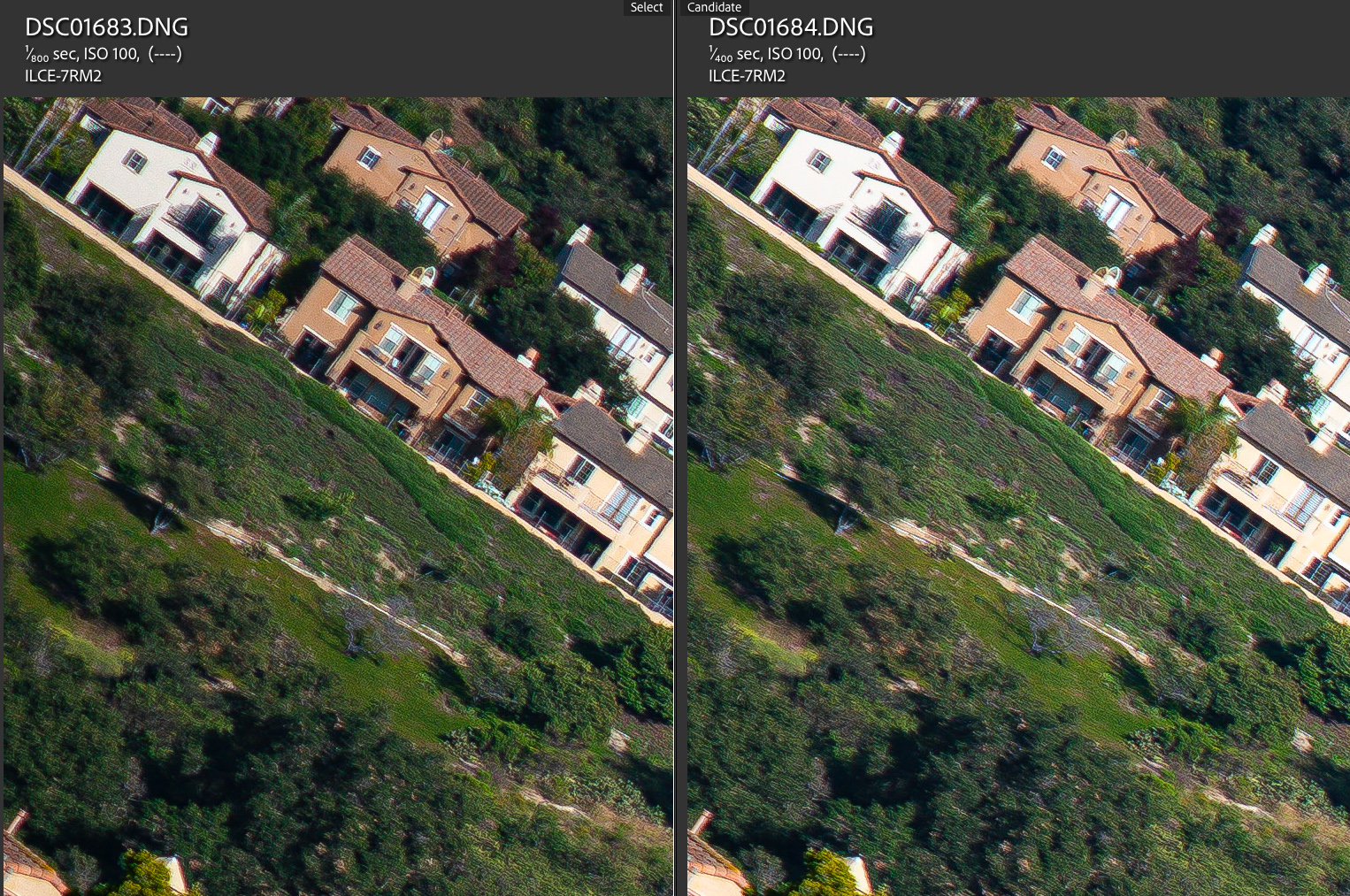
Extreme Corner: f/4 (LEFT) | f/5.6 (RIGHT)
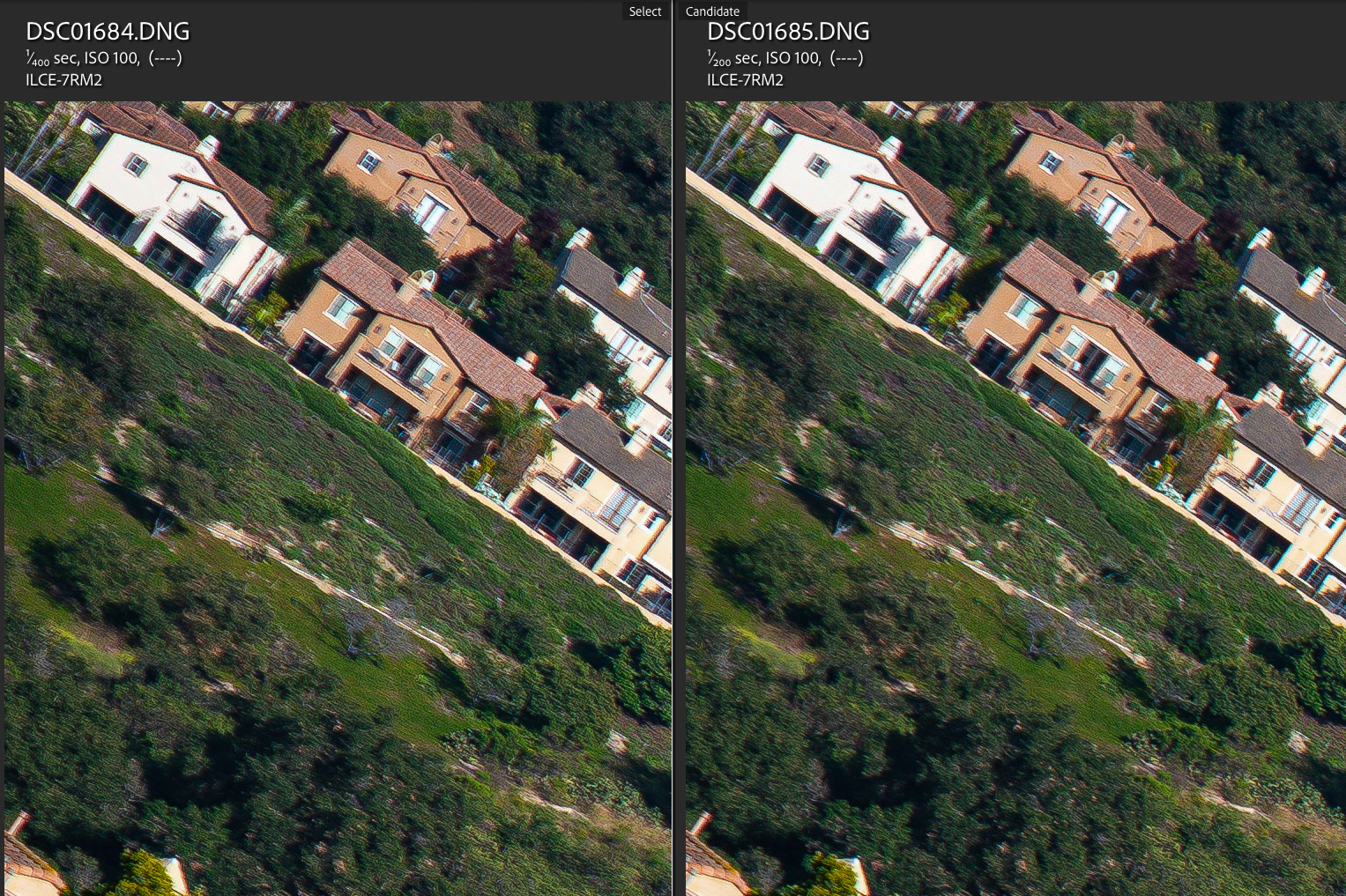
Extreme Corner: f/5.6 (LEFT) | f/8 (RIGHT)
Infinity Resolution and Contrast on stock Sony A7R II (42MP)
Extreme Corner: f/2.8 (LEFT) | f/4 (RIGHT)
Extreme Corner: f/4 (LEFT) | f/5.6 (RIGHT)
Extreme Corner: f/5.6 (LEFT) | f/8 (RIGHT)
May 01, 2026 at 06:26 PM
|
p.1 #11Voigtlander 75mm f/2.8 APO-Skopar Review
Wow, what a difference in the corners at 2.8 with the Leica M10-R compared to the Sony>
May 02, 2026 at 10:29 AM

p.1 #12Voigtlander 75mm f/2.8 APO-Skopar Review
sarkleshark wrote:
Wow, what a difference in the corners at 2.8 with the Leica M10-R compared to the Sony>
I'm not seeing that. My eyes assess it more in line with Fred's summary:
"In practice, I don't see any meaningful loss in resolution even at pixel level, and lenses starting at f/2.8 or slower also tend to be far less affected."
May 02, 2026 at 10:34 AM
p.1 #13Voigtlander 75mm f/2.8 APO-Skopar Review
Looks pretty good on sony, just ev diff and some lighting mostly
Hyped for this lens
Hyped for this lens
May 02, 2026 at 11:28 AM
p.1 #14Voigtlander 75mm f/2.8 APO-Skopar Review
Would love to see it compared to the 75 apo.
May 02, 2026 at 11:49 AM
p.1 #15Voigtlander 75mm f/2.8 APO-Skopar Review
Would love to see it compared to the 75 apo.
May 02, 2026 at 11:49 AM
p.1 #16Voigtlander 75mm f/2.8 APO-Skopar Review
sarkleshark wrote:
Wow, what a difference in the corners at 2.8 with the Leica M10-R compared to the Sony>
Would be helpful if Fred could put the M10-R and Sony extreme corners "side by side" ... scrolling down makes it a bit more challenging to see directly.
Wow, what a difference in the corners at 2.8 with the Leica M10-R compared to the Sony>
Would be helpful if Fred could put the M10-R and Sony extreme corners "side by side" ... scrolling down makes it a bit more challenging to see directly.
May 02, 2026 at 12:16 PM
p.1 #17Voigtlander 75mm f/2.8 APO-Skopar Review
RustyBug wrote:
Would be helpful if Fred could put the M10-R and Sony extreme corners "side by side" ... scrolling down makes it a bit more challenging to see directly.
Good point, that would definitely make comparison easier to read at a glance.
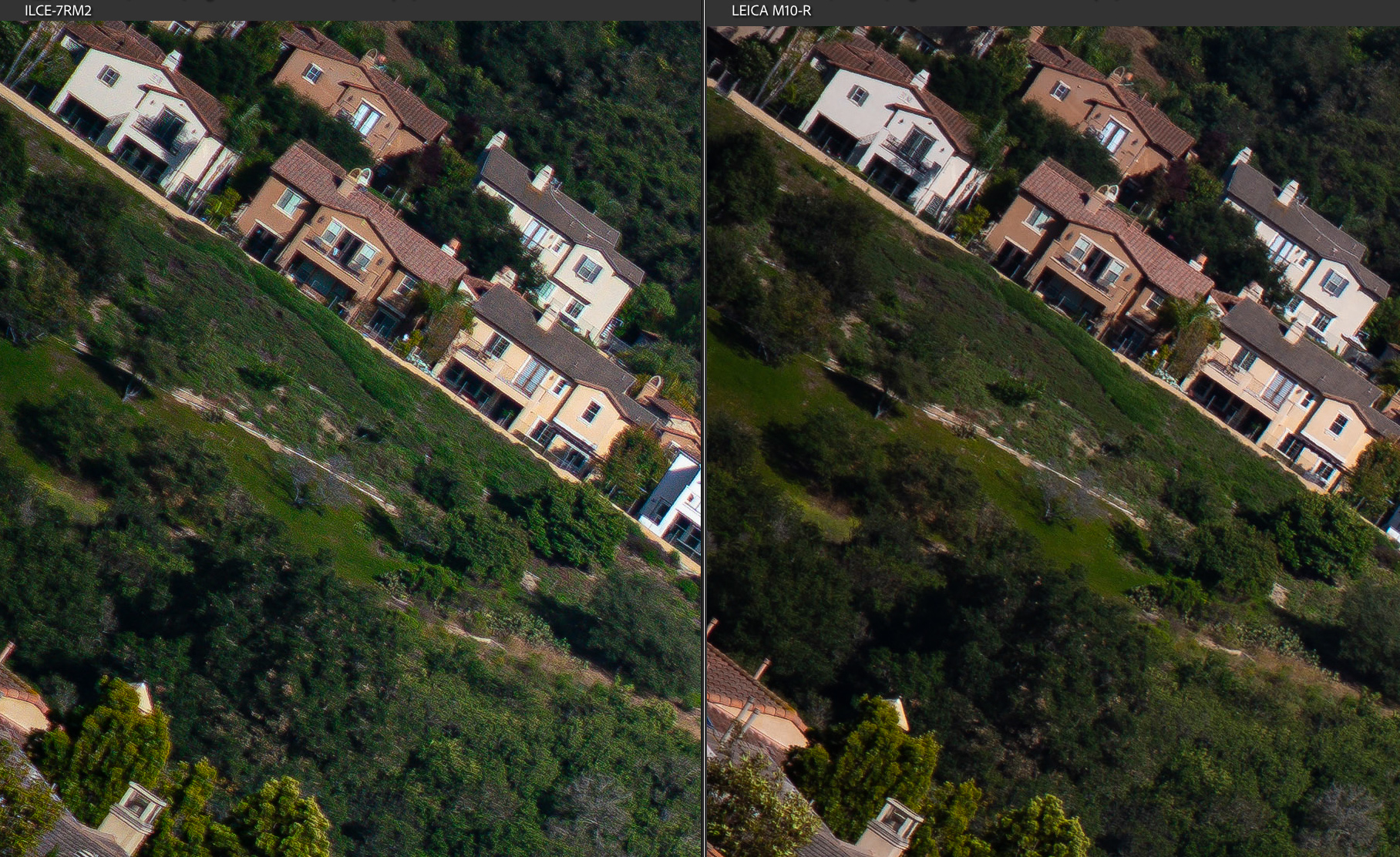
These images were not taken on the same day or under identical conditions, so there are naturally small differences in framing, exposure, and the most obvious to my eye, color rendering between the two cameras. The Sony crop shows a bit more noise because the original frame was slightly darker and I had to lift the exposure in post to normalize exposure for this comparison.
That said, I still don't see any meaningful optical penalty when using the CV 75/2.8 APO on the thicker Sony sensor stack. If you go hunting at the pixel level, you can find tiny differences due to other variables, but in real world images those differences don't translate into anything visible.
Here are the f/2.8 crops from both, placed side by side for easier comparison:
sarkleshark wrote
Wow, what a difference in the corners at 2.8 with the Leica M10-R compared to the Sony>Good point, that would definitely make comparison easier to read at a glance.
These images were not taken on the same day or under identical conditions, so there are naturally small differences in framing, exposure, and the most obvious to my eye, color rendering between the two cameras. The Sony crop shows a bit more noise because the original frame was slightly darker and I had to lift the exposure in post to normalize exposure for this comparison.
That said, I still don't see any meaningful optical penalty when using the CV 75/2.8 APO on the thicker Sony sensor stack. If you go hunting at the pixel level, you can find tiny differences due to other variables, but in real world images those differences don't translate into anything visible.
Here are the f/2.8 crops from both, placed side by side for easier comparison:
May 02, 2026 at 01:30 PM
p.1 #18Voigtlander 75mm f/2.8 APO-Skopar Review
Back to Quick Links
Distortion
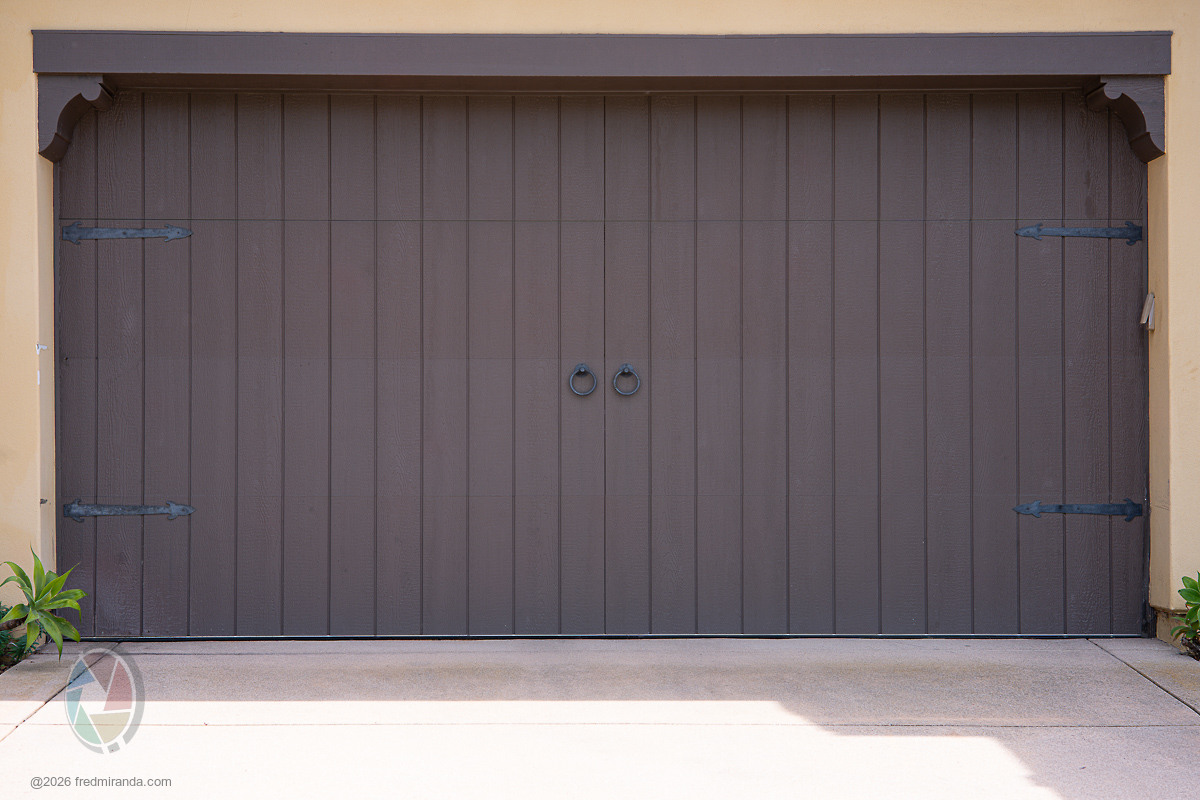
I wanted to check distortion on the Voigtlander 75mm f/2.8 APO-Skopar after noticing a slight pincushion effect in some early shots. Testing today confirmed it. Like the Voigtlander 90mm f/2.8 APO-Skopar, the 75mm shows mild pincushion distortion.
In Lightroom, it's easy to fix with about a -4 distortion adjustment.
This is pretty typical performance for a telephoto lens. For reference, the Leica APO-Summilux 90mm f/2 ASPH shows a similar level of distortion, maybe slightly less. The Voigtlander 90mm APO-Ultron and 90mm APO-Skopar are in the same ballpark as well, all showing mild pincushioning with good overall control.
Below are examples showing the uncorrected image followed by the corrected version using a -4 distortion adjustment in Lightroom.
|
||
 |
||
|
Uncorrected
|
||
 |
||
|
Corrected in LR using distortion slider -4
May 02, 2026 at 02:24 PM
p.1 #19Voigtlander 75mm f/2.8 APO-Skopar Review
If optical vignetting (the CV Achilles) is well controlled and the rendering of OOF areas and transitions is good, I am sold.
May 02, 2026 at 06:24 PM
p.1 #20Voigtlander 75mm f/2.8 APO-Skopar Review
Thanks a lot for reviewing this lens! It's a lens with specifications I waited countless years for: priorities on size, weight and IQ in the 65-75mm range at the expense of a fast aperture. Nice!
Is there a chance that Voigtländer will ever release a version in Z or RF mount? That would be even nicer...
Is there a chance that Voigtländer will ever release a version in Z or RF mount? That would be even nicer...
May 03, 2026 at 05:38 AM