aboutthelight wrote:
I have not used it for any songbirds in flight yet. I did use it to photograph Yellow Warbler feeding in a spruce tree but as the light was overcast and close to sunset there was no way to get enough shutter speed to capture a sharp flight image so I did not even try. I got the A7r6 and left for Nome and never once shot with it until I was in Alaska. I did not realize how good it would be for action so I used my A1ii most of the time that I was after flight shots of songbirds. But also songbirds were not really the goal of my trip up there except for a few of the mostly Asian nesters like Yellow Wagtail. I will try it one day and try and report back. But this camera is really amazing considering it is not an A1ii. As I mentioned a few times it will not be good in all situations and there will be times when you see rolling shutter. But for general use to lots of action it is a fantastic camera for most situations. ...Show more →
Thank you very much for suggesting to try and share your impressions and hopefully images. It would be very helpful for many for sure.
Douglas L wrote:
I haven't shot any song birds with the A7RVI. I personally have seen very visible rolling shutter effect in some of my hummingbird shots but there are plenty of good ones to choose from too. I have seen pretty bad leaning trees/buildings while panning in some of my pictures too. Plenty of images of egg shape baseballs, curvy baseball bats and golf clubs, elongated birds wings (most people probably don't notice slightly longer wings or planes) can be easily found. Let's not kid ourselves, you can't beat physics. This is not to say the A7RVI can't shoot fast stuff, in fact, it's great under most circumstances. ...Show more →
Hello. I have also seen examples of rolling shutter in sports situations () and panning-induced distortion with buildings in the background () but I have not yet seen examples of wing distortion on birds on this model. I have seen some great shots of swallows and the last thing I could think of as a stress test is something like this https://www.instagram.com/umut_h_toprak/p/C28VWV_MGOy/
Douglas L wrote:
One just needs to be aware of the limitations of the A7RVI's electronic shutters in certain situations, under which mechanical shutter can be your best friend if you are OK with 10 FPS. There is a reason why Sony priced the A7RVI at $4500, not $7500.
Long story short, I would love to see the failure modes of the camera for the use cases I am interested in. I am aware of the theoretical superiority of A1 and A9 series models but concrete examples of the kind of artifacts one could expect would be valuable to me and I strongly assume others as well.
umut_h_toprak wrote:
Hello. I have also seen examples of rolling shutter in sports situations () and panning-induced distortion with buildings in the background () but I have not yet seen examples of wing distortion on birds on this model. I have seen some great shots of swallows and the last thing I could think of as a stress test is something like this https://www.instagram.com/umut_h_toprak/p/C28VWV_MGOy/
Long story short, I would love to see the failure modes of the camera for the use cases I am interested in. I am aware of the theoretical superiority of A1 and A9 series models but concrete examples of the kind of artifacts one could expect would be valuable to me and I strongly assume others as well.
After 88 pages of posts and many of them regarding BIF, small vs large birds, hummingbirds.. Isn’t there a lot of information already provided about a camera that was designed for resolution and not for swinging bats, clubs and hummingbird wings? In short, many have posted that they, when shooting in the extremes, found artifacts, but also could find many acceptable images.
umut_h_toprak wrote:
Hello. I have also seen examples of rolling shutter in sports situations () and panning-induced distortion with buildings in the background () but I have not yet seen examples of wing distortion on birds on this model. I have seen some great shots of swallows and the last thing I could think of as a stress test is something like this https://www.instagram.com/umut_h_toprak/p/C28VWV_MGOy/
Long story short, I would love to see the failure modes of the camera for the use cases I am interested in. I am aware of the theoretical superiority of A1 and A9 series models but concrete examples of the kind of artifacts one could expect would be valuable to me and I strongly assume others as well.
I posted some pictures of distorted building, birds, helicopters, electric fans in this thread, you can go through the thread to find them. Even some pictures other members posted here showed elongated bird wings, to my eyes, at least. The extra long wings may not be noticed as the result of rolling effect but they looked unnatural. I remember seeing pictures of unnaturally long arms of a baseball pitcher someone posted, not in this thread, I think he started a separate thread to show the baseball pictures. As I said in my last post, it doesn't happen all the time but it happens, depending in the angles, I guess.
Douglas L wrote:
I posted some pictures of distorted building, birds, helicopters, electric fans in this thread, you can go through the thread to find them. Even some pictures other members posted here showed elongated bird wings, to my eyes, at least. The extra long wings may not be noticed as the result of rolling effect but they looked unnatural. As I said in my last post, it doesn't happen all the time but it happens, depending in the angles, I guess.
Thank you, I missed them I think I'll look for posts from you in this topic again.
EB-1 wrote:
Dots in a camera (front or rear) display is MILC-era marketing nonsense that treats every color pixel of a display separately, so you have to divide by three to get what we usually call pixels. So the a7RVI has 9,437,184 dots. 2048x1536x3=9,437,184 is not liekly a coincidence.
AGeoJO wrote:
I love my A7c R for travel. The rangefinder-like look makes it sleeker and yes, mine is in silver. A few times, people did ask me whether it was a Leica . Nah, just Leica-wannabe, was my answer. A few times, I got away with facilities allowing me to take pictures, because it looks "amateurish" rather than a real professional camera. Yes, the A7r X is not that much bigger but the hump makes it look like a DSLR. But to each his/her own though.
The viewfinder aspect of that camera doesn't bother me much as I use the rear screen significantly more so for rapid composition as typically, I don't have much time in capturing images. While traveling, in more than just a few occasions, speed is more important than careful composition. At least, that's my take.
Plus, I take a fair amount of people's picture while traveling. Since I am holding the camera away from my body, and I tuck in my left elbow on my tummy, the position of the camera is LOWER than my face, and roughly at my tummy. By so doing, the people's rendition is more natural and pleasing. ...Show more →
No disagreement there, Joshua. Like I said, folks who accept the size, weight/features tradeoff of the C series love them. It's all about one's priority.
umut_h_toprak wrote:
Thank you for this valuable testimonial. I personally have been trying hard to find examples of situations and images where there is noticeable rolling shutter for wildlife but it seems to be working really well. In essence Sony seems to have brought out something remarkably close to its A1 series only 1.5 years after the release of its current model. Either we are heading for a quicker than usual refresh of A1 or A1 is going to become a niche product like Canon R1.
Did you by any chance photograph any small songbirds in fast flight like a pre-capture takeoff situation? That is about the toughest rolling shutter test I can imagine for wildlife without getting into panning....Show more →
On this very site there have been thousands of shots of birds-in-flight showing no glaring or unacceptable examples of rolling-shutter effect on the wings. This includes many taken at least five years ago by many different cameras using electronic shutter.
That was mainly because in a burst of 10, 20, or 30 images, if you get 10% or 20% with unacceptable results, you were getting 80% to 90% or those bursts where the wings looked perfectly acceptable.
Imagemaster wrote:
On this very site there have been thousands of shots of birds-in-flight showing no glaring or unacceptable examples of rolling-shutter effect on the wings. This includes many taken at least five years ago by many different cameras using electronic shutter.
That was mainly because in a burst of 10, 20, or 30 images, if you get 10% or 20% with unacceptable results, you were getting 80% to 90% or those bursts where the wings looked perfectly acceptable.
That is a good point.
I just wanted to see the nature of the distortion one could expect from this particular model. I know how horrendous A7R V rolling shutter looks but that is not exactly a fair comparison.
The sensor read rate is apparently similar to the Canon R5 and that is a good reference point to have. I remember it being a well-respected birding camera in its time.
umut_h_toprak wrote:
Hello. I have also seen examples of rolling shutter in sports situations () and panning-induced distortion with buildings in the background () but I have not yet seen examples of wing distortion on birds on this model. I have seen some great shots of swallows and the last thing I could think of as a stress test is something like this https://www.instagram.com/umut_h_toprak/p/C28VWV_MGOy/
Long story short, I would love to see the failure modes of the camera for the use cases I am interested in. I am aware of the theoretical superiority of A1 and A9 series models but concrete examples of the kind of artifacts one could expect would be valuable to me and I strongly assume others as well.
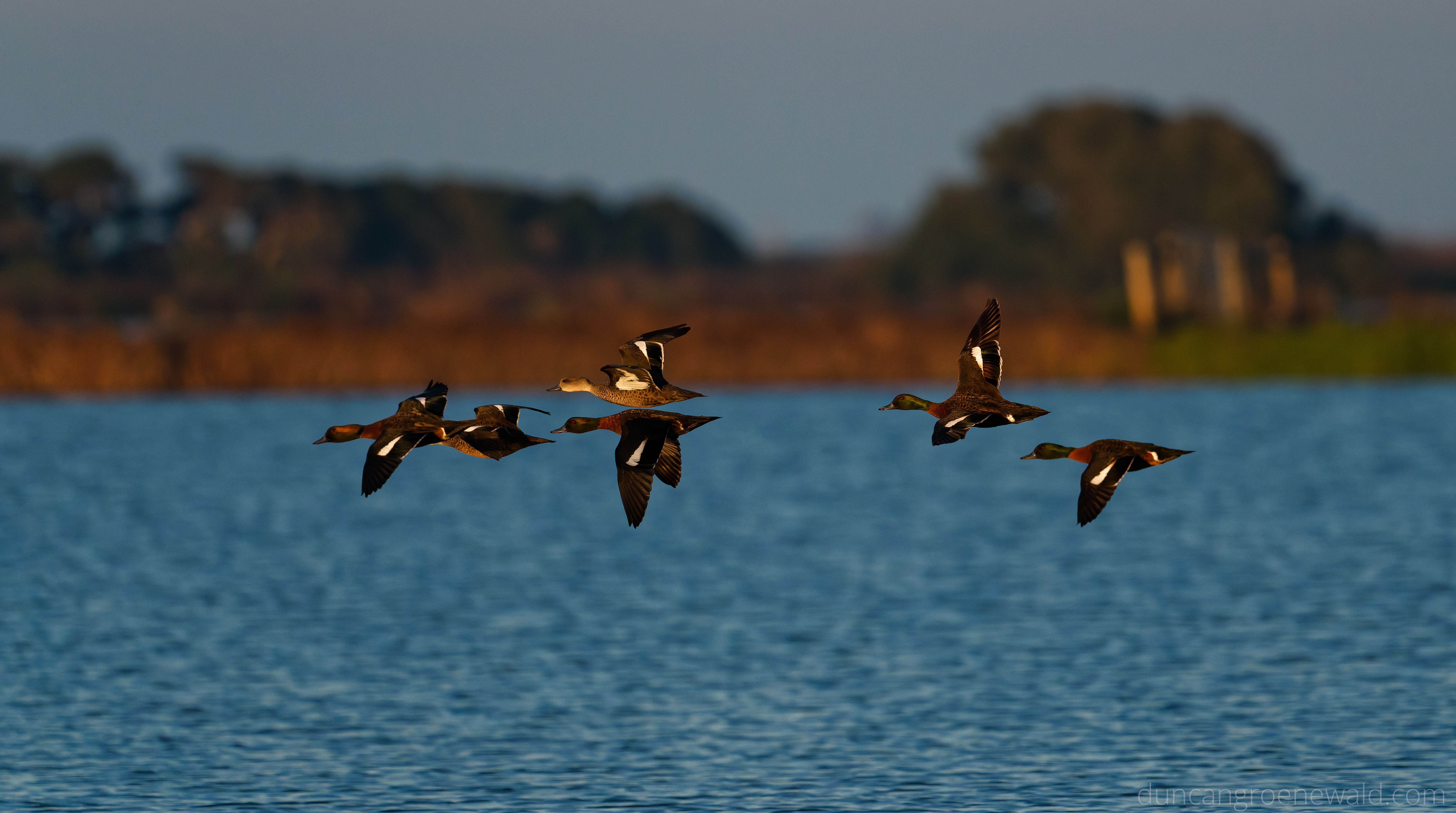
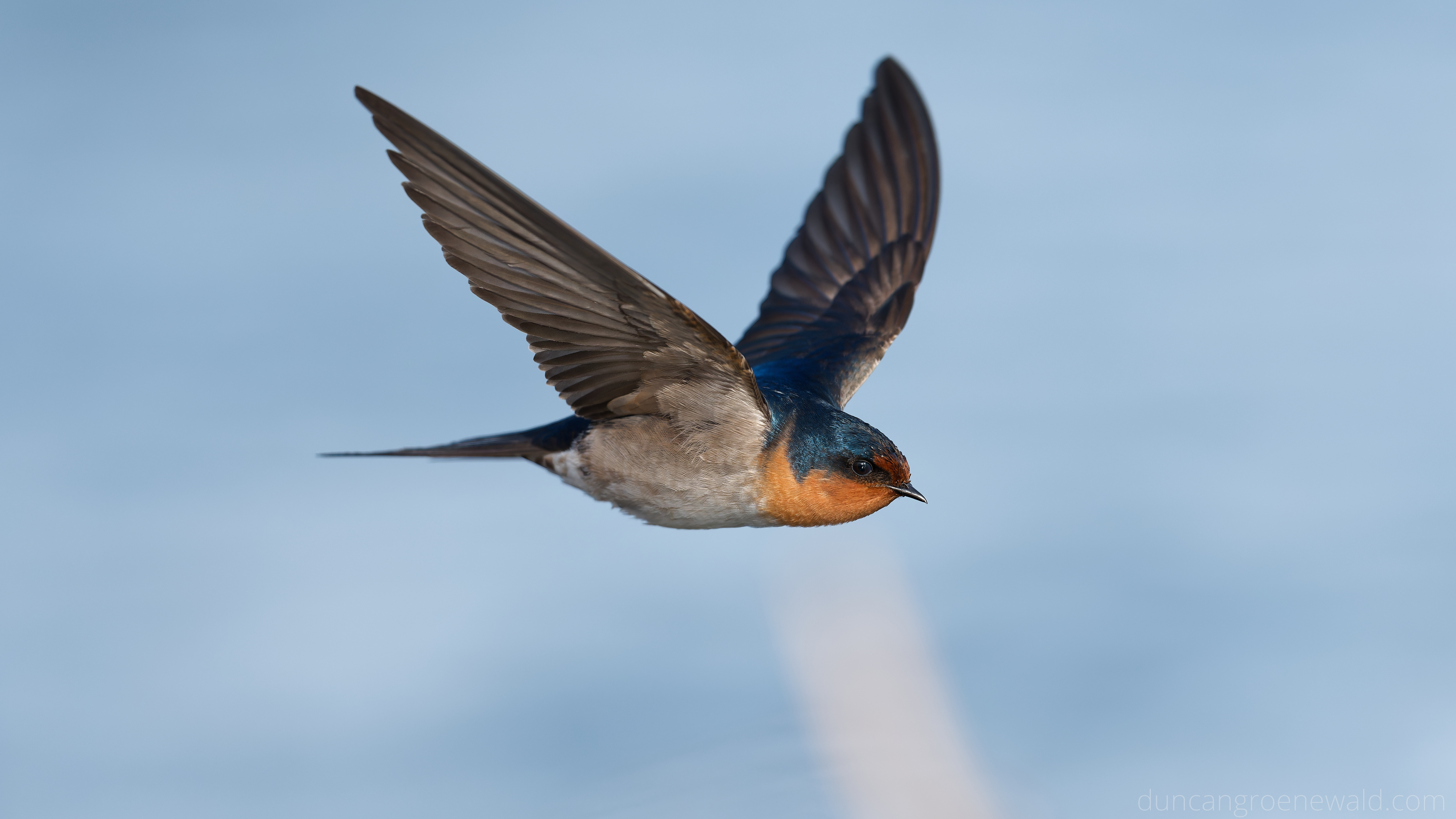
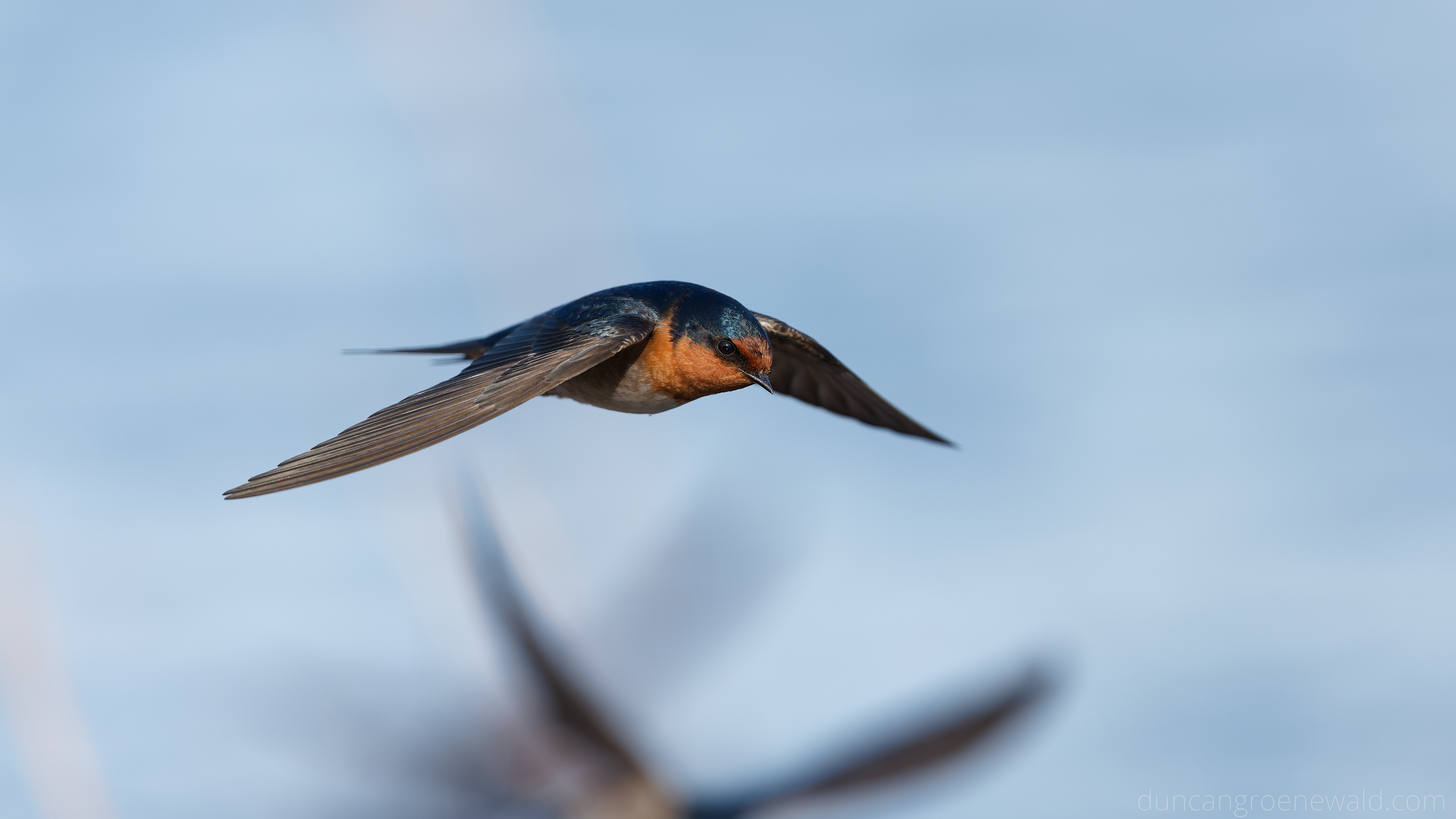
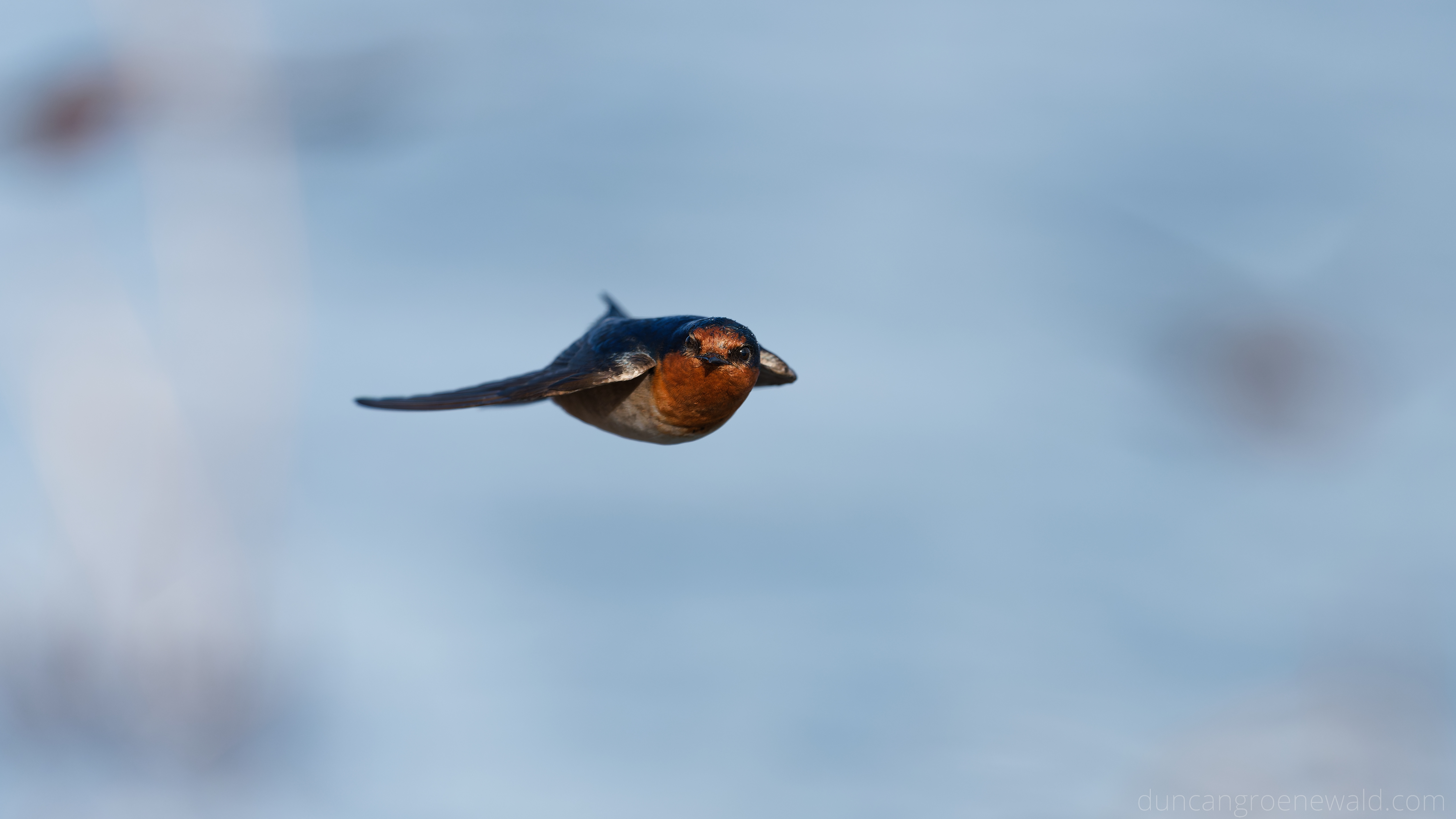
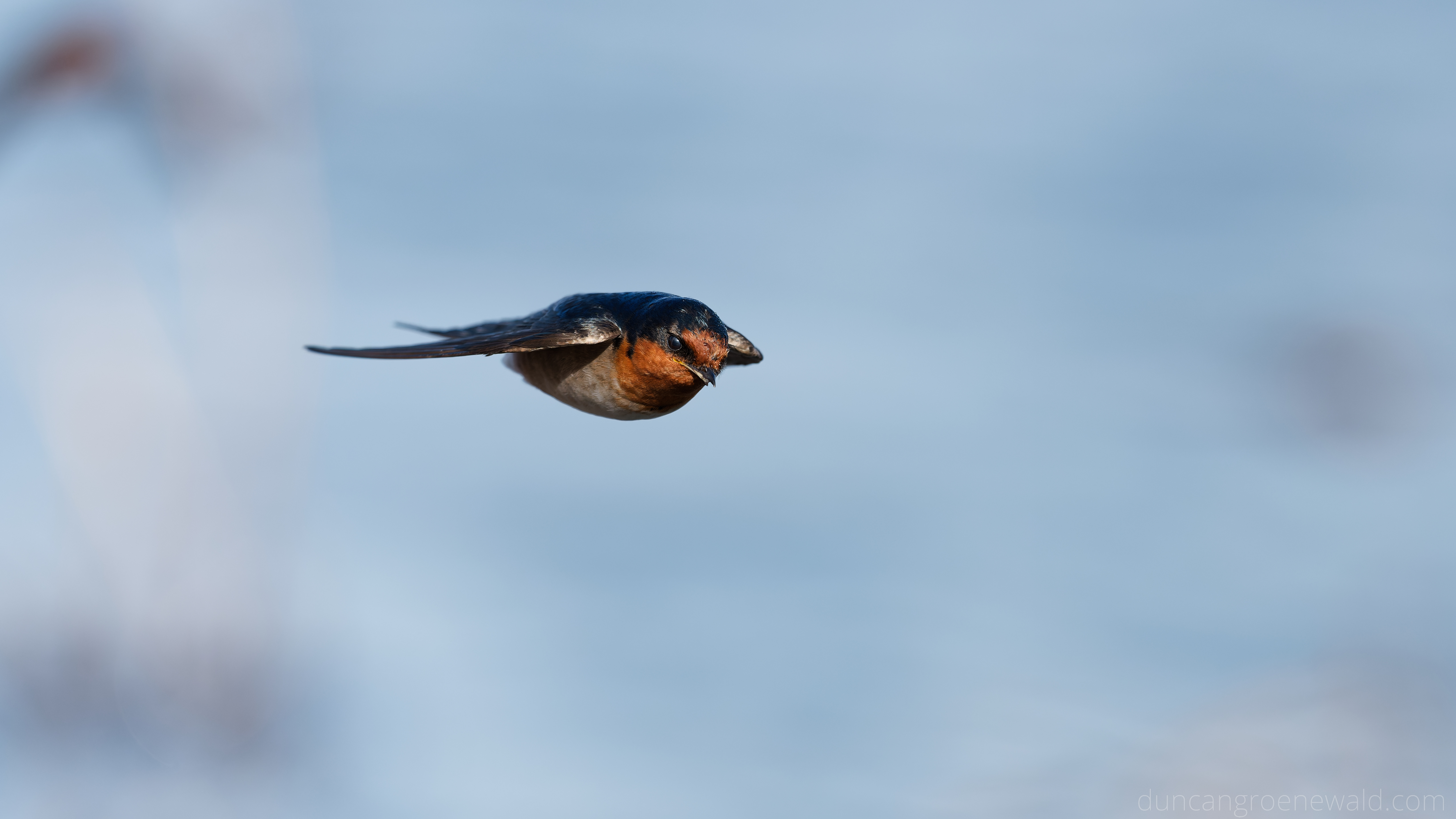
Check the poles in the background on the right - that's typically the lean you will see on vertical things in the background while panning tracking ducks.
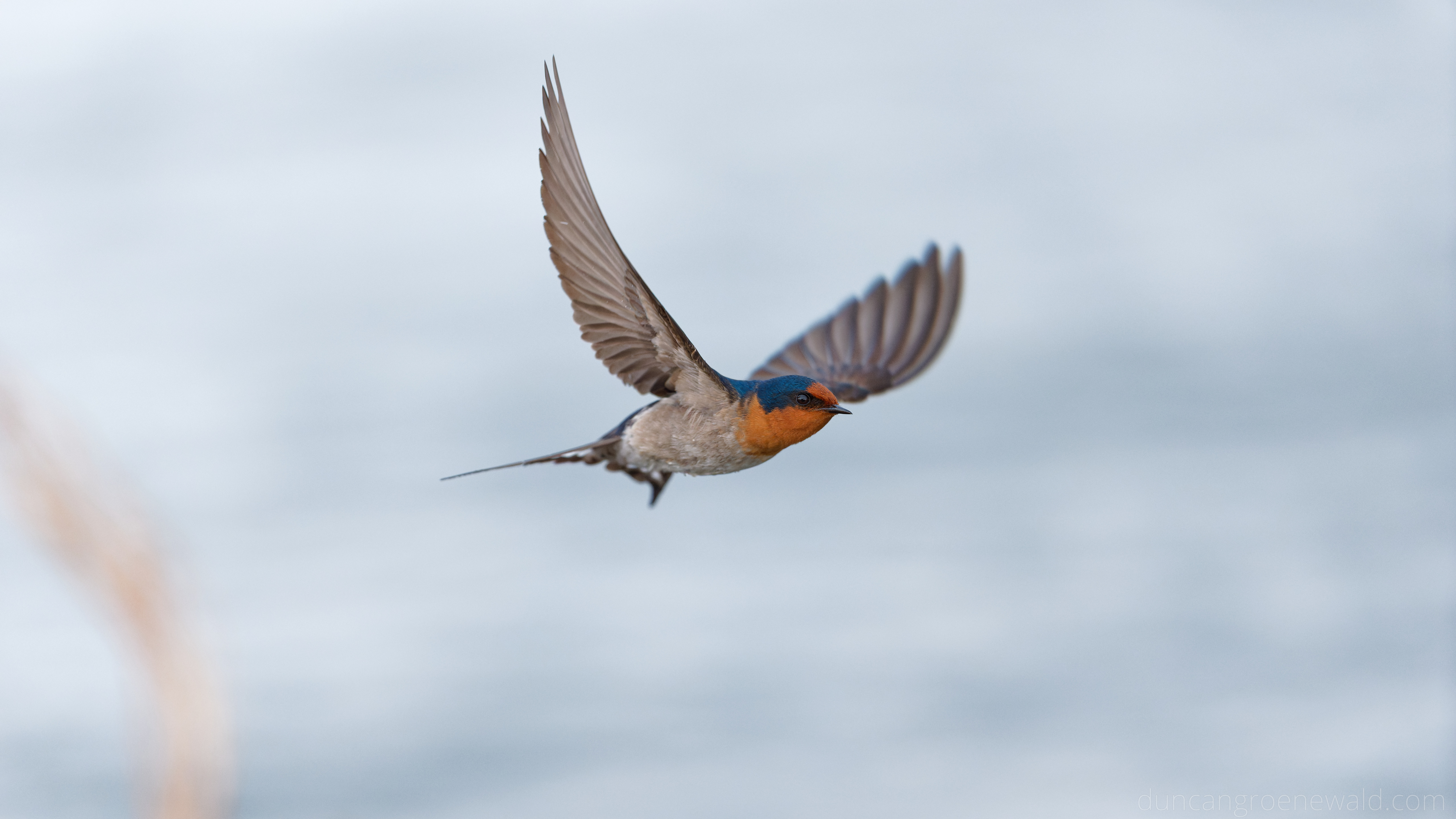
You have to look pretty hard to find examples in captured frames, seems to me there is a lot less than I recall the R5 had particularly on smaller bird. I expected to see a lot on this kind of image where the bird is filling the frame vertically but it's not really evident and the wings still look very symmetrical.
So far I don't think I have had a single decent image ruined because of rolling shutter distortion.
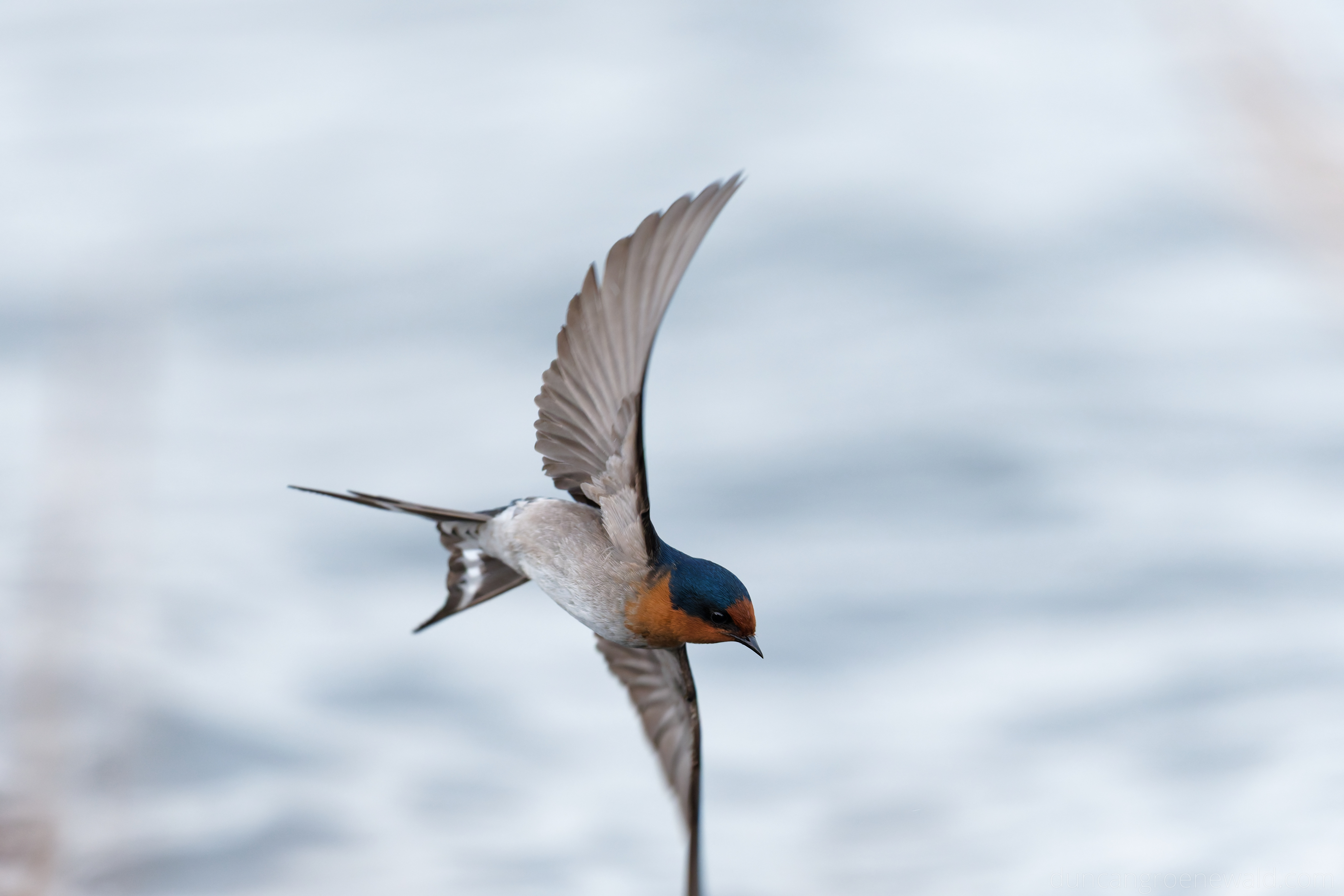
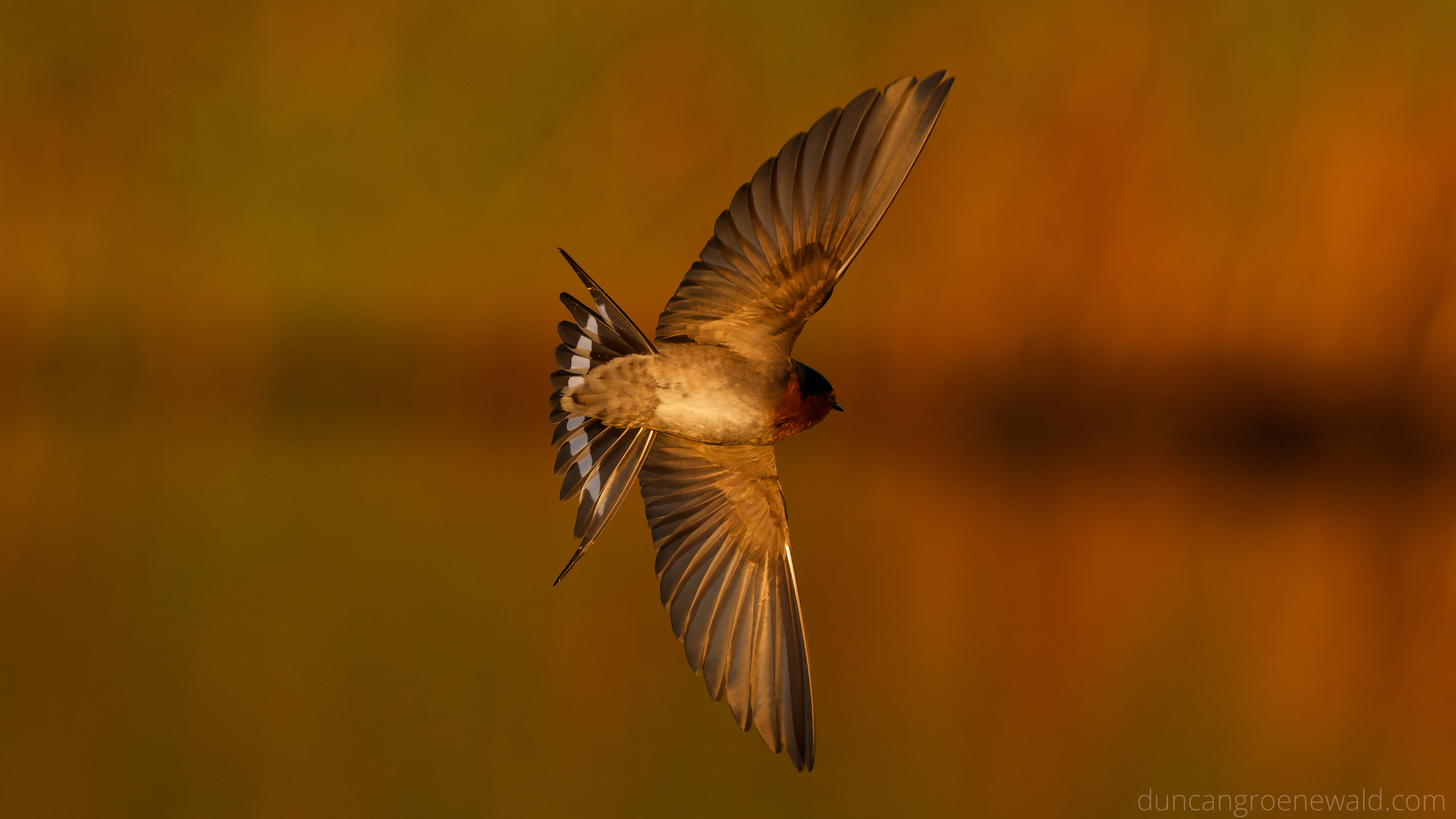
This one has what I would consider slightly excessive bend in the wings - but you get this on the A1/A1ii and not so much on the A9iii - which is why I use an A9iii for this type of subject.
Typical example where the bottom wing is on the upward stroke while the top wing was on the downstroke when captured.
duncangr wrote:
You have to look pretty hard to find examples in captured frames, seems to me there is a lot less than I recall the R5 had particularly on smaller bird. I expected to see a lot on this kind of image where the bird is filling the frame vertically but it's not really evident and the wings still look very symmetrical.
So far I don't think I have had a single decent image ruined because of rolling shutter distortion.
duncangr wrote:
This one has what I would consider slightly excessive bend in the wings - but you get this on the A1/A1ii and not so much on the A9iii - which is why I use an A9iii for this type of subject.
Tarekith wrote:
This thread is making it really hard for me to hold out for the A7CRII like I had originally planned on.
I had a love affair with the A7CR when I first purchased it. I was so used to the compact size of my former Leica M that it seemed I could now have my cake and eat it too -- the size of an M with the advantage of amazing AF. I changed over larger lenses for smaller versions. With the 24-50 it made the perfect walk-around and travel companion. I could even use my Leica camera bags.
But ... GAS infection set in, pretty much caused by this thread which I read avidly every day. (Despite all the bird pictures -- I never want to take BIFs!) In fairness I had been thinking anyway that the EVF compromise wasn't working as I had hoped. I missed a number of important shots because the EVF on the A7CR did not reveal occasional mis-focus. And for larger lenses I still had to add on the Smallrig base plate to get a manageable package -- still not great.
So I jumped in, still doubtful, and upgraded to the A7R6. Several weeks later I am so glad I did. It's not just the prominent feature improvements cited in the reviews, it's that the whole camera is better in terms of everything I want a camera to do. I think it was the DPReview assessment that said "the last camera you will ever need". Famous last words I know, but I can see why they said it. It is just better, faster, more responsive, at everything you want a camera to do.
Finally I have made my peace with the switch to Sony and stopped pining for the M. Yes it is a bit larger and lot more complex, but Leica is never going to make a camera this capable. As for the size and weight, to fix that I bought a new and better camera bag (https://www.mukama.com/products/wotancraft-pilot-travel-camera-bag-35-l?variant=55352954356091) to accommodate the added VF hump. There is no weight difference anyway compared to the M, and the VF and the handling are just wonderful.
Honestly the EVF on the A7CR doesn’t bother me one bit, so I’m lucky on that front. I got a Q3 43 when it first came out and was excited for a “proper” hi res EVF finally. While it’s definitely nice, it didn’t really change how I use the camera and I never really was bothered when I went back to the A7CR’s lower res EVF. It works just fine for me even manually focusing. I’ll count that as a good thing I guess!
The biggest reason that I want to possibly upgrade the A7CR to the RVI is that since getting the Q3 and also a GR IV Mono, the Sony 70-200GII is more or less glued to my A7CR specifically for bird and wildlife photos as those cameras cover my small and portable needs quite well.
Different question. Being new to Sony and CFxA, what cards do folks prefer? I definitely want the faster versions. I’ve always liked Lexar and Sandisk, but am looking at some of the Chinese options for price. I mainly do stills so video specific performance isn’t critical.
If you mean CFe Type A, then you want cards with VPG 400 if possible. No current Sonys can utilize the extra speed of CFe 4.0 cards, and will perform as CFe 2.0 cards. Of course future cameras will adopt CFe 4.0 speeds and some card readers can utilize the faster read speeds. Note that there is no CFe 3.0. CFe 2.0 was already at PCIe 3.x speed so they jumped over that to have the CFe version aligned with the PCIe version for marketing purposes.
Jack Flesher wrote:
Different question. Being new to Sony and CFxA, what cards do folks prefer? I definitely want the faster versions. I’ve always liked Lexar and Sandisk, but am looking at some of the Chinese options for price. I mainly do stills so video specific performance isn’t critical.
I have used Sony Tough 160GB, Prograde 160GB, Nextorage 480GB, OWC 960GB. They all work fine and so far, have been reliable. Knock, knock, knock. The fastest and the largest in storage capacity, is the OWC. But I cannot tell the difference in the speed although according to the specs, it is double that of the others. But, of course, the difference in storage capacity shows. For all we know, they are all made in China...
I went with a pair of the Nextorage CFE-A VPG200 256GB. New for my new A7Rvi. Still having and using UHS-II cards in other cameras and not expecting, necessarily, the highest speeds, they hit a spot of size and "immediate" availability and price compared to some alternates. So giving them a try. Not enough use to form conclusions, really. They work as expected, came on time, etc.
Appreciate the above feedback, thank you. I went ahead and ordered a Chinese 512. It was a 4.0, but priced less than domestic 2.0's and had good feedback from users -- we will see!


 . Nah, just Leica-wannabe, was my answer. A few times, I got away with facilities allowing me to take pictures, because it looks "amateurish" rather than a real professional camera. Yes, the A7r X is not that much bigger but the hump makes it look like a DSLR. But to each his/her own though.