Fred Miranda
Offline
Admin
Upload & Sell: On
|
 p.7 #1 · Light Lens Lab 35mm f/1.4 Aspherical "11873" Review p.7 #1 · Light Lens Lab 35mm f/1.4 Aspherical "11873" Review | |
Back to Quick Links
Rendering comparison 2: Light Lens Lab 35mm f/1.4 Aspherical vs Leica 35mm f/1.4 Summilux ASPH. (FLE)
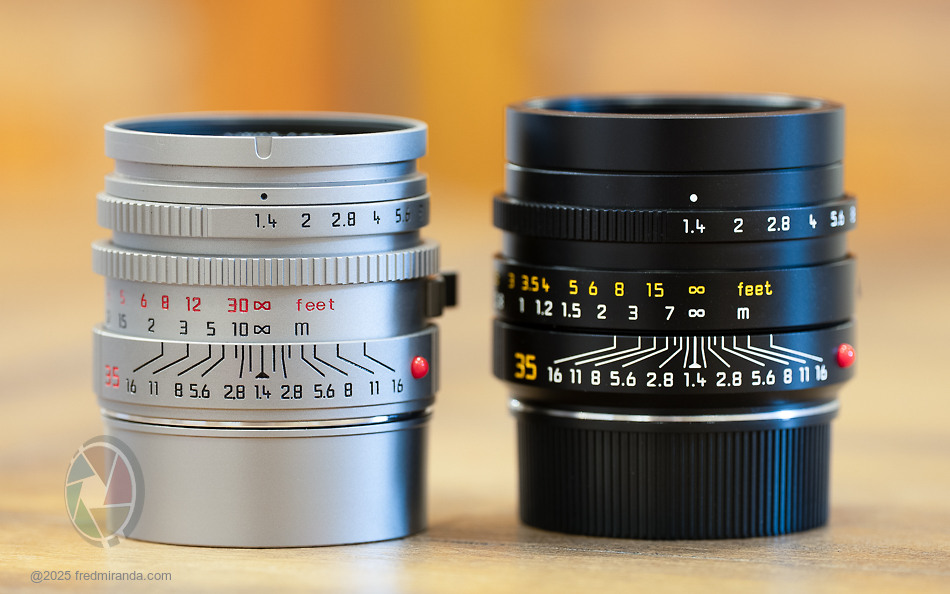
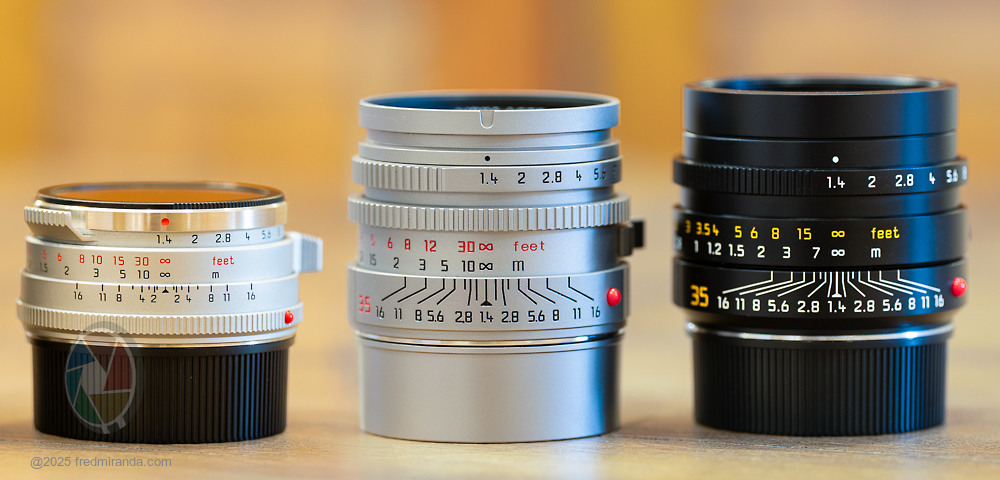
Light Lens Lab 35mm f/1.4 Aspherical Titanium | Leica 35mm f/1.4 Summilux ASPH.
In order to really understand how the Light Lens Lab 35mm f/1.4 Aspherical stacks up against the Leica 35mm f/1.4 Summilux FLE, I went out and shot more rendering comparisons today, now that the rain finally gave me a break. The outdoor shots were taken early in the morning around 8am, and thankfully the light stayed consistent throughout the test. Since the LLL versus FLE comparison is what most people are interested in, I am posting that set first. I also shot comparisons with the Leica 35mm f/1.4 Steel Rim reissue, and I will share those later.
A lot of people want to know how these lenses differ in rendering, resolution, and contrast, especially when deciding whether it makes sense to add the Light Lens Lab version if they already own the FLE, or whether they should buy one or the other as their main 35mm f/1.4. As I have mentioned before, I can only speculate how the original Leica 35mm f/1.4 Double Aspherical compares to the FLE, pre-FLE, and this Light Lens Lab replica. I do not have a definitive answer there.
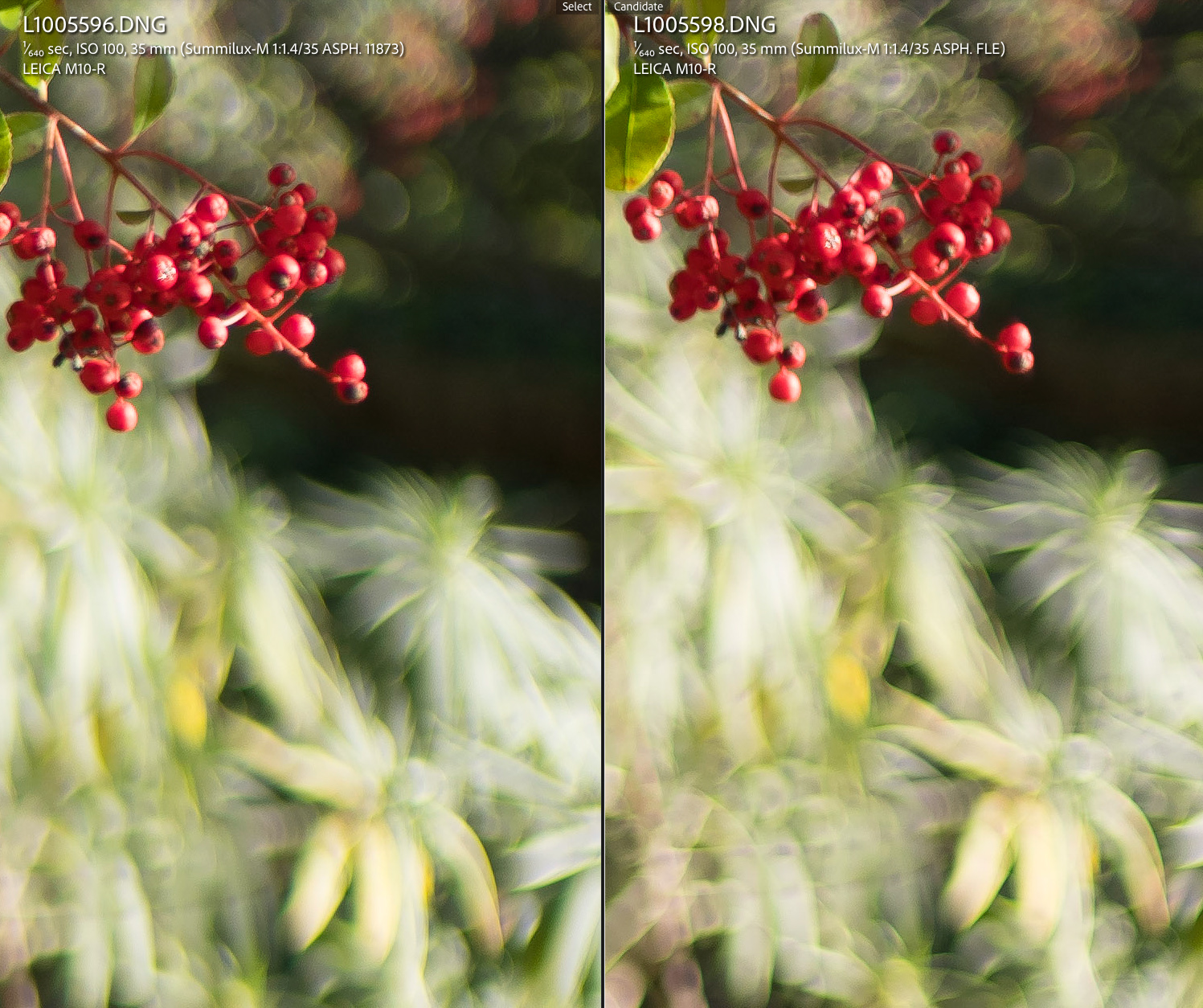
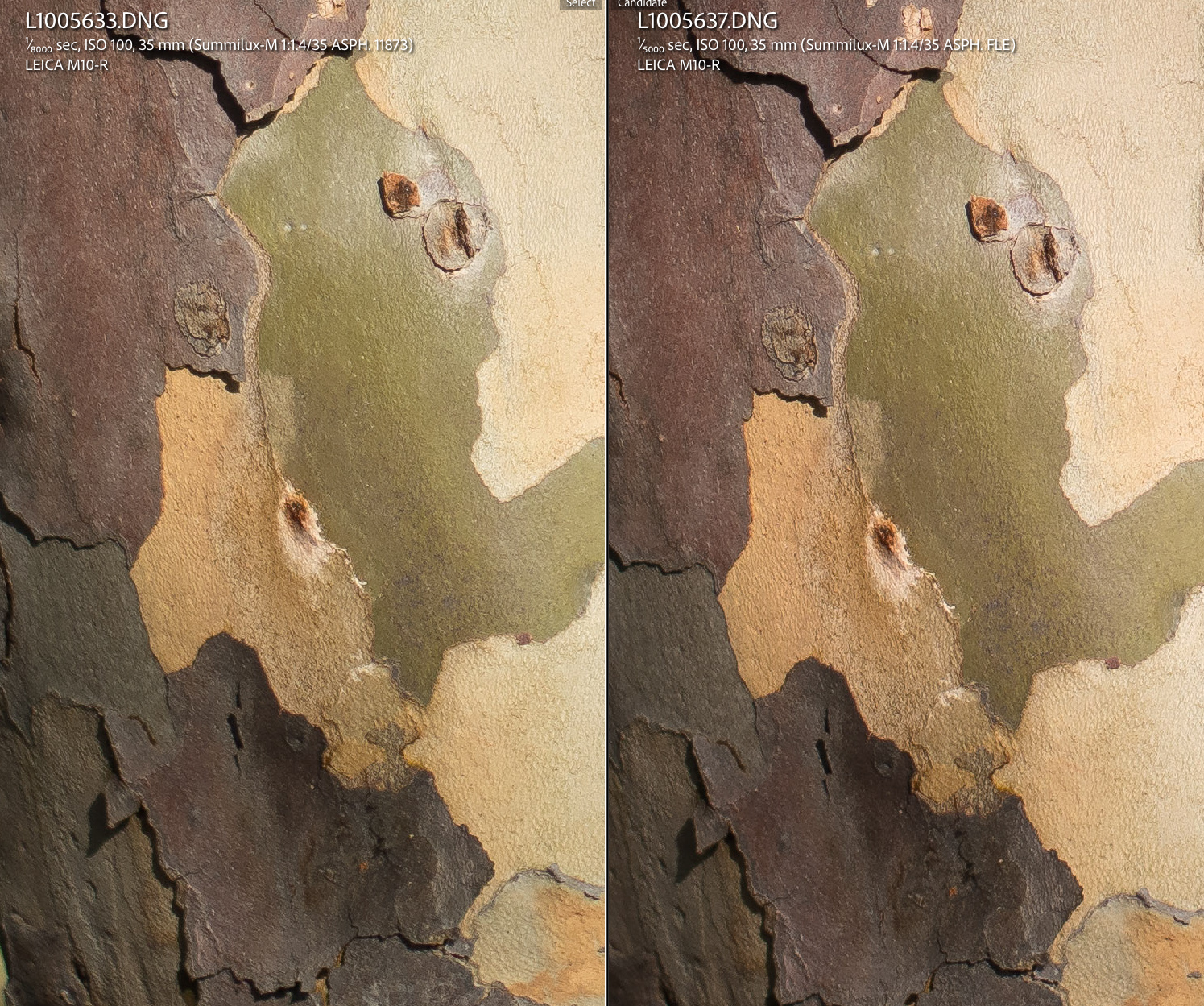
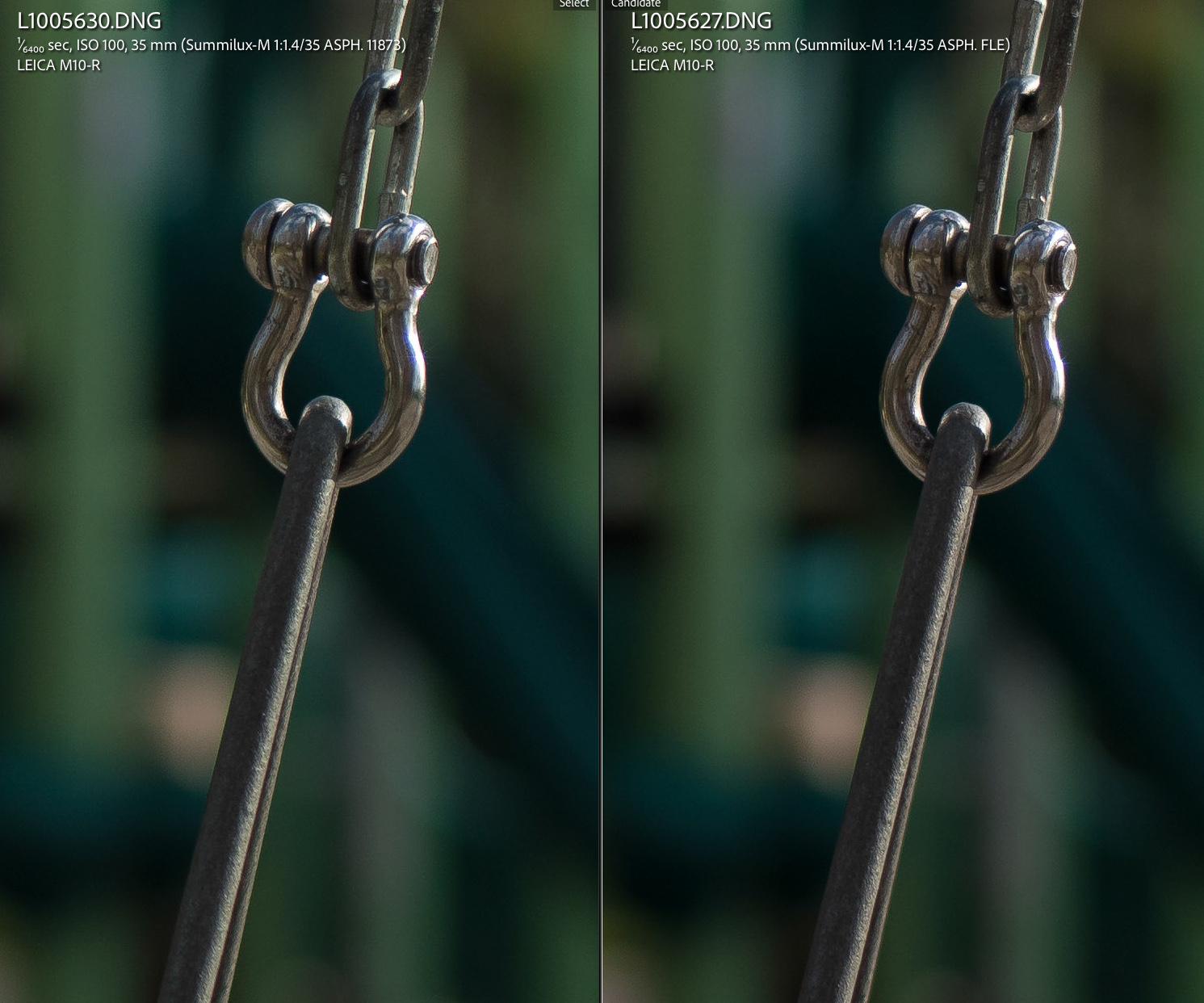
What I can show is how the Light Lens Lab compares directly to the FLE, and to my eyes they perform in a broadly similar way. The difference is that the Light Lens Lab appears to be slightly less corrected for spherical aberration, which gives it a more gentle sharpness and smoother rendering with less edge outlining. That quality can be very appealing, depending on the subject.
Hopefully these new comparisons will help people decide which type of rendering they prefer. There is no right or wrong here. This is a matter of taste.
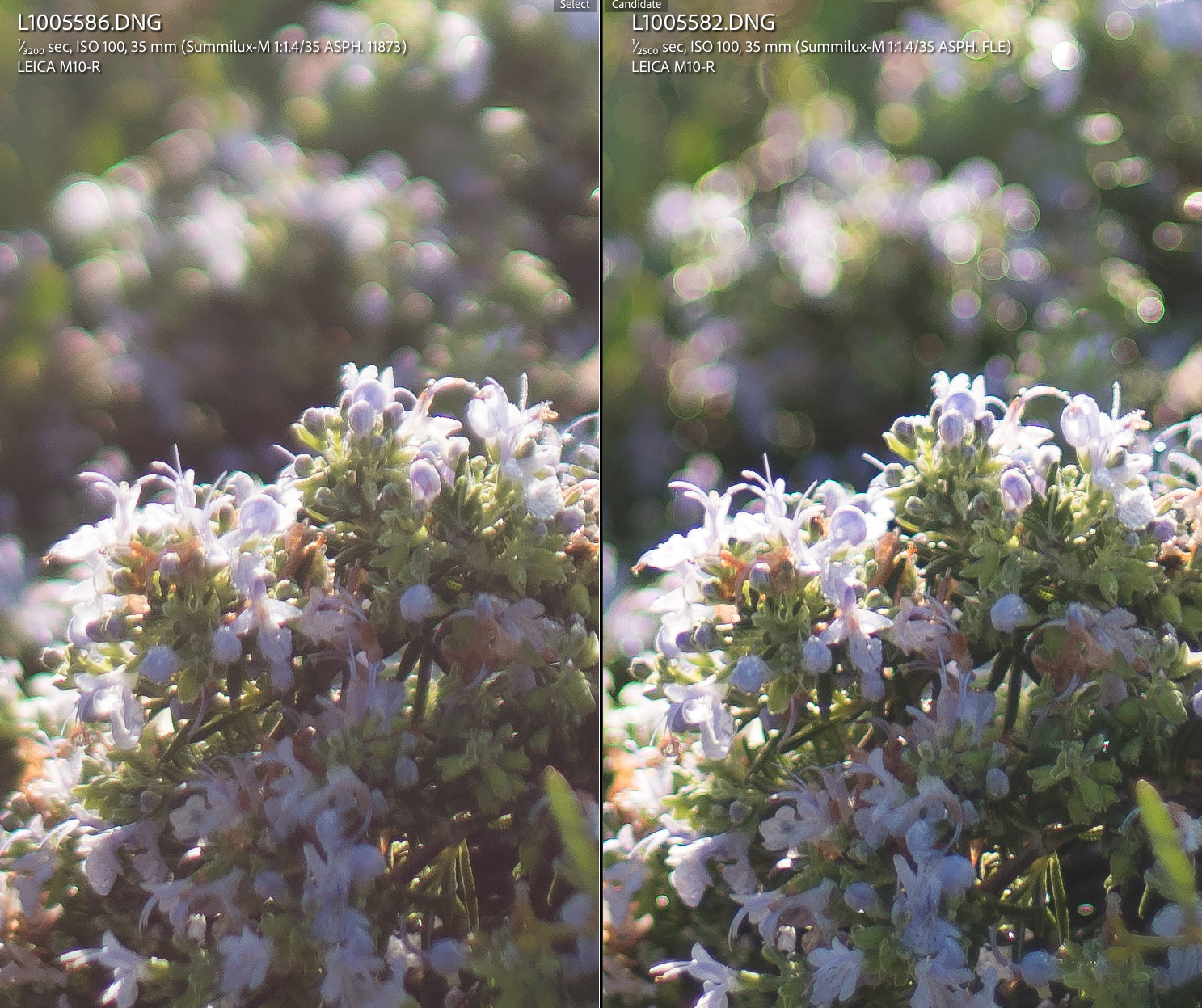
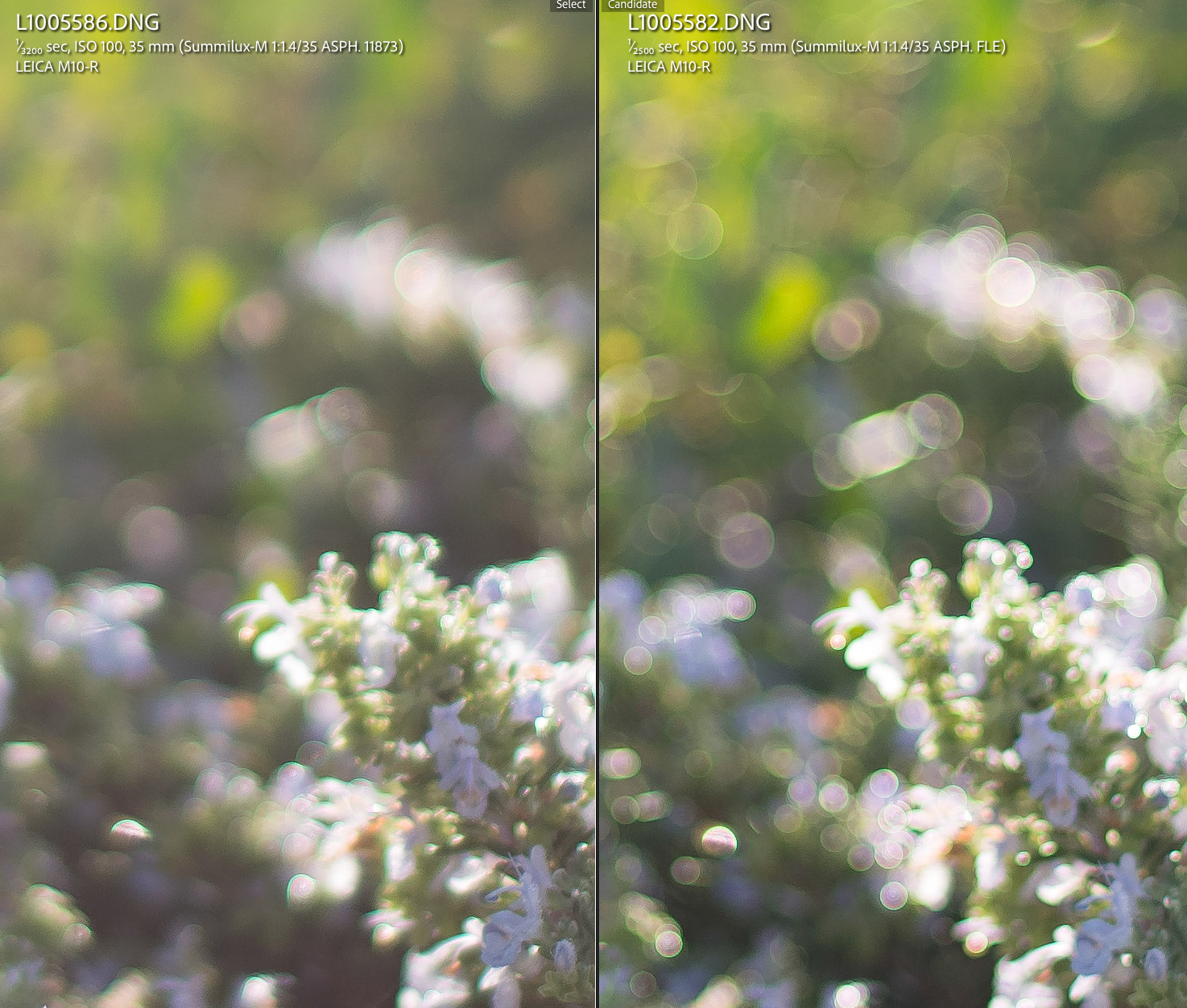
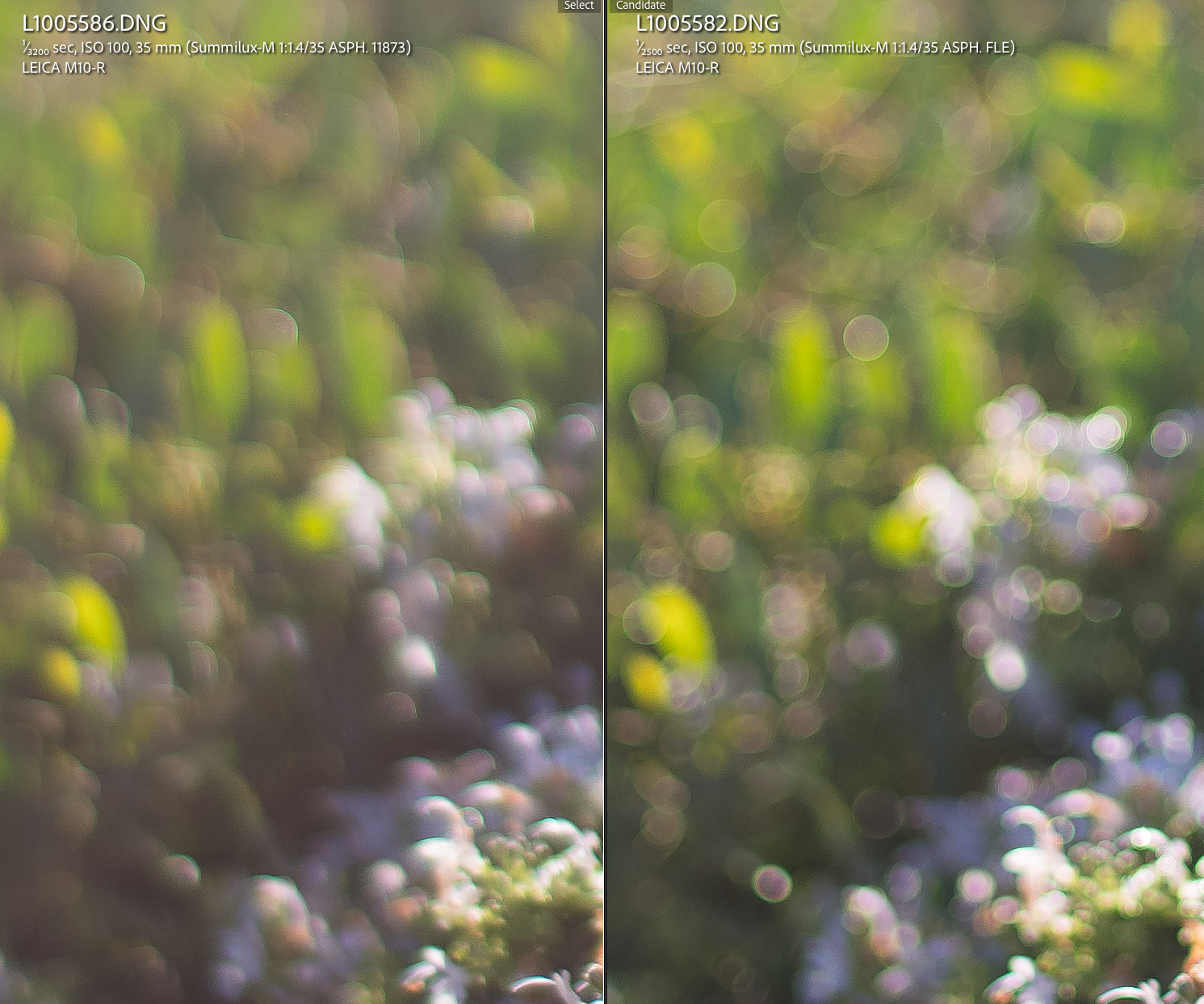
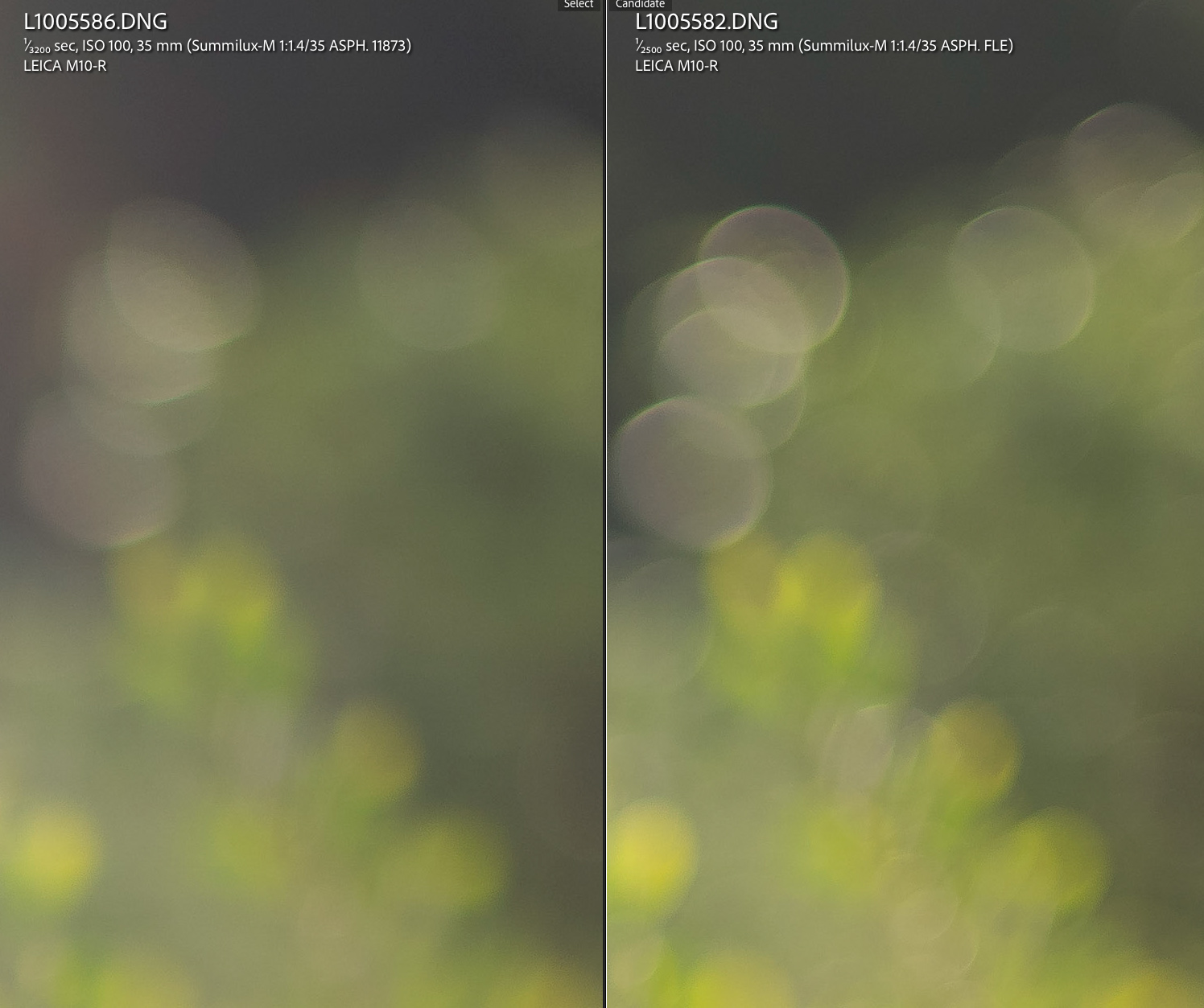
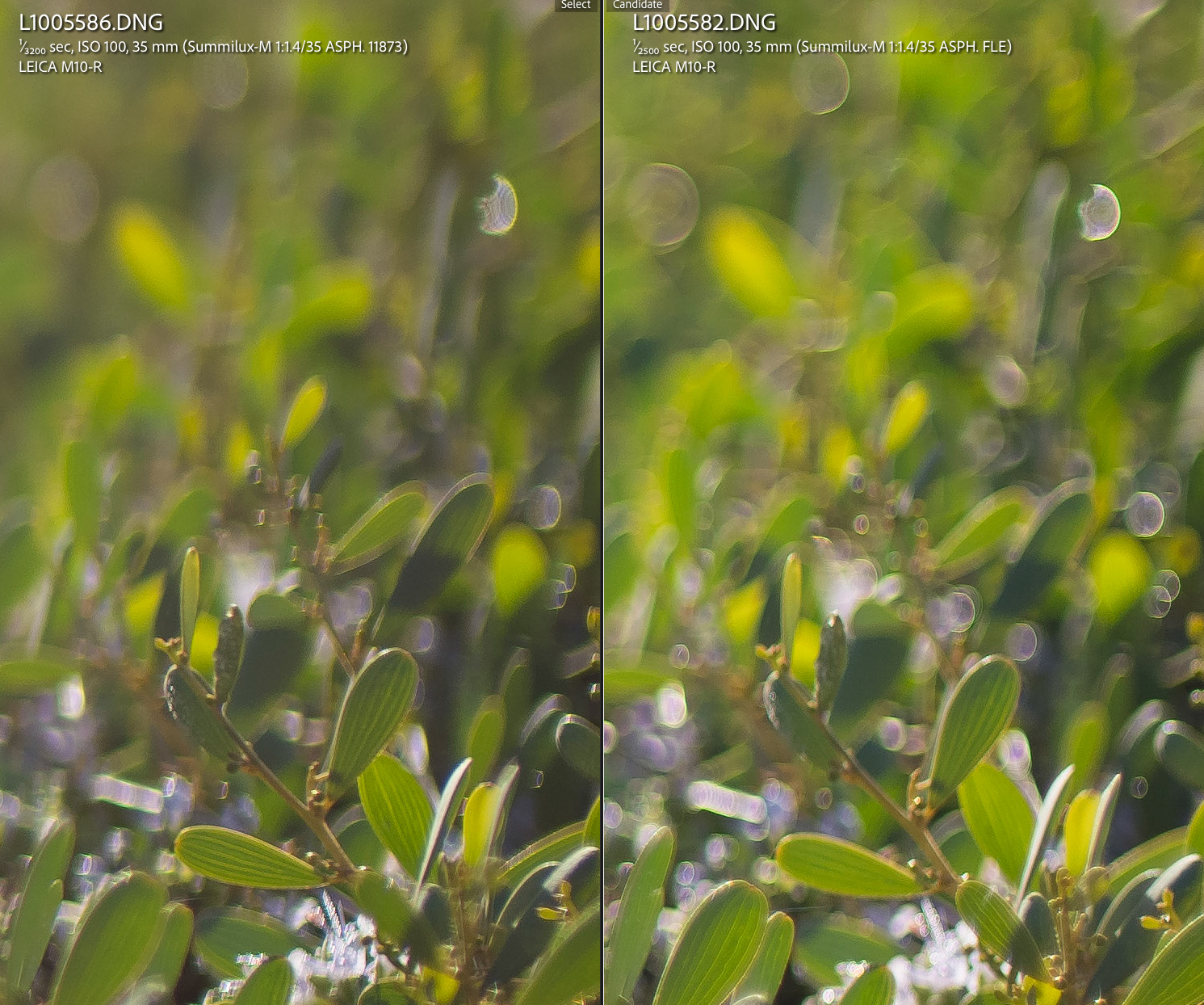
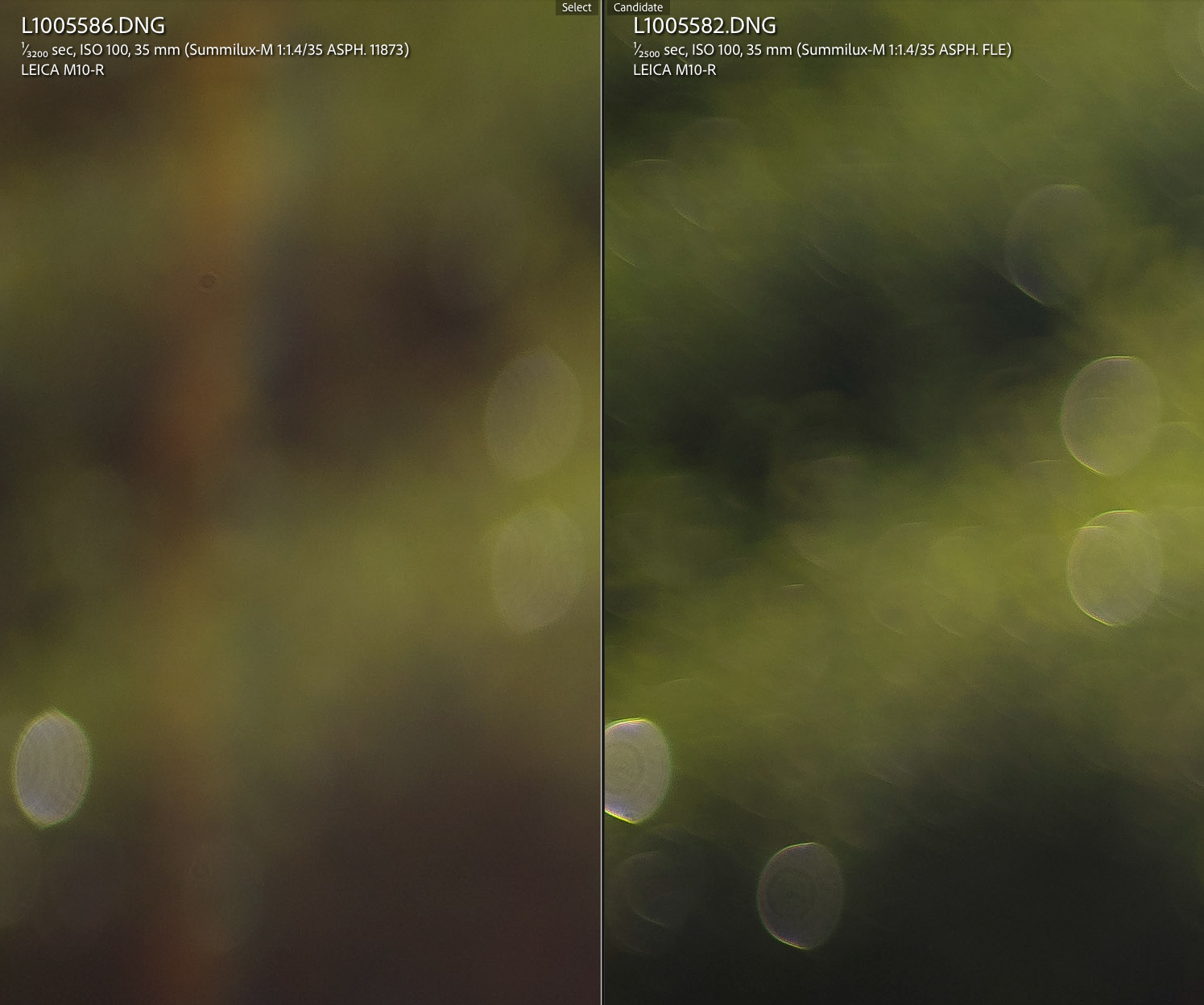
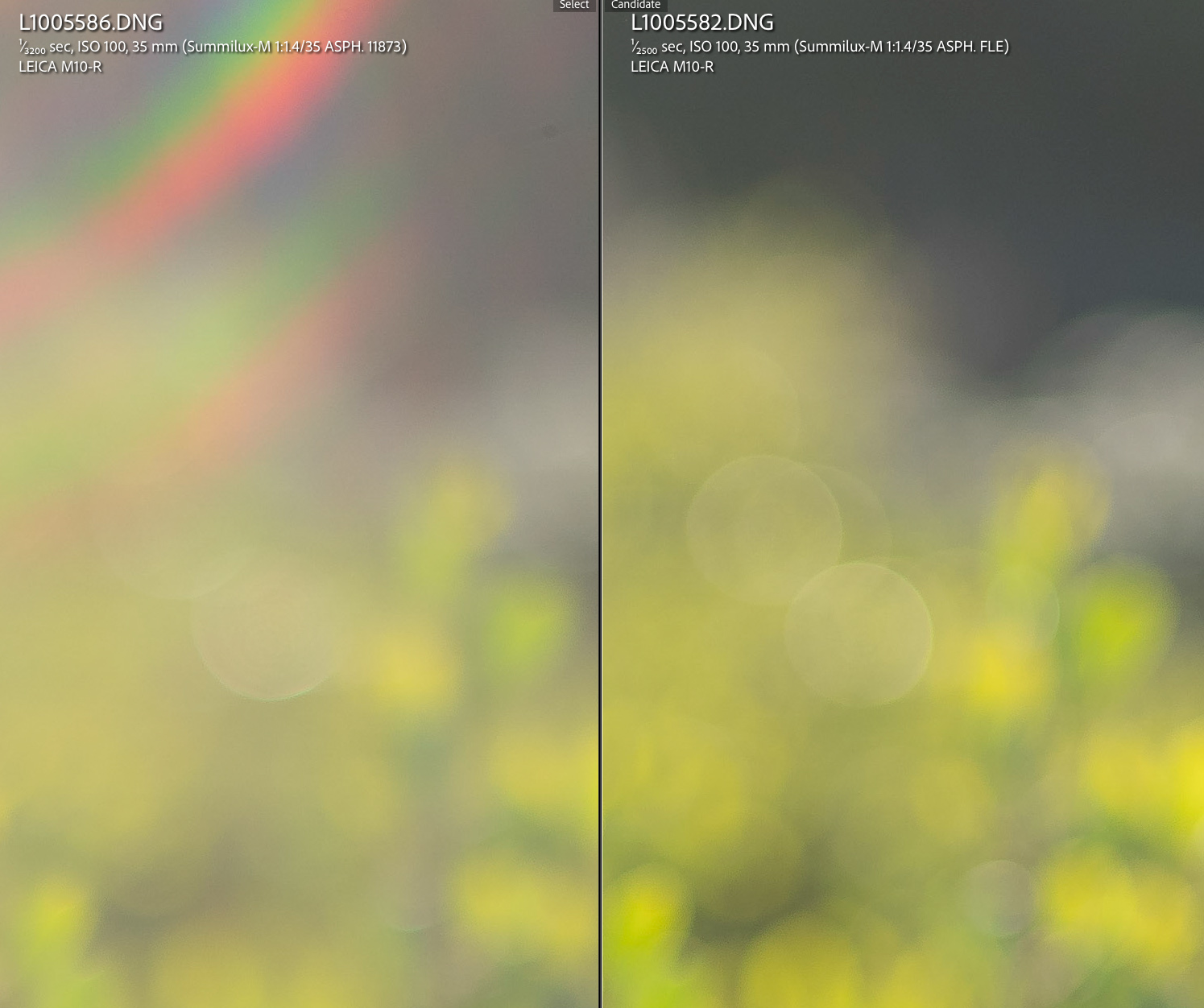
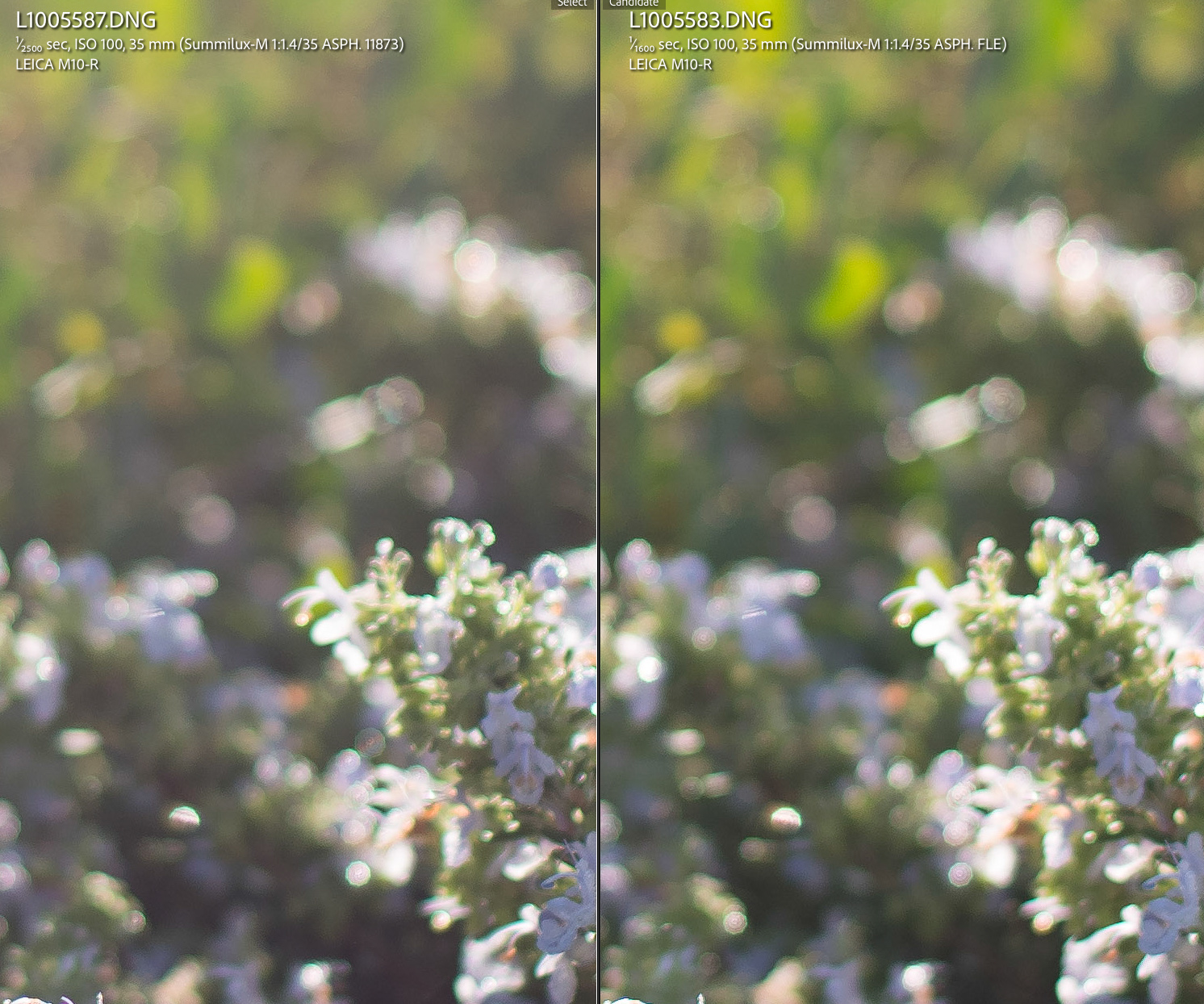
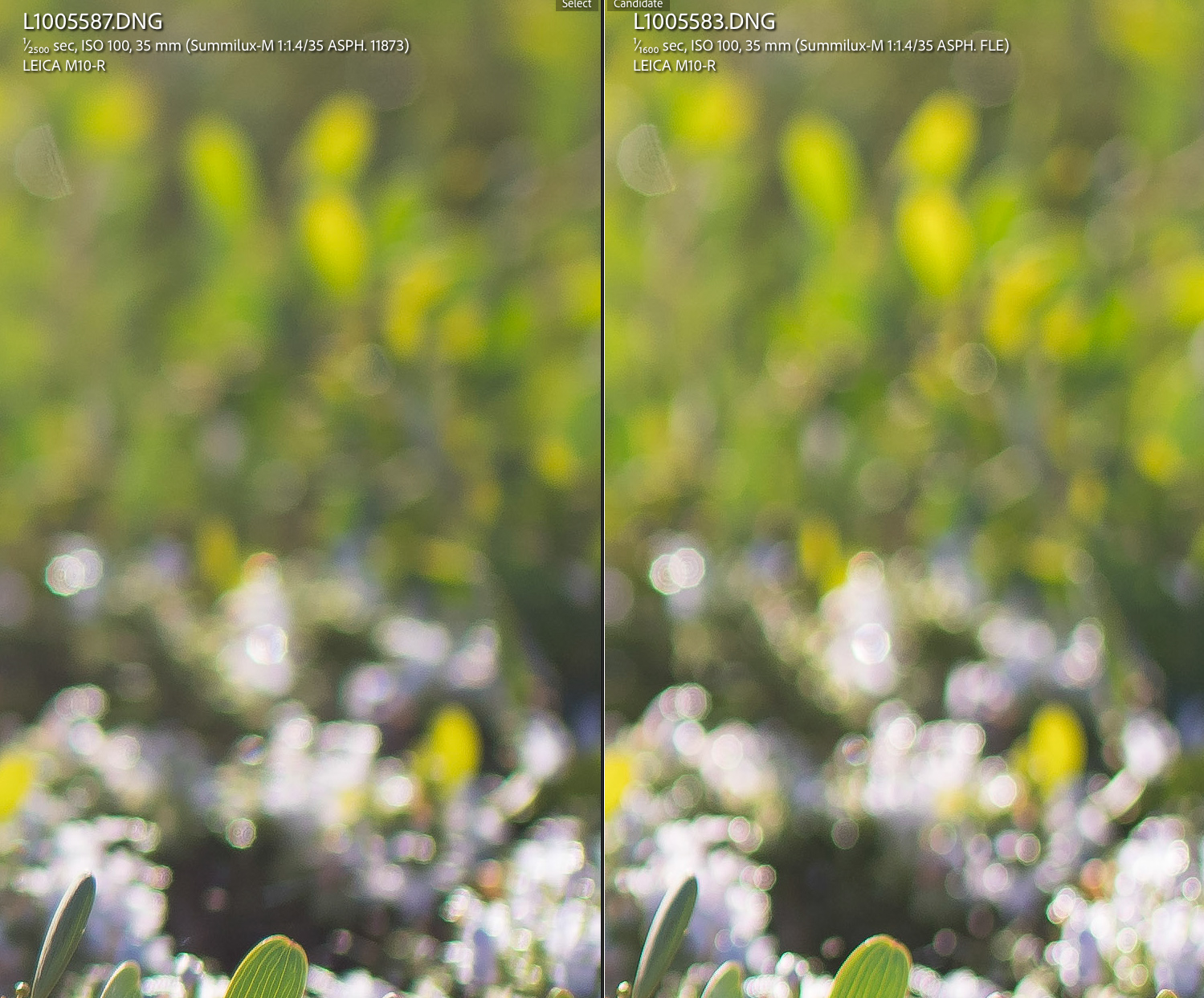
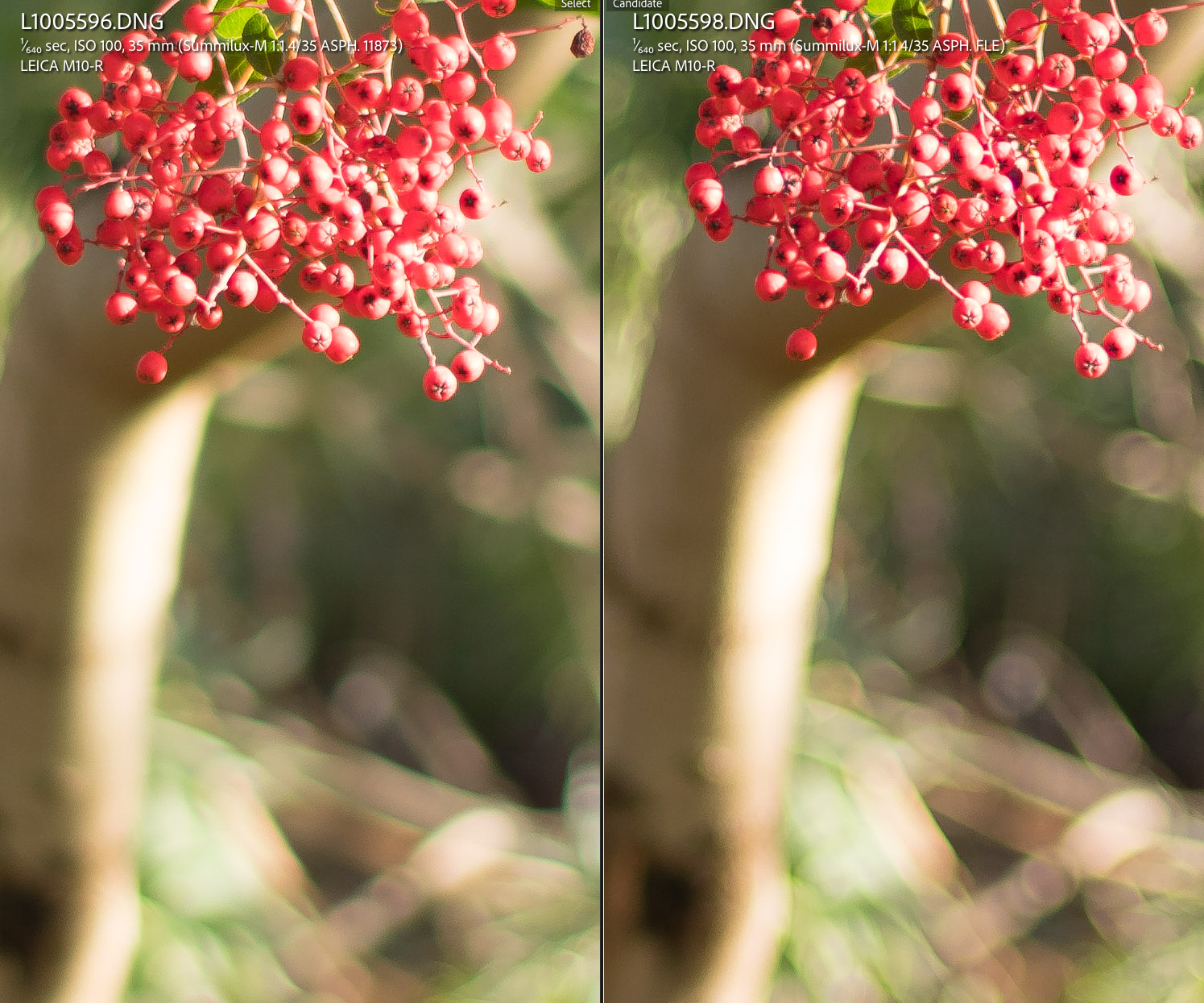
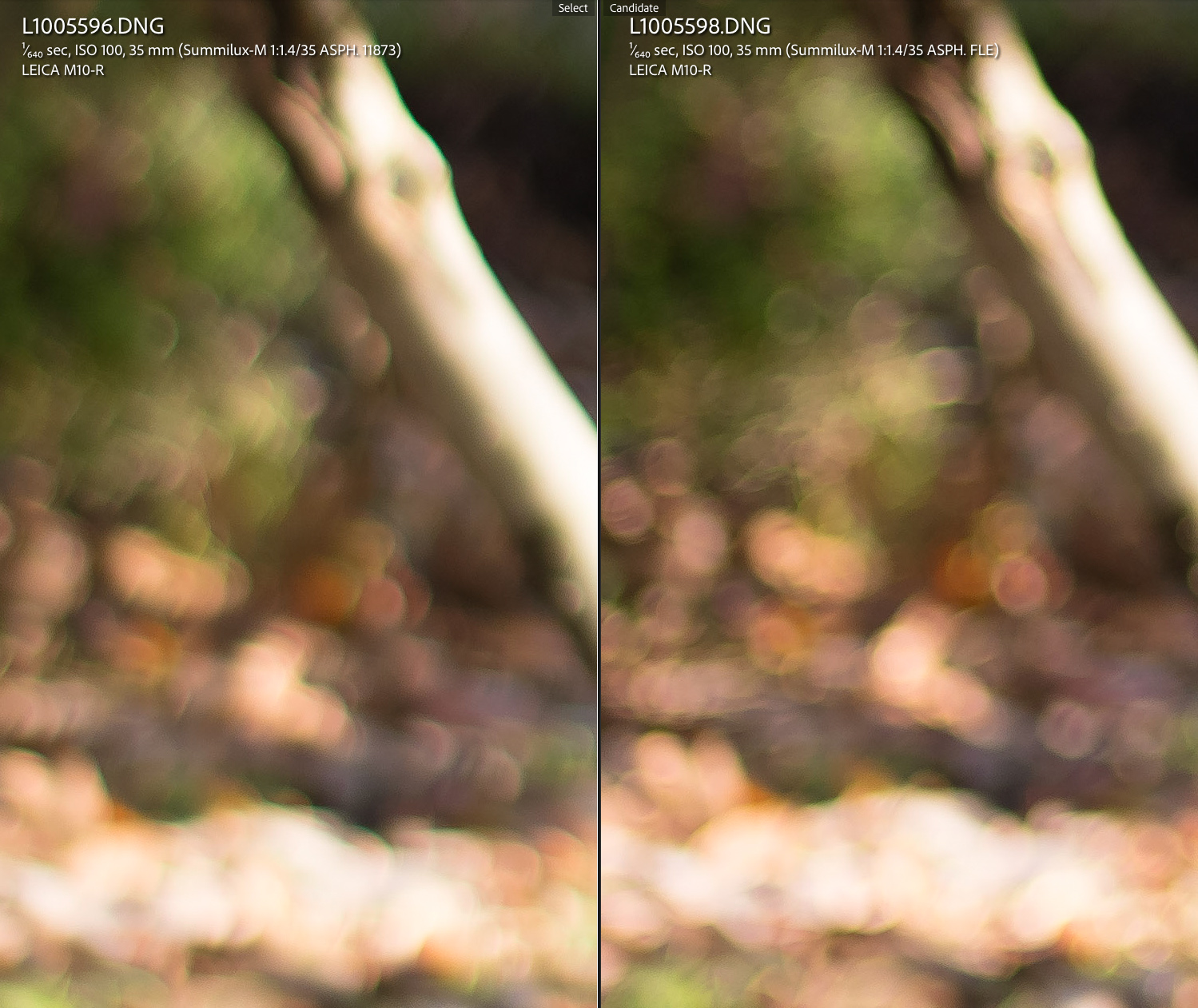
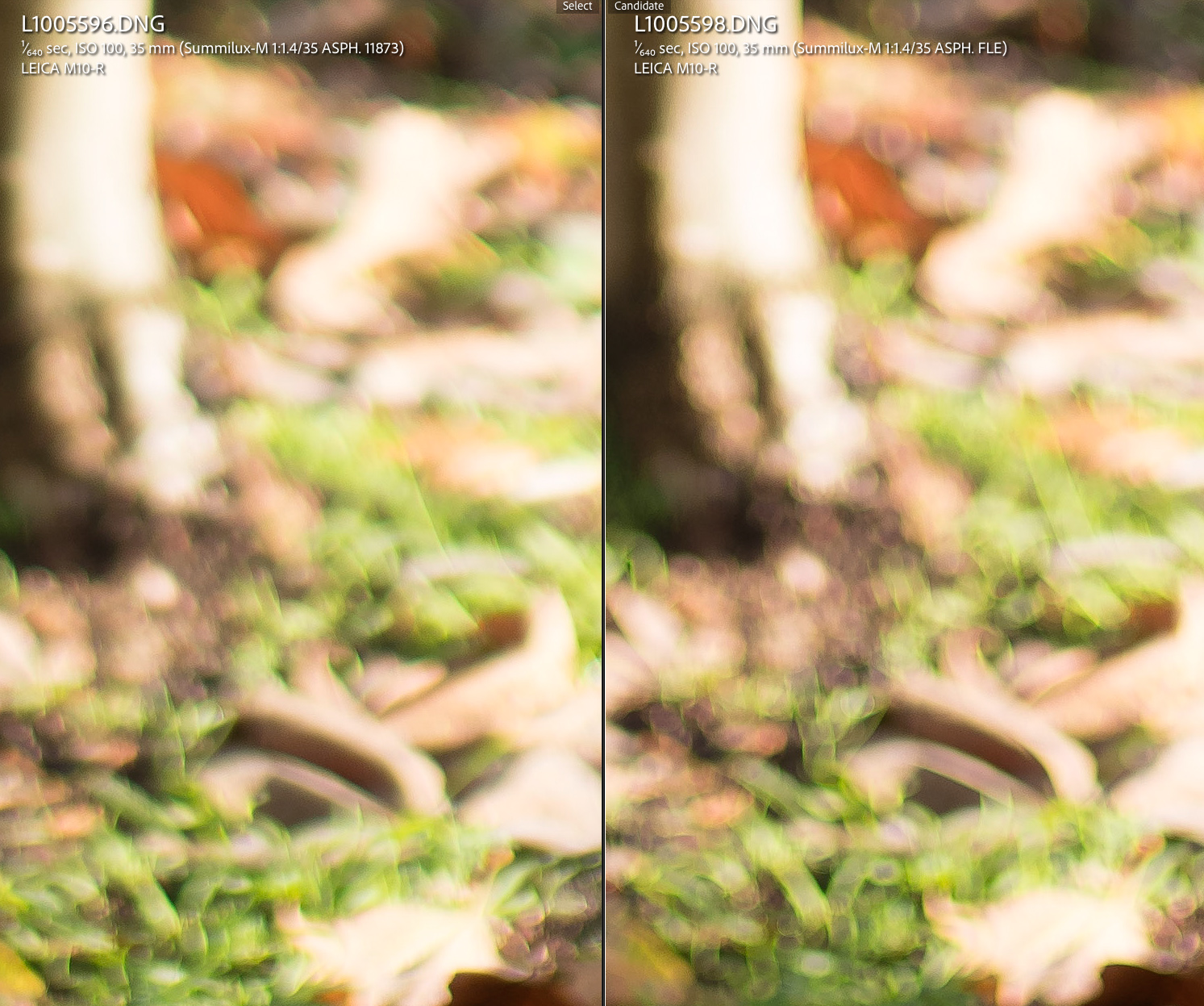
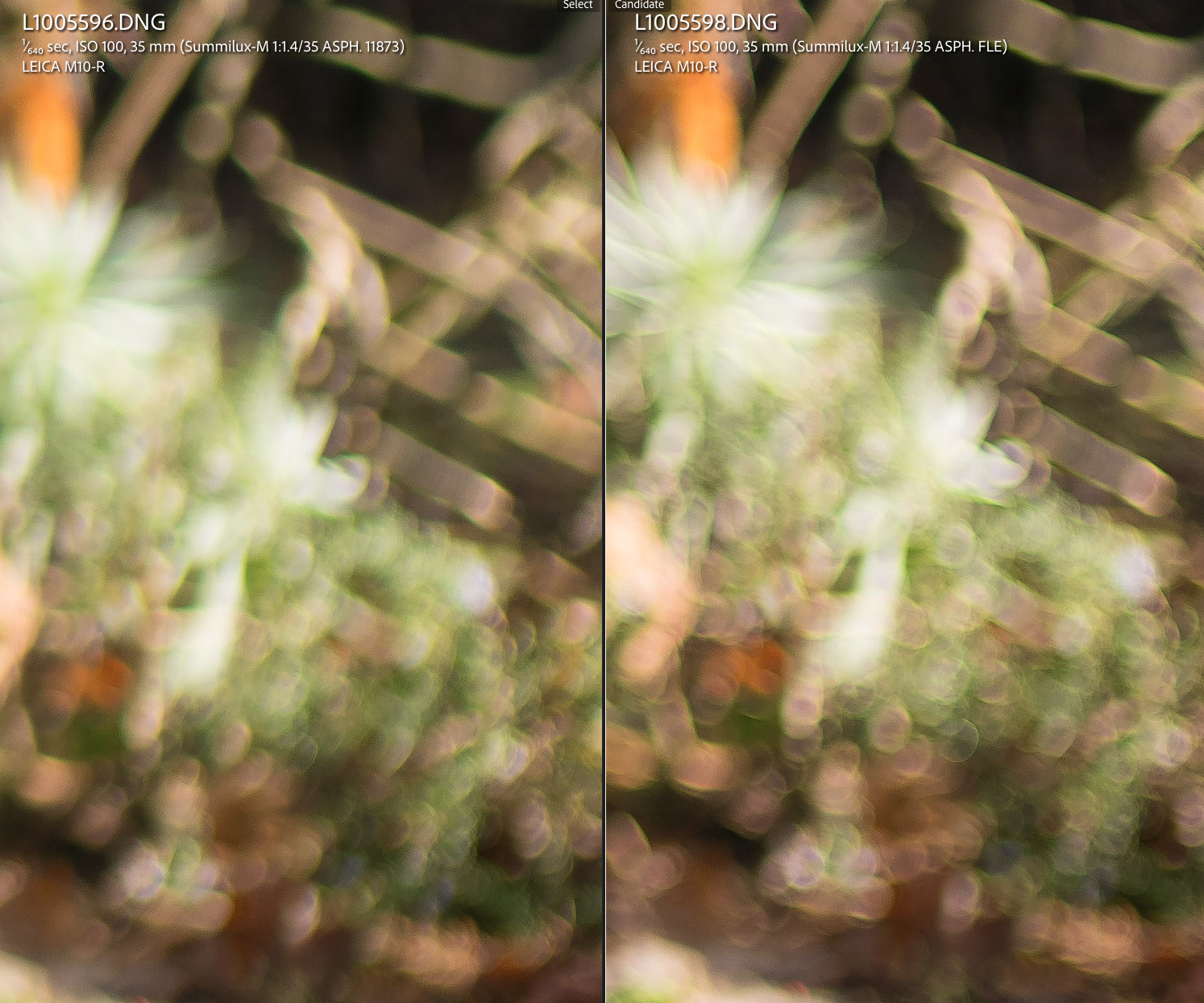
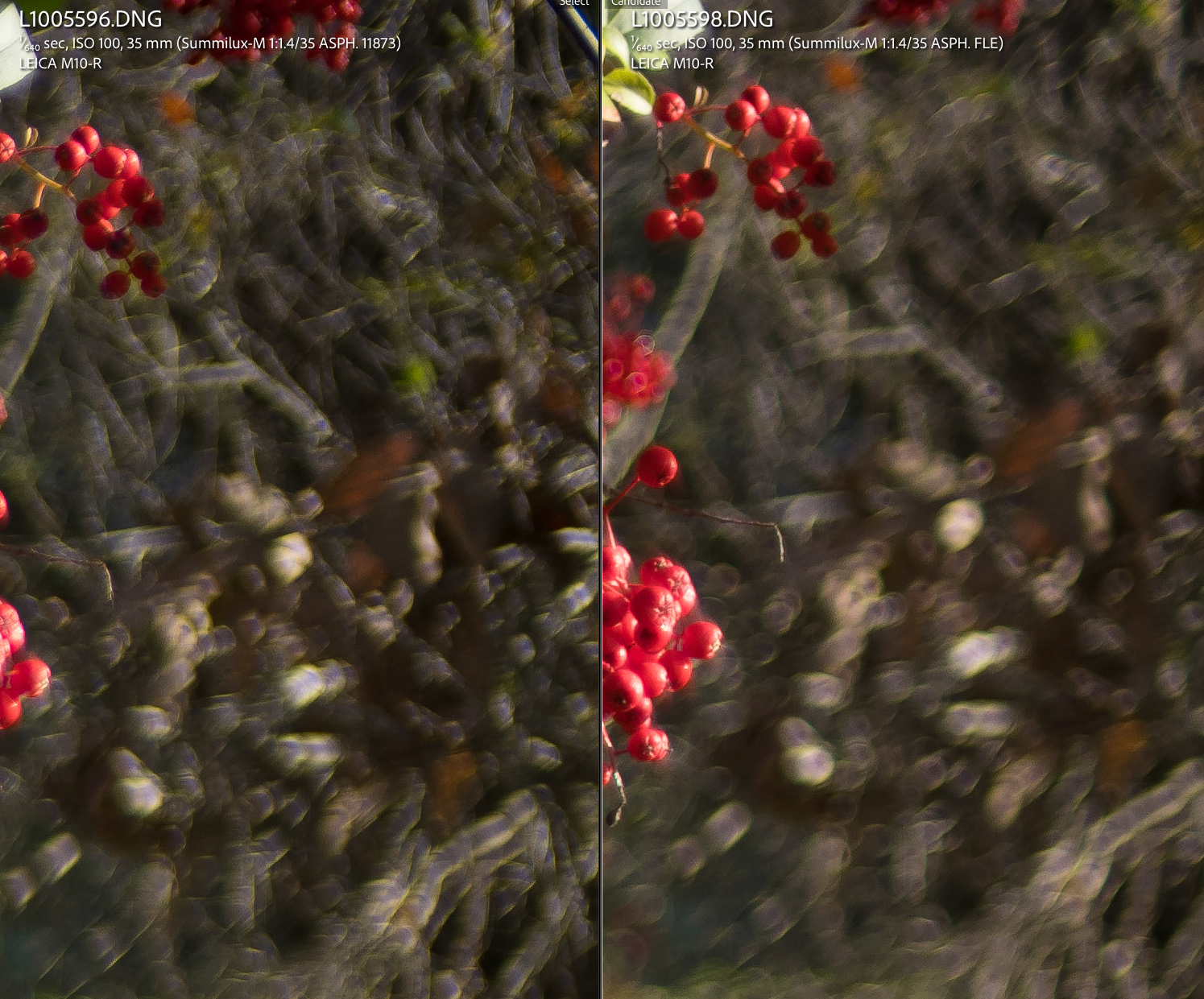
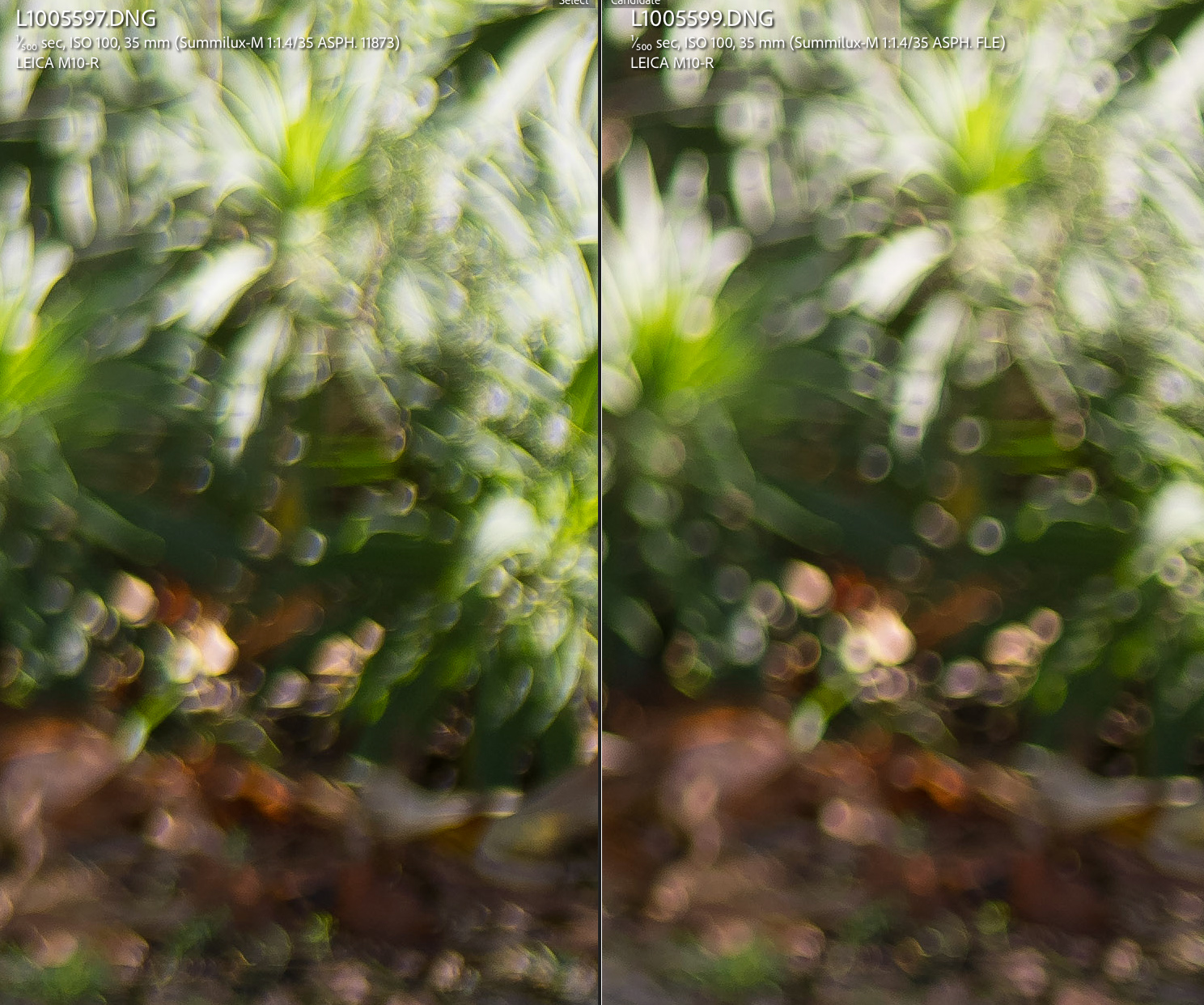
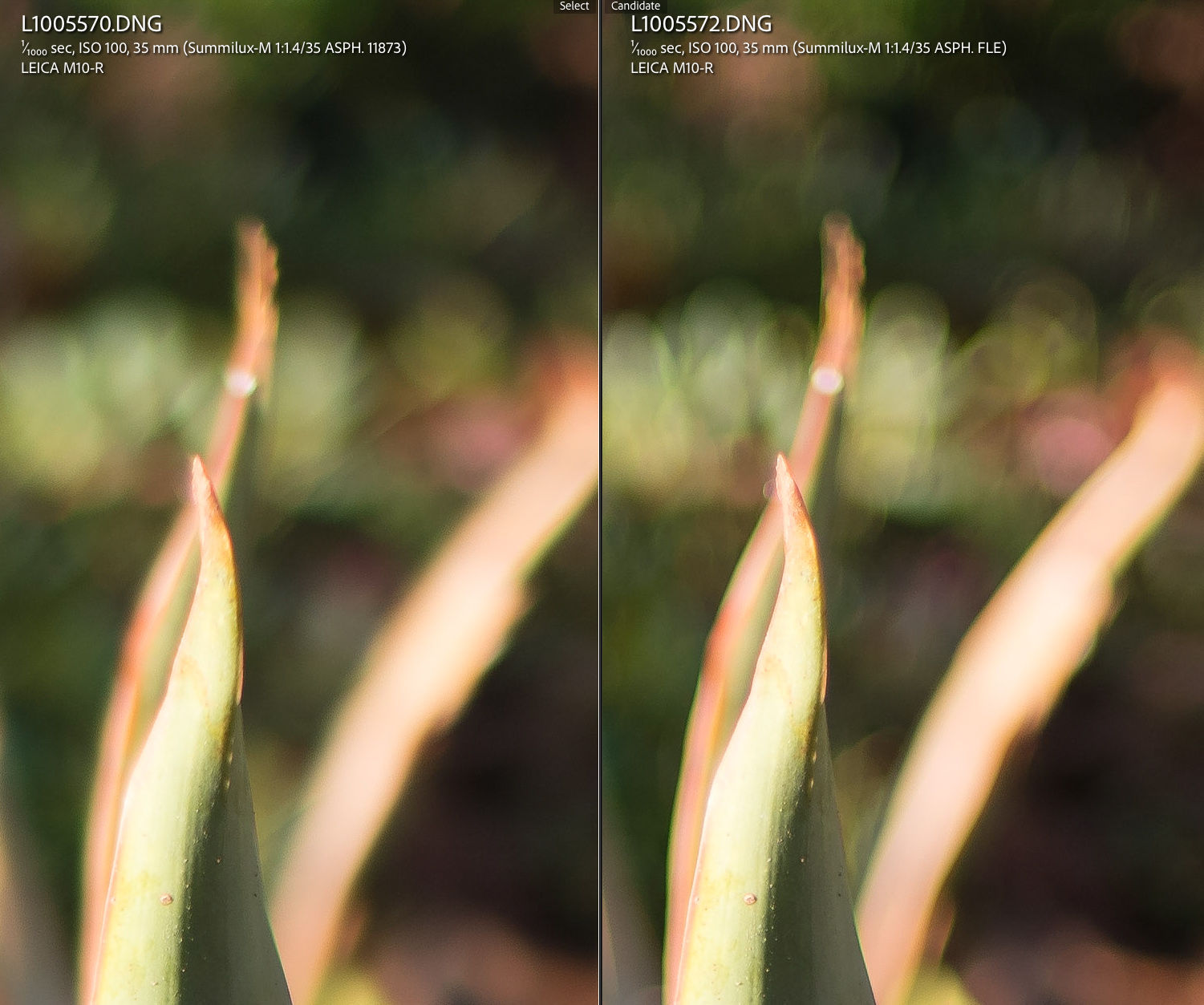
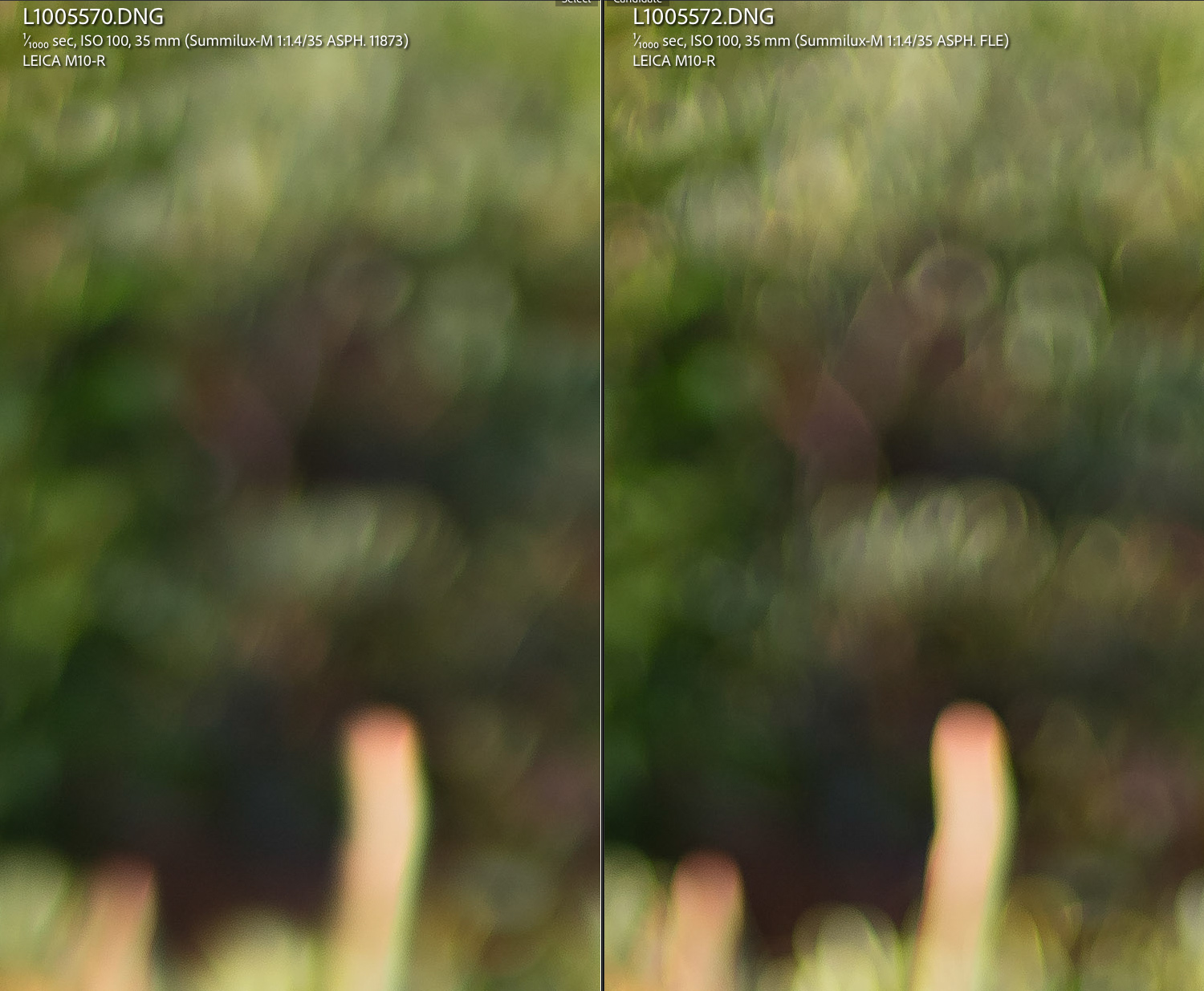
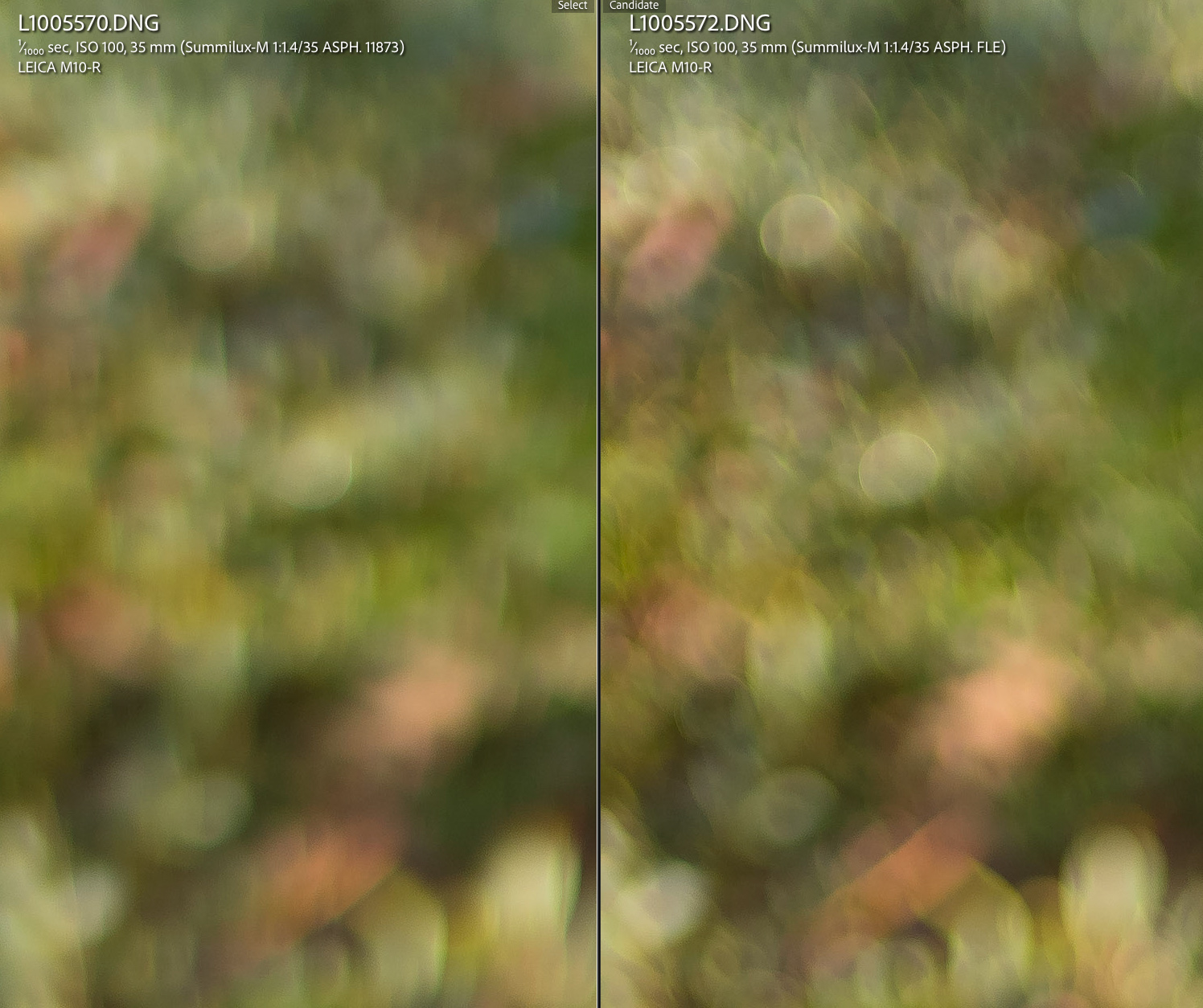
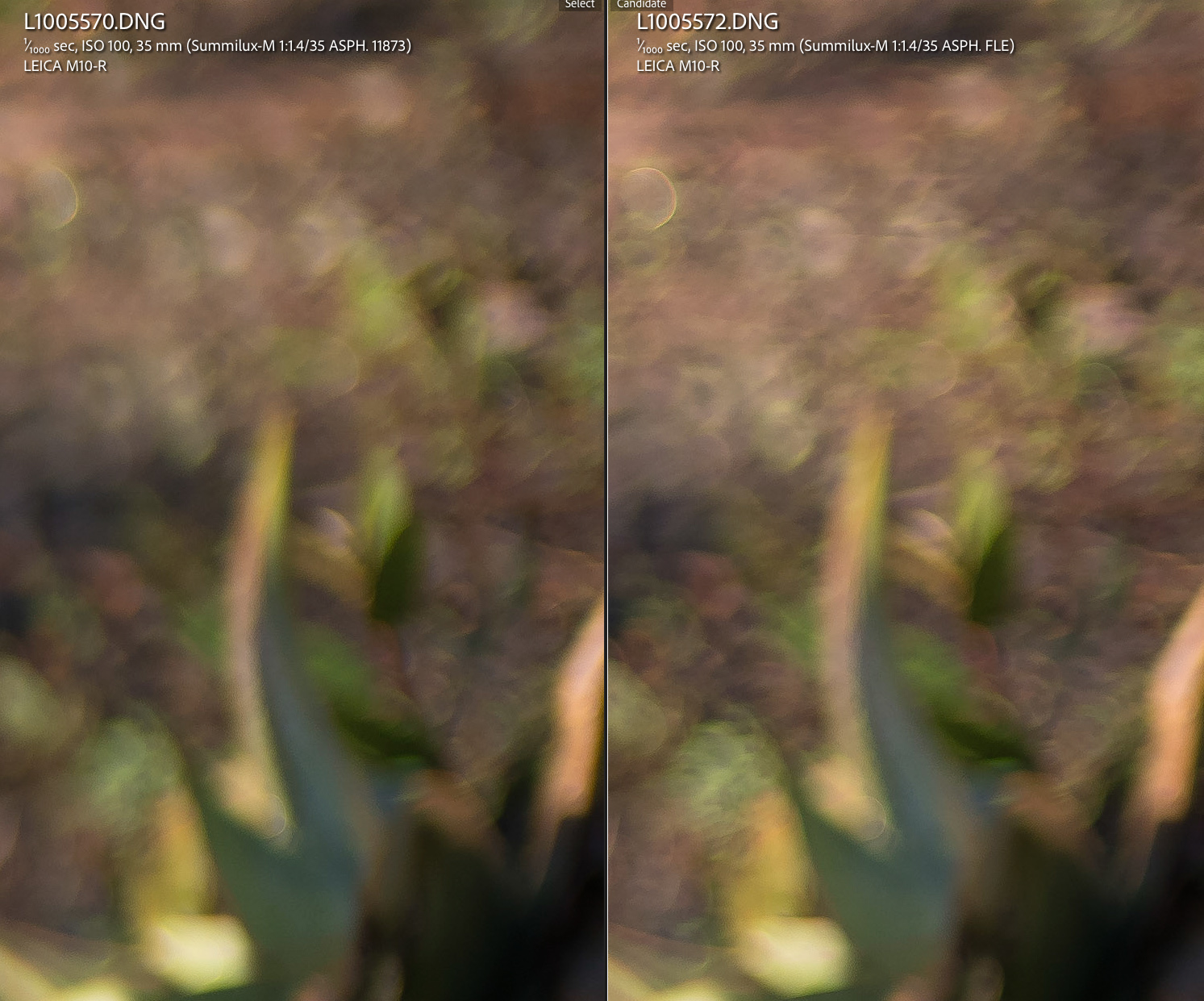
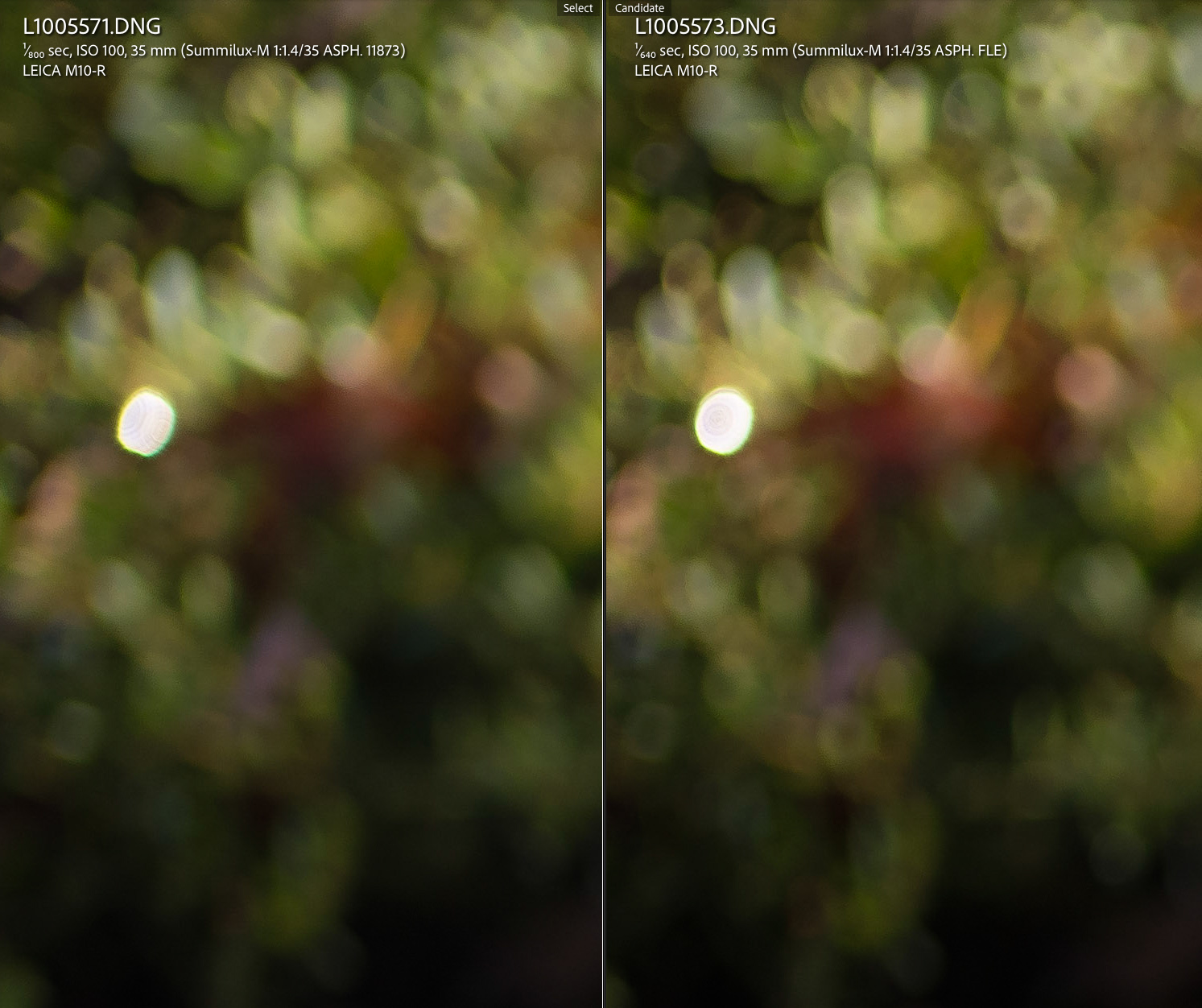
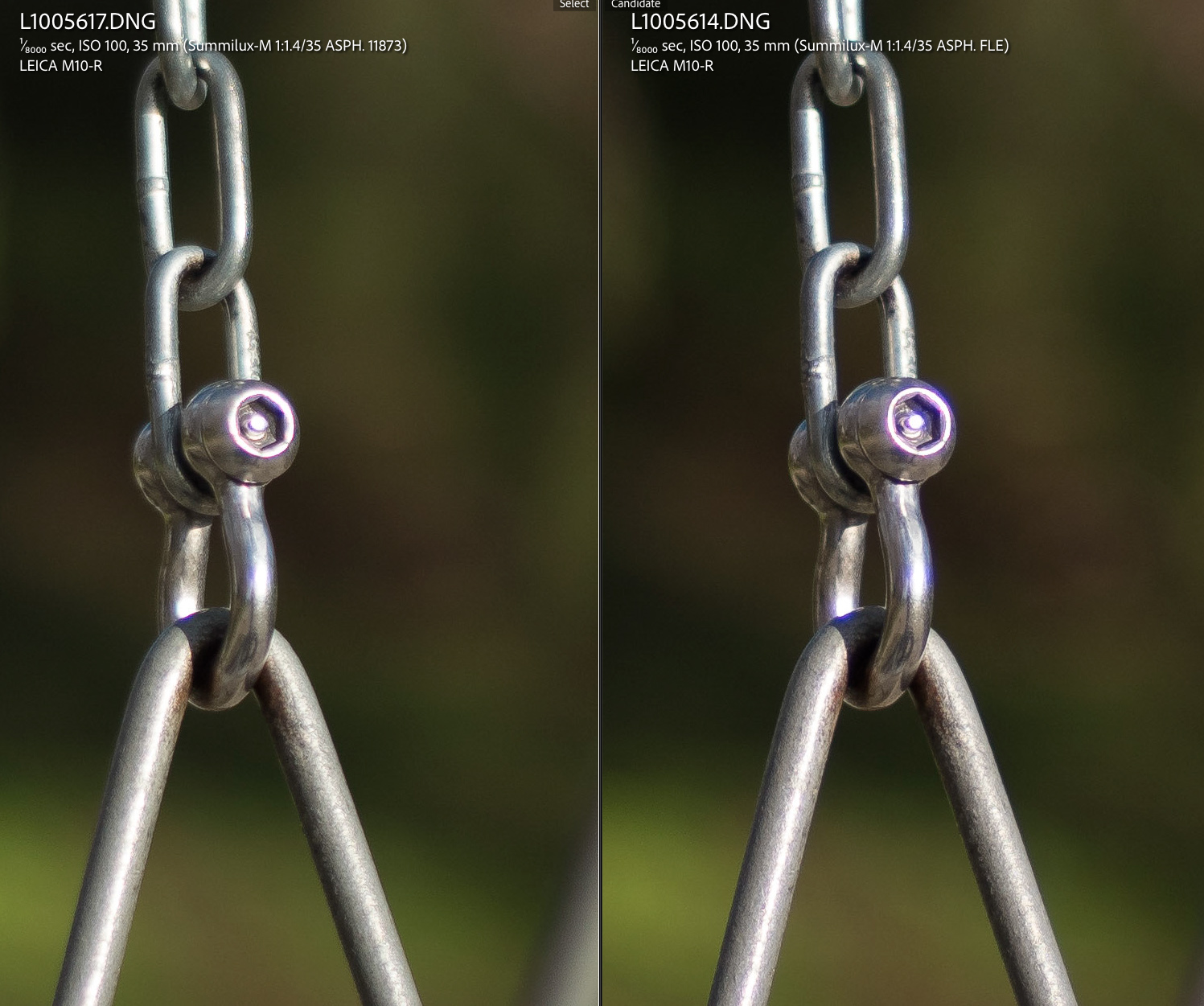
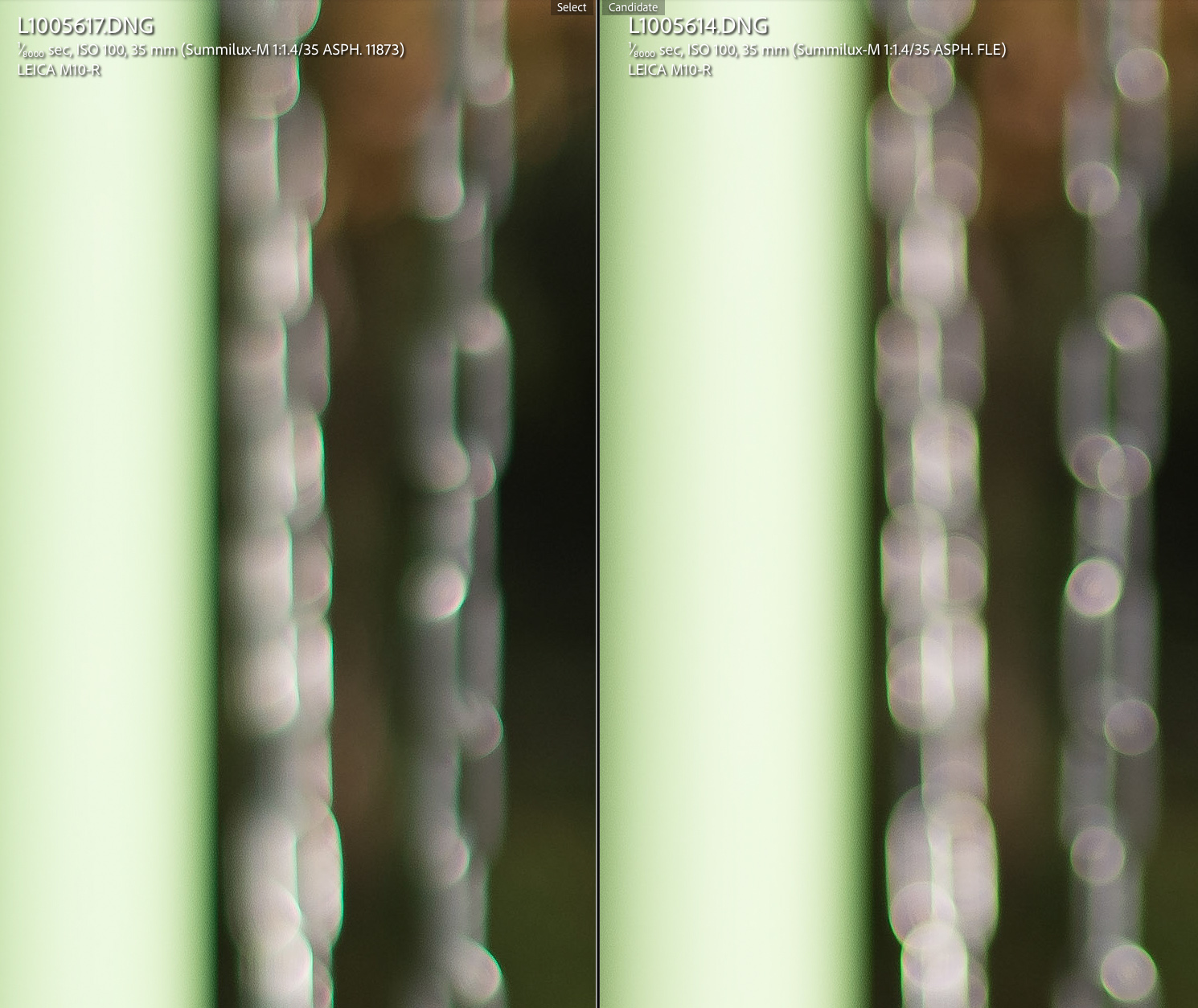
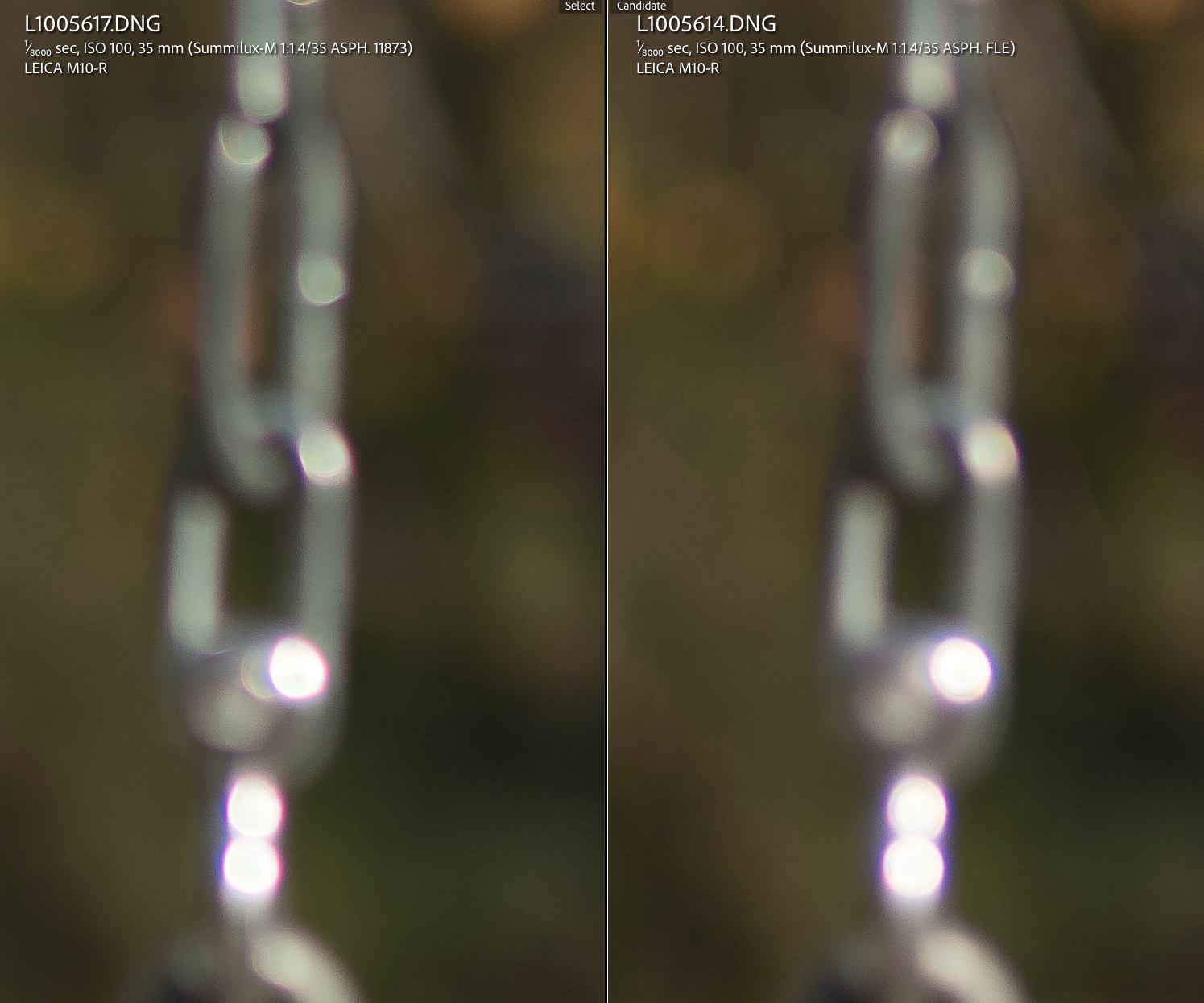
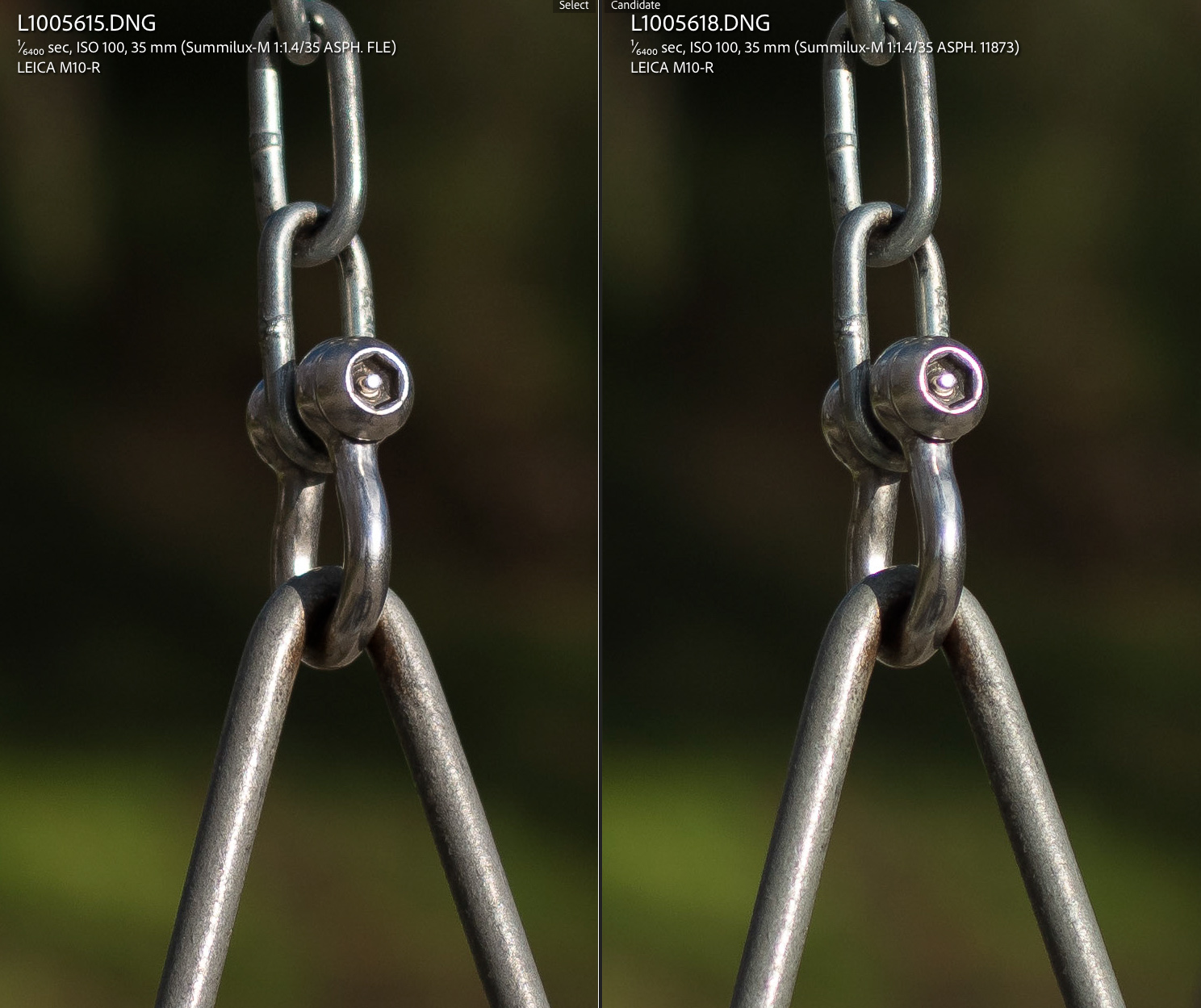
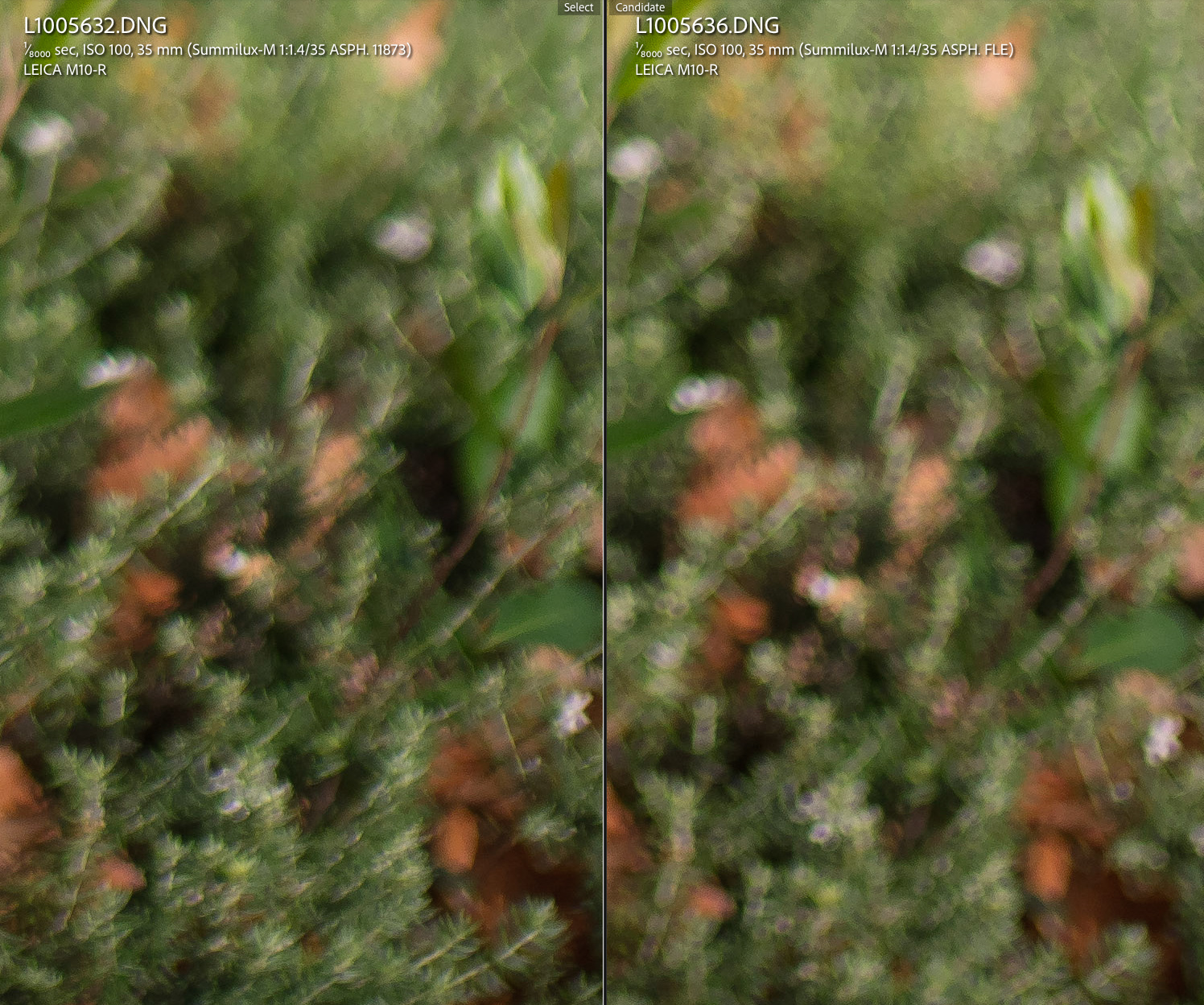
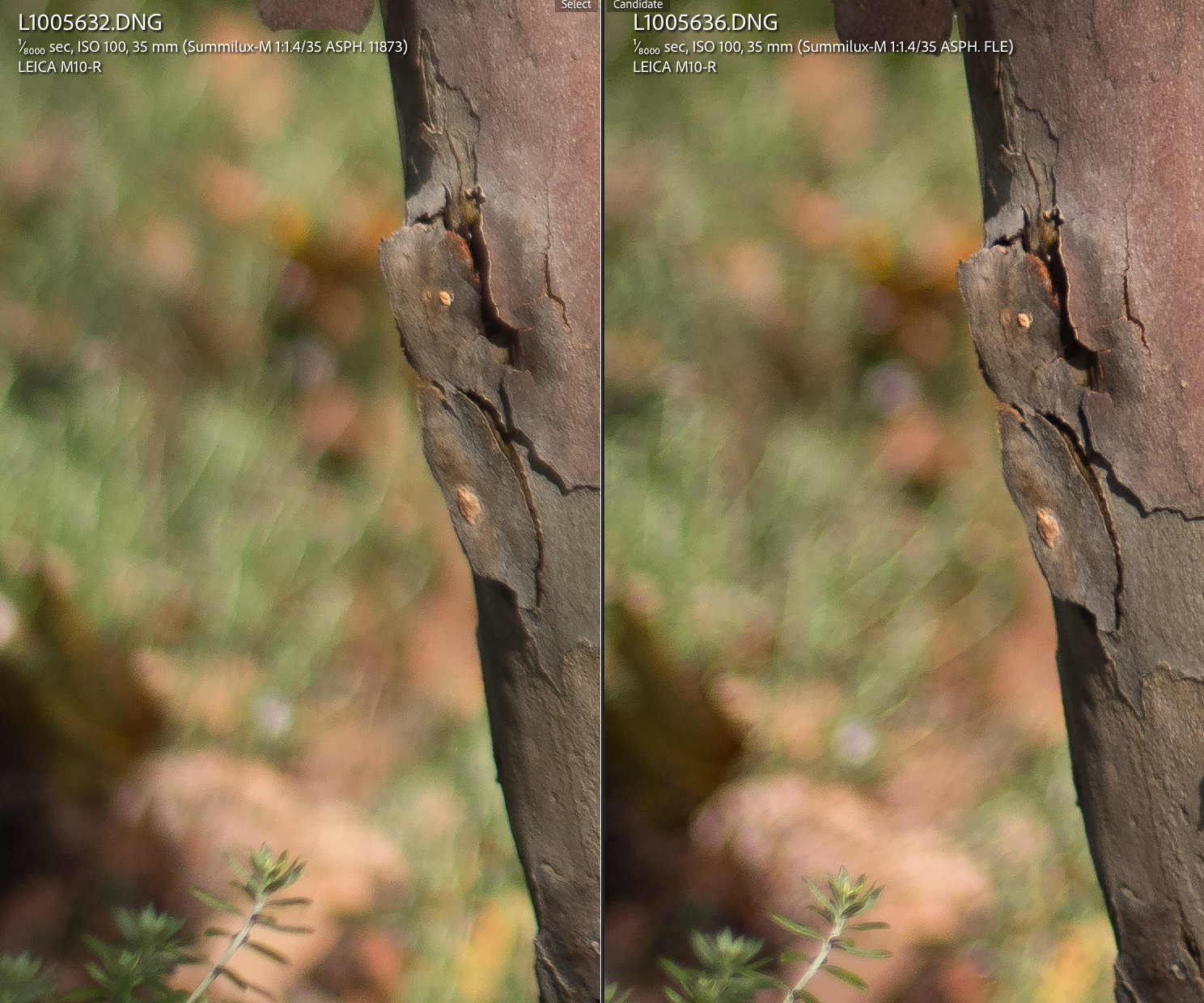
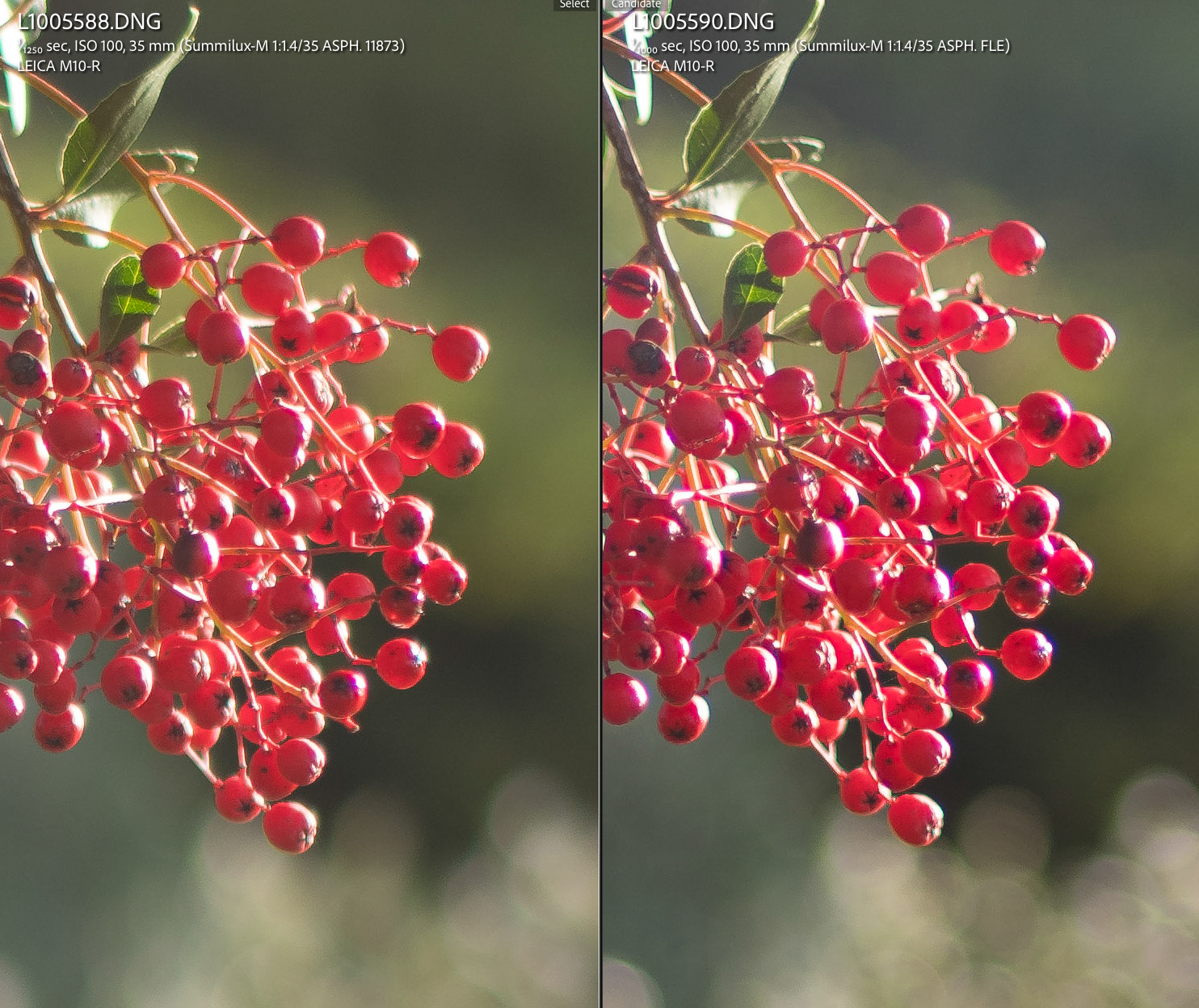
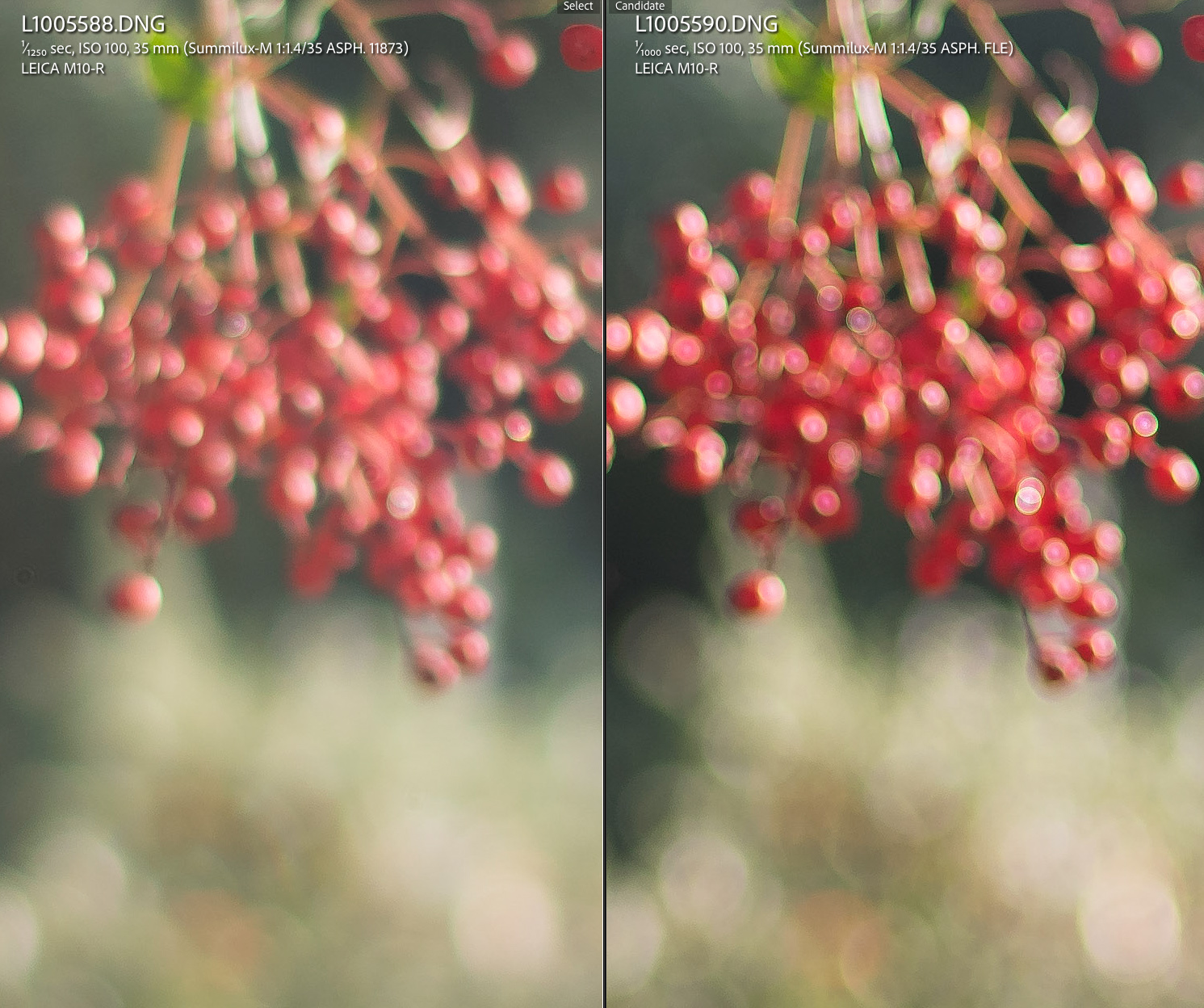
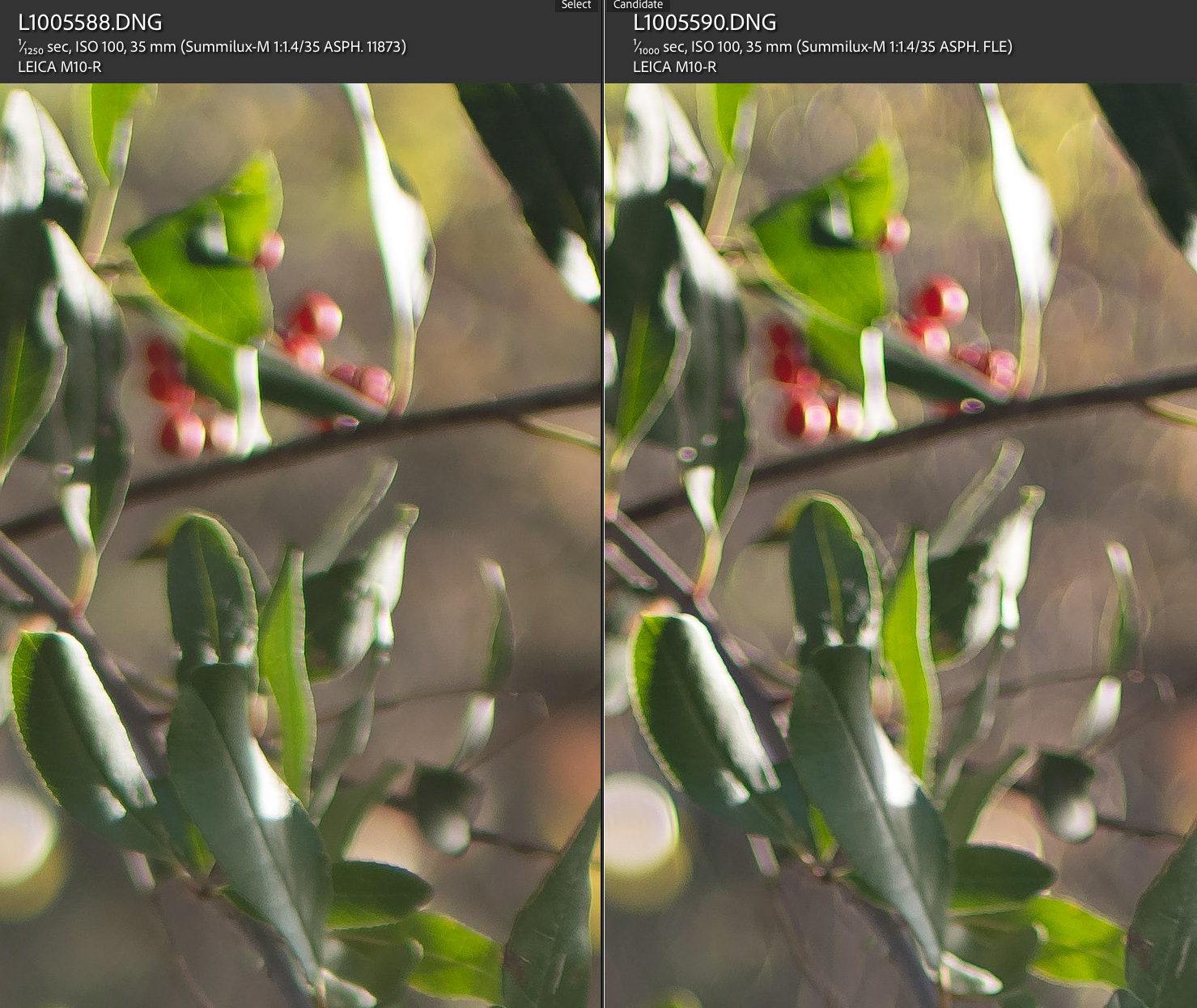
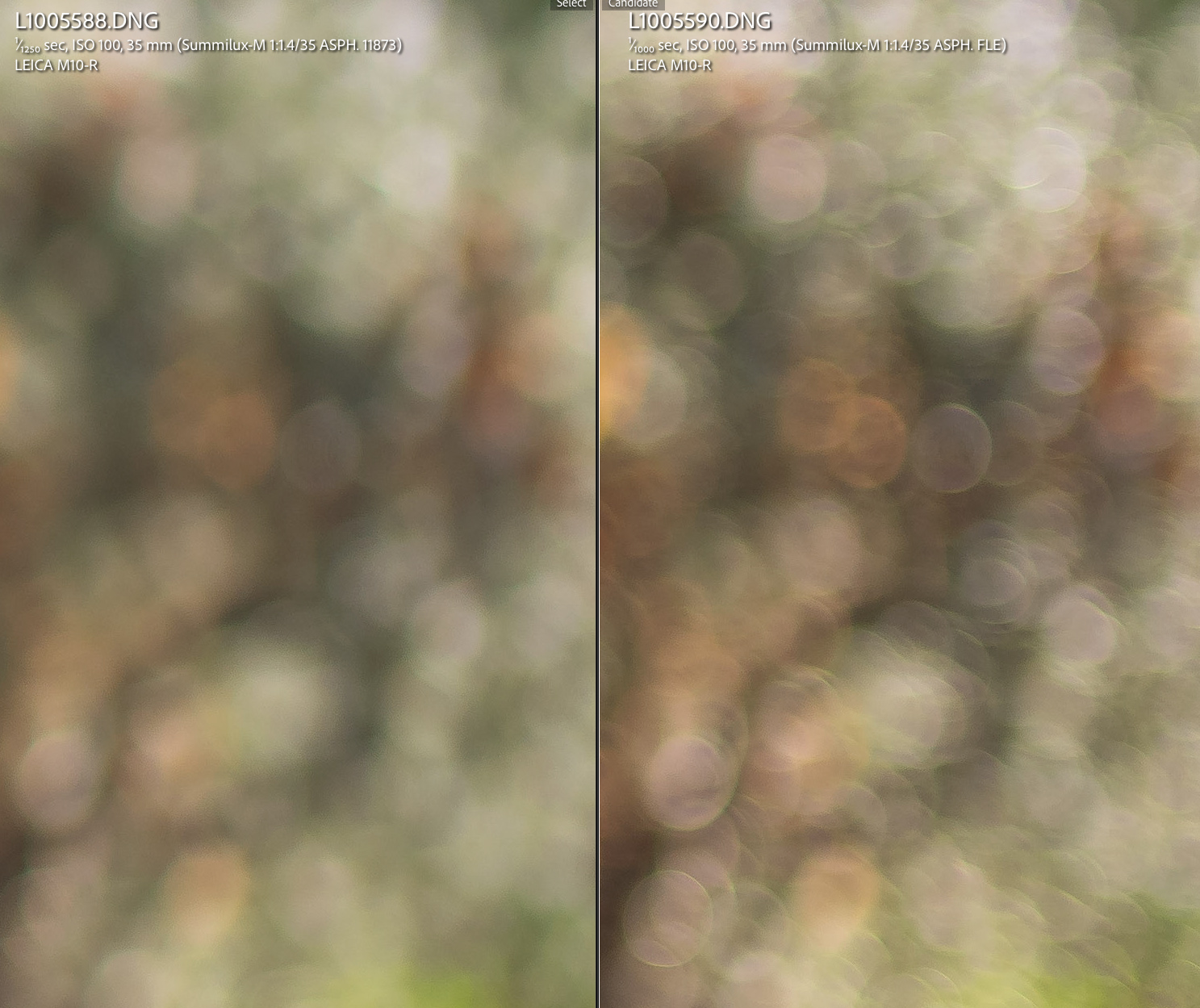
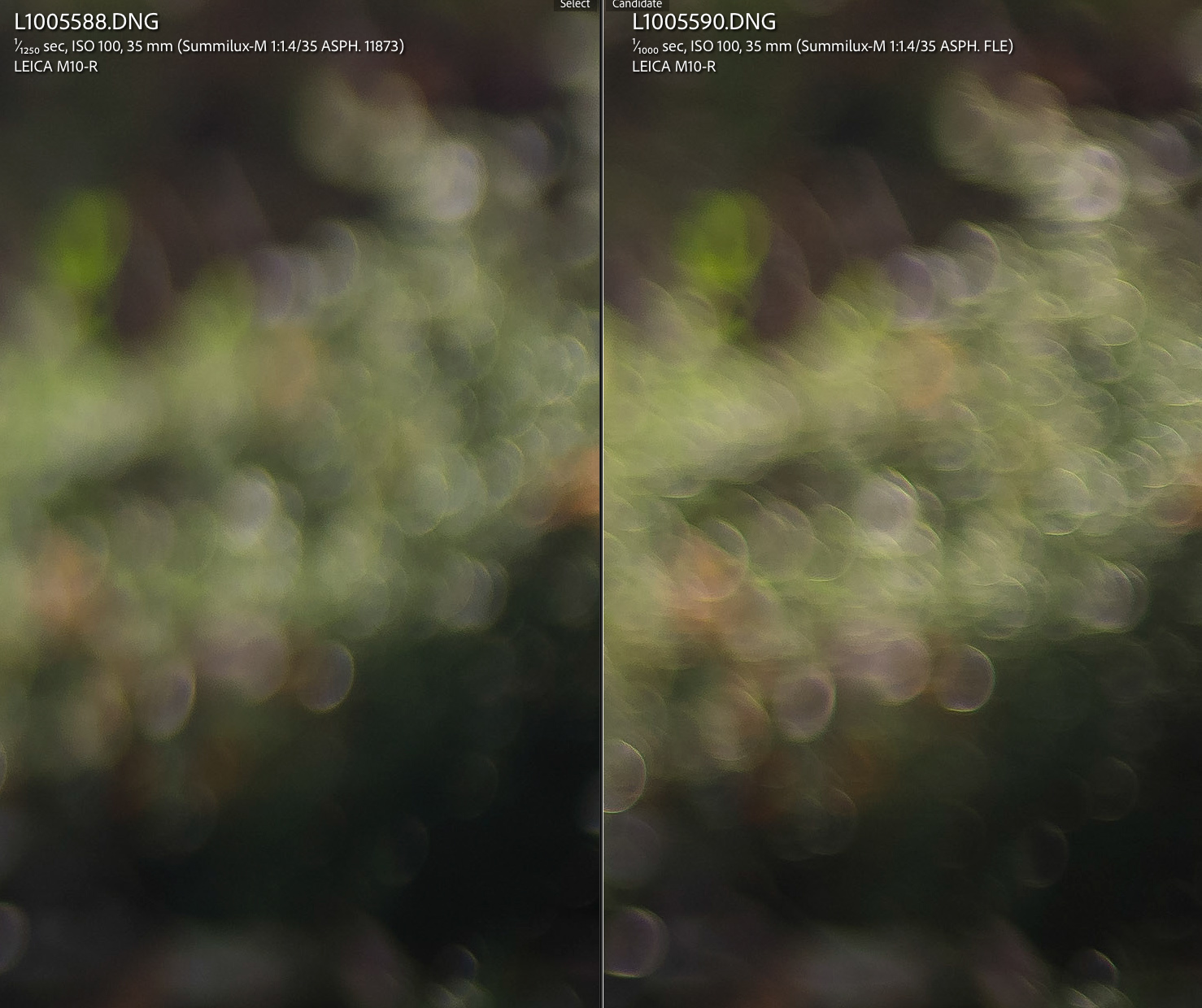
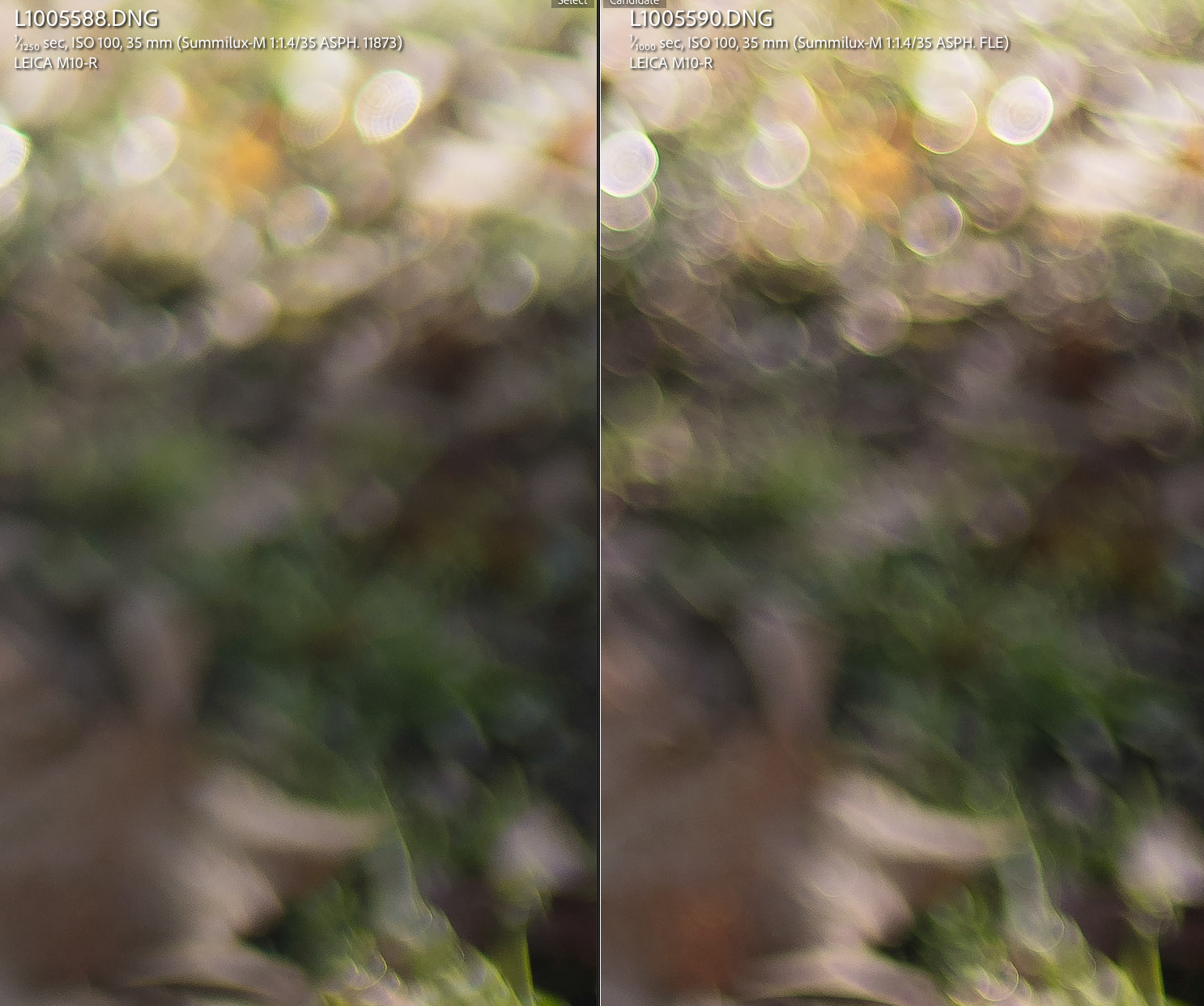
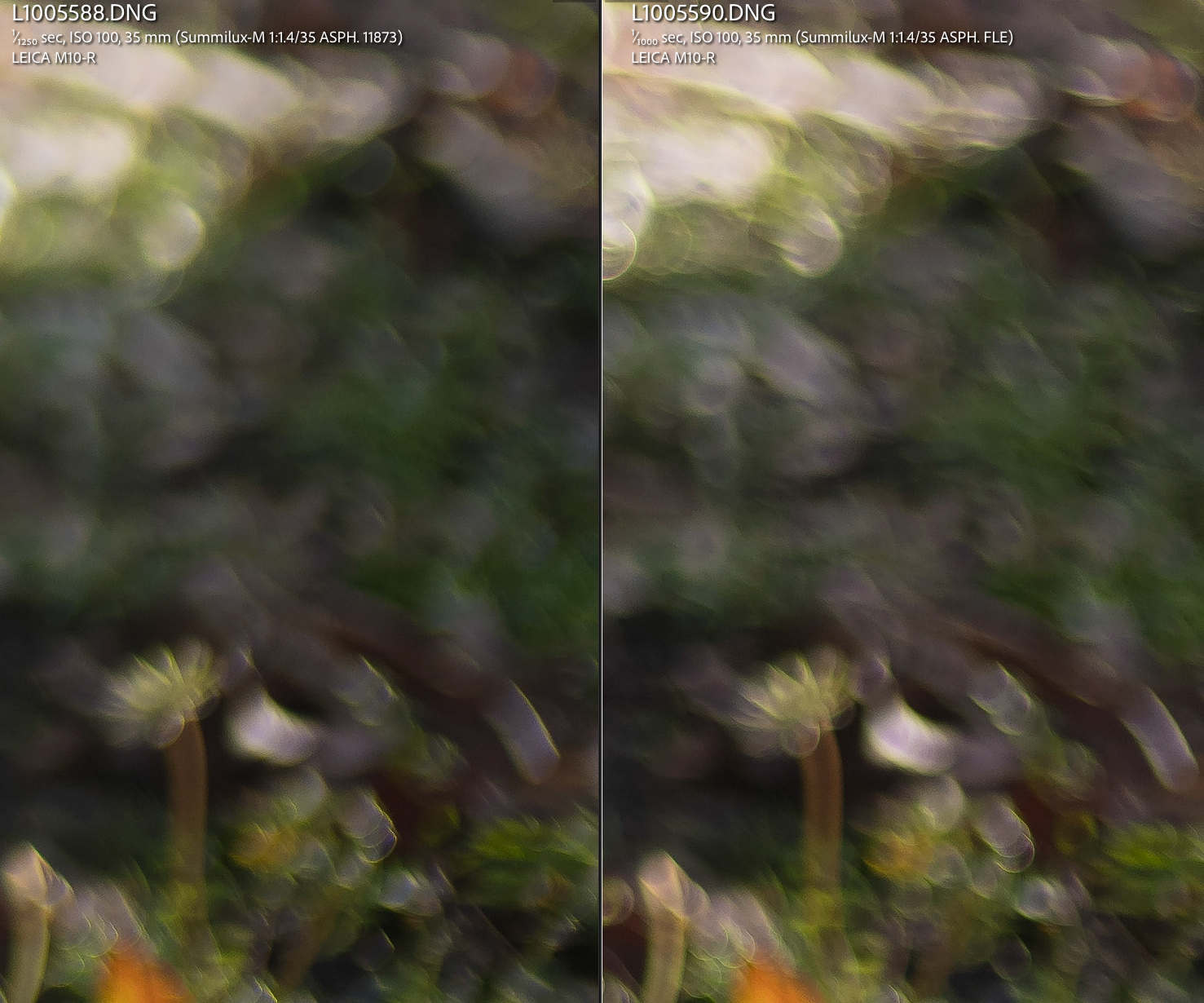
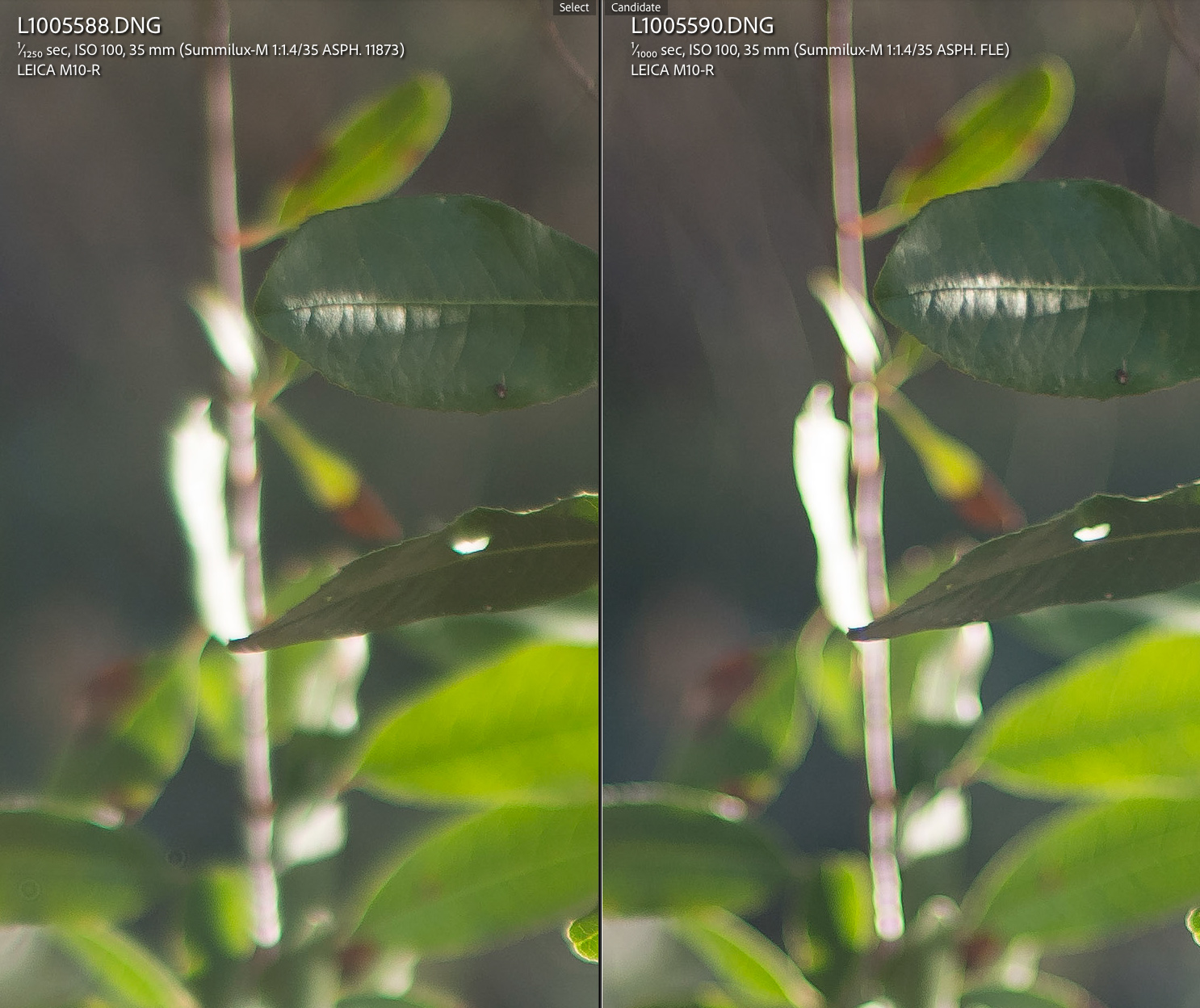
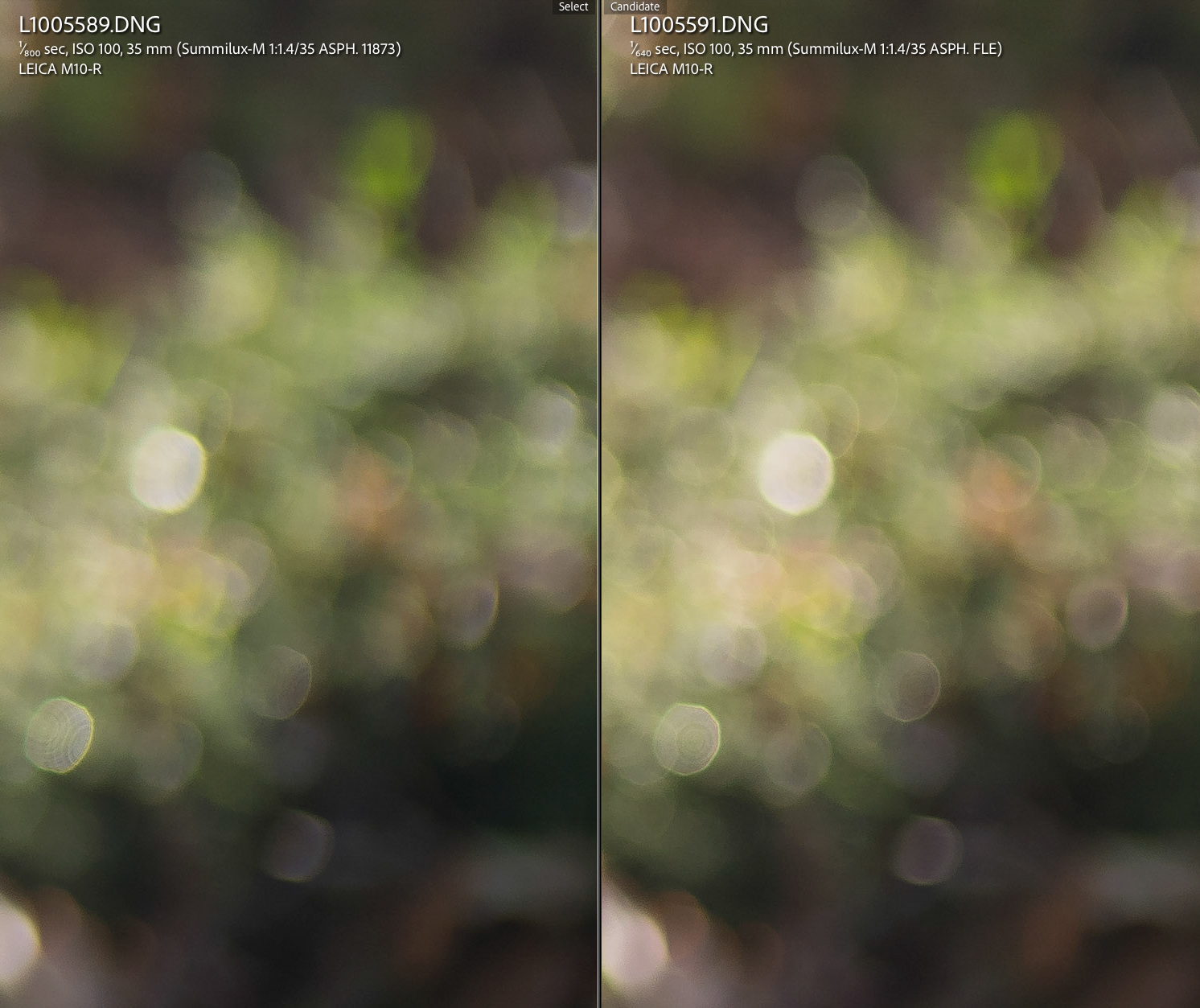
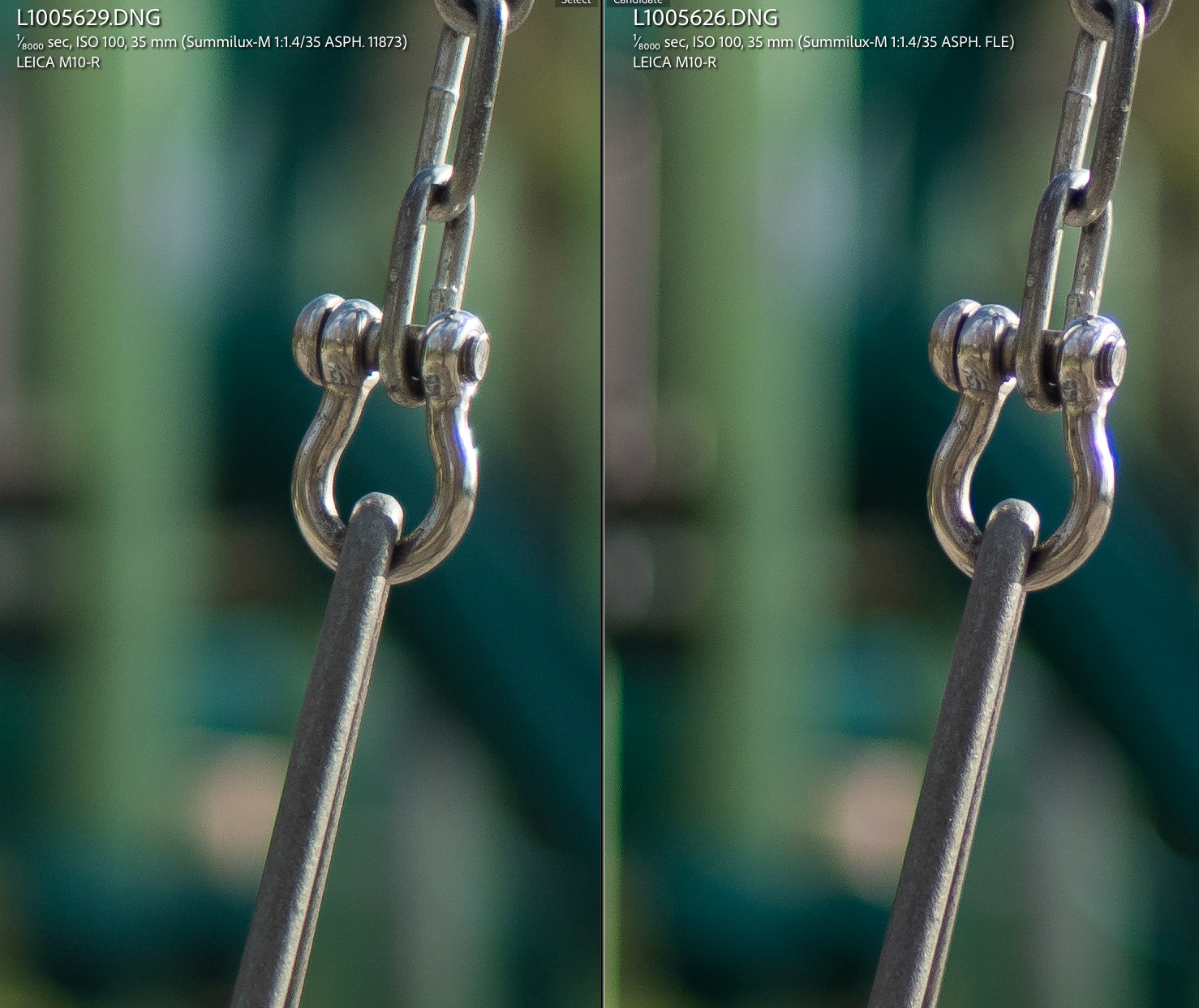
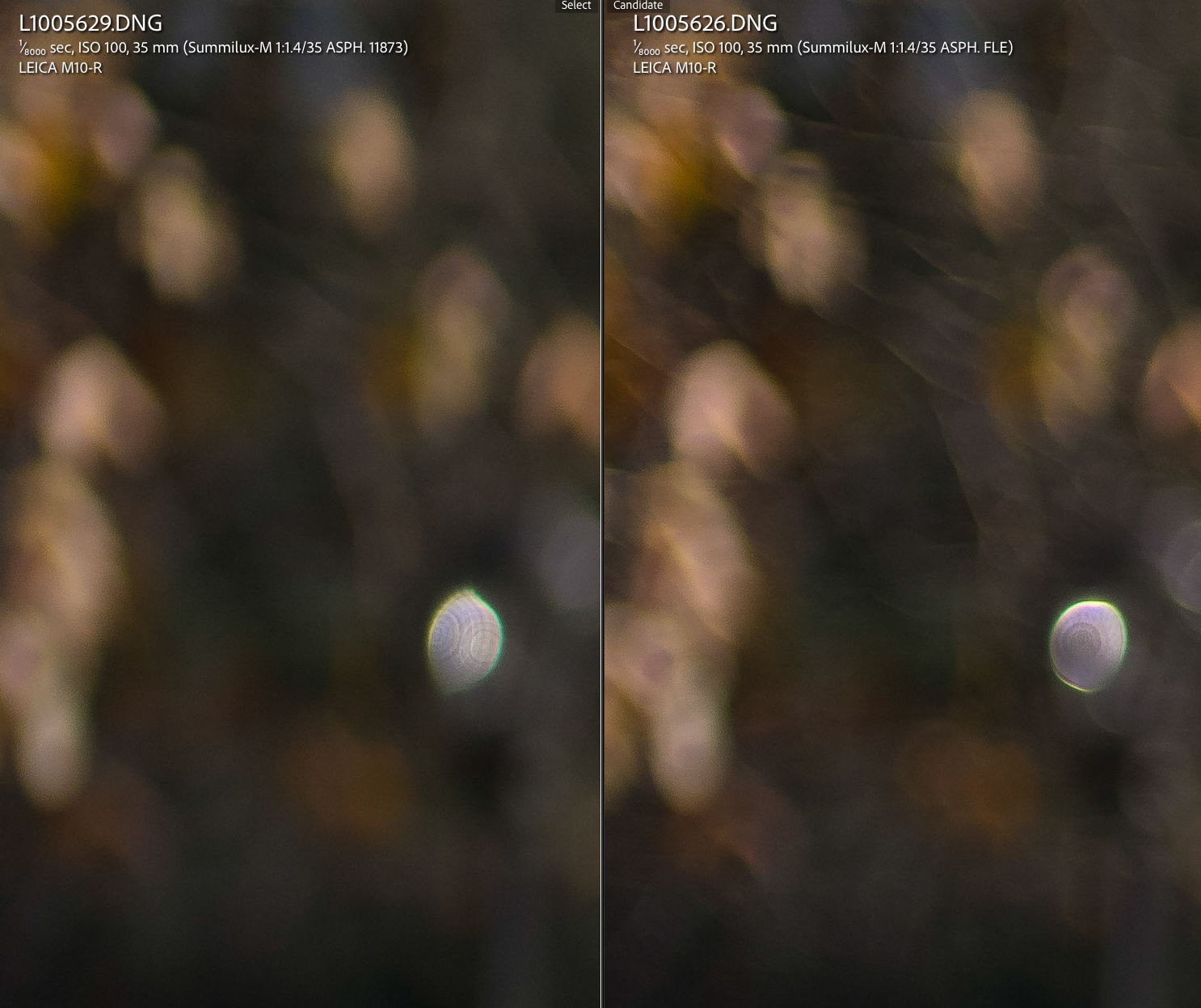
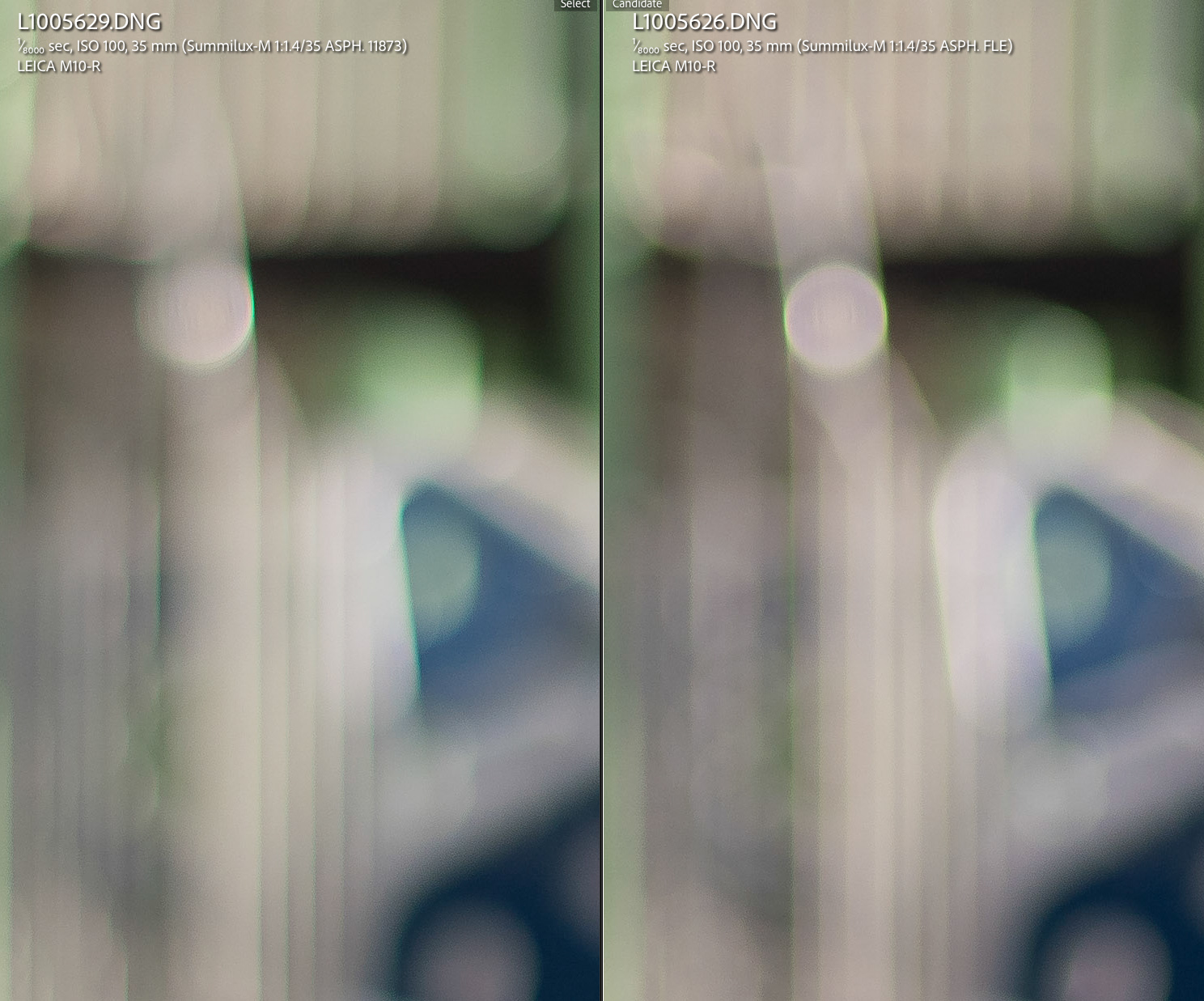
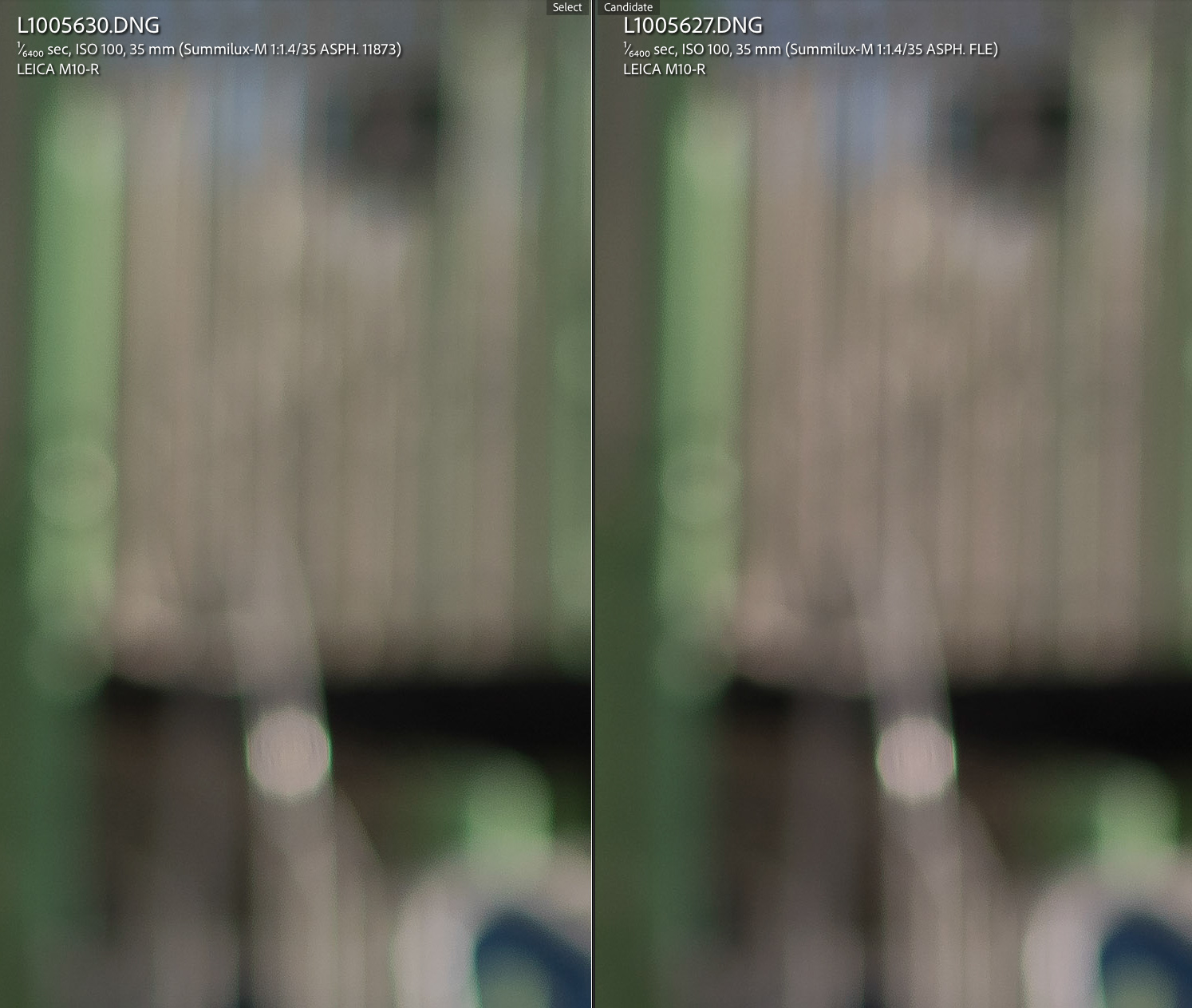
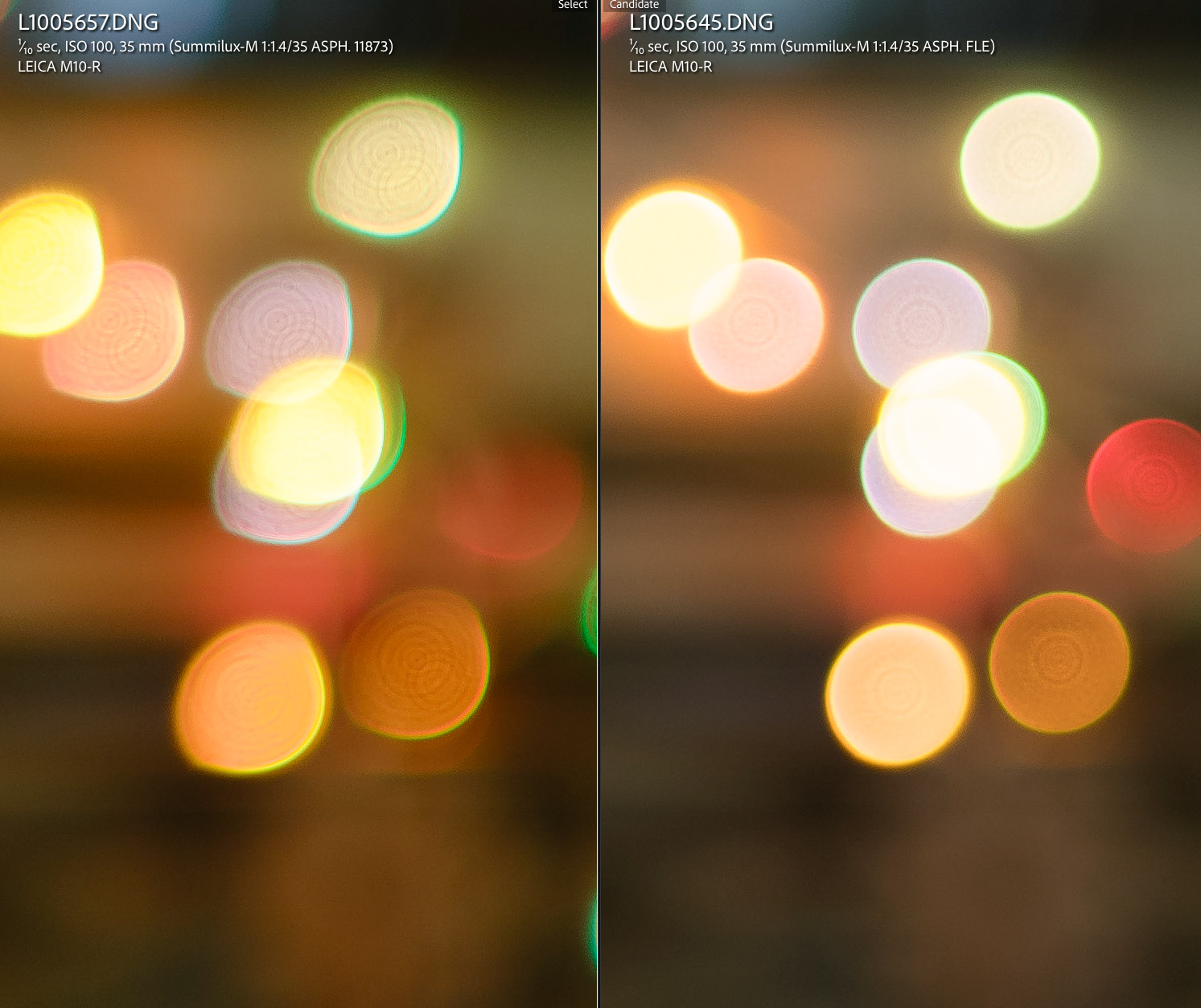
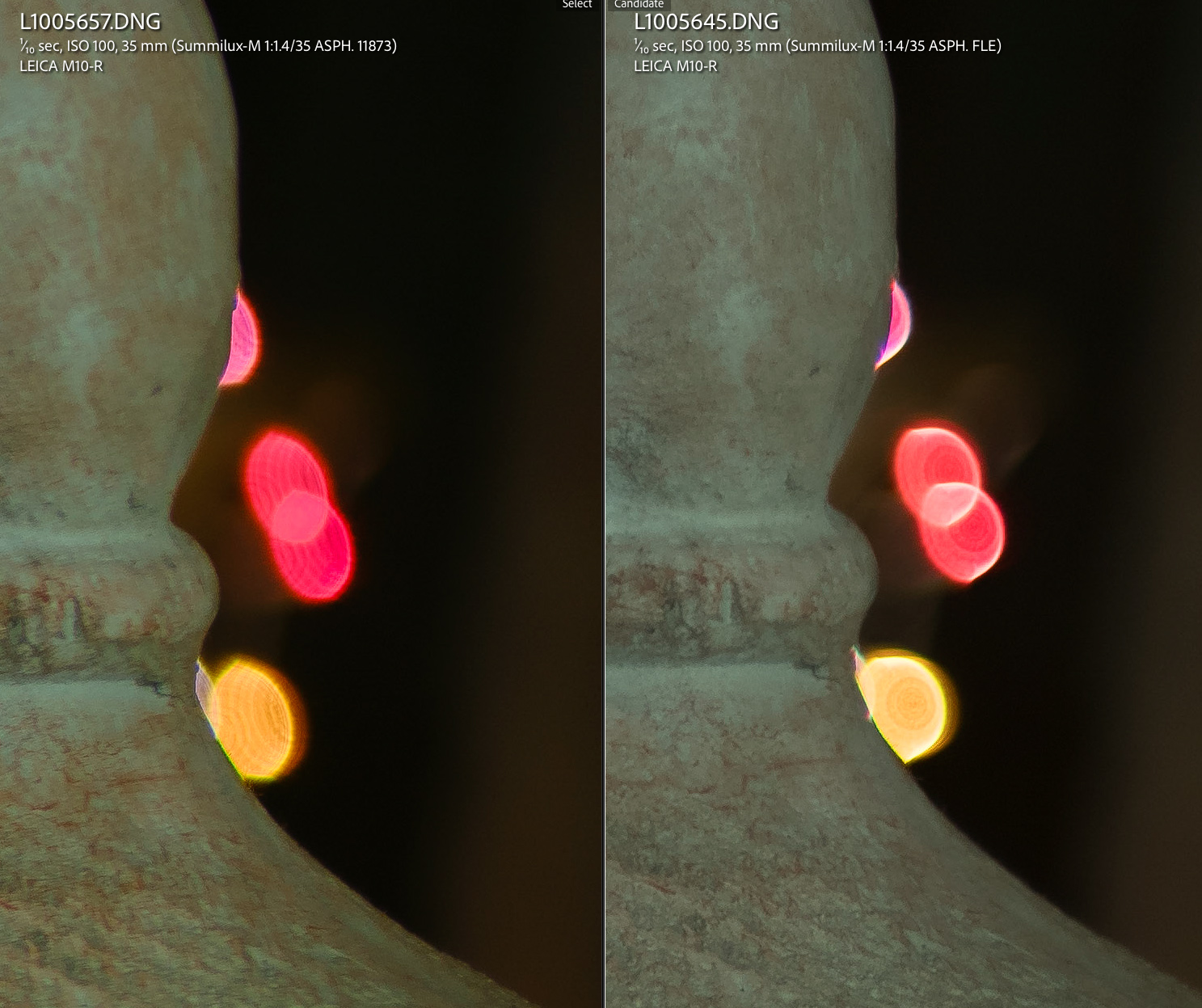
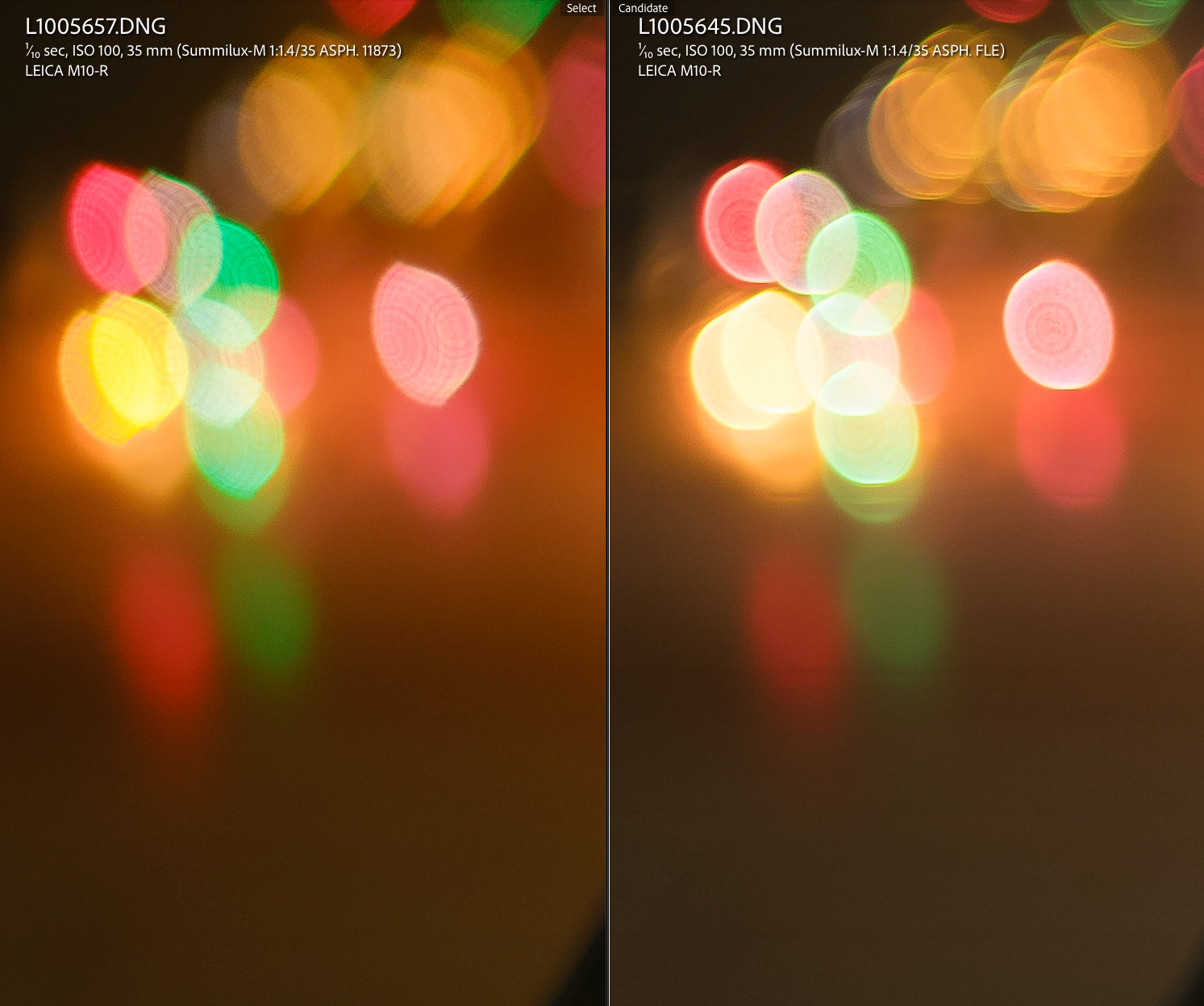
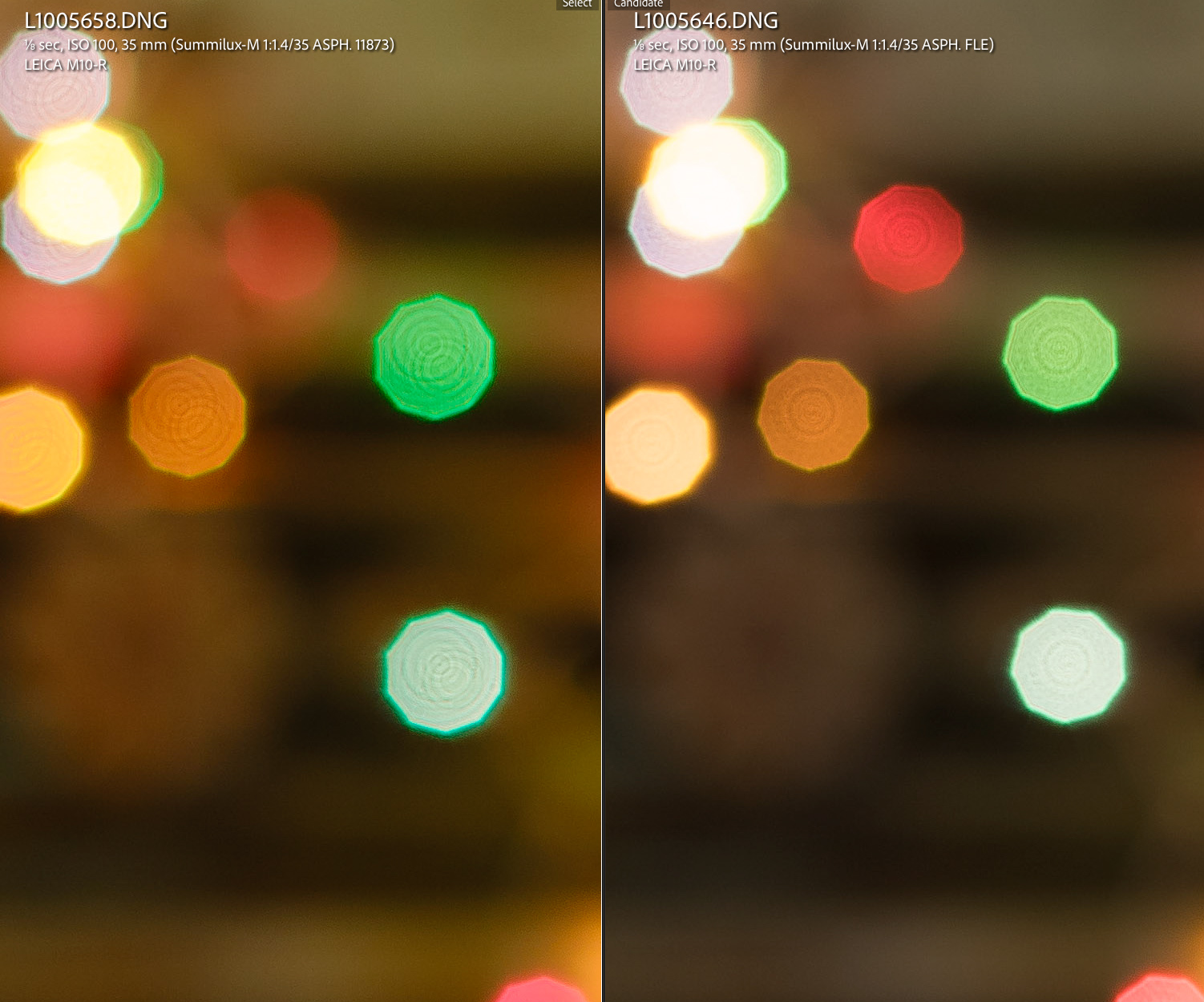
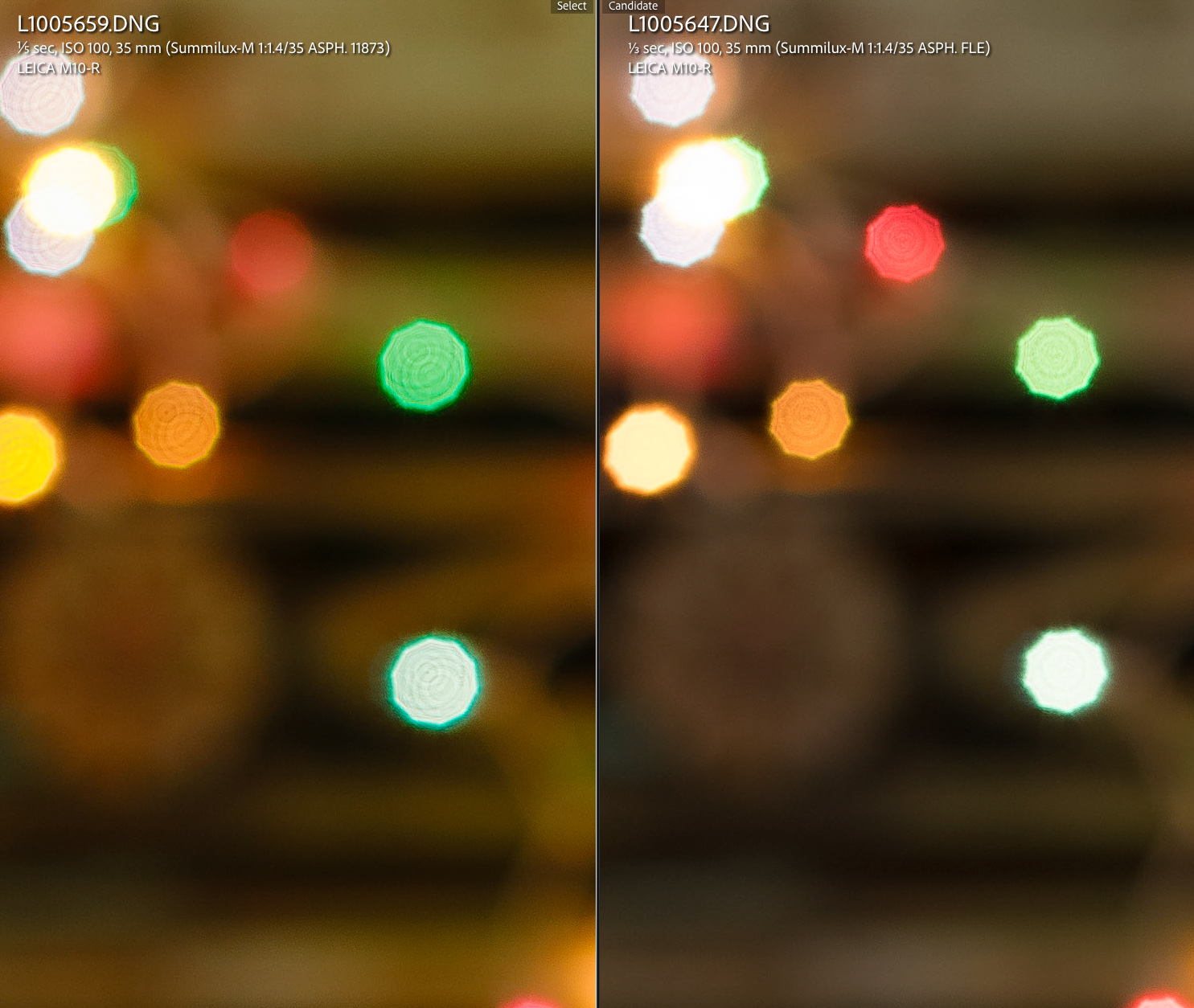
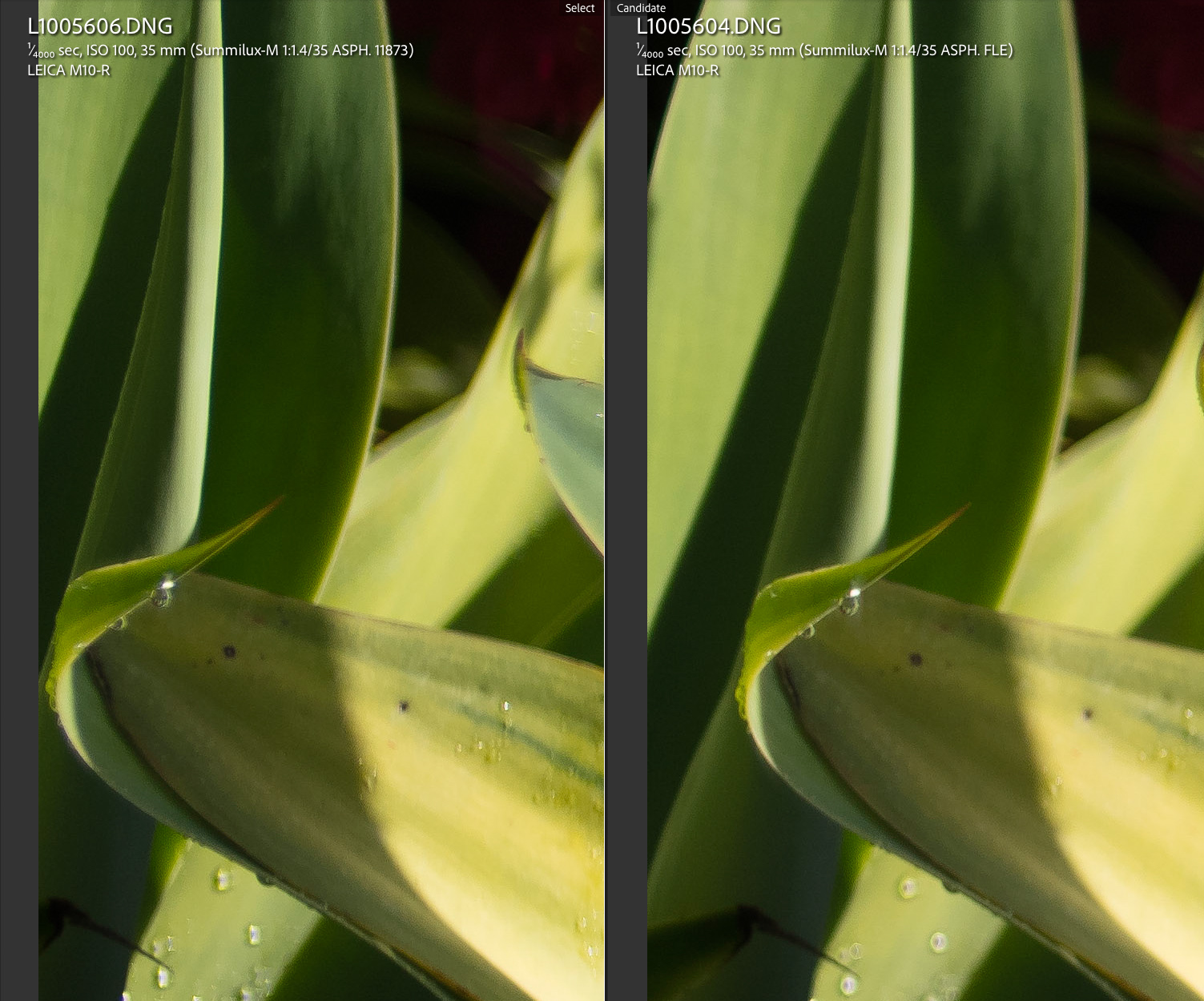
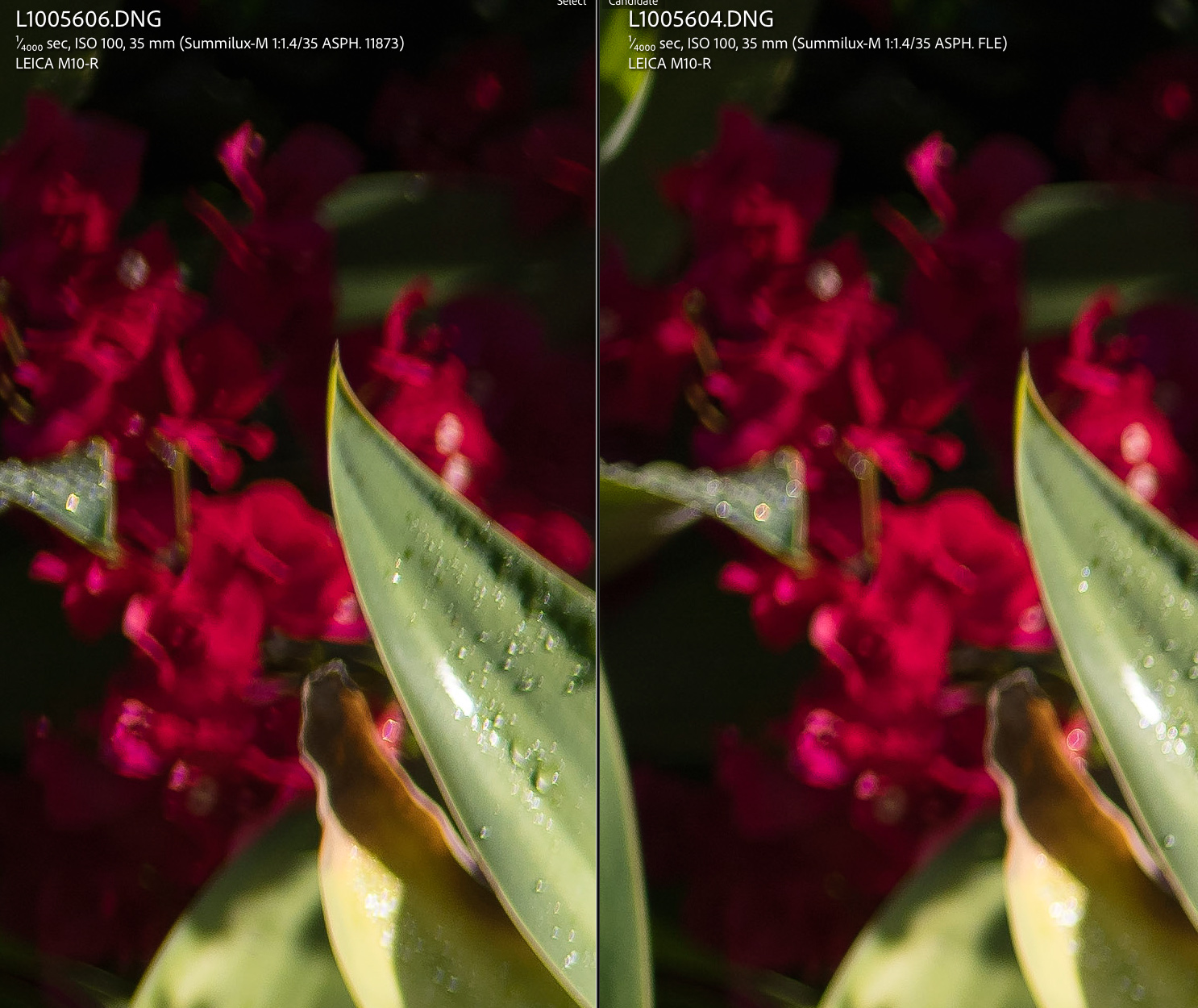
From these comparison scenes, the lenses show very similar performance and overall rendering. The FLE has better resistance to flare, ghosting, and veiling, along with stronger outlining and higher contrast, though it also exhibits more purple fringing. Both lenses reveal inner structure patterns from aspherical molding and polishing, with the FLE handling this slightly better. I've also included comparisons at f/2 to show how rounded the edges appear on each lens.
It's worth noting that toward the edges of the frame, the out-of-focus background appears slightly more "in focus" on the Light Lens Lab, due to its more pronounced outward field curvature.
All samples were shot in DNG format and are straight out of the camera with only the default sharpening applied. The standard Adobe profile was used for all images shown here. There was no in-camera or post-processing correction for vignetting, distortion, or chromatic aberration.
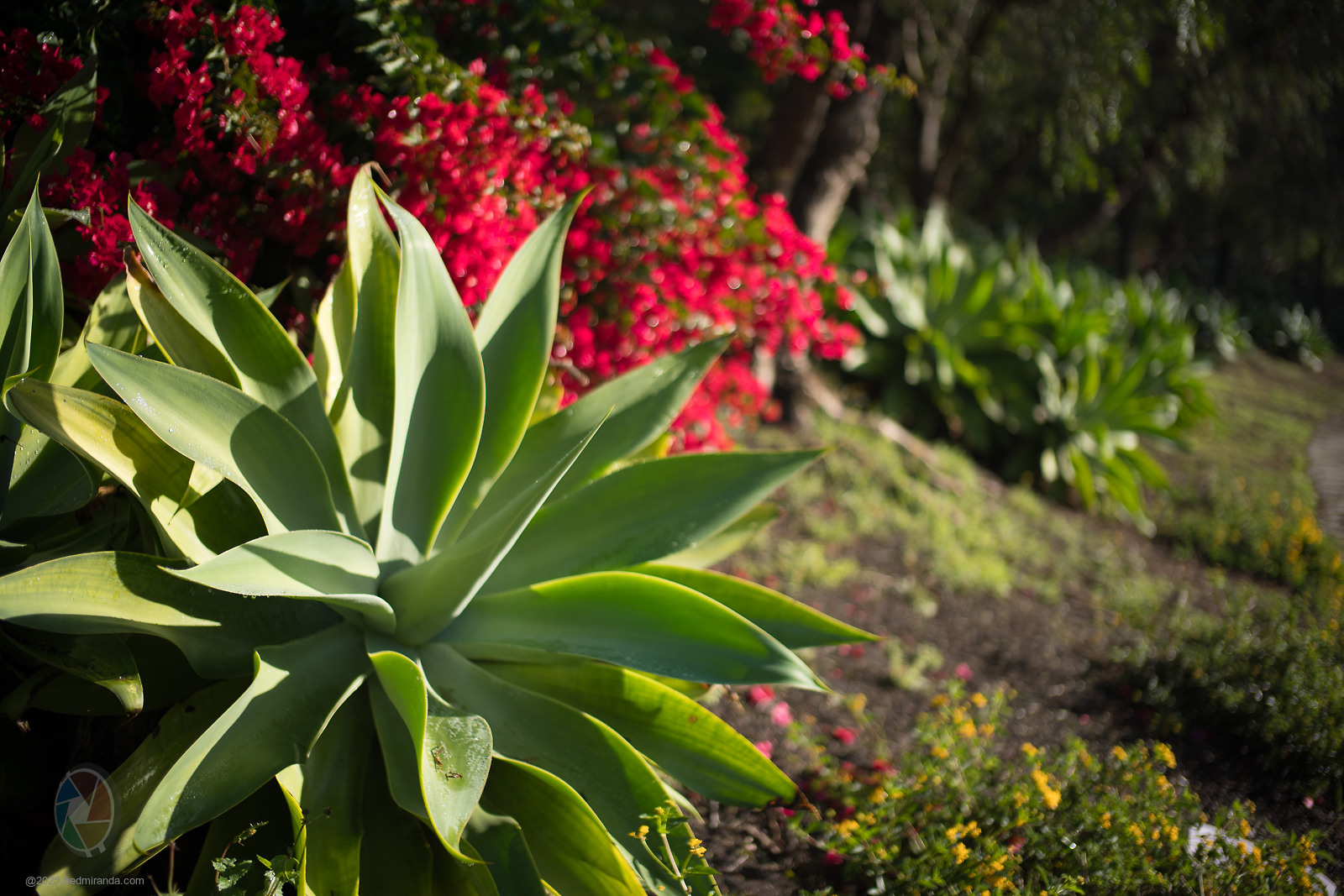
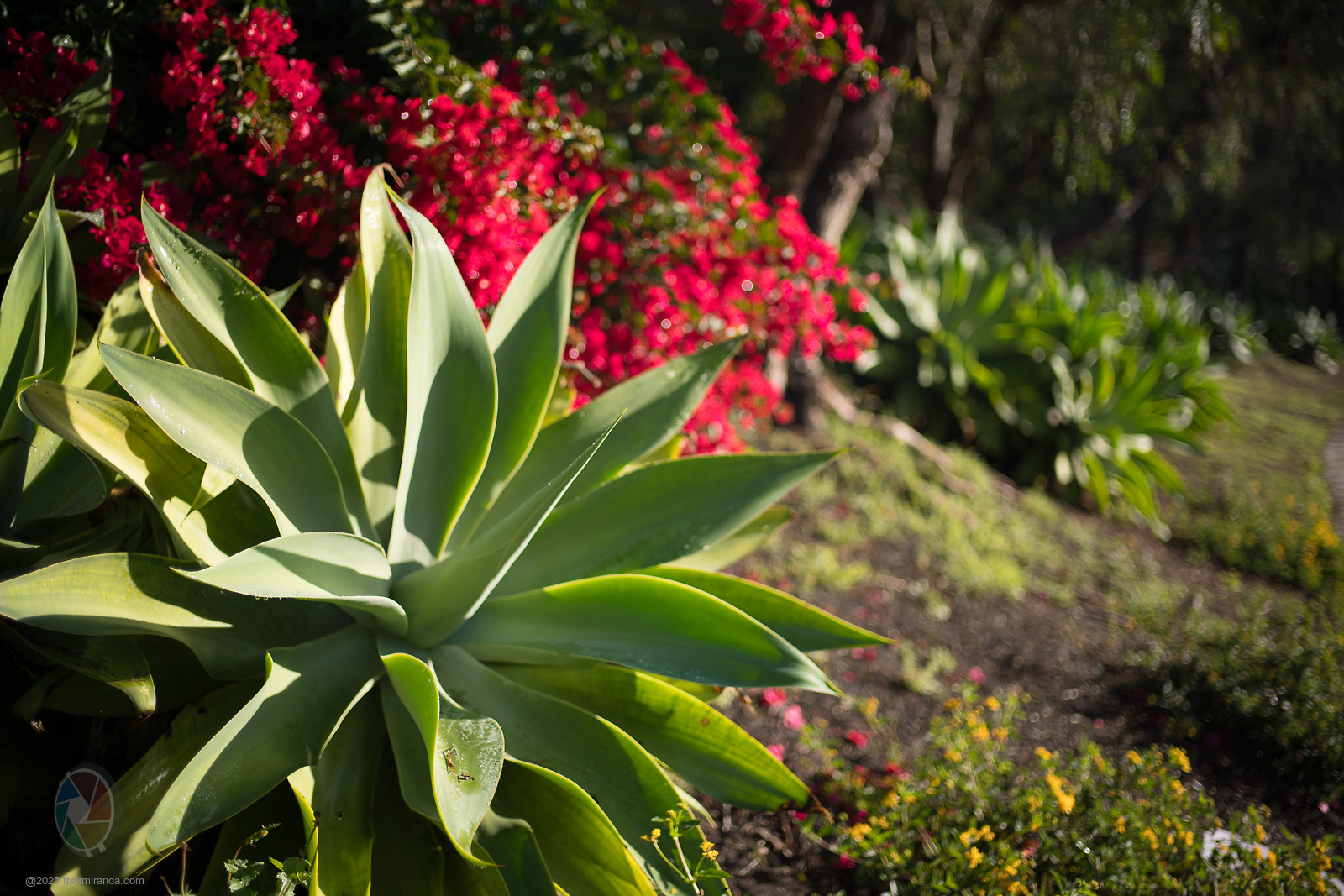
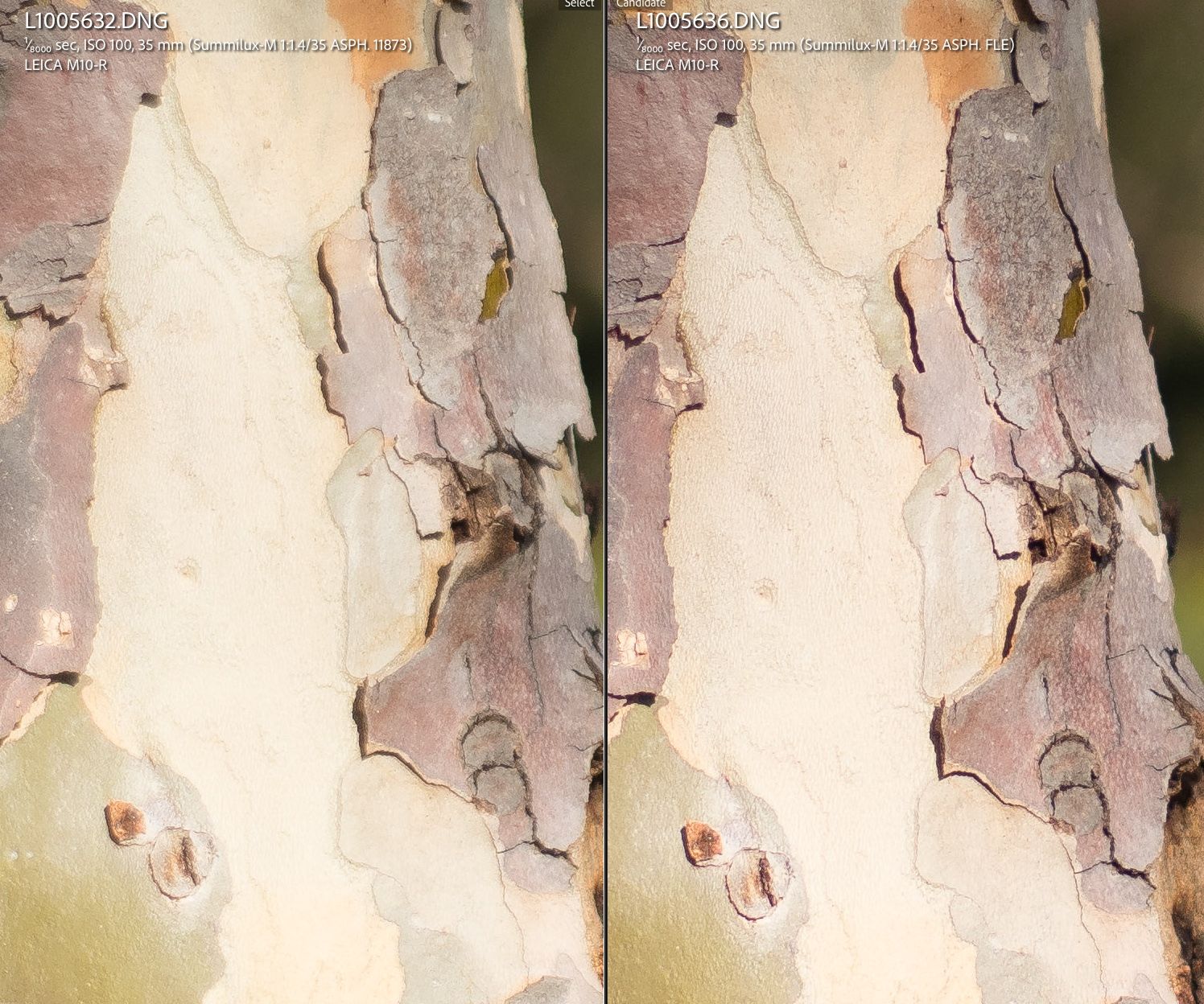
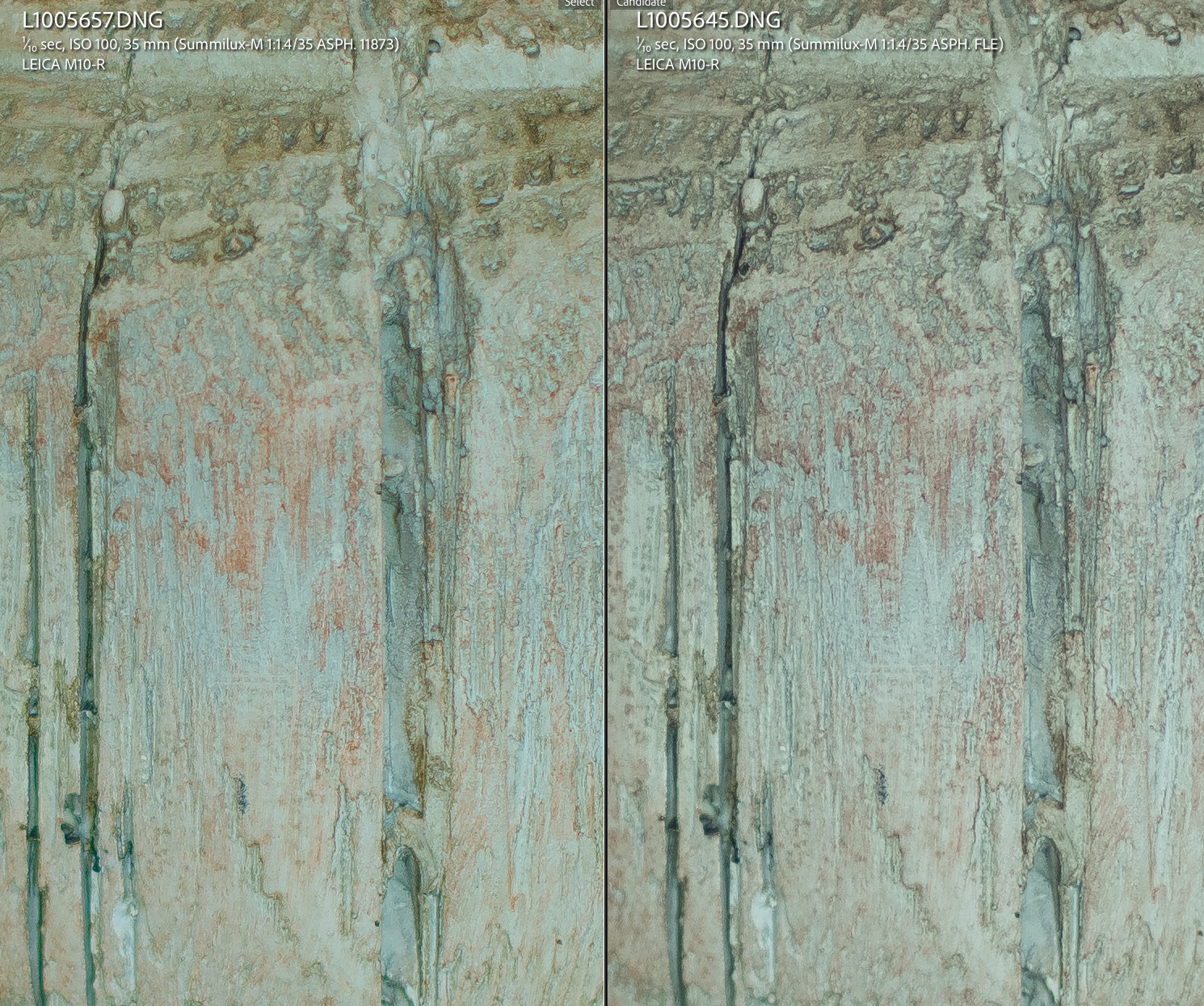
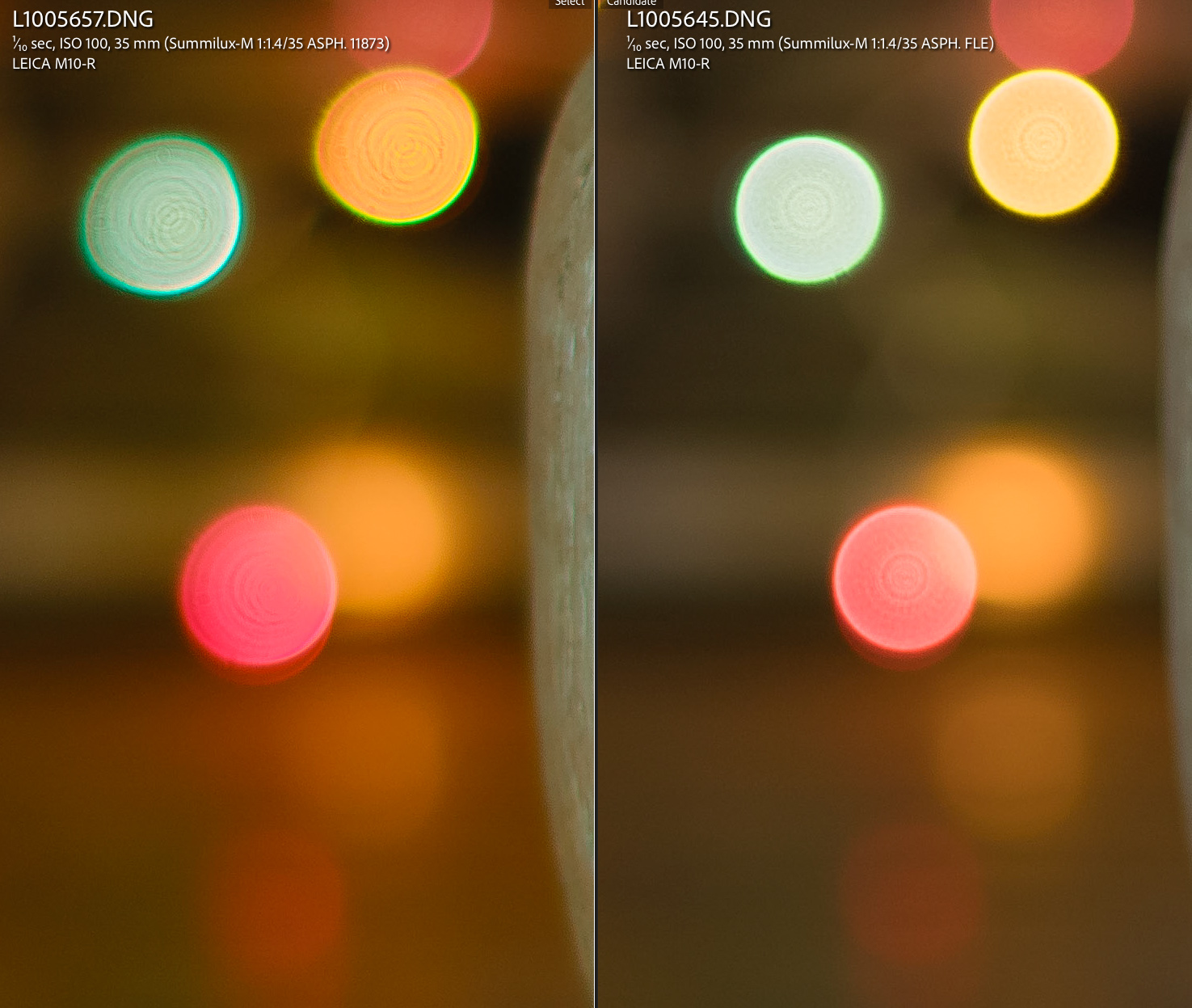
The crops are labeled "FLE" or "11873", corresponding to the Leica 35mm f/1.4 Summilux ASPH. FLE and the Light Lens Lab 35mm f/1.4 Aspherical, respectively.
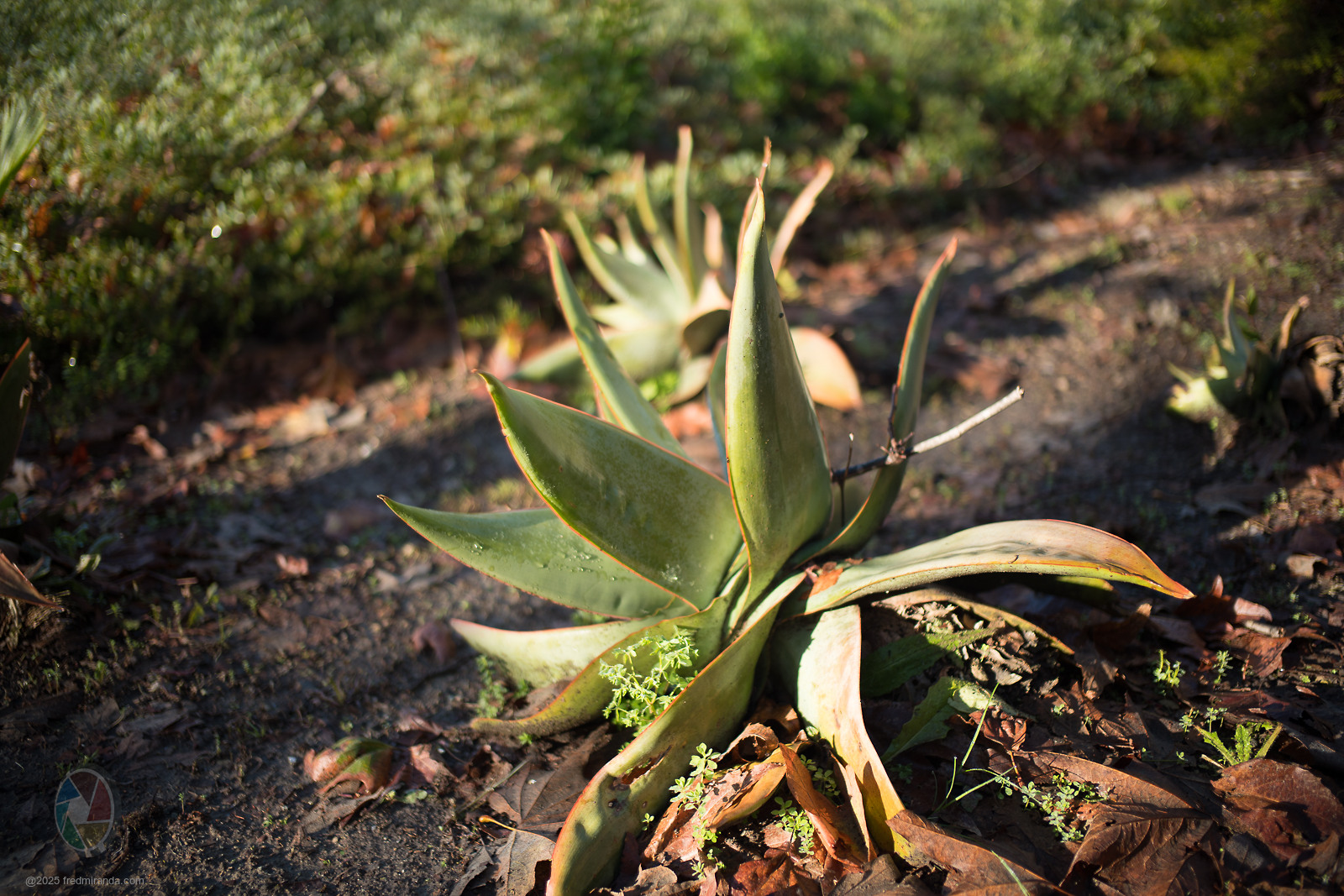
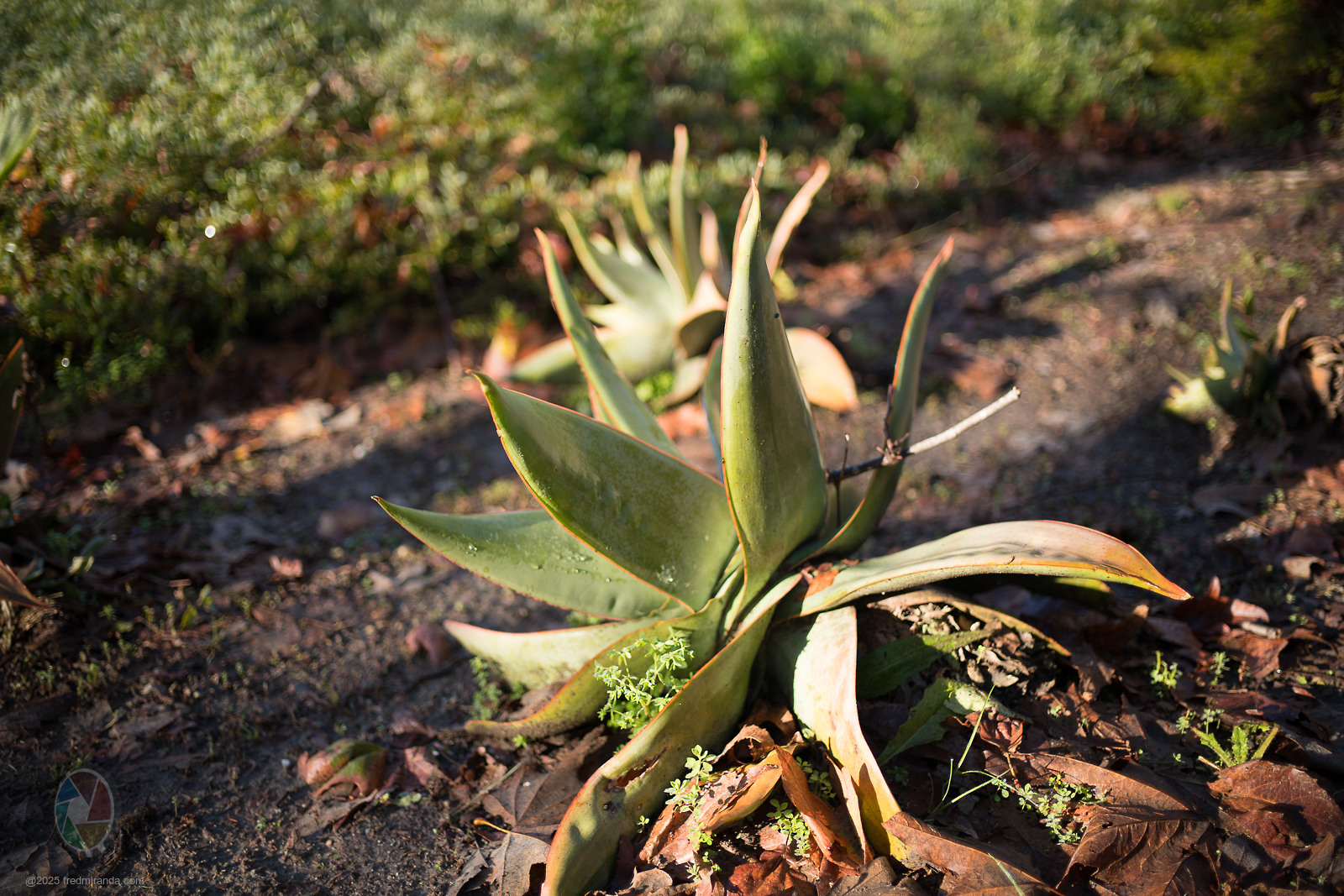
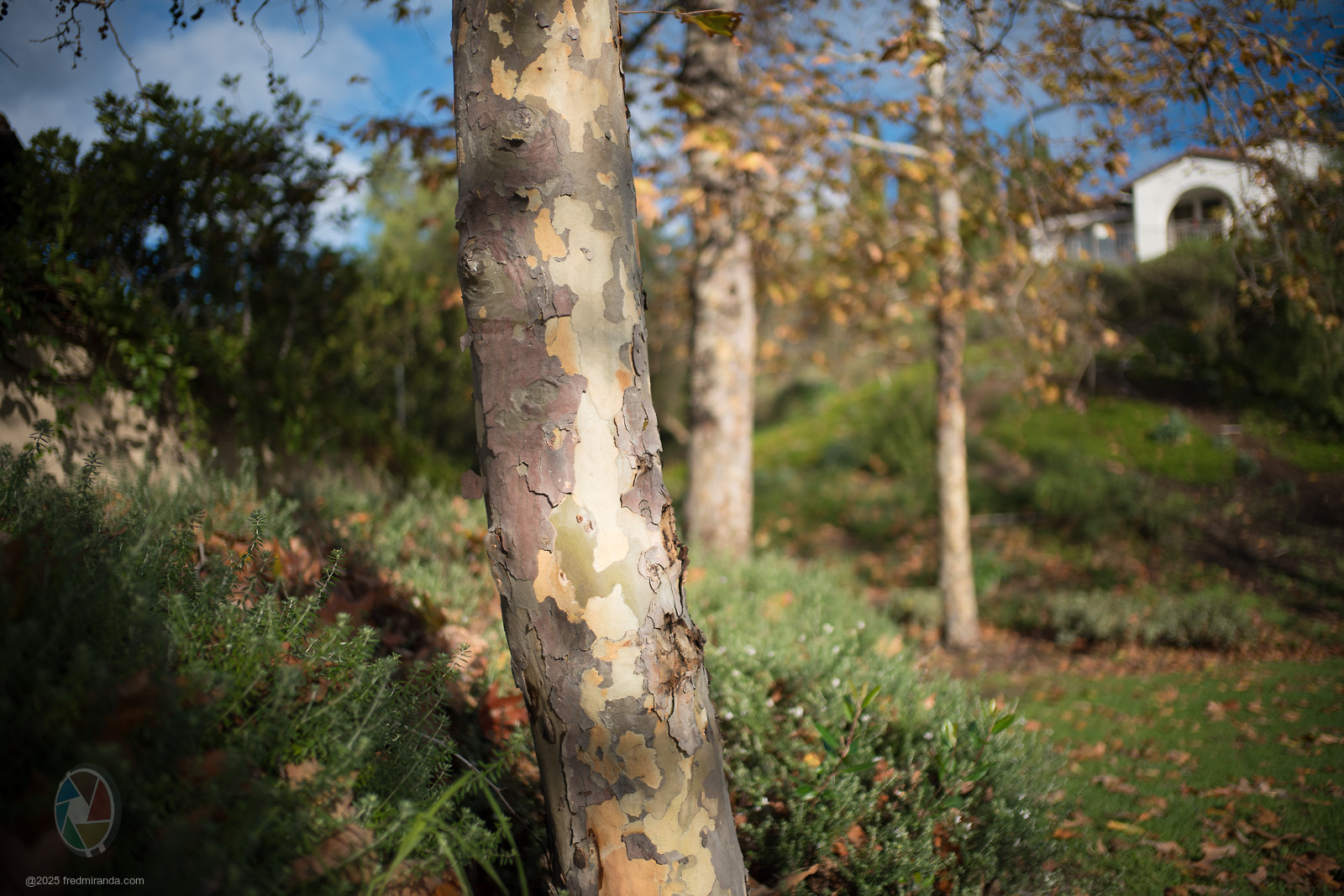
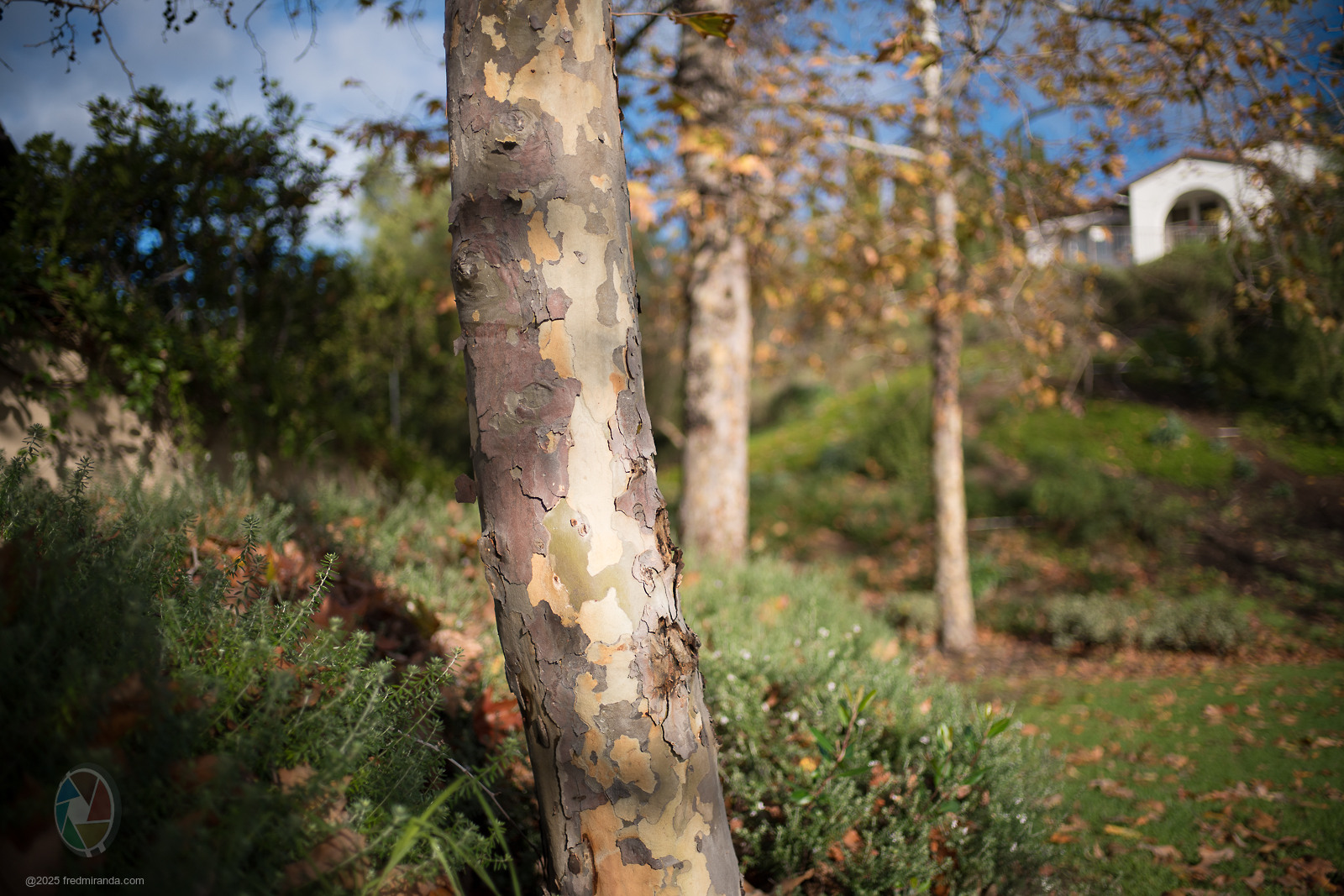
Scene 1:
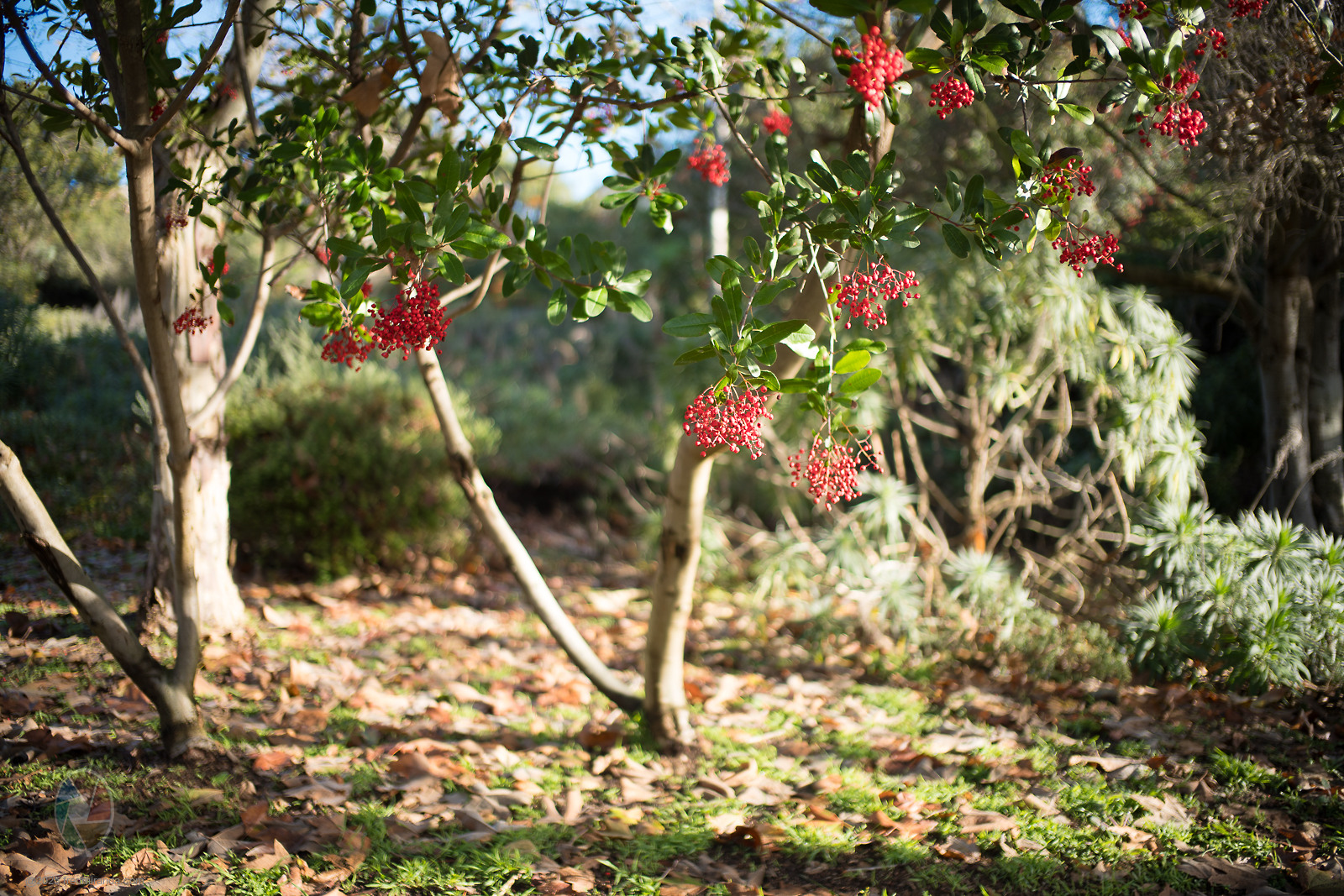
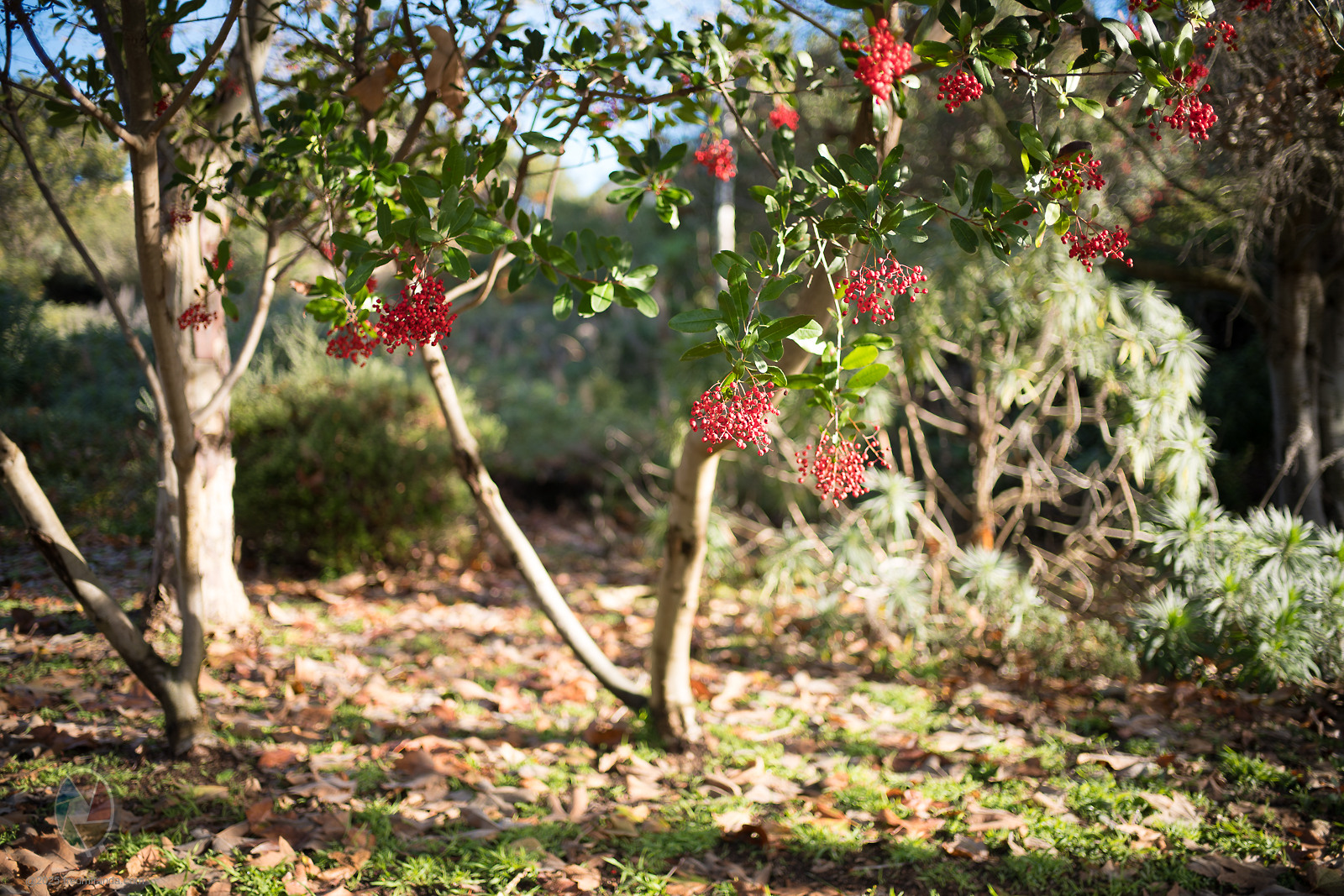
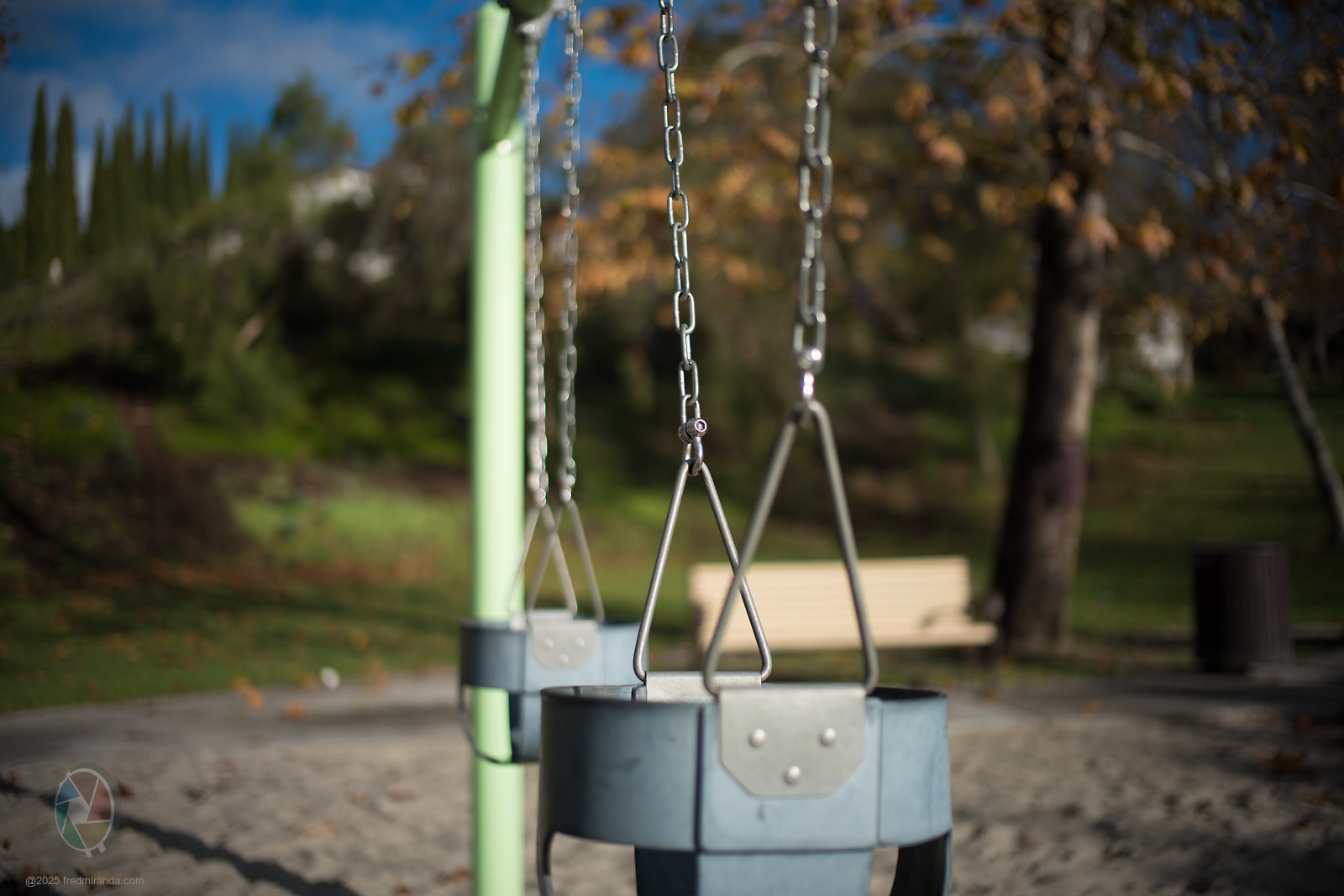
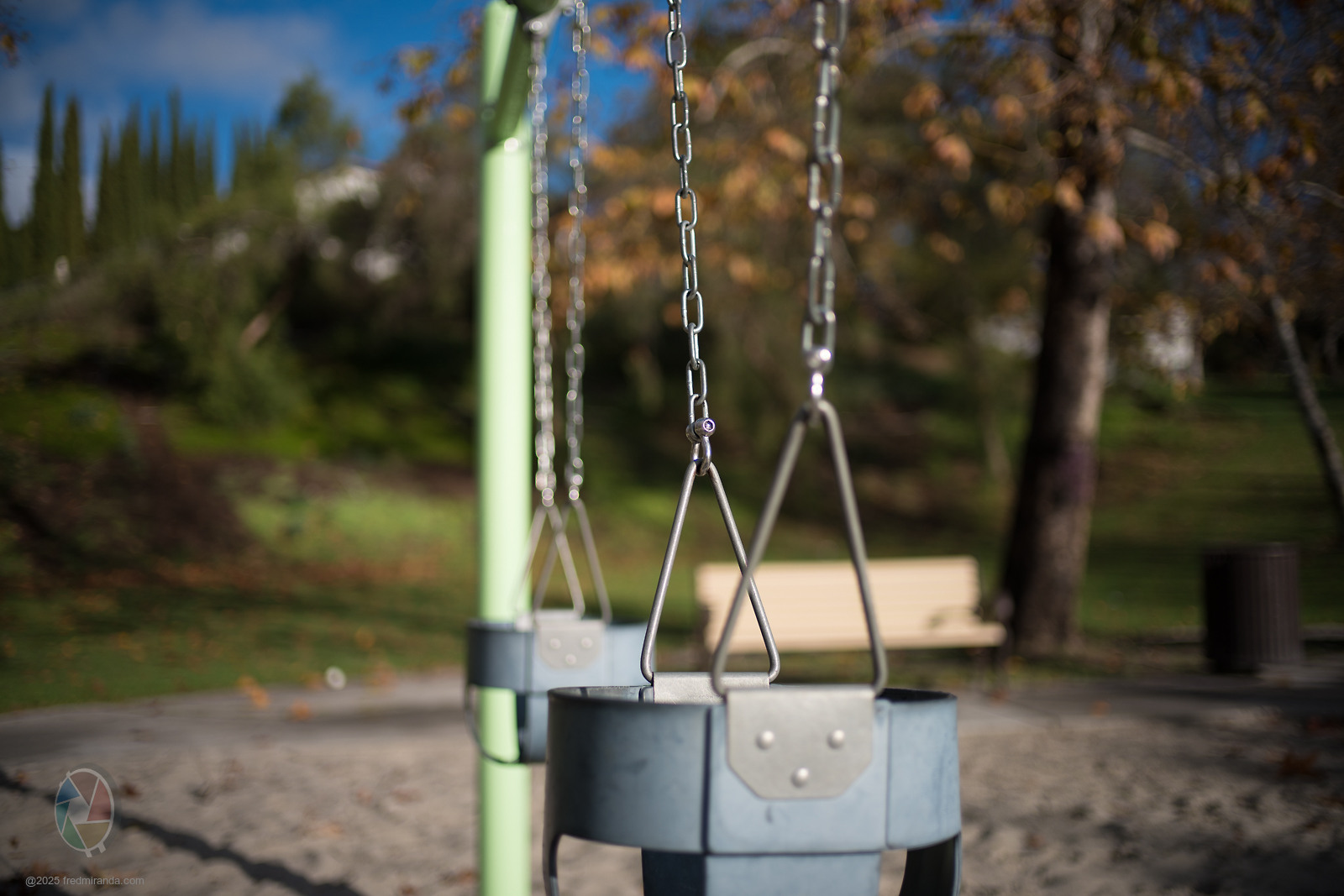
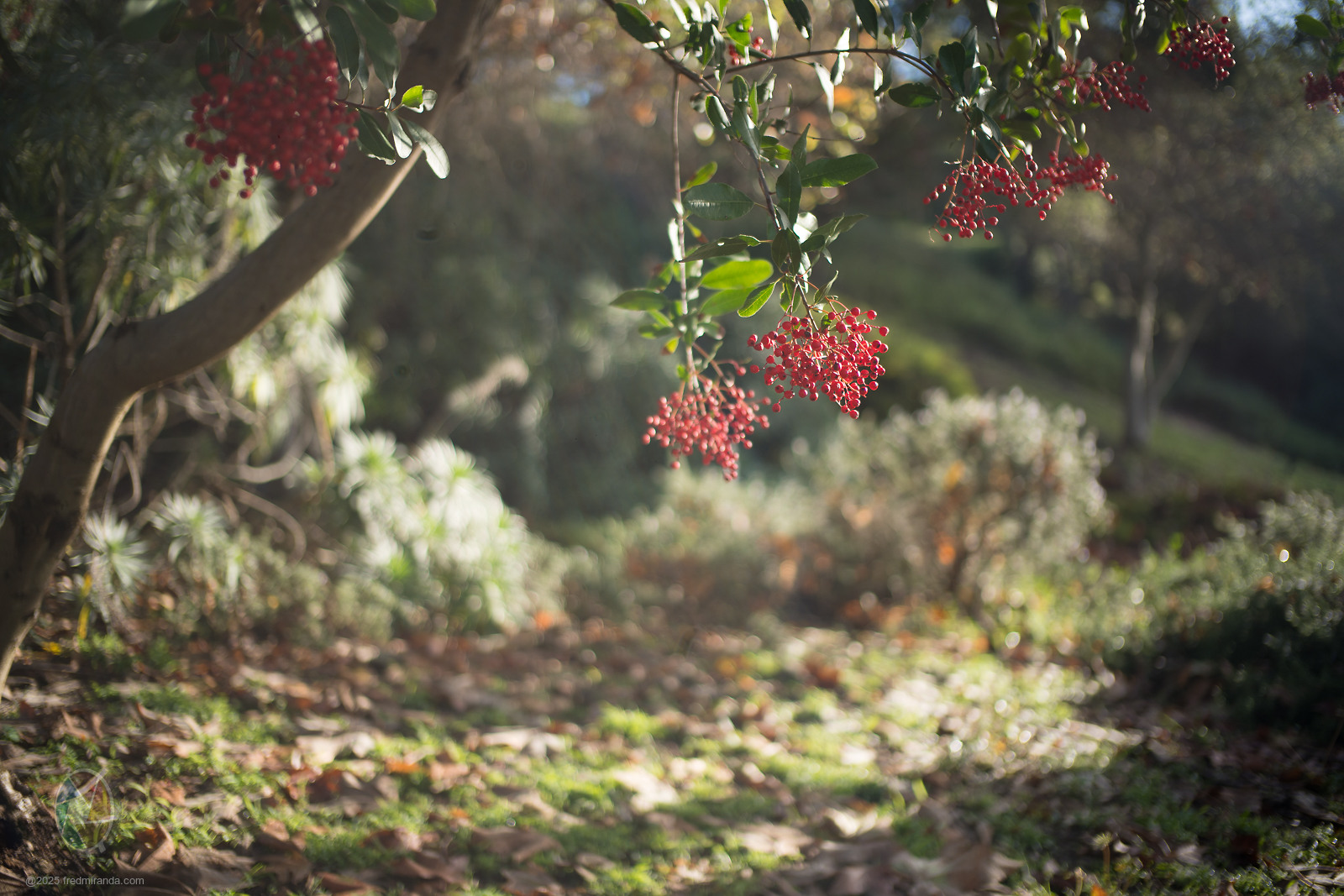
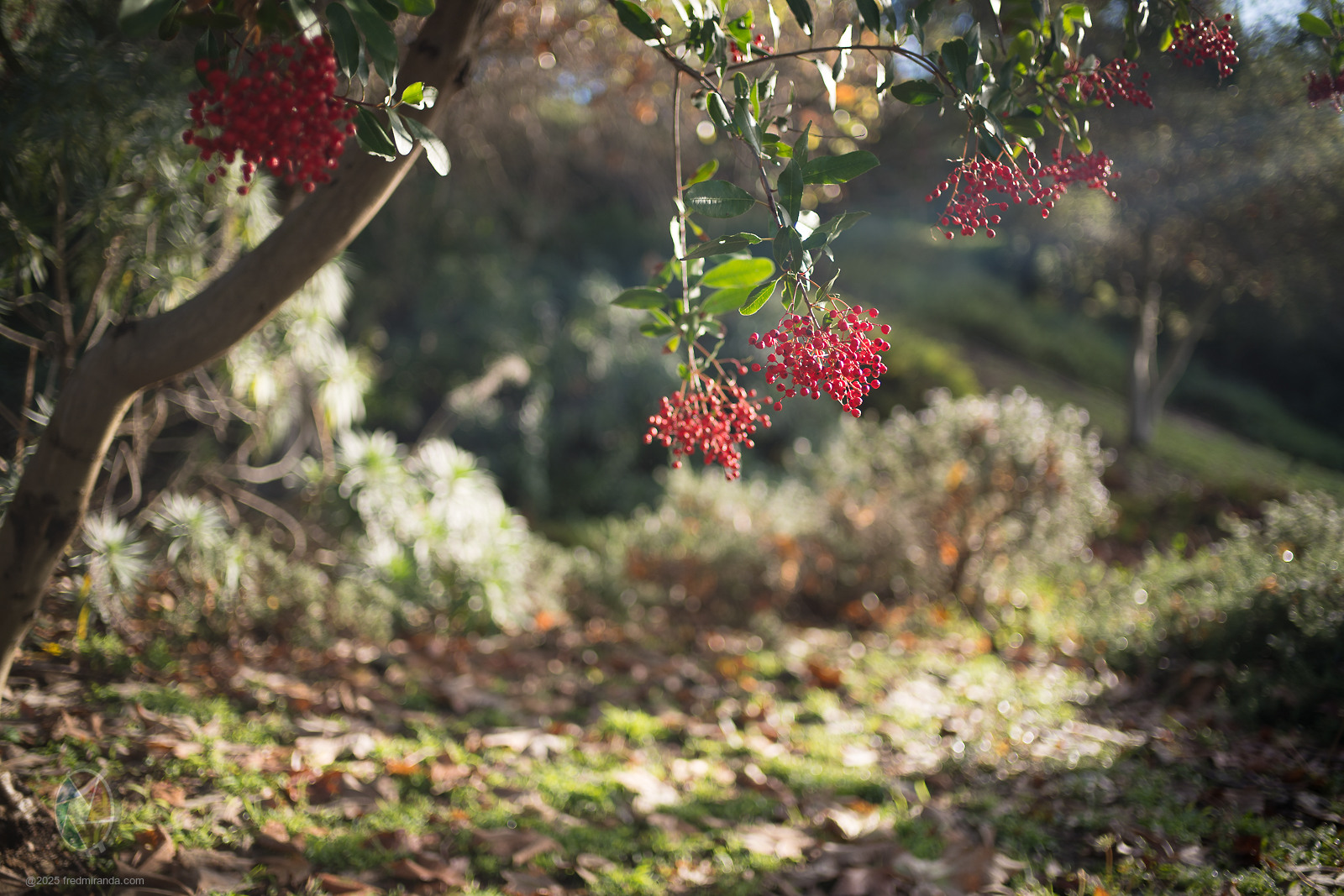
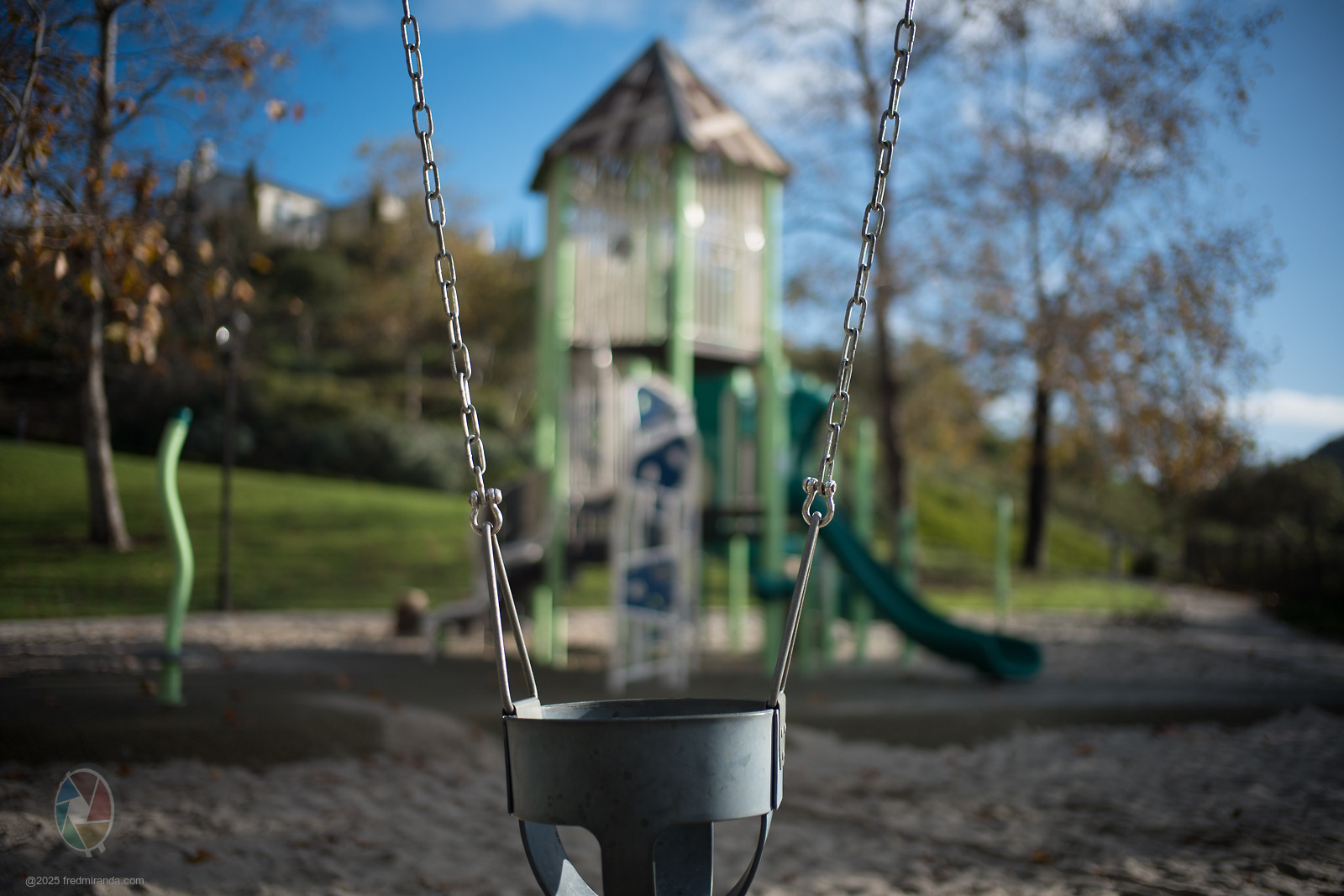
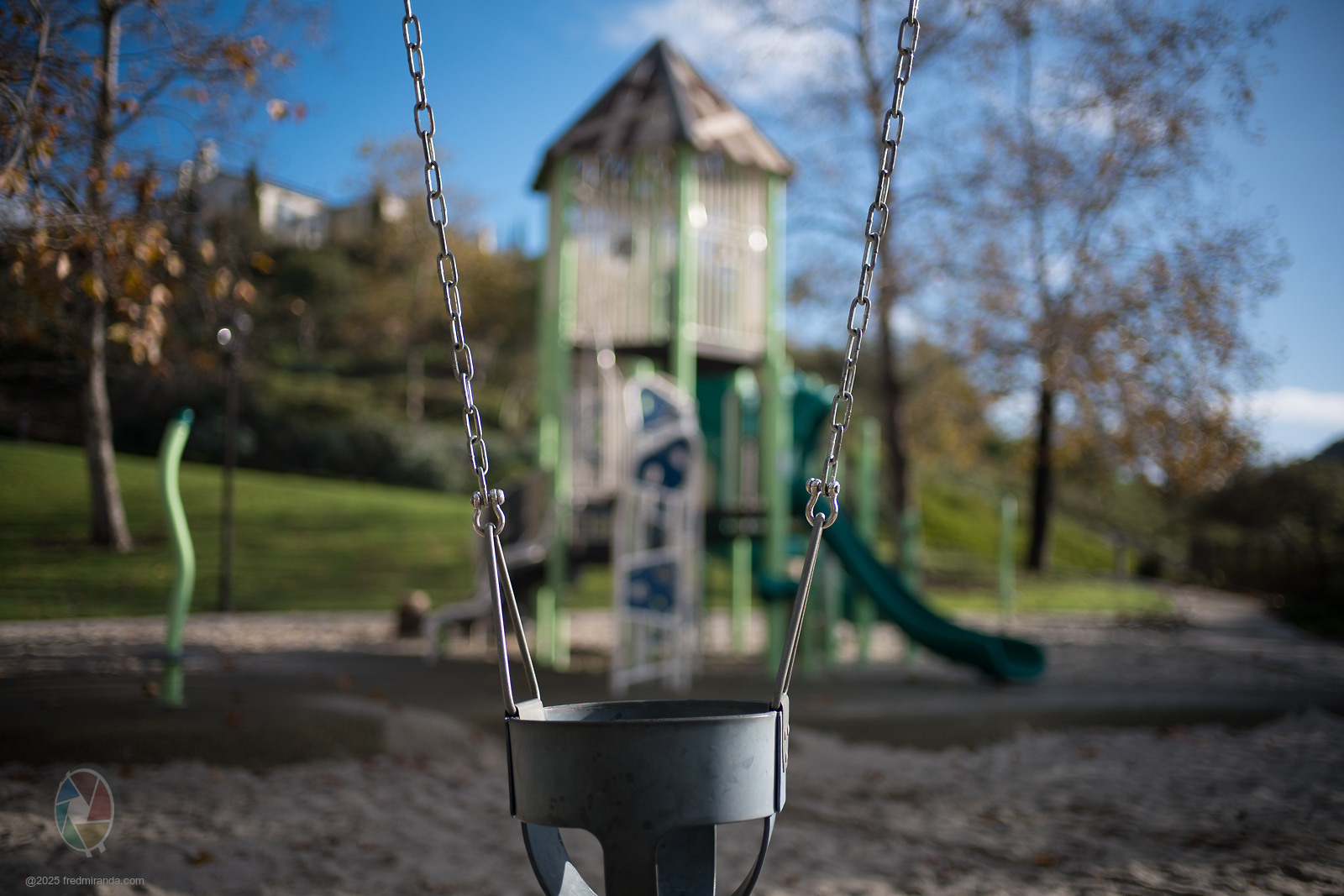
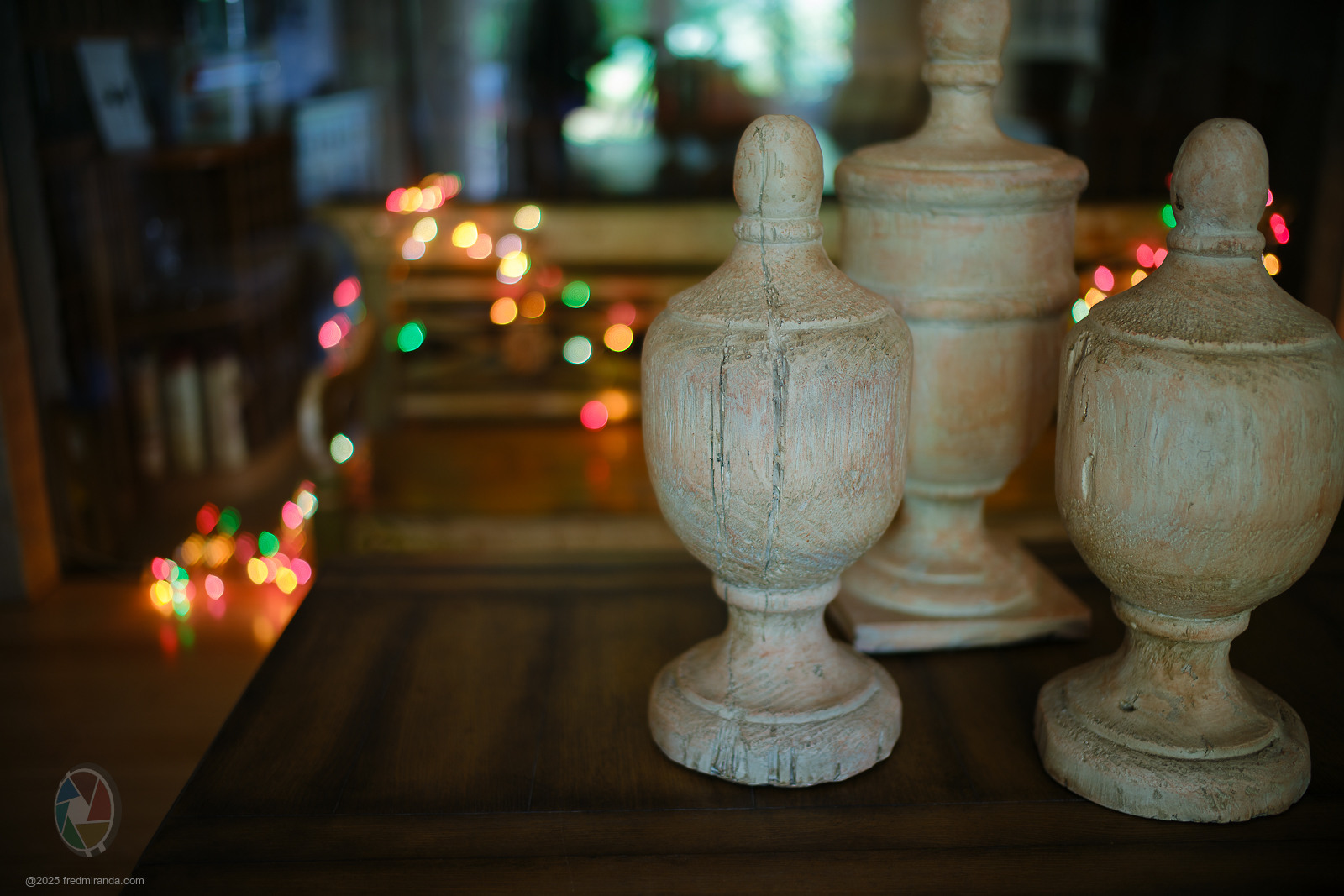
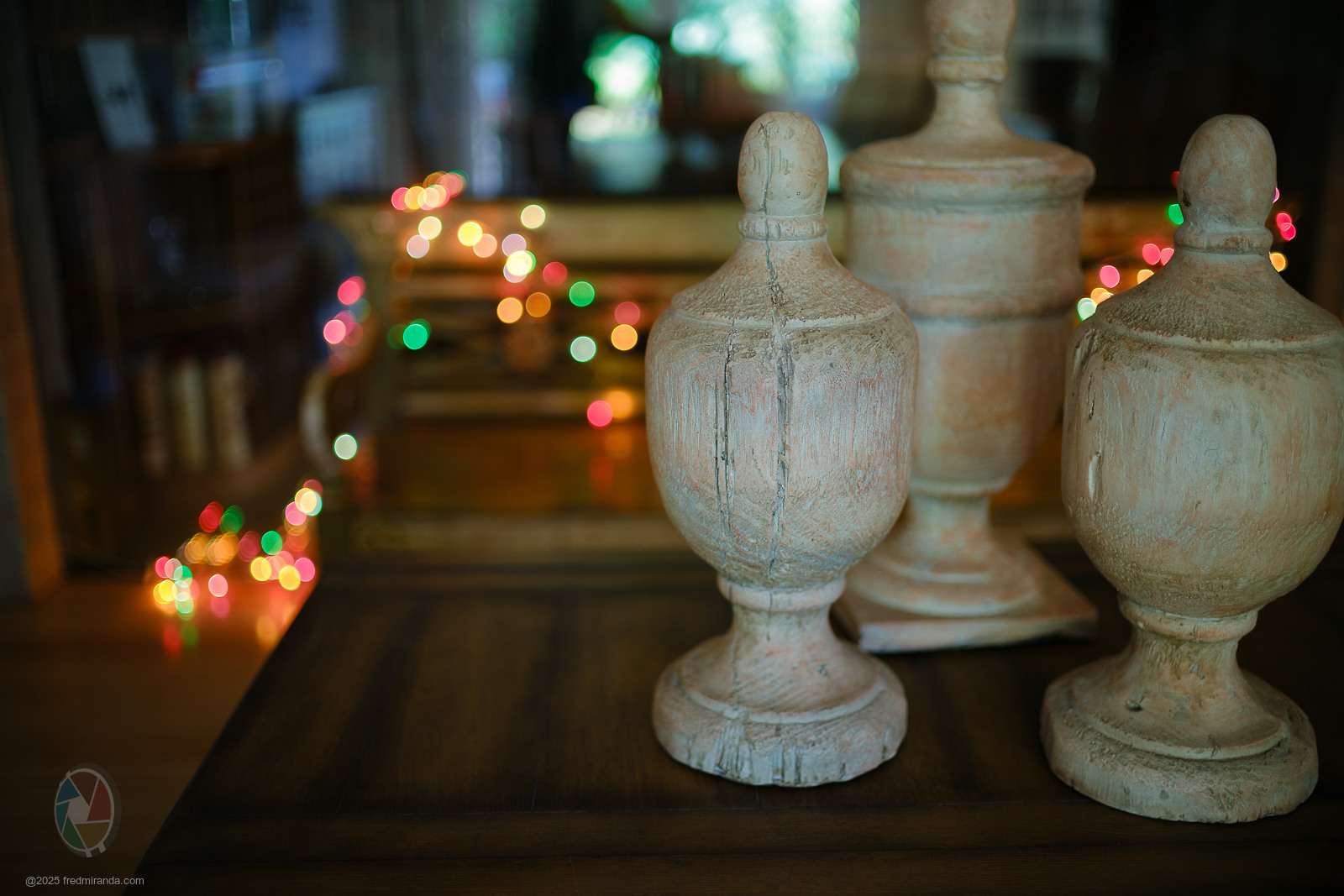
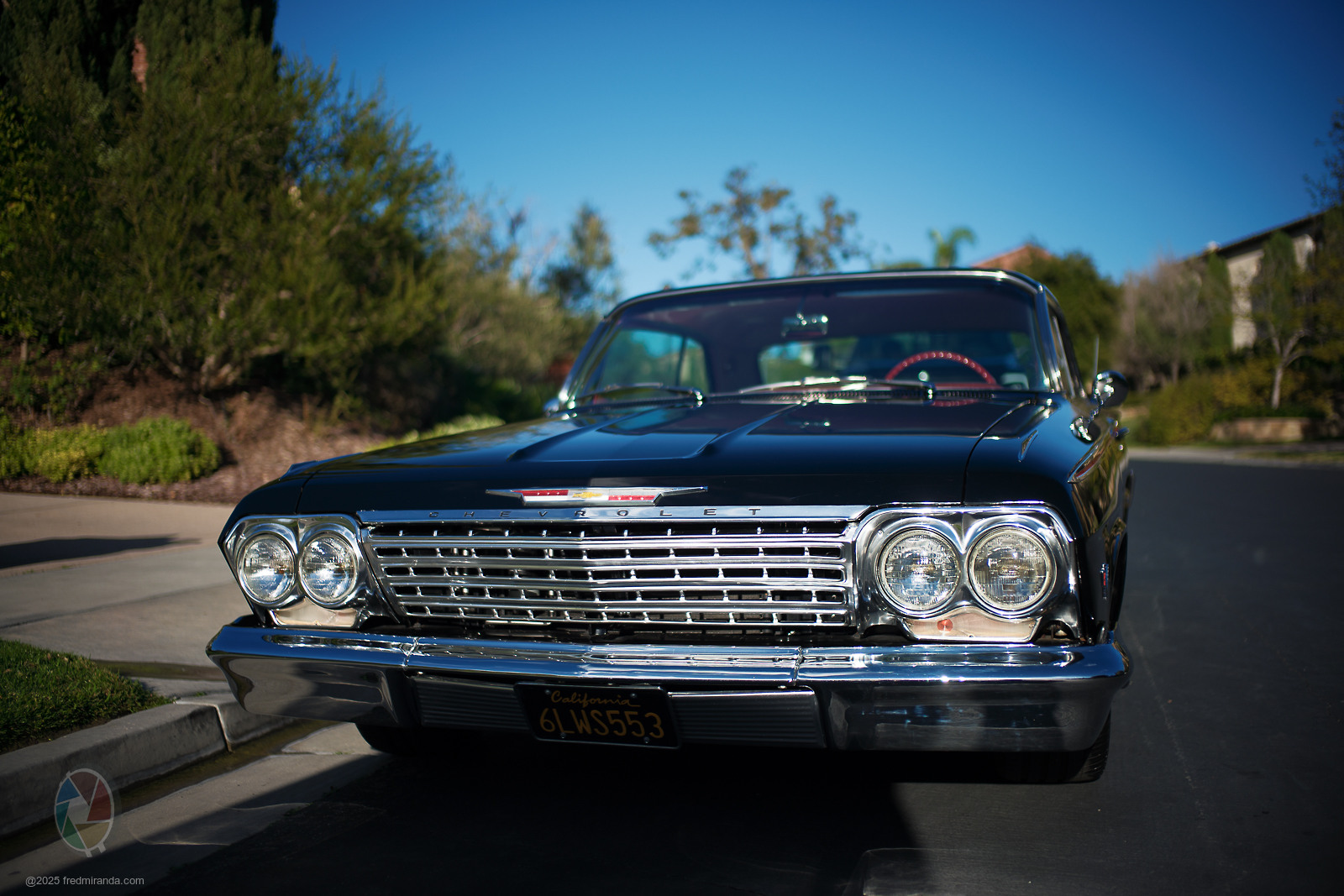
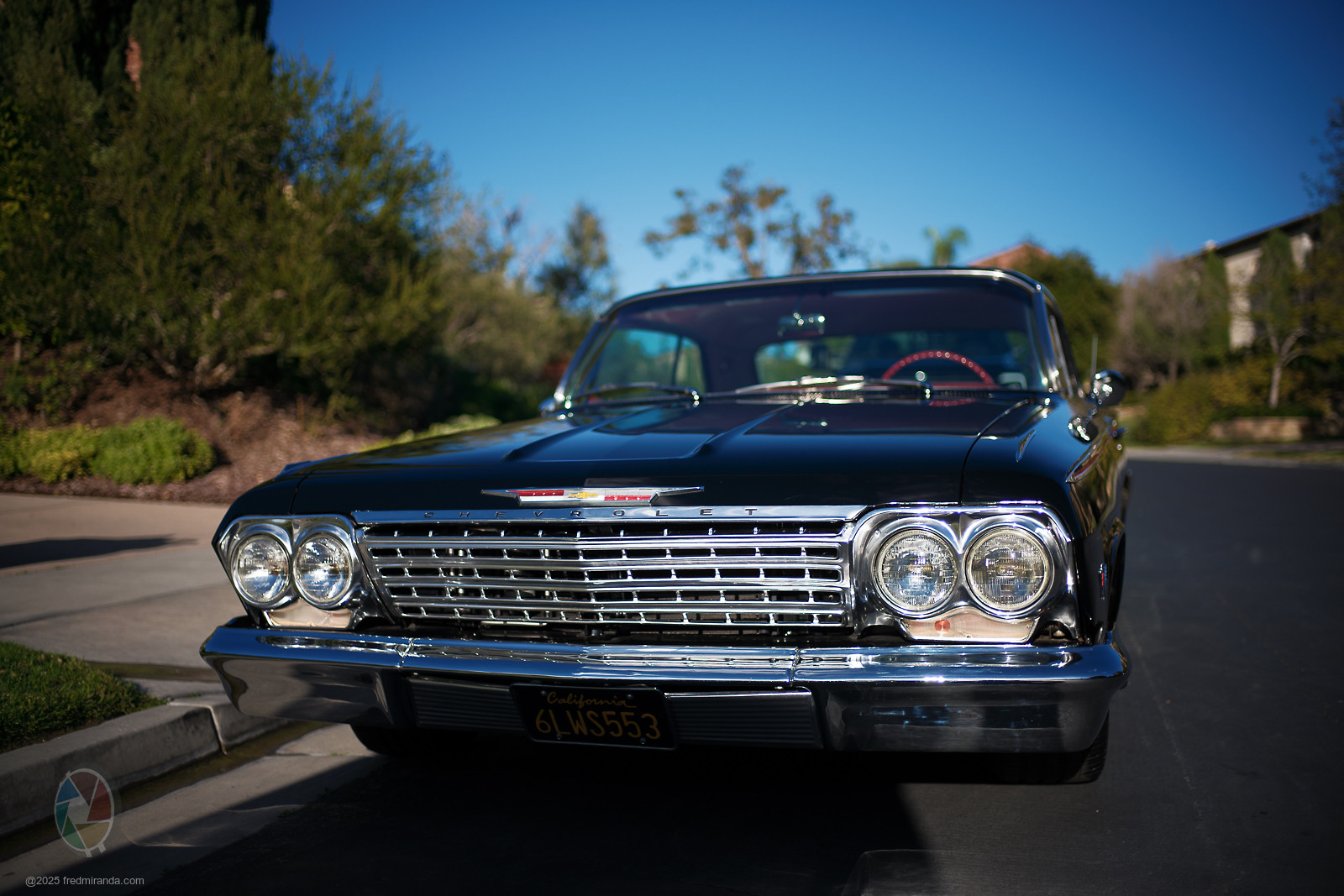
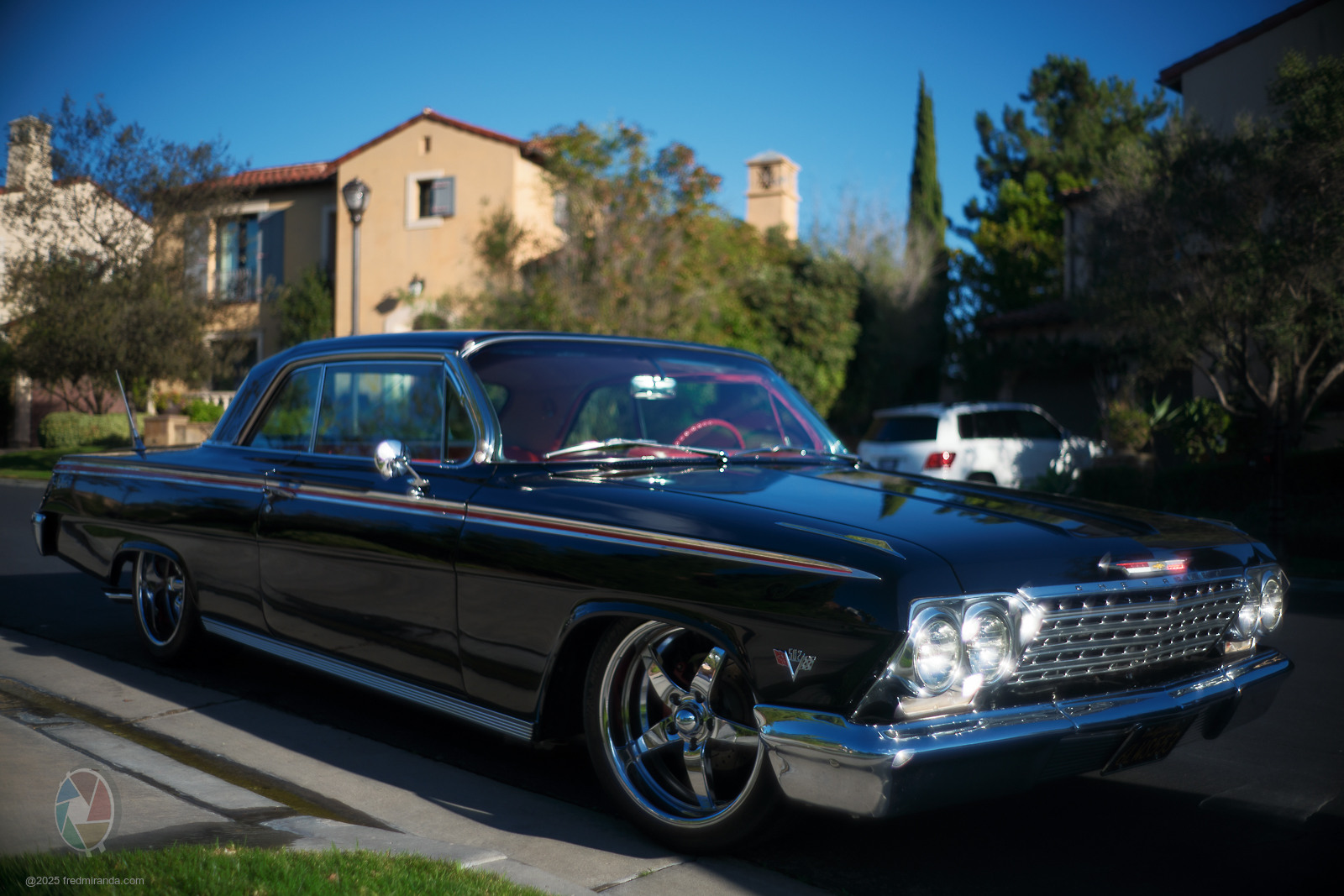
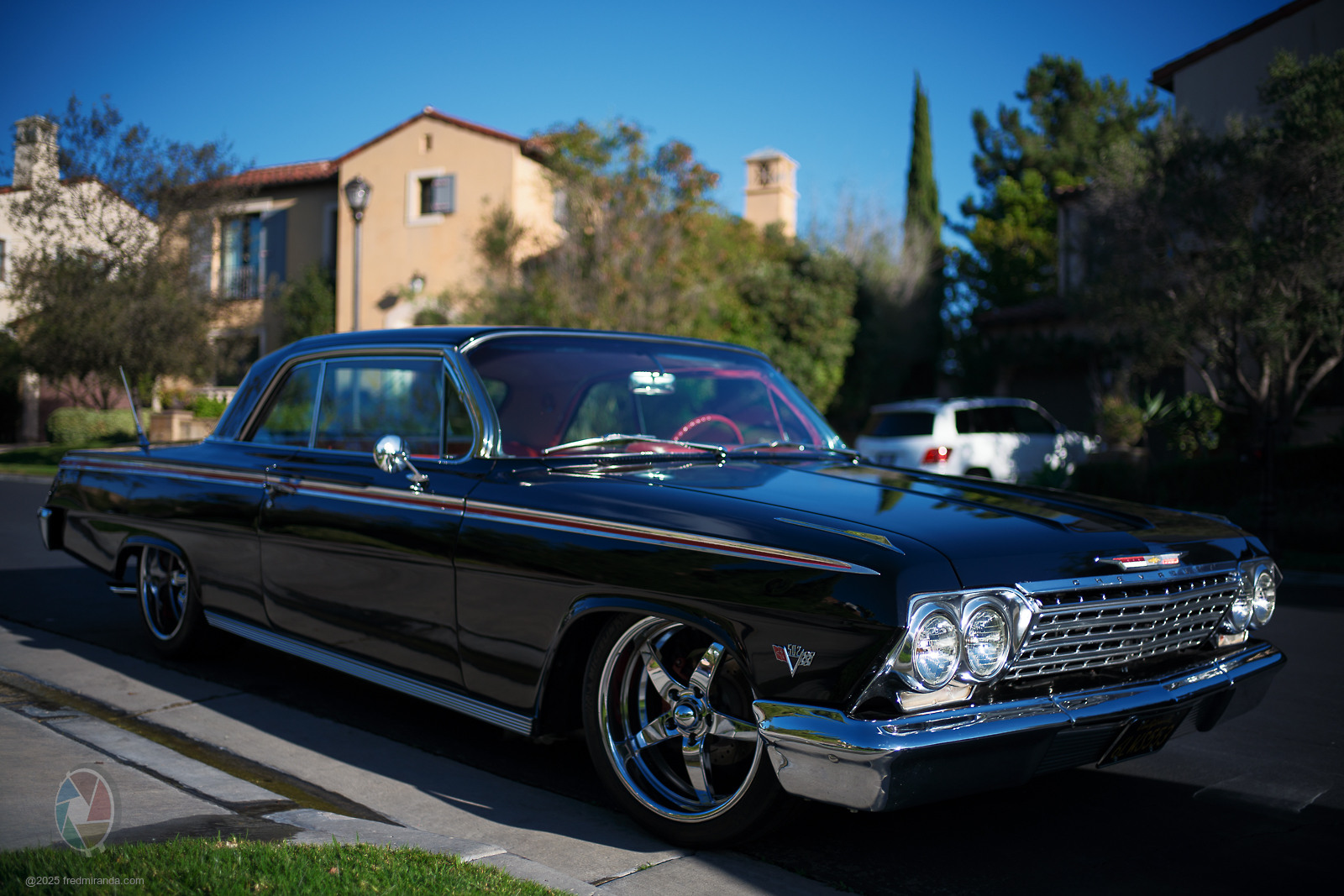
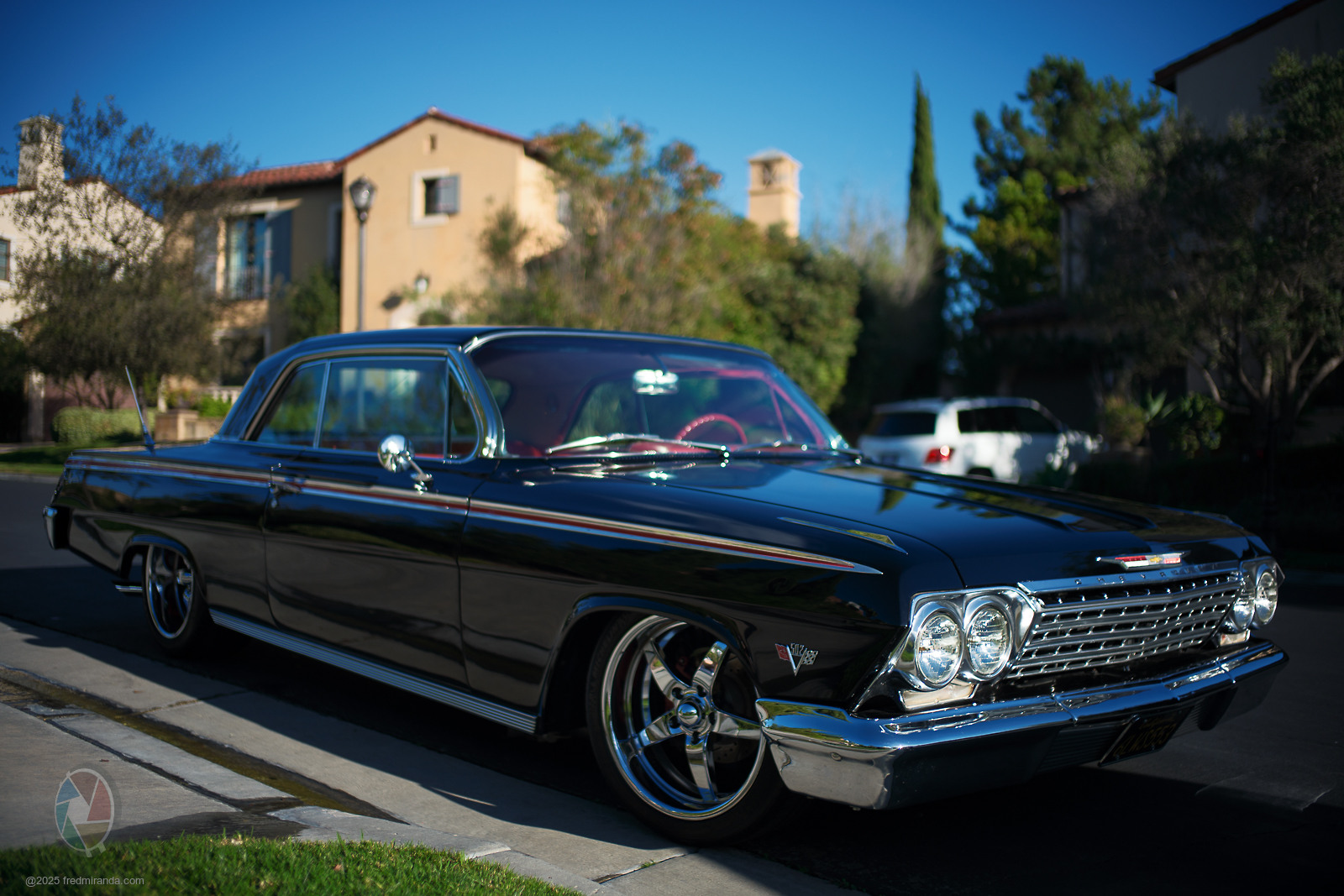
A few observations stand out. Both lenses perform similarly at this distance (around 1.5m), so the lack of a floating element in the Light Lens Lab lens does not make a noticeable difference. That said, the LLL image does show slightly lower contrast.
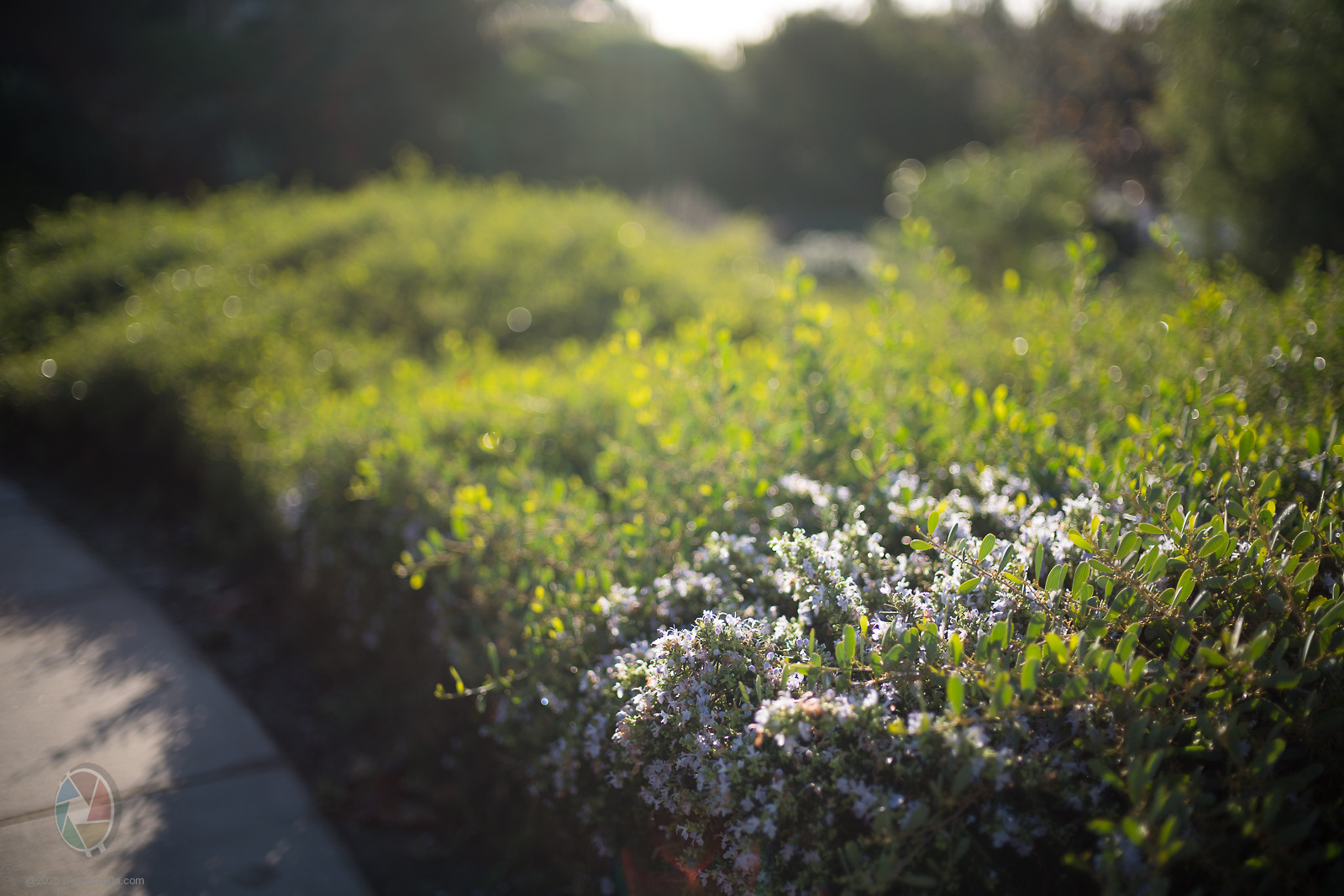
The inner structure in both lenses is busy, and this is the first time I've noticed an onion ring pattern in the LLL; the Leica shows a similar pattern. Crops toward the edges reveal more structure in the LLL, likely because the field curvature keeps those areas more in focus. Finally, both lenses show a noticeable decagon (10-sided polygon) when stopped down to f/2. For reference, the FLE v2 (close-focus) produces a dodecagon (12-sided polygon) under the same conditions.
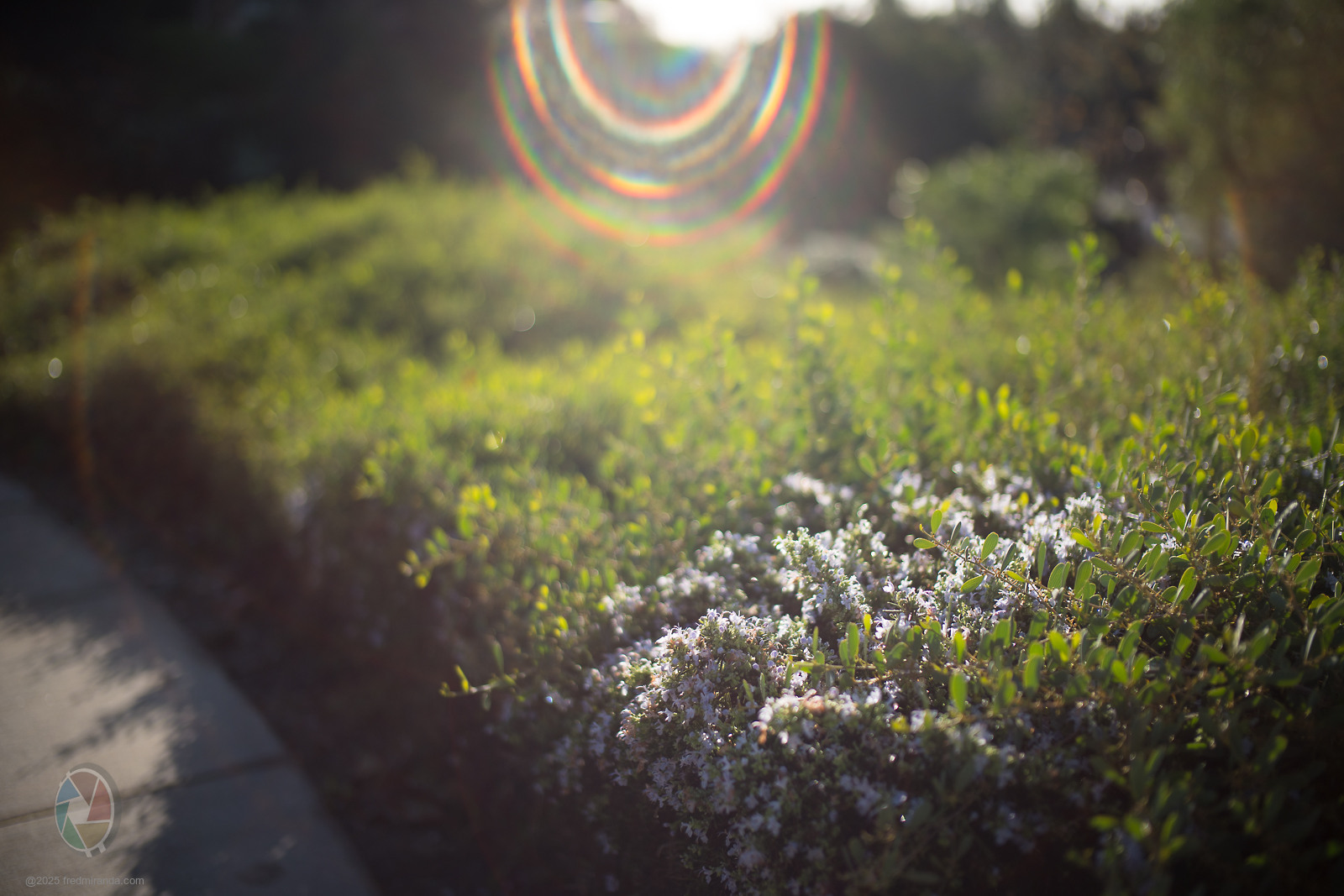
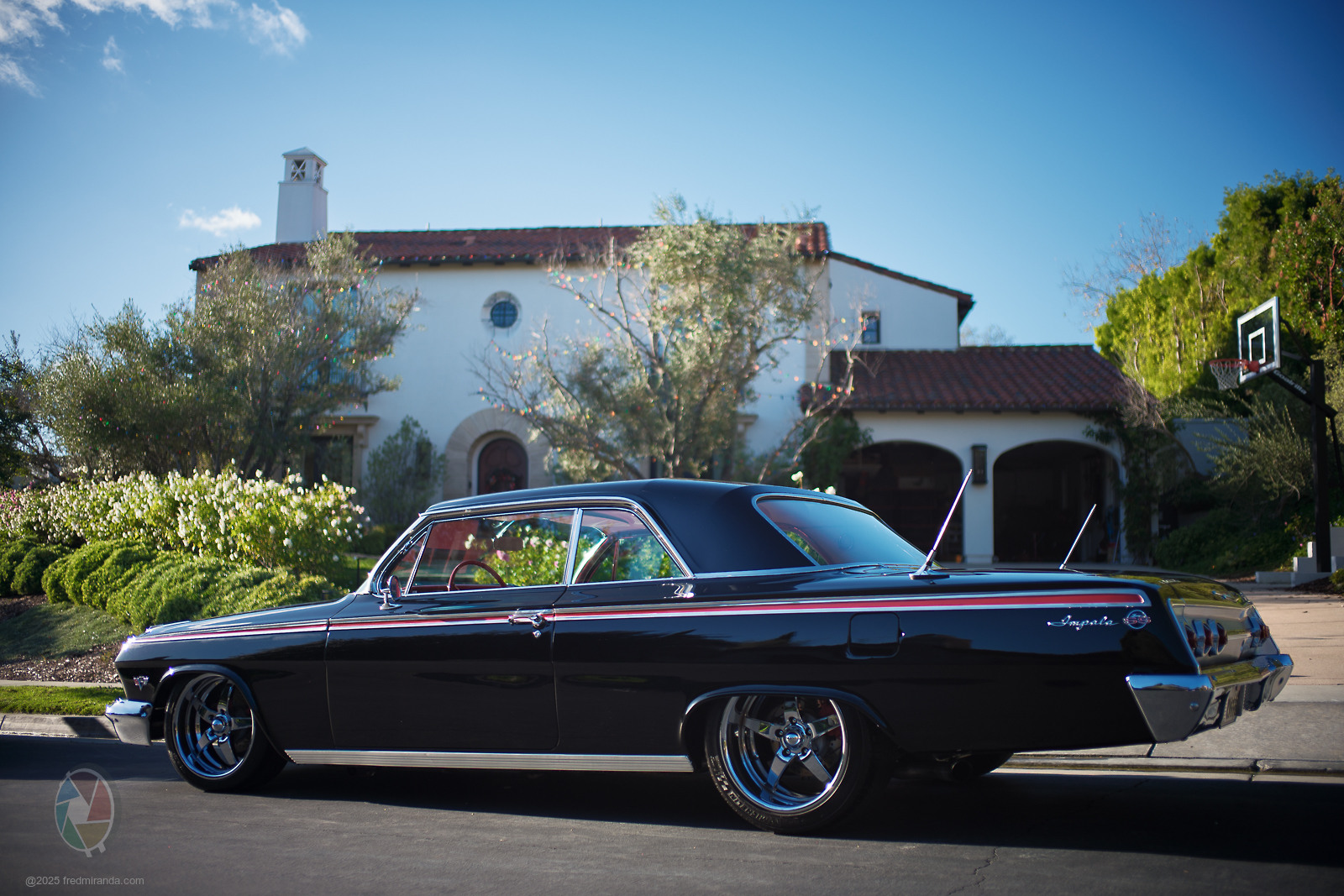
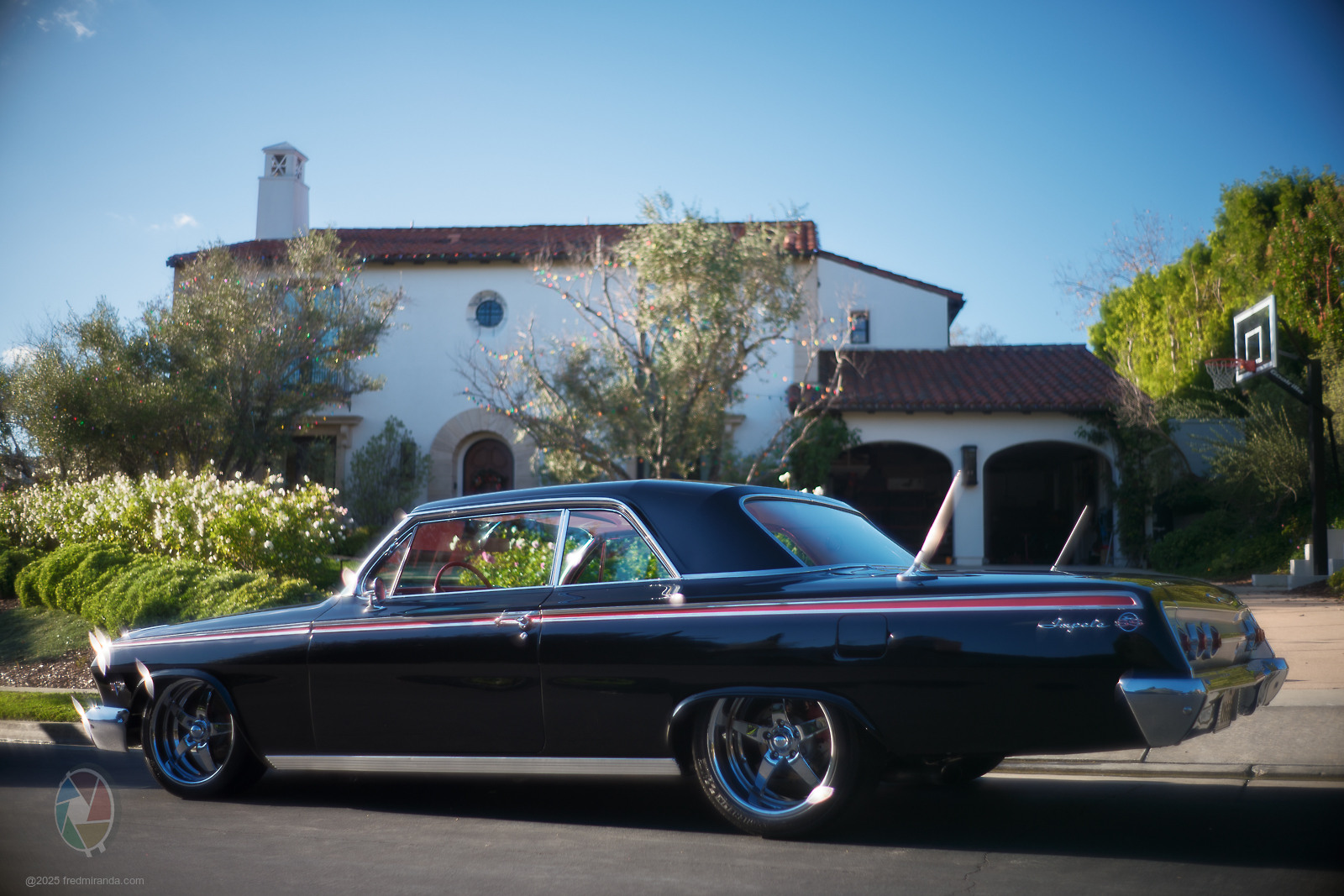
LEICA M10-R Summilux-M 1:1.4/35 ASPH. 11873 lens 35mm 1/4000s 100 ISO -0.7 EV
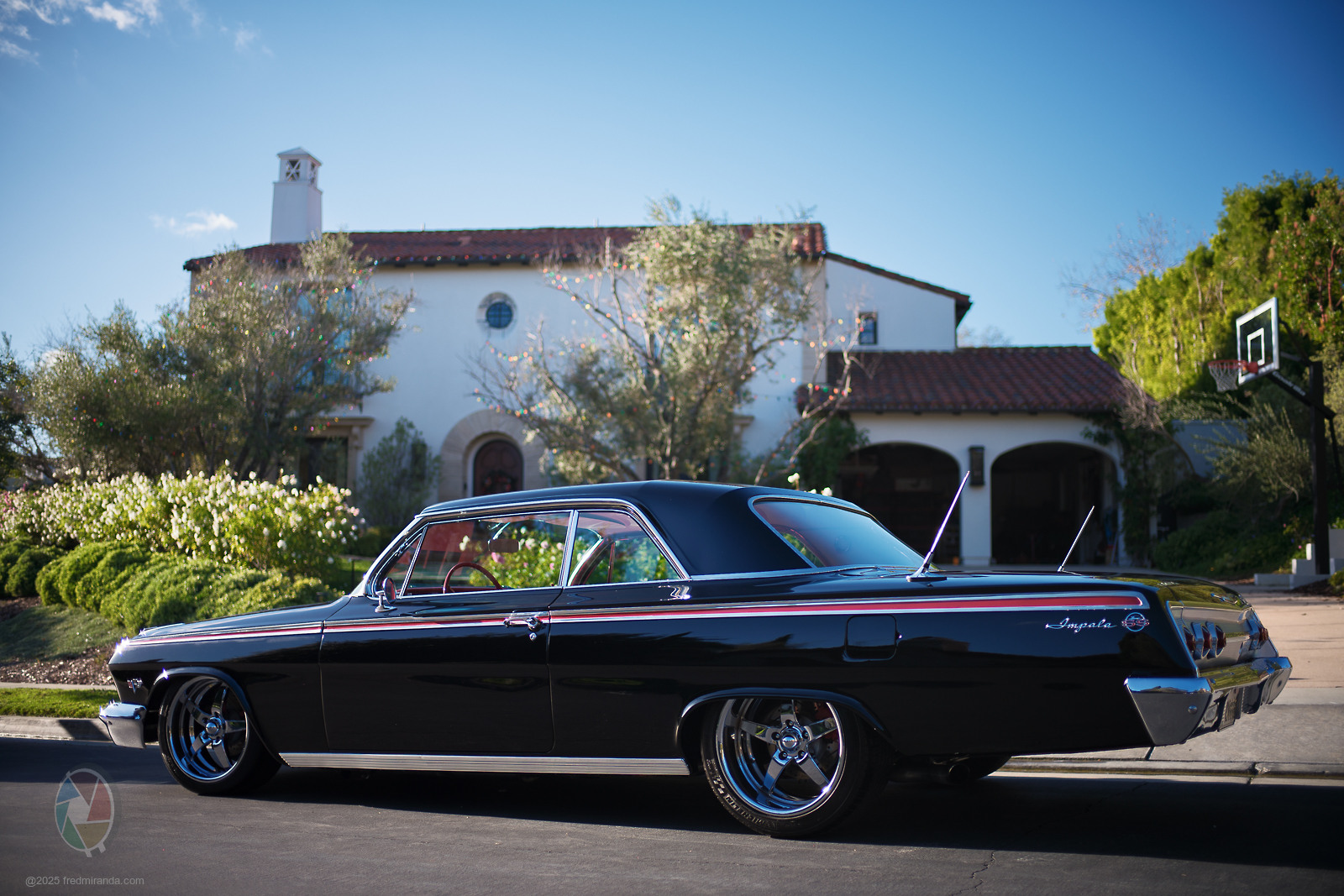
LEICA M10-R Summilux-M 1:1.4/35 ASPH. FLE lens 35mm 1/4000s 100 ISO -0.7 EV
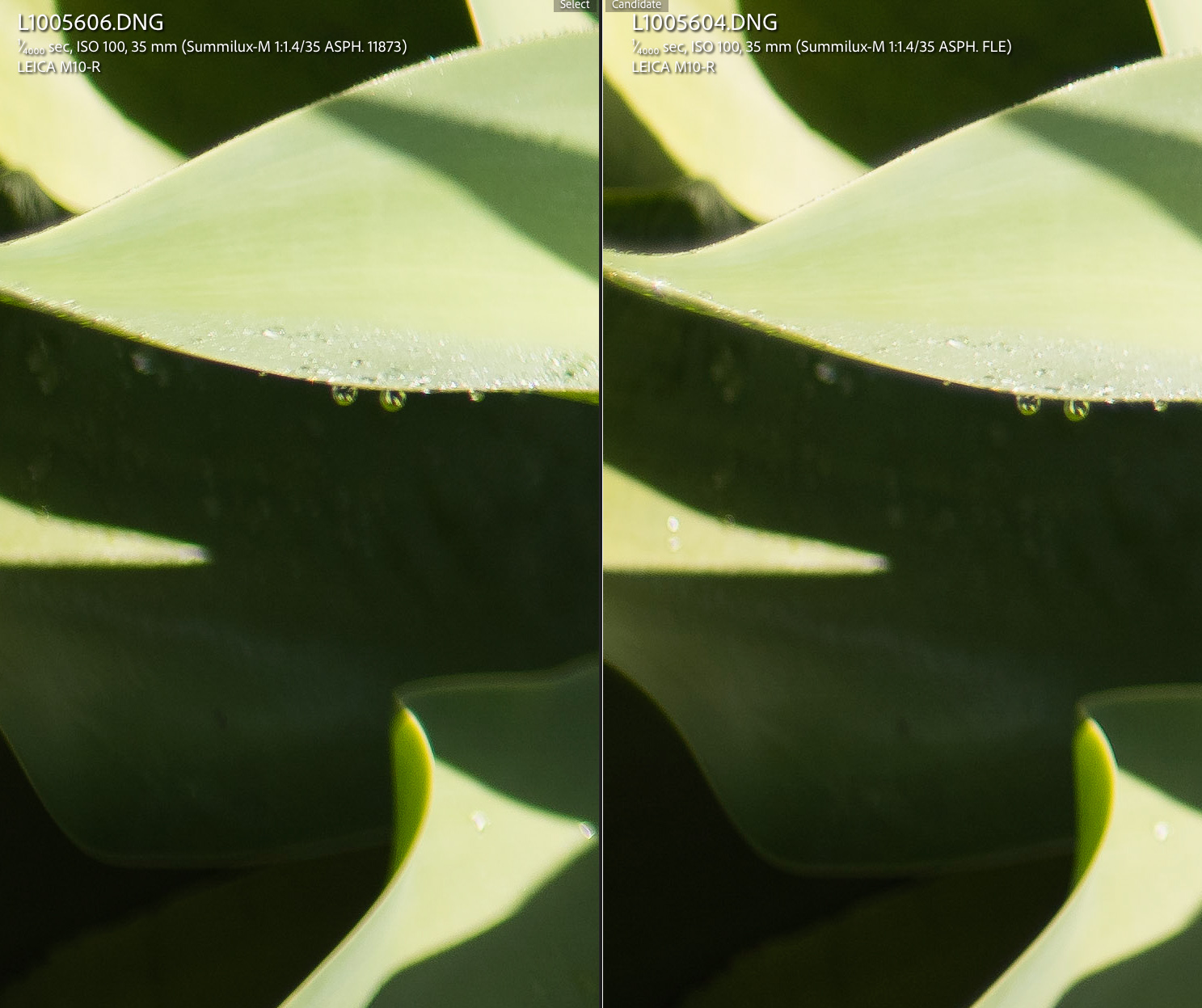
100% magnification (Focused area)
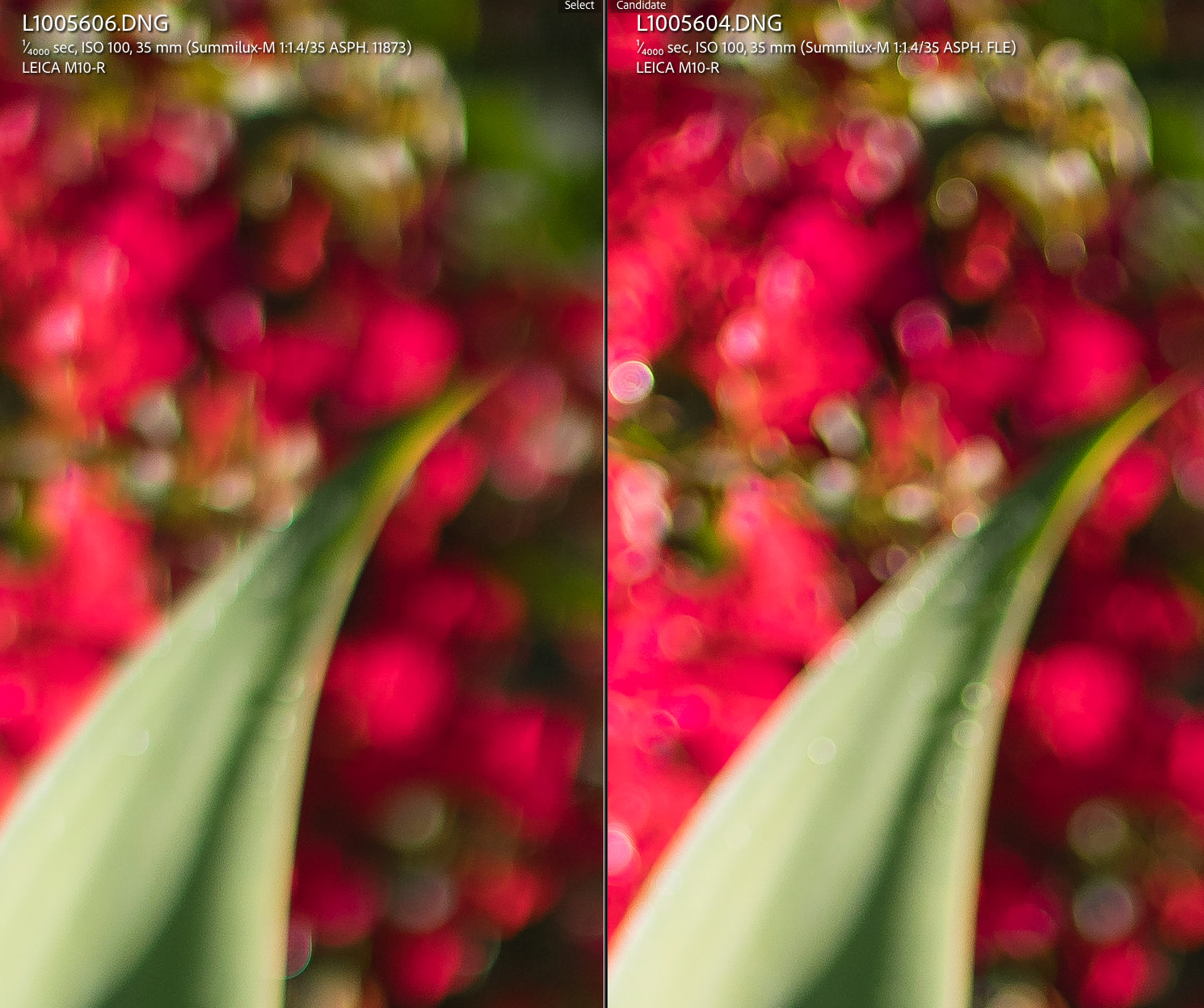
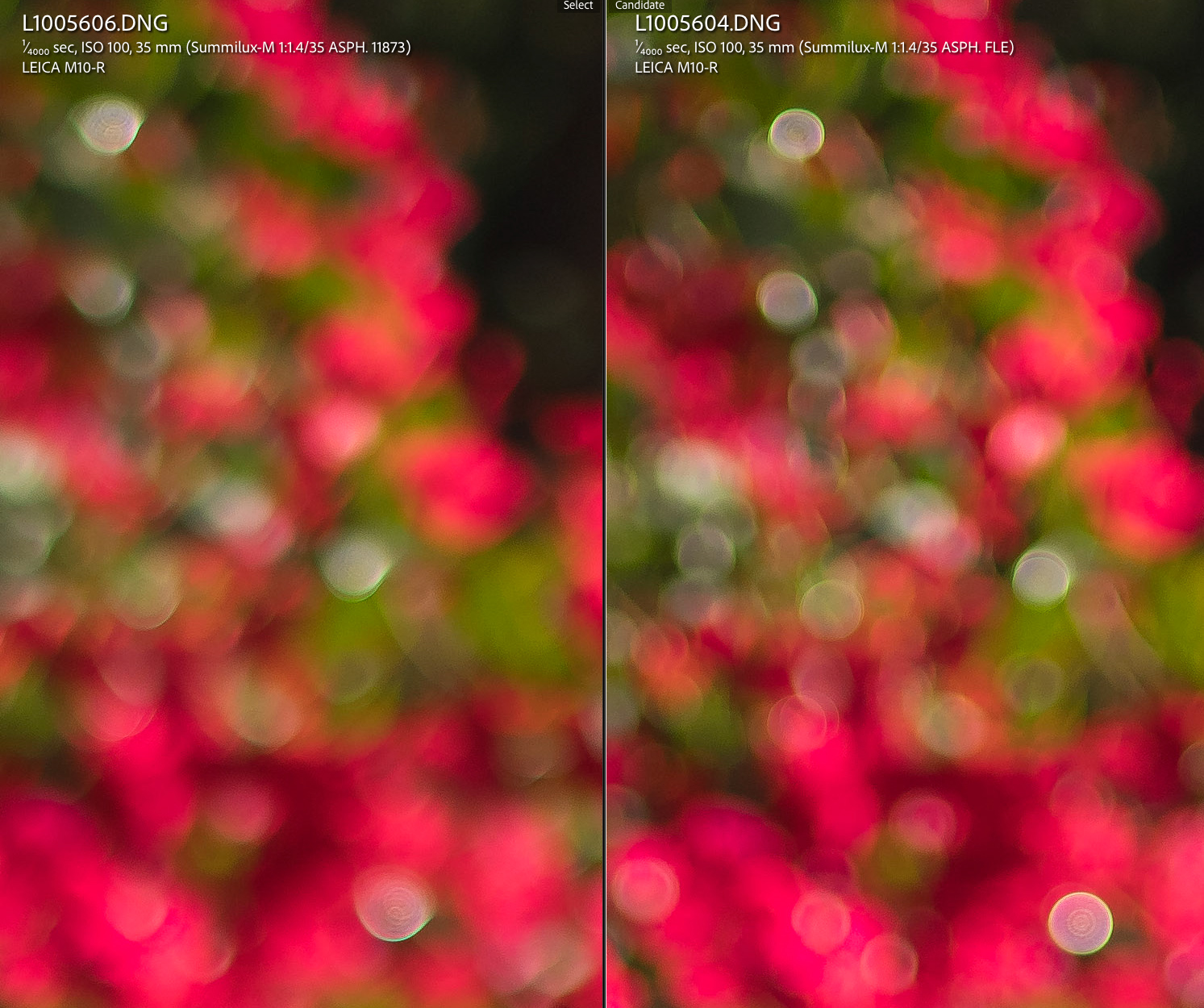
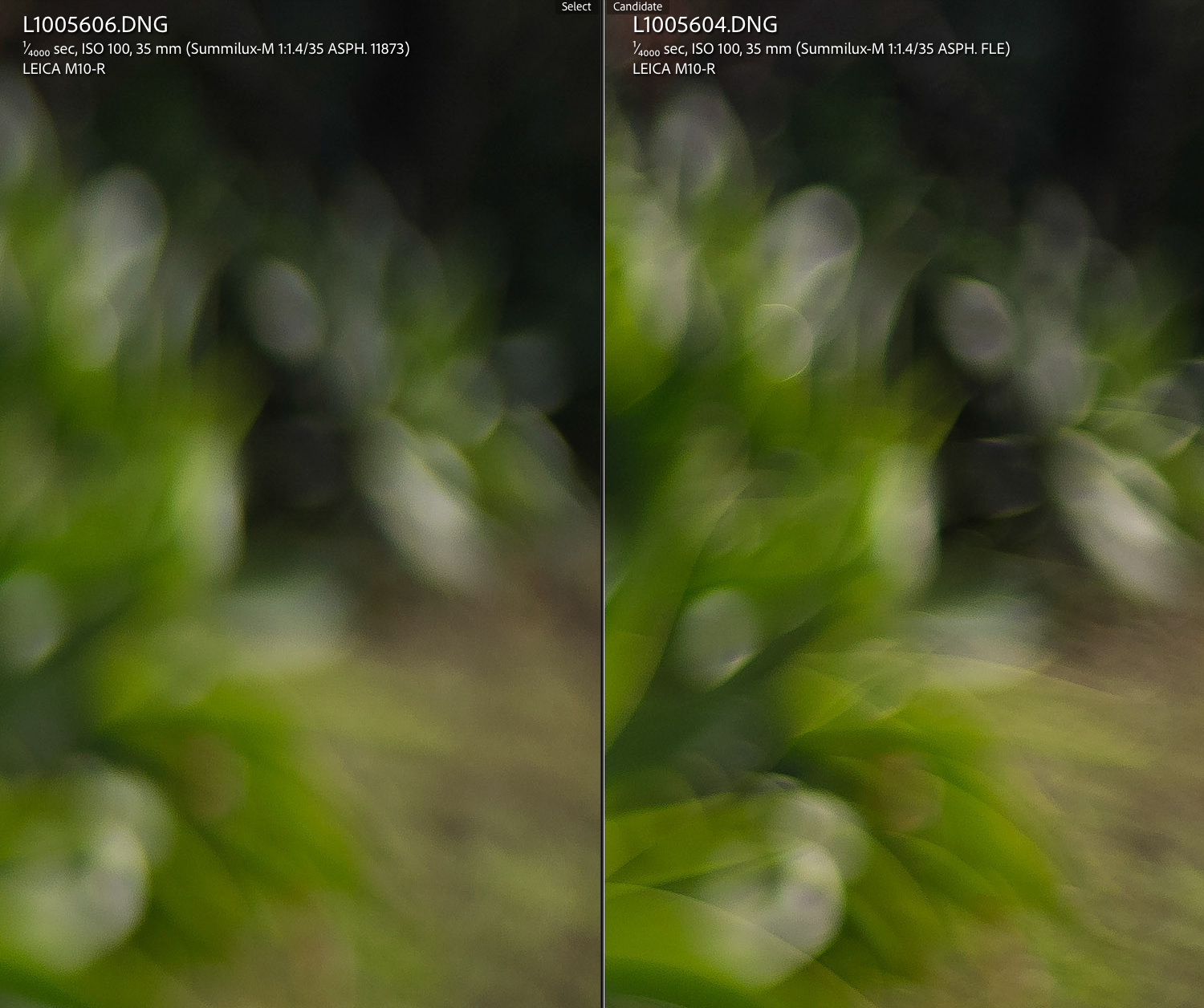
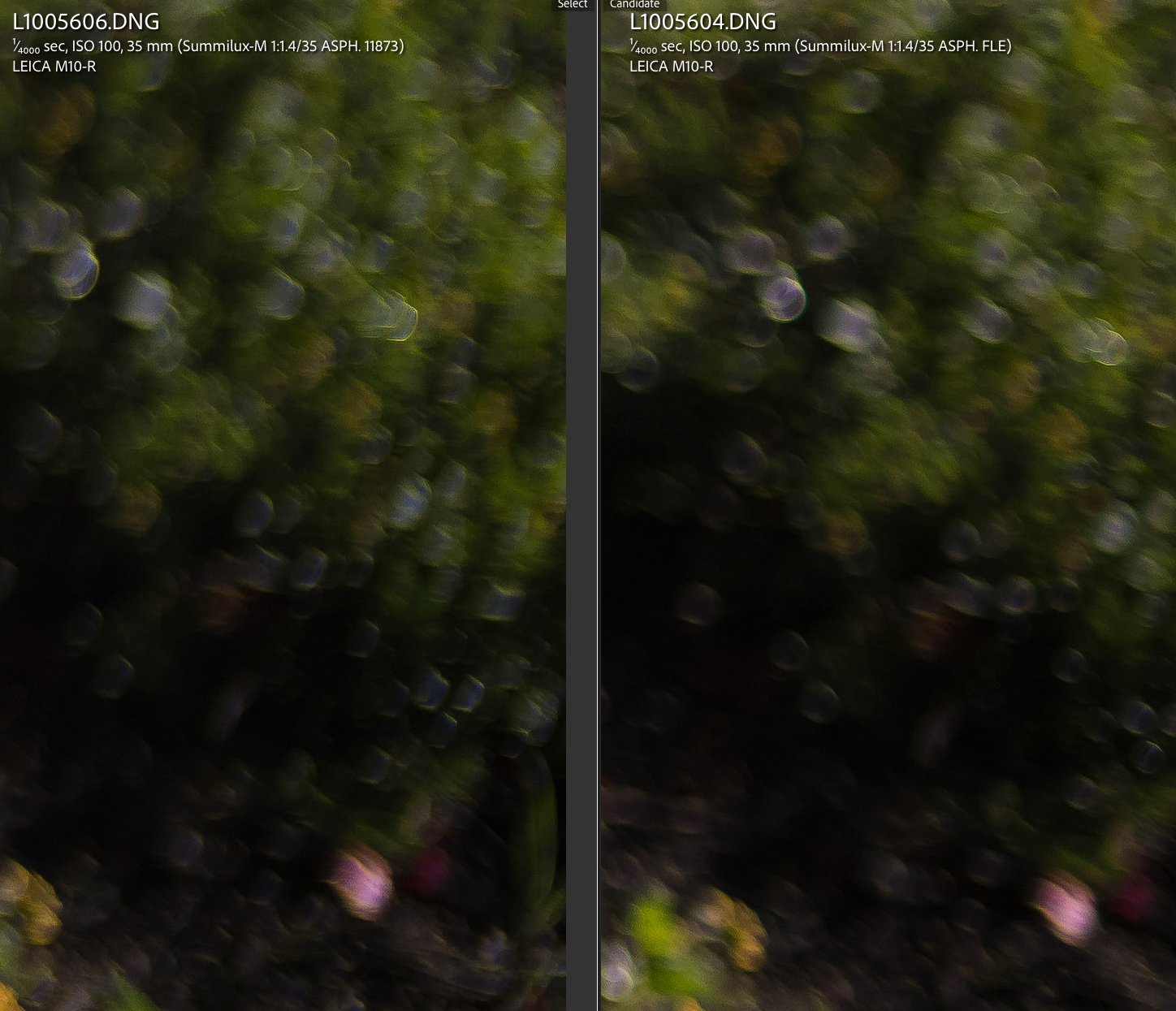
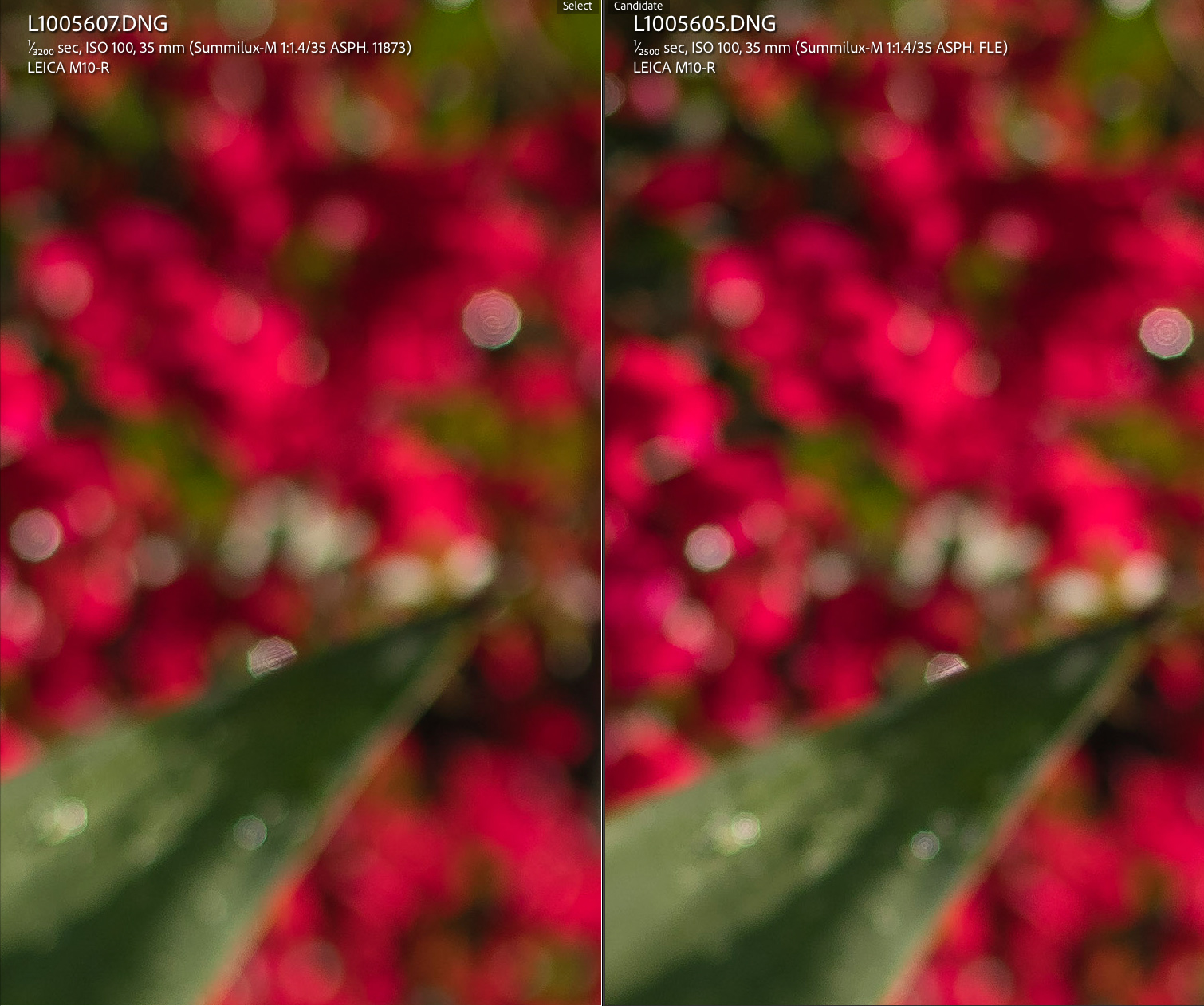
This shot shows both lenses at f/2, allowing us to analyze the shape of the bokeh balls.
|