p.1 #2 · Either, or, or neither :) Replaced new photo
grandmas wrote:
Either, or, or neither
Neither, GM. For a few reasons.
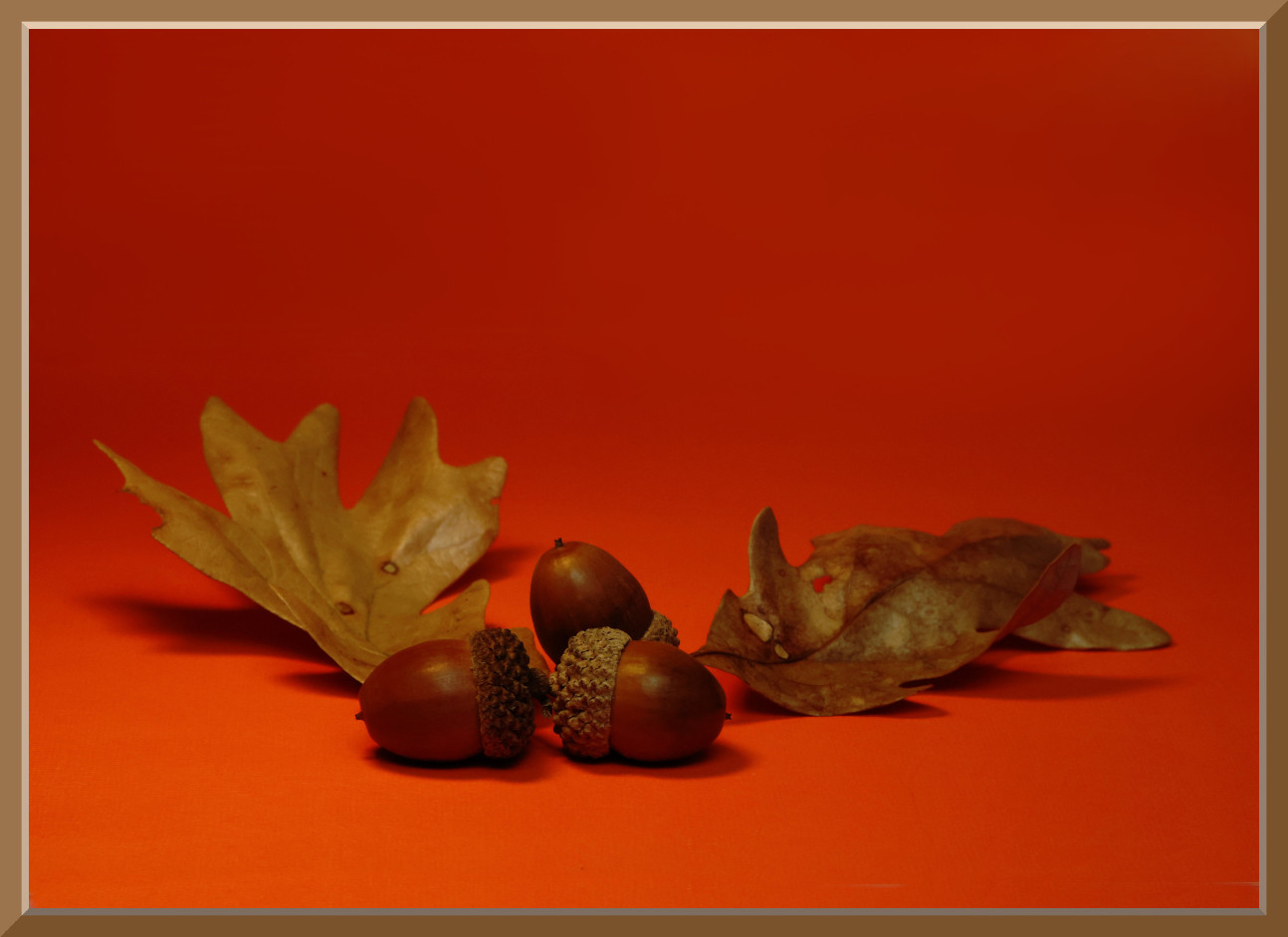
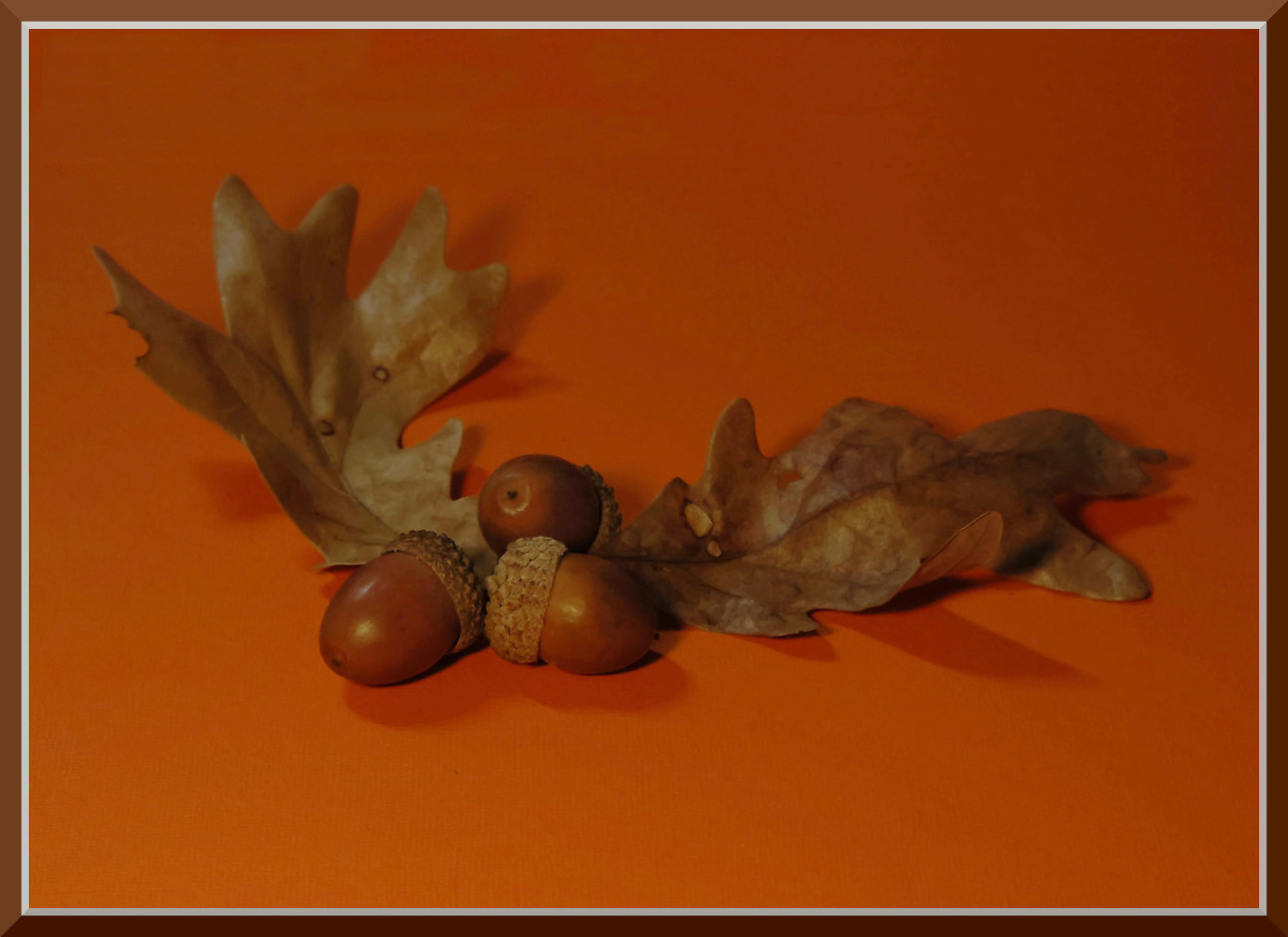
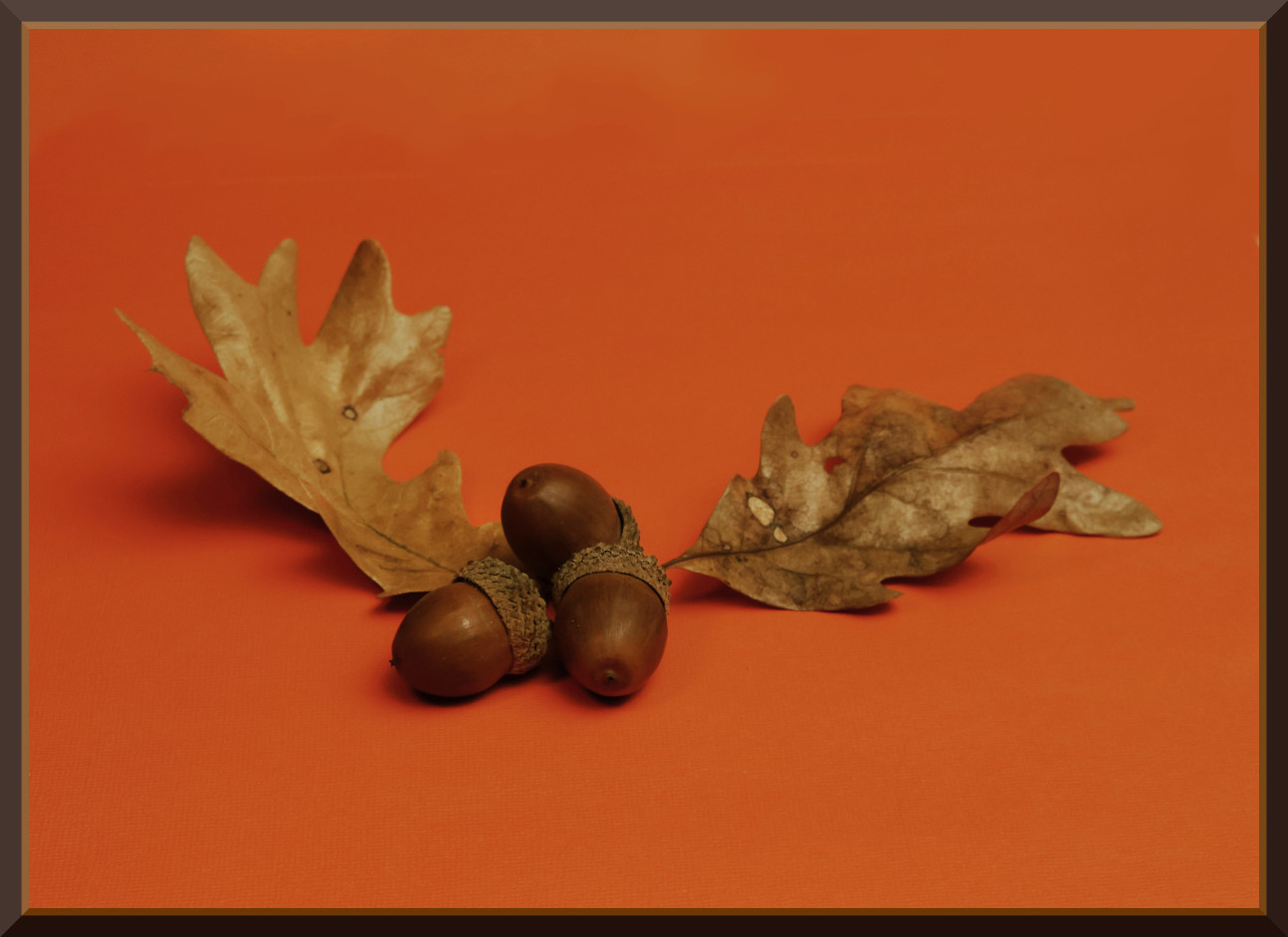
Mainly is the choice of the BG color that to my eyes ruins the mood of your images. Its color is very close, adjacent, to the color of the subject, and that makes the image flat. IOW, if you put a white subject against a white bg the subject gets lost.
If you put a white subject against a black BG the subject pops out and the image gains more power.
I also find the bg to be too saturated, (too aggressive), and brighter than the subject (first image), steeling more attention from the subject.
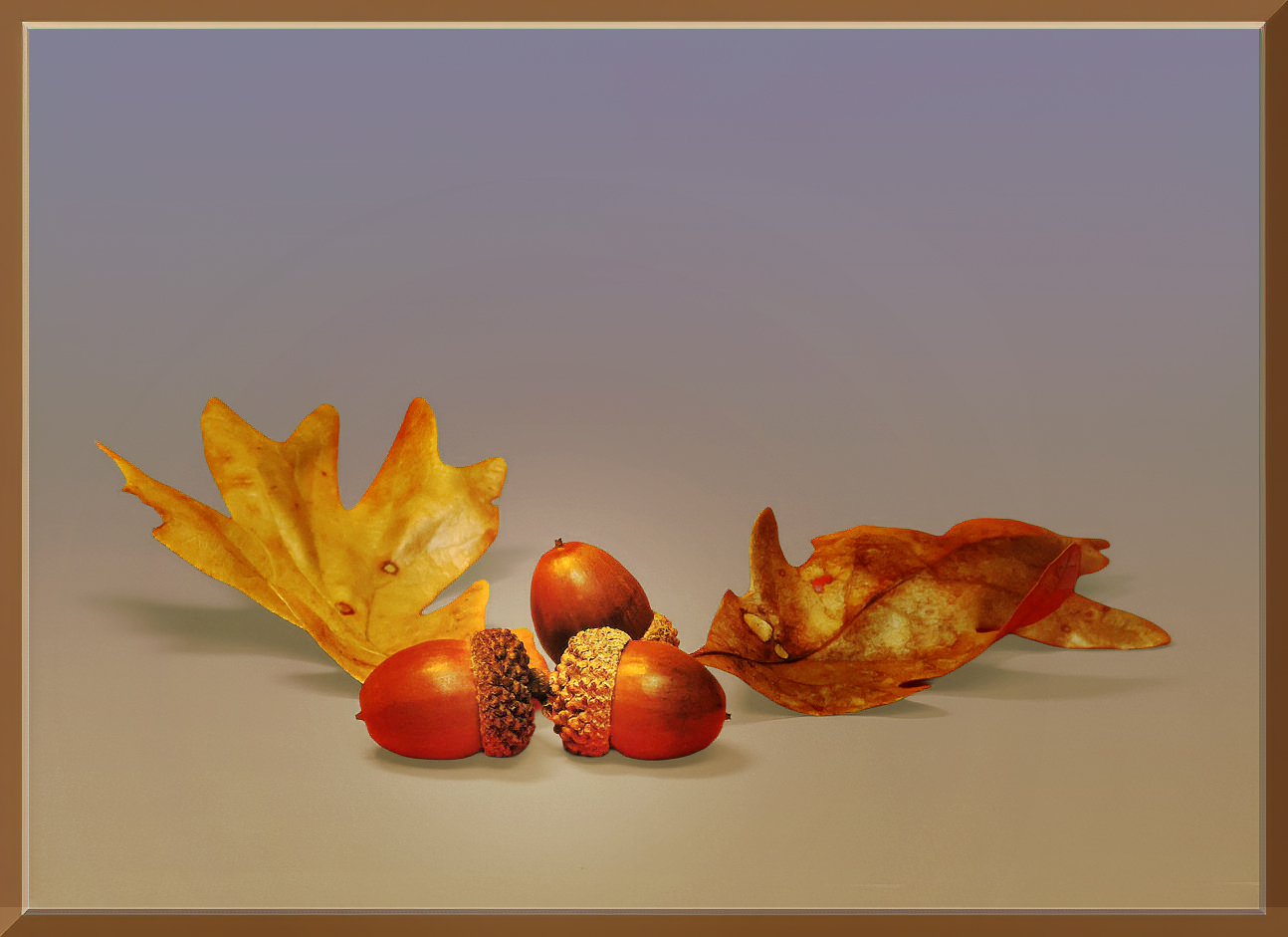
So, if you want make the subject more prominent, for the BG color you should use the orange’s complimentary colors (Blue-Green), or something located on that proximity of the color wheel. Use also less sat and your imagination and taste.
I also find the images to be on the dark side, especially the second one, which to my eyes has a better composition, but lacks in contrast. If you look at the histogram you will notice the absence of data in the highlights area, and that adds to the lack of depth of the image.
Finally, I think the images can use some sharpness, especially the subject.
Here is a quick demo to illustrate my suggestions. The final choice of BG color, and sat, is only yours, according to your personal taste and preferences, and if you are happy with your choice of the BG color, that is all it matters.
My first try was to use interesting lighting and as you can see it did not work with the background
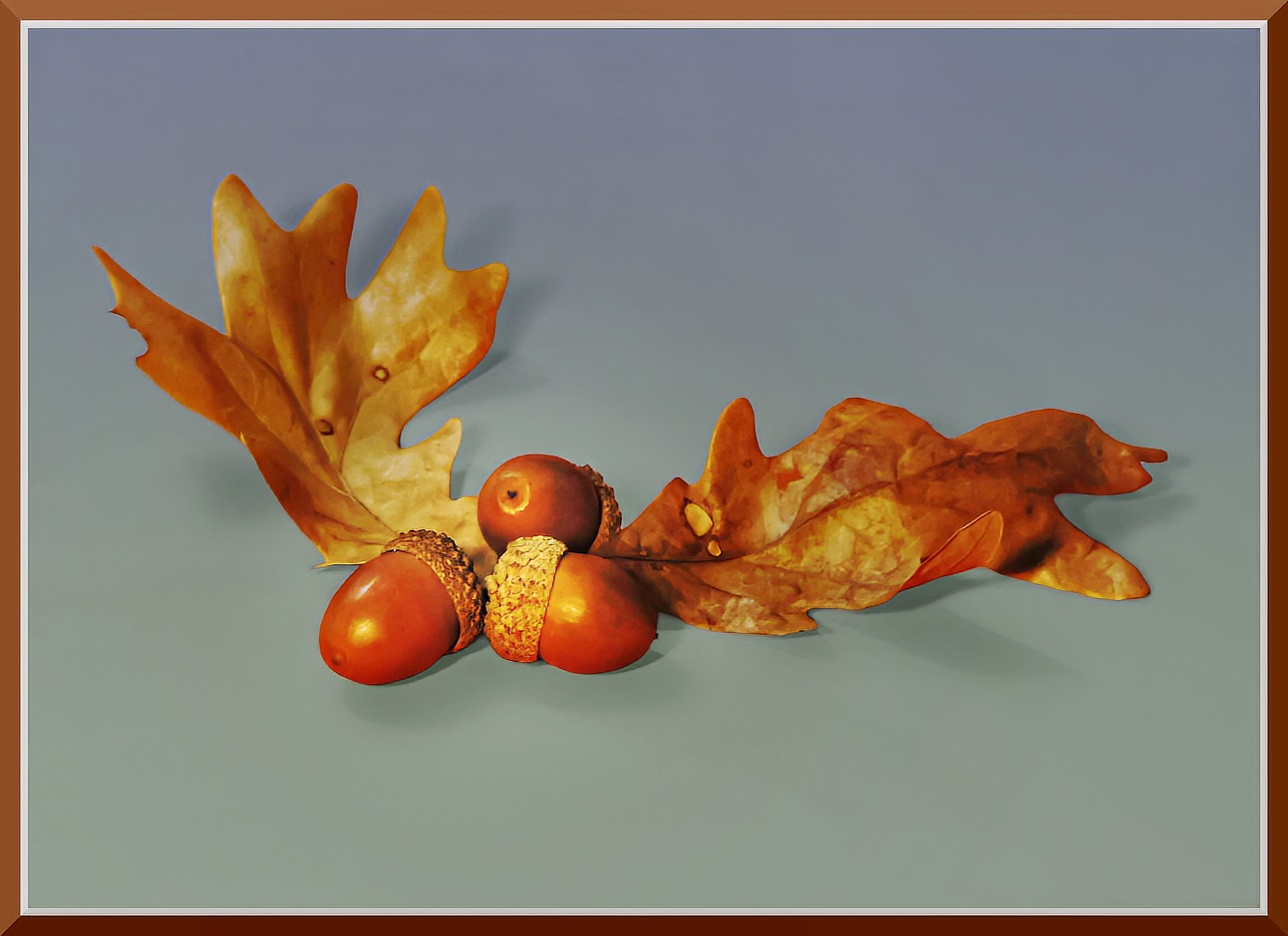
Just because it is my vision, does not mean I am not interested in other opinions. I did make one with a blue background after other comments. It had no punch, so I stuck with the orange Fall background. Acorns are not necessarily interesting by them selves, and this is a very simple shot
I didn’t intend for it to look like macro or a soft box photo, and I can assume it does not work for some.
As for dark or not, will depend on your monitor setting.
I’m not sure when off balance photos got to be the thing to do. I balance my images, because off balance is bothersome to some viewers, and I fit in that category.
Thanks for commenting.
Here is an article you might be interested in about balance in art.
p.1 #9 · Either, or, or neither :) Replaced new photo
Camperjim wrote:
Contrasting background color will emphasize the orange. Solid orange by itself loses impact.
I agree. This is what I have found out from using colored backgrounds in the past. White looks like a soft box photo. Black is kind of cliche. Yellow not good. Green needs to be dark or it turns yellowish. I did not try beige, but it might work. I did not want a pastel color. This leaves blue and is a good choice. The problem with blue is it looks so ordinary, kind of like a comfortable blue sky we see many days out of the year. When we see the red and orange skies we get excited.
It is not easy to make an ordinary subject look interesting, and I was trying with color. I might re-shoot this sometime using a blue color background and add more stuff to the photo for interest.
p.1 #11 · Either, or, or neither :) Replaced new photo
Camperjim wrote:
I do not understand why you would want to reshoot. Anyway I think Socrate has a couple of nice versions with subtle but contrasting background color.
More stuff to add interest. I have some ideas I plan to try. If I come up with something I will post it here.
p.1 #12 · Either, or, or neither :) Replaced new photo
More stuff to add interest.
Definitely so. The images, as they are presented, feel un-appealing, too scholastic, and the subject doesn't grab the viewers attention. That is the major shortcoming of your photos, no matter the color of the BG.
I would also eliminate one leaf. Those two big leaves, are taking away from the small acorns.
So you need to add some elements of interest w/o overpowering the subject. Work with the lighting and create a visually appealing image that emphasize the subject and guides the viewer's eye and holds its attention. Create some mood and make those acorns the star of the show.
Use your imagination, your creativity. Look other still life photos to get some inspiration.
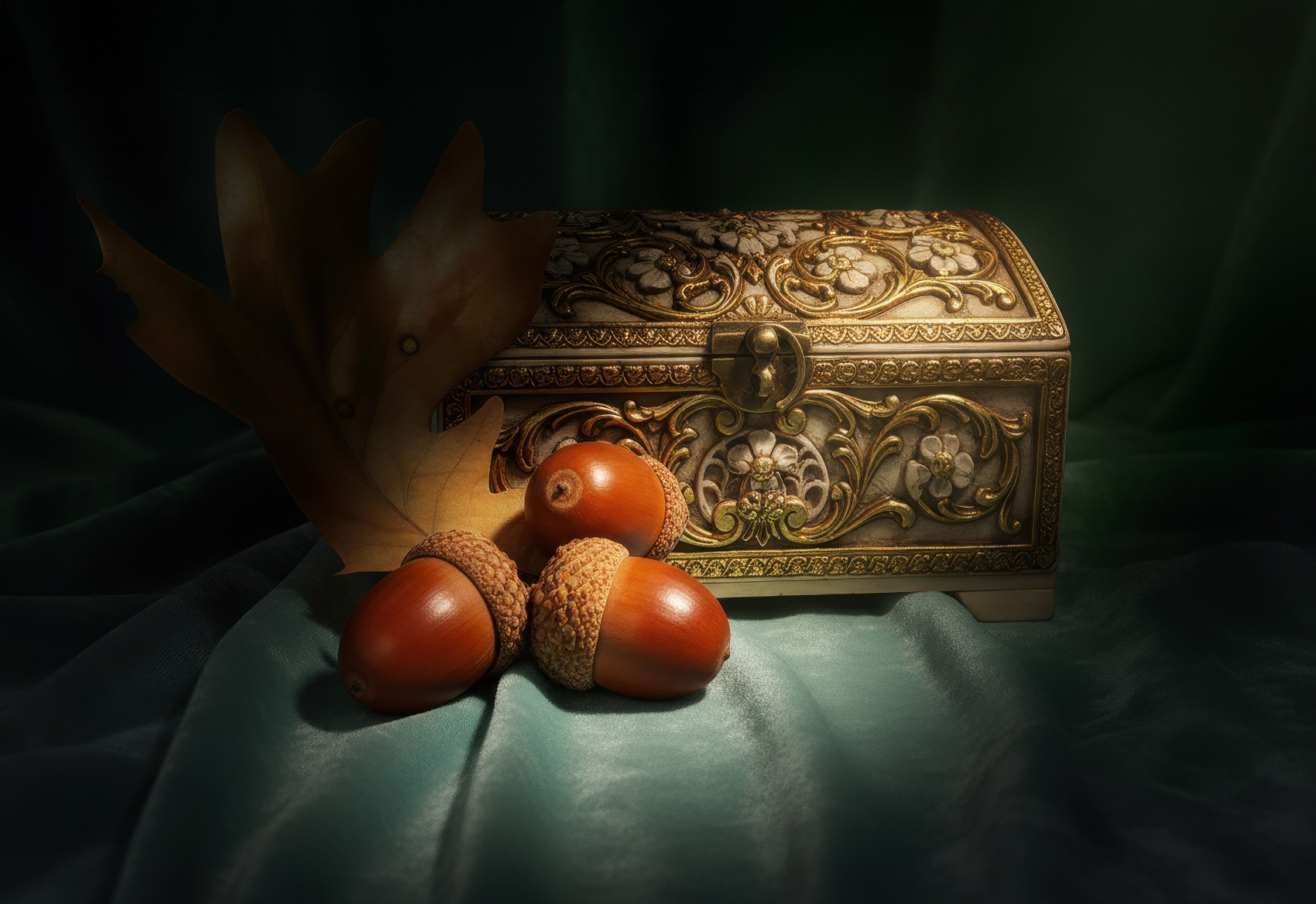
Here is an idea that I hope will give you some inspiration to create your own creation according to your intent. (I used your photo and eliminated a leaf.)
p.1 #13 · Either, or, or neither :) Replaced new photo
In the last image, the closer POV, the acorns, box, oak leaf and fabric are good, but to my eyes, the blurred blob in the upper left detracts significantly.
p.1 #14 · Either, or, or neither :) Replaced new photo
AuntiPode wrote:
In the last image, the closer POV, the acorns, box, oak leaf and fabric are good, but to my eyes, the blurred blob in the upper left detracts significantly.
Hmm..... not sure what you see, but I am planning a re-shoot as soon as I can get to it. Might take a couple of days or so, stay tuned.
p.1 #16 · Either, or, or neither :) Replaced new photo
grandmas wrote:
I agree. This is what I have found out from using colored backgrounds in the past. White looks like a soft box photo. Black is kind of cliche. Yellow not good. Green needs to be dark or it turns yellowish. I did not try beige, but it might work. I did not want a pastel color. This leaves blue and is a good choice. The problem with blue is it looks so ordinary, kind of like a comfortable blue sky we see many days out of the year. When we see the red and orange skies we get excited.
It is not easy to make an ordinary subject look interesting, and I was trying with color. I might re-shoot this sometime using a blue color background and add more stuff to the photo for interest.
I'll just comment about color choices ... (imo) the physiology of the message you want to convey should dictate / drive this decision.
By that, I mean ... if your intent is to convey a mood / vibe that lends itself toward relaxed / harmonic, then the color palette near (i.e. warm + warm) will convey less (hue) contrast. Conversely, if you want to convey a more vibrant / dynamic mood, the color palette opposing (i.e. warm + cool) will convey more (hue) contrast. That is a decision you can make "on paper" based on your awareness that less contrast is relaxing, more contrast is engaging.
While we typically think of contrast in terms of tonal value (bright vs. dark) ranges, color (hue) also can be presented in harmonious or contrasting amounts. Which can also be congruously synergistic or incongruosly offsetting, depending on how the tonal value relationships are presented along with the hue value relationships ... ranging, somewhat as possible combinations. Again, depends on what kind of mood you want to convey, as it pertains to your range of choices for consideration.
Low Hue Contrast + Low Tonal Contrast
Low Hue Contrast + High Tonal Contrast
High Hue Contrast + Low Tonal Contrast
High Hue Contrast + High Tonal Contrast
My point being that the mood desired to be conveyed should be weighed to see if your choices are complementary of conflicting in what it is you want to convey. The "right / wrong" aspect of it resides in its effect to convey your desired message / mood ... you know, that "intent" thing, and how you craft your efforts to achieve your goals for the image, relative to the viewer.
Shifting gears a bit ... is the additional goal to be "still life" oriented, or "catalog" oriented. The plain BG tends to lean into the "catalog" message conveyance. Which, (imo) is a bit incongruous to your choices for low hue contrast + low tonal contrast (i.e. relaxed mood / harmonious). If that is indeed your vibe you're trying to convey, more of a natural "still life" background could be more harmonious than a "catalog" type BG. "Catalog" is a style for more contrast ... in this instance, the contrast is the difference in structure of the subject (i.e. textures, shapes, etc.) vs. the absence of structure (plain) in the BG. So, here again, we have some choices regarding the amount of similarity / difference (i.e. contrast) of various attributes. Aligning the diff attributes are something for consideration ... either harmony or juxtaposition. Just to understand if those decisions are helping (or not) with your intended (intent) message / mood to be conveyed.
p.1 #17 · Either, or, or neither :) Replaced new photo
RustyBug wrote:
Been watching this progress for a bit.
I'll just comment about color choices ... (imo) the physiology of the message you want to convey should dictate / drive this decision.
By that, I mean ... if your intent is to convey a mood / vibe that lends itself toward relaxed / harmonic, then the color palette near (i.e. warm + warm) will convey less (hue) contrast. Conversely, if you want to convey a more vibrant / dynamic mood, the color palette opposing (i.e. warm + cool) will convey more (hue) contrast. That is a decision you can make "on paper" based on your awareness that less contrast is relaxing, more contrast is engaging.
While we typically think of contrast in terms of tonal value (bright vs. dark) ranges, color (hue) also can be presented in harmonious or contrasting amounts. Which can also be congruously synergistic or incongruosly offsetting, depending on how the tonal value relationships are presented along with the hue value relationships ... ranging, somewhat as possible combinations. Again, depends on what kind of mood you want to convey, as it pertains to your range of choices for consideration.
Low Hue Contrast + Low Tonal Contrast
Low Hue Contrast + High Tonal Contrast
High Hue Contrast + Low Tonal Contrast
High Hue Contrast + High Tonal Contrast
My point being that the mood desired to be conveyed should be weighed to see if your choices are complementary of conflicting in what it is you want to convey. The "right / wrong" aspect of it resides in its effect to convey your desired message / mood ... you know, that "intent" thing, and how you craft your efforts to achieve your goals for the image, relative to the viewer.
Shifting gears a bit ... is the additional goal to be "still life" oriented, or "catalog" oriented. The plain BG tends to lean into the "catalog" message conveyance. Which, (imo) is a bit incongruous to your choices for low hue contrast + low tonal contrast (i.e. relaxed mood / harmonious). If that is indeed your vibe you're trying to convey, more of a natural "still life" background could be more harmonious than a "catalog" type BG. "Catalog" is a style for more contrast ... in this instance, the contrast is the difference in structure of the subject (i.e. textures, shapes, etc.) vs. the absence of structure (plain) in the BG. So, here again, we have some choices regarding the amount of similarity / difference (i.e. contrast) of various attributes. Aligning the diff attributes are something for consideration ... either harmony or juxtaposition. Just to understand if those decisions are helping (or not) with your intended (intent) message / mood to be conveyed.
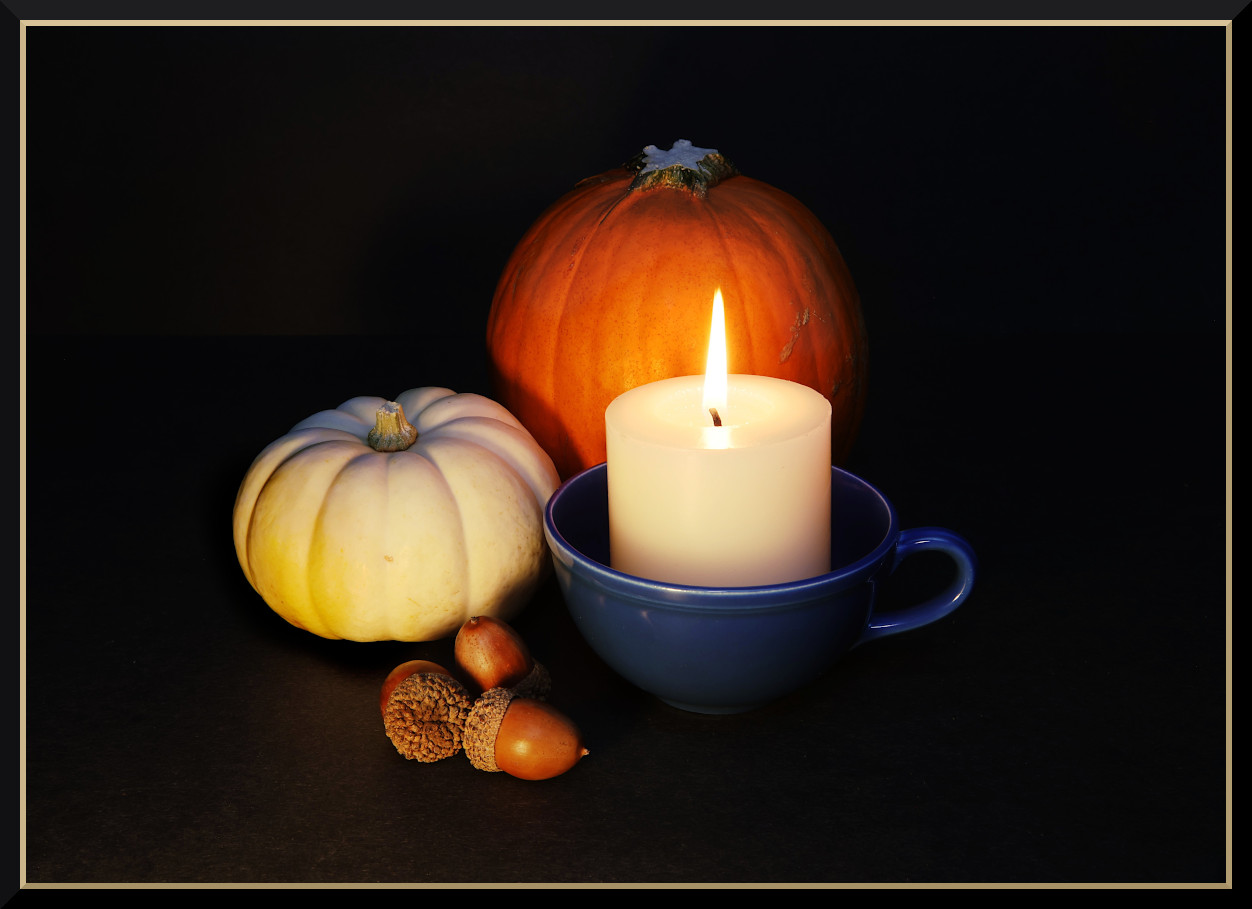
I had not completely thunk this image through and did a quicky.
We could talk about this forever and no two people will agree. I think there is a possible best way to use color for impact in a photograph. I was trying to make an image that might look like something I might paint, but with the detail of a photograph, if that makes any sense. The use of color, a fall color did not speak for itself in this image.
Anyway after the comments I was inspired to make the last version.
p.1 #18 · Either, or, or neither :) Replaced new photo
grandmas wrote:
New version
Still life photography is a type of photography that offers great opportunity to create fine art photos, but if we want to make visually compelling photos we need to pay attention to the interconnection and relationship of subject, light, and composition.
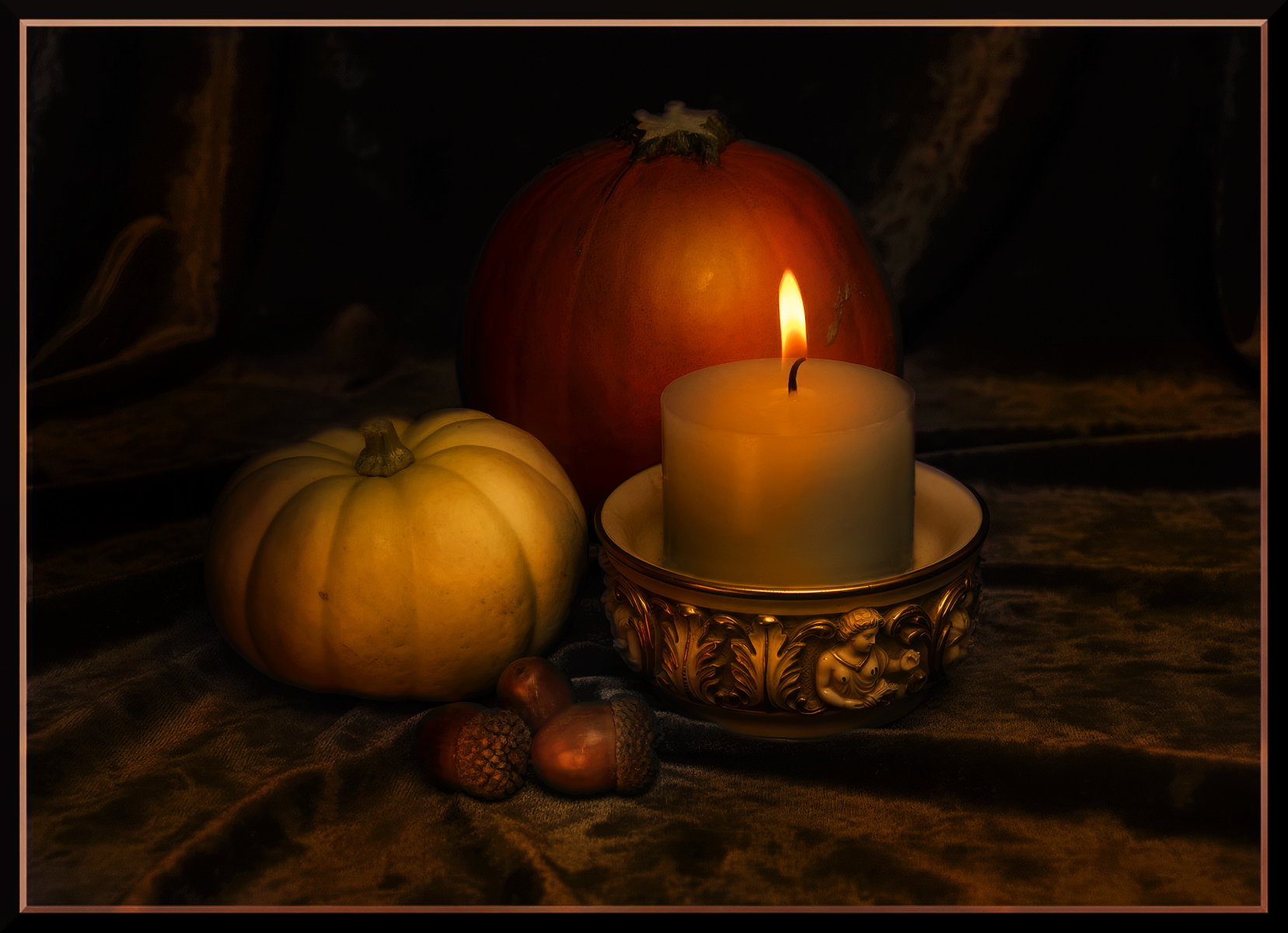
The only element I see working in your last photo is composition, even though a candle in a cup is not really my cup of tea (pun intended). What I find missing in your last image is the interaction between the subject and light.
The lighting in your image doesn’t look credible. The light is flat. As I see it on my monitor, in your image there are neither highlights nor shadows. The image is lacking depth, and, more importantly, is missing that mood that a single candlelight creates. In addition, the lack of shadows gives the impression that the subject(s) is floating, rather than being anchored to the ground.
The setting/background is another important element that should provide context, enhance the mood, and supports the subject without being distracting or intrusive. Not sure about your choice of the bg. And not completely sure about your intent in this photo.
I believe that, even though I can see some improvements from your original post, you should work more on your lighting and mood IOT create a more compelling image.