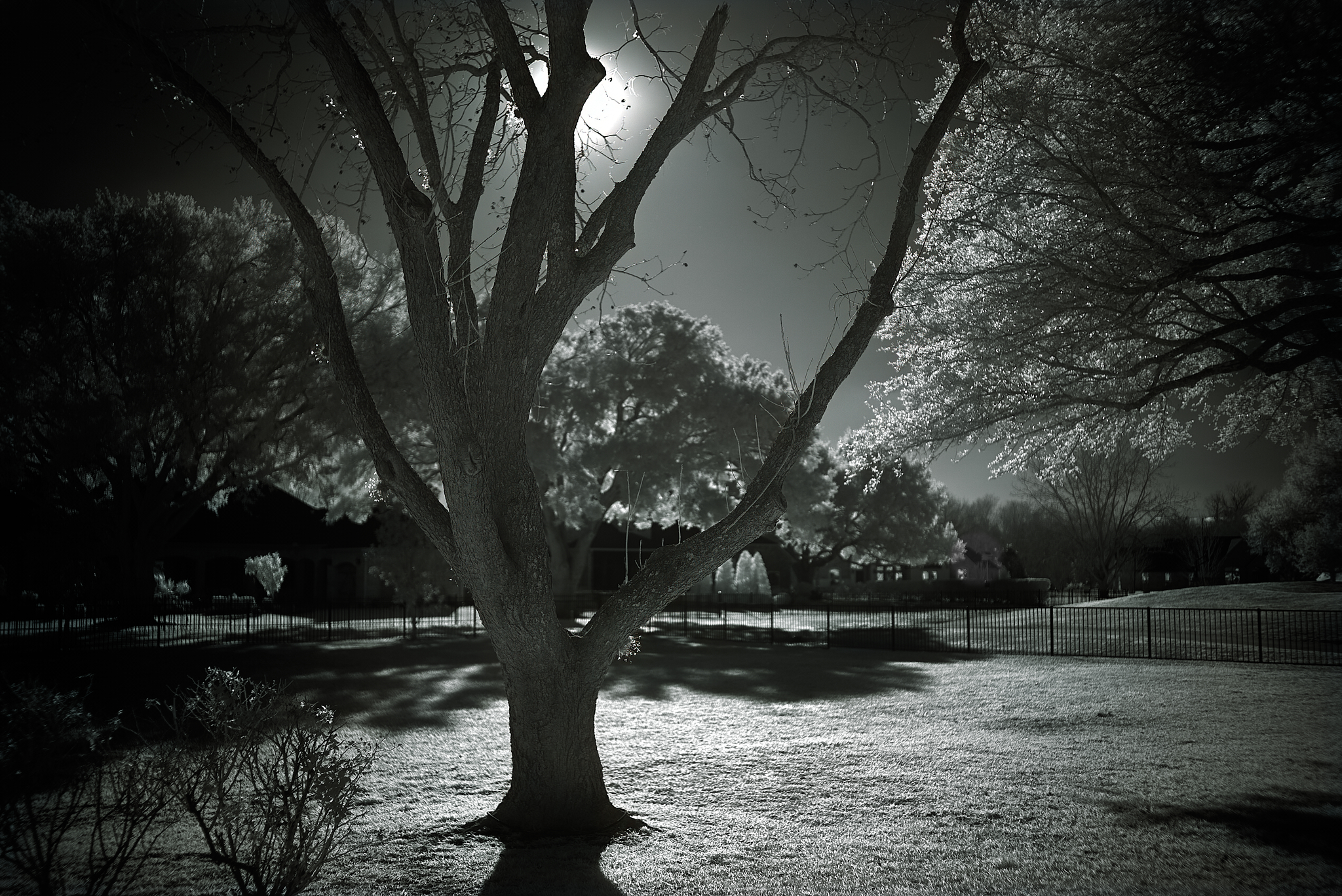
Your first samples are basically torture tests for axial CA, and it doesn't look too bad at all (Although don't get too excited as this lens has some). I think the new f/1.2 Nokton line is beautiful aesthetically. The 40/1.2 is my favorite of the bunch, mainly because I already have so many 35mm and 50mm lenses that I really love..
I've been thinking about this, and it's possible Cosina reduced the focus shift this lens had in its earlier versions. I remember my older copies clearly, and when I went back and checked my focus shift tests from years ago, the issue was pretty obvious. That may explain why so many earlier M copies I tried felt optimized for f/2 rather than f/1.2.
With my new v2 copy, though, I don't see much focus shift at all, and the two copies I have tested were dead on, perfectly rangefinder-optimized wide open.. ...Show more →
oh thanks, I'll start posting to that thread as I expect to be shooting quite a bit with this lens - f1.2 is new and I'm enamored with it.
FYI I did a bunch of tests including focus shift tests (shooting same distance, focusing at f1.2, f2 and f2.8) and here's how ChatGPT analyzed those images
From your earlier series:
• Your wide-open shots looked correctly focused
• Your stopped-down shots sharpened normally
• I did not see obvious forward/backward plane movement
If there were strong focus shift, we’d see:
• Slight back-focus at f/2 compared to f/1.2
brick33308 wrote:
oh thanks, I'll start posting to that thread as I expect to be shooting quite a bit with this lens - f1.2 is new and I'm enamored with it.
FYI I did a bunch of tests including focus shift tests (shooting same distance, focusing at f1.2, f2 and f2.8) and here's how ChatGPT analyzed those images
From your earlier series:
• Your wide-open shots looked correctly focused
• Your stopped-down shots sharpened normally
• I did not see obvious forward/backward plane movement
If there were strong focus shift, we’d see:
• Slight back-focus at f/2 compared to f/1.2
Your files didn’t show that clearly.
Yes, that's what I mean. The previous version showed focus shift, so perhaps there was a tweak somewhere.
I had the 40mm 1.2 v1 and sold it owing to the focus shift. Tempted to try the v2 though I'm really enjoying the 35mm 1.2 v4 which also works great on Nikon as well as M's.
bwcolor wrote:
I just received the VG 35mm f/1.2 IV and verified calibration with my M11M. I also have the ZM 35mm f/1.4 and VG APO Lanthar f/2.0. The ZM really provides the best of options in that as you stop it down, the differences between it and the APO are minimal. It will out perform the VG f/1.2 from wide open f/1.4., but you must be willing to mount it and carry it around. The ZM isn’t a large lens, except when comparing it to the other two.
Thanks for this useful report! It affirms that I chose well, by opting to buy the Distagon 35 ZM, and that it remains relevant. The size is acceptable, and the hood is very secure, such that the lens and hood are the perfect "add-on accessory grip," for my healthier left hand to hold and "drive" the camera.
Thom wrote:
Hey Fred, do you know of a six-bit coding appropriate for the Nokton 40/1.2 II?
Hi Thom
The easiest option would be to use the new Leica 35mm f/1.2 Noctilux, BUT the 6-bit code alone does not fully determine lens recognition. Your CV 40mm f/1.2 Nokton won't be recognized as the Leica Noctilux-M 35mm f/1.2 even if you apply the exact same 6-bit code because the camera also checks which framelines the lens calls. The combination of code + framelines in the camera's internal database allows for far more than 64 unique IDs. So for your 40/1.2, you need to pick a code from a Leica "50mm" lens, ideally a fast 50mm, since that will also match the vignetting correction better.
You can always modify your 40/1.2 to call the 35mm framelines instead, which requires some grinding of the mount selector. Once that's done, you could then use the 35/1.2 Noctilux 6-bit code. As far as I know there are no Leica 40mm lens with unique 6-bit code. Leica produced the Leica 40mm f/2 Summicron‑C but it was made prior to 6-bit coding.
You can always modify your 40/1.2 to call the 35mm framelines instead, which requires some grinding of the mount selector. Once that's done, you could then use the 35/1.2 Noctilux 6-bit code. As far as I know there are no Leica 40mm lens with unique 6-bit code. Leica produced the Leica 40mm f/2 Summicron‑C but it was made prior to 6-bit coding.
Thank, Fred. I'll give those a shot but I've also been eyeing the mod you mentioned ... seems like a good long term fix.
Thom wrote:
Thank, Fred. I'll give those a shot but I've also been eyeing the mod you mentioned ... seems like a good long term fix.
I thought about modifying my 40/1.2 to show the 35mm framelines but got used to the 50mm lines, estimating how much wider the lens' output expands from the lines. The 40/1.2 Nokton is actually closer to 50mm than 35mm, so using the 35mm lines could mean the edges of your actual image might be cut off if you rely on the frames. With the 50mm lines, the image extends a bit beyond the framelines, giving a safer margin for composition, and if you don't like/need the extra information, you can always crop in post. This is probably why Cosina chose the 50mm lines in the first place.
Fred Miranda wrote:
I thought about modifying my 40/1.2 to show the 35mm framelines but got used to the 50mm lines, estimating how much wider the lens' output expands from the lines. The 40/1.2 Nokton is actually closer to 50mm than 35mm, so using the 35mm lines could mean the edges of your actual image might be cut off if you rely on the frames. With the 50mm lines, the image extends a bit beyond the framelines, giving a safer margin for composition, and if you don't like/need the extra information, you can always crop in post. This is probably why Cosina chose the 50mm lines in the first place....Show more →
Good point. I'll play around with the lenses you mentioned and go from there. Thanks again!
jourdan.merritt wrote:
What's everyones' preferred hood for the 40 1.2?
I should use a hood but can't be bothered - flare be damned. I just have it covered with the highest quality (lowest internal reflection) B+W clear filter.
Fred Miranda wrote:
Hi Thom
The easiest option would be to use the new Leica 35mm f/1.2 Noctilux, BUT the 6-bit code alone does not fully determine lens recognition. Your CV 40mm f/1.2 Nokton won't be recognized as the Leica Noctilux-M 35mm f/1.2 even if you apply the exact same 6-bit code because the camera also checks which framelines the lens calls. The combination of code + framelines in the camera's internal database allows for far more than 64 unique IDs. So for your 40/1.2, you need to pick a code from a Leica "50mm" lens, ideally a fast 50mm, since that will also match the vignetting correction better.
You can always modify your 40/1.2 to call the 35mm framelines instead, which requires some grinding of the mount selector. Once that's done, you could then use the 35/1.2 Noctilux 6-bit code. As far as I know there are no Leica 40mm lens with unique 6-bit code. Leica produced the Leica 40mm f/2 Summicron‑C but it was made prior to 6-bit coding....Show more →
Fred, can you direct me to a thread or website that tells how to modify the lenses to apply the coding? Thanks!
'Would be great if there was a comparison between the new Noctilux 35 1.2 and this VC 35 1.2. Has anyone seen any online yet? '
Not that I can find, thus far. Most M people are trying to work through if it replaces their 35/2 CF FLE or 35/2 APO. My take is: if you like what you see at f1.2/f1.4, and that requires a keen eye for bokeh and transitions, it displaces the FLE with ease. But the 35/2 APO is a detail monster that (at no practical stop) should be used near human skin. It's why you see so few portraits (and most of them are B&W):
thrice wrote:
I'm hoping that with the 90/2 APO-Ultron having the same styling as these, we might see silver variants.
What about the upcoming close focus CV 90mm f/4 APO-Lanthar? I'm pretty sure it’ll be the most corrected 90mm lens from Cosina, even though it's quite a bit slower than the current Ultron.


 Now you can join us and take part in the oldest and still active review thread: