thrice wrote:
The dof markings are arbitrary at best with the resolution of modern sensors being so high.
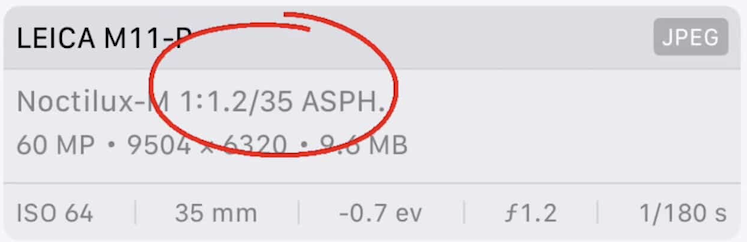
Why would Leica suddenly change how they calculate distance markings starting with this lens? I agree, based on that image, the markings suggest it's closer to a 40mm lens than a 35mm. With that thread showing the firmware update listing a Noctilux 35 f/1.2, it's clear the lens will be a 35mm. Maybe the image just showed an early prototype or was simply incorrect.
Fred Miranda wrote:
Why would Leica suddenly change how they calculate distance markings starting with this lens? I agree, based on that image, the markings suggest it's closer to a 40mm lens than a 35mm. With that thread showing the firmware update listing a Noctilux 35 f/1.2, it's clear the lens will be a 35mm. Maybe the image just showed an early prototype or was simply incorrect.
Peter (Karbe) and I discussed this more than a decade ago (how to more accurately represent the dof on modern digital bodies). No idea why they would change it now, but perhaps if they never intend to go below a certain resolution they will shift to a scale that strikes a balance between what would traditionally be expected on film and what is more likely to appear on their digital cameras going forward. On a 35mm lens the DOF scale above f/4 (ie. shallower DOF) is pointless on digital in my opinion but YMMV.
thrice wrote:
Peter (Karbe) and I discussed this more than a decade ago (how to more accurately represent the dof on modern digital bodies). No idea why they would change it now, but perhaps if they never intend to go below a certain resolution they will shift to a scale that strikes a balance between what would traditionally be expected on film and what is more likely to appear on their digital cameras going forward. On a 35mm lens the DOF scale above f/4 (ie. shallower DOF) is pointless on digital in my opinion but YMMV.
Having a mix of lenses with differing scales would throw up too many inconsistencies: better to retain all markings as is; leaving it to each user to extrapolate based on their sensor resolution 18/24/36/60 Mp etc., and expected print/viewing size. The argument stood even during the film era - Tech-Pan or TMZ-3200.
Talk of both black and silver MPs going out of production is now circulating - timing / opportunity to add 40mm frame-lines?
thrice wrote:
Peter (Karbe) and I discussed this more than a decade ago (how to more accurately represent the dof on modern digital bodies). No idea why they would change it now, but perhaps if they never intend to go below a certain resolution they will shift to a scale that strikes a balance between what would traditionally be expected on film and what is more likely to appear on their digital cameras going forward. On a 35mm lens the DOF scale above f/4 (ie. shallower DOF) is pointless on digital in my opinion but YMMV.
That's interesting and thanks for sharing but I still think Leica would want to stay consistent with how they have been marking the scale for their digital cameras. That said anything is possible. The leaked lens photo clearly shows something with a longer focal length than 35mm, maybe somewhere between 35 and 50mm, but it is also possible the image is fake.
freddy_hayek wrote:
Scratching my head how the present Summilux can be bested by 1/2 a stop and a (likely) $5000 up-charge.
The Leica 35 and 50mm ASPH Summilux lenses are at their core 20+ year old designs with a single aspherical surface element; with modest updates including close focusing, and floating elements for the 35mm. The older, limited production, 35 Summilux ( double ) Aspherical is held in the highest of regard.
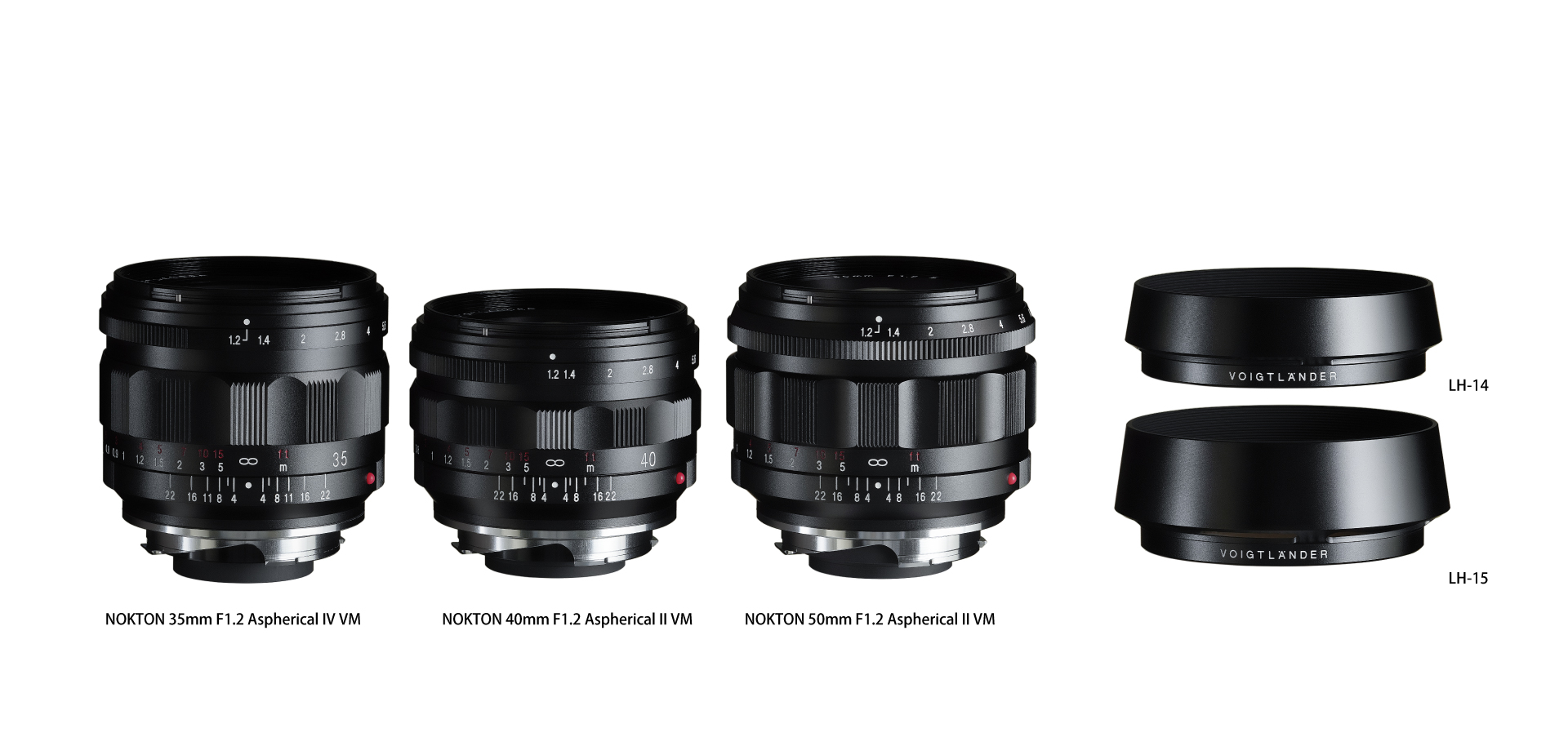
The Voigtländer Nokton 35/40/50 1.2 lenses use four aspherical surfaces.
Are the Leica Summiluxes still the best ? CA and flare are known weaknesses.
Is Leica planning a set of new Noctiluxes, (35/40/50) to compete one for one with the Noktons ? More aspherical surfaces and recent manufacturing techniques developed for the 35 APO Summicron may bring improvements and size reduction.
I wonder if Leica managed to design a 35mm f/1.2 Noctilux that’s even smaller than the Voigtlander 35mm f/1.2 Nokton, while offering comparable or possibly even better performance.
Jun 09, 2025 at 05:37 PM
Steve Spencer Online • • • • • • • Upload & Sell: On
FrozenInTime wrote:
The Leica 35 and 50mm ASPH Summilux lenses are at their core 20+ year old designs with a single aspherical surface element; with modest updates including close focusing, and floating elements for the 35mm. The older, limited production, 35 Summilux ( double ) Aspherical is held in the highest of regard.
The Voigtländer Nokton 35/40/50 1.2 lenses use four aspherical surfaces.
Are the Leica Summiluxes still the best ? CA and flare are known weaknesses.
Is Leica planning a set of new Noctiluxes, (35/40/50) to compete one for one with the Noktons ? More aspherical surfaces and recent manufacturing techniques developed for the 35 APO Summicron may bring improvements and size reduction.
I would be shocked if Leica came out with a 40 Noctilux. None of their recent cameras have 40 frame lines. They haven't made a 40mm lens for 45 years and I don't think they will start to do so anytime soon. They haven't even made a 40mm lens for the L mount.
It sure looks like this 35mm Noctilux is imminent and the 50 Noctilux came out 17 years ago, so is certainly due for a redesign. So a new 35 and 50 Noctilux seems quite likely to happen soon. It will be interesting how Leica approaches these lenses. There is definitely room to improve performance and size compared to the 50 Noctilux, and although I very much like the Voigtlander lenses they could be a lot better corrected. In my view there is room for Leica either to keep a size close to the Voigtlanders with modest improvement in corrections or a 400g 35mm and a 500g 50mm with substantially better corrections.
For the modest improvement I would expect at least 4 aspherical surfaces, at least 2 low dispersion elements and a FLE. The Voigtlander lenses only have the aspherical and not the low dispersion elements (well 50 f/1.2 has one element, but the 35mm f/1.2 and the 50 f/1.0 have none), and only the 50 f/1.0 has an FLE. So with these specs, I think Leica could keep the lenses smaller or the same size and the Voigtlanders and produce lenses with better performance.
If they go with more substantial improvements, then I think we will see 4 or maybe 5 aspherical surfaces, but more low dispersion elements, perhaps as many as 5, and there definitely will be an FLE. Such lenses ought to be able to deliver performance that clearly outshines the Voigtlanders, but they may be a bit bigger. I doubt we will see the correction of the SL APO summicrons, the 35 has 6 aspherical surfaces and 9 low dispersion elements, but 5 or 6 low dispersion elements to go with the 4 or 5 aspherical surfaces seems possible. I think they could still keep it pretty small too.
Either way these will demand a hefty price. I would guess the more modest corrections would still cost $10,000 to $11,000, whereas the more ambitious corrections would be more like $14,000 or $15,000.
On the 50/0.95 Noctilux : "contradiction to our design targets to have compact lenses"
"So a 35 for example Noctilux is not so easy because you have a wider angle and not easy to control and we need new technologies or additional technologies to keep it compact. Let's see what the future will bring"
This sounds similar to the engineering effort needed in the 35mm APO-Summicron, which is smaller than the Voigtländer APO-Lanthar, and yes comes at a very significant cost.
Regarding the size argument, Cosina's VM 50/1.0 optically outperforms the 50/0.95 Noctilux and is substantially smaller.
Whether Leica duplicates or improves on that at 50mm... IMO at the moment the Noctilux is more of a wide open shallow depth of field 'character' lens and no longer a cutting edge technical tour de force.
The challenge with a 35 Noctilux (whatever faster than f/1.4 maximum aperture it receives) will certainly be size and its impact on the rangefinder experience (frame line obstruction). To keep it compact and high performance pretty much necessitates throwing everything in the modern optical playbook at it. I suspect Leica won't want to go the route of the monstrous Zenit 35/1.0 that was paired with Zenit's M 240 rebadge project.
As for the Summiluxes... I agree that the recent 'refreshes' were somewhat of a disappointment for not actually optically revising the 35 and 50 designs to bring performance up to current standards/expectations. Yes, these lenses are optically very good, but there is certainly room for improvement.
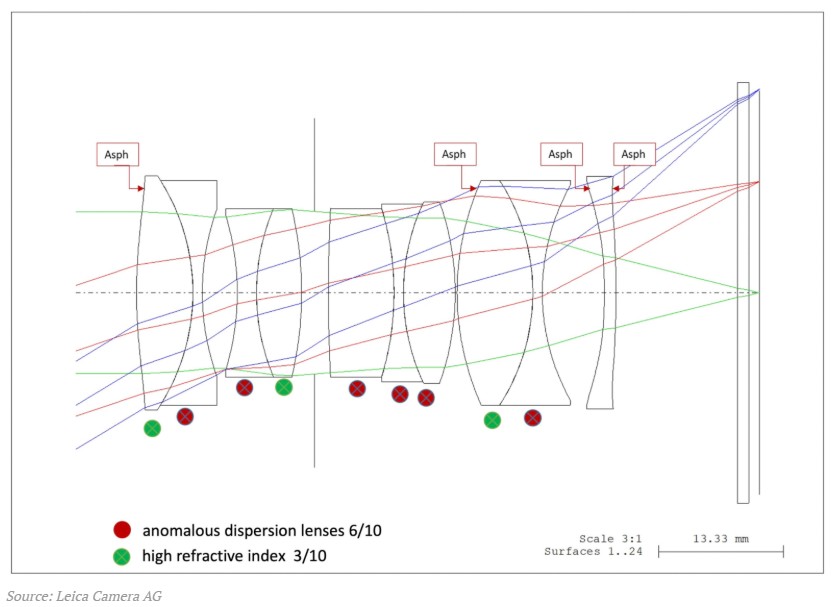
They have cost concerns with these one percenter lenses in M-mount. People want closer MFD, and they expect it all for the money. As for throwing the kitchen sink at it, see below the composition of the 35/2 APO-Summicron. Times are very different, the Summilux took ten years to redesign in the early decade of this century.
philip_pj wrote:
They have cost concerns with these one percenter lenses in M-mount. People want closer MFD, and they expect it all for the money. As for throwing the kitchen sink at it, see below the composition of the 35/2 APO-Summicron. Times are very different, the Summilux took ten years to redesign in the early decade of this century.
Regardless of the field you are interested in, recent and distant history is very important. You want to see how things unfolded, how they came about, how it came to be this way and not some other way it could have gone.
One of Leica's problems is they want to raise the bar significantly with each new release. That revolutionary spirit is what you pay for, seen another way.
It seems likely that the rumored Leica 35mm f/1.2 Noct will be a compact design. Right now, the Voigtlander 35mm f/1.2 Nokton is the only compact ultra-fast option at this speed for M-mount, aside from the MS-Optics 36mm f/1.3 Apollon. It'll be interesting to see if Leica can push the performance further and reduce axial CA at wide open apertures.
I’m curious about the compromises for a small Noctilux:
- 1.0m minimum focusing distance
- Focus shift, making this a two aperture lens (usable at only either f/1.2 or f/8 and beyond) when used on classic rangefinders; makes sense that this would be released with the M11-V because with the EVF what you see is what you get - focus shift won’t be an issue
- Expect vignetting
Looks like the long anticipated lens is about to be offered at F 1.2 as has been posted here before
It looks moderately small if the lens hood is subtracted, weight unknown, from appearances it looks about the same size as CS 1.2 50 mm on the camera
Price no indication- will it be under or over 15K$ might be the question to anticipate
Will it have enough bang over the 1.4 lens to justify
Hope Fred gets a chance to review it, I guess at 1.2 I am bit underwhelmed when if I understand what Overgaard said in his youtube Noct review the natural progression of 1.25 75, 0.95 50, would 0.7 35mm ....
EMH2025 wrote:
Look like the long anticipated lens is about to be offered at F 1.2 as has been posted here before
It looks moderately small if the lens hood is subtracted, weight unknown, from appearances it looks about the same size as CS 1.2 50 mm on the camera
Price no indication- will it be under or over 15K$ might be the question to anticipate
Will it have enough bang over the 1.4 lens to justify
Hope Fred gets a chance to review it, I guess at 1.2 I am bit underwhelmed when if I understand what Overgaard said in his youtube Noct review the natural progression of 1.25 75, 0.95 50, would 0.7 35mm ....
Past f/1.2 on full frame, any extra gains fall off quickly unless the lens is deliberately tuned for character. At that point, you are paying for bragging rights and a very specific rendering, not some dramatic night and day improvement.
Overgaard is only right when it comes to entrance pupil diameter. A hypothetical 35mm f/0.7, as he mentioned, would indeed require about a 50mm entrance pupil. If my calculations are right, a 75mm f/1.25 would have 60mm and a 50/0.95 53mm. Where he goes off the rails is ignoring the massive increase in optical complexity when you move from 50mm or 75mm down to 35mm. The steeper ray angles, the explosion of aberrations to control, and the mechanical constraints make a hyper fast 35mm a nightmare to design.
Yes, a 35mm f/0.7 lens can be designed, but it would end up in a museum, not in anyone's camera bag. That is exactly why Leica went the f/1.2 route, and why Cosina did the same for their Nokton.
Fred Miranda wrote:
Past f/1.2 on full frame, any extra gains fall off quickly unless the lens is deliberately tuned for character. At that point, you are paying for bragging rights and a very specific rendering, not some dramatic night and day improvement.
Overgaard is only right when it comes to entrance pupil diameter. A hypothetical 35mm f/0.7, as he mentioned, would indeed require about a 50mm entrance pupil. If my calculations are right, a 75mm f/1.25 would have 60mm and a 50/0.95 53mm. Where he goes off the rails is ignoring the massive increase in optical complexity when you move from 50mm or 75mm down to 35mm. The steeper ray angles, the explosion of aberrations to control, and the mechanical constraints make a hyper fast 35mm a nightmare to design.
Yes, a 35mm f/0.7 lens can be designed, but it would end up in a museum, not in anyone's camera bag. That is exactly why Leica went the f/1.2 route, and why Cosina did the same for their Nokton....Show more →
great explanation- thanks............ I would think after this long run-up it will be a great lens, and I am also confident it will break new levels of being pricey- and maybe wait times for stressing looting their bank accounts. Leica people seem to split into 50 v 35 people so we will see how the 35ers respond.
If the 1.2 is a clean 1.2, then I expect anyone who can buy it to do so. Probably getting to the optical limits within volume constraints now without some advance step like curved sensors + metamaterial paradigm shifts.
And the f/0.7 35mm would definitely be a museum and it was! A redditor shared a photo of the Zeiss f/0.7 36.5mm setup at the Kubrick exhibit years ago and it's quite massive.
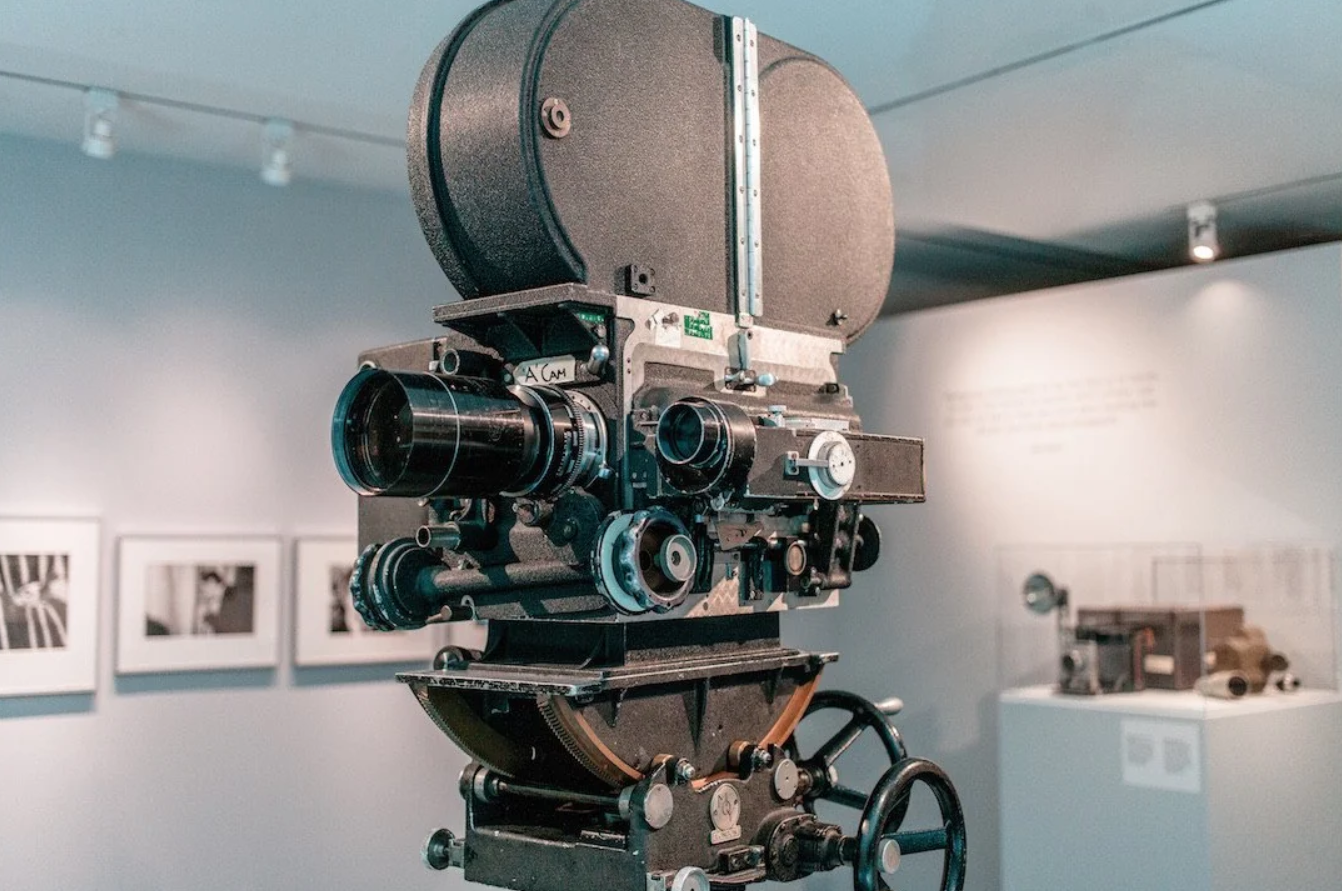
The Zeiss f/0.7 Lens with Kollmorgen adaptor - 36.5mm focal length, source: Reddit





 That is exactly why Leica went the f/1.2 route, and why Cosina did the same for their Nokton.