Fred Miranda wrote:
Thank you so much! So, the version I purchased is the version 3, which is similar to the "R" in terms of performance and rendering. I've always been curious about the larger 6-element version, which you mentioned is actually the "v2". (I initially thought it was the v1).
I haven't seen many samples from it -- If you know some, please share the link!
Since I primarily use the Leica M and rangefinder focusing, the v3 seemed like the best "compromise". I’m excited to compare it to the APO version.
Both the Summicron-M 90 pre-asph I and Summicron-M 90 pre-asph II are 6 element lenses. The Summicron-M 90 pre-asph III is a 5 element and so is the Summicron-R 90 pre-asph.
What I see in common whether it's a M v2 or v2 or R are the following characteristics:
1) Under corrected spherical aberration bokeh. (Smooth and creamy).
2) Fast fall off from the point of focus.
3) High detail resolution but lower micro contrast. This takes the harshness away from pores and fine hairs.
4) Saturated pastel colors especially at wider apertures due to under corrected spherical aberrations.
Steve Spencer wrote:
Another important differences between the Leica R version and the Leica M versions is the Leica R version has eight aperture blades which results in octagons in stopped down bokeh balls, whereas the Leica M version has 11 curved aperture blades and IMO, nicer stopped down bokeh balls, although I don't know if these blades make ninja star type bokeh balls at some apertures.
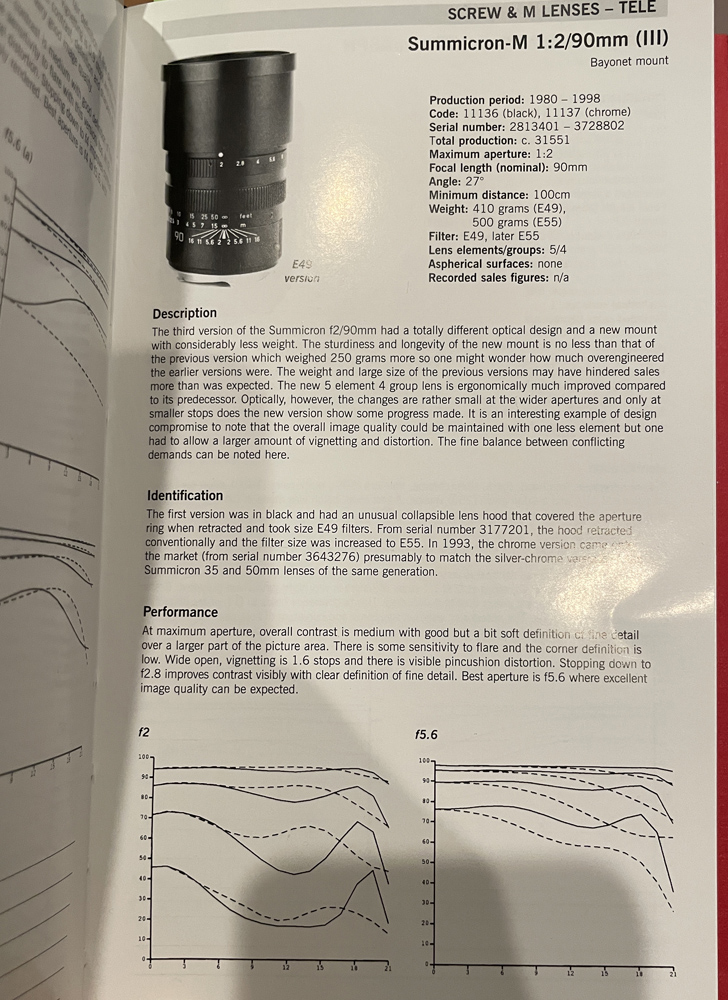
If people are interested in this lens, then it might be worth reading what Erwin Puts has to say about it in his "Leica M lens their soul and secrets." He covers the earlier 6 element version(s) and 5 element version (often called version III) on pages 65 and 66. According to the Leica Wiki page from 1957 to 1962 version I was produced, and 1963 to 1980 version II was produced, but these two versions appear to be optically identical and only have minor differences. The five element version appeared in 1980. Puts describes the six element version as just one version that began in 1958 and continued to 1980. He also has MTF and distortion graphs for the five element version. All of these 90 summicron pre-asph lenses were designed by Mandler.
Thank you, Steve.
The Leica 90/2 pre-ASPH optical design shown in the PDF is for the v3. The v1 and v2, with their 6-element double-Gauss design, have a different character. I think I might enjoy that optical design more, but I’m unsure due to the limited number of samples available online.
cbass wrote:
Both the Summicron-M 90 pre-asph I and Summicron-M 90 pre-asph II are 6 element lenses. The Summicron-M 90 pre-asph III is a 5 element and so is the Summicron-R 90 pre-asph.
What I see in common whether it's a M v2 or v2 or R are the following characteristics:
1) Under corrected spherical aberration bokeh. (Smooth and creamy).
2) Fast fall off from the point of focus.
3) High detail resolution but lower micro contrast. This takes the harshness away from pores and fine hairs.
4) Saturated pastel colors especially at wider apertures due to under corrected spherical aberrations. ...Show more →
Great links! Matt’s images are beautiful, though a bit over-processed, which makes it harder to evaluate the lens’s true rendering, including outlining, glow, and coma. I still do not have a clear sense of how the 6-element version performs with subjects at mid and long distances or how much chromatic aberration it produces. I might as well pick up the v2 since it is a bargain anyway.
Fred Miranda wrote:
Great links! Matt’s images are beautiful, though a bit over-processed, which makes it harder to evaluate the lens’s true rendering, including outlining, glow, and coma. I still do not have a clear sense of how the 6-element version performs with subjects at mid and long distances or how much chromatic aberration it produces. I might as well pick up the v2 since it is a bargain anyway.
I don't know of any link that does in depth testing at different distances. The only place I have seen that is on Fred Miranda with testing done by Fred Miranda. I can provide you the MTF charts between different versions, but those are I believe at infinity. Thus, it will not tell you about performance at other distances or chromatic aberrations. Both the APO-Summicron and the last Elmarit-R 90 are superior technically over the Summicron 90 pre-asph. I just love how it draws portraits, but your preferences may vary. There is a lot of spherical aberrations and glow at f/2 on the pre-asph. There is a noticeable improvement at f/2.8 and at f/4 it becomes incredibly sharp.
Fred Miranda wrote:
Thank you so much! So, the version I purchased is the version 3, which is similar to the "R" in terms of performance and rendering. I've always been curious about the larger 6-element version, which you mentioned is actually the "v2". (I initially thought it was the v1).
I haven't seen many samples from it -- If you know some, please share the link!
Since I primarily use the Leica M and rangefinder focusing, the v3 seemed like the best "compromise". I’m excited to compare it to the APO version.
I think you’re going to be quite surprised with the 90 Cron VIII. It isn’t as sharp as the Voigt 90 APO in center but as you get to the edges the 90 Cron Pre ASPH is much sharper. Has a wonderful softness at the same time that is extremely flattering for portraits. Much less contrast than the Voigt, totally different look. I also have a Canon 100 f/2 Serenar which renders very similarly to the Pre ASPH and is my go to for portraits
Nick YR wrote:
Do you guys use VF magnifier with 90mm? The framelines are so narrow, it’s going to be hard to nail focus
I don't; and in fact, find it snappy to focus since focus throw is not too long (so not going back-n-forth umpteen number of times). Framing is something I still need to get used to.
rsolti13 wrote:
I think you’re going to be quite surprised with the 90 Cron VIII. It isn’t as sharp as the Voigt 90 APO in center but as you get to the edges the 90 Cron Pre ASPH is much sharper. Has a wonderful softness at the same time that is extremely flattering for portraits. Much less contrast than the Voigt, totally different look. I also have a Canon 100 f/2 Serenar which renders very similarly to the Pre ASPH and is my go to for portraits
It would be truly incredible if the pre-APO resolution and contrast are higher than the APO at the edges. I haven’t found any lens as good as the Leica 90mm f/2 AA at the edges, not even Leica’s own SL 90mm f/2 APO, which only matches it at f/5.6. The SL performs better at wider apertures, but once stopped down, the Leica M is just outstanding.
Fred Miranda wrote:
It would be truly incredible if the pre-APO resolution and contrast are higher than the APO at the edges. I haven’t found any lens as good as the Leica 90mm f/2 AA at the edges, not even Leica’s own SL 90mm f/2 APO, which only matches it at f/5.6. The SL performs better at wider apertures, but once stopped down, the Leica M is just outstanding.
not the contrast, just the resolution is superior to the Voigtlander 90 f/2 APO
Fred Miranda wrote:
It would be truly incredible if the pre-APO resolution and contrast are higher than the APO at the edges. I haven’t found any lens as good as the Leica 90mm f/2 AA at the edges, not even Leica’s own SL 90mm f/2 APO, which only matches it at f/5.6. The SL performs better at wider apertures, but once stopped down, the Leica M is just outstanding.
It won't be. The APO-Summicron 90 is a virtually perfect lens except for some astigmatism wide open. If you like perfect, then there isn't much to improve here. I think what the OP was trying to say is the pre-asph is a pretty planar lens so performance is even from center into the corners. It won't beat the APO-Summicron in any way technically. The pre-asph is about liking how the aberrations effect the final image especially for portraits.
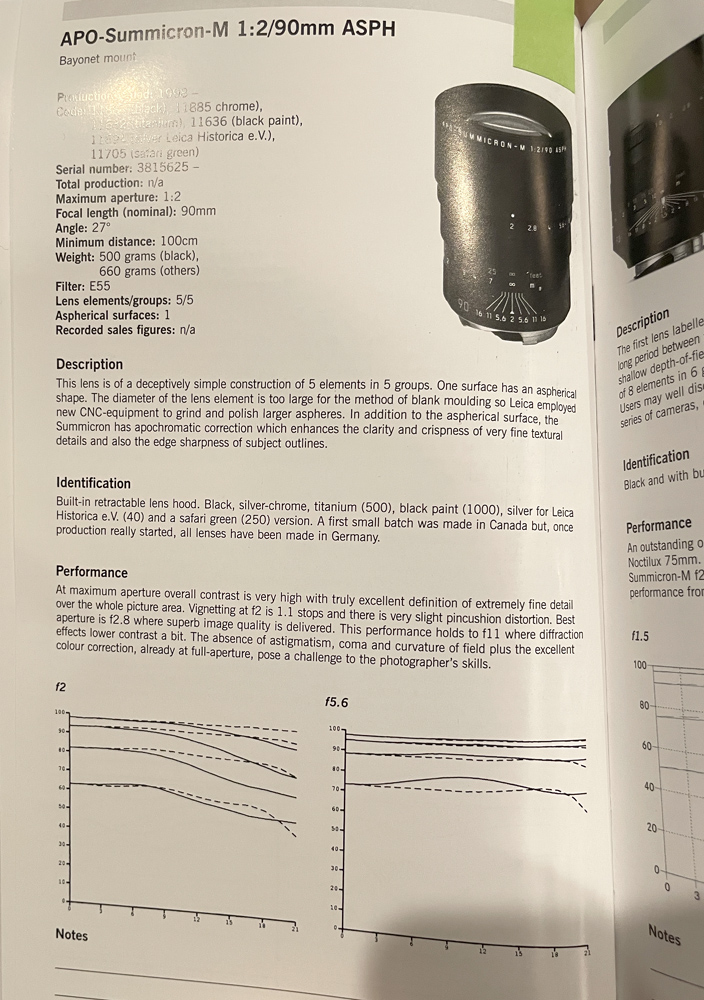
Here is the Leica 90mm f/2 pre-ASPH compared to the 90mm f/2 APO-ASPH according to Leica’s MTF charts.
Based on these graphs, there is no contest as the APO clearly outperforms in resolution and contrast at the corners. Center is similar at f/5.6 though.
Just received the Leica 90mm f/2 Cron pre-ASPH v3. It's the same size and weight as my Leica 90/2 APO-ASPH, 483g (measured). Interesting how both have almost identical barrel designs. I got lucky with this pre-ASPH copy since it’s perfectly aligned to the RF, just like my APO.
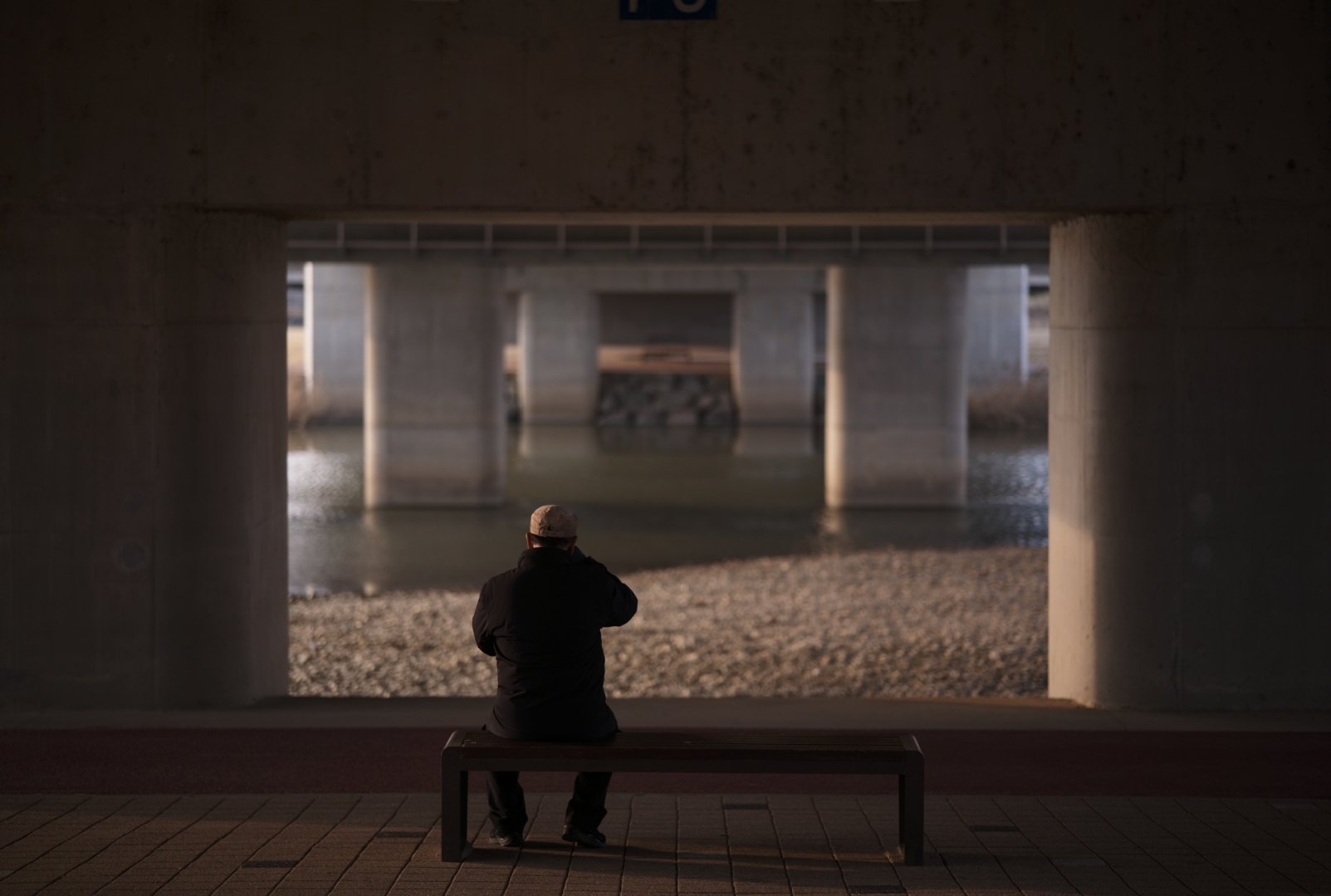
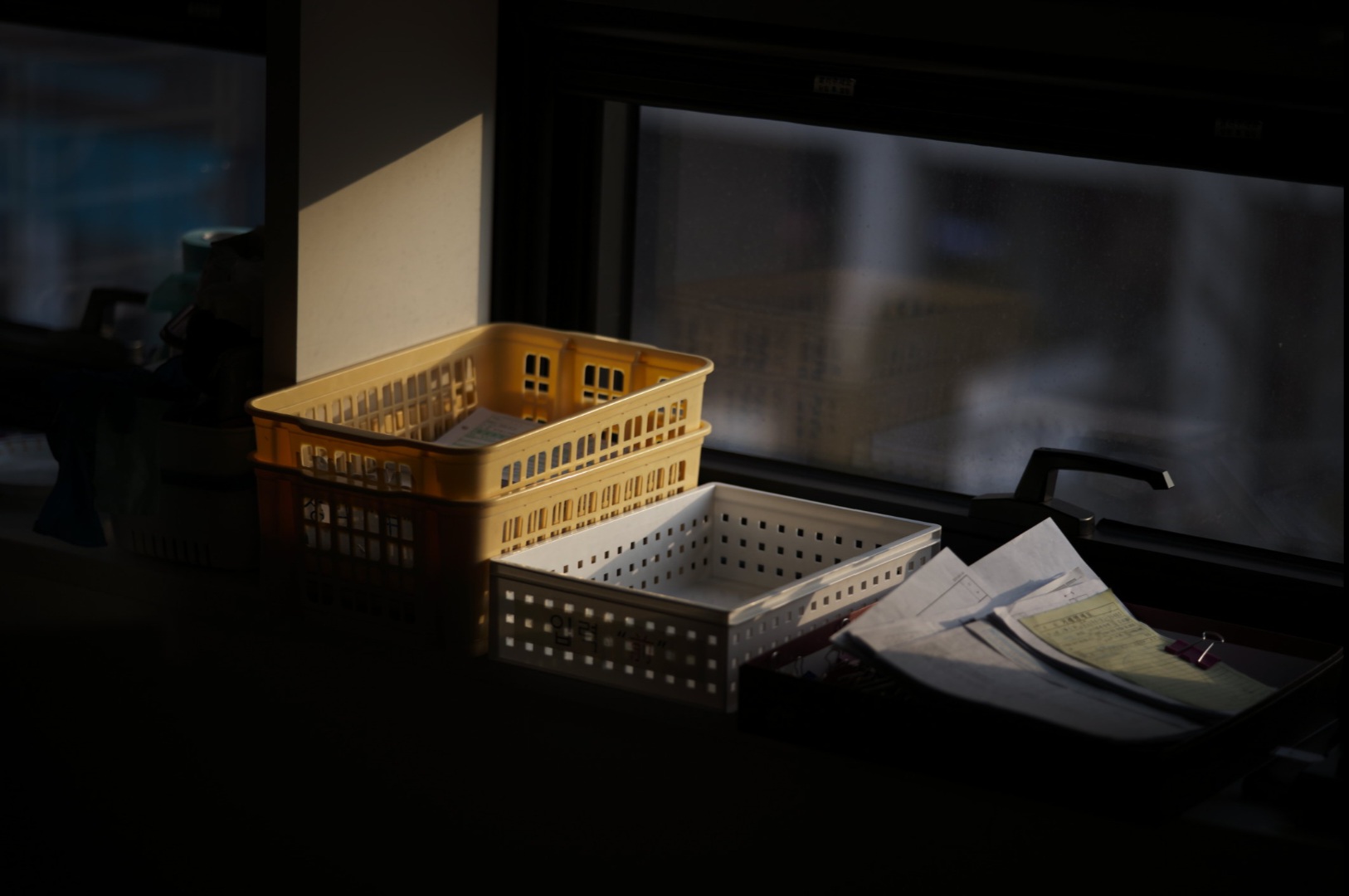
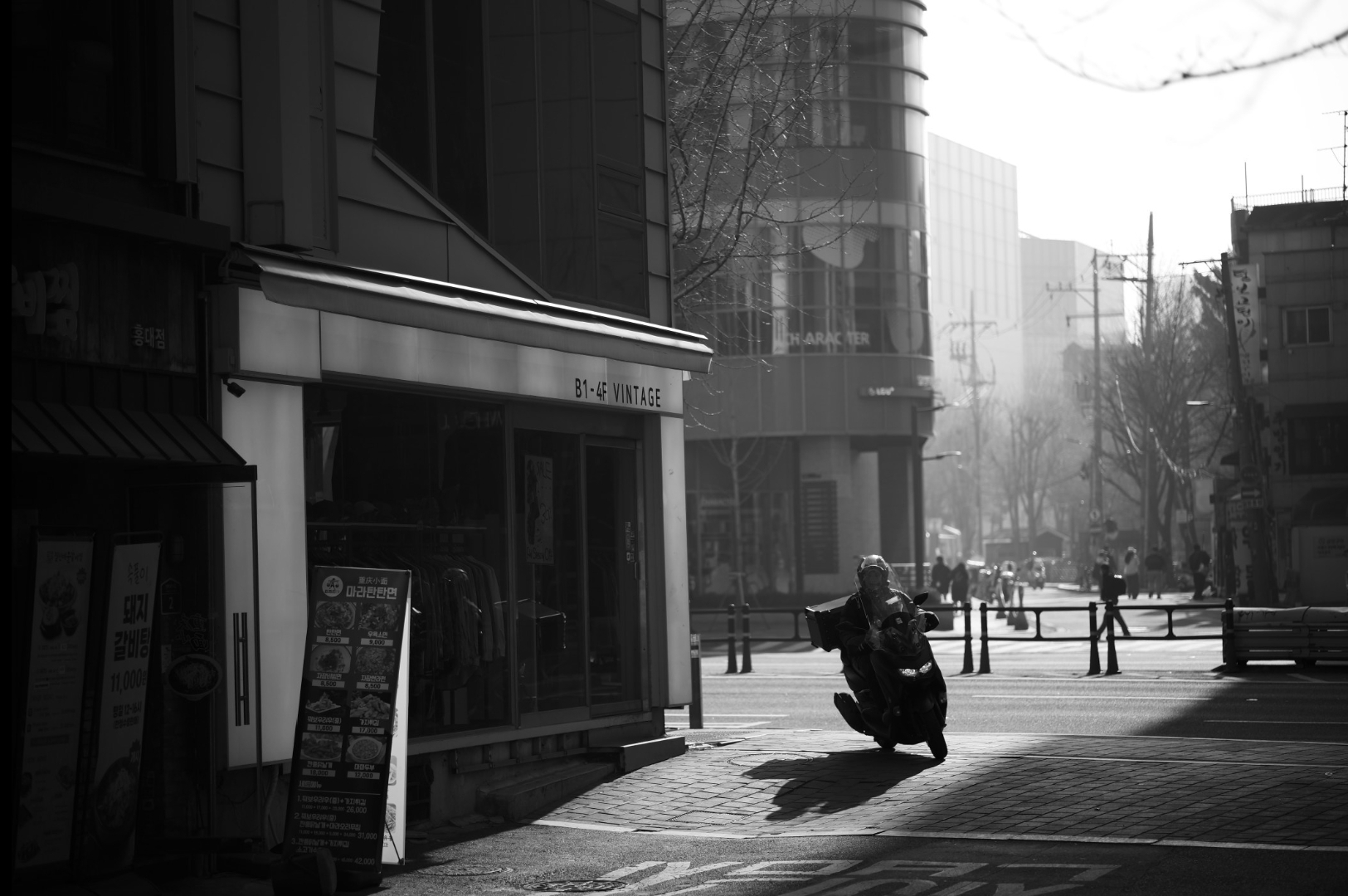
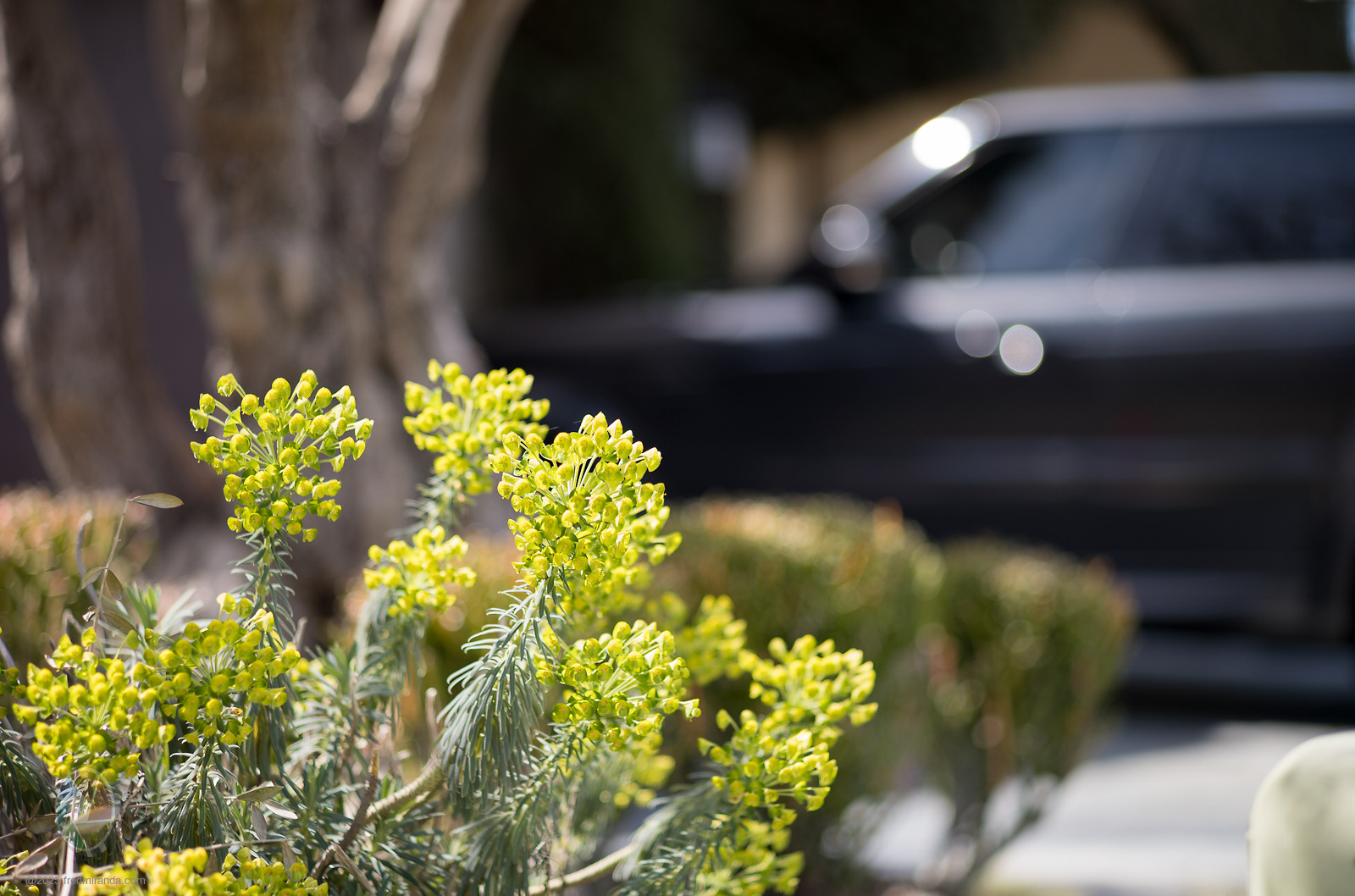
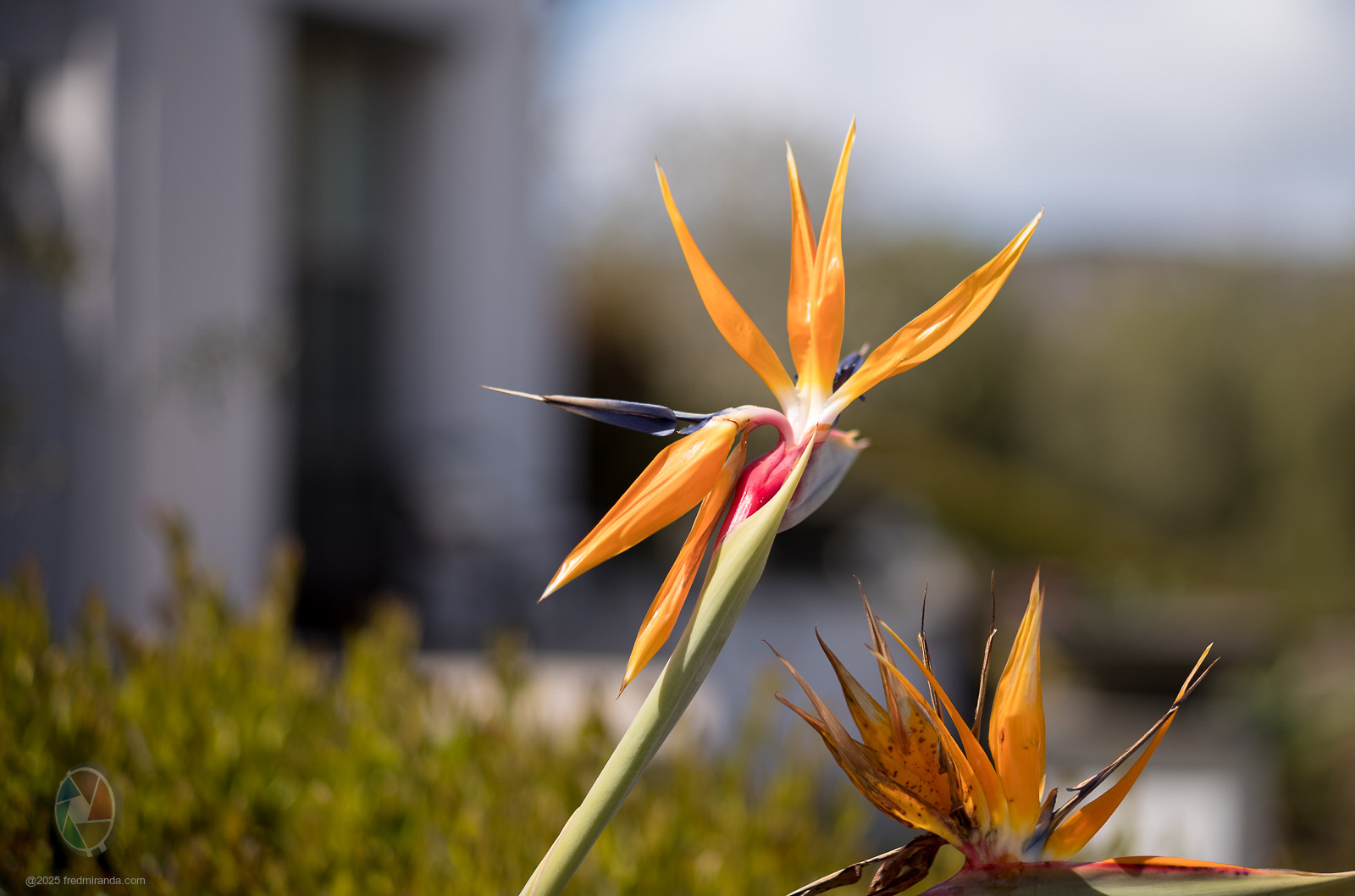
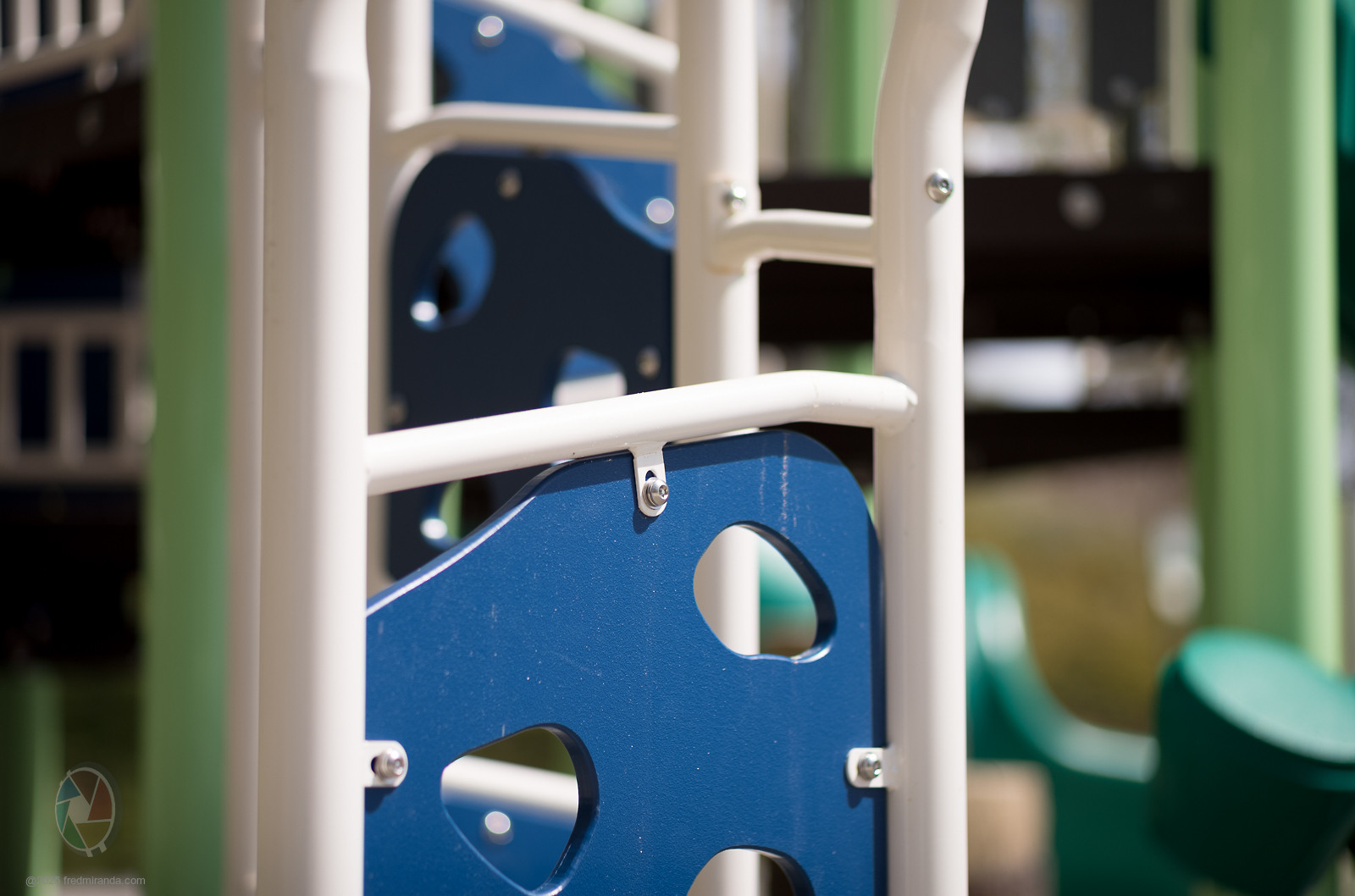
I just took the Leica 90/2 Cron pre-asph for a spin to confirm the RF adjustment and check things like rendering, CA, and more. My first impression is that it’s easier to focus with the RF because the focus throw is longer compared to the APO version. I was able to nail all the subjects perfectly without any issues, which I can’t quite do with the APO. Here are a few test shots I took around my neighborhood, mostly with subjects centered to ensure the RF was spot on.
The rendering has a painterly quality, and the specular highlights are very clean, due to the absence of aspherical elements. The images are sharp, but not overly crisp or full of micro-contrast, which I personally prefer, especially for portraits. There is some visible CA, but nothing too distracting so far. I can see some coma in the rendering.
These are straight out of the camera under harsh lighting using the Adobe Standard profile and Daylight WB.
LEICA M10-RSummicron-M 1:2/90 lens90mmf/2.01/750s100 ISO0.0 EV
LEICA M10-RSummicron-M 1:2/90 lens90mmf/2.01/1500s100 ISO0.0 EV
LEICA M10-RSummicron-M 1:2/90 lens90mmf/2.01/3000s100 ISO0.0 EV
LEICA M10-RSummicron-M 1:2/90 lens90mmf/2.01/1500s100 ISO0.0 EV
LEICA M10-RSummicron-M 1:2/90 lens90mmf/2.01/1000s100 ISO0.0 EV
LEICA M10-RSummicron-M 1:2/90 lens90mmf/2.01/750s100 ISO0.0 EV
LEICA M10-RSummicron-M 1:2/90 lens90mmf/2.01/2000s100 ISO0.0 EV
LEICA M10-RSummicron-M 1:2/90 lens90mmf/2.01/2000s100 ISO0.0 EV
LEICA M10-RSummicron-M 1:2/90 lens90mmf/2.01/2000s100 ISO0.0 EV
LEICA M10-RSummicron-M 1:2/90 lens90mmf/2.01/3000s100 ISO0.0 EV
LEICA M10-RSummicron-M 1:2/90 lens90mmf/2.01/4000s100 ISO0.0 EV
LEICA M10-RSummicron-M 1:2/90 lens90mmf/2.01/4000s100 ISO0.0 EV
Fred Miranda wrote:
I just took the Leica 90/2 Cron pre-asph for a spin to confirm the RF adjustment and check things like rendering, CA, and more. My first impression is that it’s easier to focus with the RF because the focus throw is longer compared to the APO version. I was able to nail all the subjects perfectly without any issues, which I can’t quite do with the APO. Here are a few test shots I took around my neighborhood, mostly with subjects centered to ensure the RF was spot on.
The rendering has a painterly quality, and the specular highlights are very clean, due to the absence of aspherical elements. The images are sharp, but not overly crisp or full of micro-contrast, which I personally prefer, especially for portraits. There is some visible CA, but nothing too distracting so far. I can see some coma in the rendering.
These are straight out of the camera under harsh lighting using the Adobe Standard profile and Daylight WB....Show more →
100% you said it better than me. Love it for portraits because of the exact comments you mentioned. It is sharp across the image, just has much lower contrast and a little glow the APOs don't have. Part of my test between this lens and the Voigt APO was how accurate I could focus in normal situations. The Voigt APO was significantly more difficult to focus because of the short throw compared to the Cron. Great pics!
rsolti13 wrote:
100% you said it better than me. Love it for portraits because of the exact comments you mentioned. It is sharp across the image, just has much lower contrast and a little glow the APOs don't have. Part of my test between this lens and the Voigt APO was how accurate I could focus in normal situations. The Voigt APO was significantly more difficult to focus because of the short throw compared to the Cron. Great pics!
I prefer telephoto lenses without aspherical elements since specular highlights tend to be larger and more noticeable in the rendering. Any traces of onion ring effects also stand out more. Great reasons for choosing the Voigtlander 90mm f/2 APO or the Leica 90/2 pre-apsh lenses.
Fred Miranda wrote:
I prefer telephoto lenses without aspherical elements since specular highlights tend to be larger and more noticeable in the rendering. Any traces of onion ring effects also stand out more. Great reasons for choosing the Voigtlander 90mm f/2 APO or the Leica 90/2 pre-apsh lenses.
+1 ASPH onion rings can be a bummer. I'd rather have a bit of undercorrection / SA than strong onion rings. One ASPH element well placed can be tolerable, but multiple ASPH elements tend to get a little much for my taste.
RustyBug wrote:
+1 ASPH onion rings can be a bummer. I'd rather have a bit of undercorrection / SA than strong onion rings. One ASPH element well placed can be tolerable, but multiple ASPH elements tend to get a little much for my taste.
Yummy to eat, but not a fan in my pics.
You probably wouldn’t be a fan of the original Leica 50mm f/1.2 Noctilux or the Light Lens Lab version. The onion-ring bokeh in those lenses has to be seen as part of their "character".
Fred Miranda wrote:
You probably wouldn’t be a fan of the original Leica 50mm f/1.2 Noctilux or the Light Lens Lab version. The onion-ring bokeh in those lenses has to be seen as part of their "character".
I'd just have to acknowledge it as a "specialty" lens ... not my "welded on", general use lens.


 I can provide you the MTF charts between different versions, but those are I believe at infinity. Thus, it will not tell you about performance at other distances or chromatic aberrations. Both the APO-Summicron and the last Elmarit-R 90 are superior technically over the Summicron 90 pre-asph. I just love how it draws portraits, but your preferences may vary. There is a lot of spherical aberrations and glow at f/2 on the pre-asph. There is a noticeable improvement at f/2.8 and at f/4 it becomes incredibly sharp.