fredmiranda.com
Login

Moderated by: Fred Miranda
  New fredmiranda.com Mobile Site
  New Feature: SMS Notification alert
  New Feature: Buy & Sell Watchlist
  

FM Forums | Photo Critique | Join Upload & Sell

1              3       end
  

Twilight Photo


Camperjim
Offline
• • • • •
Upload & Sell: On
p.2 #1 · Twilight Photo


My monitor is also at 90 cd/m^2. This works well for matching what I see on my monitor and what prints will give me. I cannot control what others will see but I know most monitors will be much, much brighter.

The related issue involves artistic choices on the brightness of the print or viewed image. Because we can, it seems popular to make sure there are visible shadow details. That was not the case in the old film days when pulling details from the shadows was not possible due to the very limited dynamic range of the film media. When I visited the Ansel Adams museum in Yosemite, I was shocked to see many prints with large areas of total black.

Now we have more choices including HDR. Personally I think the details in the shadow approach is often overdone. IMO, the worst examples are the milky way composites where we see every dim star but the foreground is well lit and full of details even the human eye could not possibly see.

Deep blacks are not to be feared. The old painting masters often pushed chiaroscuro and tenebrism for effect.


Dec 11, 2024 at 08:35 AM
RustyBug
Offline
• • • • • • •
Upload & Sell: On
p.2 #2 · Twilight Photo


hanay78 wrote:
Dear @RustyBug@ thank you very very much for your answer!!!!!!

I have checked with suncalc. That day, when I took the photograph, the sun was 6.5 degrees under the horizon. That is, the moment represents the interface between the civil and the nautical twilight.

This is a moment in which I like a lot to shoot, since it represents the interface between seeing something and not seeing anything Also, in terms of public lighting, it is already working, bulbs are hot delivering full light power, and landscape is still partially visible in a dim light. I suppose that the
...Show more

Excellent discussion ...

Jumping to the "adequate L value" of white things illuminated with natural light ... somewhere between zone 1 and zone 9.

Imo, where you decide to land your whites is part of the key regarding the mood you are trying to convey. The premise that there is some "systematically" approach (i.e. mechanical / objective) to achieving a subjective / emotional response is one that kinda needs to be "kicked to the curb" (imo).

That said, the "math" of light is exponential, not linear. Because the human perception is "adaptive" to this exponential relationship, the key here is not to have a specific landing point. Rather (imo) to have the relative difference(s) that are indicative of a given time of day / illumination. Conceptually, the math is kinda like this ...

Daylight EV15 (i.e. Sunny 16) is 2^15
If this level of illumination is striking a "100% specular" surface, the return will be the same 2^15 value ... scaled to 0-255, this is 255.
If this level of illumination is striking a "white" surface, with a reflective value of 90-95%, then 255 *.9 = 230. If you take a look at color checker values, you'll see where the whites are in the 220-235 range-ish, for "correct" exposure.

Now, let's go to twilight.
Twilight EV10 - EV12 (we'll use EV10)
2^10 ... or 5 stops less than EV15.
If we use the Zone system of roughly 10 stops, then each stop of light on the 0-255 scale is ballpark 25 points. So, a reduction of 5 stops is ballpark a reduction of 125 RGB. So, 230-125 is around 105.

Thus, the same 90% reflectivity (i.e. white) when illuminated by EV15 vs. EV10 will have a roughly 5 stop reflectivity return difference.

So, if I'm looking at an "L" value for white during twilight, then it is going to be around 105/255 is around .42.
That said, bear in mind that the over values incur a similar reduction in return. i.e. a middle value of 128 (L50) in EV15 lighting, will return (naturally) a value much lower in EV10 lighting. NOTE: I "converted" an exponential to a linear when I said approximately 25 = 1 stop. From an EV15 perspective, that holds, but as the reduction to EV10 is exponential, the corresponding reduction will also be exponentially calculated. Point being, that if I use 25*5=125, then times "middle" 50%, that 5 stops isn't 125 points, but closer to 75 points, so 128 - 75 lands middle around 50. Now, we have a spread of "white" > "middle" around 105 > 50 (vs. EV15 of 230 > 128). 10% blacks follow similarly.

FYI, this is the first time I've "calculated" where whites would land, naturally in twilight. But, conceptually I've accepted that I know it is significantly less than when illuminated by less light, it will have a significantly lower reflective return (and knowing that our eye / brain accommodates relatively vs. absolute).

So, where we are "told" of a lot of things about what the values "should" be ... the vast majority of those so called rules of what it should be are correlated to "normal" lighting. As we move into the realm of reduced light ... then, yeah natural light return is going to be significantly reduced, and trying to follow the guidance for "normal" light response with greatly reduced light response can lead us into a situation of trying to fit a square peg into a round hole.

Now ... while I laid out some math, DO NOT feel compelled that the values should follow this systematically. But, just understand that the exponential return value of reflectance means that "white" will have a lower value (naturally, speaking) in EV10 than EV15, and it might be "much lower" than folks think they would be. So, if you want to present it naturally, then it's likely going to be "less than" what folks tend to think that "white" should be.

Ultimately extreme example would be a white sheet of paper in a dark room. With 0EV reflecting off the 90% reflective surface, the return would be 0 ... naturally, speaking. So, if we are photographing a white paper in a dark room, the decision of where the photographer desires to land the white paper, a natural presentation would be a value of 0. Yet, if the desire is to show the white paper white, then raising the exposure (i.e. moving it from its natural EV0) to EV15 would bring it back up to the 230 range. So, when I stated Zone 1 - Zone 9, that wasn't just a "whatever you want" answer. Rather, it was that the Mood / Time of day (i.e. variable amount of EV light) will result in a varied Zone for landing things, depending on where you want to convey time of day. Also, the reflectance value of your subject will impact that. A high sheen, white (98% reflectivity) will return more light than a dull, diffuse surface, illuminated with a soft, diffuse light, even if both are "white".

Long, I know ... but understand how light reflectance naturally occurs, is a piece of the puzzle if we are striving to present a natural look. ETTR and other aspects of "setting white points", etc. are mostly guidance for achieving a "correct" (i.e. correct for EV15 / natural daylight) ... but, that does not hold the same for reduced natural light, if you want to convey the natural light levels (vs. adjust ^ EV15 levels).

So, don't be afraid of the dark, if you're wanting to convey the dark. How dark (vs. light and the relative exponential relationship) you want to convey is up to you.

There's more ... but, I'll rest for a moment.


Dec 11, 2024 at 11:04 AM
RustyBug
Offline
• • • • • • •
Upload & Sell: On
p.2 #3 · Twilight Photo


Camperjim wrote:
My monitor is also at 90 cd/m^2. This works well for matching what I see on my monitor and what prints will give me. I cannot control what others will see but I know most monitors will be much, much brighter.

The related issue involves artistic choices on the brightness of the print or viewed image. Because we can, it seems popular to make sure there are visible shadow details. That was not the case in the old film days when pulling details from the shadows was not possible due to the very limited dynamic range of the film media.
...Show more

Jim's point about details in shadow approach being overdone ... takes us back to the concept of whether you are trying to illuminate the subject vs. present it naturally. The premise of allowing shadows to be shadows (particularly if we are trying to convey natural) has become lost in the popular realm. Imo, there's tremendous value in the shadow as a shadow ... often, more powerful than bringing up illumination values to reveal every possible detail. Sure, it's a technical marvel that we can do that. But, I think it falls into the realm of "just because we can" doesn't necessarily mean "we should".

Imo, there's a difference between "this is what it looks like" vs. "this is what is was like to be there". Jim references Adams. It was my reading of Adams and his explanation of "presence" that was pretty much a game changer for me, in terms of my goals regarding when I want the dark to be dark vs. I want the dark to be light ... or, the light to be light vs. the light to be dark.

Imo, there's a difference in "look at this" vs. "this is what it was like to be there", i.e. conveying presence.

It's your pic, your message, your call.


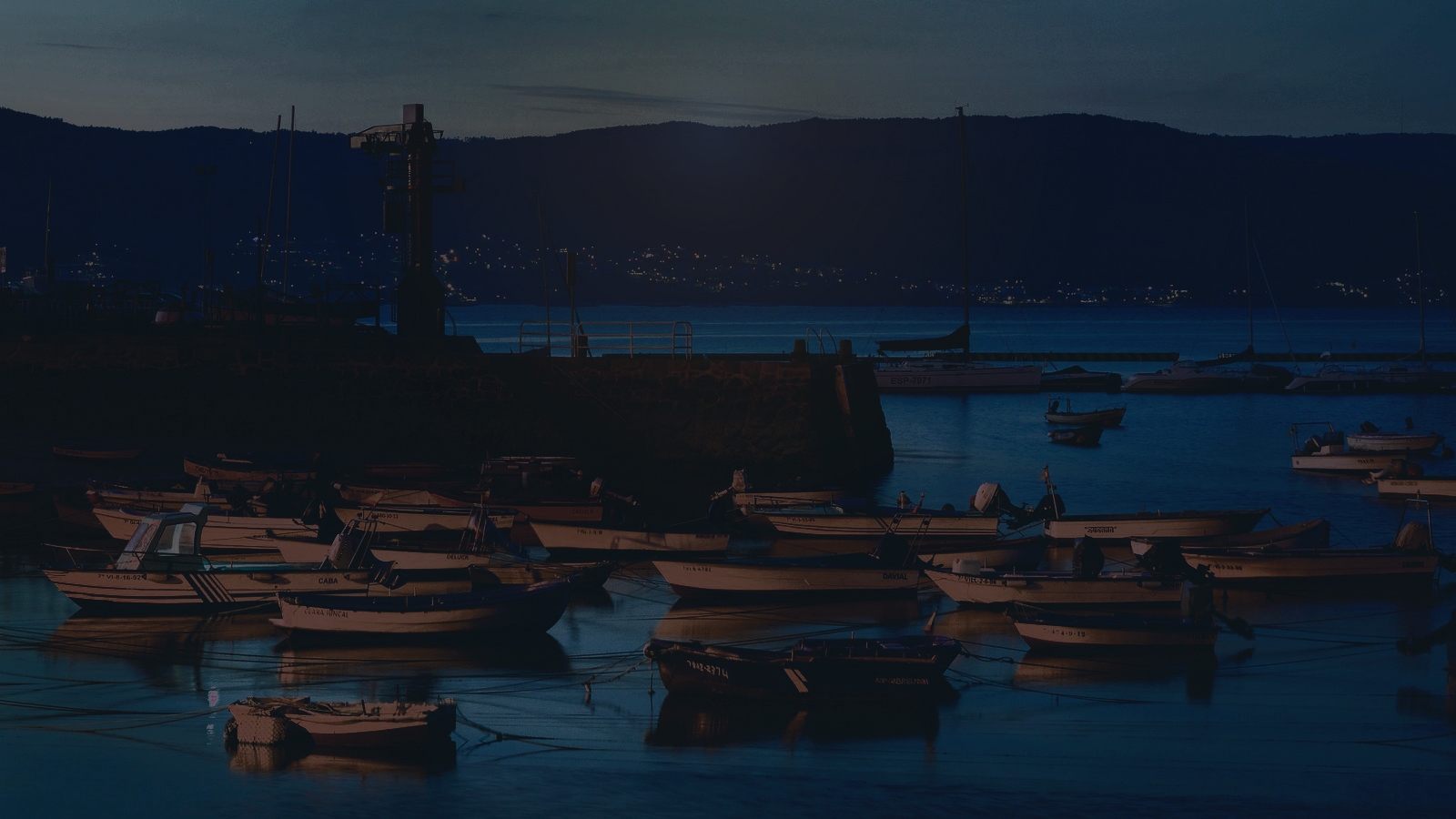
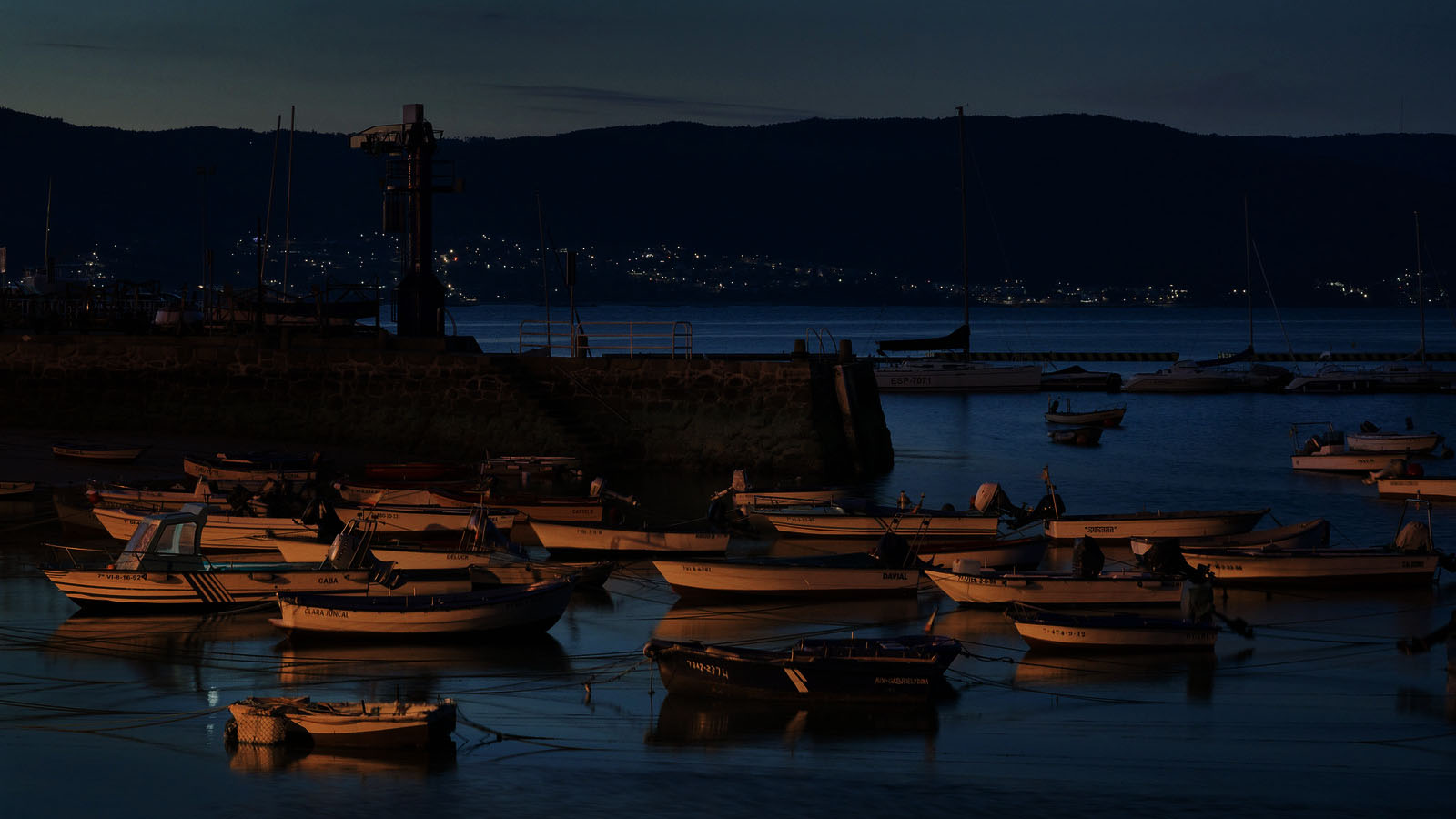
P.S. The harbor scene ... the boats are illuminated by twilight EV + Sodium Vapor EV additive. Depending on the power / distance of the Sodium Vapor lighting (in the narrow spectrum), the contribution of light will be some value above twilight EV itself, naturally. That puts us back into the realm of "land it where you want it" to a certain degree (vs. rigid systematic), based on what you want to convey from your assessment of the lighting in play. As it stands, the sodium vapor warmth is a bit "deceiving" that it made me want to think it was sunset ... yet, it was twilight ... how was that happening (naturally). The answer being, it is a mix of natural (twilight) and artificial (sodium vapor), yet the viewer doesn't automatically pick up on that artificial light source. Still ... the warm vs. cool is a lovely rendering (explanations, be darned).


Dec 11, 2024 at 11:22 AM
Shasoc
Offline
• • • • • • •
Upload & Sell: On
p.2 #4 · Twilight Photo


hanay78 wrote:
This one is even worse. I have been struggling with it for days. Maybe I feel now more confident to discuss about it. The lightest parts of the barges in Lab have L=60. Lighter, it make them completely unrealistic (in my 90 cd/m^2 monitor is sRBG). There was a dim sodium light in the port that illuminated them dimly. More that 60 is to make them be lighted by a sunset, not dim twilight. There is some shadow clipping. It is a tricky struggle for me to get a reasonable twilight illumination...

https://live.staticflickr.com/65535/54194674510_4c4a0aa45e_h.jpg


Once you have color calibrated your monitor, when it comes to printing the most important value is the overall brightness of the display. There is no "one value fits it all". You need to find the right value that will match the brightness of your prints.
For web displaying color calibration is the key and you have to accept the fact that you will see your images darker than someone else seeing your image in a regular monitor and you have to hope its monitor is color calibrated.

I want to represent the beauty of a place with the delicacy of the dim soft colors of the twilight. Don't expect to get that in camera. Editing conveys your vision. I use luminosity masks when I want to fine tune the brightness and tones, and I use color masks when I deal with colors.

Here is an attempt to reduce the brightness on the boats using a luminosity mask. The measured L value on the boats is around 28.

Socrate


Dec 11, 2024 at 11:54 AM
RustyBug
Offline
• • • • • • •
Upload & Sell: On
p.2 #5 · Twilight Photo


L values are in the 35-50 range (curvature of boats > AI=AR variance) for the illuminated "whites" of the boats. Mostly around low 40's which kinda falls in line with the calculations I ran through above.

Sodium Vapor might kick things up a bit from 40-50 vs. "natural" only. You could go even brighter, to convey a stronger / brighter Sodium Vapor lighting ... or the other way for a dimmer SV light. If you look at the boats more distant from the SV light source, you'll see the values dropping into the 20's / 10's as the SV falls off.


Here again, land it where you want it ... it's your story.


Dec 11, 2024 at 01:06 PM
hanay78
Online
• • •
Upload & Sell: Off
p.2 #6 · Twilight Photo


I think your math was very interesting.

In your previous message you have suggested an example. In it you have the brightest areas of the barges with a luminosity bellow 50%. My example is intended for 60%. Actually now that I have a decent monitor, I realize that your example is correct. Actually is more similar to the feeling I had in the field that my own.

Another thing is the aesthetic value. But I have the impression that to be able to create with sense, one may wish to understand first what one is doing.And your math are very clarifying.

Your example is one in which the math and the reality match each other. I perceive the scene in Galicia, very close to the result of your post-processing. I understand that we are discussing not on ultimate accuracy, but mostly on tumb values that can allow for an objective lighting intend.

Now in cheaper monitors, the other ones I have, the example you propose is not very attractive aesthetically. But in the Eizo with 90 cd/m^2 is a very realistic scene. I am surprised that one can match it so simply, in terms of approximated L.

In scenes like that, the tumbrule is L between 0.4 and 0.6 for white things depending on the time of twilight to reach a "dim" rendering. Note that in my original post-processing (the barges) the ships in the middle ground that are illuminated by natural light have a L=0.4

After reading your message, I looked in the wikipedia and found https://en.wikipedia.org/wiki/Exposure_value

Thank you for the discussion. I am liking it a lot !!!!


RustyBug wrote:
Excellent discussion ...

Jumping to the "adequate L value" of white things illuminated with natural light ... somewhere between zone 1 and zone 9.

Imo, where you decide to land your whites is part of the key regarding the mood you are trying to convey. The premise that there is some "systematically" approach (i.e. mechanical / objective) to achieving a subjective / emotional response is one that kinda needs to be "kicked to the curb" (imo).

That said, the "math" of light is exponential, not linear. Because the human perception is "adaptive" to this exponential relationship, the key here is not
...Show more


Dec 11, 2024 at 05:13 PM
hanay78
Online
• • •
Upload & Sell: Off
p.2 #7 · Twilight Photo


@Camperjim & @RustyBug thank you for your answers.

Adams have several books. I do not know of the "presence" concept you are mentioning. Can I ask where did you read it?

Adams have plenty of areas, in very famous photographs with black zone 0 areas Nevertheless, in its book about making 40 of his most famous photographs, he mention about his intend to have the darkest parts in zone 2.

The Harbour scene:

The light of the sodium lamp was not powerful. One realize that the barges on the left are better illuminated than the ones on the right, square dependence I believe. Still, the the white areas they got very clearly lighted and with a strangely warm light.

I had the impression that the sodium light was one with deep yellow color. I decreased the saturation of yellow, because the color of the barges was so dramatically unrealistic.

In spite of its lack of power, the contribution of the lamp is clearly larger than the ambient twilight light. Note that the scene was taken in Seixo, near Marin, Pontevedra. This lovely place, is quite deep in the ria, so that the mountains around it also reduced the twilight lighting and sky reflections. A port in a natural port. To avoid a very strong movement of the barges I took the photograph at iso 1000 requiring almost a second exposure.

The contribution of the artificial and the natural light must be balanced, specially because the lantern is not appearing in the scene. So, I believe it is not that one can render the artificial lighting as powerful as one likes. I tried previously with lower ISO 100 the exposures were too long and the barges were moving too much. Then it was late when I arrived into the ISO 1000. At this stage the natural light was not enough to be in equilibrium with the public lighting. But this makes the barges to highlight more.

In BW utilizing red filter and bringing the lightest parts to L 0.9. A brutal post-processing, in which all subtelery of the dim twilight has disappeared. In BW I do not have problems brining things to tremendous contrast.


I do not like ISO 1000. It makes the image noisy. But the barges required it.

RustyBug wrote:
Jim's point about details in shadow approach being overdone ... takes us back to the concept of whether you are trying to illuminate the subject vs. present it naturally. The premise of allowing shadows to be shadows (particularly if we are trying to convey natural) has become lost in the popular realm. Imo, there's tremendous value in the shadow as a shadow ... often, more powerful than bringing up illumination values to reveal every possible detail. Sure, it's a technical marvel that we can do that. But, I think it falls into the realm of "just because we can" doesn't
...Show more


Dec 11, 2024 at 05:43 PM
hanay78
Online
• • •
Upload & Sell: Off
p.2 #8 · Twilight Photo


A very beautiful rendering. I believe it is the way to go for this scene!

RustyBug wrote:
L values are in the 35-50 range (curvature of boats > AI=AR variance) for the illuminated "whites" of the boats. Mostly around low 40's which kinda falls in line with the calculations I ran through above.

Sodium Vapor might kick things up a bit from 40-50 vs. "natural" only. You could go even brighter, to convey a stronger / brighter Sodium Vapor lighting ... or the other way for a dimmer SV light. If you look at the boats more distant from the SV light source, you'll see the values dropping into the 20's / 10's as the SV falls off.

Here
...Show more


Dec 11, 2024 at 05:47 PM
RustyBug
Offline
• • • • • • •
Upload & Sell: On
p.2 #9 · Twilight Photo


+1 for much of your responses ... bottom line ... YOU got this.

Always, MEGA WAY COOL for me when folks "git it". From here on out, you'll own it ... your way. For me, that is the absolute best I can ever hope for (i.e. critique is about educate / understand), that someone owns it with a level of understanding that liberates them from their previous confusion.

Again ... so good to hear you "got it". And, to be clear ... I recognize it is a "team effort" of contributions, i.e. Jim, Socrate, et al. to "make it click" for folks. Iron Sharpens Iron.

As to "presence" reference to Adams ... I'll see what I can find. It's been the better part of a decade or more since I read it. While the details are fuzzy ... I recall him talking about an image being able to convey the temperature, humidity, wind, etc. He didn't specifically reference "time of day", but it is another attribute of "what it is like to be there." ... i.e. "presence".

Again, so glad we've been a help. Helping each other ... that's the best.


Dec 11, 2024 at 10:21 PM
Catherina
Offline
• •
Upload & Sell: On
p.2 #10 · Twilight Photo


Very interesting. Sometimes, the technology science built into the equipment is incapable of interpreting the level of sharpness, color, and rendering in general. I think you just need to adjust parameters locally to achieve the results you chasing?


Jan 02, 2025 at 07:30 PM


Search in Used Dept. 

Shasoc
Offline
• • • • • • •
Upload & Sell: On
p.2 #11 · Twilight Photo


Catherina wrote:
Very interesting. Sometimes, the technology science built into the equipment is incapable of interpreting the level of sharpness, color, and rendering in general. I think you just need to adjust parameters locally to achieve the results you chasing?


I would go even further than that. The mind's eyes of the photographer sees an image, and, no matter how advanced in technology is, the "equipment" cannot make decisions for the photographer, because the photographer is concerned that the light is part of his/her intent, more than how the camera actually recorded. Or more interested in giving the viewer the image s/he has in its mind than s/he has objectively seen or, more precisely, the camera has recorded.
Socrate


Jan 02, 2025 at 11:38 PM
AuntiPode
Offline
• • • • •
Upload & Sell: Off
p.2 #12 · Twilight Photo


The scene is in the eyes of the beholder. As art, I reserve the right to show a scene as I felt the scene or as it ought to have been.

Reality is the only option for folks who lack imagination.


Jan 03, 2025 at 03:52 PM
Catherina
Offline
• •
Upload & Sell: On
p.2 #13 · Twilight Photo


AuntiPode wrote:
The scene is in the eyes of the beholder. As art, I reserve the right to show a scene as I felt the scene or as it ought to have been.

Reality is the only option for folks who lack imagination.


Agree!


Jan 03, 2025 at 03:59 PM
hanay78
Online
• • •
Upload & Sell: Off
p.2 #14 · Twilight Photo


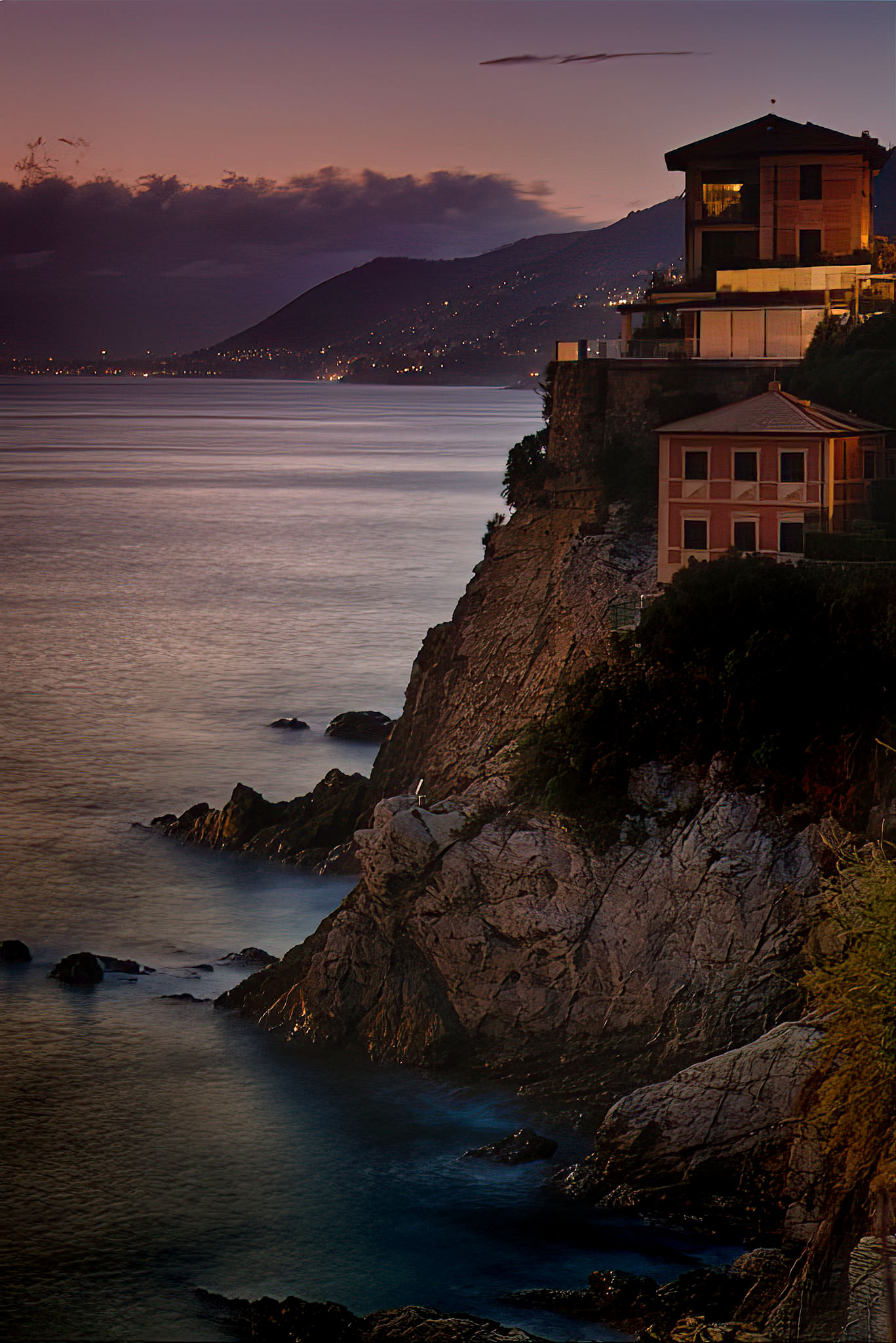
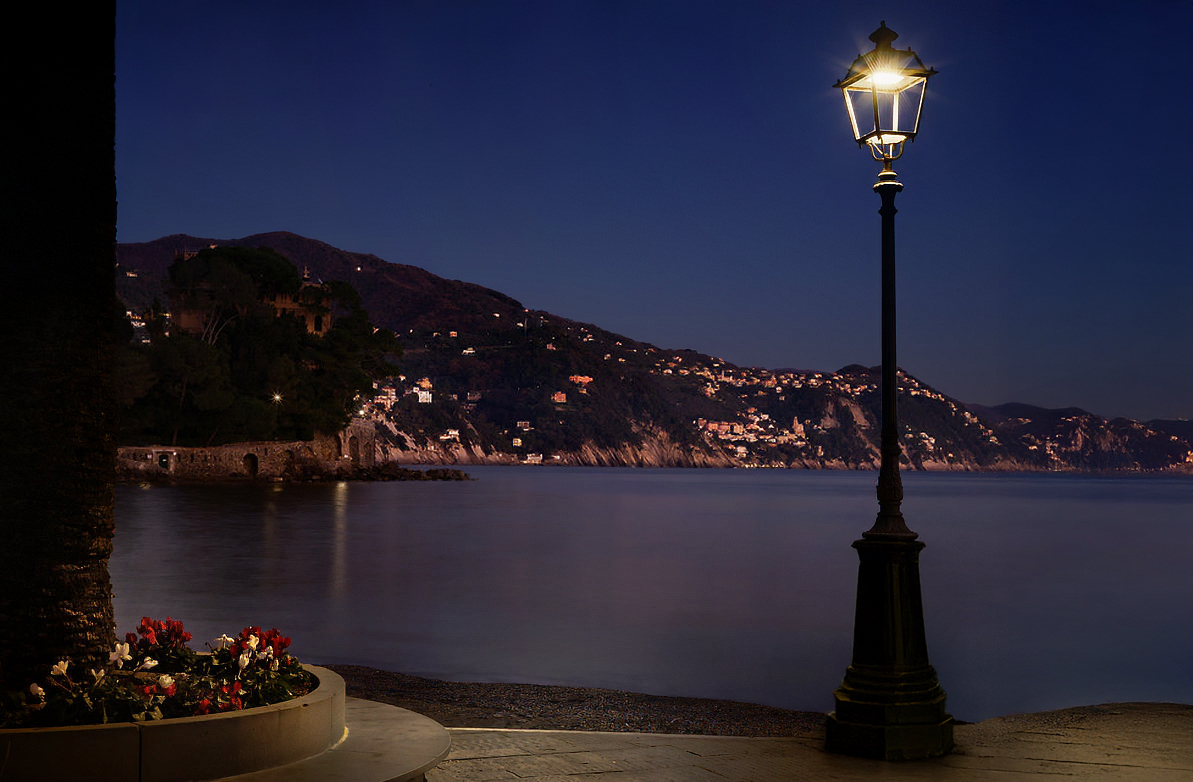
I got two photographs like this one in the field. I thought the tripod was stable, but both are slightly moved. Maybe I kick it slightly with my foot. Who knows. A pity, since a liked a lot the colors of that day. The L value of the lightest part is kind of 45. I adjusted it to taste, and then check in the values in this thread.


PS: At home in a high quality monitor, the photo looks good, realisticaly twilight feeling. In my telephone not so: tremendously dark


May 05, 2025 at 05:09 PM
hanay78
Online
• • •
Upload & Sell: Off
p.2 #15 · Twilight Photo


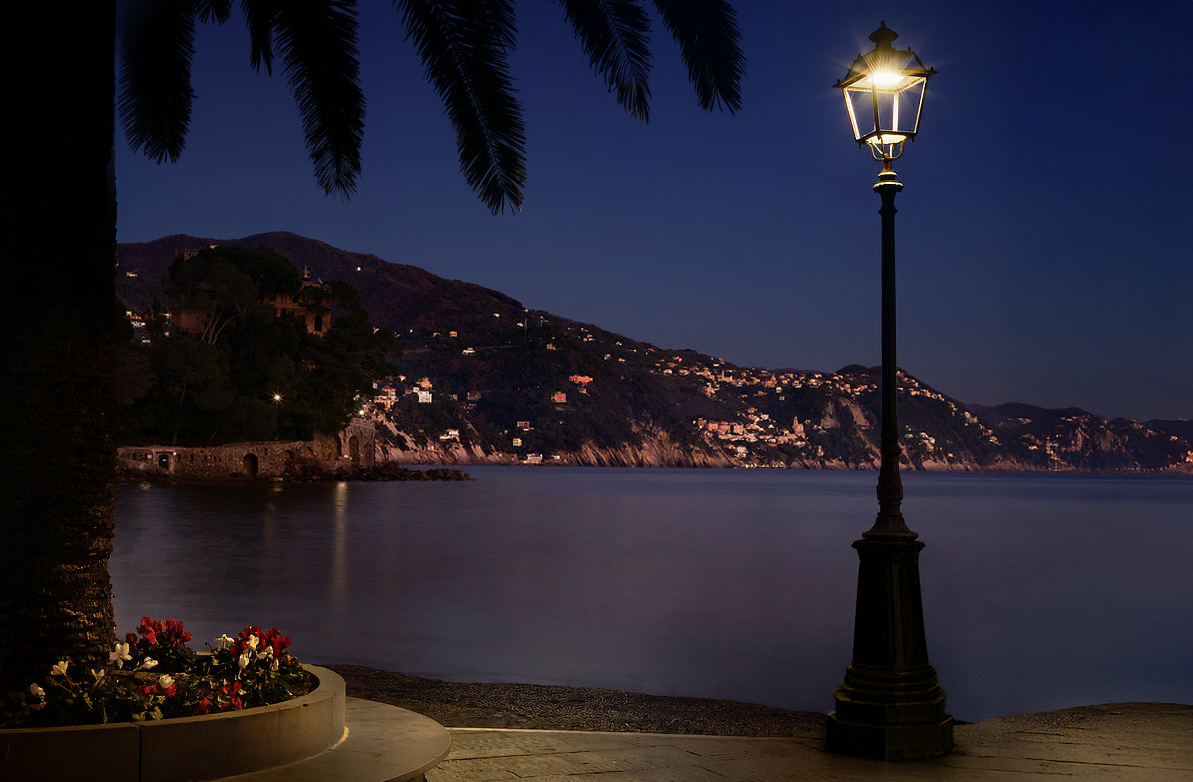
A quiet evening near Rapallo,


Jul 20, 2025 at 02:32 AM
Camperjim
Offline
• • • • •
Upload & Sell: On
p.2 #16 · Twilight Photo


We all have different monitors and different browsers which alter what we see. Looking at the most recent image you posted, it does indeed seem overly dark. Also annoyingly out of focus and lacking optimal contrast.

This is probably a mistake, since again my edit will be viewed by different eyes on different browsers and monitors. I gave it a quick 1 minute fix and at least for my own interest am curious to see if the changes work when again downloaded to the internet.


Jul 21, 2025 at 08:49 AM
Shasoc
Offline
• • • • • • •
Upload & Sell: On
p.2 #17 · Twilight Photo


hanay78 wrote:
A quiet evening near Rapallo,

https://live.staticflickr.com/65535/54664598357_908e255b38_b.jpg


Very nice image. The lighting looks fine on my monitor. I like it.
I have been in Rapallo only once, long time ago. So long time that I don't remember that place any more. When I was staying around that area I used to rather go to Portofino.

I did some edit to your photo with the intent to give you some suggestions aimed to improve an already fine image.
Got rid of the trash can (?) in front of the light pole, added some canvas on the right side to reduce the squarish crop (personal preference).
Pulled the bg mountain closer to the viewer, and increased its contrast. Added more lighting to the fg flowers to make them more prominent, and.... I guess that was all. Whatever works for you.
Two versions one with and one w/o the palm leaves.

Socrate


Jul 21, 2025 at 01:06 PM
grandmas
Offline
• • • •
Upload & Sell: Off
p.2 #18 · Twilight Photo


https://finearttutorials.com/guide/balance-in-art/

Here is a link you might be interested in to help with shooting these kinds of photos.


Jul 21, 2025 at 11:10 PM
hanay78
Online
• • •
Upload & Sell: Off
p.2 #19 · Twilight Photo


@grandmas thanks for the tutorial

@Shasoc thanks for the post processing. I am surprised about the one without palms. Actually, they disappear and the photo improves

@Camperjim Thank you for the input. I am sorry you do not like the last one. I believe it may be boring, and i maybe I focused on the street lamp, so that maybe not the best accuracy of focusing in the background.

Thank you again for your post-processing of the previous one. The photograph exhibit a much stronger contrast and lightness. It is very attractive. But it is difficult for me to believe on it as a twilight photograph, representing the realistic conditions one may observe at this hour. In previous discussion, see the posts by @RustyBug, is not how to give photograph a very intense contrast. But how to settle for something realistic somehow reproducing the dim conditions one may experiment at this late light hour.

Of course, one may argue that to post-process for these conditions is a mistake since this precludes strong contrast, strong illuminations,...

This is of course a photographer choice and everyone mileage may vary...

thank you all for the discussion again!!!!!


Jul 22, 2025 at 04:53 PM
RustyBug
Offline
• • • • • • •
Upload & Sell: On
p.2 #20 · Twilight Photo


hanay78 wrote:
This is of course a photographer choice and everyone mileage may vary...


Indeed.

As long as your efforts align with your intent and goals for the image ...

One thing about our beloved craft ... I can shoot (an exposure, for example) in such a way, that turns night into day or day into night. That decision resides in my goals for the image, and is at my discretion. Of course, I can also record day as day, or night as night, too.


Jul 23, 2025 at 03:53 AM
1              3       end


FM Forums | Photo Critique | Join Upload & Sell

1              3       end


Welcome back
Log in to your account