This topic is in the 2024 archive. You can read it and like its posts here. It is read only.
Archive 2024New Thypoch Simera 50mm f/1.4 Announced
p.3 #1New Thypoch Simera 50mm f/1.4 Announced
Doug Ball wrote:
Not sure how to do that. Try tag Simera 50
what is your flickr user or account name?
Not sure how to do that. Try tag Simera 50
what is your flickr user or account name?
Oct 22, 2024 at 10:43 AM
p.3 #2New Thypoch Simera 50mm f/1.4 Announced
account name is Douglas Ball hyluxkbc89
Oct 22, 2024 at 11:32 AM
p.3 #3New Thypoch Simera 50mm f/1.4 Announced
Doug Ball wrote:
account name is Douglas Ball hyluxkbc89
Found your Flickr. Thanks for posting those samples!
https://www.flickr.com/photos/201650013@N05/
account name is Douglas Ball hyluxkbc89
Found your Flickr.
Thanks for posting those samples! https://www.flickr.com/photos/201650013@N05/
Oct 22, 2024 at 11:51 AM
p.3 #4New Thypoch Simera 50mm f/1.4 Announced
Thanks for posting Doug—I was hoping for a side to side.
Anyway, you might all find this pretty helpful—they really know lenses, though they do have a cinema perspective.
I am more interested in these as cinema glass anyway. Looks Thypoch has just rehoused their m-mount lenses:
Anyway, you might all find this pretty helpful—they really know lenses, though they do have a cinema perspective.
I am more interested in these as cinema glass anyway. Looks Thypoch has just rehoused their m-mount lenses:
Oct 22, 2024 at 01:34 PM
p.3 #5New Thypoch Simera 50mm f/1.4 Announced
Did you check the Samyang V-AF cinema lenses? The lenses are also rehoused Sony versions of Samyang/Rokinon1.8 series. I have the 100mm T2.3 version, since they have not released that as a regular lens.
https://www.bhphotovideo.com/c/product/1811941-REG/samyang_cine_v_af_t1_9_fe.html
https://www.bhphotovideo.com/c/product/1850569-REG/rokinon_rokinon_cine_af_t1_9_2_3.html
nehemiahphoto wrote:
Thanks for posting Doug—I was hoping for a side to side.
Anyway, you might all find this pretty helpful—they really know lenses, though they do have a cinema perspective.
I am more interested in these as cinema glass anyway. Looks Thypoch has just rehoused their m-mount lenses:
Oct 22, 2024 at 04:41 PM
p.3 #6New Thypoch Simera 50mm f/1.4 Announced
The 75/1.5 Simera-C is smaller in length and diameter than the 75/1.5 Nokton in the same mount - Sony E. It's only made in E-mount. It's 65 grams lighter and has the same MFD of 0.55m. In the video above, 9:25 for the 75mm test, gives a good sense of the (16 blade) rendering and DOF of subjects for portraits, and bokeh at each step in aperture.
It's a true 72mm at infinity, breathing is 'not controlled' but is pretty minimal to my eyes, you might pick up an extra 4-5mm. (thanks, Doug, very good use of the aesthetics). 'See-meh-ra' means 'today' in Greek.
It's a true 72mm at infinity, breathing is 'not controlled' but is pretty minimal to my eyes, you might pick up an extra 4-5mm. (thanks, Doug, very good use of the aesthetics). 'See-meh-ra' means 'today' in Greek.
Oct 22, 2024 at 05:09 PM
p.3 #7New Thypoch Simera 50mm f/1.4 Announced
mak543 wrote:
Found your Flickr. Thanks for posting those samples!
https://www.flickr.com/photos/201650013@N05/
Interesting, my copy looked nowhere near that good
Doug Ball wrote
account name is Douglas Ball hyluxkbc89 Thanks for posting those samples! https://www.flickr.com/photos/201650013@N05/
Interesting, my copy looked nowhere near that good
Oct 22, 2024 at 07:38 PM
p.3 #8New Thypoch Simera 50mm f/1.4 Announced
serhan_ wrote:
Did you check the Samyang V-AF cinema lenses? The lenses are also rehoused Sony versions of Samyang/Rokinon1.8 series. I have the 100mm T2.3 version, since they have not released that as a regular lens.
https://www.bhphotovideo.com/c/product/1811941-REG/samyang_cine_v_af_t1_9_fe.html
https://www.bhphotovideo.com/c/product/1850569-REG/rokinon_rokinon_cine_af_t1_9_2_3.html
Anyway, you might all find this pretty helpful—they really know lenses, though they do have a cinema perspective.
I am more interested in these as cinema glass anyway. Looks Thypoch has just rehoused their m-mount lenses:
I did. Watched a Brandon Li review on youtube. They just look like re-housed Samy lenses. I owned the 35,45 and 75/1.8–wasn’t a fan really.
Did you check the Samyang V-AF cinema lenses? The lenses are also rehoused Sony versions of Samyang/Rokinon1.8 series. I have the 100mm T2.3 version, since they have not released that as a regular lens.
https://www.bhphotovideo.com/c/product/1811941-REG/samyang_cine_v_af_t1_9_fe.html
https://www.bhphotovideo.com/c/product/1850569-REG/rokinon_rokinon_cine_af_t1_9_2_3.html
nehemiahphoto wrote
Thanks for posting Doug—I was hoping for a side to side.Anyway, you might all find this pretty helpful—they really know lenses, though they do have a cinema perspective.
I am more interested in these as cinema glass anyway. Looks Thypoch has just rehoused their m-mount lenses:
I did. Watched a Brandon Li review on youtube. They just look like re-housed Samy lenses. I owned the 35,45 and 75/1.8–wasn’t a fan really.
Oct 22, 2024 at 11:01 PM
p.3 #9New Thypoch Simera 50mm f/1.4 Announced
Many thanks to mak543 for directing me to Flickr. I had not used this for some time.
I just posted some more images that show detail at infinity in a landscaping situation, possible distortion of the Simera 50, a comparison test of the Simera 50 at 1.4, against the Leica SL 50 1.4 at 1.4, and others as well.
https://www.flickr.com/photos/201650013@N05/
I just posted some more images that show detail at infinity in a landscaping situation, possible distortion of the Simera 50, a comparison test of the Simera 50 at 1.4, against the Leica SL 50 1.4 at 1.4, and others as well.
https://www.flickr.com/photos/201650013@N05/
Oct 24, 2024 at 09:31 AM
p.3 #10New Thypoch Simera 50mm f/1.4 Announced
A well-structured look at the forthcoming Thypoch/DZO lenses, with a lot of footage and detailed assessment. In many respects, they represent an incursion of still lenses into the emerging 'cinema light' and video worlds, with hitherto cine-averse aspects like vignette and breathing. Regardless, both fit comfortably within our expectations in the MF stills world. Weight and size alone are shocking, given the performance on offer.
Even many of those who are orthodox in these matters can sense something special about the Simeras. They strike a sound balance between the need for technical image performance and endearing character, expressed in image depth and cinematic focus roll-off. It's likely to be an easy formula for aficionados to appreciate. The C lens range will soon include a 21mm, presumably T1.5.
The 75 T1.5 is being introduced ahead of the Simera stills version - it would be great if that one, as a 75/1.4, incorporated the same 16 blade aperture built into the C version. Many are fussy about bokeh ball shapes and that focal length would also show the bokeh and fall-off more fully than the shorter focal lengths. It's fair to say many of us find more to like in the variety of 50mm lenses than in 75-85mm lenses, where you may have to be more fussy, because these are more likely to be used as portrait focal lengths, shot at/near wide open.
This video features a set of pre-release M-mount lenses but E-mount comes first. It appears we may see all four mounts catered for in the SImeras, both C and stills versions. These people are out to build a presence and they will not be wasting any time doing so.
Edited on Oct 25, 2024 at 04:23 PM · View previous versions
Oct 25, 2024 at 03:38 PM
p.3 #11New Thypoch Simera 50mm f/1.4 Announced
Thank you again, Doug, very impressive. Is it possible, if you find time, to post images from the Simera and Summilux f1.4s on the same body? It would give more of an apples to apples comparison, by taking the body out of the equation.
Oct 25, 2024 at 03:45 PM
p.3 #12New Thypoch Simera 50mm f/1.4 Announced
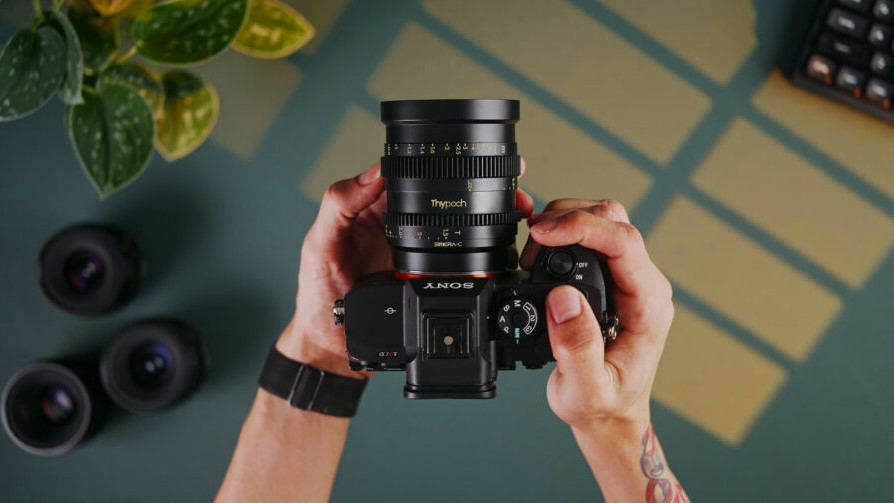
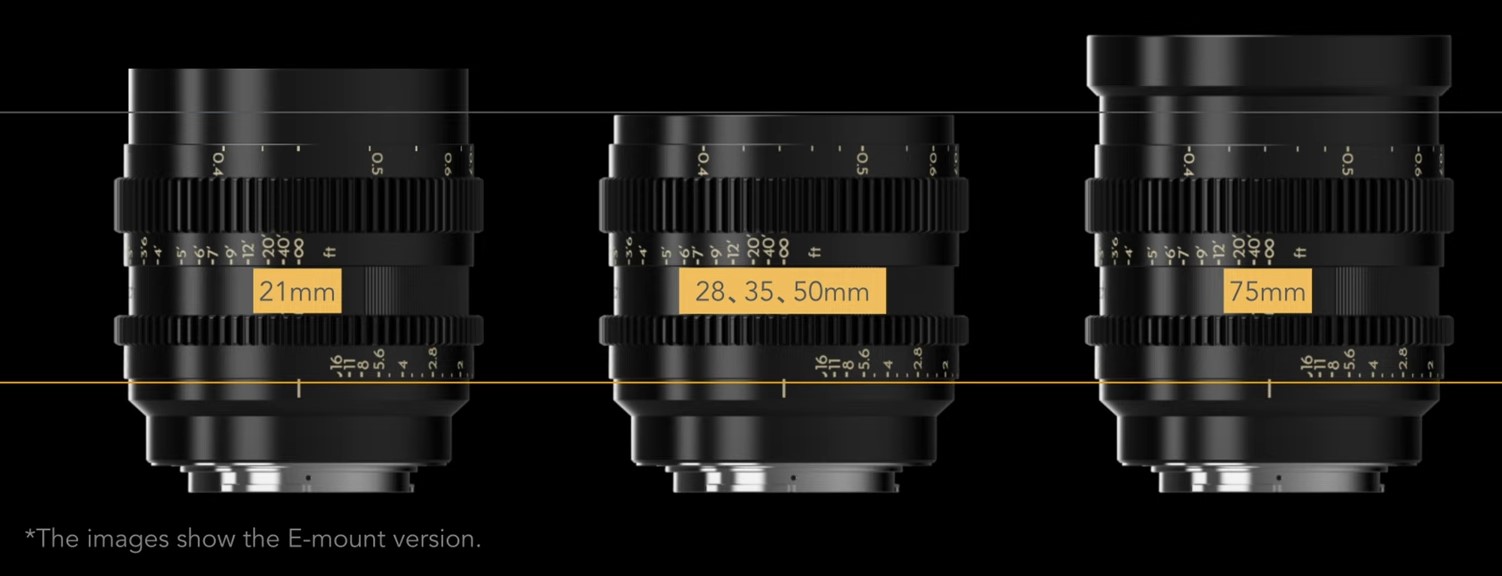
The 21mm Simera cine lens may appear at year's end. From its dimensions, it looks like being much the same weight and max aperture as the others. These being rehoused stills lenses we can perhaps expect this one early next year. These cine lenses will appear in both E and M-mounts first. See below for the 75mm on a Sony body, and the sizes of the cine lenses lineup (images courtesy of Spenser Sakurai). This YT was shot with one of the Simera-C lneses, plenty of detail in this one also:
'Somehow the best lenses I've ever reviewed'
YouTube
Spenser Sakurai
17 Oct 2024
He's looking forward to the 75mm; so am I.
Using the Simera-C 75mm on Sony
The Simera-C range, the 21mm looks to be T1.5 (= f1.4).
'Somehow the best lenses I've ever reviewed'
YouTube
Spenser Sakurai
17 Oct 2024
He's looking forward to the 75mm; so am I.
 |
||
 |
||
|
Using the Simera-C 75mm on Sony
|
||
 |
||
|
The Simera-C range, the 21mm looks to be T1.5 (= f1.4).
Oct 25, 2024 at 06:15 PM
p.3 #13New Thypoch Simera 50mm f/1.4 Announced
Philip_pj I uploaded shots of Simera 50 and SL Summilux both shot on S1R. Note the field of view on the Summilux is slightly wider than the simmer 50.
https://www.flickr.com/photos/201650013@N05/with/54095211300/
https://www.flickr.com/photos/201650013@N05/with/54095211300/
Oct 26, 2024 at 09:22 AM
p.3 #14New Thypoch Simera 50mm f/1.4 Announced
What would make these lenses much more interesting from my perspective: tweak the optics for e-mount.
We know how much you're giving up on the 28/1.4 and 35/1.4 from Bastian's reviews in terms of sensor stack induced FC. The 50/1.4 and 75/1.4 will probably be less to minimally affect, while the 21/1.4 is a wild card, but will probably only like either e or m.
If we had lenses this small and cine ready with uncrippled performance, that would be lovely. They might not be the most characterful lenses, but the utility is extremely high.
@Doug Ball Thanks for posting!
Oct 27, 2024 at 07:24 PM
p.3 #15New Thypoch Simera 50mm f/1.4 Announced
Simera 28/35mm:
'Available Now for Z/E/X/RF Mount
The Simera series expands its lens mount options with native Z, E, X, and RF mounts that are seamlessly integrated into its classic and elegant design. Perfectly compatible with Nikon, Sony, Fujifilm, and Canon mirrorless cameras, it prevents potential image quality loss associated with adapters.'
https://thypoch.com/simera
Simera-C:
'With a maximum image circle of 43.2mm, Simera-C covers full-frame sensors and is also compatible with Super 35 and APS-C formats. Featuring a native Sony E-mount, it works seamlessly with a wide range of cameras, from entry-level mirrorless to high-end systems like DJI Ronin 4D, and Sony Venice. The 28-50mm lenses share a consistent 67mm front diameter for M62 filters, while the 75mm lens uses a 72mm front diameter for M67 filters.'
https://thypoch.com/en/simera-c
I've read the E-mount is next for the stills version of the 50/1.4. The cine lenses will be first released in E-mount, then (from memory) M-mount. People still think Thypoch is a jumped up, el cheapo outfit. They maybe don't know about DZO.
I'm interested in the 75/T1.5 as I believe they will pay greater attention to tolerances and QC - the cine world is very unforgiving due to opportunity costs etc. Also, a 75mm can take best advantage of the 16 blade aperture, and that lens is very well-specified, it's small by MILC standards, and just 450g native to Sony. Close focus quality is vital, as we see in the 50mm in particular. MFD matches the E-mount CV 75/1.5, it's a little closer than the 0.7m of the VM 75/1.5 I use.
Oct 27, 2024 at 11:00 PM
p.3 #16New Thypoch Simera 50mm f/1.4 Announced
I am interested on 75mm 1.5 with 50cm mfd also...
Per Bastian:
https://www.fredmiranda.com/forum/topic/1825553/10#16548544
"I got confirmation from the manufacturer today: the optics are the same as the M-mount version. No adjustments have been made to account for the thicker filter stack of the other camera systems"
https://www.fredmiranda.com/forum/topic/1825553/10#16549366
"They now asked me not to share this information anymore and now claim other systems "have been considered during development so the lenses are optimized for every system"."
philip_pj wrote:
Simera 28/35mm:
'Available Now for Z/E/X/RF Mount
The Simera series expands its lens mount options with native Z, E, X, and RF mounts that are seamlessly integrated into its classic and elegant design. Perfectly compatible with Nikon, Sony, Fujifilm, and Canon mirrorless cameras, it prevents potential image quality loss associated with adapters.'
https://thypoch.com/simera
Simera-C:
'With a maximum image circle of 43.2mm, Simera-C covers full-frame sensors and is also compatible with Super 35 and APS-C formats. Featuring a native Sony E-mount, it works seamlessly with a wide range of cameras, from entry-level mirrorless to high-end systems like DJI Ronin 4D, and Sony Venice. The 28-50mm lenses...Show more →
Oct 28, 2024 at 06:45 AM
p.3 #17New Thypoch Simera 50mm f/1.4 Announced
There is a lot of uncertainly about the issue and there has been for some years. The phrasing of:
'the optics are the same as the M-mount version. No adjustments have been made..'
..could as easily be made by the manufacturer of these three lenses:
https://www.cosina.co.jp/voigtlander/en/vm-mount/nokton-vintage-line-75mm-f1-5-aspherical/
https://www.cosina.co.jp/voigtlander/en/z-mount/nokton-75mm-f1-5-aspherical/
https://www.cosina.co.jp/voigtlander/en/e-mount/nokton-75mm-f1-5-aspherical/
Using as evidence the block diagrams are identical, so what exactly was the optimization made by Cosina to ensure 'the lens is optimized for the image sensors of mirrorless cameras with the Nikon Z-mount.' A similar circumstance applies to the 50/1 Nokton. Cosina have been telling people for ages that their VM lenses work on MILC cameras. This from the 50/1, surely a lens that could be expected to cause cross-mount problems:
'Not only can it be used with many rangefinder cameras, but it also has an excellent balance when attached to a mirrorless digital camera via an appropriate adapter.' What exactly does 'balance' mean in this context? Well, for the 40/1.2 VM we see:
'but *design-wise* it also balances very nicely when mounted on mirrorless digital cameras with a mount adapter.' Not physical, but 'design-wise'. Again, what changed in the newer made for Z-mount, the one with the identical block diagram?
Lost in translation, I am guessing, but room for doubt. If not, DZO will face a lot of returns and loss of reputation if the problem is serious. Come what may, the cine 75 T1.5 is not a knock-off of an M optic, but a native E-mount lens, and it already exists and we have reviews of it.
Oct 28, 2024 at 07:27 PM
p.3 #18New Thypoch Simera 50mm f/1.4 Announced
Last month, Marc Alhadeff tested an E-mount version of the Simera 35/1.4 - one of the 'no adjustment for thicker sensor stacks' ones - and found the corners as good as the CV 35/1.2 at f1.4 and f2; and better than the CV 35/1.4 at all apertures. Imagine if it had been optimized!  He used a Sony A1.
https://sonyalpha.blog/2024/09/04/thypoch-simera-35mm-f1-4/#42_Sharpness_Pique
He comes fairly close to understanding what the lens does in examining its characteristics, but he is interested more in the side-by-side metrics business. As always, a little background reading would help understand our lenses. Cine lenses are, of course, people lenses but just a couple of found portraits here.
https://sonyalpha.blog/2024/09/04/thypoch-simera-35mm-f1-4/#4_Comparison_with_other_35mm_F14_MF_Comparaison_avec_dautres_35mm_F14_MF
He used a Sony A1. https://sonyalpha.blog/2024/09/04/thypoch-simera-35mm-f1-4/#42_Sharpness_Pique
He comes fairly close to understanding what the lens does in examining its characteristics, but he is interested more in the side-by-side metrics business. As always, a little background reading would help understand our lenses. Cine lenses are, of course, people lenses but just a couple of found portraits here.
https://sonyalpha.blog/2024/09/04/thypoch-simera-35mm-f1-4/#4_Comparison_with_other_35mm_F14_MF_Comparaison_avec_dautres_35mm_F14_MF
Oct 28, 2024 at 10:22 PM
p.3 #19New Thypoch Simera 50mm f/1.4 Announced
Meanwhile, I take delivery of the Simera 50/1.4 tomorrow! Excited to see what I can create with this lens.
Oct 29, 2024 at 05:00 AM

p.3 #20New Thypoch Simera 50mm f/1.4 Announced
philip_pj wrote:
There is a lot of uncertainly about the issue and there has been for some years. The phrasing of:
'the optics are the same as the M-mount version. No adjustments have been made..'
..could as easily be made by the manufacturer of these three lenses:
https://www.cosina.co.jp/voigtlander/en/vm-mount/nokton-vintage-line-75mm-f1-5-aspherical/
https://www.cosina.co.jp/voigtlander/en/z-mount/nokton-75mm-f1-5-aspherical/
https://www.cosina.co.jp/voigtlander/en/e-mount/nokton-75mm-f1-5-aspherical/
Using as evidence the block diagrams are identical, so what exactly was the optimization made by Cosina to ensure 'the lens is optimized for the image sensors of mirrorless cameras with the Nikon Z-mount.' A similar circumstance applies to the 50/1 Nokton. Cosina have been telling people for ages that their VM lenses work on MILC cameras....Show more →
I don't think there is the uncertainty that you suggest at least in the ways that are most important. Cosina makes a lot of M lenses for Leica M mount cameras. Some of these lenses they also make for Sony E-mount, Nikon Z-mount, and Canon RF-mount cameras. What isn't uncertain is that when they make these lenses for these other mounts they don't underperform on those mounts compared to how they perform on Leica M mount cameras and perform at least as well. I don't think there are any exceptions to that general rule. What is uncertain is whether they tweaked the lenses to get this at least equivalent performance. Some lenses they may well have not needed to tweak (e.g., the 75 f/1.5), whereas other lenses are clearly different for Leica M mount vs. other mounts (e.g., 50 f/2 APO, which even has a different number of elements with special glass on mirrorless mounts compared the Leica M mount).
In my view, Cosina has been very careful to offer lenses to mirrorless mounts that have really good performance on those mounts. This is in contrast to these new Thypoch lenses. It is clear that the 28 f/1.4 and 35 f/1.4 Thypoch Leica M mount lenses perform better on a Leica M camera than the mirrorless mount versions of these lenses perform on the mirrorless mounts. For cine purposes I am not sure how important that lesser performance is--I am ambivalent about that myself--but it is a notable difference between these Thypoch lenses and Cosina Voigtlander lenses. Perhaps part of the reason there are so many Leica M mount Voigtlander 28 and 35 mm lenses that don't have corresponding mirrorless mount versions is that making such lenses that perform as well on mirrorless cameras as they do on Leica M cameras is not an easy adjustment. It appears that Thypoch has taken the road of not adjusting and just living with the reduced performance, whereas Cosina has not brought out lenses with reduced performance in mirrorless mounts. I am not sure what I prefer, but the difference is notable.
Oct 29, 2024 at 06:19 AM