fredmiranda.com
Login

Moderated by: Fred Miranda
  New fredmiranda.com Mobile Site
  New Feature: SMS Notification alert
  New Feature: Buy & Sell Watchlist
  

FM Forums | Micro Four Thirds Forum | Join Upload & Sell

1       2              4              6       7       end
  

Archive 2024 · Sony A1 & 200-600mm against OM-1 II M.Zuiko & 300mm


ruthenium
Offline
• • • •
Upload & Sell: On
p.3 #1 · Sony A1 & 200-600mm against OM-1 II M.Zuiko & 300mm


Every photography high-end piece of equipment is a compromise of a sort. There are various questions that are asked or can be asked. For example, I like hiking, and when choosing between a heavier 50MP camera system and a considerably lighter and compact high-end pro-quality 20MP camera system, my choice is to take the latter. Am I going to come home with inferior photos? No, I doubt this very much.
Professional wildlife and sports photographers may have different needs and this is understood that theirs can be completely different from what an enthusiast photographer wants.
There is no need for a confrontation. Something else, it is natural for a FF photographer to be skeptical about a cropped-sensor camera. There are some entrenched dogmas. In actual use, there are different important advantages offered by the different formats. I have both the OM-1 II and A1. The latter cannot shoot 2s exposures hand-held, or even combine 8 such long exposures into a 14-bit raw file in camera. My A1 doesn't have pre capture, and it cannot shoot at 50 fps. Of course, I don’t mean to say that one is better than the other. It all depends on what you do. It is often said that it is good to have options and choices. I started this thread to post factual observations that can be useful to some photographers who are interested in options. As simple as that.


Jun 11, 2024 at 10:08 PM
Imagemaster
Offline
• • • • • • •
Upload & Sell: On
p.3 #2 · Sony A1 & 200-600mm against OM-1 II M.Zuiko & 300mm


Anyone can post all the test images they want comparing ISO's, IQ, noise, bokeh, etc., etc.,but there are so many variables amongst not only those factors, but also how and what an individual takes photos of and how they take those photos. There are also all the variables of lenses and cameras, and even differences in how a copy of the exact same lens compares. There is also the post-processing skills that can greatly improve the 'look' of the final image.

Buy the cheapest gear or buy the most expensive gear. Often there are photographers that produce far better images with the cheapest gear than many that use the most expensive gear. Just like there are many photographers than produce better images using M4/3 gear than many using FF gear.

Canon R50 - $650 & 13.2 oz (375g) with battery.
Canon RF 800mm f11 - $1,000 & 2.77 lbs. (1260g)

I also shoot with Canon R5 & R6 II, and various RF lenses. Whatever works.


  Canon EOS R50    RF800mm F11 IS STM lens    800mm    f/11.0    1/1000s    6400 ISO    0.0 EV  


  Canon EOS R50    RF800mm F11 IS STM lens    800mm    f/11.0    1/100s    640 ISO    0.0 EV  


  Canon EOS R50    RF100-400mm F5.6-8 IS USM lens    400mm    f/9.0    1/250s    2000 ISO    0.0 EV  


  Canon EOS R50    RF100-500mm F4.5-7.1 L IS USM + EXTENDER RF2x lens    1000mm    f/16.0    1/125s    5000 ISO    0.0 EV  


Jun 11, 2024 at 11:52 PM
MEDISN
Offline
• •
Upload & Sell: Off
p.3 #3 · Sony A1 & 200-600mm against OM-1 II M.Zuiko & 300mm


telyt wrote:
This is why YMMV. I have several wildlife portraits that have sold quite well. Wildlife photography isn't something you do on the side.

There's also aliasing and color moire in feather detail: it's something I encountered frequently with a 10MP camera, often with a 24MP camera, and never in the last 3+ years with a 50MP camera.


I am curious what “selling well” equates to for wildlife? The handful of professional wildlife photographers I have met over the years give me the impression that it is not lucrative.

I have found aliasing and moire in my R5, SL2 and SL3 so which 50MP camera are you saying eliminates this?


Jun 11, 2024 at 11:59 PM
telyt
Offline
• • • •
Upload & Sell: Off
p.3 #4 · Sony A1 & 200-600mm against OM-1 II M.Zuiko & 300mm


Imagemaster wrote:
Anyone can post all the test images they want comparing ISO's, IQ, noise, bokeh, etc., etc.,but there are so many variables amongst not only those factors, but also how and what an individual takes photos of and how they take those photos. There are also all the variables of lenses and cameras, and even differences in how a copy of the exact same lens compares. There is also the post-processing skills that can greatly improve the 'look' of the final image.

Buy the cheapest gear or buy the most expensive gear. Often there are photographers that produce far better images with
...Show more

These are over-processed to my taste. To each his own.


Jun 12, 2024 at 12:42 AM
somersettr
Offline
• •
Upload & Sell: Off
p.3 #5 · Sony A1 & 200-600mm against OM-1 II M.Zuiko & 300mm


My experience of the Olympus 300 f/4 PRO is a bit more mixed. In my case I used it with the E-M1 I, II and III so that was most likely a significant contributing factor but I still had reservations about the lens.

My issues were the inconsistency of focus accuracy in continuous autofocus. I spent years trying to figure out whether this could be improved but in the end, gave up. In my investigations, I did a lot of testing and analysis of the embedded exif data. The exif data icluded atributes called FocusDistance and FocusStepCount and I was able to compare these with sharpness of the images.

The FocusStepCount field can be interpreted as the number of discrete focus distance settings from closest focus to infinity and is an integer number. With the E-M1's, the FocusStepCount varied significantly even with a stationary subject which was almost certainly down to the inadequacies of the Olympus pdaf algorithm and system and this may well have been improved with the OM-1 I and II. However, I also had two further concerns at the time that that would relate to the lens.

1. Given that the FocusStepCount was an integer, there were distances where an individual focus step represented a sighnificantly large distance. i.e. larger than the bird I was trying to photograph. So my concern was, did the design of the lens have a focus step resolution limitation baked in that meant perfect focus was unachievable?

2. There were instances where two images of a stationary subject had the same FocusStepCount but were not equally sharp. This gave me a concern about the repeatibility of the focusing system in the lens.

Both these suggestions are speculation on my part brought about by frustration with the accuracy of the focus system. The lens itself can be sharp but, with moving subjects, you could never be sure when that would be. I switched system to the A9 II with the 200-600 and spent my time taking photographs instead of trying to figure out how to make continuous autofocus work!


Jun 12, 2024 at 03:35 AM
Tom Reynolds
Offline
• • •
Upload & Sell: On
p.3 #6 · Sony A1 & 200-600mm against OM-1 II M.Zuiko & 300mm


You need an OM-1 m2. However @ 50 f/s not every frame is sharp but the vast majority are.

Tom


Jun 12, 2024 at 10:30 AM
robert_in_ca
Offline
• • • •
Upload & Sell: On
p.3 #7 · Sony A1 & 200-600mm against OM-1 II M.Zuiko & 300mm


somersettr wrote:
My experience of the Olympus 300 f/4 PRO is a bit more mixed. In my case I used it with the E-M1 I, II and III so that was most likely a significant contributing factor but I still had reservations about the lens.

My issues were the inconsistency of focus accuracy in continuous autofocus. I spent years trying to figure out whether this could be improved but in the end, gave up. In my investigations, I did a lot of testing and analysis of the embedded exif data. The exif data icluded atributes called FocusDistance and FocusStepCount and I was able
...Show more

Having used Olympus cameras for over 15 years, I can say with confidence it's not the lens. The E-M1's including the E-M1X do not have great tracking and you'll need to overshoot with them. If you can, rent the OM-1 or OM-1 Mk2 and test it out with the 300mm. Below are some examples with the OM-1 - the tracking was spot on and nearly all the photos in the sequences where in focus.


  OM-1    OLYMPUS M.150-400mm F4.5 lens    400mm    f/4.5    1/6400s    1250 ISO    0.0 EV  


  OM-1    OLYMPUS M.150-400mm F4.5 TC lens    500mm    f/5.6    1/3200s    4000 ISO    -0.3 EV  


  OM-1    OLYMPUS M.150-400mm F4.5 TC lens    500mm    f/5.6    1/640s    1000 ISO    +0.3 EV  


Jun 12, 2024 at 11:02 AM
Imagemaster
Offline
• • • • • • •
Upload & Sell: On
p.3 #8 · Sony A1 & 200-600mm against OM-1 II M.Zuiko & 300mm


telyt wrote:
These are over-processed to my taste. To each his own.


Thanks for reinforcing what I wrote. Different tastes are just one of the many variables. You also do not have the same eyesight as everyone else, nor are you viewing exactly the same image as everyone else. Different monitor, etc. The images I posted look a lot better to some than others, and vice-versa.


Jun 12, 2024 at 11:18 AM
birderbill1
Offline

Upload & Sell: Off
p.3 #9 · Sony A1 & 200-600mm against OM-1 II M.Zuiko & 300mm


ruthenium wrote:
Re "I really do miss using the back wheel ISO control with zebras", I use both on my OM-1 II. The back wheel can be programmed to change the ISO. The front wheel can be used for exposure compensation. Maybe we are talking about different things?


I'm referring to the wheel on the back of the A1, its at the same location as the arrow pad is on the OM-1. Using it to adjust ISO and with zebras indicating overexposed areas the wheel can be used to very quickly arrive at the best exposure level on the subject. Trying to use the highlight/shadow warning on the OM-1 and adjusting ISO via arrow pad or wheels is just no where near as quick or accurate.


Jun 12, 2024 at 11:05 PM
Tom Reynolds
Offline
• • •
Upload & Sell: On
p.3 #10 · Sony A1 & 200-600mm against OM-1 II M.Zuiko & 300mm


I simply press the EXP COMP button on the top of the OM-1 and rotate the rear command dial. Sounds, however, like the A1 is easier-one less step


Jun 12, 2024 at 11:42 PM
A74me
Offline
• •
Upload & Sell: Off
p.3 #11 · Sony A1 & 200-600mm against OM-1 II M.Zuiko & 300mm


somersettr wrote:
My experience of the Olympus 300 f/4 PRO is a bit more mixed. In my case I used it with the E-M1 I, II and III so that was most likely a significant contributing factor but I still had reservations about the lens.

My issues were the inconsistency of focus accuracy in continuous autofocus. I spent years trying to figure out whether this could be improved but in the end, gave up. In my investigations, I did a lot of testing and analysis of the embedded exif data. The exif data icluded atributes called FocusDistance and FocusStepCount and I was able
...Show more

same, i shot olympus for 5 years including pro shoots auto focus on my new em1mk2 was useless on the original firmware ,then the new firmware came out and it improved quite a bit, but still was very unrealiable even shooting studio portraits, sold all my m43 gear bought a a7r2 which left my olympus gear for dead but still not perfect focus, then came the a7iv the auto fucus is perfect. it will be my 10 year studio event camera its that good.


Jun 13, 2024 at 02:29 AM
ruthenium
Offline
• • • •
Upload & Sell: On
p.3 #12 · Sony A1 & 200-600mm against OM-1 II M.Zuiko & 300mm


A74me wrote:
same, i shot olympus for 5 years including pro shoots auto focus on my new em1mk2 was useless on the original firmware ,then the new firmware came out and it improved quite a bit, but still was very unrealiable even shooting studio portraits, sold all my m43 gear bought a a7r2 which left my olympus gear for dead but still not perfect focus, then came the a7iv the auto fucus is perfect. it will be my 10 year studio event camera its that good.

I took hundreds of test shots with my OM-1 II & M.Zuiko 300mm F4. I have not experienced inconsistent inaccurate focusing.

Unrelated to the lens, subject (human, bird, animal) recognition by the camera usually feels instantaneous. As soon as one of the subjects appears in the viewfinder, the camera shows a grey frame around the subject. Eye recognition is good as well.

I find this convenient that OM-1 has four, C1-C4, positions on the upper (PASM) dial, where almost every existing camera setting is saved. It helps quickly switching from settings for landscapes to humans to birds or fast action. In C1, that I set for landscapes and static subjects in general, one of the settings tells the camera to raise ISO from base only when the SS is longer than 2s - the time I can normally shoot hand-held in the focal range up to 50mm (FF 100mm).


Jun 13, 2024 at 06:41 AM
Paul_100A
Offline
• • •
Upload & Sell: Off
p.3 #13 · Sony A1 & 200-600mm against OM-1 II M.Zuiko & 300mm


ruthenium wrote:
I took hundreds of test shots with my OM-1 II & M.Zuiko 300mm F4. I have not experienced inconsistent inaccurate focusing.

Unrelated to the lens, subject (human, bird, animal) recognition by the camera usually feels instantaneous. As soon as one of the subjects appears in the viewfinder, the camera shows a grey frame around the subject. Eye recognition is good as well.

I find this convenient that OM-1 has four, C1-C4, positions on the upper (PASM) dial, where almost every existing camera setting is saved. It helps quickly switching from settings for landscapes to humans to birds or fast action.
...Show more

you might like to assign direct buttons to toggle your most often used C modes.

if you do, i advise you to program each C mode with the respective button(s) of the other C modes. that way you can toggle directly into any of the C modes from any of the other C modes instead of having to first toggle out of any particular C mode and then toggling into another.


Jun 13, 2024 at 10:30 AM
somersettr
Offline
• •
Upload & Sell: Off
p.3 #14 · Sony A1 & 200-600mm against OM-1 II M.Zuiko & 300mm


ruthenium wrote:
I took hundreds of test shots with my OM-1 II & M.Zuiko 300mm F4. I have not experienced inconsistent inaccurate focusing.

...


Was that shooting burst of a static subject with continuous autofocus? That's where I had problems. Well, I had problems with moving subjects too but I used static subjects to analyse it.


Jun 13, 2024 at 11:43 AM
A74me
Offline
• •
Upload & Sell: Off
p.3 #15 · Sony A1 & 200-600mm against OM-1 II M.Zuiko & 300mm


ruthenium wrote:
I took hundreds of test shots with my OM-1 II & M.Zuiko 300mm F4. I have not experienced inconsistent inaccurate focusing.

Unrelated to the lens, subject (human, bird, animal) recognition by the camera usually feels instantaneous. As soon as one of the subjects appears in the viewfinder, the camera shows a grey frame around the subject. Eye recognition is good as well.

I find this convenient that OM-1 has four, C1-C4, positions on the upper (PASM) dial, where almost every existing camera setting is saved. It helps quickly switching from settings for landscapes to humans to birds or fast action.
...Show more
looking back at my 5 years with olympus the em52 images stand out as the best rendering skintones. loved the little camera.


Jun 13, 2024 at 02:31 PM
ruthenium
Offline
• • • •
Upload & Sell: On
p.3 #16 · Sony A1 & 200-600mm against OM-1 II M.Zuiko & 300mm


somersettr wrote:
Was that shooting burst of a static subject with continuous autofocus? That's where I had problems. Well, I had problems with moving subjects too but I used static subjects to analyse it.


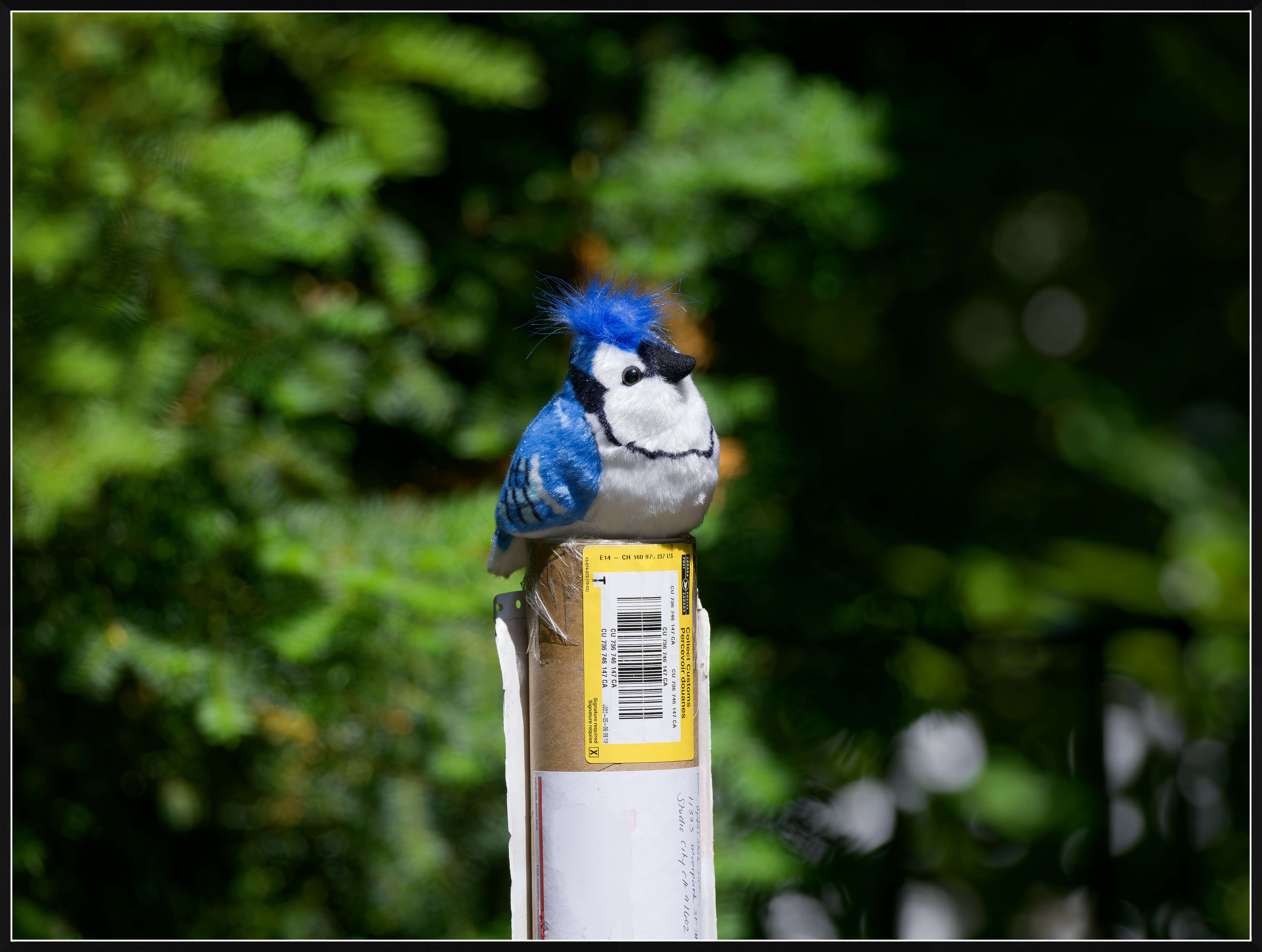
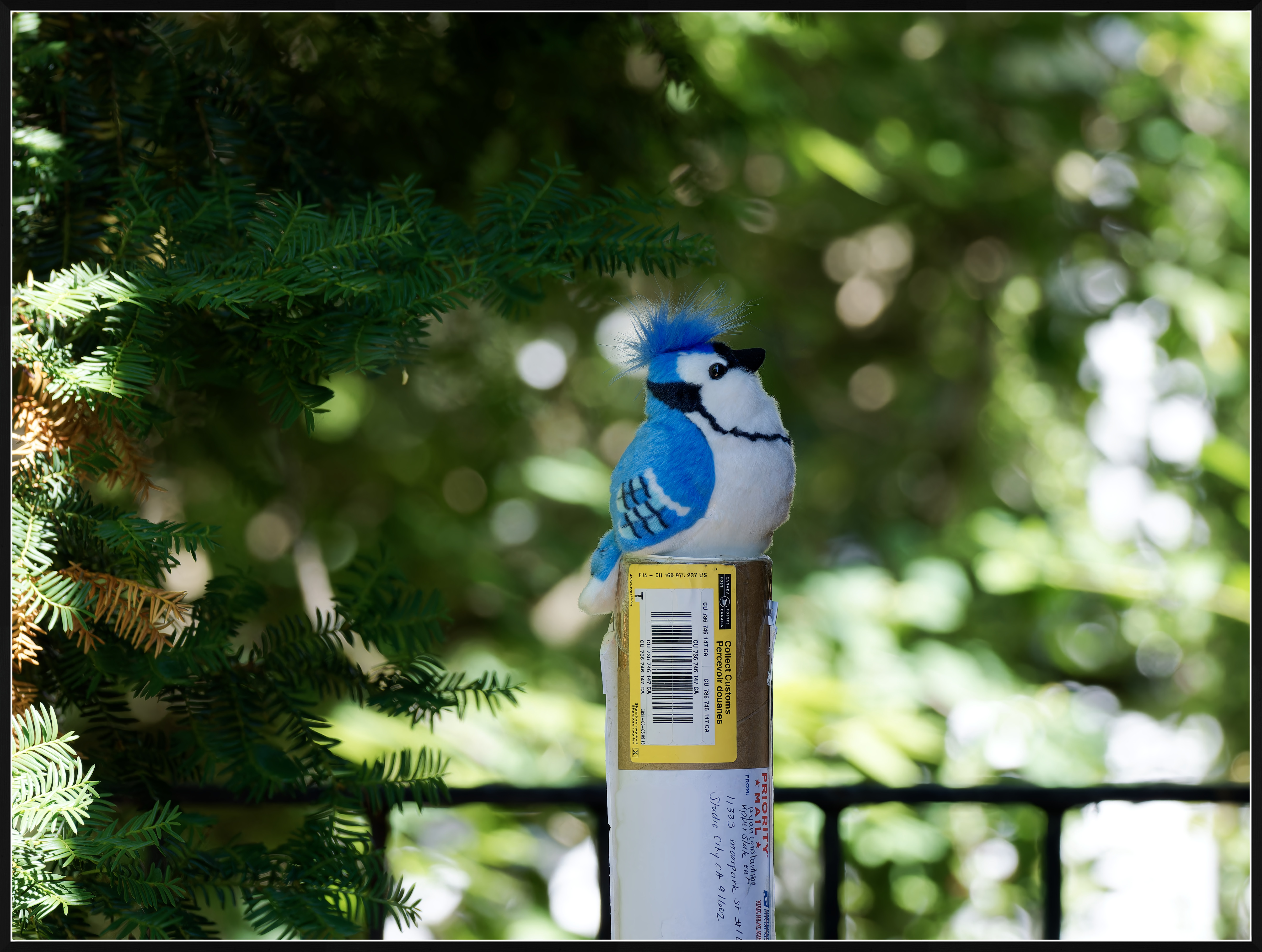
Today, I fired six 50 fps bursts on a static subject - a toy bird, using AF-C and subject (bird) recognition, at 1/2500 shutter speed; bird AF was engaged throughout; that is, the camera (OM-1 II) was set to focus for every shot in a burst. Each burst was limited to 50 shots, including 25 in pre-capture. I placed the bird in direct sunlight (see upload 1) and in the shadow of some dense bush (see upload 2). In the latter case, the ISO increased to 2500.
In the sunlight, at low ISO, >90% of the shots were critically sharp. There was hardly any problem at all.
In the shadow, at high ISO, the percentage of critically sharp shots dropped. Of the 50 shots in a burst, perhaps, about 12 - 15 were critically sharp, whereas 10 more were acceptably sharp. The visibly softer images were slightly softer. That is, there was no wild focus hunting.
The observations present no reason for concern. The lens can focus consistently, given enough light.
When there is less light, one can still obtain a good number of critically sharp images in a burst at 50 fps.


  OM-1MarkII     OLYMPUS M.300mm F4.0 lens    300mm    f/4.0    1/2500s    200 ISO    -1.3 EV  


  OM-1MarkII     OLYMPUS M.300mm F4.0 lens    300mm    f/4.0    1/2500s    2500 ISO    -0.3 EV  


Jun 14, 2024 at 09:28 PM
MEDISN
Offline
• •
Upload & Sell: Off
p.3 #17 · Sony A1 & 200-600mm against OM-1 II M.Zuiko & 300mm


ruthenium wrote:
I took hundreds of test shots with my OM-1 II & M.Zuiko 300mm F4. I have not experienced inconsistent inaccurate focusing.


Same experience. Prior to FW 1.3 on the OM1, there was occasional "focus sawing" where the camera might push/pull focus over the subject at times. That disappeared with FW 1.3.


The OM1.2 rarely loses focus and if it does it regains it very quickly - within 1-2 frames.


Jun 17, 2024 at 09:17 AM
userjjb
Offline

Upload & Sell: Off
p.3 #18 · Sony A1 & 200-600mm against OM-1 II M.Zuiko & 300mm


ruthenium wrote:
Thank you! Yes, I completely forgot that "equivalent ISO settings are related through R squared."


---------------------------------------------

mogul wrote:
ISO means nothing as each manufacturers have their own idea of digital ISO.


While there is some variability in ISO, there is not as much as you'd think and definitely not in this case. For example from ruthenium's original post:
300mm, SS (ISO): 1/80 (200), 1/200 (500), 1/400 (1000), 1/640 (1600), 1/1250 (3200)
200-600mm at 600 mm, SS (ISO): 1/30 (200), 1/80 (500), 1/160 (1000), 1/250 (1600), 1/500 (3200)

Properly applying equivalence we know that if we want to think of a M43 300mm lens as an equivalent FF 600mm lens, we have a crop factor of 2 and therefore the Olympus lens is equivalent to a f/8 FF lens and (8^2)/(6.3^2)=1.61 times slower or 0.69 stops slower. We also know that equivalent ISO ratio is the square of the crop factor, in this case this is 4.

Putting together the above two facts, we expect an equivalent FF shot (i.e. one that captures the same total light for the same shutter speed as a M43 one) to use an ISO 4/1.61 = 2.48 times higher. And what do you know, the ISO ratio between the M43 and FF shots at 1/80 of a second is 2.5; very close to our calculated value of 2.48. Bear in mind that although the FF shot has an ISO 2.5 times higher, this shot actually has noise comparable* to a 500/4 = 125 ISO shot on M43; that is to say 0.69 stops less noise. This is because the 200-600 at f/6.3 collects 0.69 stops more light from its larger relative aperture.

*[This statement assumes two FF and M43 sensors from a similar sensor generation with similar noise behavior. This is not broadly true for the A1 and OM-1 MII to my knowledge, but provides a basis for comparison]

Edited on Jun 25, 2024 at 12:17 PM · View previous versions


Jun 22, 2024 at 12:42 AM
JasonTheBirder
Offline
• • •
Upload & Sell: Off
p.3 #19 · Sony A1 & 200-600mm against OM-1 II M.Zuiko & 300mm


The main problem here is that in terms of number of pixels on the bird, 300mm on micro four thirds provides about the same number of pixels on your bird as 1.23*300 = 372mm on the Sony a1 -- you've got to consider pixel density and not just field of view, considering most bird photographers will be cropping. So with the Sony 200-600 you're getting 1.62x times as much reach. Of course, that doesn't account for the fact that with the Olympus 300mm you'll be aiming for *different* shots when the bird is closer, BUT, for those cases where you can't get closer and won't see that species again, there's really not much comparison.

Of course, you can attach a 1.4 TC to that 300mm f/4 prime, equalizing the scenario somewhat....whereas attaching a TC to the 200-600 is not that great. Still, for those who prefer to shoot with bare lenses, it's something to be considered, especially since later, IF you decide to upgrade from a superzoom to a prime, you've got longer primes like the 600 f/4 that the micro four thirds system simply does not have.


Jun 24, 2024 at 08:45 AM
Paul_100A
Offline
• • •
Upload & Sell: Off
p.3 #20 · Sony A1 & 200-600mm against OM-1 II M.Zuiko & 300mm


JasonTheBirder wrote:
The main problem here is that in terms of number of pixels on the bird, 300mm on micro four thirds provides about the same number of pixels on your bird as 1.23*300 = 372mm on the Sony a1 -- you've got to consider pixel density and not just field of view, considering most bird photographers will be cropping. So with the Sony 200-600 you're getting 1.62x times as much reach. Of course, that doesn't account for the fact that with the Olympus 300mm you'll be aiming for *different* shots when the bird is closer, BUT, for those cases where you
...Show more

funny how maths are used to prove the superiority of FF over the 2X crop format yet the following always happens to me and my colleagues...in the real world...

*the m4/3 300 f/4 is the same as the FF 600 f/4 according to myself, and my colleagues who use FF and a 600 f/4, when comparing images taken shoulder to shoulder.

between myself and my colleagues the talking point arising from comparison of images from the two formats is always the same...there is no notable difference of IQ...just size, weight, and, money.

I stopped, long ago, unless they ask, comparing images captured with my 2X crop format equipment to those captured with my colleague's FF 600 f/4 equipment as I know it is simply cruel for them to see, time and time again, what the maths do not actually reveal.

i'm not into the maths of photography...but i find this interesting..."number of pixels on your bird"...
if interested...look at this absolutely lovely image, aesthetically-wise, image taken with an A1 and 600 f/4...
https://www.dpreview.com/challenges/Entry.aspx?ID=1247591
good from far, far from good, relating to IQ, in my book.
this image, and any image like it, would be a delete for me 100 times out of 100 times.
i've never had to even consider using images with such low image quality when using m4/3.
weird or what?
how many A1 pixels do you suppose were on this bird?

what's better...optically enlarging the data/subject before it arrives at the sensor or enlarging the data/subject from the sensor afterwards?

what do you think of the sharpness and crispness of the details of the A1 and 600 f/4 when looking at this image?

i've used FF (since 2012) for people stuff (and love it) and i've used m4/3 for birds/wildlife.
i bought a second high speed AF Sony FF camera with the 200-600 and 1.4X TC (all brand new) planning to consolidate into one system.
-you are correct...using the 1.4X on the 200-600 quickly proved to be a no no for me.
so, i shot in APS-C mode mostly all the time.
long story short...i found it very easy to arrive at the decision to, and did so, go back to m4/3 for birds/wildlife.
i realized that i was using a FF camera in crop mode most of the time (throwing away a huge portion of the sensor's pixels) and therefor i might as well use a 2X crop mode sensor, and all of that sensor, instead.


Jun 24, 2024 at 11:37 AM
1       2              4              6       7       end


FM Forums | Micro Four Thirds Forum | Join Upload & Sell

1       2              4              6       7       end


Welcome back
Log in to your account