ruthenium
Offline
• • • •
Upload & Sell: On
|
 p.1 #1 · Sony A1 & 200-600mm against OM-1 II M.Zuiko & 300mm p.1 #1 · Sony A1 & 200-600mm against OM-1 II M.Zuiko & 300mm | |
I believe this post might be of interest to FF and MFT photographers who use long telephoto lenses.
I compared the two camera systems in my kit: Sony A1 with the 200-600mm F5.6-6.3 G lens against OM-1 II with the Olympus M.Zuiko ED 300mm F4.0 IS PRO lens (the 200-600mm lens is currently priced at US$1,898. The M.Zuiko 300mm is more expensive at US$ 2,800 that reflects the PRO designation of the lens).
Some observations.
1) Size and weight: Upload 1 (admittedly an ugly picture, taken with my phone) illustrates the differences in size of the Sony and OM/Olympus systems. Understandably, the latter is more compact. The 300mm lens is comparable in size to the Sony 70-200 F2.8 GM II lens. Note that the hood of the 300 mm lens is retractable; it slides back and forth (I find this convenient in use).
The A1 & 200-600 system weighs 3080 g with the hood attached.
The OM-1 II & 300 system weighs 1916 g.
I weighed both systems on a balance accurate to +/- 1g, with the tripod leg removed from the 200-600; the tripod leg&collar were removed from the 300mm lens as well. I believe that the 300mm lens would rarely need a tripod considering that the OM-1 II has an excellent IS and the lens is not too heavy.
2) Focal length: the Olympus M.Zuiko ED 300mm lens is regarded as equivalent to a 600mm FF lens. The 200-600 has the FL of 600mm at the long end, when focussed to infinity. At shorter distances, the lens is wider. For example, it has been noted that when the focus distance is 4.5 to 7.5 m, the FL is in the 520 – 530mm range at the longest. (https://arihazeghiphotography.com/blog/sony-fe-200-600mm-f-5-6-6-3-g-oss-review/).
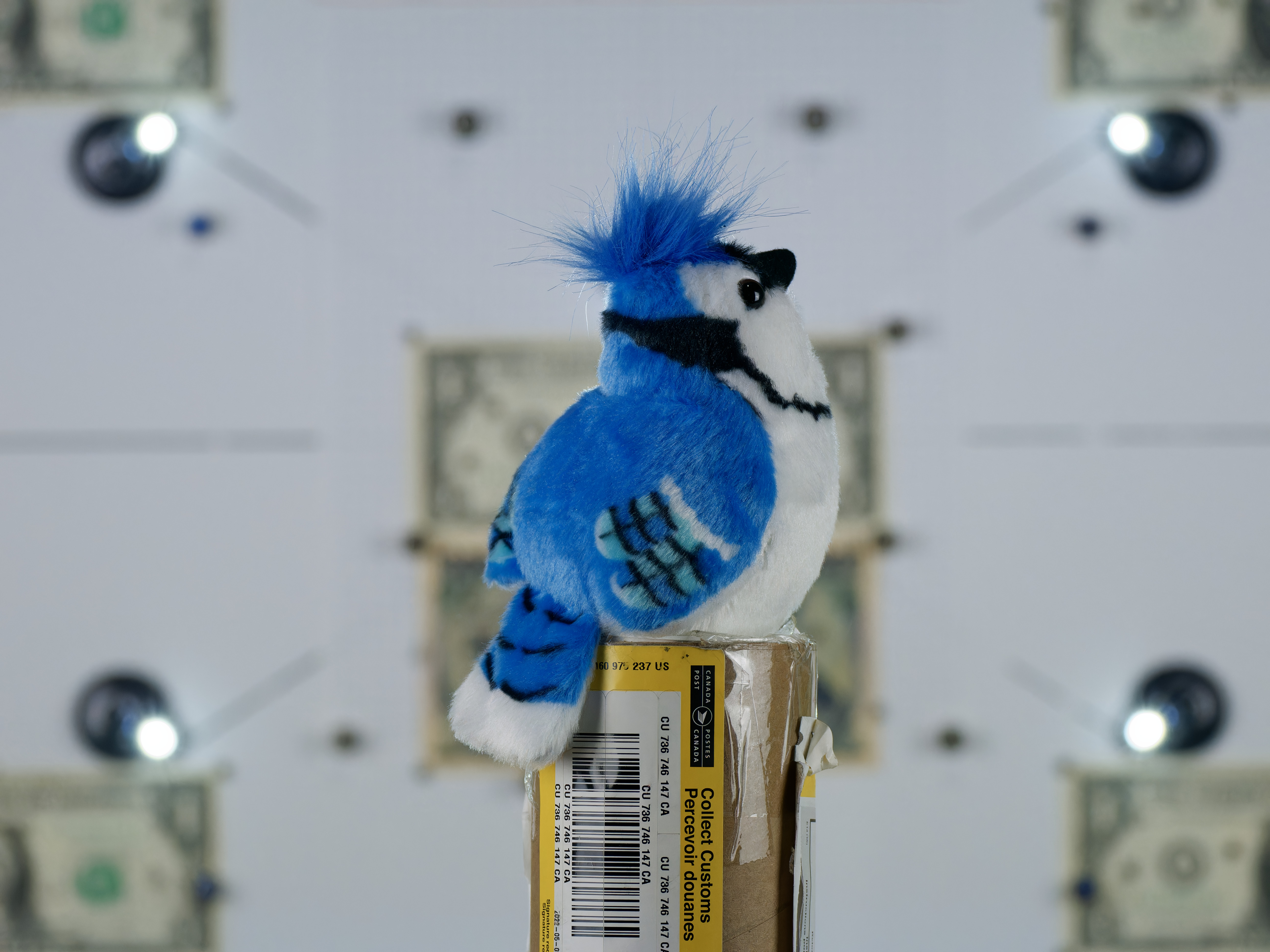
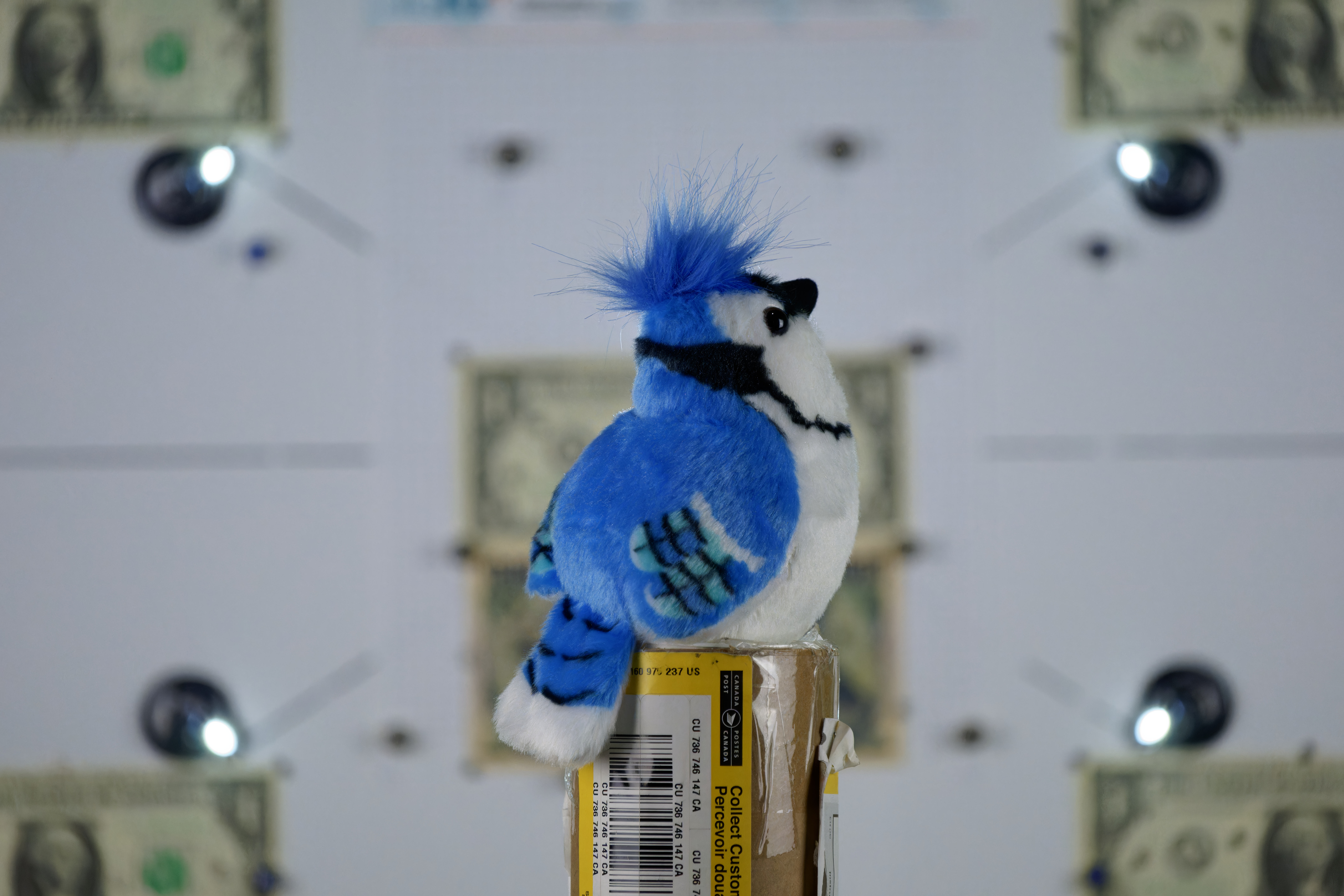
Uploads 2 and 3 demonstrate that the 200-600 is wider at 600mm compared to the M.Zuiko 300 mm lens. From the focus distance of 5.1 m and the horizontal span of the area captured by the 200-600mm lens of 33 cm (in upload 3), I estimated the FL of 550mm.
3) Lens “speed”: I observed a consistent difference of one to one and a third stops between the Sony and OM/Olympus systems, the 200-600 being the slower one (yes, you read this correctly). When used wide-open, the shutter speeds are systematically slower for the Sony lens, at the same ISO and under equivalent light (no external light in the basement of my home at night). Here are the data I recorded under the light I have in the basement (all measurements were done in one evening, from the same focusing distance; there has been no change in the shooting conditions).
300mm, SS (ISO): 1/80 (200), 1/200 (500), 1/400 (1000), 1/640 (1600), 1/1250 (3200), 1/2500 (6400), 1/5000 (12800).
200-600mm at 600 mm, SS (ISO): 1/30 (200), 1/80 (500), 1/160 (1000), 1/250 (1600), 1/500 (3200), 1/1000 (6400), 1/2000 (12800).
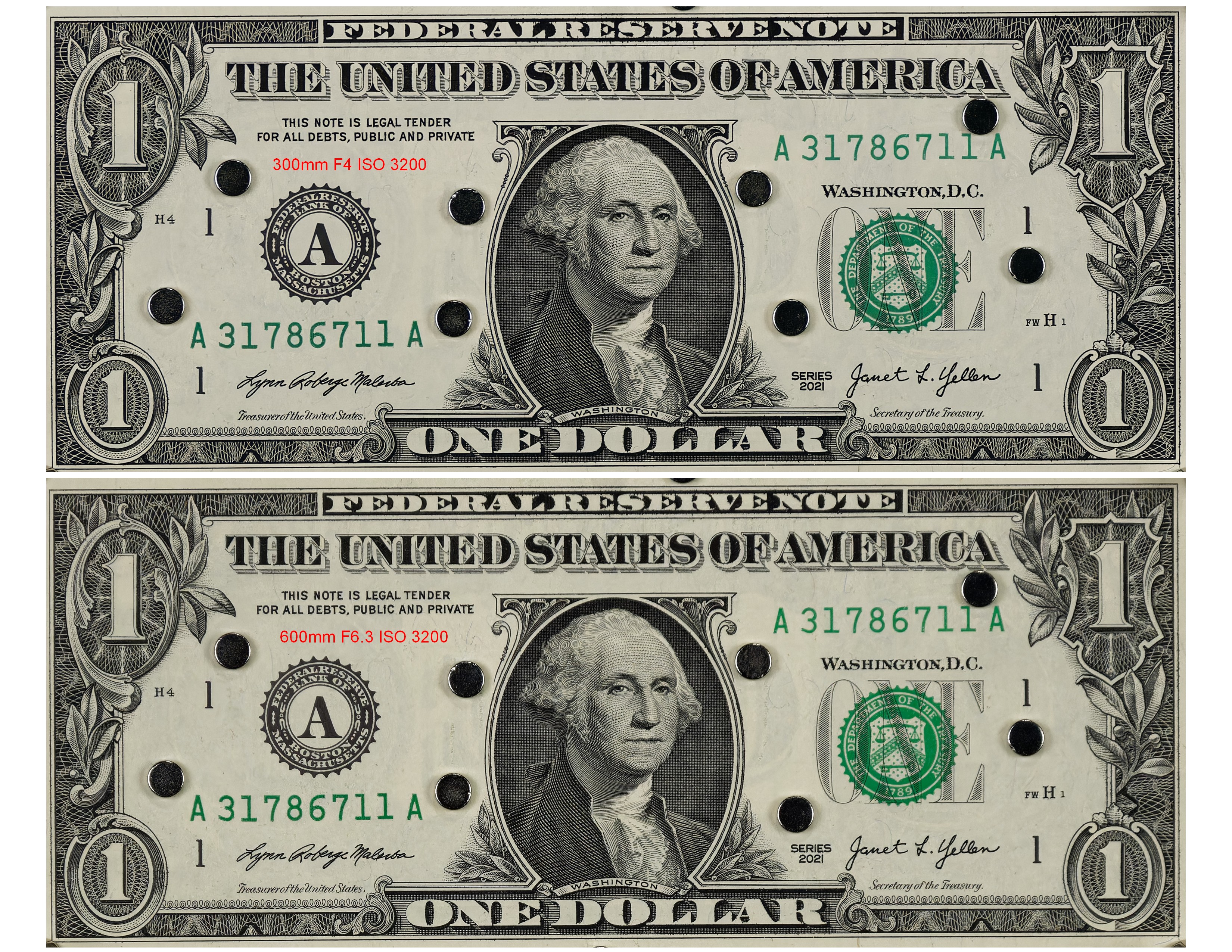
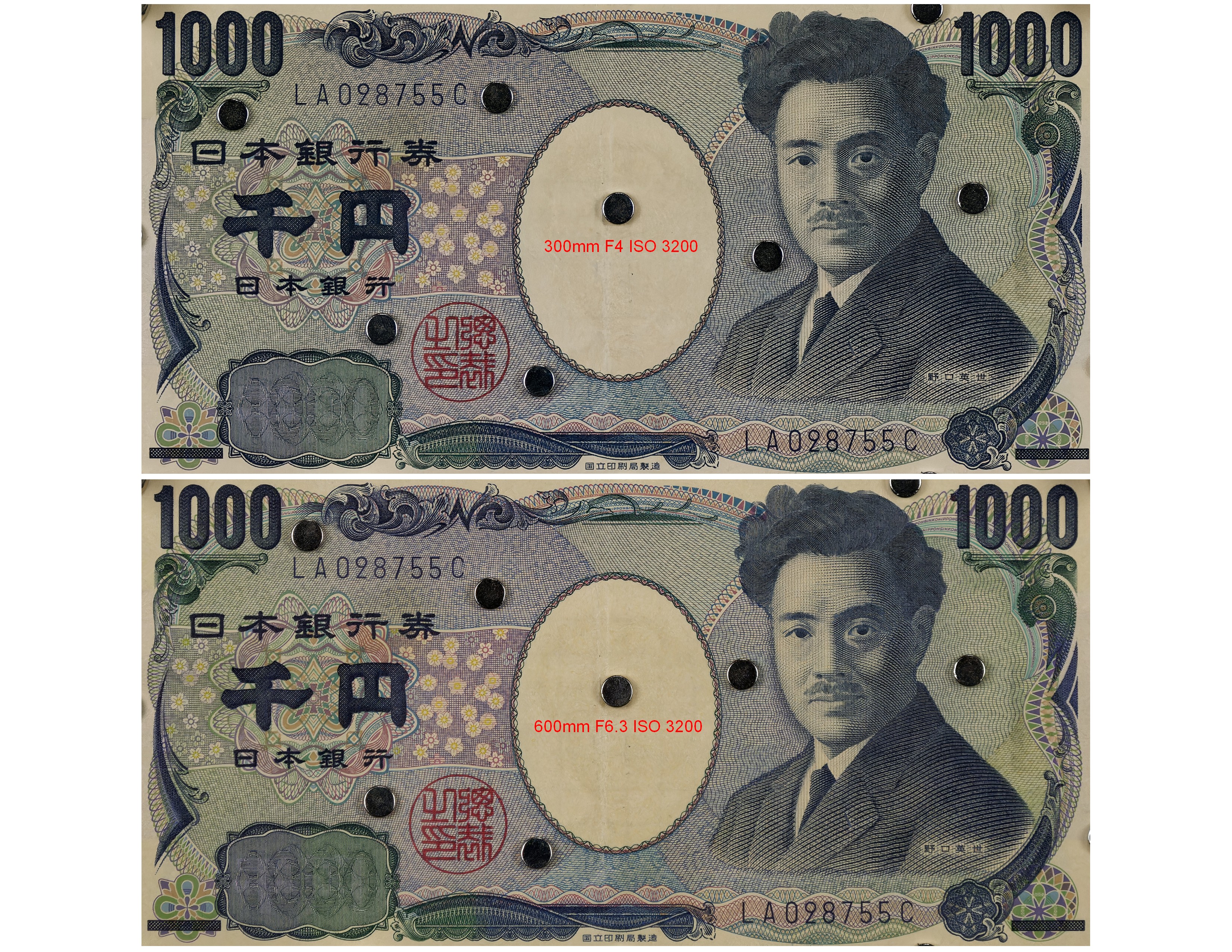
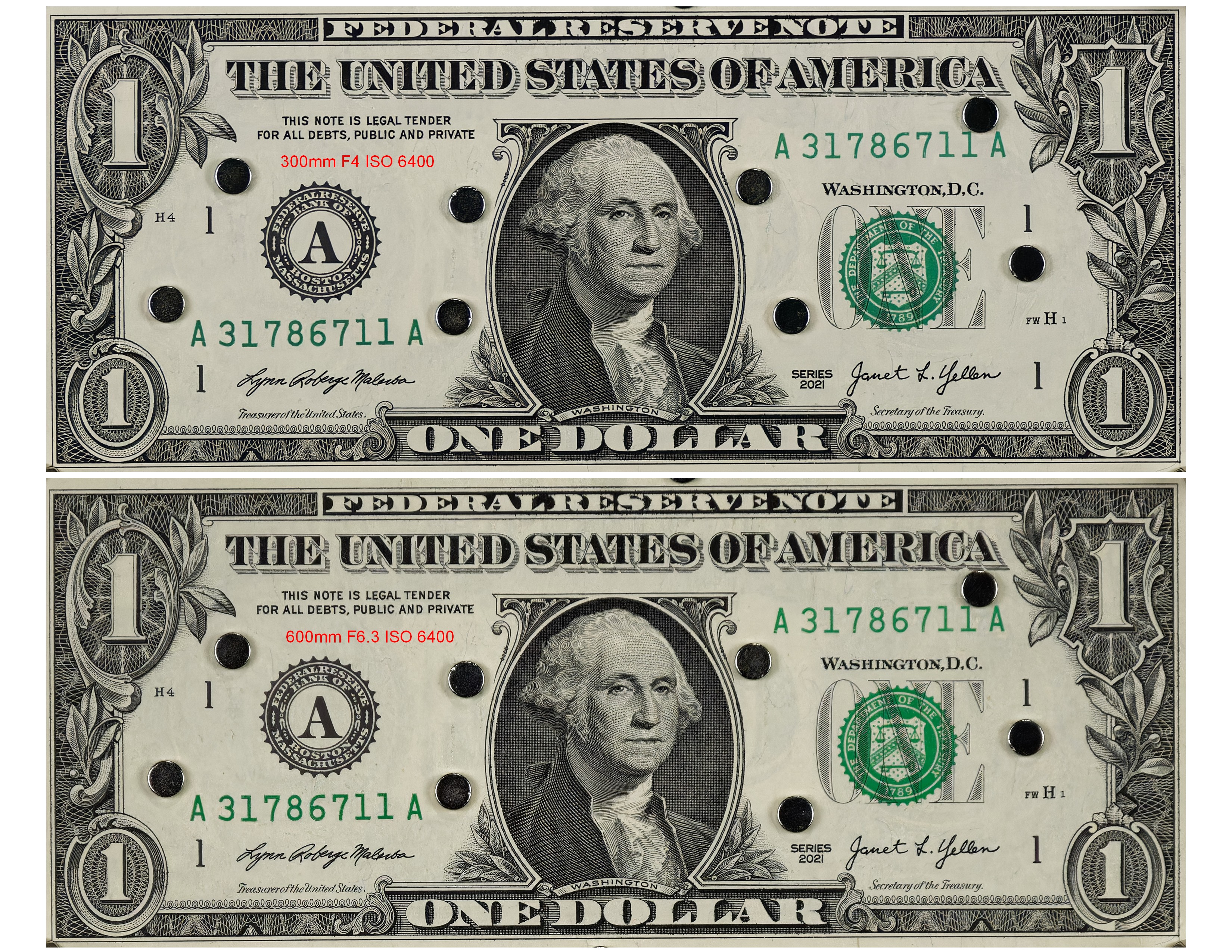
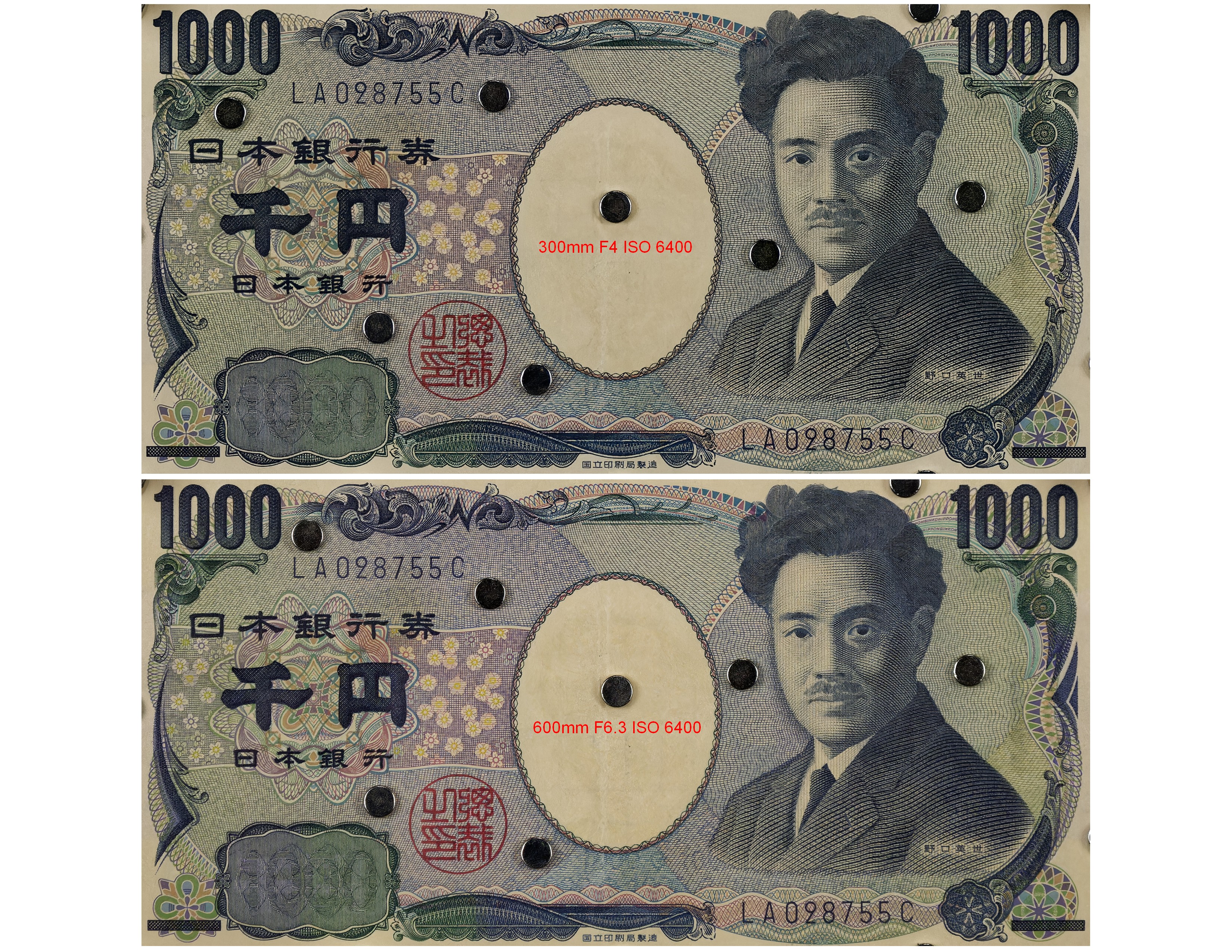
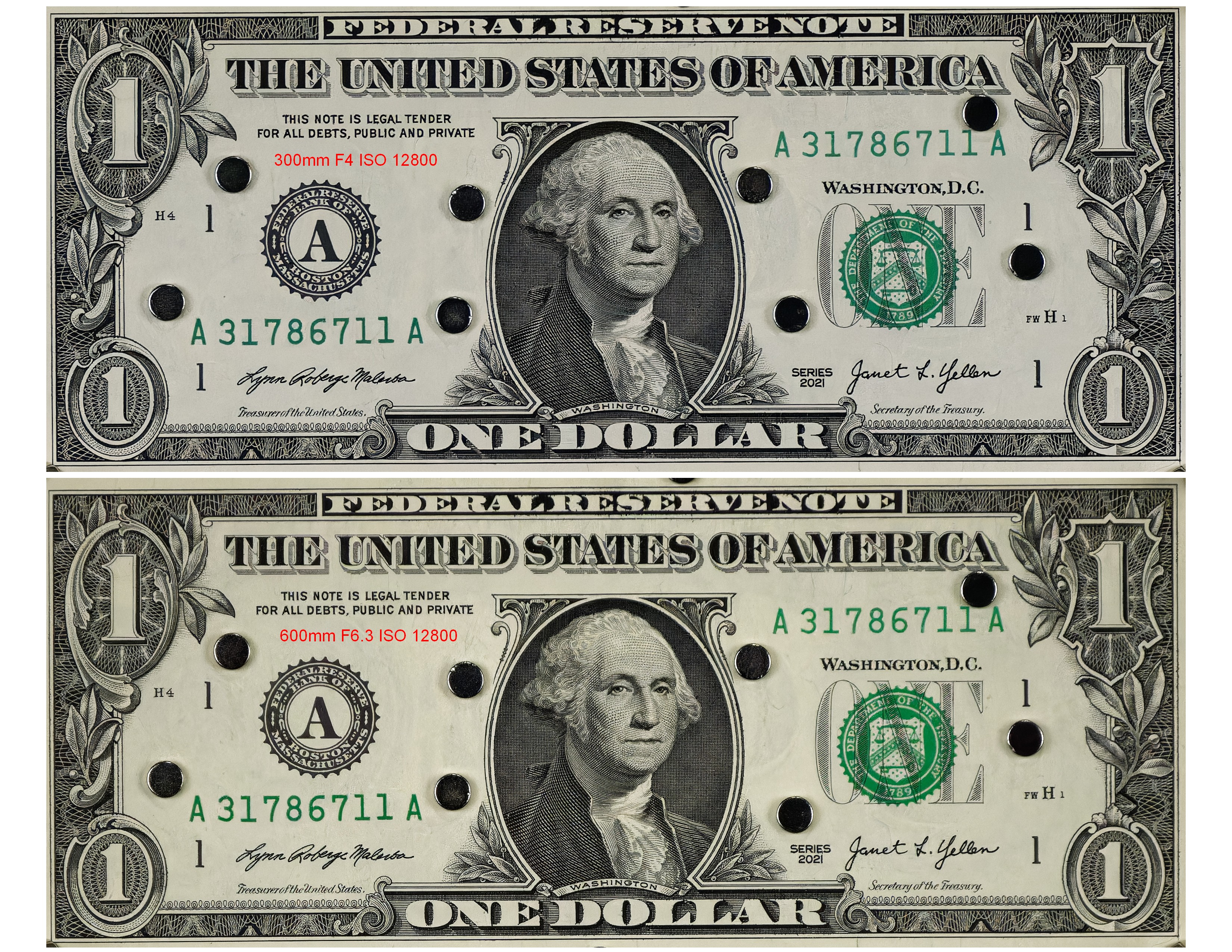
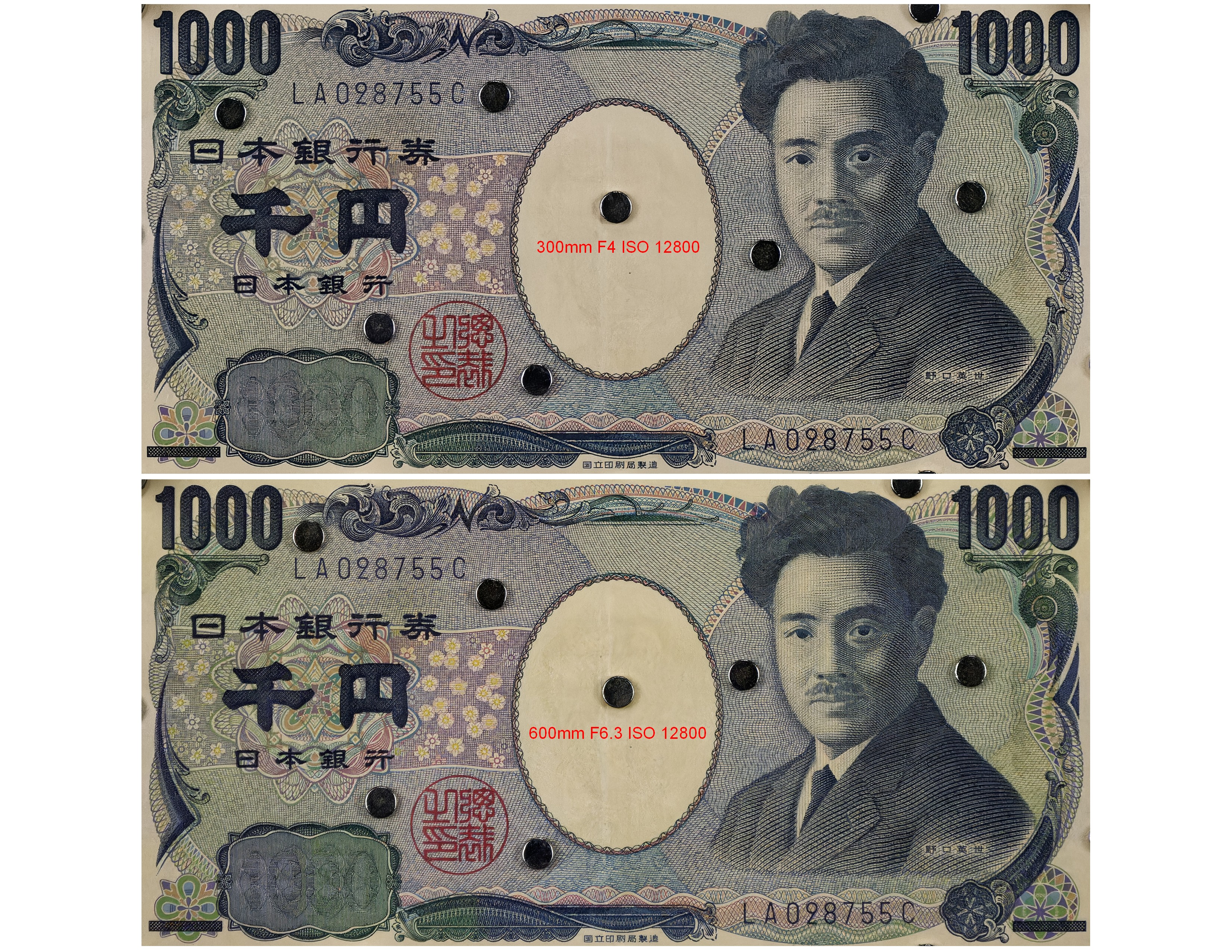
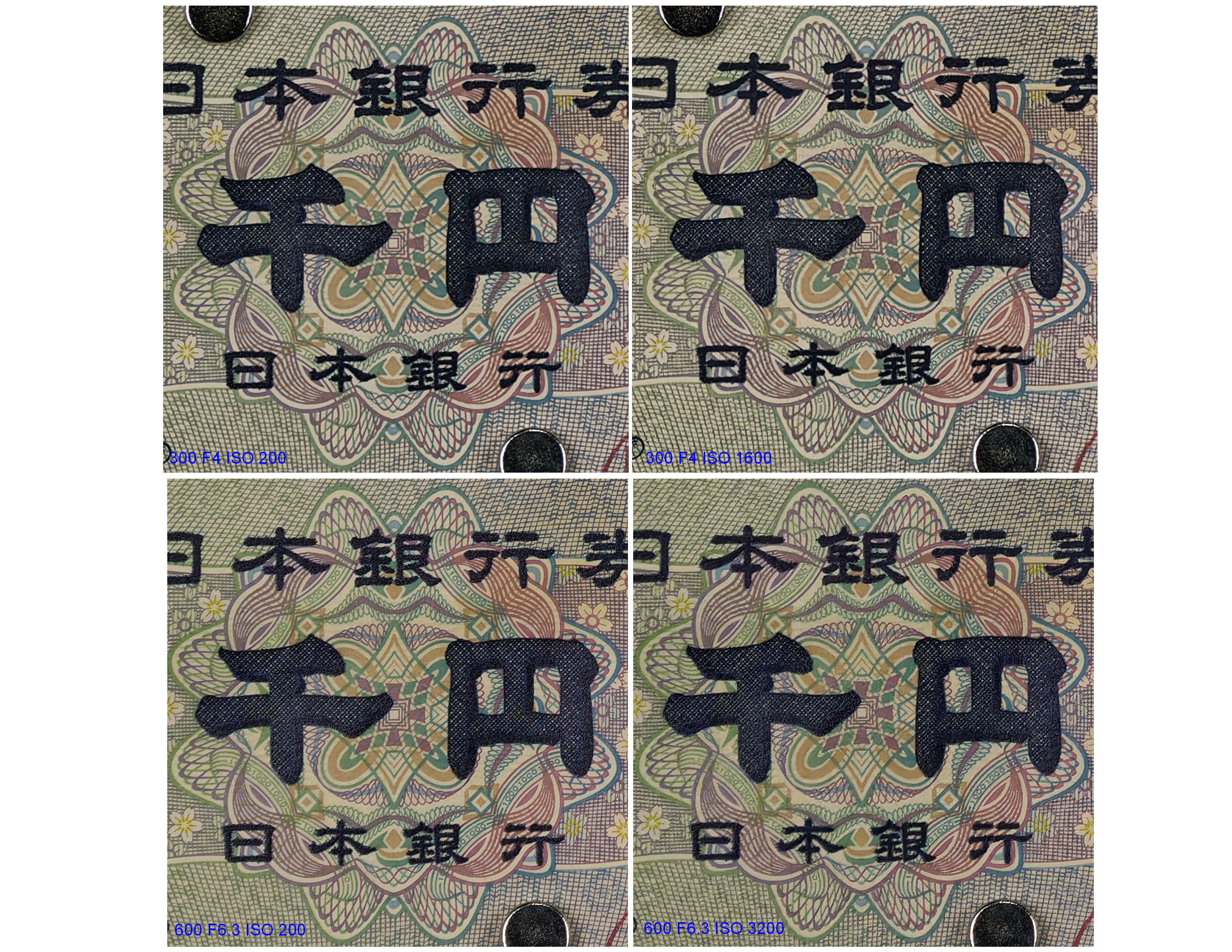
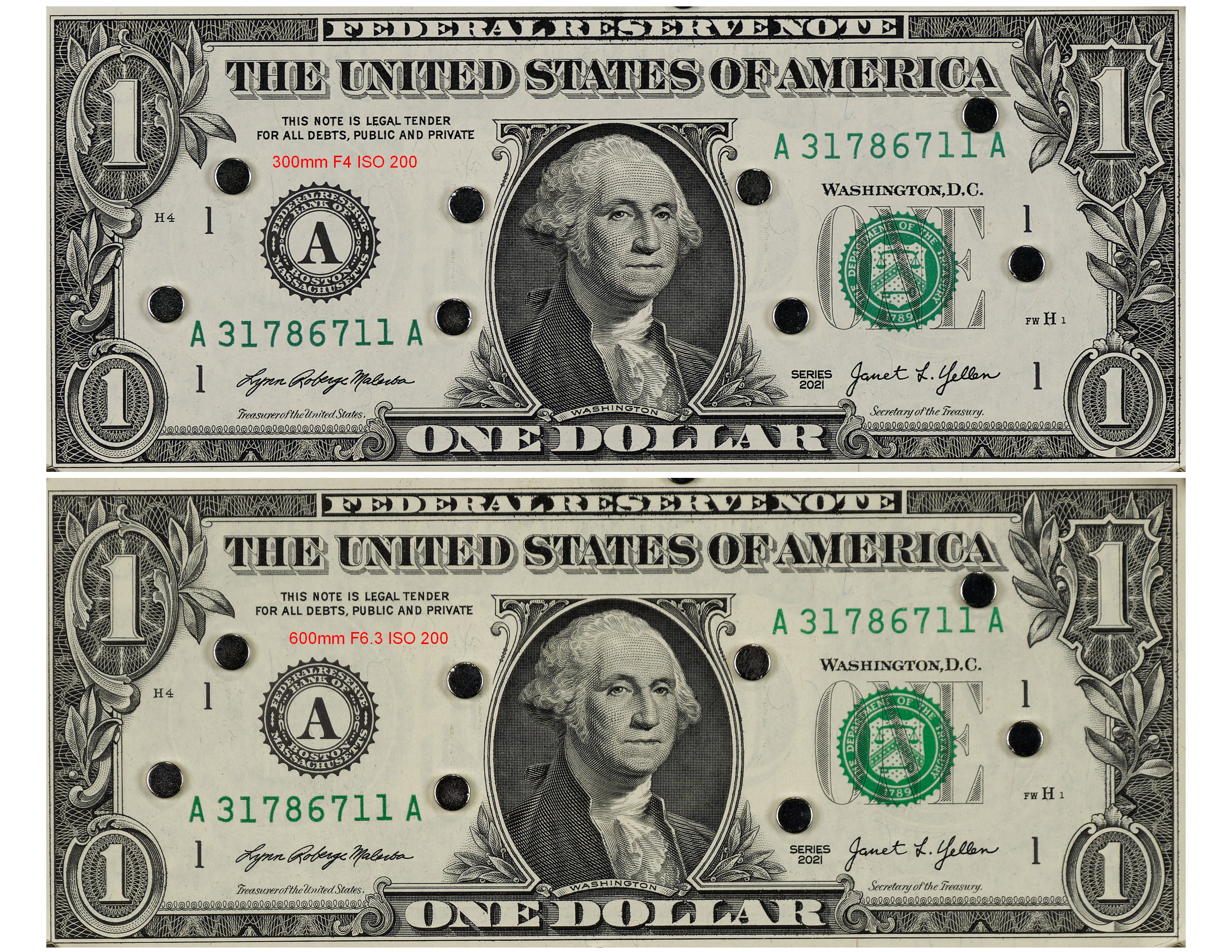
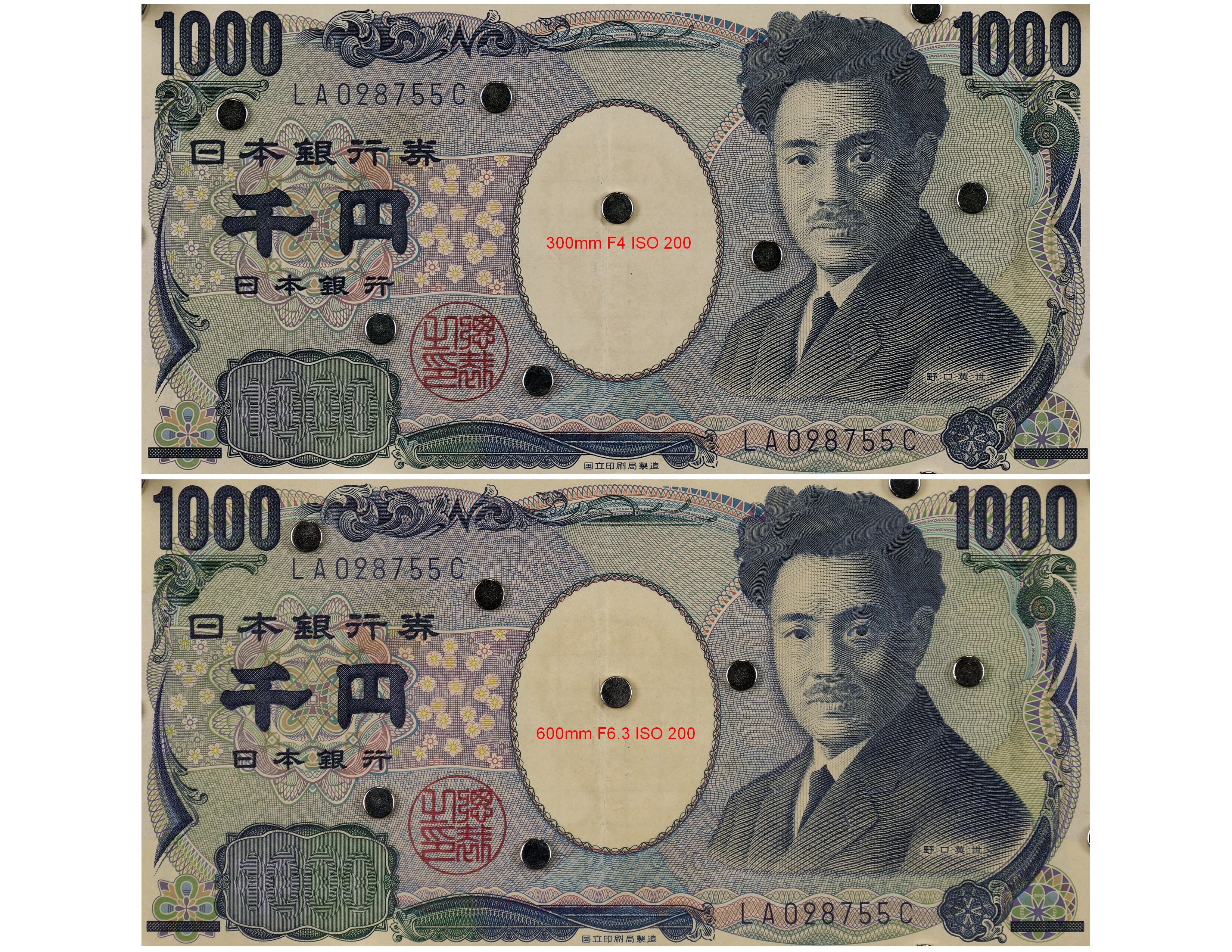
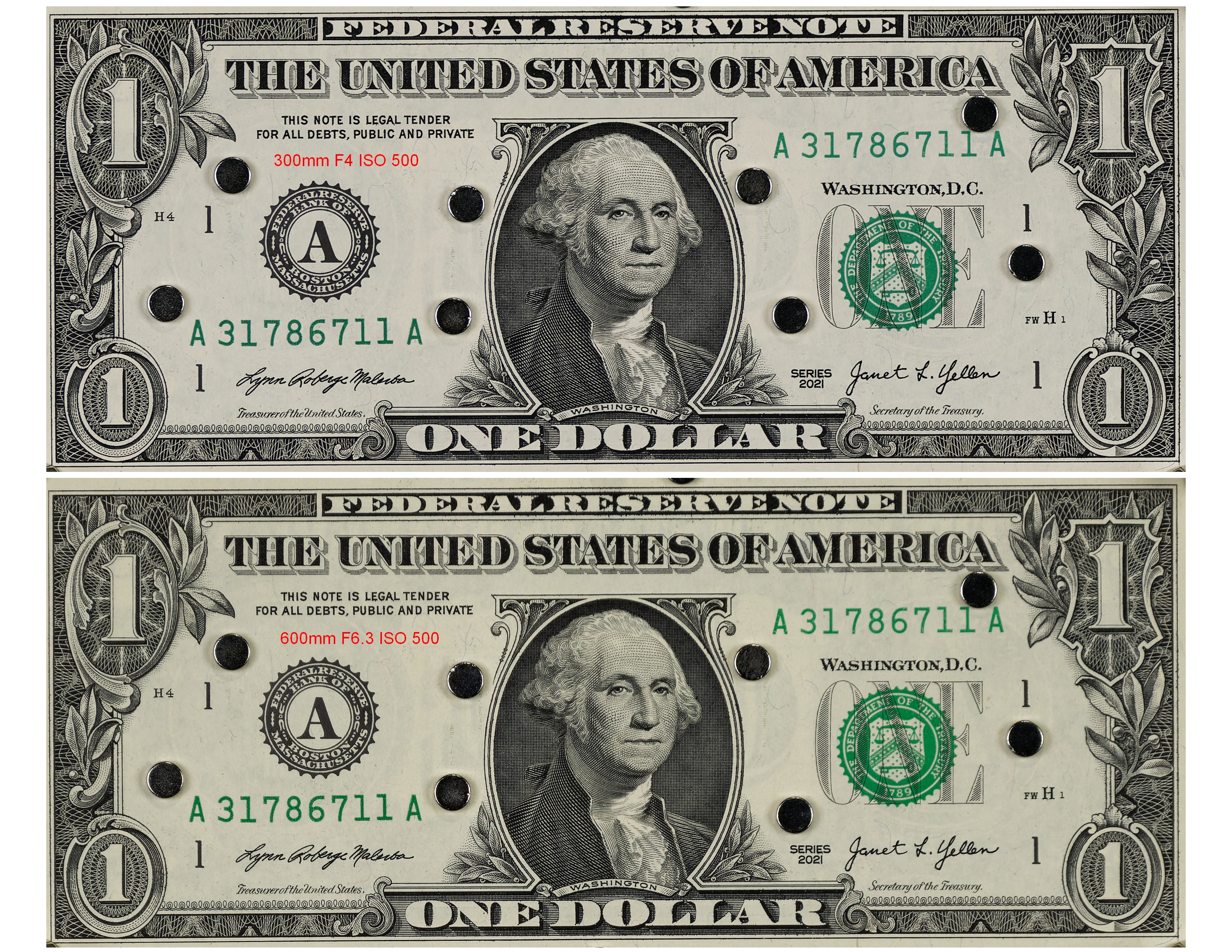
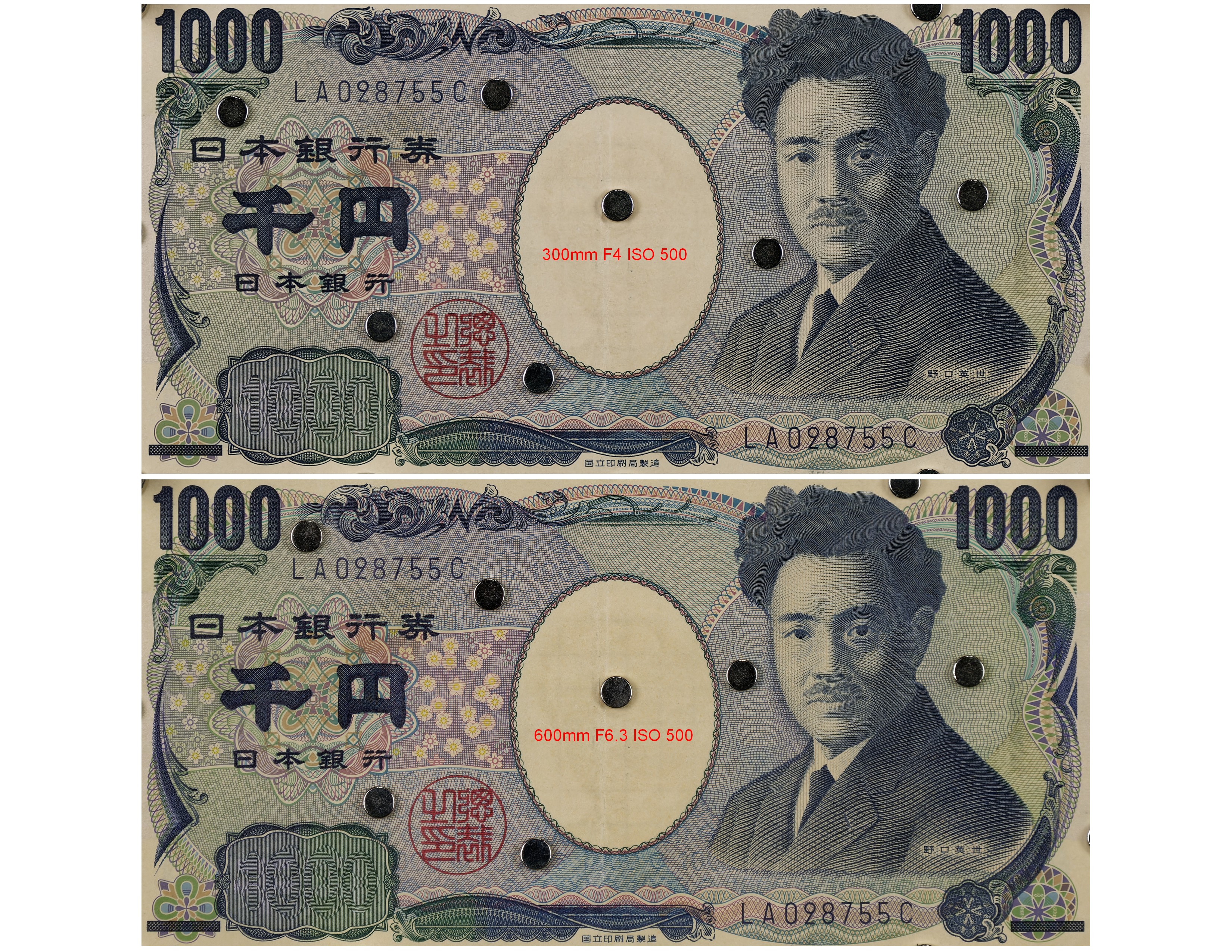
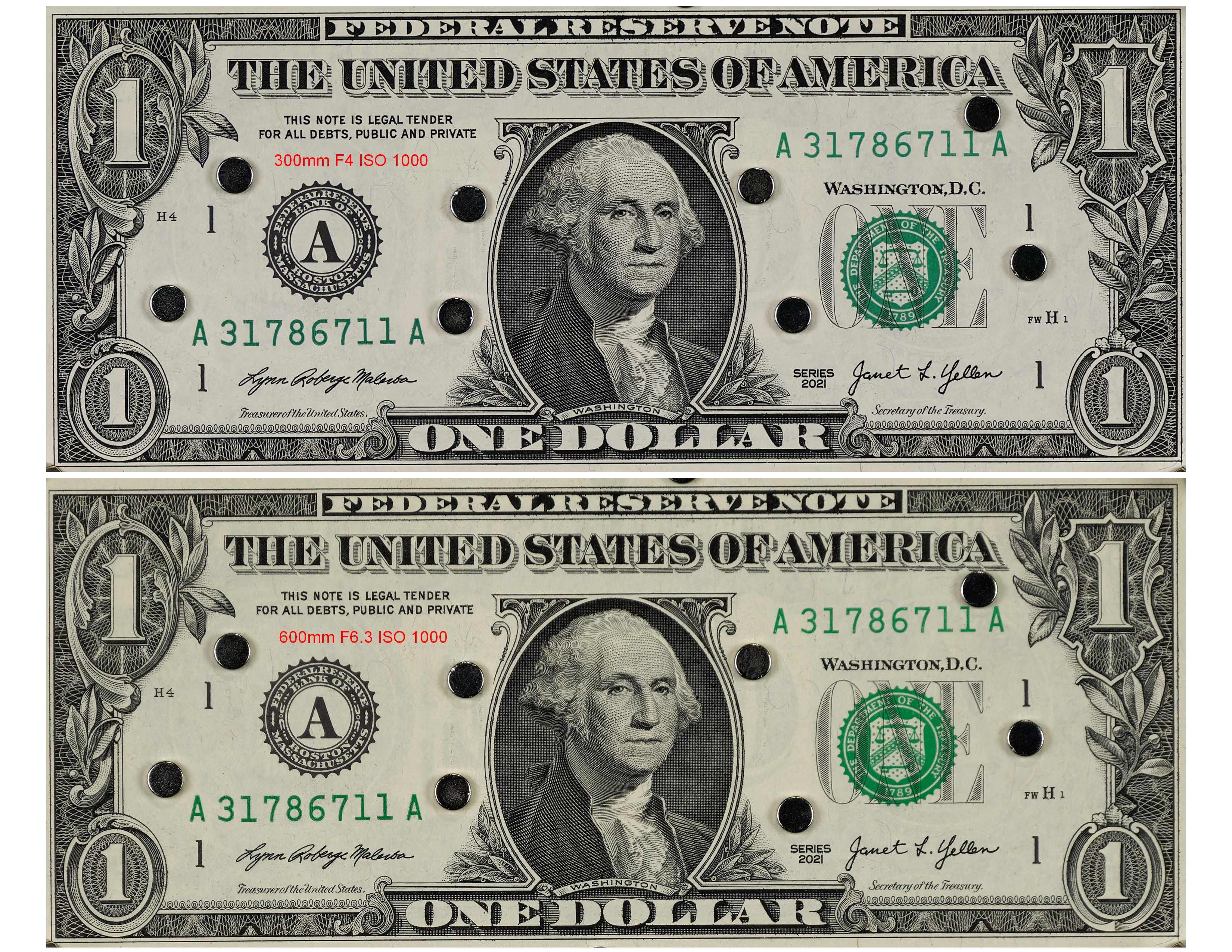
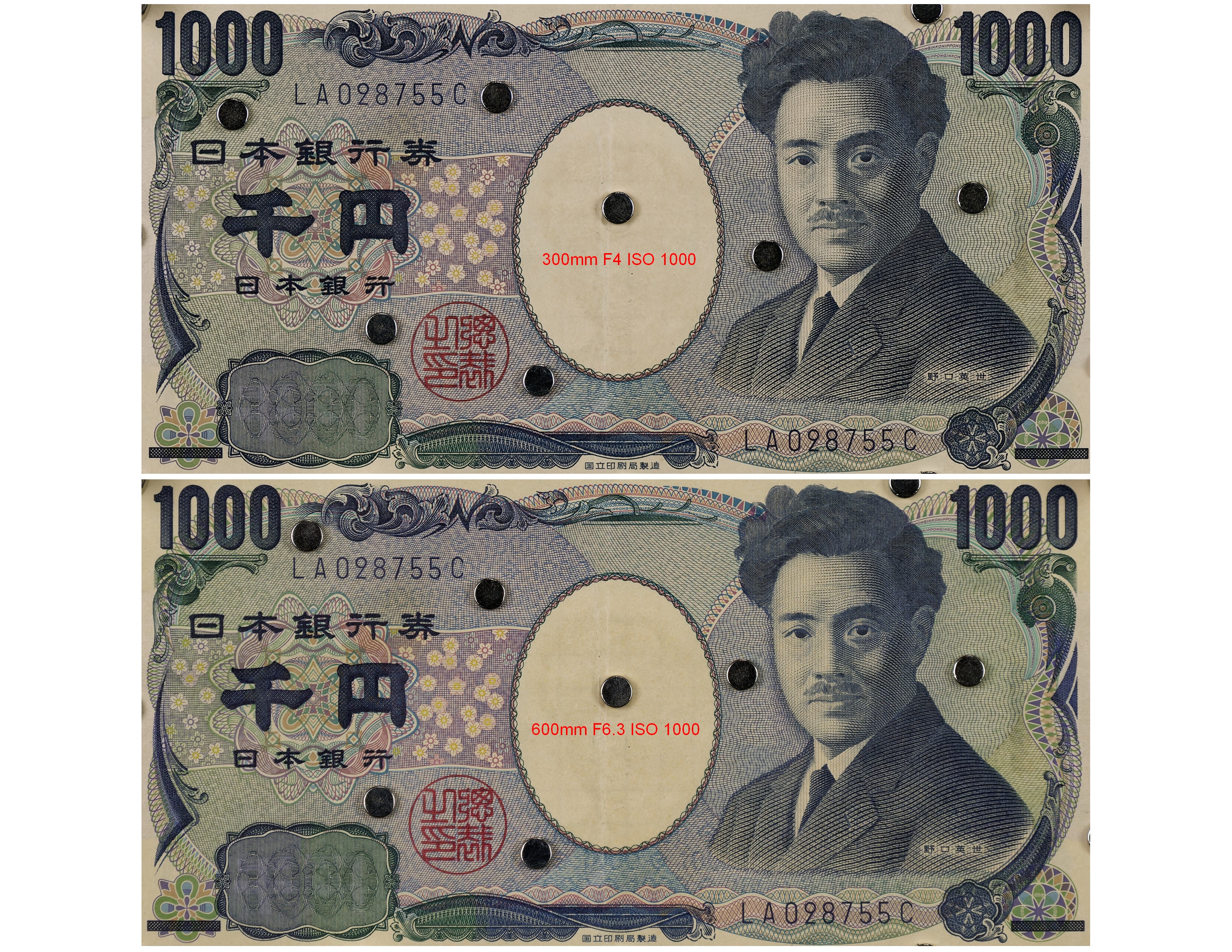
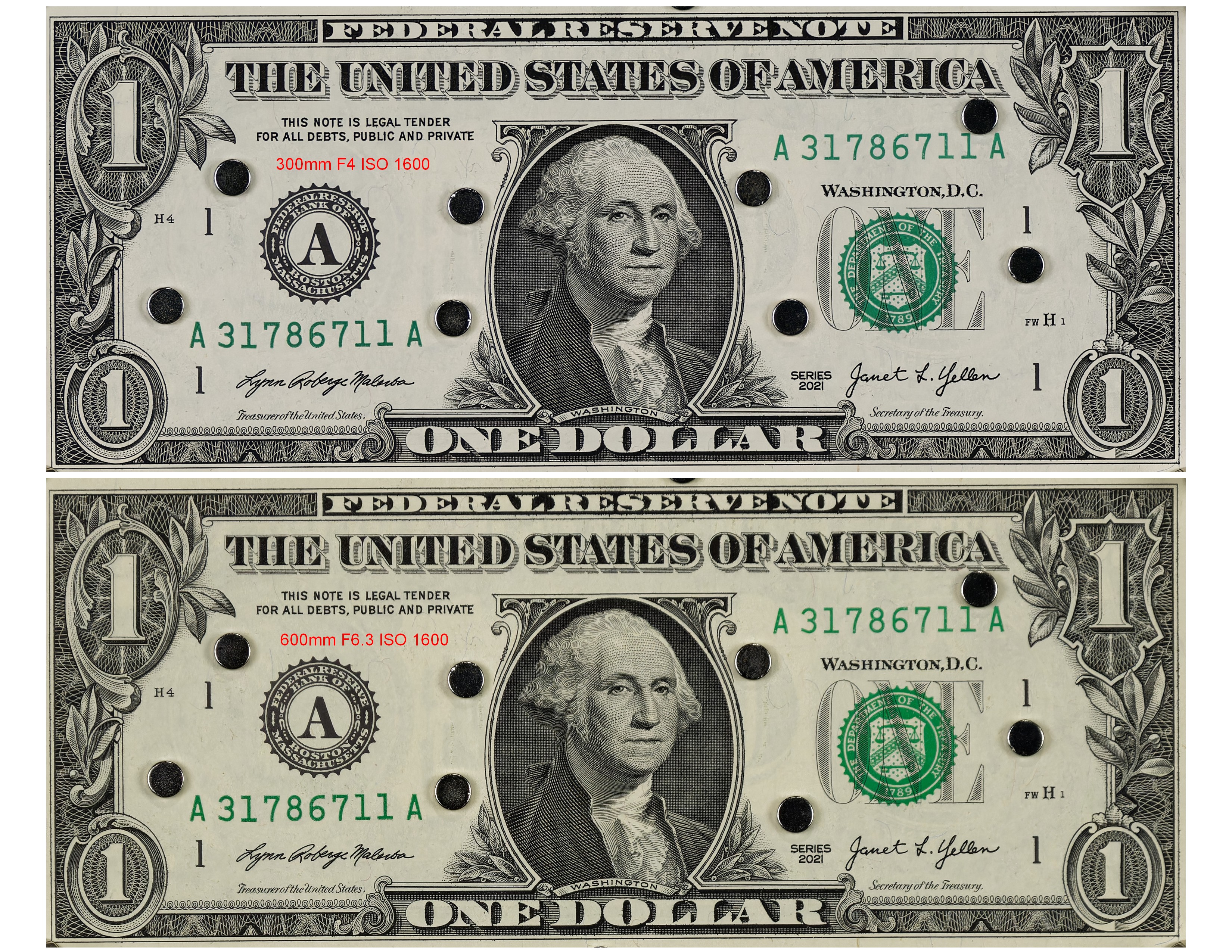
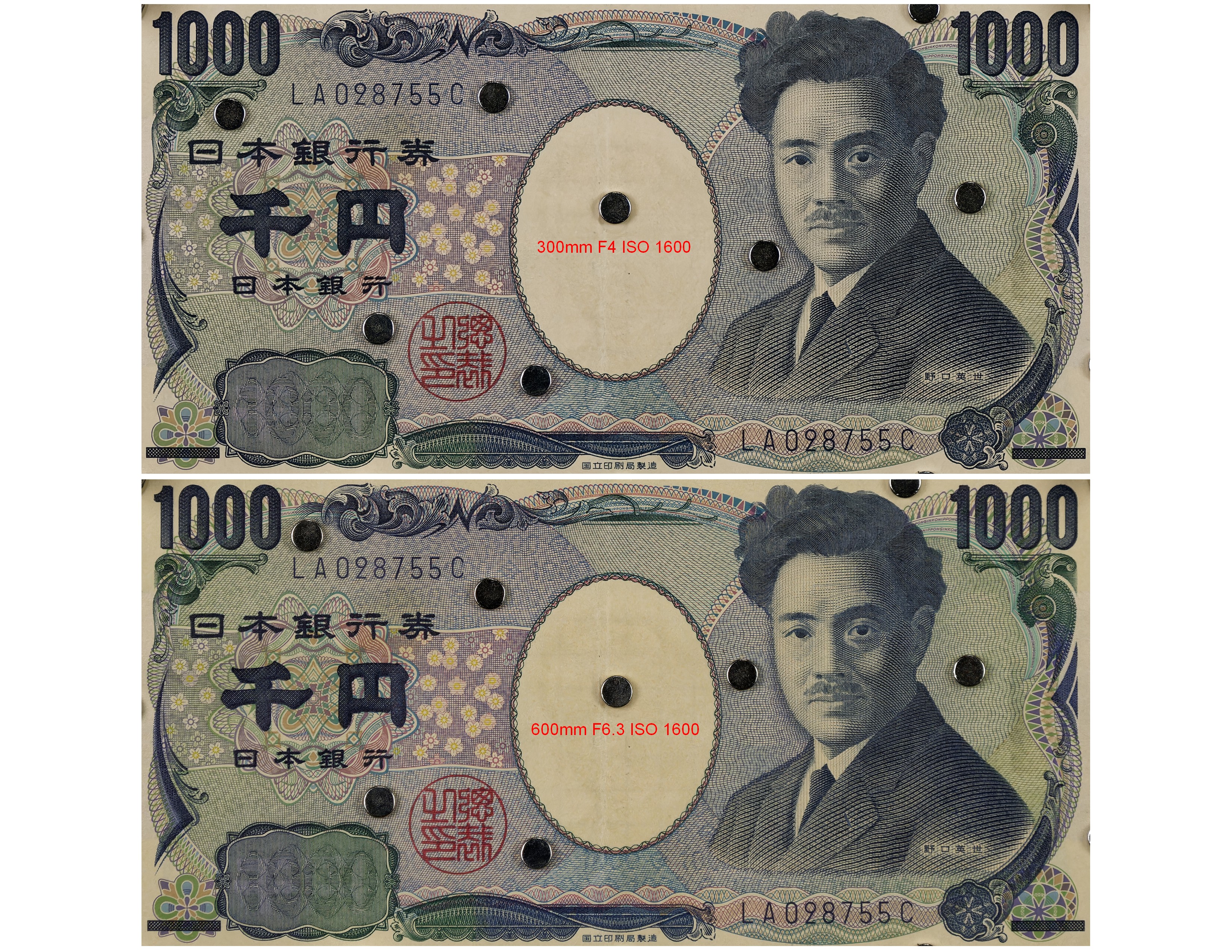
4) Image quality: this can be assessed qualitatively by looking at the crops from the full photos at ISO 200, 500, 1000, 1600, 3200, 6400, and 12800. All the full-sized photos were framed exactly as Uploads 2 and 3 (that is, only ISO changed during the shooting). The crops are given in 12 uploads (from Upload 4 to 11 in this post, and 1 to 6 in the next one). All raw files were processed in DxO PL7 by applying the “DxO Standard” profile with added DeepPRIME XD denoising using the default (auto) settings; the “Microcontrast” was set to 10. When processing raw files from OM-1 II, the “Lens Softness Correction” was reduced from the default +1 to 0 to avoid an apparent over-sharpening.
The WB had been decided by the cameras; it was not changed in post.
When comparing the IQ, it is worth noting that the OM-1 II images have 20MP; thus, the OM-1 II pictures tend to appear “crispier.”
I don’t want to impose my own judgement and should let the readers of this post to decide which images they like better: from the A1 at 600mm or from the OM-1 II at 300mm. Just keep in mind the lens speed difference: when shooting the two systems side-by-side, the ISO will be one to one and a third of a stop higher on the A1. For example, when the ISO is at 3200 on the OM-1 II, the A1 will have the ISO most likely at 8000 (at best at 6400).

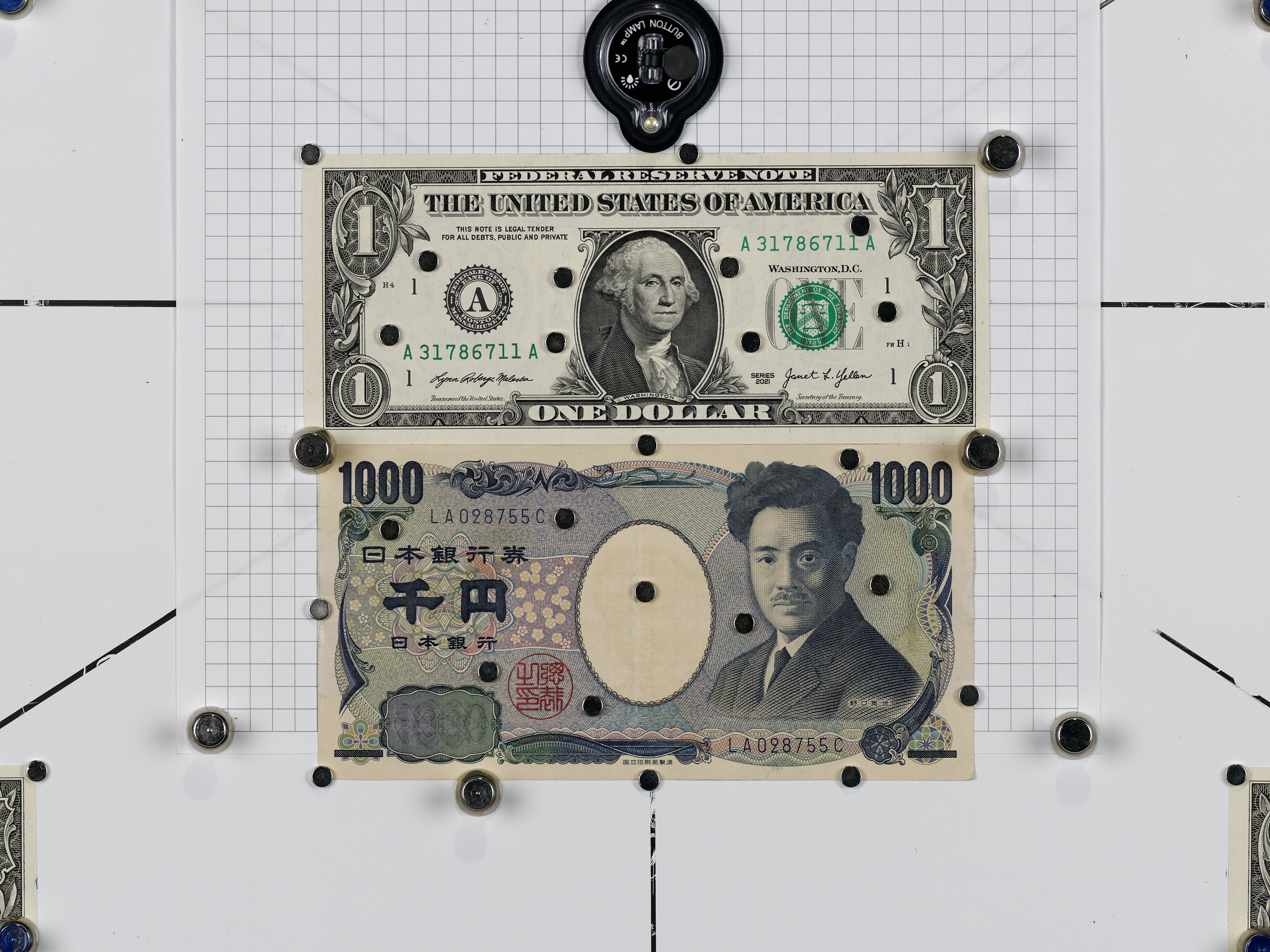
OM-1MarkII OLYMPUS M.300mm F4.0 lens 300mm f/4.0 1/80s 200 ISO 0.0 EV
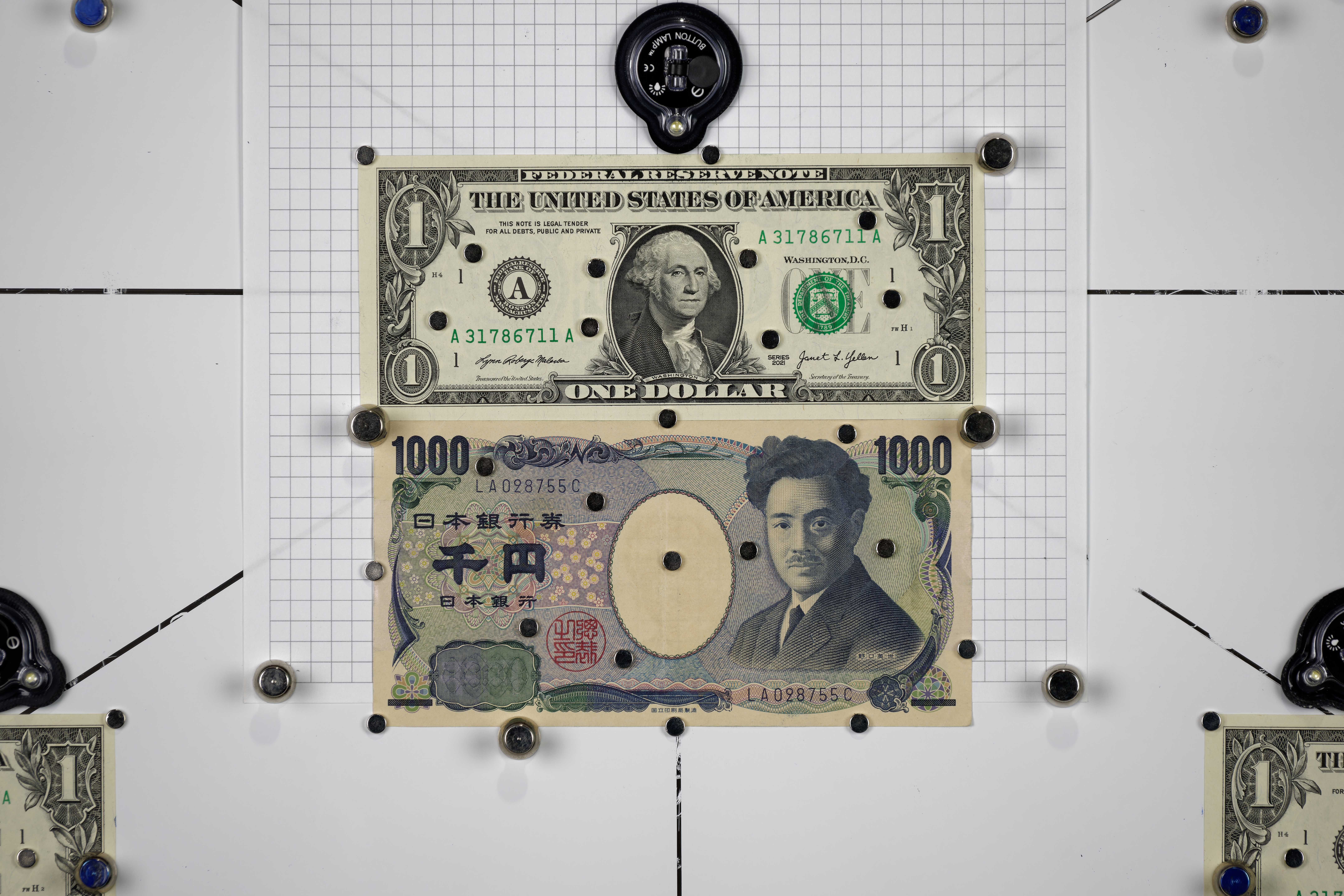
ILCE-1 FE 200-600mm F5.6-6.3 G OSS lens 600mm f/6.3 1/30s 200 ISO 0.0 EV
|