Best monster camera that did everything and weighed like it did: Nikon F5
Best viewfinder experience for manual focusing, and just for the feel of the body: Nikon F3HP (I wear glasses thus the "HP"); coincidently worst viewfinder LCD of any Nikon as well.
Sentimental favorite: Minolta X700 first SLR
Caveat, never use anything in good condition older than a Nikon FM that, so I'm sure I'm missing out!
pbraymond wrote:
Most rolls of film shot: Nikon F100
Best monster camera that did everything and weighed like it did: Nikon F5
Best viewfinder experience for manual focusing, and just for the feel of the body: Nikon F3HP (I wear glasses thus the "HP"); coincidently worst viewfinder LCD of any Nikon as well.
Sentimental favorite: Minolta X700 first SLR
Caveat, never use anything in good condition older than a Nikon FM that, so I'm sure I'm missing out!
Good choices. I also wear glasses but actually prefer the DE2 on my F3 (non HP finder). It still has loads of eye relief (20mm) and the higher magnification makes it easier to focus. I love my F5. It can be made a bit lighter by running lithium AA batteries and only using small and light AFD primes (eg 35mm f2). It is surprisingly comfortable to carry on a peak designs strap.
My pick for a really nice older Nikon is the Nikkormat FT2. Build quality is on the same level as the pro cameras and much nicer than the FM series for only a modest size/weight gain.
andrewd01 wrote:
Good choices. I also wear glasses but actually prefer the DE2 on my F3 (non HP finder). It still has loads of eye relief (20mm) and the higher magnification makes it easier to focus. I love my F5. It can be made a bit lighter by running lithium AA batteries and only using small and light AFD primes (eg 35mm f2). It is surprisingly comfortable to carry on a peak designs strap.
My pick for a really nice older Nikon is the Nikkormat FT2. Build quality is on the same level as the pro cameras and much nicer than the FM series for only a modest size/weight gain.
The F5 chewed thru so many batteries! At one point I had found a source for AA Lithiums at a decent price and think I had enough four-packs to start a convenience store. I was a good thing the F100 used the same AA's!
andrewd01 wrote:
Good choices. I also wear glasses but actually prefer the DE2 on my F3 (non HP finder). It still has loads of eye relief (20mm) and the higher magnification makes it easier to focus. I love my F5. It can be made a bit lighter by running lithium AA batteries and only using small and light AFD primes (eg 35mm f2). It is surprisingly comfortable to carry on a peak designs strap.
My pick for a really nice older Nikon is the Nikkormat FT2. Build quality is on the same level as the pro cameras and much nicer than the FM series for only a modest size/weight gain.
Oh yeah, I had a couple FT2s - superb build quality - much better than the later FM series that replaced it. But that was the point of the FM series - Nikon wanted a lighter weight camera to compete with the Olympus and Pentax offerings which had become very small.
I liked the FT2 because it could use both AI and non AI lenses, and modern batteries.
pbraymond wrote:
The F5 chewed thru so many batteries! At one point I had found a source for AA Lithiums at a decent price and think I had enough four-packs to start a convenience store. I was a good thing the F100 used the same AA's!
That’s interesting. Was that with professional use? I can’t afford to churn through a lot of film at 8fps, so have never had an issue with battery life. I have owned two F5s. I stupidly traded the first one for way too low a price when I thought I wouldn’t shoot film again. Re-bought a mint copy recently.
pbraymond wrote:
Most rolls of film shot: Nikon F100
Best monster camera that did everything and weighed like it did: Nikon F5
Best viewfinder experience for manual focusing, and just for the feel of the body: Nikon F3HP (I wear glasses thus the "HP"); coincidently worst viewfinder LCD of any Nikon as well.
Sentimental favorite: Minolta X700 first SLR
Caveat, never use anything in good condition older than a Nikon FM that, so I'm sure I'm missing out!
Ray, The F3HP was also my favorite film body from about 1994 to 2008 I ran two bodies. One with color film and one with black and white. (two different color Nikon straps). Quite often I needed higher resolution than the nc2000ap digital back could provide. So I would use film and then scan on a huge Kodak SCSI scanner (think it was the 2035) to get a 20 megapixel image - which was plenty resolution to print any quality we did. I don't seem to have any photos of the two bodies that I had to surrender when I left the Press. In all those years I never had a single problem with either body.
andrewd01 wrote:
That’s interesting. Was that with professional use? I can’t afford to churn through a lot of film at 8fps, so have never had an issue with battery life. I have owned two F5s. I stupidly traded the first one for way too low a price when I thought I wouldn’t shoot film again. Re-bought a mint copy recently.
Not professional use. Only really did the high FPS for very limited action, and in some situations for bracketing. Film was too expensive to burn through like that. I do know that when I switched over to the F100, the burn rate thru the AA's went down quite a bit.
pbraymond wrote:
Not professional use. Only really did the high FPS for very limited action, and in some situations for bracketing. Film was too expensive to burn through like that. I do know that when I switched over to the F100, the burn rate thru the AA's went down quite a bit.
I did see some reports of this when searching on line. Curious to know if you were running AFS lenses or AFD (screw drive) lenses on the F5. Perhaps there is some design flaw somewhere. I have only used screw drive lenses with the F5. Mostly small primes but I did have the 80-200 f2.8 AFD for a while. I am guilty of having way too many film cameras so battery drainage is not something I notice often.
andrewd01 wrote:
I did see some reports of this when searching on line. Curious to know if you were running AFS lenses or AFD (screw drive) lenses on the F5. Perhaps there is some design flaw somewhere. I have only used screw drive lenses with the F5. Mostly small primes but I did have the 80-200 f2.8 AFD for a while. I am guilty of having way too many film cameras so battery drainage is not something I notice often.
I think the F5 was very sensitive to the correct high voltage being maintained by the 8AA cells. That's why the lithiums were better than alkalines - the voltage drop curve for lithiums is much flatter and maintained sufficient voltage for the F5. AA Alkalines that failed to power the F5 were still quite usable for a lot of other things if I recall correctly.
Back then I used mostly screw drive lenses; I think the first AFS lenses I used were the 17-35 and 70-200 f2.8 (first version), if that gives you an idea.
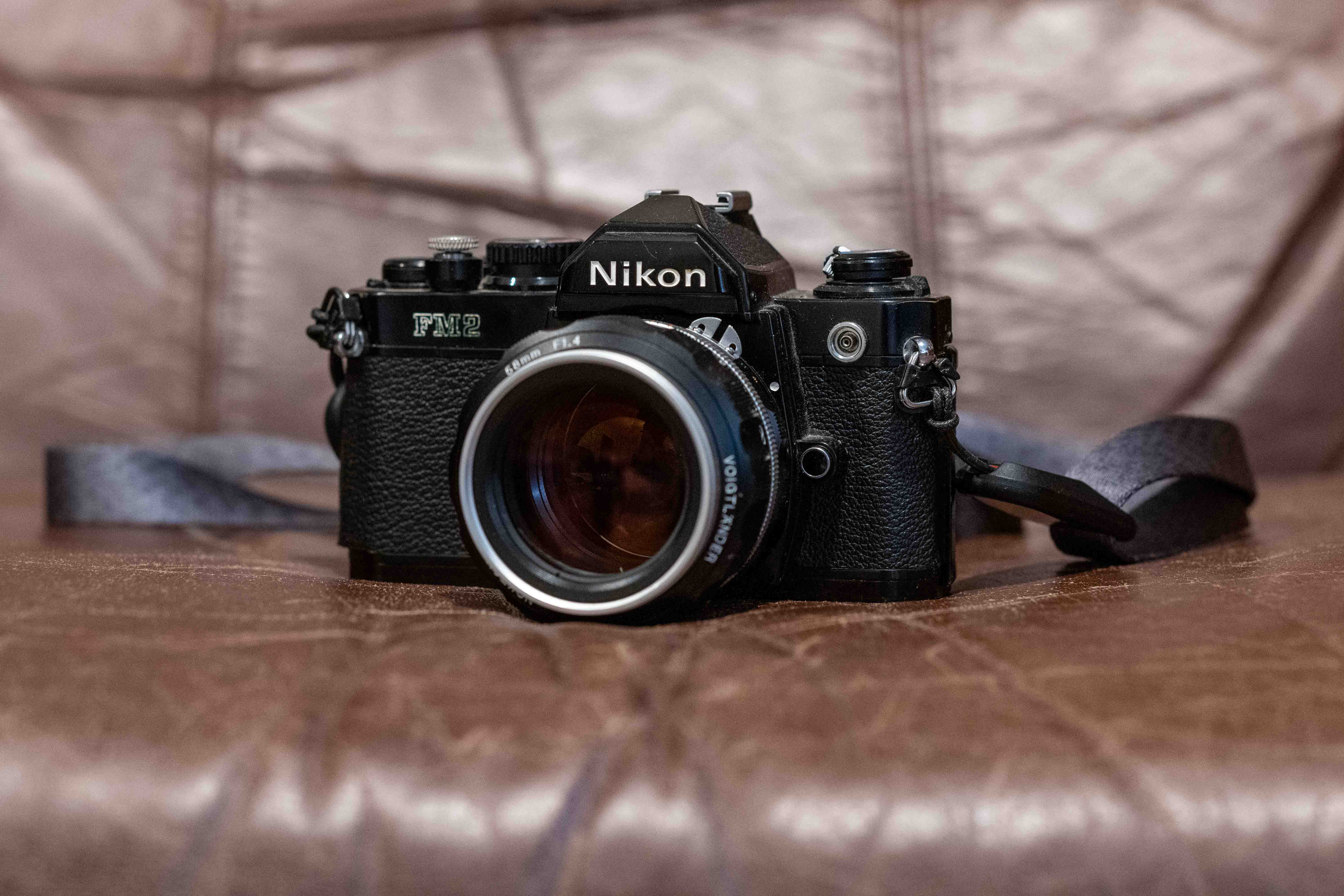
I've been using this FM2 to scratch my analog itch, recently picked up the Voigtlander 58 1.4 and I don't think it will be coming off the camera anytime soon.
Sorry for the huge picture. Obviously I need to figure out a better export size.
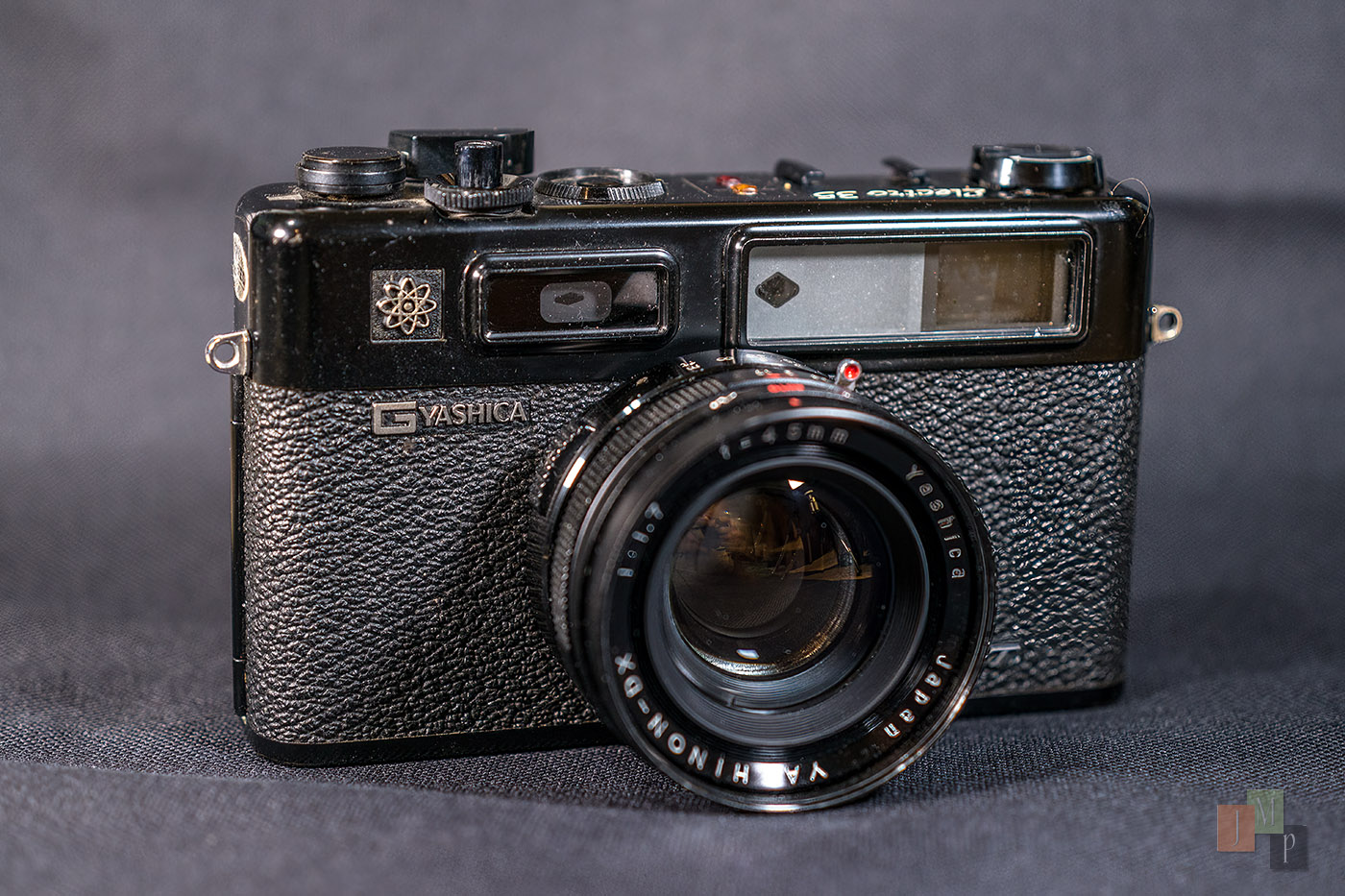
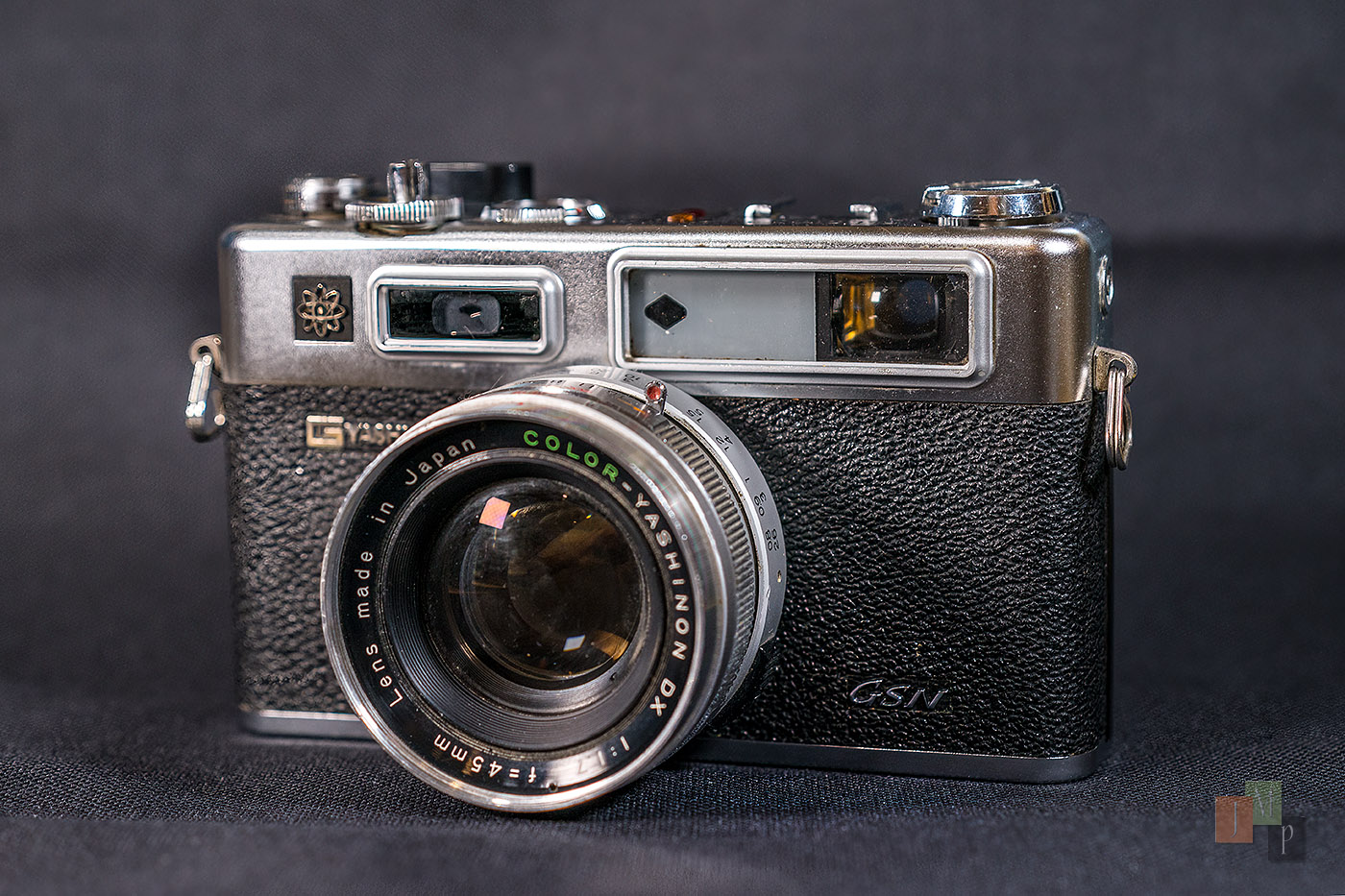
In the 1960s there was this Yashica Electro 35 magazine ad that had me wanting one, but I was a poor kid who went the Exakta route instead since my lawn jobs could support that way. Then I found these two on the auction site. Both purchased by someone at a garage sale who held onto them for 20 years, and I got them both for $46. Both were broken, but I have fixed the GT, and expect the GSN to be repairable as well. They are larger, and more heavily made than I imagined. They shoot aperture priority only, and the camera's "computer" (hahahaha) picks the shutter speed.
catacore wrote:
Hi, would you mind to share its location/website here?
If you search for Westlicht in the Westbahnstrasse in Vienna, you see the first and most prominent one (there’s Ostlicht and Westlicht, one is gear, the other one images), across the street is Camera31 and close to that one is another store. Down the street is Joe Geier. There is also Foto Borse, but I have never seen it. There may be more.
Too soon to say if this will be my favourite film camera, but it's certainly the most unusual. It arrived today: the ONDU 6x6 pinhole camera, made of walnut. This weekend will be busy so not sure how much time I'll have for pinholing but hopefully by the end of next week I'll have my first roll shot and developed.
The hole you see in the center is just the window for the pinhole; the actual pinhole is 0.15mm in diameter, drilled by laser into thin foil.
bjhurley wrote:
Too soon to say if this will be my favourite film camera, but it's certainly the most unusual. It arrived today: the ONDU 6x6 pinhole camera, made of walnut. This weekend will be busy so not sure how much time I'll have for pinholing but hopefully by the end of next week I'll have my first roll shot and developed.
The hole you see in the center is just the window for the pinhole; the actual pinhole is 0.15mm in diameter, drilled by laser into thin foil.
madNbad wrote:
Have fun with it! Do you have a pinhole exposure app for your phone or are you just going to count the seconds in your head?
I have an amazing app on my phone called Pinhole Assist that has a large database of cameras (including mine) and a large database of films and their reciprocity failures. It has a light meter (even a selectable spot meter) and it takes your pinhole's size and the film's reciprocity curve into account, plus any filters you have added (ND, red filter, etc.) to give you the proper exposure. And it has a timer (it actually uses your phone's own timer). It has great reviews and a lot of pinhole photographers use it.
The camera does come with a nice little wooden exposure chart to use with any light meter (take a reading for f22, and then use that to get the exposure on the little wooden chart). But then you have to calculate the additional exposure needed to account for reciprocity failure, which varies greatly by film, and most exposures with a pinhole camera are much longer than 1 second, sometimes 45 minutes or more (not counting the pinhole cameras that are used for photo paper, which can have exposures lasting months or even years). Fuji Acros is always a good choice due to its low reciprocity failure, but it's not my favorite film. A lot of people use Fomapan 100 because it has extreme reciprocity failure, giving you long exposure times even in relatively bright conditions, which is one of the features of pinhole photography: you aren't just capturing a moment in time, you're capturing a collection of moments.