rji2goleez wrote:
Looking forward to comparing to my M3.
Congrats!
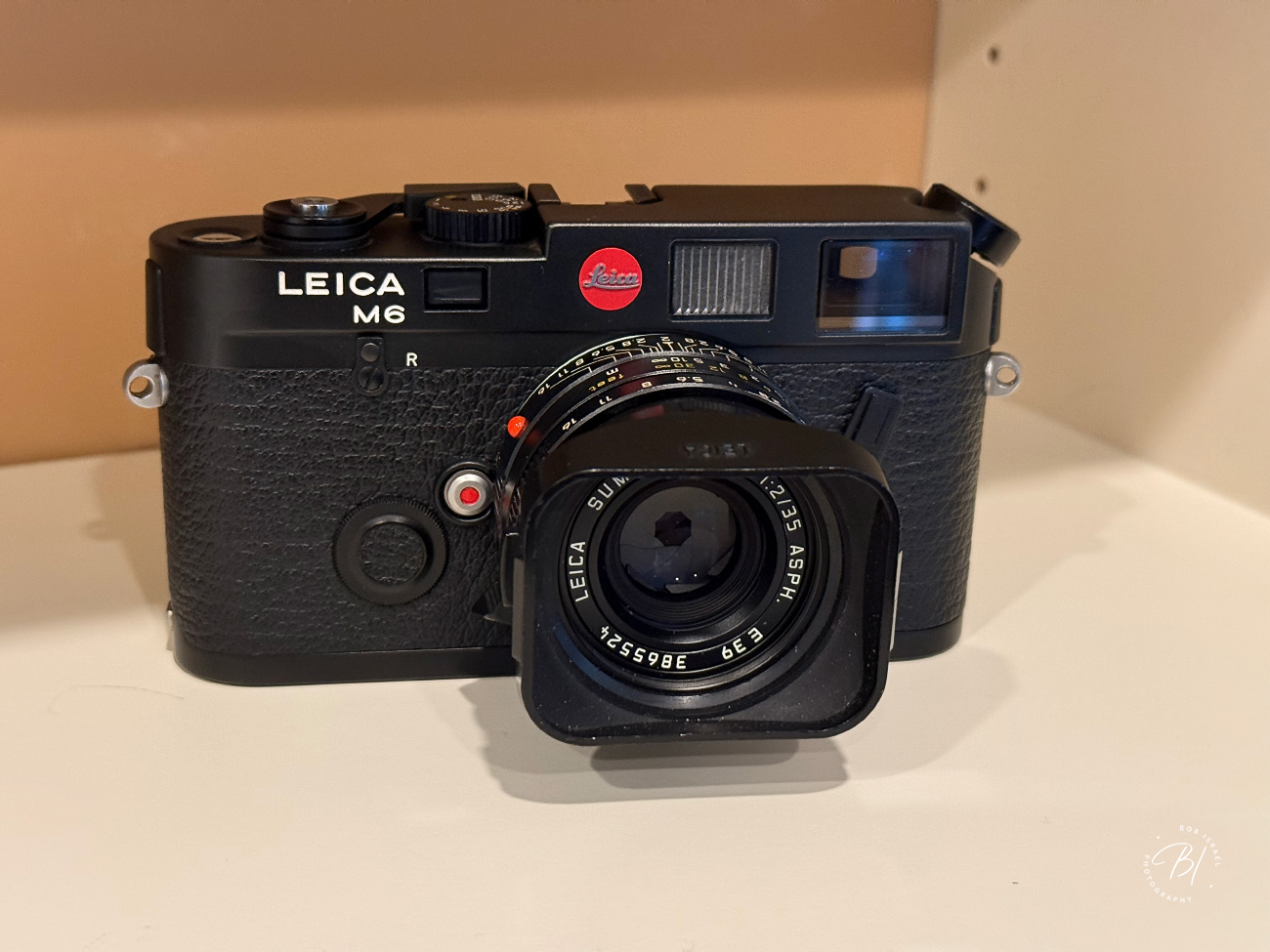
Curious about your findings. I find my M6 Classic (Titan version) to be a bit smoother and, maybe, a bit more refined, than my M3. Plus easier to load the film into it.
Curious about your findings. I find my M6 Classic (Titan version) to be a bit smoother and, maybe, a bit more refined, than my M3. Plus easier to load the film into it.
I have a very nice M3. But all my more modern film M cameras are smoother and more refined in operation.
I have an M3 and M6. My particular M3 is mechanically smoother than my M6. With 40-60 year old cameras I don’t think it is possible to generalise about the mechanical operation smoothness because the cameras have likely had vastly different histories in terms of usage, servicing, storage conditions etc.
When I bought my M3 the dealer had several and I chose the one that felt smoothest to operate mechanically.
Both are fantastic cameras and I wouldn’t sell either. The M3 is nicer to use with a 50mm lens due to higher viewfinder magnification and longer rangefinder effective baselength.
andrewd01 wrote:
With 40-60 year old cameras I don’t think it is possible to generalise about the mechanical operation smoothness because the cameras have likely had vastly different histories in terms of usage, servicing, storage conditions etc.
Both are fantastic cameras and I wouldn’t sell either.
That's true, and this is why I am curious to hear his findings on his M3 vs his M6.
catacore wrote:
That's true, and this is why I am curious to hear his findings on his M3 vs his M6.
Don’t get an M3 double stroke. My own biased opinion but needing two short strokes to advance the film really bothered me, as you miss out on the glorious feel of the full single stroke film advance.
I was happy to sell my DS M3.
Desmolicious wrote:
Don’t get an M3 double stroke. My own biased opinion but needing two short strokes to advance the film really bothered me, as you miss out on the glorious feel of the full single stroke film advance.
I was happy to sell my DS M3.
The early 1950's designers thought the single advance stroke would stretch the film and break it. Safety film change that. They also used a glass pressure plate because they were worried a metal one would scratch film.
Desmolicious wrote:
Don’t get an M3 double stroke. My own biased opinion but needing two short strokes to advance the film really bothered me, as you miss out on the glorious feel of the full single stroke film advance.
A nice M3 DS is the only Leica camera on my shopping list because the earliest versions had ball bearings on the film door. Yup, Leica collectors are weirdo. As for smooth and quiet M bodies, I got over that obsession: the Barnacks are rougher and louder but a lot more fun. If I want dead silent shooting for some reason then I can just use the Sony A1 with ES, or my Contax T (film RF, leaf shutter, tiny).
Desmolicious wrote:
Don’t get an M3 double stroke. My own biased opinion but needing two short strokes to advance the film really bothered me, as you miss out on the glorious feel of the full single stroke film advance.
I was happy to sell my DS M3.
Well, it seems my M3 was, innitially, a DS judging by its serial number (840xxx) and the Buddha's ears, but I bought it used as a SS. It is 70 years old this year!
catacore wrote:
Well, it seems my M3 was, innitially, a DS judging by its serial number (840xxx) and the Buddha's ears, but I bought it used as a SS. It is 70 years old this year!
Currently I own two analog M cameras and they mark the end of one era and the beginning of another. My M4 was assembled in 1975 at the Wetzlar factory using the "file to fit" process that Leica had used for decades. It required skilled technicians, was an expensive and slow process. Leica sales were in a slump after a less than enthusiastic roll out of the M5 and pouring money into the SL which was rapidly out paced by the SLR's from Japan. In order to save the company, manufacturing changed to a new country and a new approach.
My M4-2 was made in 1977. The new steel gears were stronger and a motor winder was introduced. The new process was finding parts that fit and needed little adjustment. At first, the M4-2 had problems. The new steel gears would occasionally bind, locking up the camera. Removing the sensor from the rangefinder's optical path could cause the viewfinder to flare. The steel gears got better but the sensor didn't return until the MP in 2003.
Both of my cameras have been serviced by Don Goldberg. The M4 needed a few parts replaced but mostly it had sat unused for decades and needed a thorough cleaning. It's smooth to use and has a very solid feel.
The M4-2 had several previous owners and was used but not abused. I was lucky enough to find a 3D printed nylon replacement flash block and replaced the articulated advance lever with one for the MP. Huss called it "the picture machine" and that is what it is. It has an industrial look and feel and it's fun to use.
If there are differences in how they were built, I haven't noticed.
Desmolicious wrote:
Don’t get an M3 double stroke. My own biased opinion but needing two short strokes to advance the film really bothered me, as you miss out on the glorious feel of the full single stroke film advance.
I was happy to sell my DS M3.
I love my 1955 M3 DS. Two short strokes is twice the fun of one long stroke to me. In other areas, the M6 is much better (rewinding film). But both take great images.
rji2goleez wrote:
I love my 1955 M3 DS. Two short strokes is twice the fun of one long stroke to me. In other areas, the M6 is much better (rewinding film). But both take great images.
I am looking for an upgrade to my Canon P. In a ideal world, I would just get a Leica M-A and be done with it. But it's out of my price range. The Leica M6 Classic is a contender. I'm receptive to lightmeter models like the MP and M6 TTL but I am slightly apprehensive about spending so much money on something with parts that may eventually fail on me. As a glasses wearer, I'd like to get a Zeiss Ikon ZM, but it could become a very expensive paper weight in the future. Do you guys think that sentiment is silly?
sean_s wrote:
I am looking for an upgrade to my Canon P. In a ideal world, I would just get a Leica M-A and be done with it. But it's out of my price range. The Leica M6 Classic is a contender. I'm receptive to lightmeter models like the MP and M6 TTL but I am slightly apprehensive about spending so much money on something with parts that may eventually fail on me.
There's always the Konica Hexanon RF, the Minola CLE, or one of the Voigtländer Bessas to consider if you want a more affordable with-meter option. The Hexanon is really nice but nobody services them (as far as I know) and they do have their problems. The CLE is nice although the framelines are problematic for some people (40mm as opposed to 35mm or 50mm).
If you don't need a light meter, the Leica M2 or M3 could be options but honestly I'm not sure they're an upgrade from the Canon P except in the sense that you can use M as well as LTM lenses on the Leica. I have a Canon P and a Leica M2-R and much prefer the Canon.
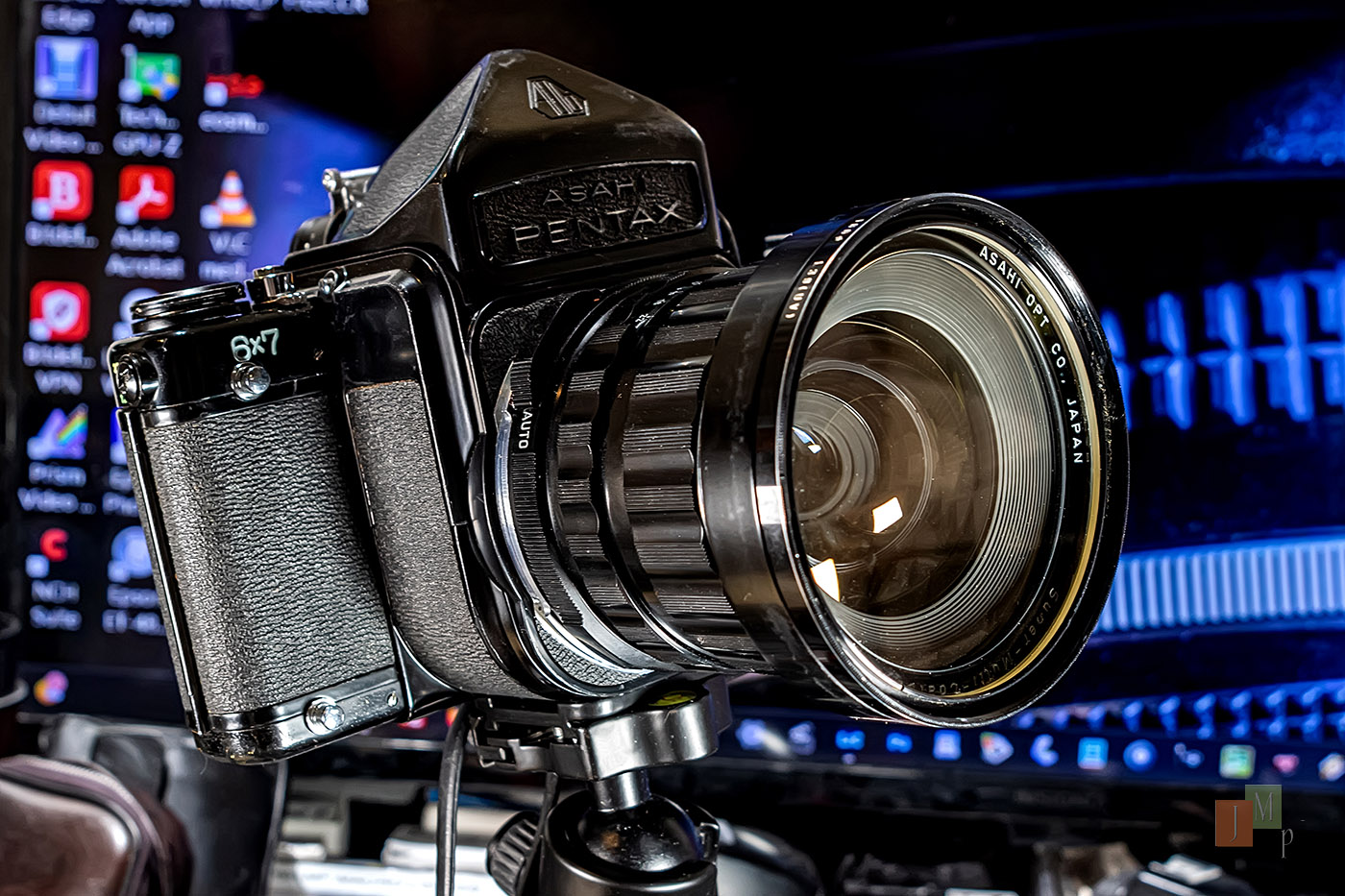
Got a new to me fav. The 731st one made in 1969. No mirror lock up or mirror release button, but I use to own the famous Bronica S which some orchestras used as a percussion instrument - so it will be fine. I think the 55mm f3.5 with it's 100mm filter size is simply gorgeous. She ain't as refined as a Leica, but she's my new fav.
The Hexar, Minolta, and Bessas are on my radar too, but I penalized them on the premise of them being less repairable than a Leica. Is that not actually the case?
Re: the Bessas, I don’t really dig the 40mm frame lines. I’m still pretty new to film and mostly stick to 35mm and 50mm. (Very partial to 35mm in particular).
I agree on the M2. I extensively looked into it and came to the same conclusion that it wouldn’t be a huge upgrade, if at all, from the Canon P.
And I’ve no problem ponying up for an M6. I just get nervous about such expensive purchases. There’s so much nuance in the differences between them and it’s difficult to ascertain which one is best for me. I wish I I could just demo them all, or at least buy them with a reasonable return policy. Which reminds me - that is another reason I’m drawn to Leica: resell value!
On the topic of the light meter – I’m actually preferential to _not_ having one, mostly because, for me, film is a way to slow down and escape the hyper-optimizations and automations of modern life. I can always use an external light meter or Sunny 16.


 As for smooth and quiet M bodies, I got over that obsession: the Barnacks are rougher and louder but a lot more fun. If I want dead silent shooting for some reason then I can just use the Sony A1 with ES, or my Contax T (film RF, leaf shutter, tiny).