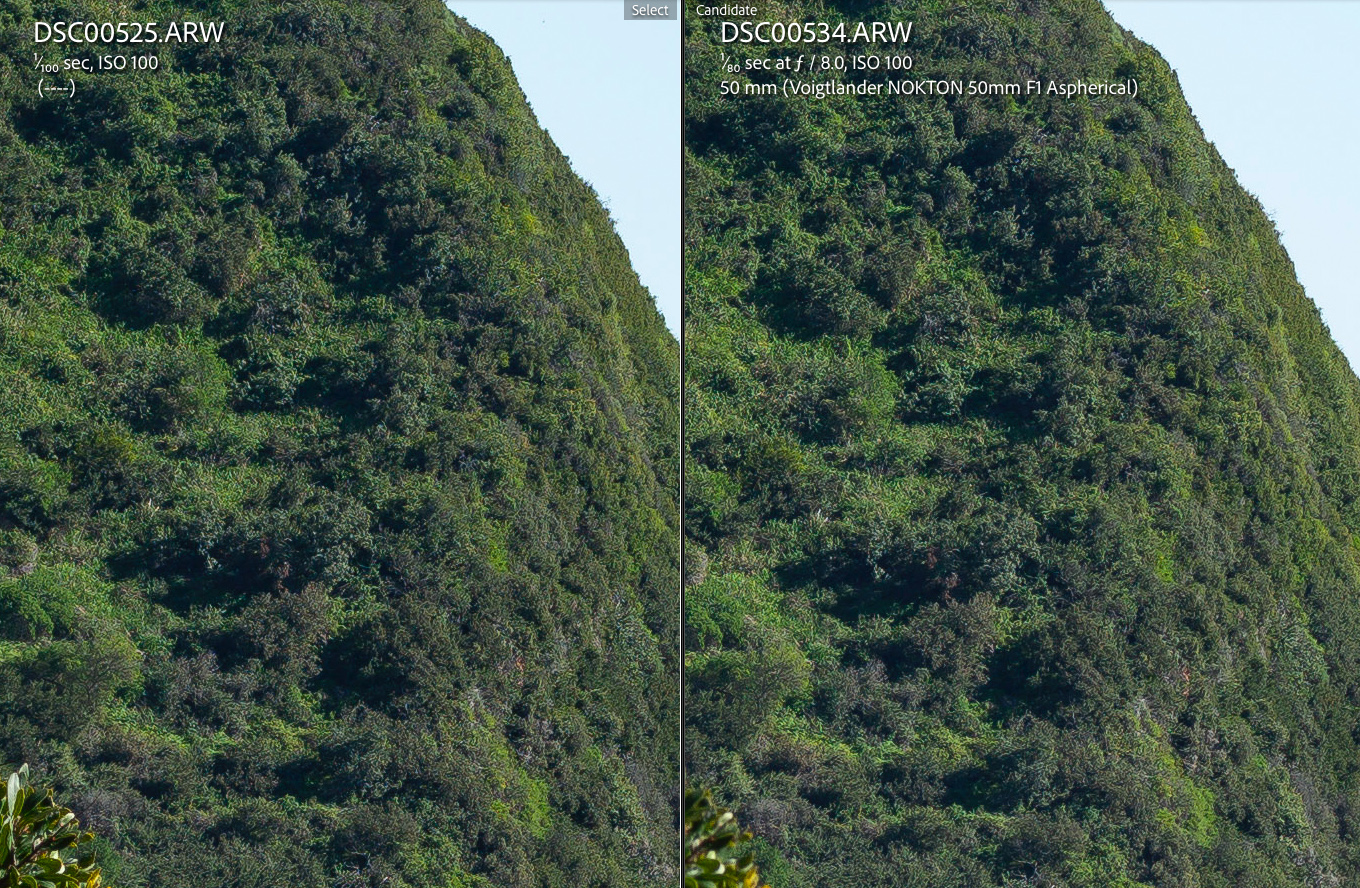
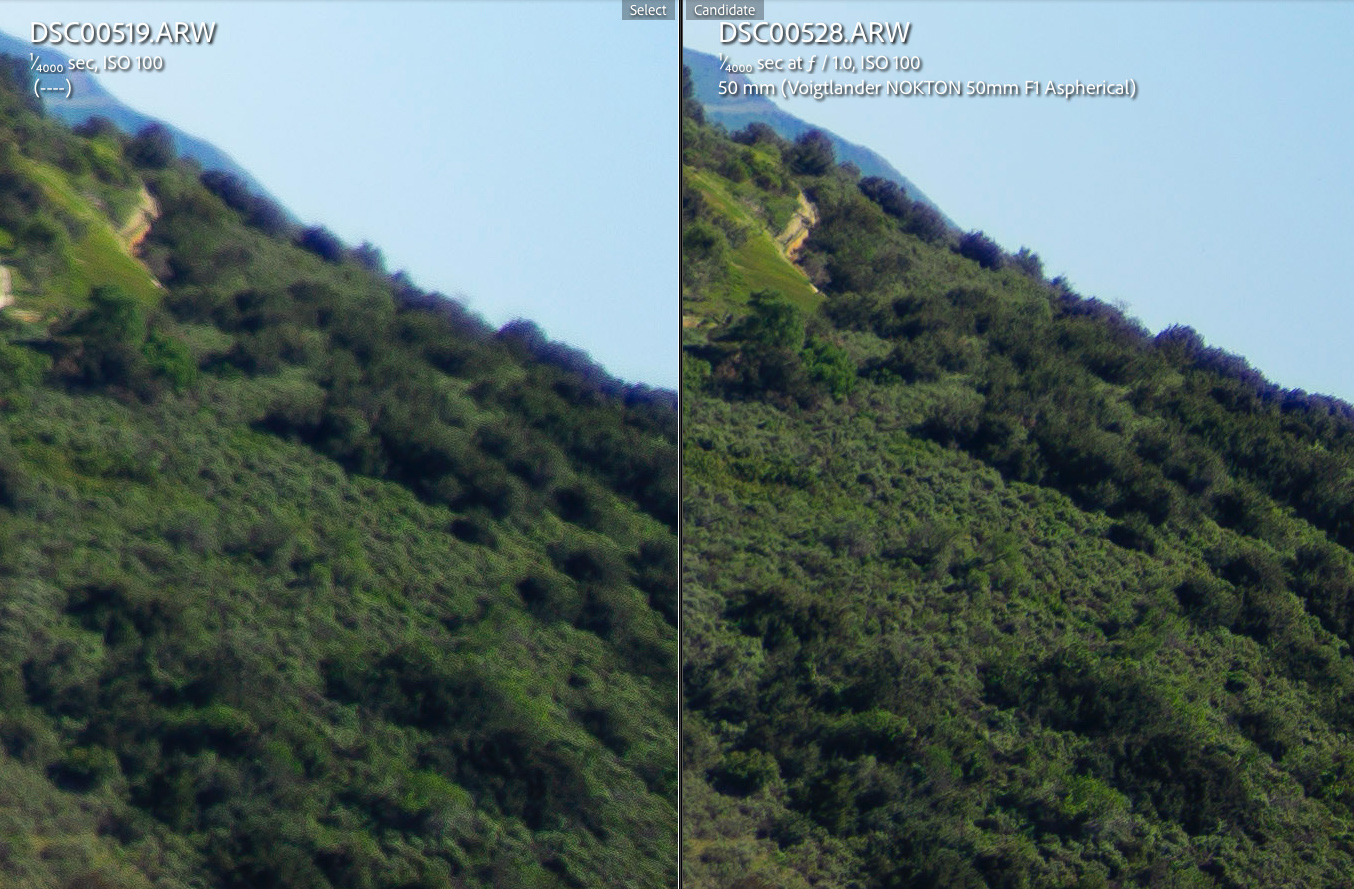
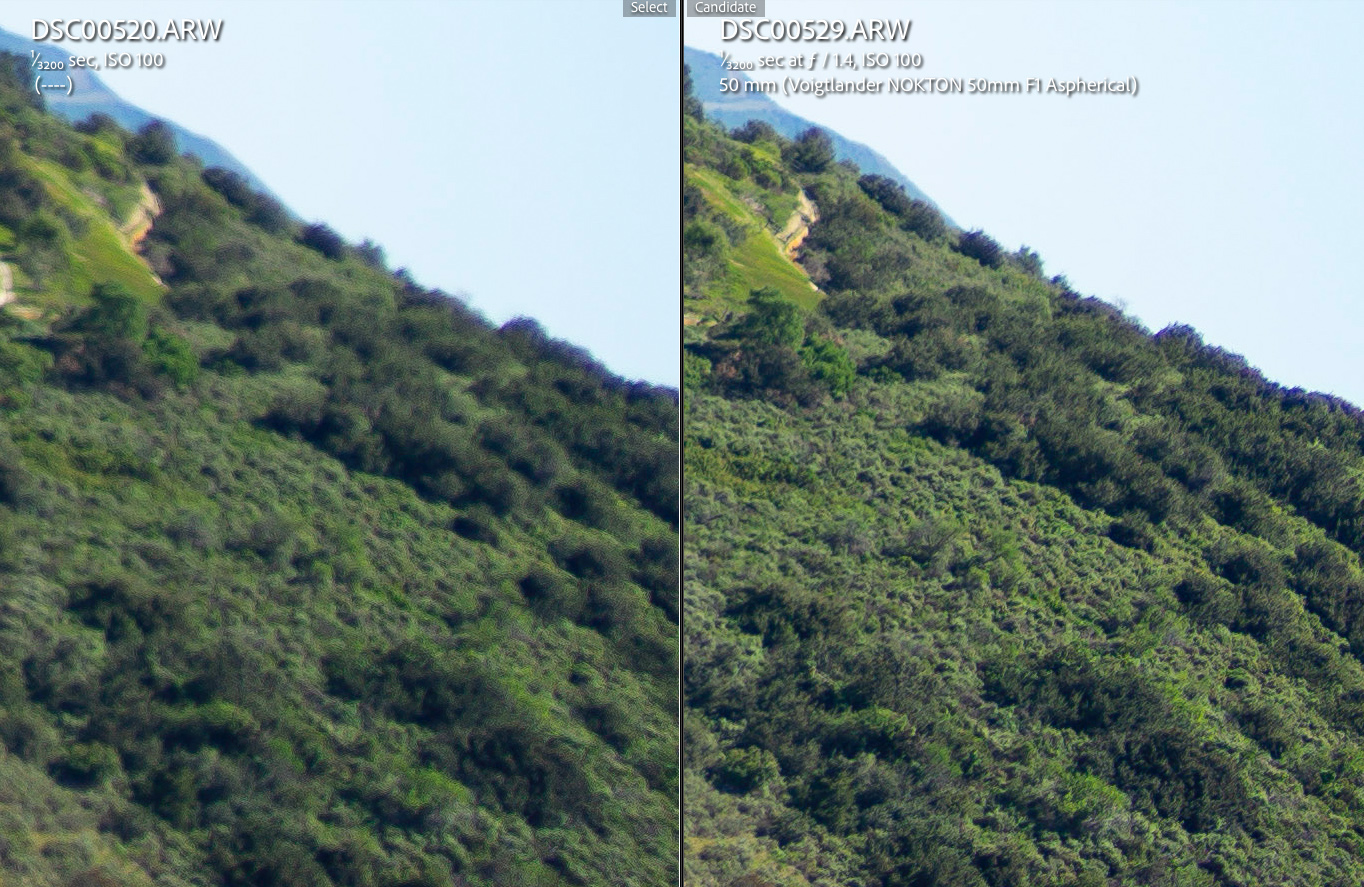
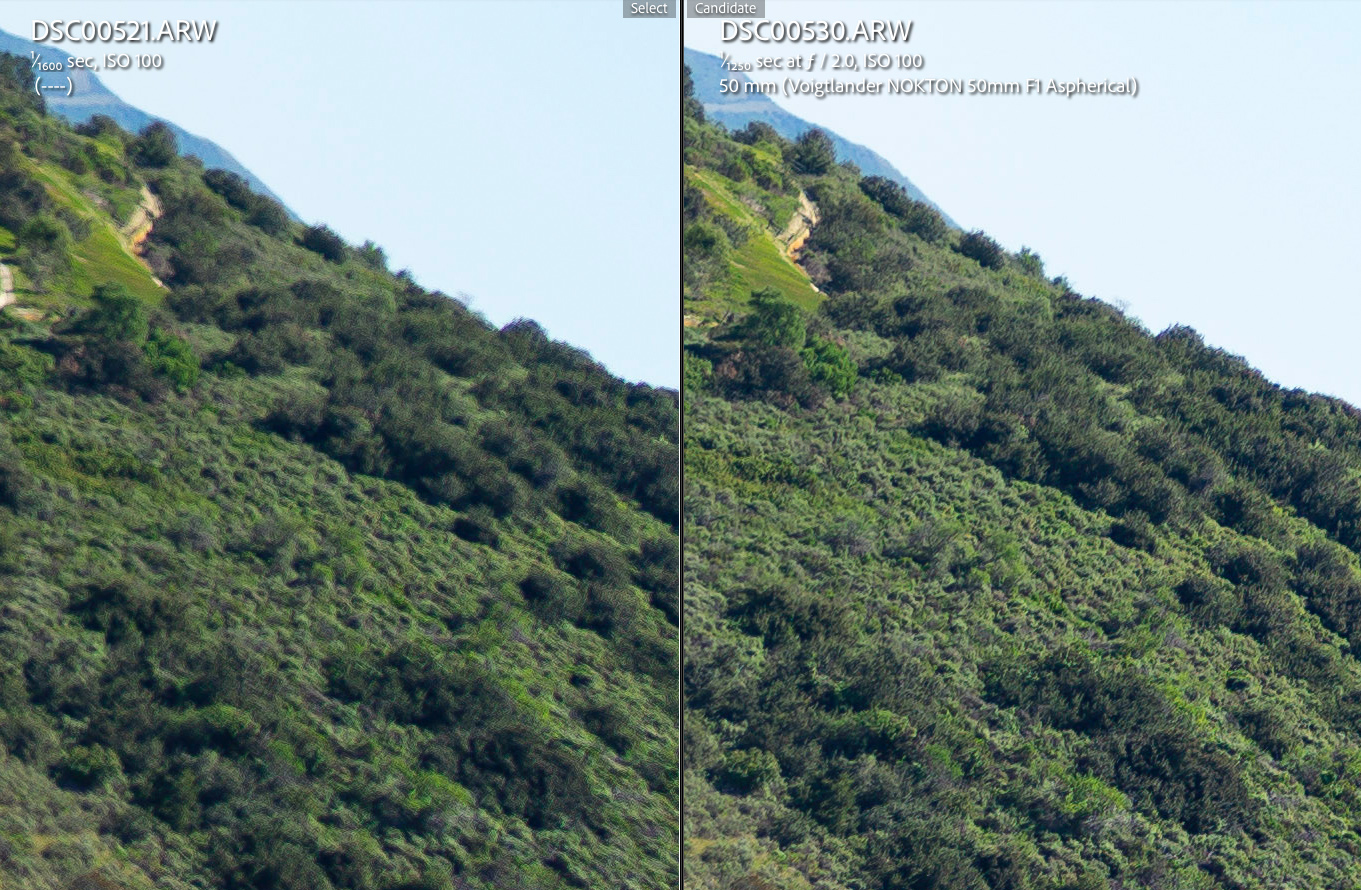
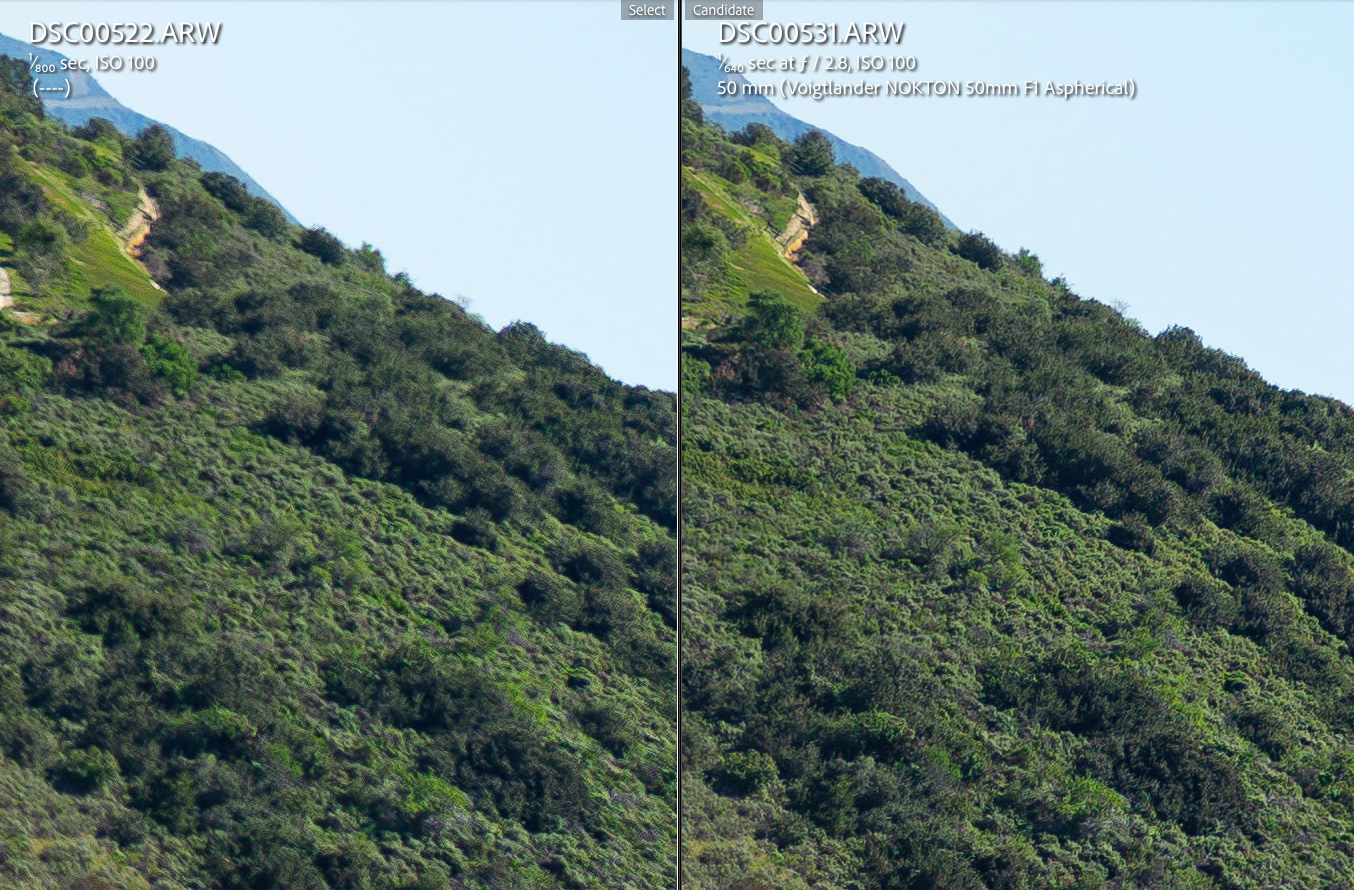
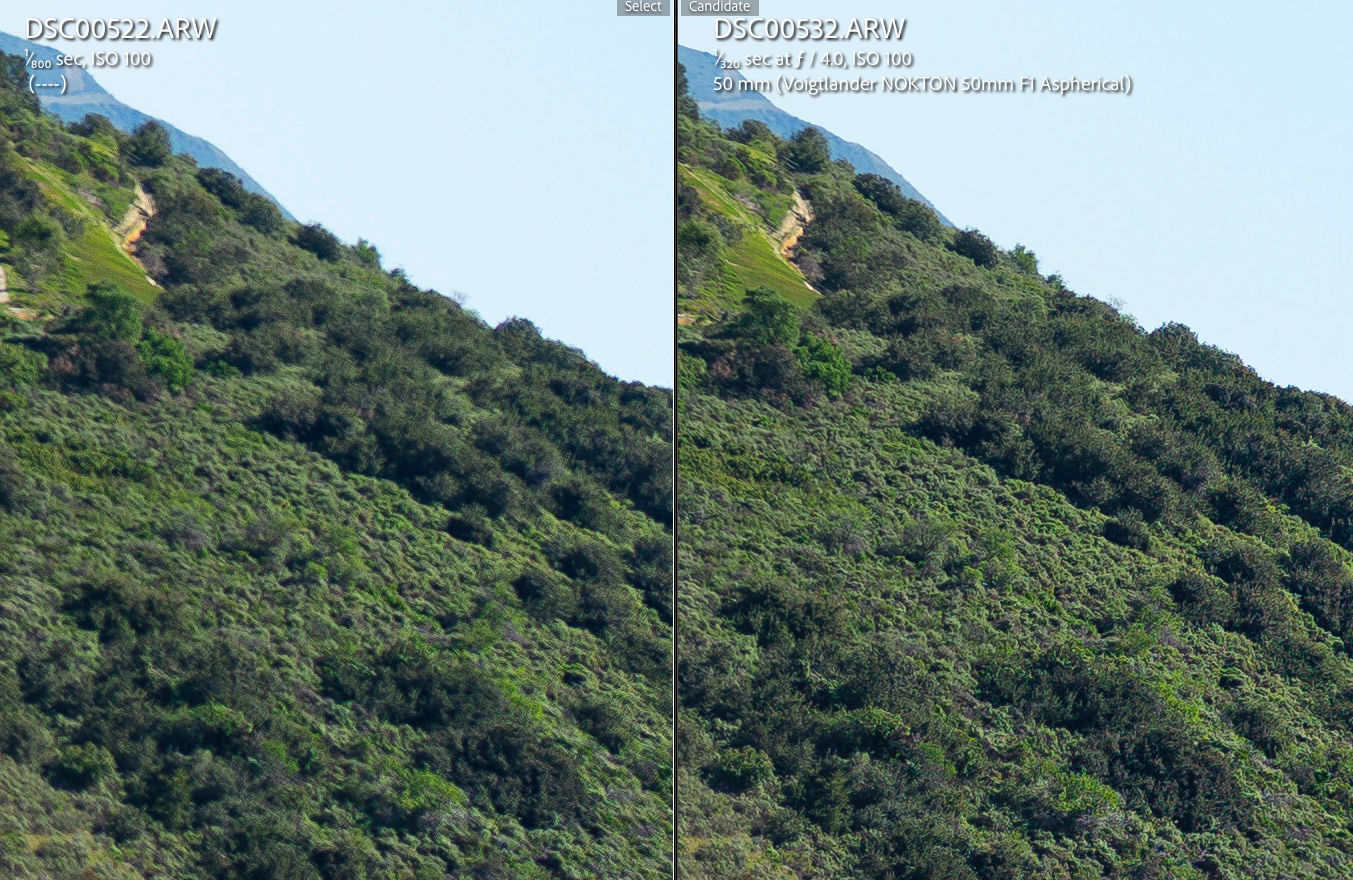
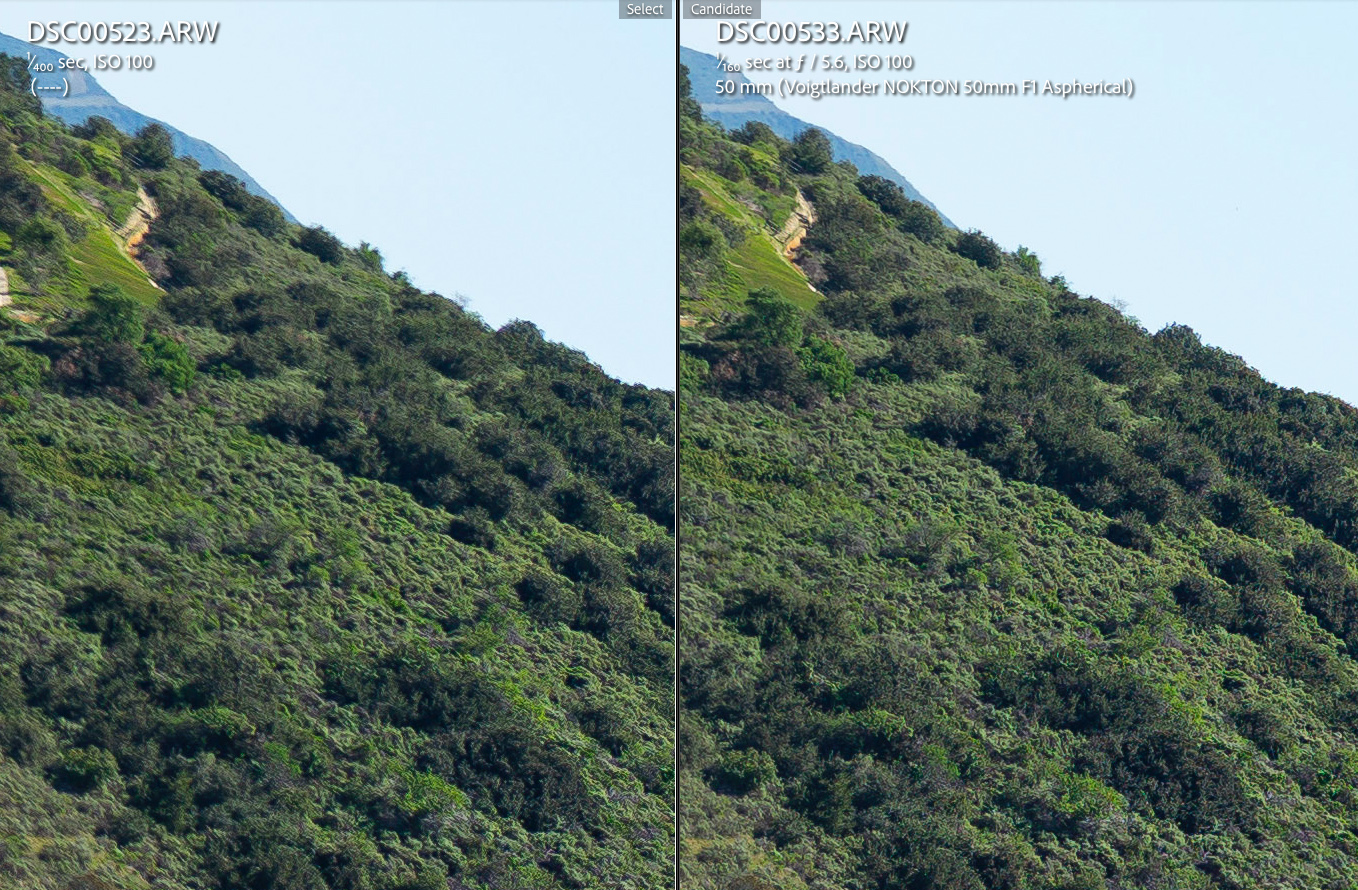
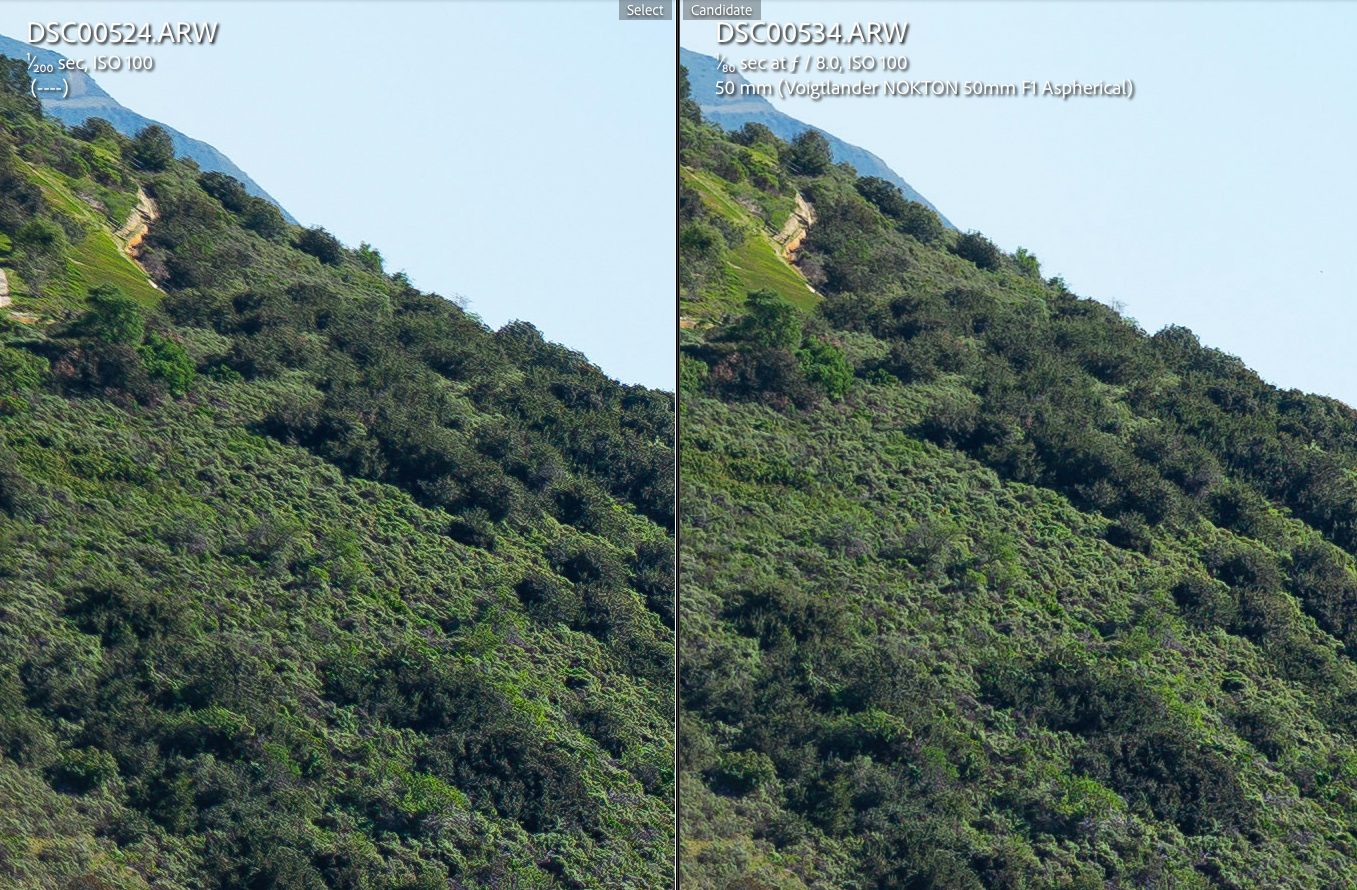
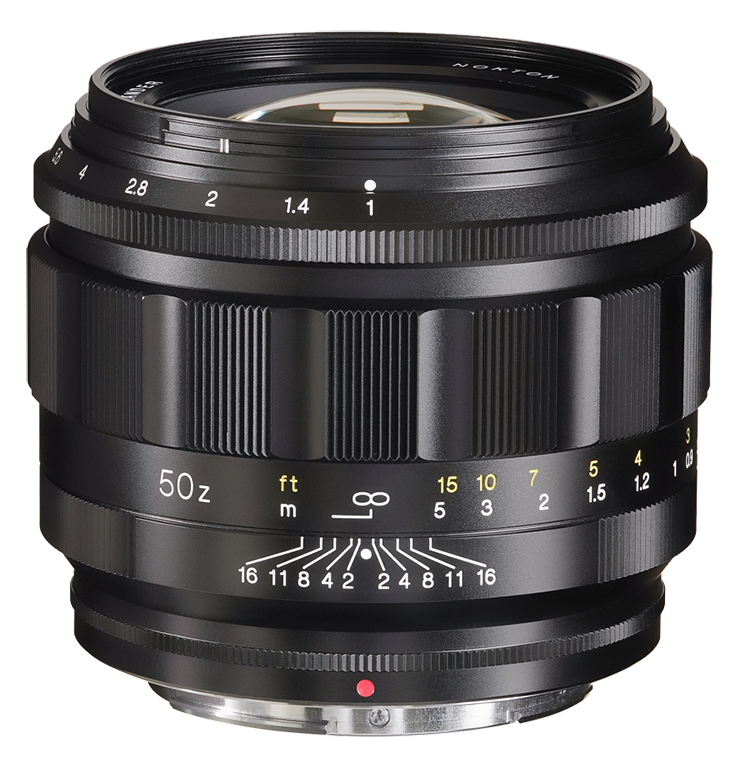
I've received numerous requests to compare the Voigtlander 50mm f/1 Nokton lens in Leica M-mount to the newly released Voigtlander 50mm f/1 Nokton for the Sony E-mount. Even though these lenses have similar optical designs, Cosina adjusted the formula to accommodate the thicker sensor stack of Sony cameras compared to the much thinner stack used in Leica M cameras.
The Voigtlander 50/1 Nokton M-mount has already been reviewed here and was compared to many other M-mount lenses like the Leica 50mm f/1 Noctilux, Leica 50mm f/0.95 Noctilux, TTArtisan 50mm f/0.95, and Voigtlander 50mm f/1.2 Nokton lenses. You can read this review here.
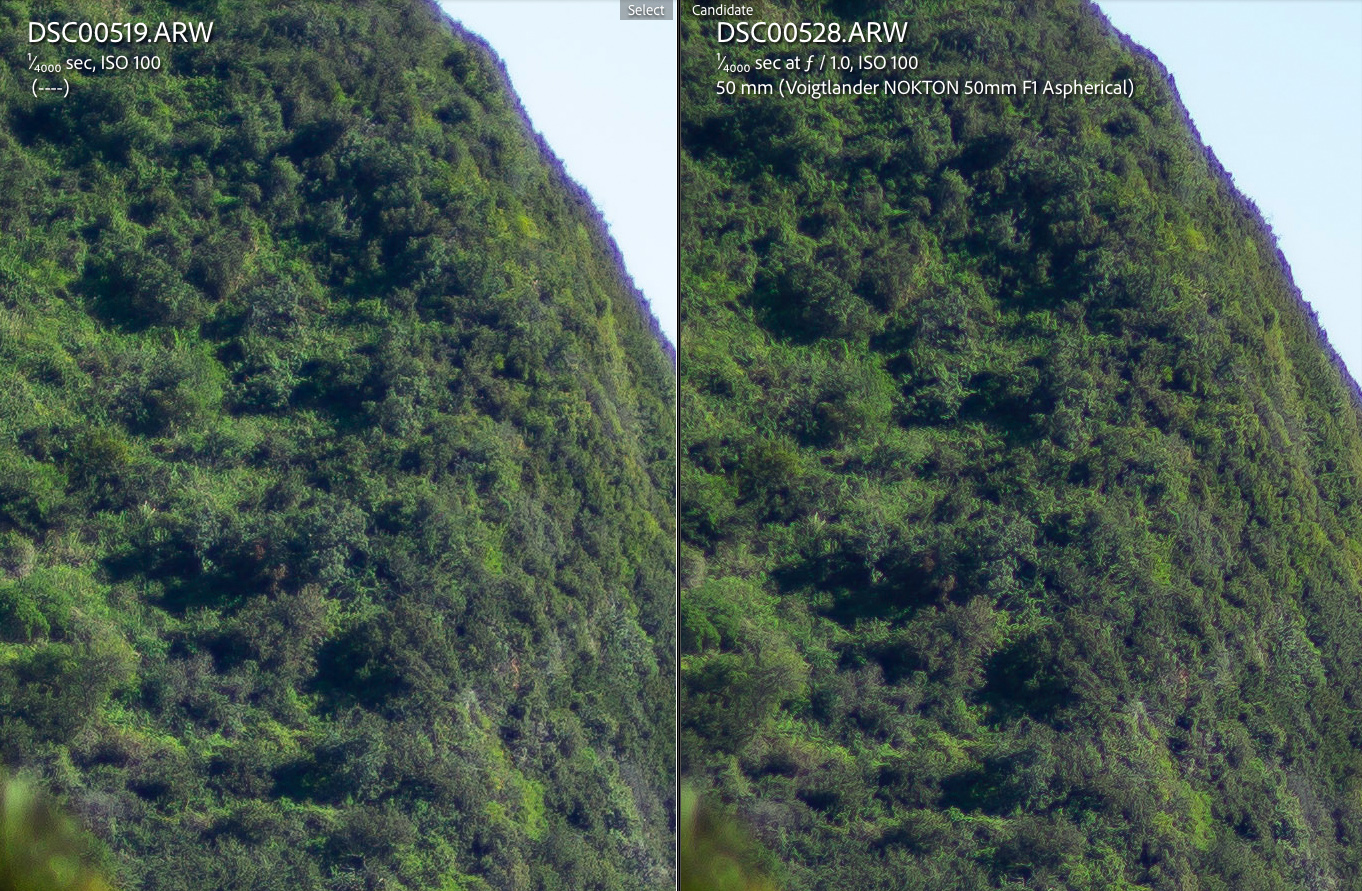
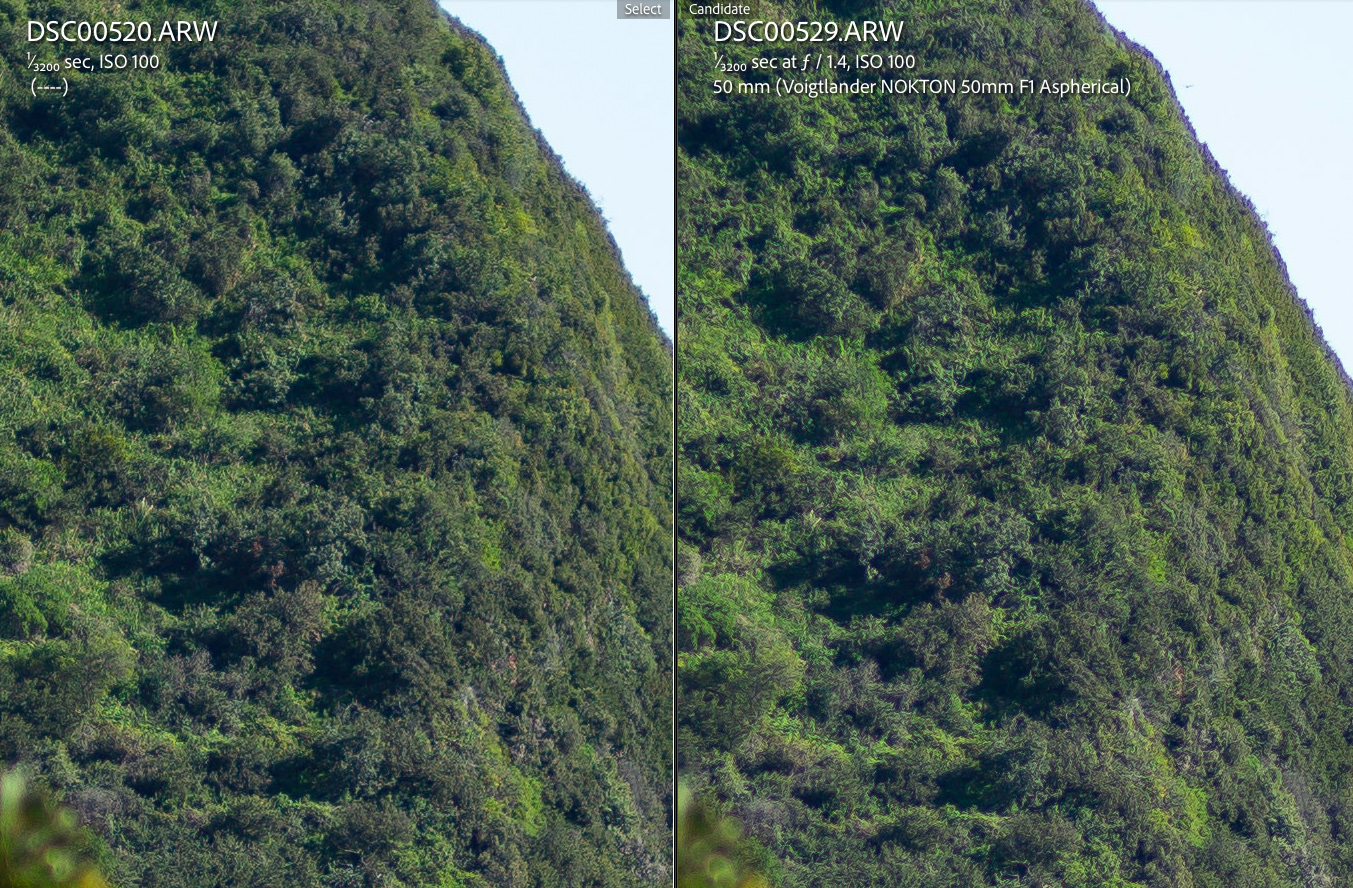
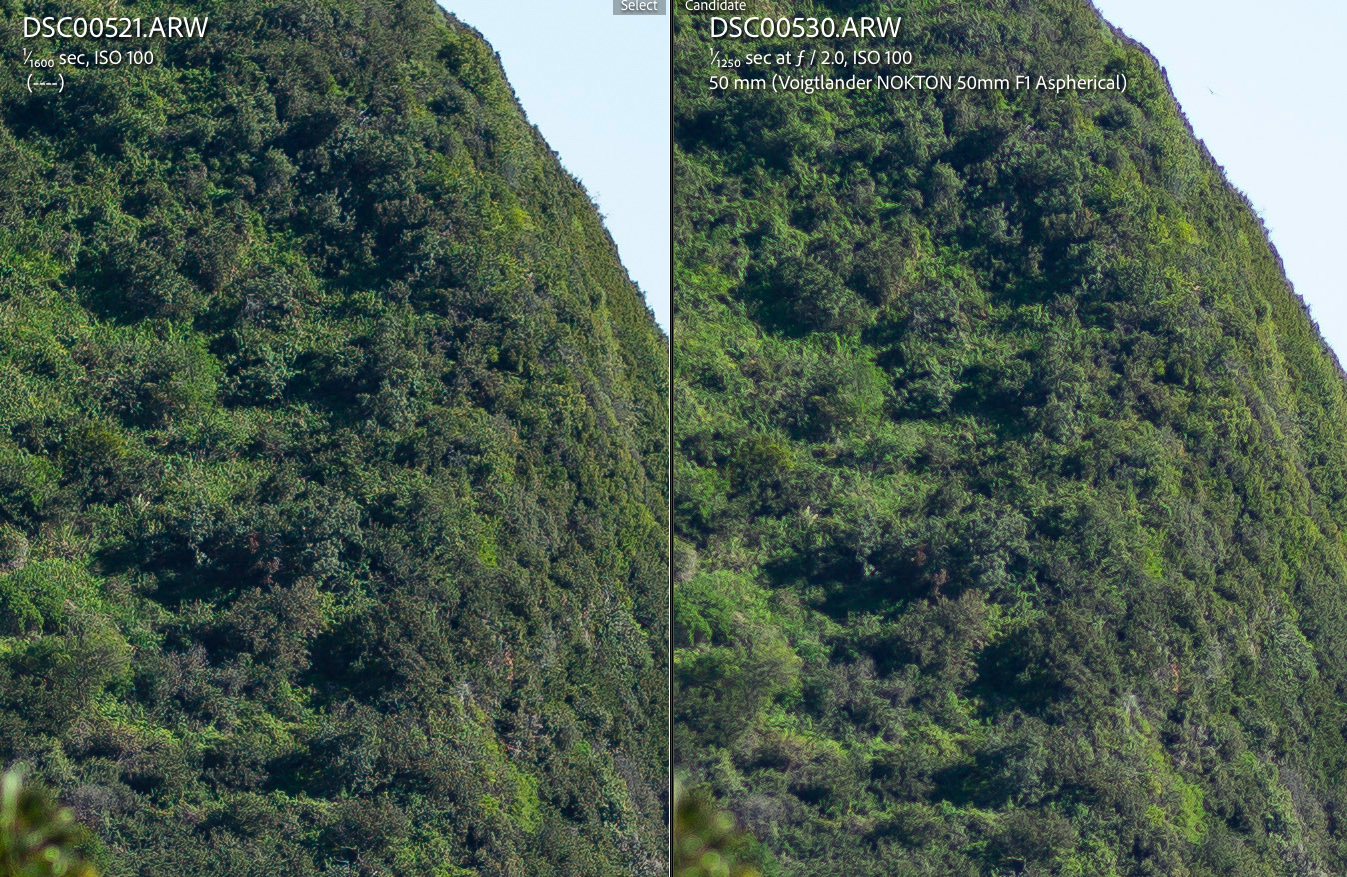
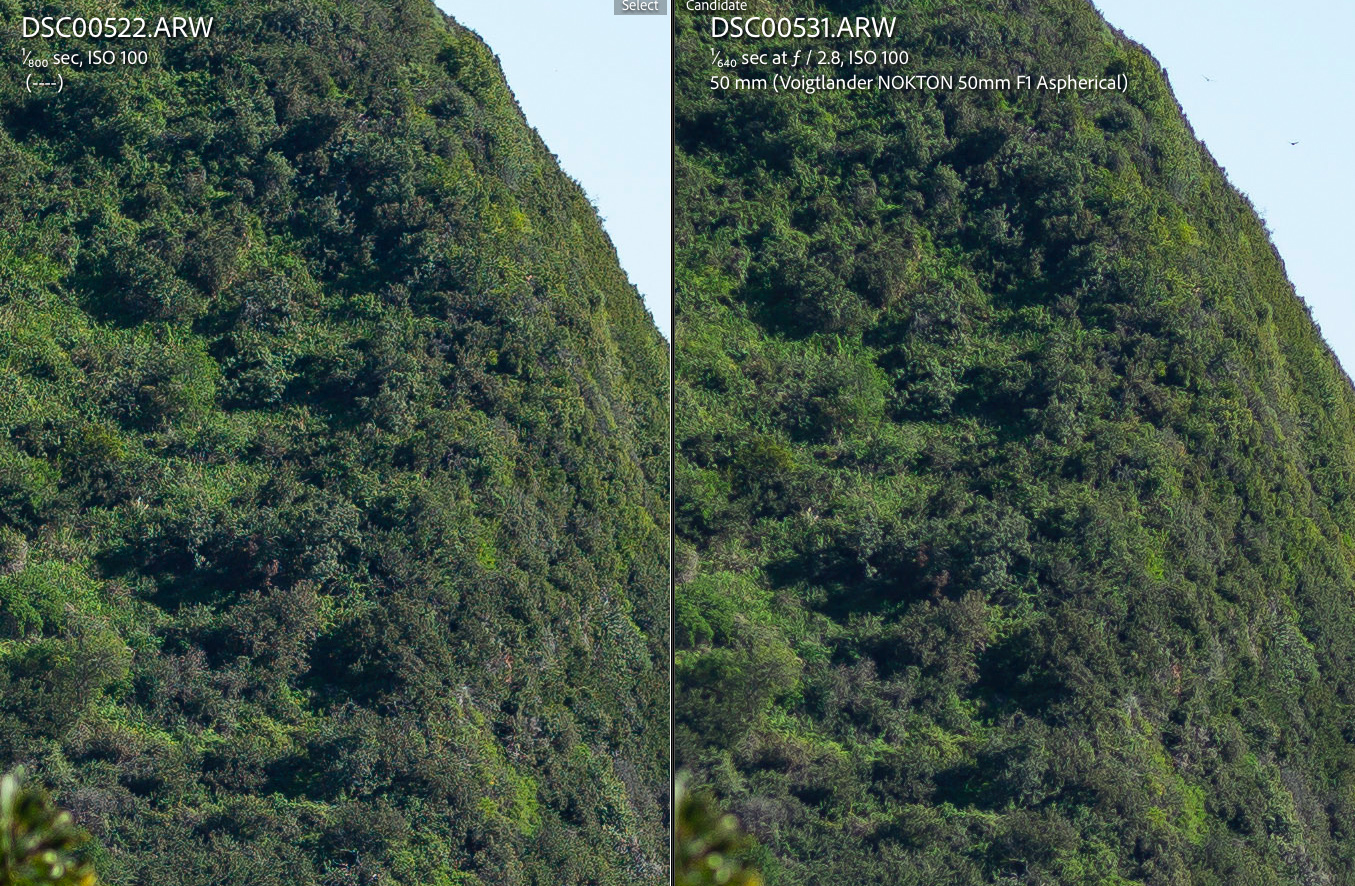
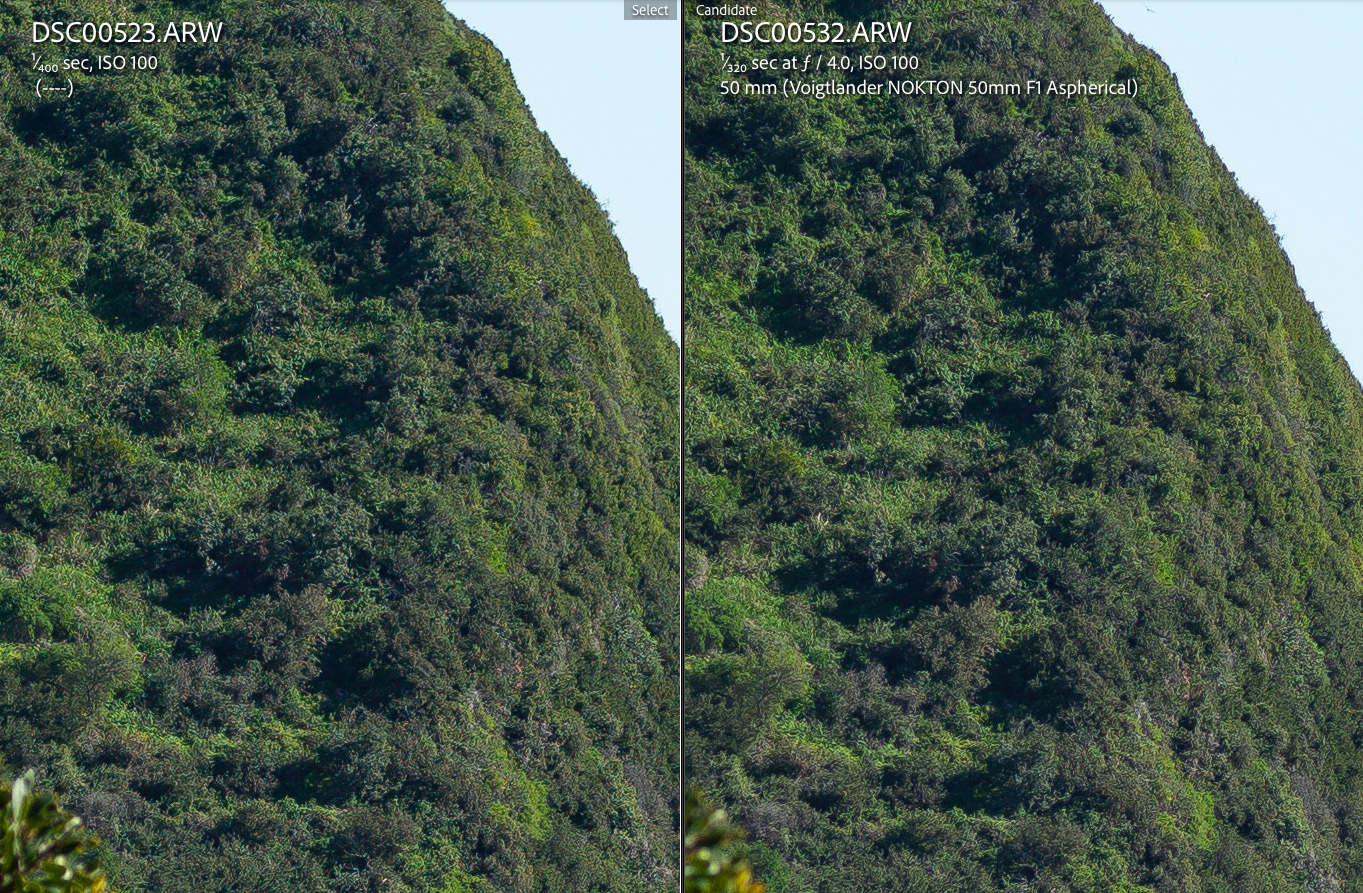
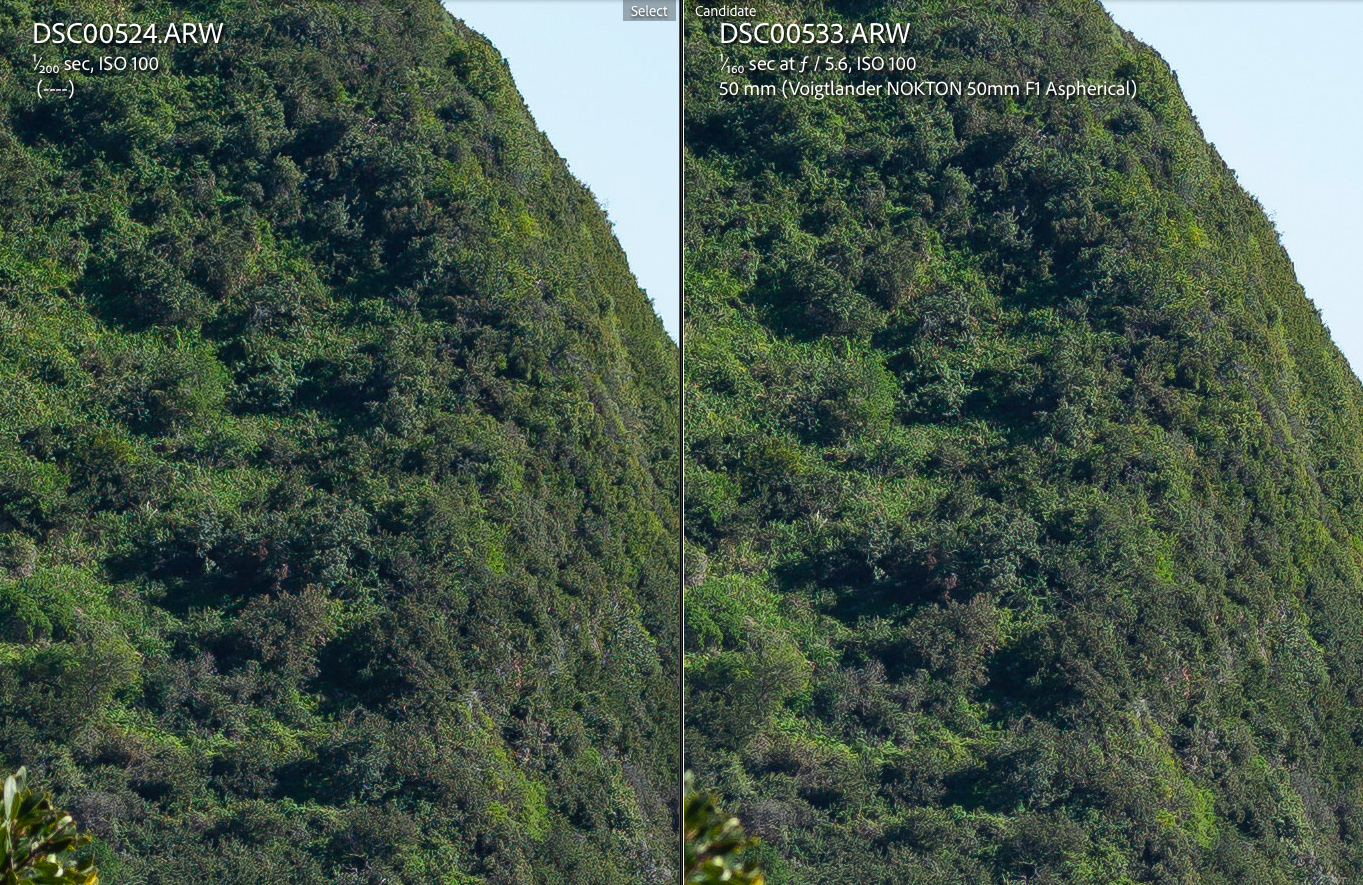
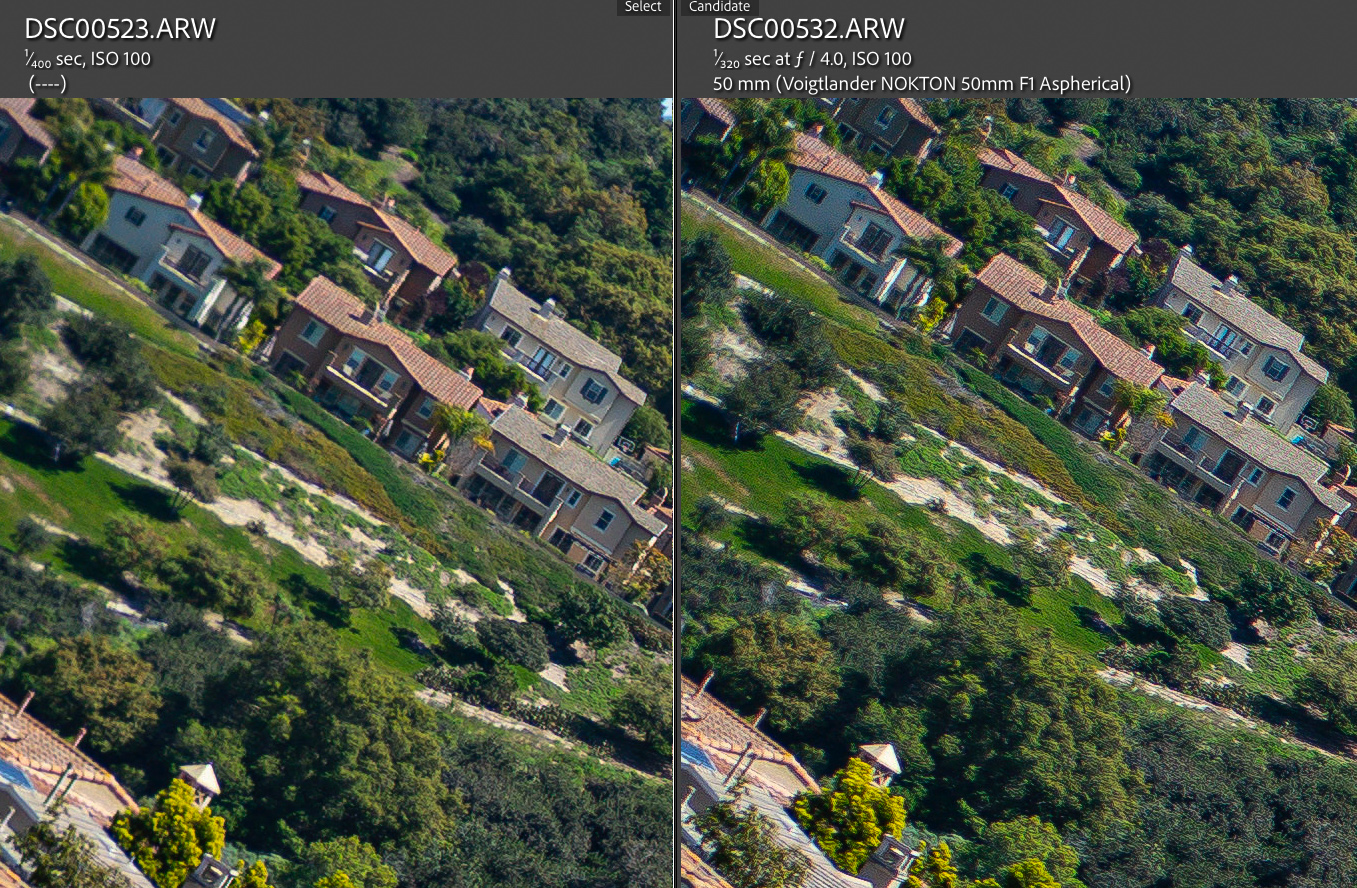
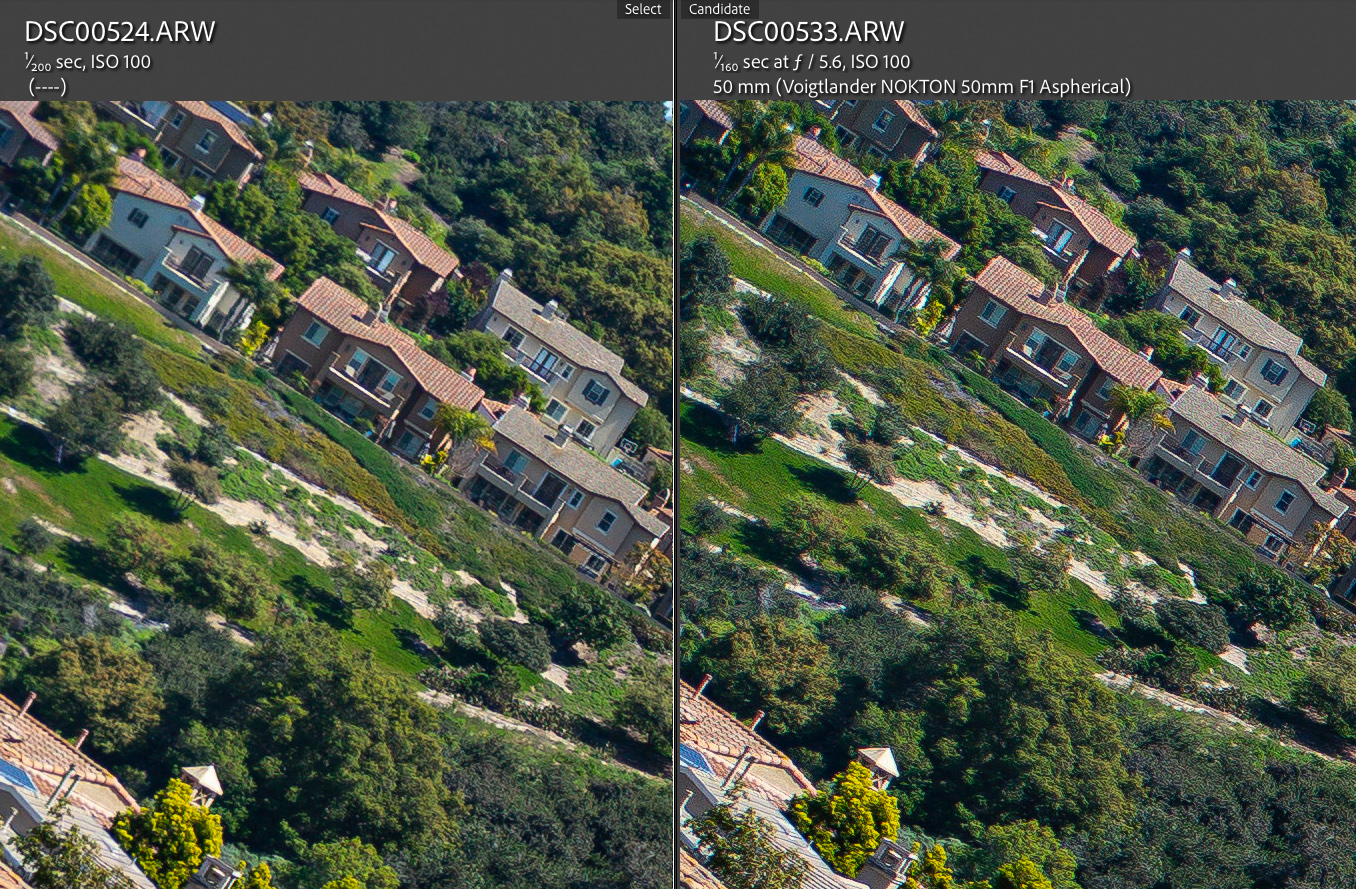
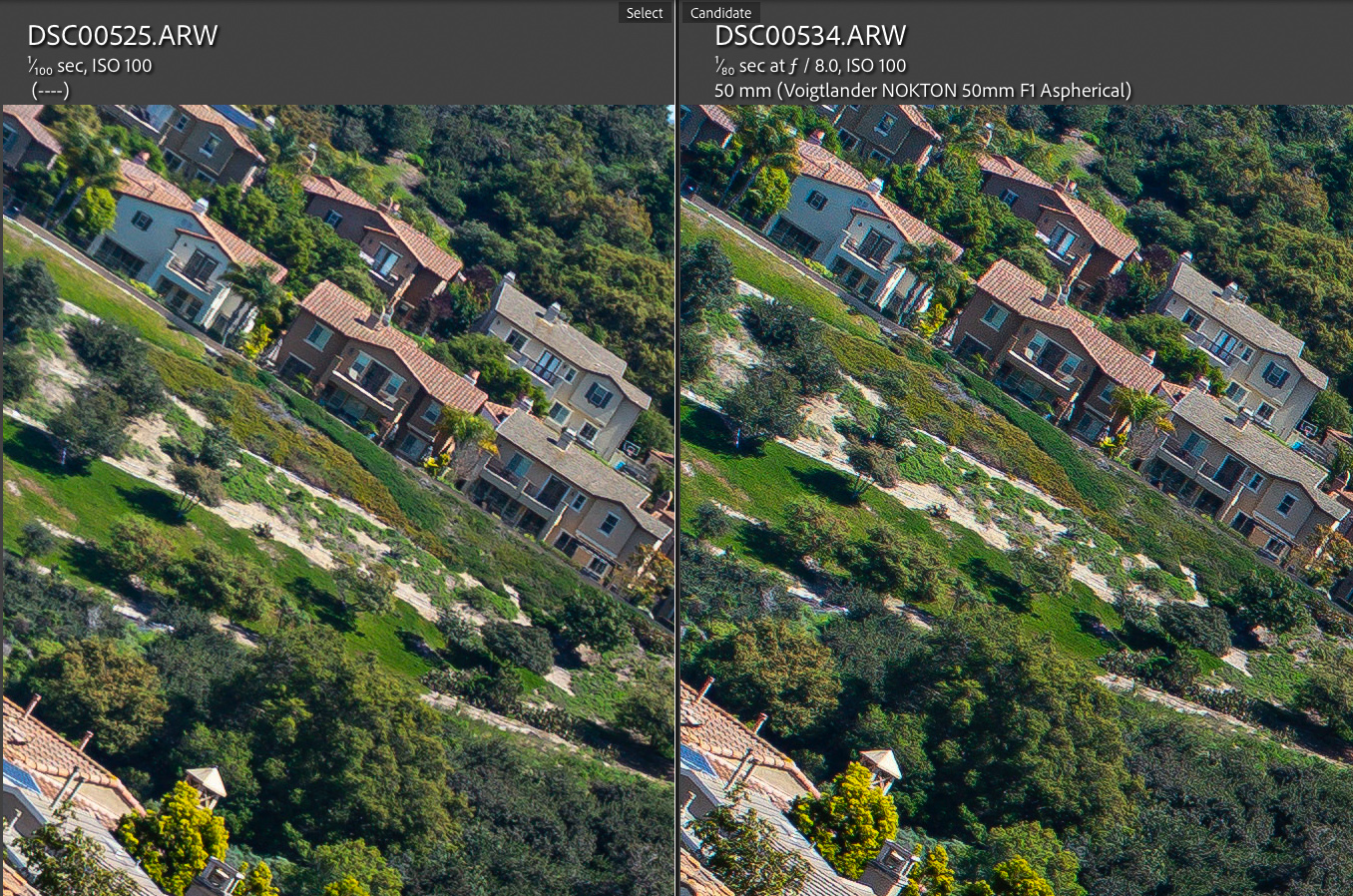
Many have wondered if using the Voigtlander 50mm f/1 Nokton M-mount on a Sony sensor instead of the dedicated E-mount version would work fine, but I'm here to say there will be noticeable degradation in image quality due to induced field curvature. They perform similarly at the center, although I still give the E-mount version a slight advantage even at the center. However, as you move from the center to the mid-zone and corners, you can see noticeable image quality degradation at infinity focus.
Stopping down the CV 50/1 Nokton M-mount to about f/8 reduces the induced field curvature, making it perform similarly to the E-mount version, but I would recommend choosing the E-mount lens when shooting at wider apertures.
During testing, no corrections for vignetting or chromatic aberration were applied, enabling an analysis of its performance without post-processing. The Sony A7R II (42MP) was used for this comparison.
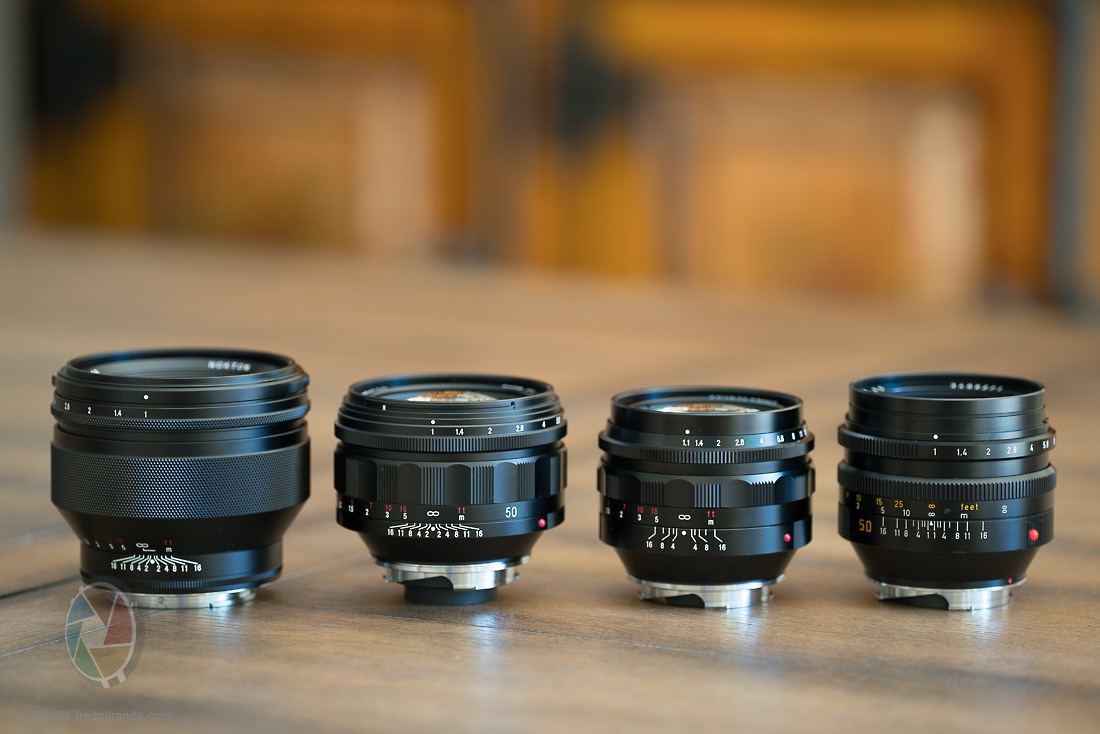
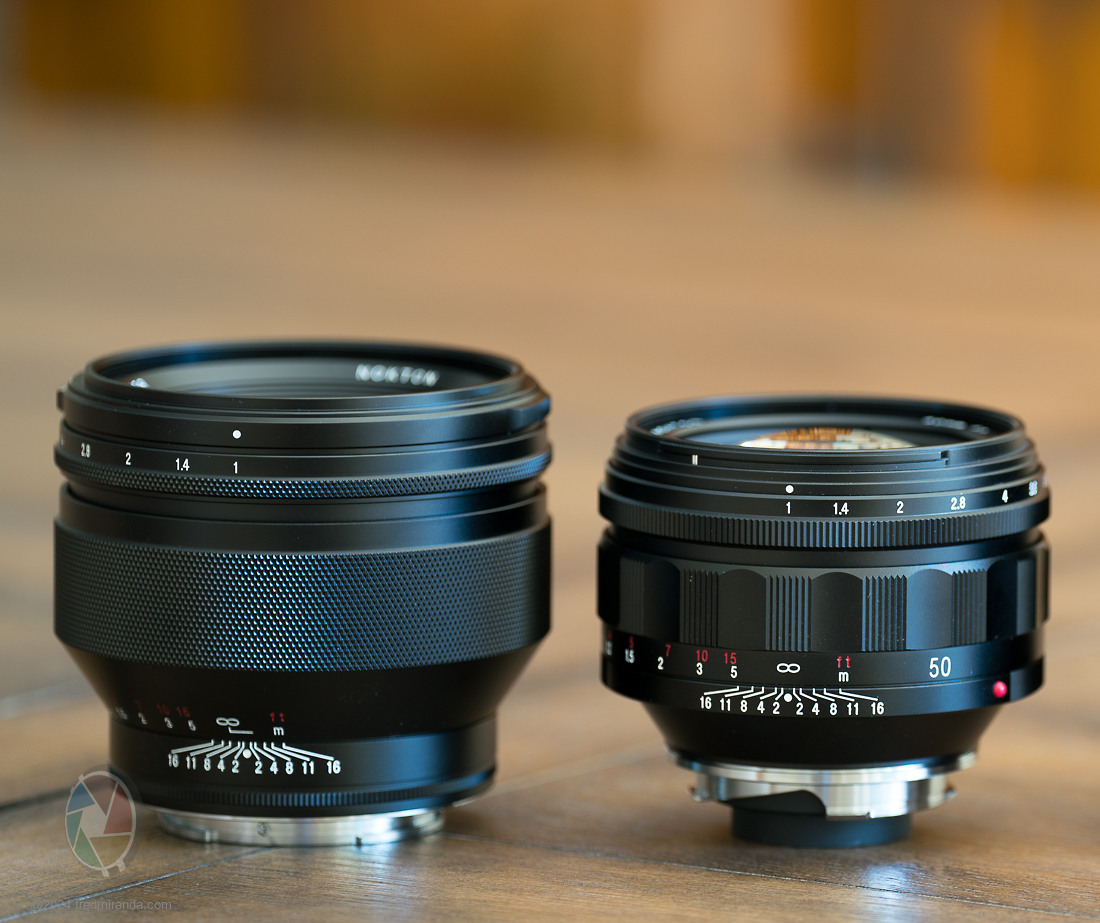
I just compared the weights of the Voigtlander 50mm f/1 Nokton in both M-mount and E-mount versions. The M-mount lens weighs 482 grams, while the E-mount version weighs 589 grams. This means the M-mount lens is 107 grams lighter which is considerable.
However, if you use an adapter to mount the M-mount lens on E-mount cameras, the weight becomes more comparable. Despite this, the M-mount lens remains noticeably more compact, even with an adapter attached.
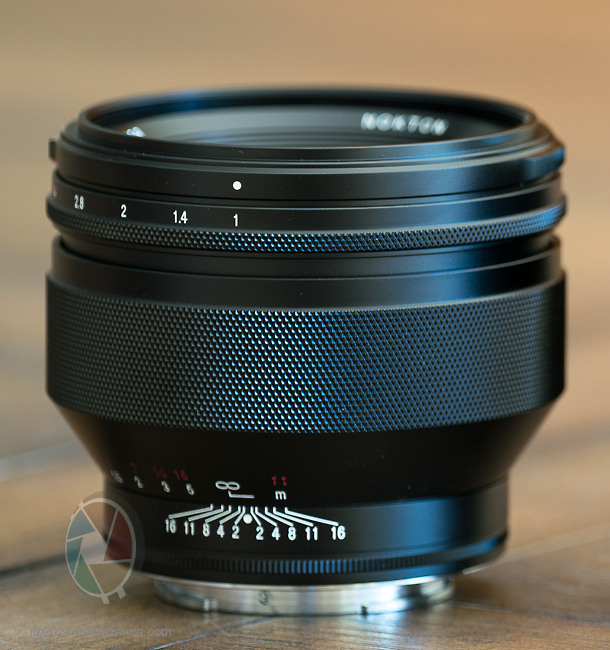
Apart from differences in lens aesthetics—such as the E-mount rings feeling more luxurious and the M-mount having a classic design—it's important to note that the E-mount version features a de-clicking mechanism. This mechanical design is well executed and easy to use. Removing the “clicks” is definitely a plus for videographers, as it allows for smooth, seamless aperture adjustments during filming.
robsonj wrote:
I really like the design of the e-mount version. Wished the m-mount looked like that
It looks like Cosina aimed to maximize compactness with the M-mount version. Comparing side by side, you'll notice the optical design remains consistent. However, differences emerge in the rear element: the M-mount extends beyond the lens mount, and the top element sits closer to the filter thread. In contrast, the E-mount version features a covered rear section and provides more room on top for the de-clicking mechanism. The M-mount's focusing ring retains a classic design, while Sony's is more contemporary.
The Nikon Z mount version is similar to the aesthetics of the M-mount.
Yes, if they melded the contemporary ascetics to the m compactness, would be outstanding. Think it would look killer on the M11m
Fred Miranda wrote:
It looks like Cosina aimed to maximize compactness with the M-mount version. Comparing side by side, you'll notice the optical design remains consistent. However, differences emerge in the rear element: the M-mount extends beyond the lens mount, and the top element sits closer to the filter thread. In contrast, the E-mount version features a covered rear section and provides more room on top for the de-clicking mechanism. The M-mount's focusing ring retains a classic design, while Sony's is more contemporary.
The Nikon Z mount version is similar to the aesthetics of the M-mount.
Interesting. Thanks for your hard work in shooting these comparisons. I remain in little danger of becoming a Sony shooter*, but, as the owner of the M-mount Nokton, it is good to see your results, in order to remain well-informed.
*Actually, my first digital camera was a Sony DSC-H20, but when I was ready to try interchangeable-lens cameras, and then soon thereafter, needed a DSLR, to pair with a serious macro lens, preferably weather-sealed, and serious shoe-mount flash, to use while on duty, the Sony system was not yet nearly ready. Canon was most ready. Simple as that.
Fred Miranda wrote:
...
Thanks. I have the M mount lens myself and know that it has outward bending field curvature even on digital M cameras.
I was asking because it would be nice to know if Cosina adjusted the optical formula for the Sony version (and Nikon Z and Canon RF versions for that matter) in order to reduce field curvature with the thicker sensor glass. That might make the Z version more interesting to me, since I have a Kolari Vision Ultra-Thin converted Z6, which may flatten the plane of focus further when using a lens designed for a thicker sensor glass ... if you understand what I am thinking?
Fred Miranda wrote:
I did a rendering comparison between the Voigtlander 50/1 M-mount and E-mount lenses on the Sony sensor, and I'll be sharing it shortly.
It would be interesting to see if there is any difference between the M and E versions on their native sensors, to determine whether the optical adjustments are just to compensate for the sensor glass or whether there is an improvement above that.
Apr 30, 2024 at 10:44 AM
Steve Spencer Offline • • • • • • • Upload & Sell: On
oscartb wrote:
It would be interesting to see if there is any difference between the M and E versions on their native sensors, to determine whether the optical adjustments are just to compensate for the sensor glass or whether there is an improvement above that.
It would be very hard to do this comparison because you not only have two different lenses, but you have two different sensors. It would be very difficult to tell if any improvement was the result of subtle changes to the lens or the result of the different sensors. You could conclude that you like one lens/sensor combo better than the other lens/sensor combo but you wouldn't know if it was because of the lens or the sensor.
Comparison of Rendering: Voigtlander 50/1 Nokton E-mount vs. M-mount on Sony A7R II (42MP)
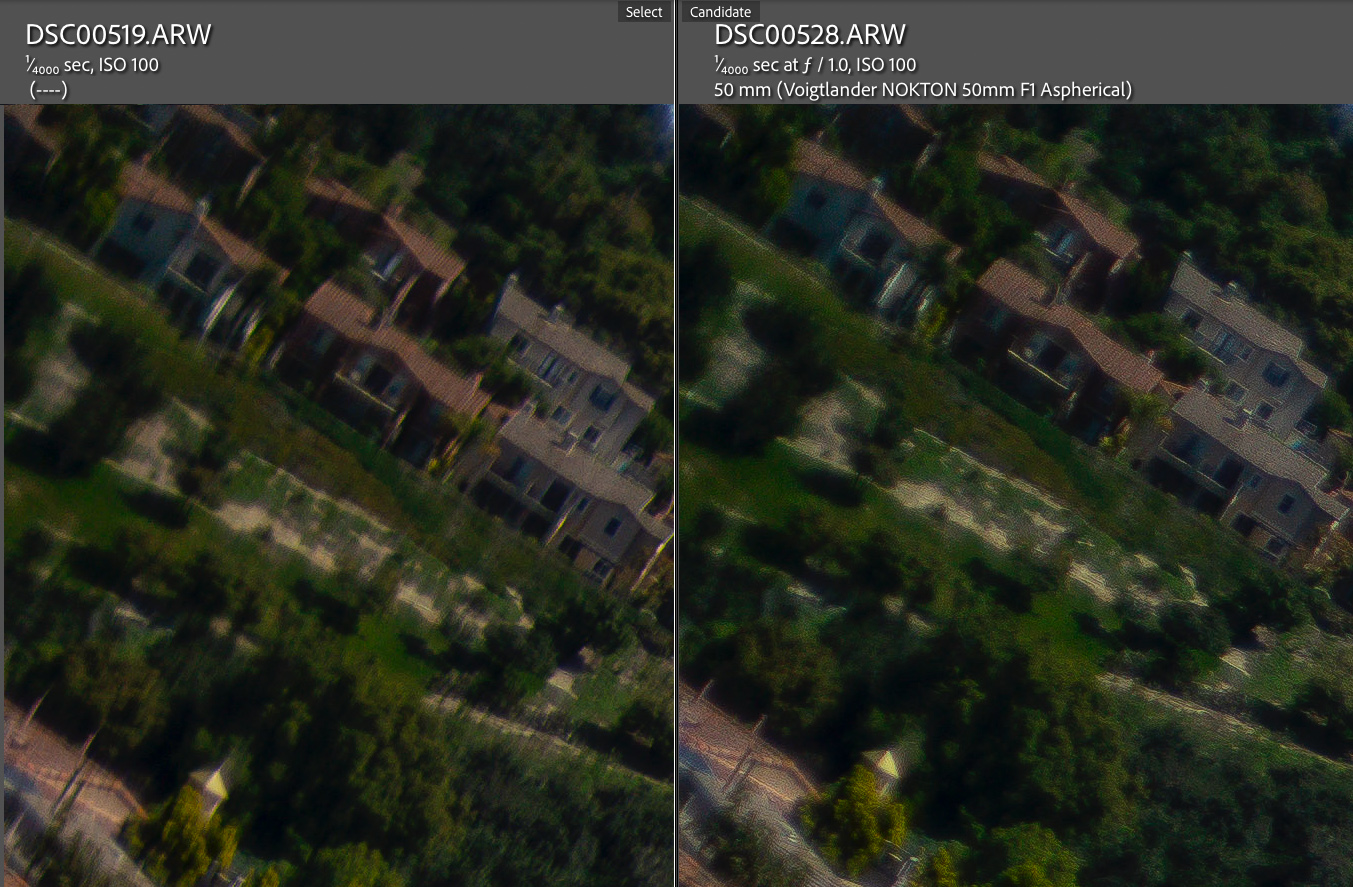
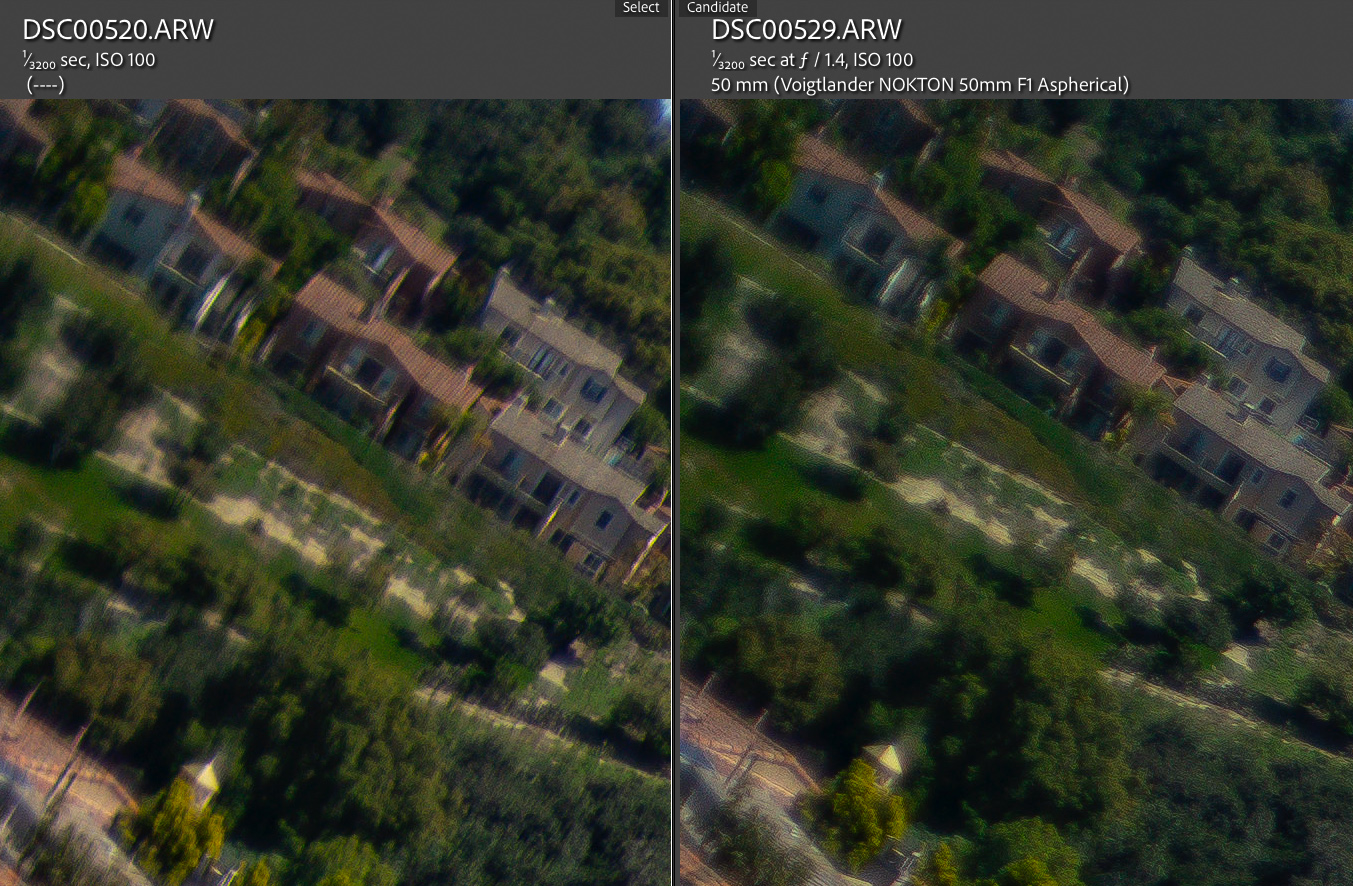
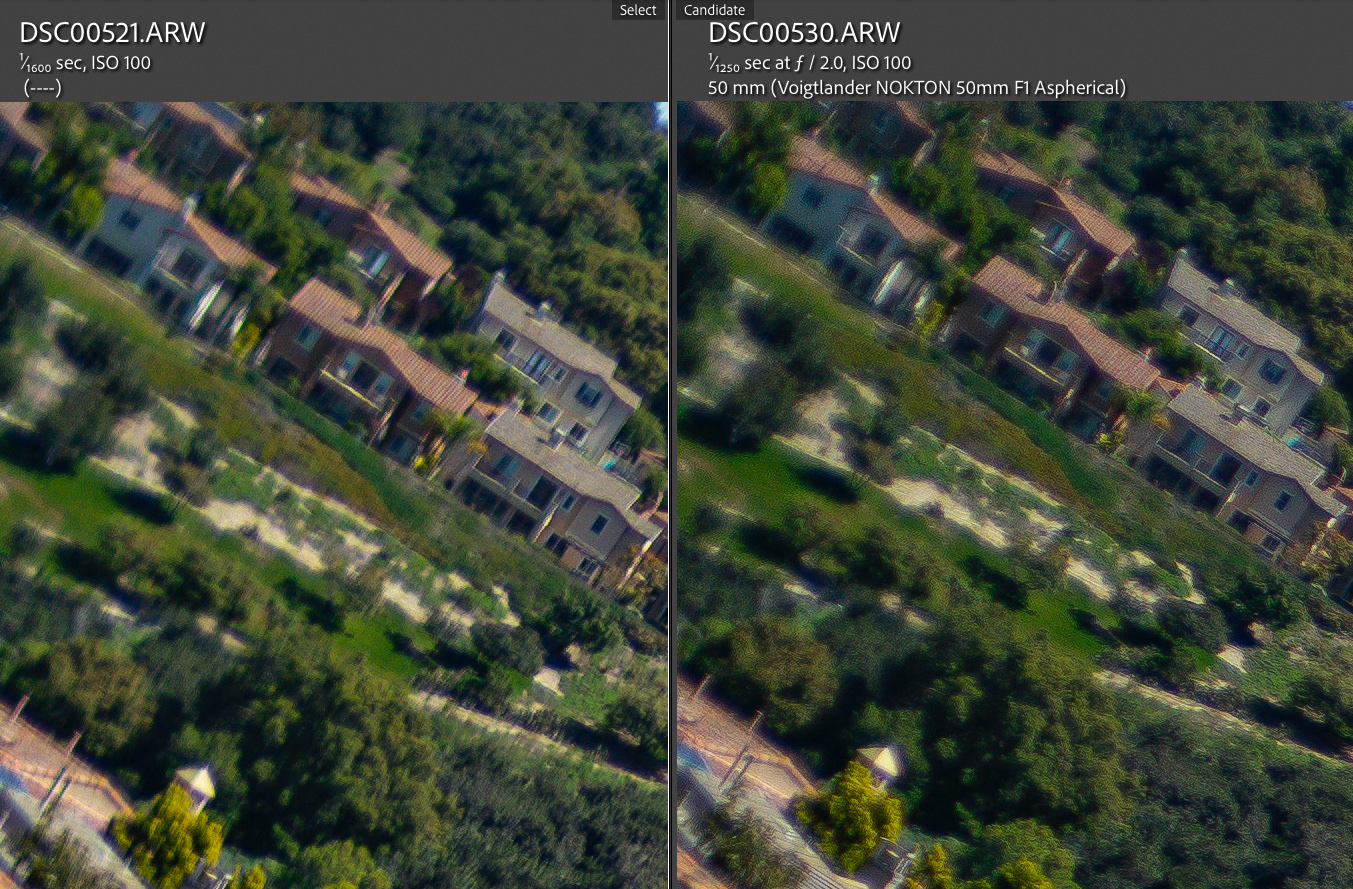
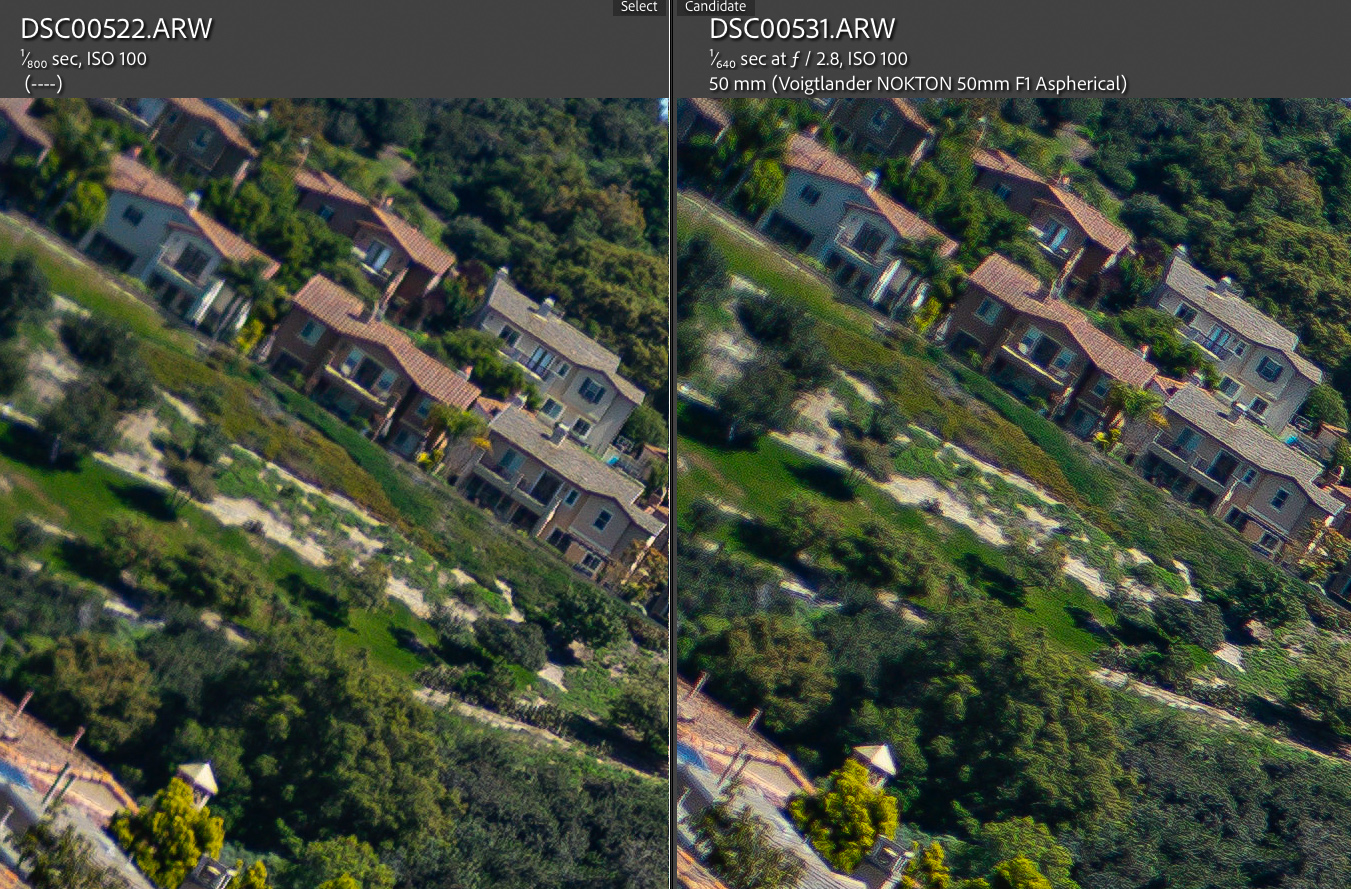
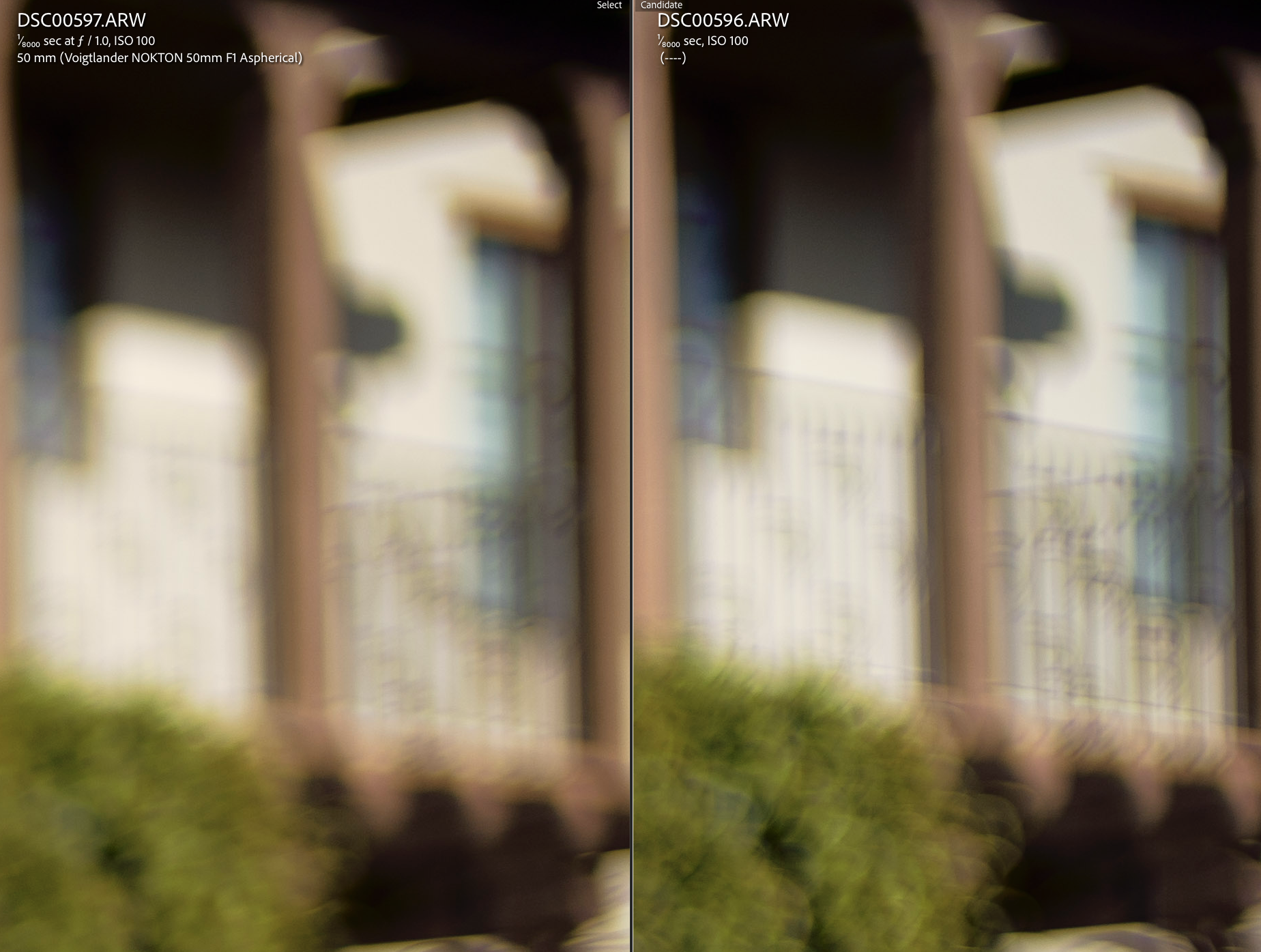
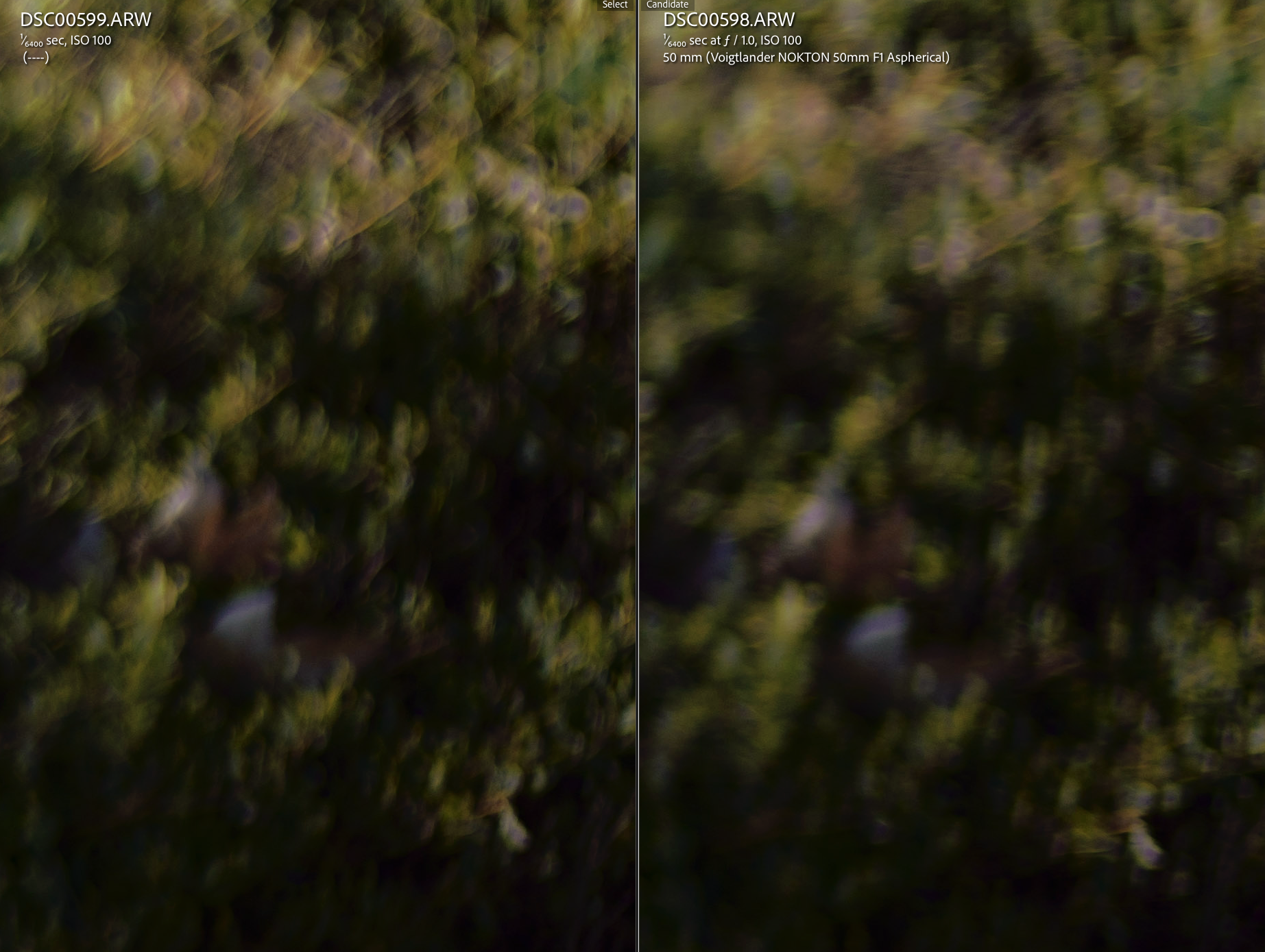
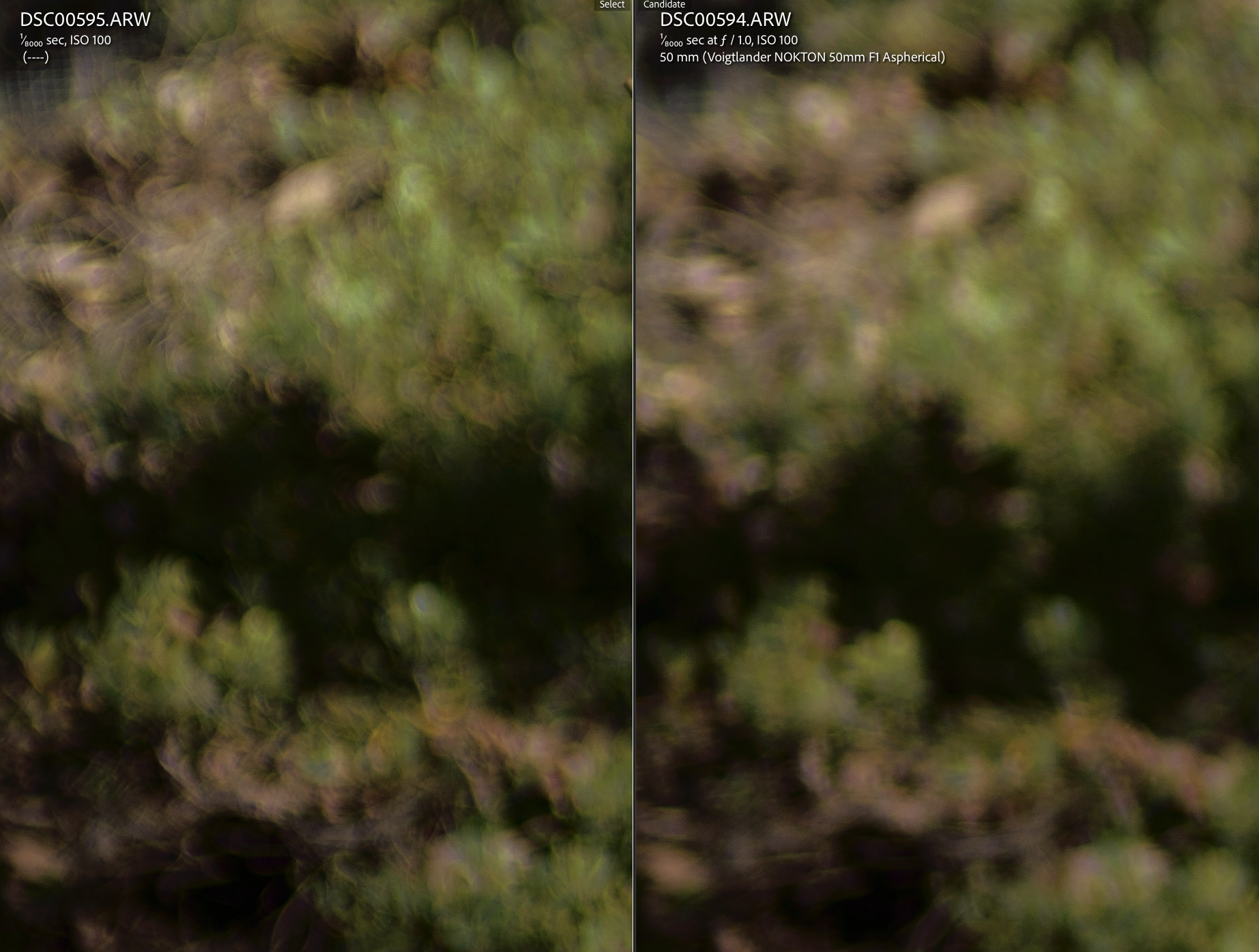
When comparing side-by-side images taken with the Voigtlander 50mm f/1 Nokton lens in both E-mount and M-mount configurations on a Sony camera, it's interesting to note that the E-mount lens yields a slightly smoother rendering compared to the adapted M-mount combination. This difference is evident when examining the out-of-focus background from center to corners, especially when shooting wide open.
Also, using the M-mount lens on a camera with a thicker sensor stack than it was originally designed for introduces an amplified field curvature visible in the rendering. While this effect is noticeable in the corners of the frame, it's not as pronounced as one might expect, since the lens isn't a wide-angle one. Nevertheless, there's a discernible increase in "focus" towards the corners due to the induced field curvature.
Rendering sample 1
Notice that the out-of-focus rendering is smoother on the E-mount lens, even in the central area. Also, the corners show a perceived "sharper" appearance, attributed to the induced field curvature.
M-mount lens adapted to the Sony A7R II
ILCE-7RM2---- lens1/8000s100 ISO-1.0 EV
E-mount lens on Sony A7R II
ILCE-7RM2Voigtlander NOKTON 50mm F1 Aspherical lens50mmf/1.01/8000s100 ISO-1.0 EV
Comparison of Corner Rendering at 100% Magnification: E-mount vs. M-mount