ruthenium
Offline
• • • •
Upload & Sell: On
|
 p.3 #13 · Sony FF owners who also own a Oly/OM p.3 #13 · Sony FF owners who also own a Oly/OM | |
This is in response to "I now feel that Sony is the best option for a smaller compact kit, either APS-C or FF. Liking the A6700 as much as I do, I ordered this week a A7CR and plan to use it with my G/GM/Batis lenses, and for a lighter weight prime option, the Sigma I series of f2 and f2.8 primes." from @SpecFoto.
There are different ways how FMers feel passionate about photography; e.g., some are collecting lenses with mythical rendering. Others are pursuing ever smaller and lighter camera and lens kits.
It is true that Sony has very recently developed a line of compact and light camera&lens FF systems. Also Sigma and Tamron are an important part of this development (and several other third-party lens companies). Thus, I tend to agree with @SpecFoto: the Sony "ecosystem" is an attractive place to be for those who want the smallest and lightest possible modern and advanced lenses and cameras in the wide-to-normal-to-short telephoto range.
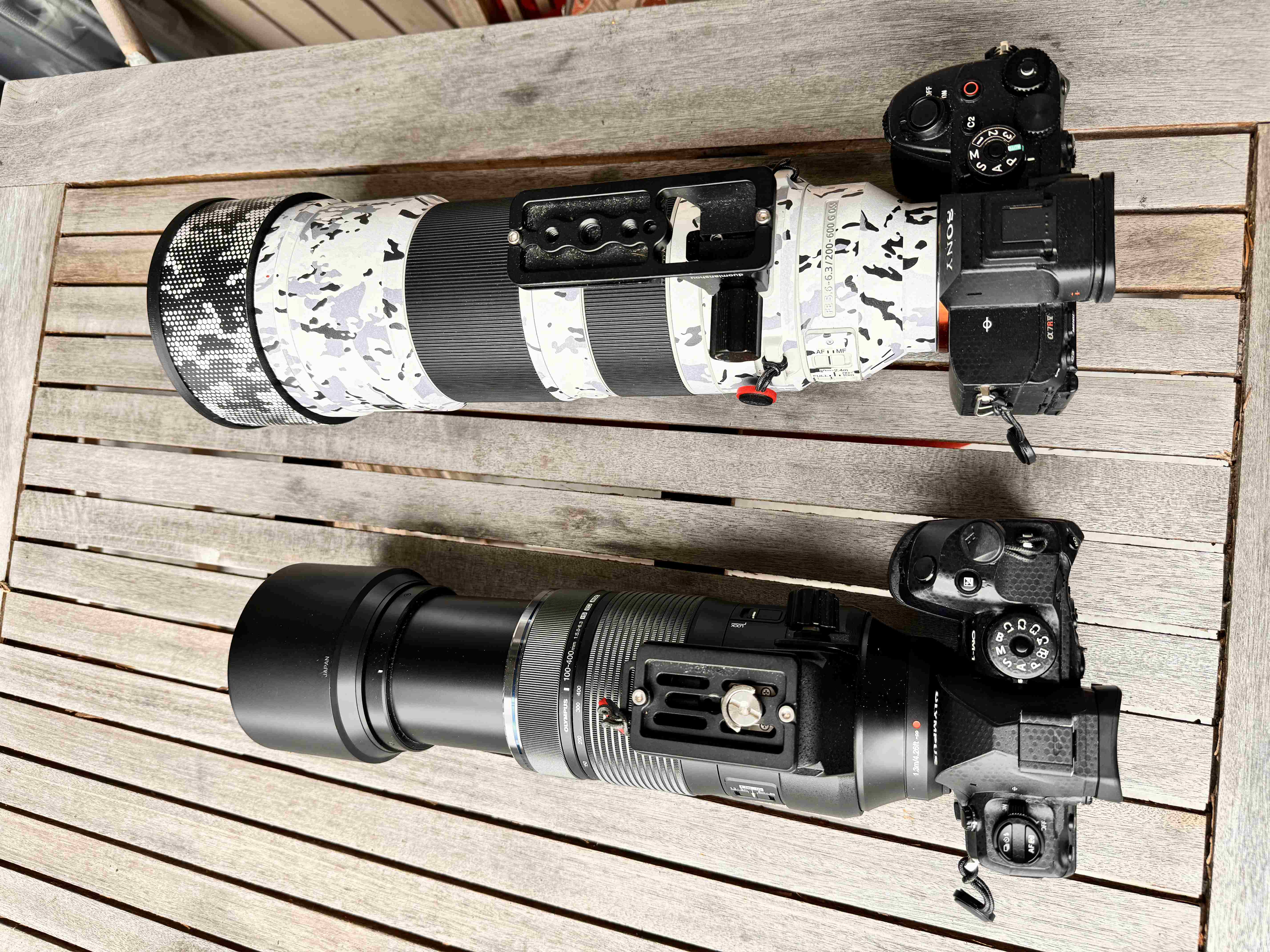
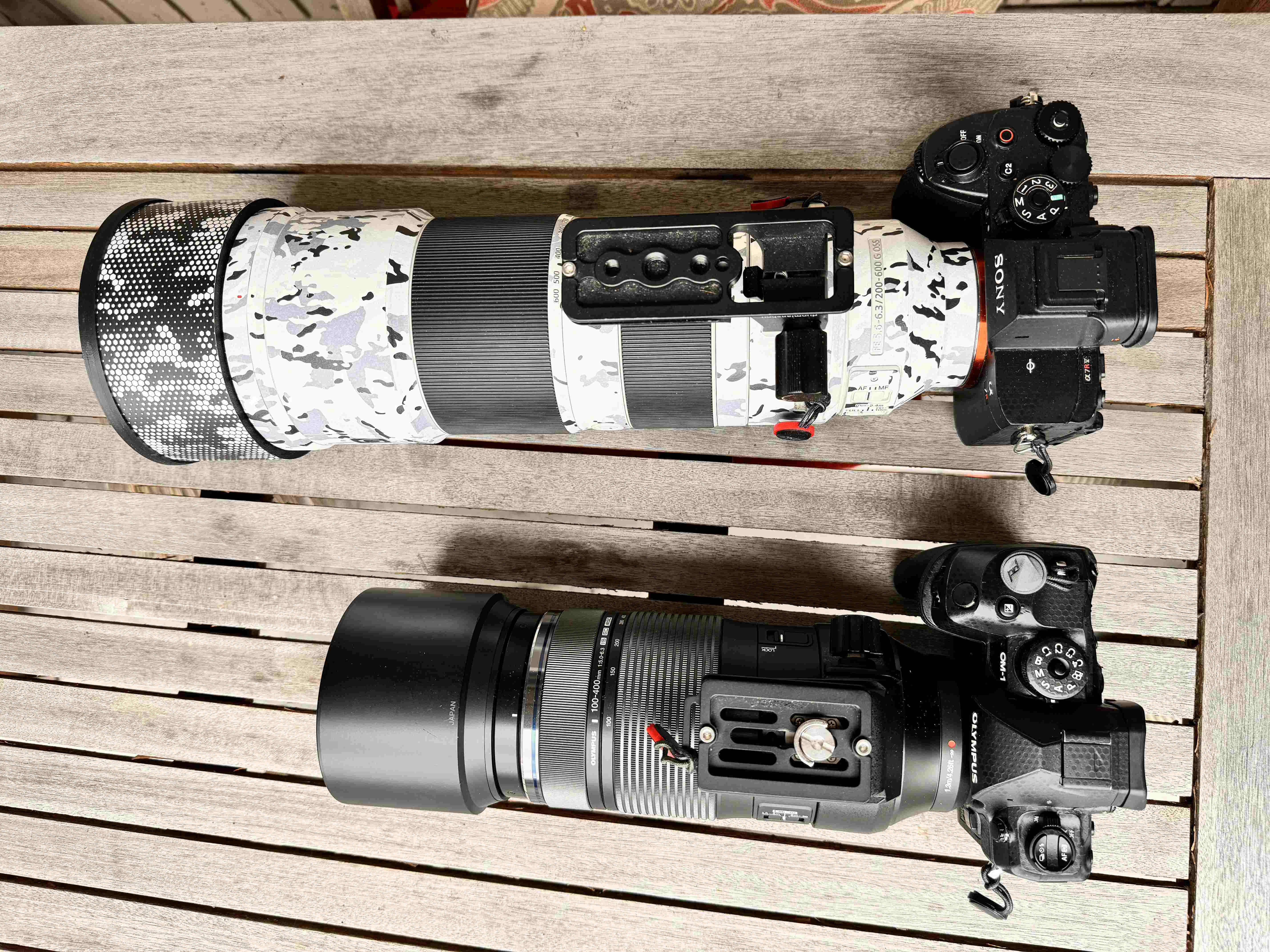
Cropped sensors still have some weight (but little size) advantage over the FF systems when it comes to the long telephoto lenses. However, even that may not be dramatic. For example, my A1 with the 200-600mm lens weigh 2,985 g (my measurement, without the lens hood and the foot, as I shoot handheld). The data from the Internet suggest that if I buy the M.Zuiko 150-400 lens for my OM-1, the system should weigh 2,475 g (without the lens cap and hood) - perhaps near 2,400 g without the foot. Is the 600 g difference significant? Yes, but the MFT telephoto is still a heavy lens, and it is as long as the Sony lens (314.3mm vs. 318.0mm). Thus, the size and weight may or may not be the reason to buy the 150-400 and OM-1 vs the 200-600 and A1. One must certainly investigate the image quality, AF performance, etc.
@Frogfish noted above: "Age of Lens Selection: Yep no doubt some of these lenses in the Oly/Pana lineup are aging." This is indeed a problem, in different ways. Anyone who finds pleasure in GAS should rejoice in the Sony ecosystem where there is a constant flow of more and more new lenses produced by multiple manufacturers. The new lenses in the Sony ecosystem are not just sharp. There is a strong push to optical perfection in other aspects. For example, the 35mm F1.4 and M.Zuiko 17mm F1.2 cost similarly (the MSRP is CA $1,800 - 1,900). My copy of the 17mm lens has a strong barrel distortion (Lenstips measured this to be −3.46%, vs. the slight distortion of the Sony lens, +0.73%). Lateral CA from the 17 mm F1.2 looks very disturbing to me, whereas, to quote from Lenstips, the 35mm F1.2 GM "fares sensationally well. In the whole range of relative apertures you deal with results of 0.02%, so a level that is completely imperceptible in real life photos." There is no doubt that the 17mm F1.2 is a useful lens; it just not worth CA $1,800 when compared to the Sony 35 F1.4 GM. It is not worth even the CA $1,500 I paid for my copy of the 17mm lens when it was on sale recently.
Another problem with the MFT lens development vs that for the FF Sony system is the lack of original and innovative lens design. The two FF lenses that I have used most recently are the Tamron 35-150 F2.0-2.8 and 50-400 F4.5-6.3. If there had been an MFT 17-75 mm F2.8 (even better 14-100 F2.8), or 25-200 F2.8-3.3 lens, I would have purchased them now, regardless of their size and weight. I wish Tamron continued making MFT lenses.
I am not interested in the Sony APS-C cameras. They just don't make practical sense to me. The FF Sony A7RV can be switched to a 24MP APS-C mode at a push of a button. One must badly (and unreasonably, in my opinion) want the smallest and lightest camera system, to buy A6700. The meagre 5.0 stops of IBIS on A6700 is not inspiring (unlike the 8.5 stops of my OM-1 II).
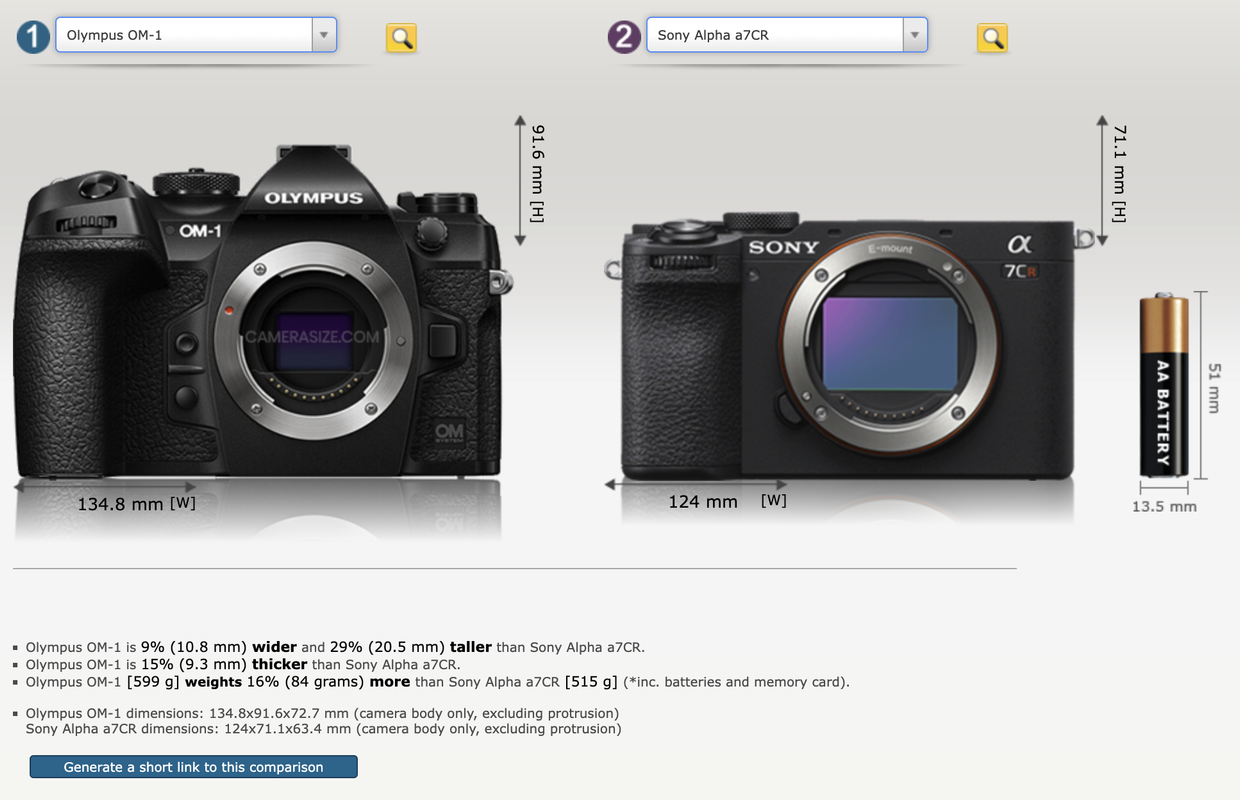
At the end, I can only repeat something I already said in this thread that the Olympus/OM System and Sony FF system seem complimentary, to me. One is better than the other in some ways, and both have certain advantages in some ways. The key to a successful and enjoyable use of these systems is in knowing what they can do best. I am still learning my ways with the OM-1 II and the two lenses in my hands (12-40 F2.8, 17 F1.2) and trying to figure it out what lenses I may want to add (the 40-150 F2.8 and 90 F3.5 seem to be worth adding).
|


 that still yields a 14mp file, plenty for viewing on a 5k monitor or printing on glossy AL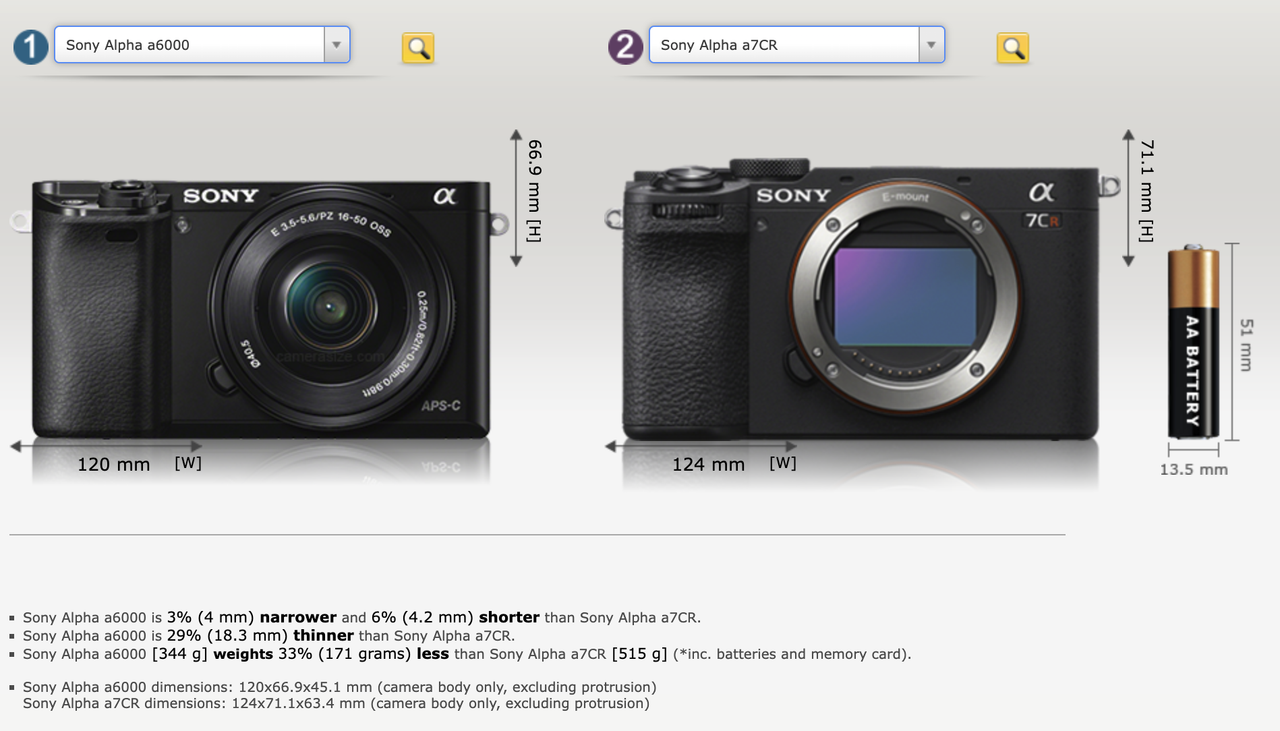
 .
.