I learned more about field curvature and what it means from a practical standpoint from this one post than i did reading other stuff over the last few months.
Fred Miranda wrote:
Jim,
Does the Voigtlander 28mm f/1.5 Nokton perform well with the thicker Sony sensor stack? I'd say it's better than expected but far from optimal. In real-world images, photos captured with either a Leica M or Sony body will have similar resolution and contrast at the focused area. The main difference is in the field curvature, which is amplified by the thicker stack. This means that OOF areas may appear more in focus when shooting with the Sony, but this depends on the subject distance..
Focusing on a subject very close and wide open, results in a high amount of blur that masks this ill-effect. However, at mid or long distances, the transition zone becomes more apparent, making discrepancies in rendering more obvious. For example, if you focus on a bicycle in the center area at mid-distance, the further outer zone (towards the edges), which should be blurred, may appear sharper than it should.
Shooting flatter subjects at a distance, like landscapes or architecture, will make the focus areas uneven due to field curvature (as seen here). However, these applications usually require stopping down the lens. The broader depth of field will also mask the unevenness of the field curvature shape. In this case, the lens performs well, nearly as good as when shot using a Leica M.
There's also an increase in astigmatism, causing the outer zone to underperform as tangential and sagittal lines become further apart. Therefore, it's best to use fast wide-angle lenses like the Voigtlander 28mm f/1.5 on a sensor with a thin stack, as the optical design was intended for it.
Can it be used on the Sony? Absolutely, as long as these issues are not very apparent or do not bother you.
From my experience testing many lenses, only slower lenses with a maximum aperture like f/3.5 or smaller perform well on both thin Leica and thicker Sony stacks, but it also depends on the optical design....Show more →
Picture This! wrote:
I learned more about field curvature and what it means from a practical standpoint from this one post than i did reading other stuff over the last few months.
I’m glad to hear that. In my last sentence, I mentioned that typically, lenses with apertures of f/3.5 or slower aren't as impacted by sensor stack thickness. The new Voigtlander 50mm f/3.5 APO-Lanthar illustrates this well...it performs equally well on both Leica and Sony sensors, at least to my eye.
Thanks Fred for the meticulous review and everyone else for fantastic contributions.
For those of you who have owned the lens for several months, how is it holding up with regard to build quality and mechanical performance? Has anyone had issues where they had to return their copy because of sample variation? Is the build quality the same for both types?
It's been mechanically very solid like all CV lenses over the past decade or so.
Optically it's a very sharp lens, mine seems to perform identically to review copies I've seen.
juanj wrote:
Thanks Fred for the meticulous review and everyone else for fantastic contributions.
For those of you who have owned the lens for several months, how is it holding up with regard to build quality and mechanical performance? Has anyone had issues where they had to return their copy because of sample variation? Is the build quality the same for both types?
My copy just arrived this week, just in time for a trip to India
I realized there is no option to select manually on the M11 a 28mm Summilux lens. What would be the recommended way to have the camera or Lightroom recognize the lens as the summilux? Usually I use lenstagger but am not sure if I process my raws with Dxo would like the lens to be recognized as the summilux or if there is an exact wording I should use
bubbachua wrote:
My copy just arrived this week, just in time for a trip to India
I realized there is no option to select manually on the M11 a 28mm Summilux lens. What would be the recommended way to have the camera or Lightroom recognize the lens as the summilux? Usually I use lenstagger but am not sure if I process my raws with Dxo would like the lens to be recognized as the summilux or if there is an exact wording I should use
Apologies if this had been mentioned before
Just have it recognize as the Sumicron- Or you can code the lens which many have done. You can buy a template for 10 bucks and mark the lens as whatever one you want-
The 28 LUX only came 6 bit coded which is why there isn't an option for it.
Yes! There is definitely some structure in the rendering at this distance which is a perfect storm for this characteristic. It renders similarly to the Leica 28/1.4 Lux, which some people like, while others don't. For those looking for a 28mm with smooth transitions, the Simera 28 makes more sense.
Fred Miranda wrote:
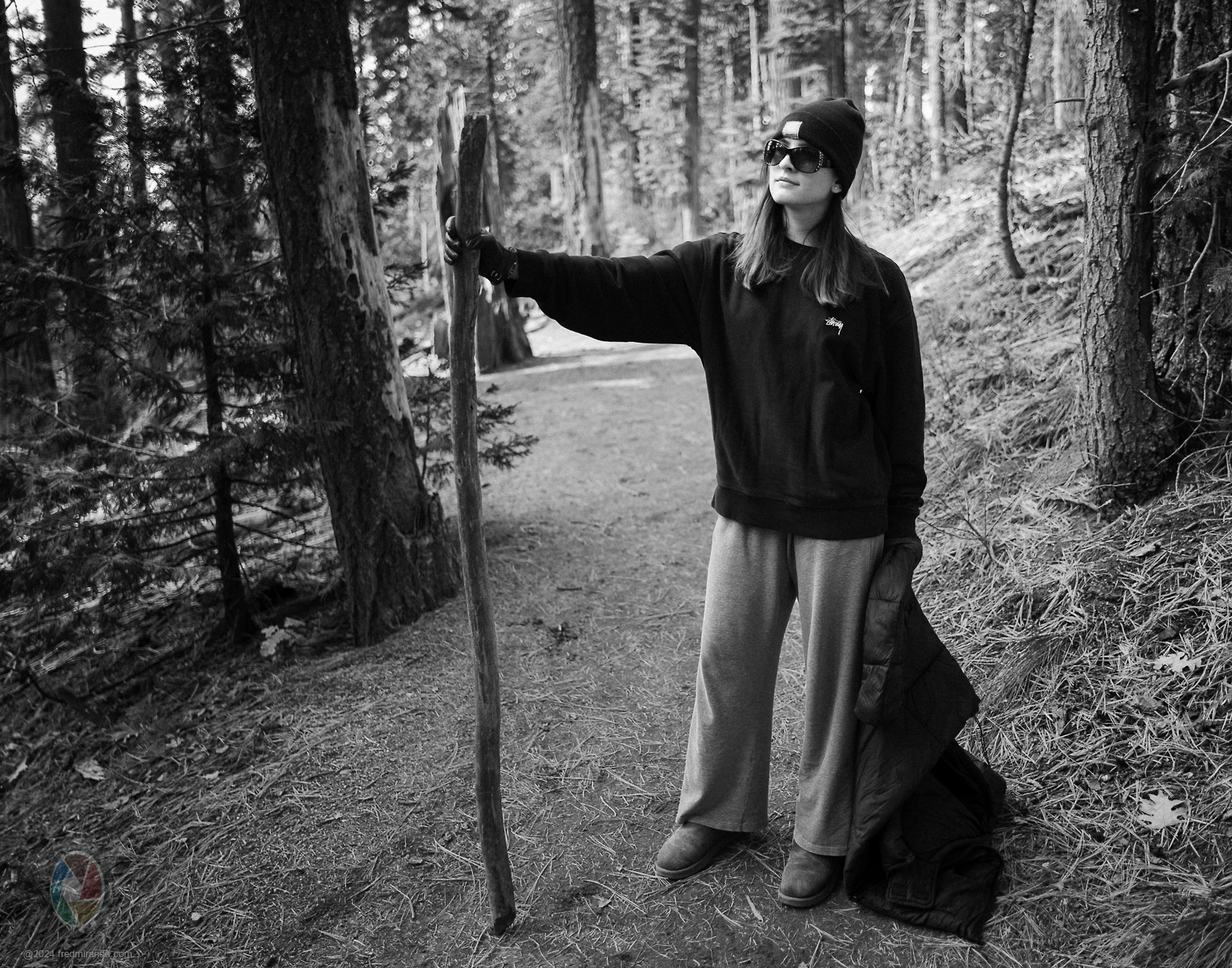
Leica M-D with CV 28/1.5 Nokton:
Let me say I very much like the rendering in this photo, even though I understand some hate it. What I see is the shape of the field curvature as the focus plane curves and that is what I like. Fred's daughter is in focus and what is behind her curved to the sides is in focus. To my eye that provides shape and good context to the portrait if those element that are also in focus highlight the shot capturing the "environment." I think Fred has done a masterful job of using the field curvature of this len to enhance this shot as the element that come in focus highlight the context. I hope that make sense and helps explain that although I like flat field lenses, that especially for wides in which composing for context matters with the right composition I can prefer field curvature.Thanks Fred for this and many fine examples of a good use of this lens.
Cosina provide visual cues in their bokeh, to enhance image depth and to provide context to complement the subject. It's a balancing act, one which can look unpleasant viewed at 100%. But for many images, it rescues the viewing eye from endless smoothness.
They are to be commended for doing it their way, to my mind. Stills lenses often try to be flashy and impressive, so very often they fall-off fast as part of their rendering, but they run into the opposite problem, of surrendering context by submerging it in a sea of bokeh.
Lenses that do this effectively divide the image into two sections: the featured in-focus subject (foreground) and the abstracted and detached background. This is the modern look, which is showing signs of receding a little in recent times.
Here is a example of both design philosophies in fast 28mm lenses:
Four lenses here are the modern rendering (left side links), two are concerned to show cues to assist image depth (Thypoch and Voigtlander). The left side lenses have so successfully destroyed image depth that it's hard to tell which is the front side of the post and which lies behind, in the crop. The right side lenses give the eye something to help make sense of compositions. choices.
I've come to love structured bokeh because it gives more clue of what the background is, and also doesn't melt away immediately if zone focus and subject falling just slightly off the focus plane (a frustrations when I shoot on Sony and the focus just slightly off).
With M mount lenses there seems to be varying degrees of such characteristic, even within Leica lenses. I've seen images like 35/1.4 pre FLE with transition zone that looked like worms crawling all over. So far the simera 28 give me a very pleasant and balanced between soft/structured bokeh, reminds me of the 35/2 summicron asph V1.
With all that being said, I've come to learn that bokeh really isn't the deciding factor, I pay more attention to the in focus subject - how does it render the tonality (gradient/shades) and contrast, and how the bokeh "play" with the subject (some lenses have more contrast in bokeh, some less, I prefer more saturated and contrasty bokeh in general).
Over the years, my preferences for lens rendering have evolved quite a bit. When I was shooting primarily with Canon and Sony, I prioritized lenses with incredibly smooth bokeh. My go-to lens was the Sony RX1’s 35/2 Sonnar, which I considered to have perfect rendering with super smooth bokeh with no outlining, round specular highlights, and minimal coma.
However, as I started experimenting with vintage lenses and newer lenses inspired by old designs, my perspective shifted. I began to appreciate that bokeh can be undistracting without being overly smooth and losing all its character.. Unlike many modern lenses, which often render with overly smooth transitions, vintage lenses offer a unique charm with their imperfections --- cat’s eye effects, FC shape, SA, bokeh outlining, coma, astigmatism, and even some rough transitions.
Interestingly, some Leica and Voigtlander lenses manage to blend the best of both worlds, delivering modern performance while retaining unique characterr. I believe the Voigtlander 28mm f/1.5 Nokton is a prime example of this..
Sometimes, I can look at an image and almost guess which lens was used, especially those with unique qualities. This is not really possible with many modern lenses like the latest Nikon, Sony GM or Fuji lenses, which tend to have a more uniform, smooth, almost perfect rendering.
Nowadays, I find myself drawn to these characteristics and prefer lenses that display them for many applications. They add a distinct personality to the images, making them stand out in a sea of perfection.