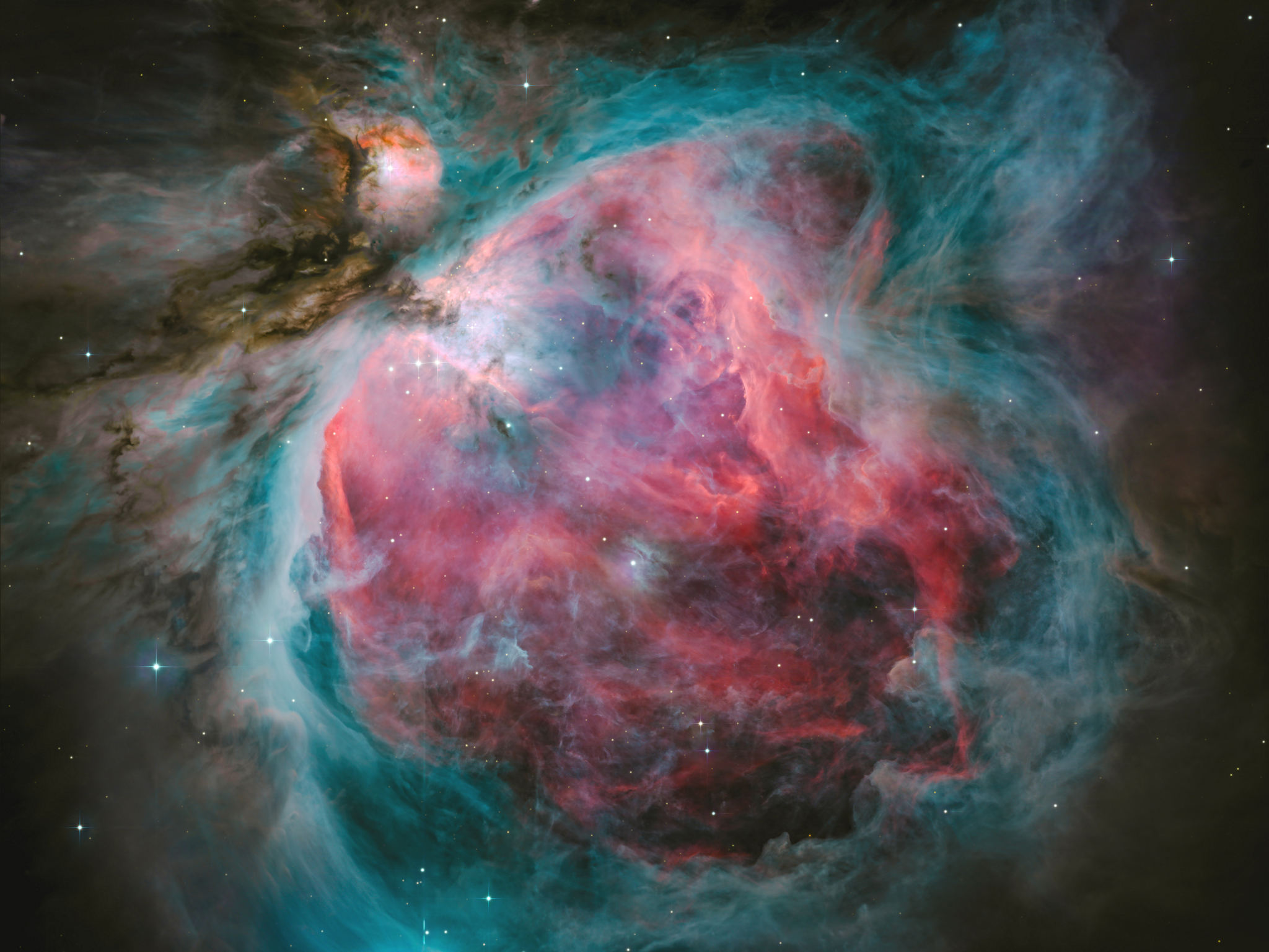
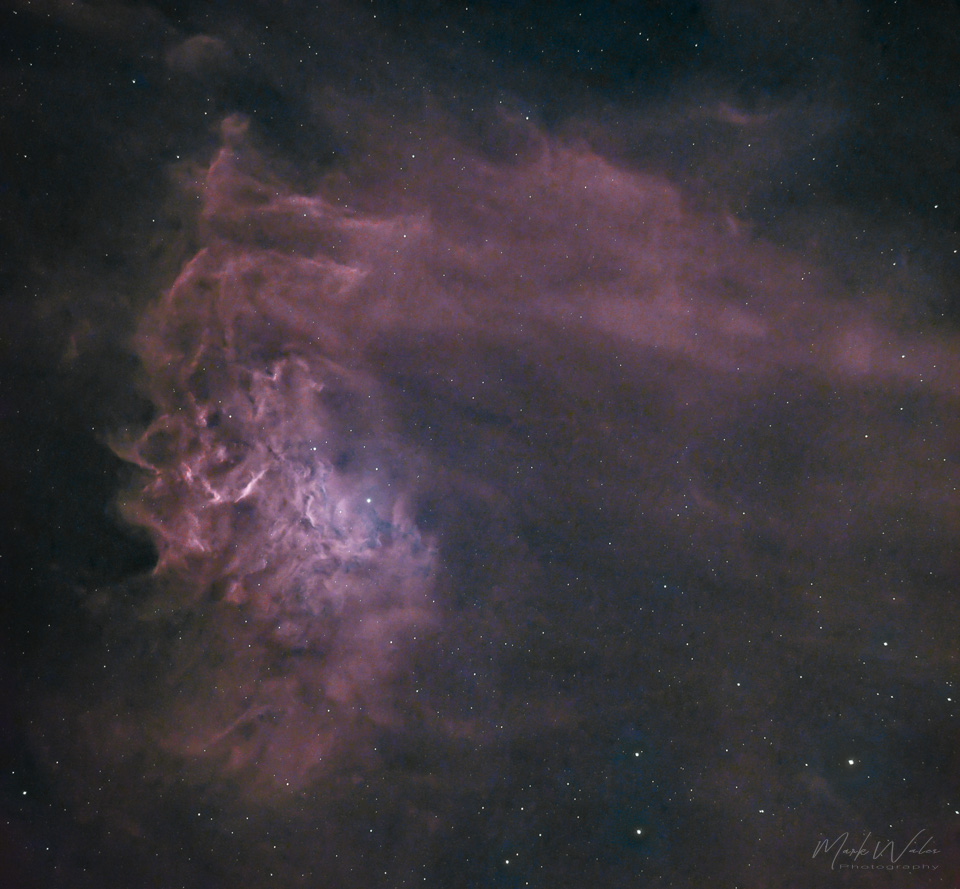
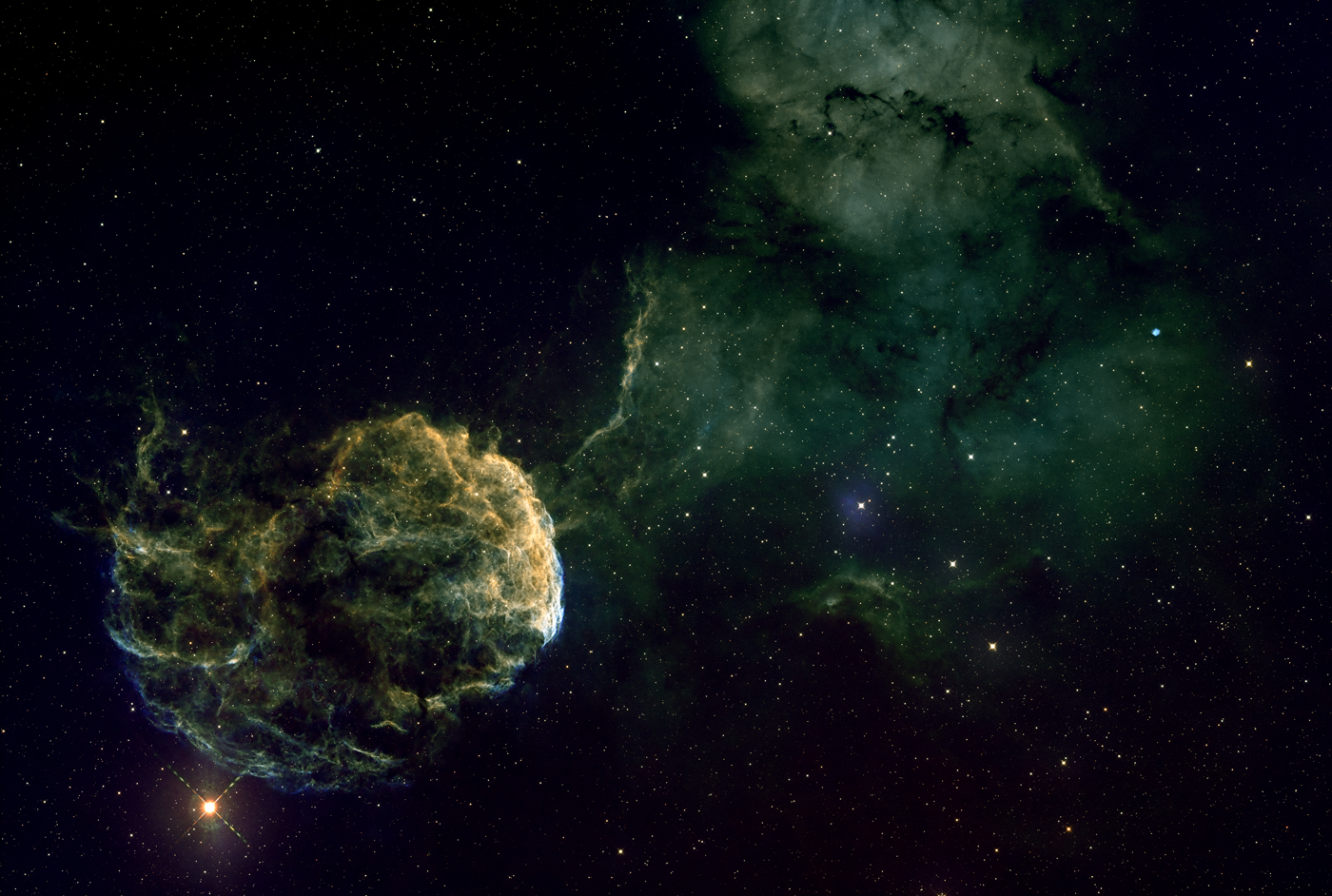
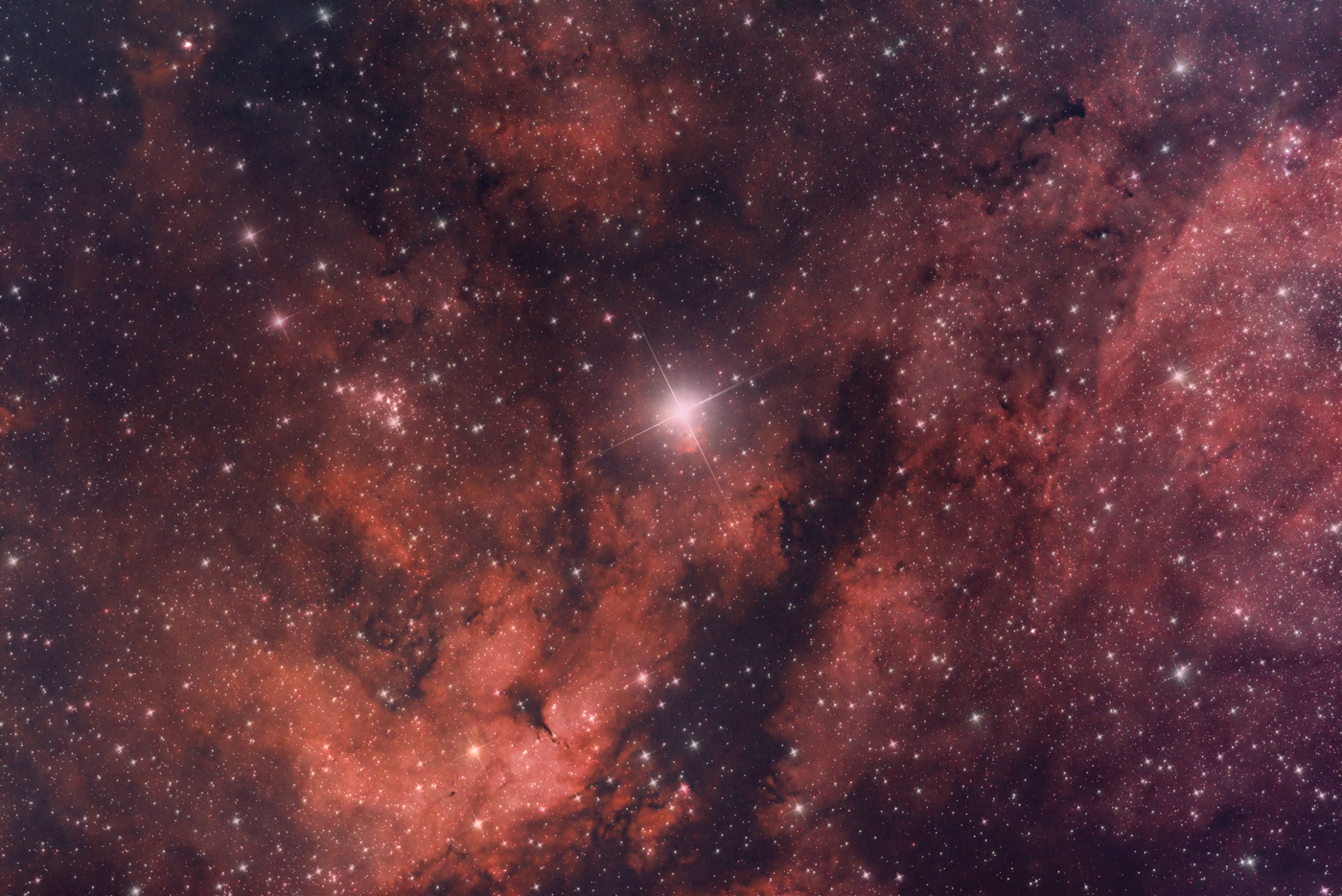
Since I've had nothing but clouds - this image came from free data I downloaded from the Dark Matters Astrophotography website. You can download it here:
IC 405 is an emission and reflection nebula located 1500 light years from earth and 5 light years across in the constellation Auriga north of the celestial equator, surrounding the bluish, irregular variable star AE Aurigae.
What do you guys do ( girls, guys ) figure out where to put your scope, then look thru it or look at your computer and then you see the image all while your telescope is tracking it ?
How long does it take to actually see an image like this ?
This is my work flow for the equipment I use and others may very..
The first thing I do is roughly point my scope at the North Celestial Pol (Polaris), level the mount then polar align my mount/scope. In the ZWO software you put in the latitude and longitude so the whole thing knows where it's located. This process takes me about 10-20 min. to complete.
I use a ZWO ASIAIR Pro (small NUC like computer) that everything on the scope connects to and is control by. That is connected via WiFi to my home network using a WiFi extender and I control it all from inside the house on a small tablet.
Once aligned I choose a target I want to shoot that is available for my location and the mount now knowing where it's at slews to the target and does a thing called Plate Solving where it will take a series of images and matches them up with what's in it's data base of what stars should be there and aligns the mount/scope to that portion of the sky.
It amazes me at how accurate plate solving is and gets it right every time. Once I'm pointing at the target I want I take a 60 sec. test shot with the filter I want for that target to check it's orientation.
Once this is all done I setup my guiding which is performed by the ASIAIR Pro and a small camera and small scope combo called a guide scope. This little scope will track a star in the area of the target and send very small impulses/nudges to the mount keeping it locked on the target during imaging as it follows it across the night sky.
After all this I setup an autorun in the software with how many shots, how long of an exposure and what filter to use and once I push the start button it will perform an autofocus using the ZWO Electronic Automatic Focuser (EAF). Once the focusing process is complete it will begin capturing the image and will do this all by it self until it completes the number of shots I choose.
With out seeing this workflow in action it can be a little daunting, but once you do it a few times or more it's not bad at all.
There are many video's on you tube explaining it in more detail and better than I can. Channels like Astrobackyard, Cuiv the lazy geek, wido's astoforum and many more.
I also use a free program called Stellarium that you can download and see what's in the night sky for your location in real time. This is what I use to find what target I want to shoot for that night.
I hope this helps a little on how we use the equipment to capture these very cool images that can't be seen with the naked eye.
Thanks Mark, nice job explaining.
You must have nice weather as it's freezing, rainy, foggy and crappy here but it changes on a daily bases.
A couple times when I have driven to the coast at nighttime I will pull over and get out and look at the sky.
It is sooooo dark and the sky is so bright it's frikkin amazing. I always want to get my camera out and take some pixs but don't. It would definitely help to have a house up higher in elevation from the city lights and not so many trees to get setup like you explained. I've yet to do the alignment with my scope because of my work schedule or the dam trees. So kool tho how you can go inside and control all that, hopefully people, cats, dogs, raccoons won't bother it.
Are you able to see real time from inside what you are shooting or do you wait a while till all done and then look and process it ?
And how does it all stay focused or is it like an infinity focus like we have on our camera lens ?
Bill Gass wrote:
Thanks Mark, nice job explaining.
You must have nice weather as it's freezing, rainy, foggy and crappy here but it changes on a daily bases.
A couple times when I have driven to the coast at nighttime I will pull over and get out and look at the sky.
It is sooooo dark and the sky is so bright it's frikkin amazing. I always want to get my camera out and take some pixs but don't. It would definitely help to have a house up higher in elevation from the city lights and not so many trees to get setup like you explained. I've yet to do the alignment with my scope because of my work schedule or the dam trees. So kool tho how you can go inside and control all that, hopefully people, cats, dogs, raccoons won't bother it.
Are you able to see real time from inside what you are shooting or do you wait a while till all done and then look and process it ?
And how does it all stay focused or is it like an infinity focus like we have on our camera lens ?...Show more →
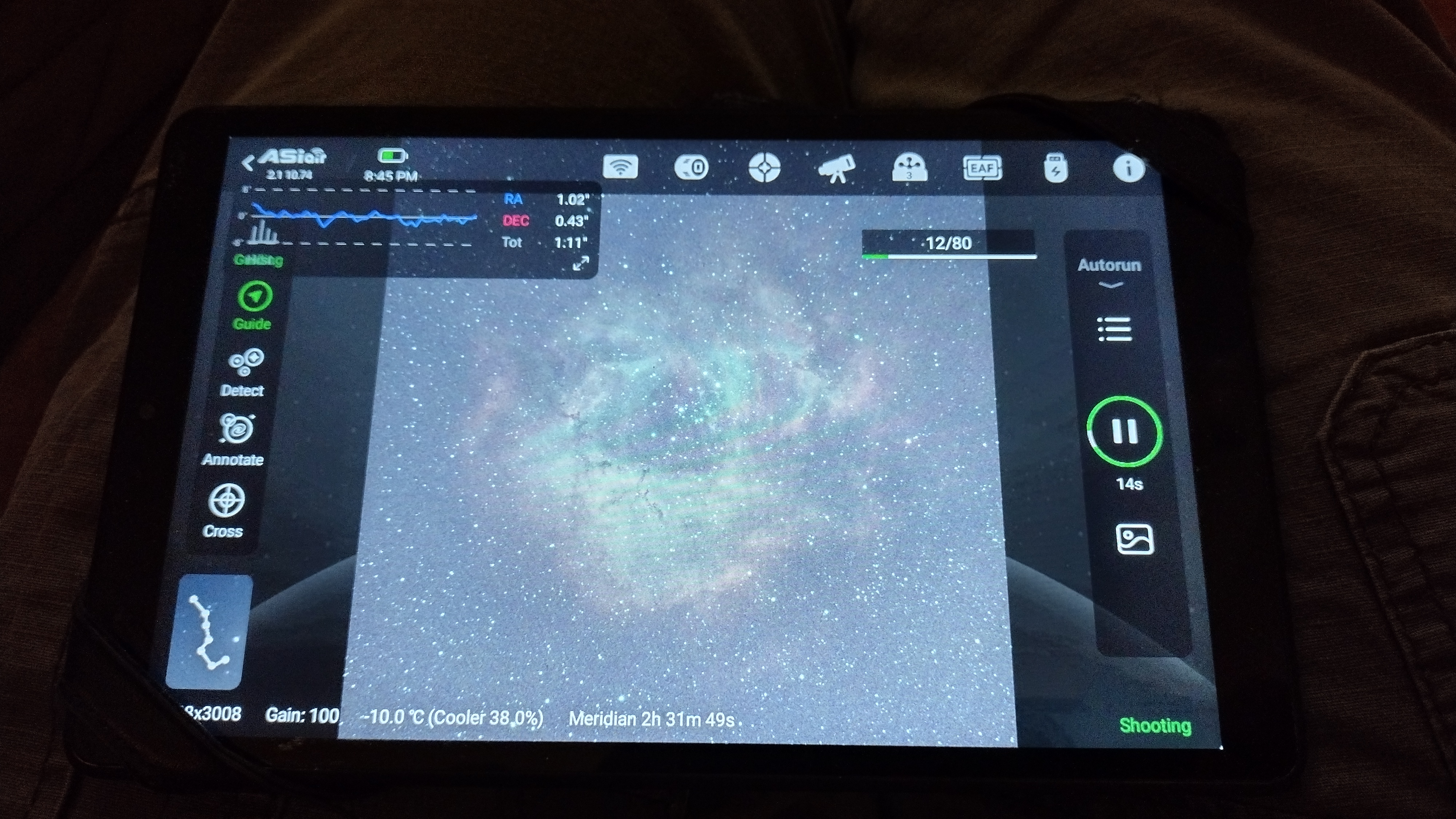
I mostly take 3-5 min. exposures and once it's done taking each exposure It shows me a stretched image on the tablet. Sample below that shows a single image of the Rosette Nebula...
I have it set to refocus every 2 hours or when there is a temperature change of 2 degree's C and after a Meridian Flip.
Very neat.
What is it focusing on ?
The moon moves fast enough on my telescope but looking at something that far away is probably going really fast. Great video too.
Bill Gass wrote:
Very neat.
What is it focusing on ?
The moon moves fast enough on my telescope but looking at something that far away is probably going really fast. Great video too.
The camera takes shots every 2-4 seconds and then the auto focuser is focusing in and out trying to get the star to it's smallest point to achieve focus.
To the best of my knowledge it focuses on a star near the middle of the frame.
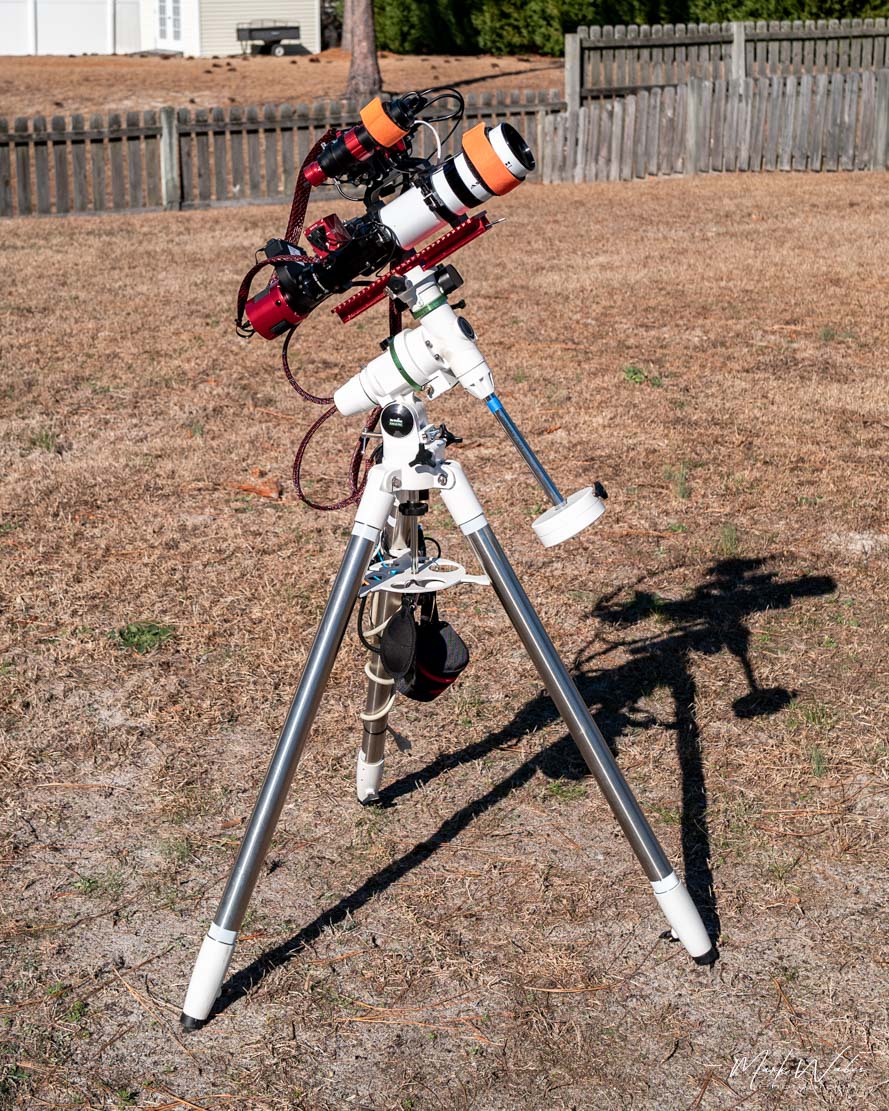
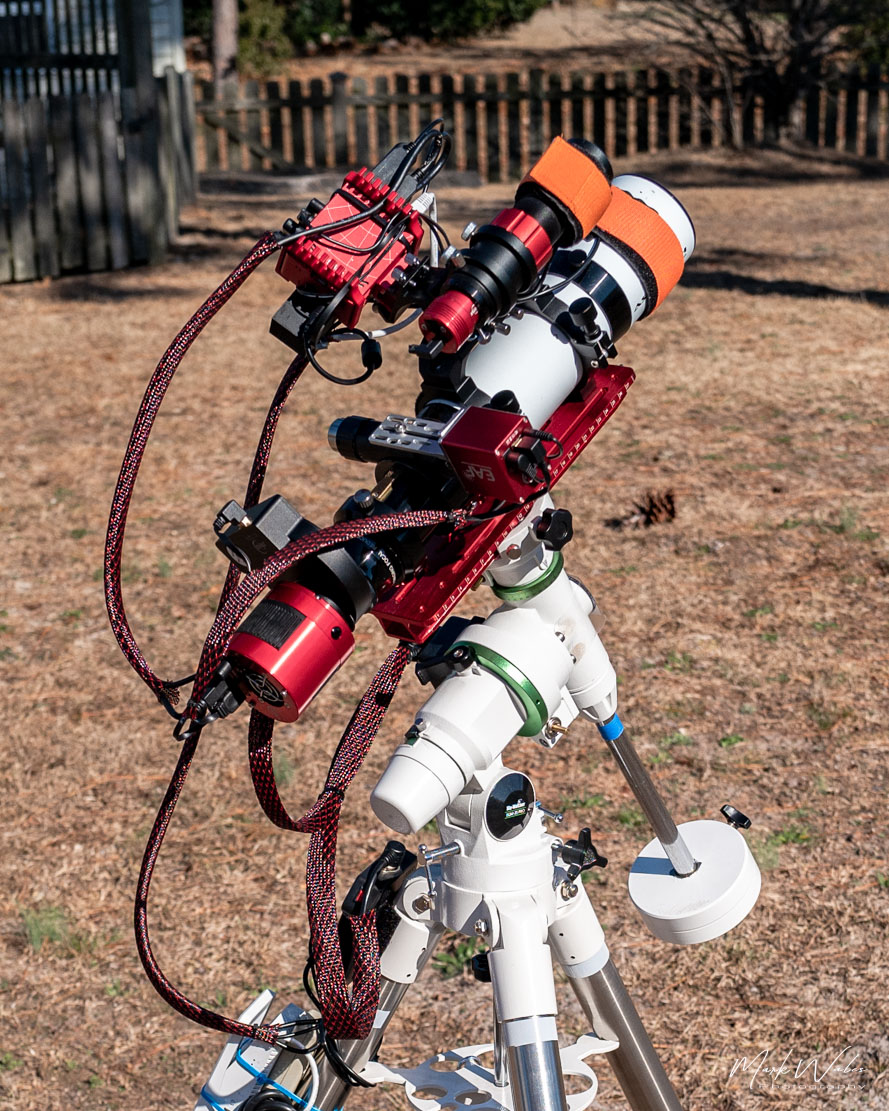
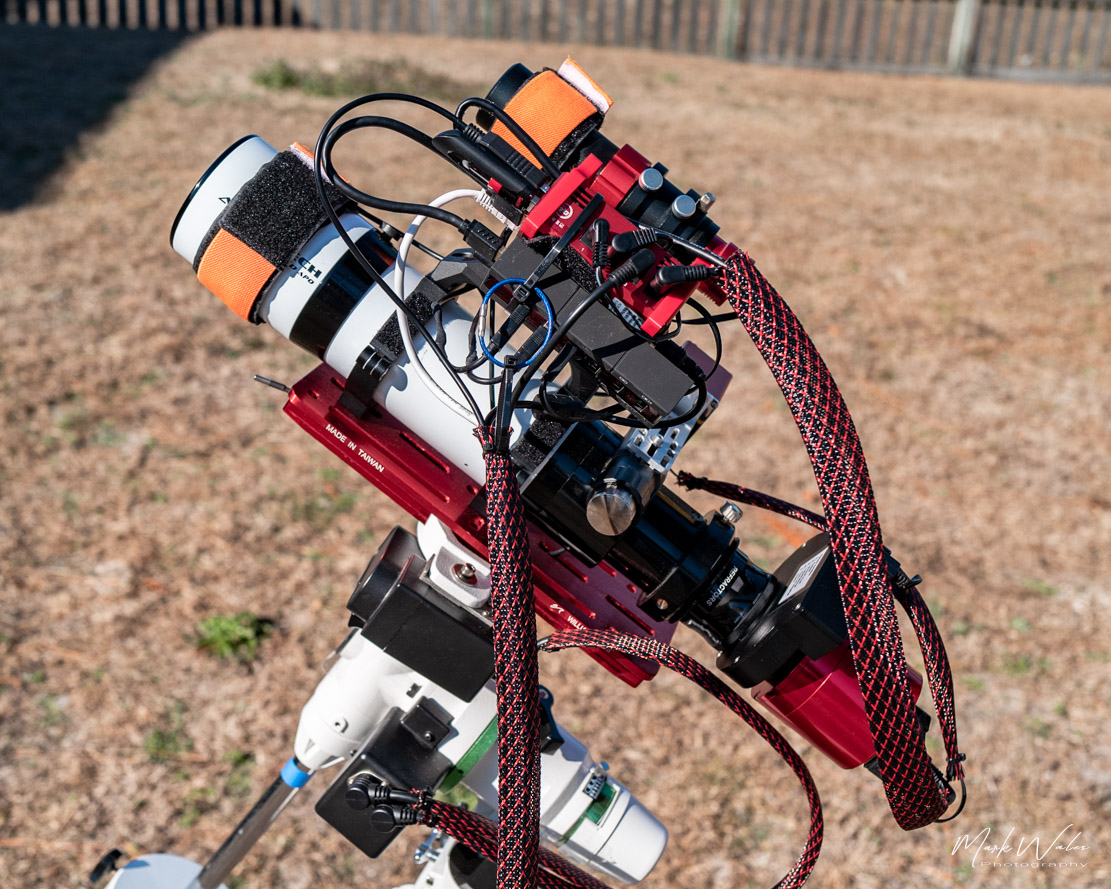
Here's my main imaging rig. The Sky-Watcher EQM-35 is a more affordable mount, but not one of the better ones out of the box. It had a lot of slop called backlash that made it hard to get good guiding out of it, but after I took it apart and cleaned out the factory grease and re-greased it with something much better (can't remember the name) and tuned the gearing to mesh much tighter it now has no backlash and guides much better.
Not the latest or greatest, but still producers nice images...
I'm still thinking about replacing it with a newer/better mount in the future and the ZWO AM3 maybe be it's replacement.
Thank you for starting this post. I've always wanted to do astrophotography, but it seems so daunting. Your set-ups appear different from using a telescope with a DSLR or mirrorless camera. Can you and/or Leah link sites to get started.
Also, if you could write up an inventory of your equipment and what it is used for, that would be useful for others also that are interested.
Bill Gass wrote:
Thanks Mark,
Soooooooooooooooo neat to see pictures of your setups.
What is the little thumb drive for ?
I am thinking about replacing the mount/tripod, but it's still doing a good job so who knows...
The images are saved to it in a folder. The ASIAIR Pro (red box on top) has onboard memory, but to get it to you computer you have to transfer it to a flash drive anyway...