gerov wrote:
Mark,
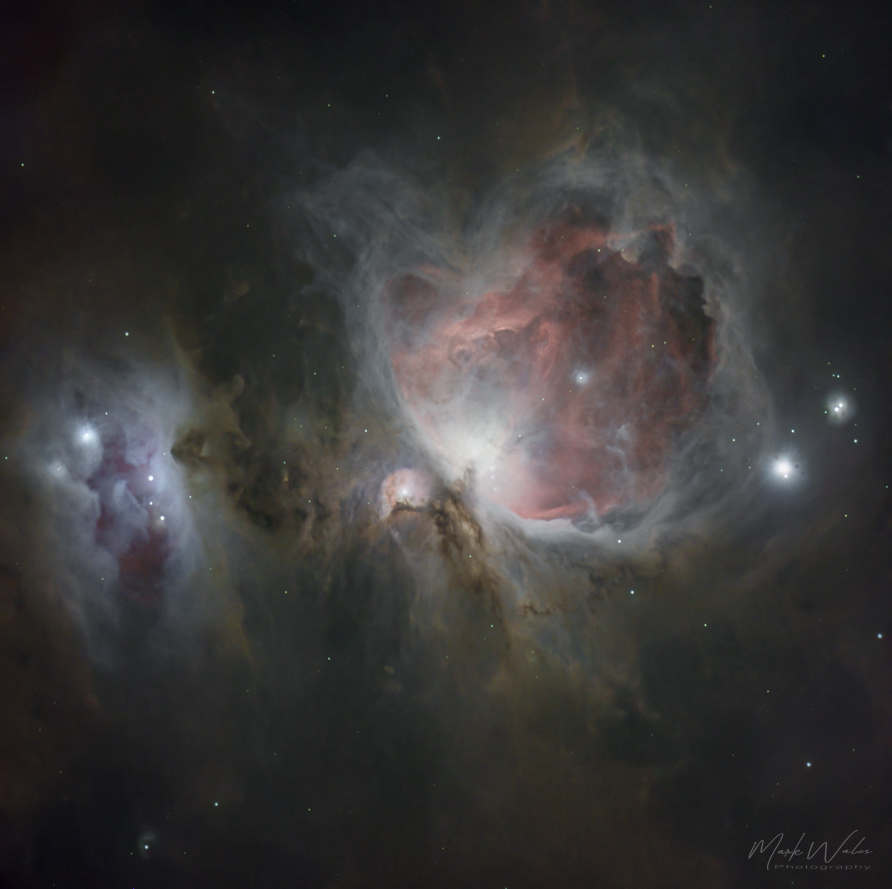
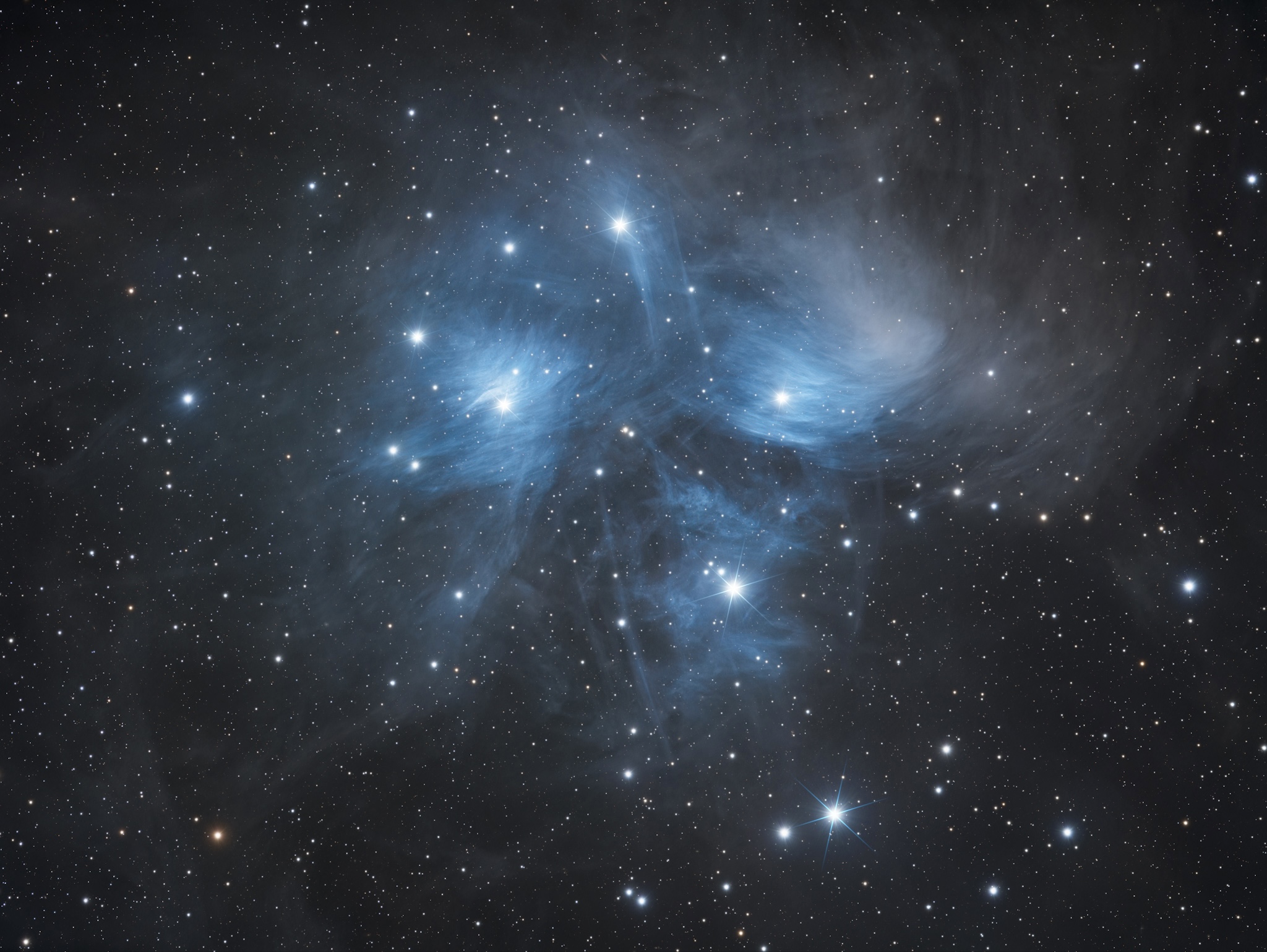
That is spectacular. I assume you are in very dark spaces when taking these. Please keep them coming as we don’t see this very often.
Gero
All images were taken from my bortle class 4 backyard. I'm also using a filter that only allows certain narrow band wave lengths through to the sensor.
Oh wow, nice one there.
.
I bought a cassegrain last year with some lenses and I knew telescopes where a challenge but they really are, fun but a challenge. Got mine out the other night to look at the moon and a planet and forgot the wrap and the scope got really cold. It's amazing how fast the moon moves when looking thru one. Trying to figure out if I want to get some sort of tracker but not sure yet.
Bill Gass wrote:
Oh wow, nice one there.
.
I bought a cassegrain last year with some lenses and I knew telescopes where a challenge but they really are, fun but a challenge. Got mine out the other night to look at the moon and a planet and forgot the wrap and the scope got really cold. It's amazing how fast the moon moves when looking thru one. Trying to figure out if I want to get some sort of tracker but not sure yet.
Not sure the size of your Cass., but I use a Sky-Watcher AZ/GTi with my little 127 Mak/Cass and it carries it well. It also has go/to you can control with a phone or tablet.
This is what I have, Celestron NexStar 8SE 203mm f/10 Schmidt-Cassegrain. https://www.bhphotovideo.com/c/product/440829-REG/Celestron_11069_NexStar_8_SE_8_0_203mm.html
.
I know it will do the goto for finding planets, just to may trees to use that in my little backyard.
It's talks about tracking but still need to see if it will work or not and if so how to set it up.
.
Ok, after more reading it looks like it will track maybe but gotta use it more to figure it out.
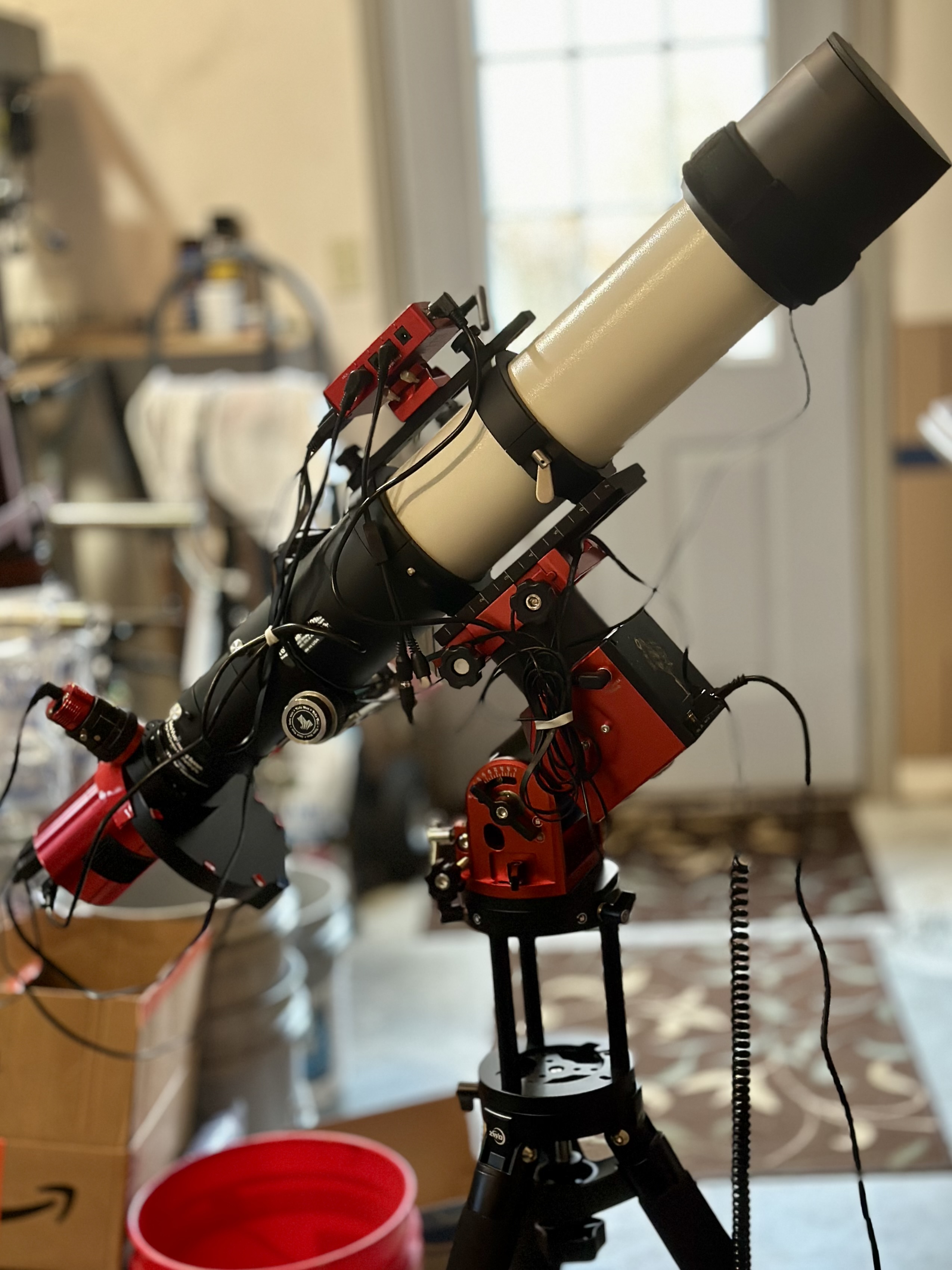
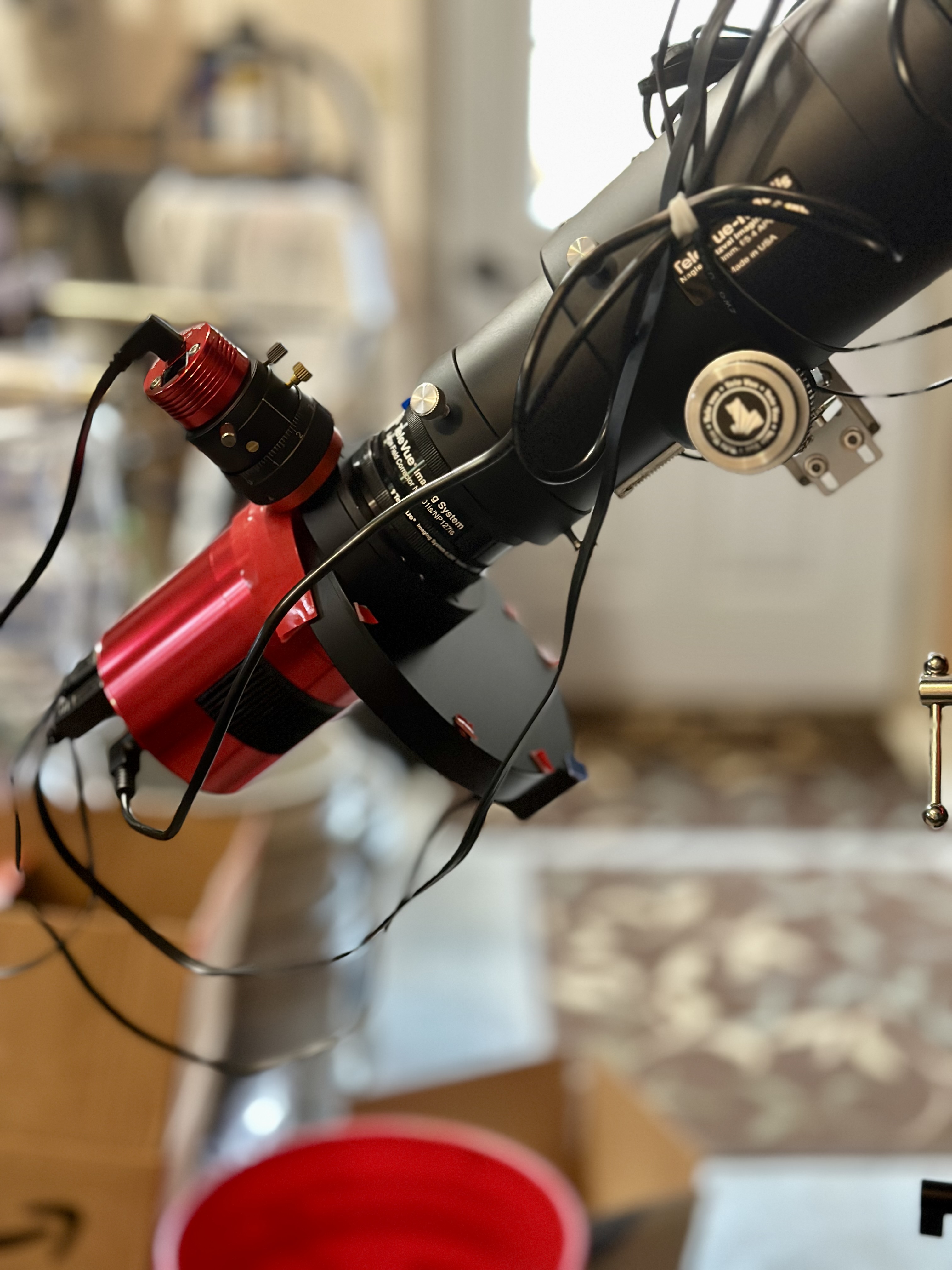
Sorry I’ve gotten the flu from my granddaughter and didn’t get to take a better shot of the gear I use. Just a phone snap.
Details:
Telescope is the Tele Vue TV-NP101is with the Tele Vue Large Field Flattner
Astro Camera is the ZWO ASI2600MM Pro (Monochrome Sony IMX571 26mp APS-C)
Mount is the ZWO AM5 with the ZWO TC40 Carbon fiber tripod
Filters are all Antlia 3nm Narrowband H-alpha 36 mm, 3nm Narrowband Oxygen III, 3nm Narrowband Sulfur II, and Antlia V-Pro Red, Green, Blue and Luminance broadband filters.
ZWO ASIAIR Plus
ZWO electronic auto focuser
ZWO 7 x 36mm filter wheel
Off Axis Guide Camera is the ZWO ASI174MM
Yes I just carry it all together outside. It’s about 22lbs I think? I have to leave it in the unheated garage in the winter so it can acclimate quicker, not sweat so much. The setup in the link you posted is a lot more than I spent putting this together separately and with none of the visual accessories. It was still a lot though. But then I don’t spend anything on lots of stuff most women spend on! No offense to other women meant! I did buy the scope itself used which saved a lot.
I thought maybe you had it in a garage then rolled it out on a track or something, .
Quite a setup tho but very neat and the images are amazing.
.
Men have their other vices as well, mine are cameras, computers and airplanes
.
When you first carry that out to use it I'm guessing you know where you want to point it at...But can you see anything like these pixs right away or does it take a while to get a picture like that.
Leah Hallett wrote:
Thank You! I use exposures of ~120 seconds each and then stack them together in PixInsight. Youtube has many many videos of how it's done. I do it over several clear nights.
In the Tadpole image there are:
Ha 139×120″ 4h 38′
Oiii 144×120″ 4h 48′
Sii 141×120″ 4h 42′
Blue 35×60″ 35′
Green 35×60″ 35′
Red 35×60″ 35′
.
That's a lot of pictures every 2 minutes for 16hrs.
.
Did you upload those on a camera or computer ?
You initially point the scope-align it with the North Star/Polaris. From there you go back to a preset ‘home’ position set in the mini computer the ASIAIR. The ASIAIR does most of the polar alignment by plate solving, but I do have to do the very fine adjustments with alignment knobs on the mount. The ASIAIR is WiFi connected to my iPad where you control the mount during and once it’s polar aligned. You can do a search for a target in the ASIAIR and tell the mount to slew to it. Then it plate solves the area in view again to make sure your target is centered or you can recenter it however you like. Sometimes you must manually rotate the camera to get the framing you want. Then you set up the guiding and the schedule for how many exposures with which filter you want to use. The ASIAIR will ‘run’ the schedule you set up all night annd save the images on a flash card in the ASIAIR And all this is after you have your scope backfocus set correctly and the guide scope focused at the same place your scope is.
The images you see on the iPad are all monochrome/grayscale. With some filters you see virtually nothing but the stars until you move all the images from the flash card taken with the separate filers to your superfast computer the next day and stack them in PixInsight to make sure they all have perfectly aligned stars. Images are stacked into one image for each filter. Once you stack them with calibration frames, you combine/assign the separate filter stacks to different color channels…Then you get a faint color image that you still have to process to arrive at what you see here. It’s 20% gathering exposures and 80% processing in PixInsight. I just started last March, there is still SO MUCH I don’t know-way more than I know for sure. I’m sure I didn’t explain this well!
Thanks for all that, a lot of typing and stuff, lol.
And you said superfast computer
Probably a lot of excitement to see what your end results will be, pretty fun tho.
I love the star images.
The next day I can’t wait to hit that channel combine button to get the first color glimpse of what I shot. Yes I love computers too. I put together my ‘superfast’ one! 😆
Beautiful...
What file size do you end up with ?
Raw or Jpeg ?
I finally bought the PS/LR sub this year and a new comp from Falcon Northwest and have been diving into Raw again.
Leah Hallett wrote:
You initially point the scope-align it with the North Star/Polaris. From there you go back to a preset ‘home’ position set in the mini computer the ASIAIR. The ASIAIR does most of the polar alignment by plate solving, but I do have to do the very fine adjustments with alignment knobs on the mount. The ASIAIR is WiFi connected to my iPad where you control the mount during and once it’s polar aligned. You can do a search for a target in the ASIAIR and tell the mount to slew to it. Then it plate solves the area in view again to make sure your target is centered or you can recenter it however you like. Sometimes you must manually rotate the camera to get the framing you want. Then you set up the guiding and the schedule for how many exposures with which filter you want to use. The ASIAIR will ‘run’ the schedule you set up all night annd save the images on a flash card in the ASIAIR And all this is after you have your scope backfocus set correctly and the guide scope focused at the same place your scope is.
The images you see on the iPad are all monochrome/grayscale. With some filters you see virtually nothing but the stars until you move all the images from the flash card taken with the separate filers to your superfast computer the next day and stack them in PixInsight to make sure they all have perfectly aligned stars. Images are stacked into one image for each filter. Once you stack them with calibration frames, you combine/assign the separate filter stacks to different color channels…Then you get a faint color image that you still have to process to arrive at what you see here. It’s 20% gathering exposures and 80% processing in PixInsight. I just started last March, there is still SO MUCH I don’t know-way more than I know for sure. I’m sure I didn’t explain this well!
Thanks for this clear explanation, as well as the pictures of your setup, Leah. I assume you have a long extension cord and power strip for all of this. Amazing stuff and it sounds like a fascinating learning curve. Please keep adding to this thread - Mark please do same as you are original poster - as this is really cool to look at. One question on your Andromeda shot - do you know what the red spots/fringing are on the periphery of the galaxy?