This topic is in the 2023 archive. You can read it and like its posts here. It is read only.
Archive 2023Infrared Thread - Digital or Film
p.4 #1Infrared Thread - Digital or Film
I put an R72 filter on my Z7 + Voigtlander 21mm f1.4 trying to persuade myself I need to convert my D810 camera to IR.
30 seconds - f5.6 - ISO 160
https://marcelobarrera.zenfolio.com/img/s/v-10/p2967912578-6.jpg
5 seconds - f1.4 - ISO 160
https://marcelobarrera.zenfolio.com/img/s/v-10/p2967912622-6.jpg
2 seconds - f1.4 - ISO 160
https://marcelobarrera.zenfolio.com/img/s/v-10/p2967912580-6.jpg
30 seconds - f5.6 - ISO 160
https://marcelobarrera.zenfolio.com/img/s/v-10/p2967912578-6.jpg
5 seconds - f1.4 - ISO 160
https://marcelobarrera.zenfolio.com/img/s/v-10/p2967912622-6.jpg
2 seconds - f1.4 - ISO 160
https://marcelobarrera.zenfolio.com/img/s/v-10/p2967912580-6.jpg
Oct 26, 2023 at 09:04 PM
p.4 #2Infrared Thread - Digital or Film
I started off with the Hoya R72 on my Z6 and then with my Z50. I then had a Z50 converted and it is so much better than using a filter. After using a converted mirrorless I’d advise anyone thinking of converting a camera go mirrorless. You can adjust your exposure in realtime using the histogram for better results.
Oct 27, 2023 at 12:06 PM
p.4 #3Infrared Thread - Digital or Film
That's the same path I took, starting with filters then getting cameras converted - so much more practical. I do like the 30sec shot above though that shows the cloud movement!
Oct 27, 2023 at 12:33 PM
p.4 #4Infrared Thread - Digital or Film
Fujifilm X-T20 850nm + Meike 50 f0.95 at f8
5 stitched shots

Venice by Massinissa Dalla Costa, on Flickr
5 stitched shots
Venice by Massinissa Dalla Costa, on Flickr
Oct 29, 2023 at 10:09 AM
p.4 #5Infrared Thread - Digital or Film
Fantastic thread. Thanks all for these contributions.
Oct 29, 2023 at 03:33 PM
p.4 #6Infrared Thread - Digital or Film
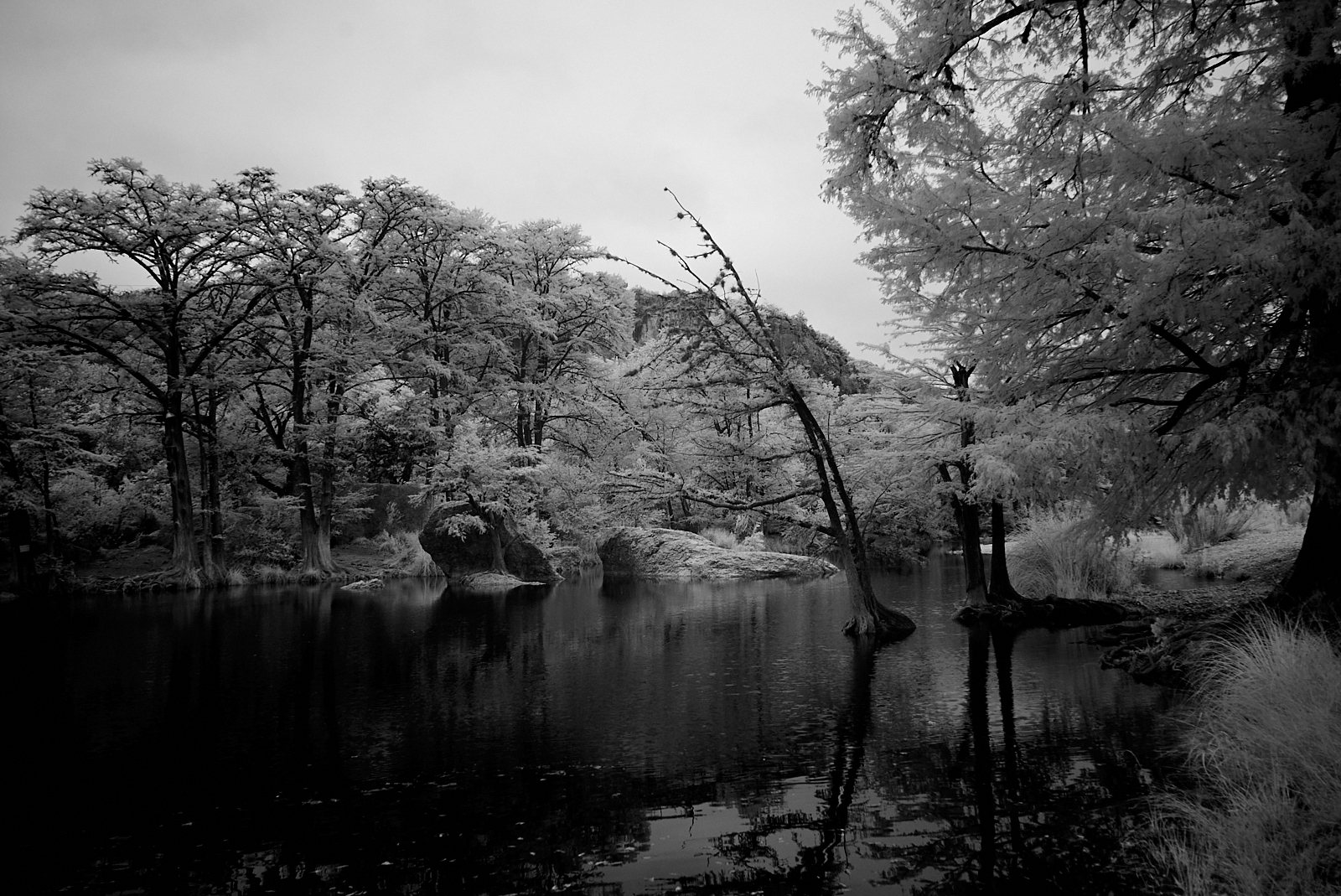
These were all taken with a Sony A7S FS and 830 NM filter.
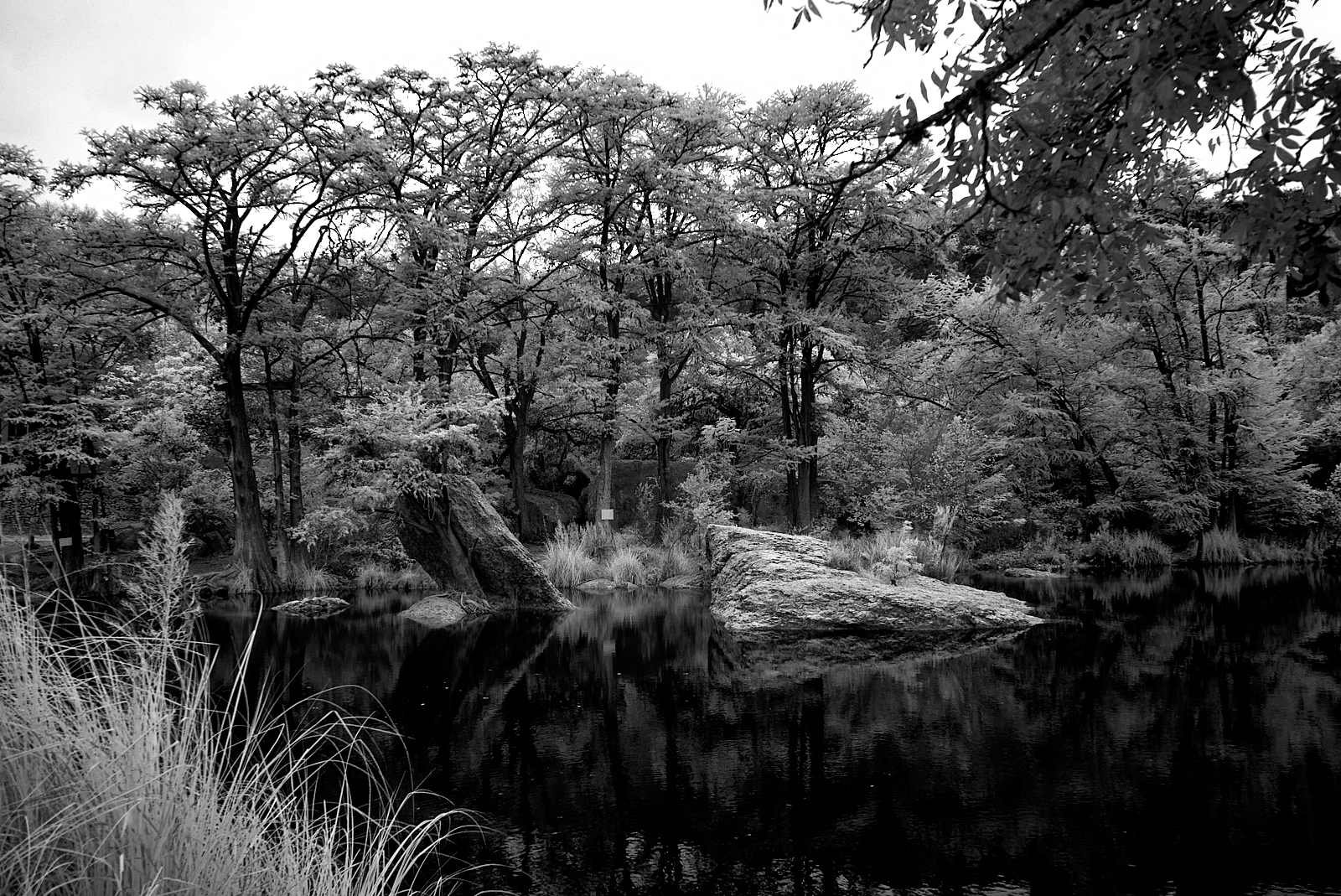
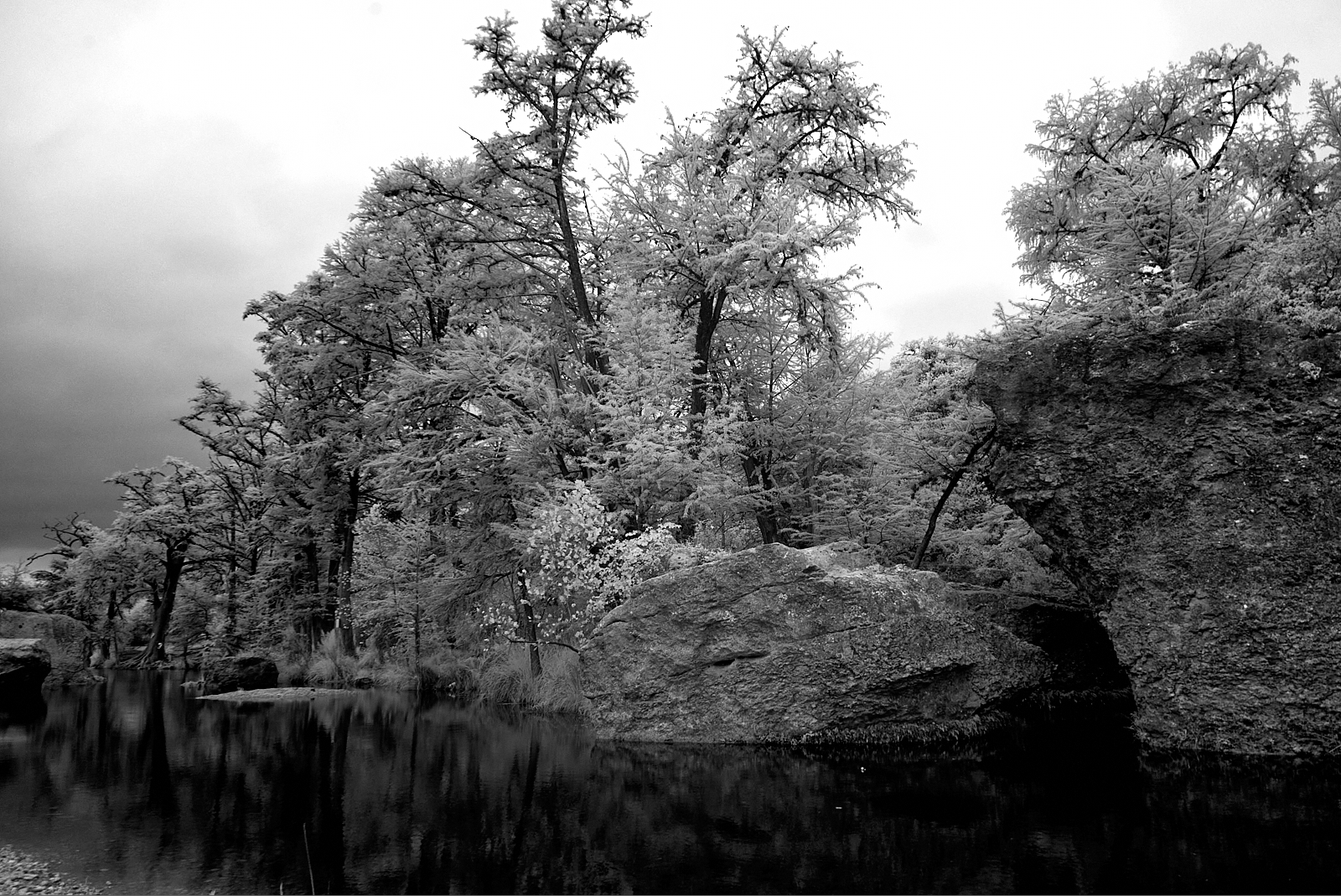
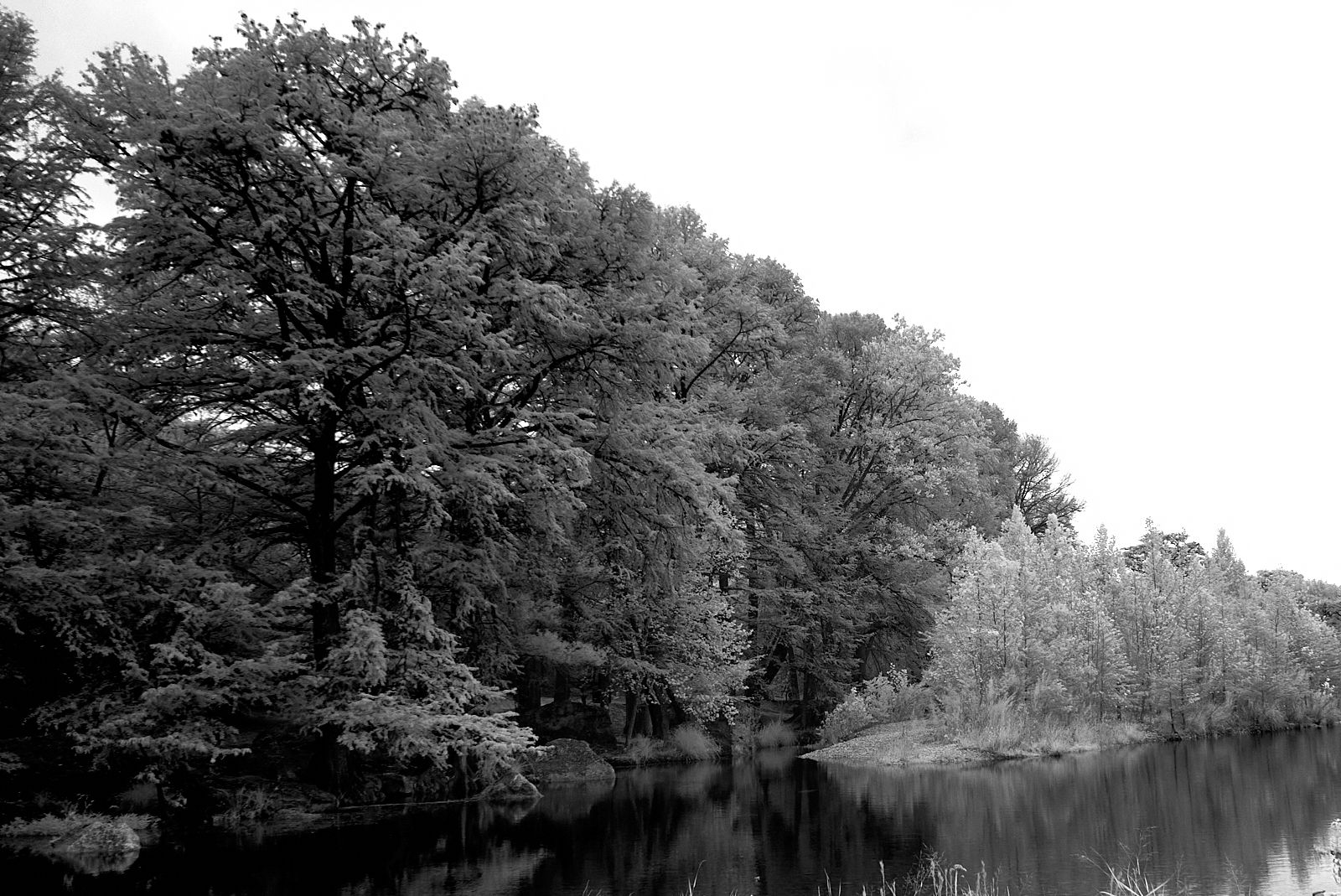
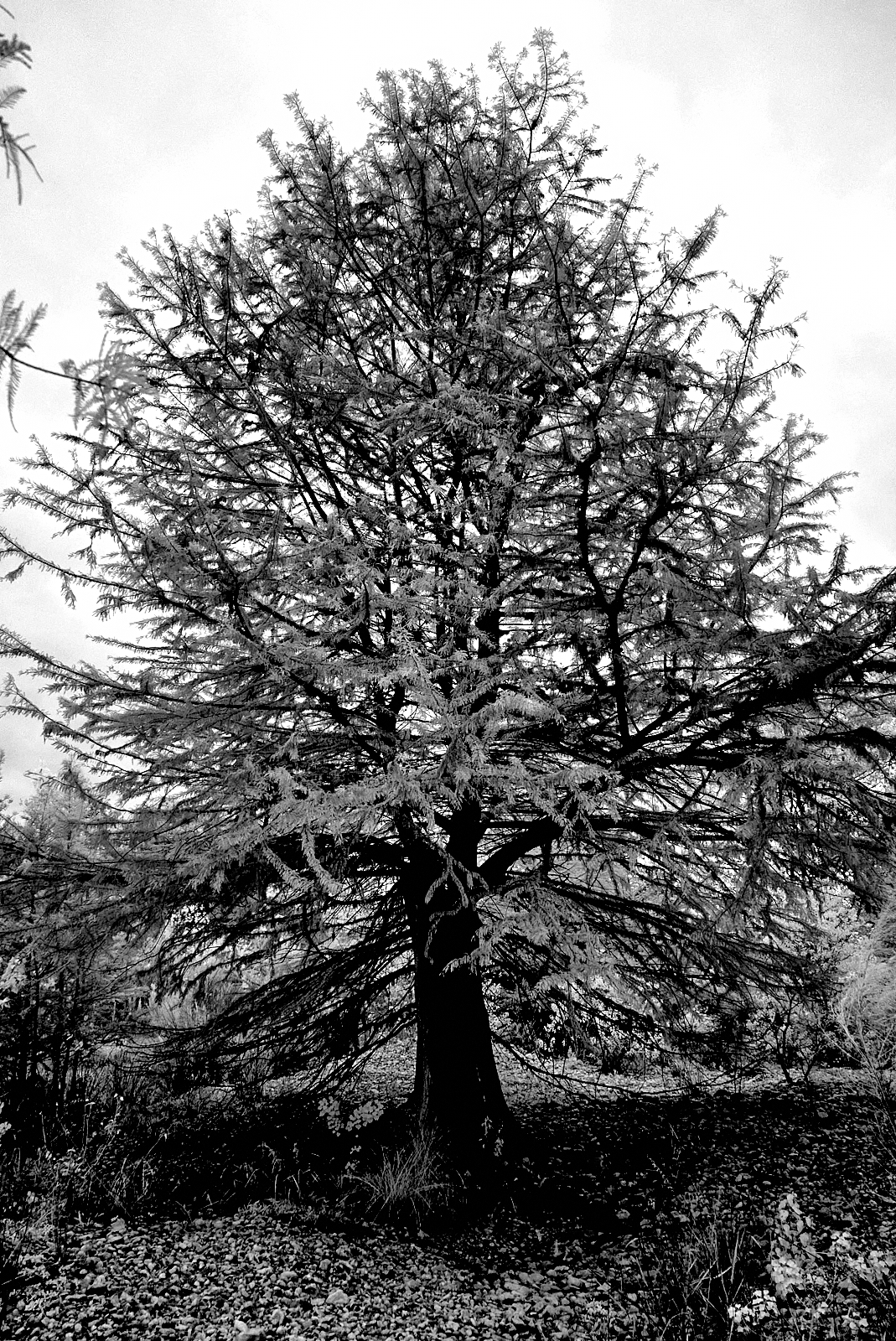
Oct 31, 2023 at 06:10 PM
p.4 #7Infrared Thread - Digital or Film
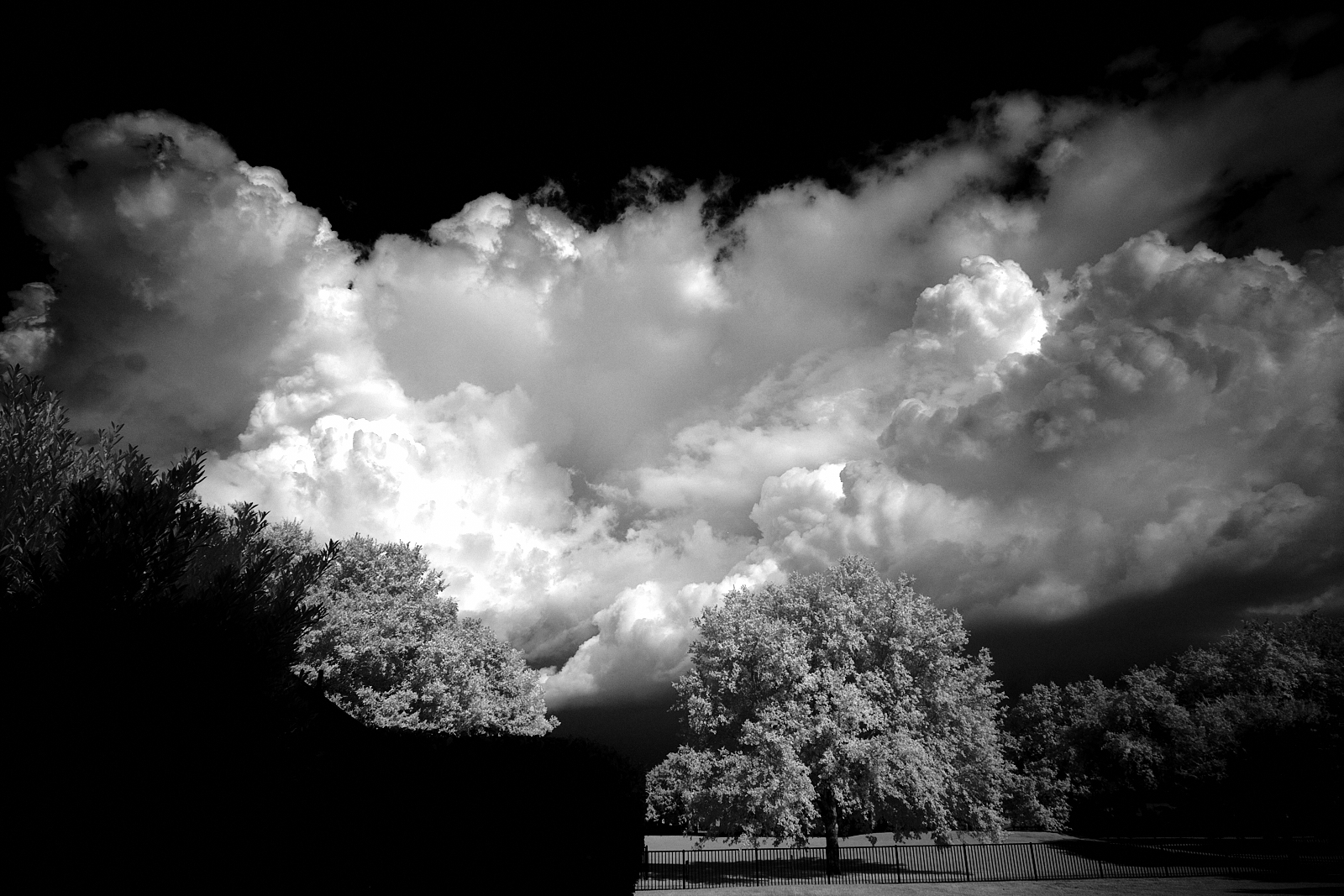
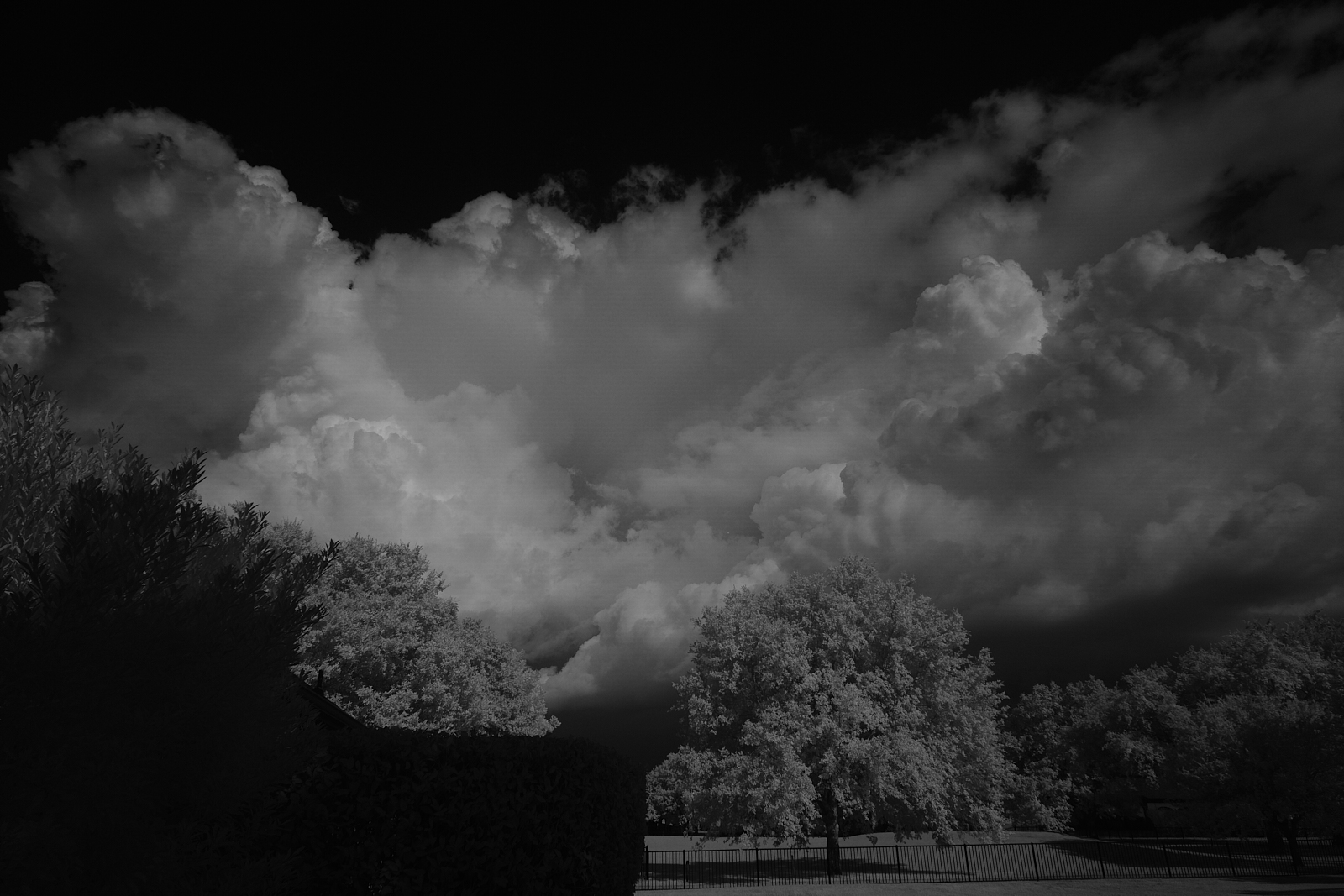
The following 2 photos are the RAW processed and JPG in camera. Check out the banding in the latter. Shot on a Fuji XT2 720NM.
Oct 31, 2023 at 06:50 PM
p.4 #8Infrared Thread - Digital or Film
Was the X-T2 a converted camera?
Never had banding issue onX-E3 FS with B+W830nm and X-T20 850nm.
Edited on Nov 03, 2023 at 02:21 AM · View previous versions
Never had banding issue onX-E3 FS with B+W830nm and X-T20 850nm.
Edited on Nov 03, 2023 at 02:21 AM · View previous versions
Nov 01, 2023 at 04:22 AM
p.4 #9Infrared Thread - Digital or Film
It was a 590NM converted camera with a 830NM filter. I always process the RAW file so not an issue but I just wondered if others had seen issues with JPG in-camera files. I've been reviewing all my old XT2 files as I've been shooting Sony for the last few years but thinking of returning to Fuji and wanted to review the image quality differences. Sorry for derailing the thread somewhat, back to B&W IR photos!
Nov 01, 2023 at 06:10 AM
p.4 #10Infrared Thread - Digital or Film
spyderphil wrote:
It was a 590NM converted camera with a 830NM filter. I always process the RAW file so not an issue but I just wondered if others had seen issues with JPG in-camera files. I've been reviewing all my old XT2 files as I've been shooting Sony for the last few years but thinking of returning to Fuji and wanted to review the image quality differences. Sorry for derailing the thread somewhat, back to B&W IR photos!
FWIW, I'm using a X-E3 converted for 830nm, and have never seen banding in my JPEGs.
Generally, I save both RAW and a normal JPEG, for backup. The JPEGs are sometimes used for quick review and then discarded. Have never played much with White Balance to take out the color balance, and just typcially have the camera set for Across simulation to get a clean B+W image in the viewfinder.
Nov 01, 2023 at 06:56 AM

p.4 #11Infrared Thread - Digital or Film
An impressive tree - 665nm converted 5DmkII with Nikkor 20mm f2.9 ais
http://www.photomatter.com/2023/Edit_5DmkII-IR_w-Nikkor-20mm-f2.8-ais_GrandRvPk-7002.jpg
http://www.photomatter.com/2023/Edit_5DmkII-IR_w-Nikkor-20mm-f2.8-ais_GrandRvPk-7002.jpg
Nov 01, 2023 at 09:46 AM
p.4 #12Infrared Thread - Digital or Film
Having started doing some infared in the last year I enjoyed this thread. But has the IR community run out of things to discuss? I would post some of my work but find it’s too complicated for my old head.
Nov 11, 2023 at 12:11 PM
p.4 #13Infrared Thread - Digital or Film
http://www.photomatter.com/2022/Edit_5D-IR_55mm_f3.5_Nikkor-P.C-ai'd_micro_RiversidePark-0943_11-image-gs.jpg
Nov 11, 2023 at 09:24 PM
p.4 #14Infrared Thread - Digital or Film
Fujifilm X-E3 FS + meike 50 f0.95 at f8
B+W 093 filter
4 shots stitched in PTgui PRO

L'Hemisferic - Valencia by Massinissa Dalla Costa, on Flickr
B+W 093 filter
4 shots stitched in PTgui PRO
L'Hemisferic - Valencia by Massinissa Dalla Costa, on Flickr
Nov 16, 2023 at 07:28 AM
p.4 #15Infrared Thread - Digital or Film
I converted a Sigma DP1m camera to full spectrum a few years ago by removing the hot mirror. The fun thing about doing this on a foveon is that you can get a live view with the red foliage like aerochrome and no channel swapping in photoshop is required. I like shooting this camera in color for the wild reds and deep blue skies, but it can create nice monochromes also.
Full spectrum Sigma DP1m
Polarizing filter only

Winding path by Graham Gibson, on Flickr
Sigma DP1 Merrill with Full Spectrum Conversion
Hoya X1 Green Filter & Custom WB
SPP Foveon Blue Color Mode

Cycling among the redwoods by Graham Gibson, on Flickr
Sigma DP1 Merrill Full Spectrum Converted
Hoya X1 Green Filter
CPL Filter
Foveon Blue Mode

Dark forest by Graham Gibson, on Flickr
Sigma DP1 Merrill Full Spectrum Converted
Hoya X1 Green Filter
CPL Filter
Foveon Blue Mode

Point Lobos Inlet Infrared by Graham Gibson, on Flickr
Sigma DP1m full spectrum
Hoya R72 720nm infrared filter
CPL filter
B&W Mode

Twisted growth by Graham Gibson, on Flickr
Full spectrum Sigma DP1m
Polarizing filter only
Winding path by Graham Gibson, on Flickr
Sigma DP1 Merrill with Full Spectrum Conversion
Hoya X1 Green Filter & Custom WB
SPP Foveon Blue Color Mode
Cycling among the redwoods by Graham Gibson, on Flickr
Sigma DP1 Merrill Full Spectrum Converted
Hoya X1 Green Filter
CPL Filter
Foveon Blue Mode
Dark forest by Graham Gibson, on Flickr
Sigma DP1 Merrill Full Spectrum Converted
Hoya X1 Green Filter
CPL Filter
Foveon Blue Mode
Point Lobos Inlet Infrared by Graham Gibson, on Flickr
Sigma DP1m full spectrum
Hoya R72 720nm infrared filter
CPL filter
B&W Mode
Twisted growth by Graham Gibson, on Flickr
Nov 16, 2023 at 04:32 PM
p.4 #16Infrared Thread - Digital or Film
Full spectrum Foveons are well known to be good for Aerochrome, expecially with the Hoya X1.
Nov 17, 2023 at 07:10 AM
p.4 #17Infrared Thread - Digital or Film
IR 665nm converted Canon 5DmkII with the Nikkor 20mm f2.8 ais in a three image stitch
https://www.photomatter.com/2023/Edit_5DmkII-IR_w-Nikkor-20mm-f2.8-AIS_3-image-retouched_GrandRiver-7064-Edit.jpg
https://www.photomatter.com/2023/Edit_5DmkII-IR_w-Nikkor-20mm-f2.8-AIS_3-image-retouched_GrandRiver-7064-Edit.jpg
Nov 17, 2023 at 07:57 PM
p.4 #18Infrared Thread - Digital or Film
Grand Black Walnut tree shot with 665nm converted Canon 5D and a Nikkor 20mm f2.8 ais manual focus lens - 7 frame stitch.
http://www.photomatter.com/2023/Edit_5D-IR_20mm_f2.8-ais_HagerPark-0683-7-image_BlackWalnut-alt.jpg
http://www.photomatter.com/2023/Edit_5D-IR_20mm_f2.8-ais_HagerPark-0683-7-image_BlackWalnut-alt.jpg
Nov 27, 2023 at 10:08 AM
p.4 #19Infrared Thread - Digital or Film
grahamgibson wrote:
I converted a Sigma DP1m camera to full spectrum a few years ago by removing the hot mirror. The fun thing about doing this on a foveon is that you can get a live view with the red foliage like aerochrome and no channel swapping in photoshop is required. I like shooting this camera in color for the wild reds and deep blue skies, but it can create nice monochromes also.
Full spectrum Sigma DP1m
Polarizing filter only
https://live.staticflickr.com/65535/50159302346_d53a1ce6b9_h.jpg
Winding path by Graham Gibson, on Flickr
Sigma DP1 Merrill with Full Spectrum Conversion
Hoya X1 Green Filter & Custom WB
SPP Foveon Blue Color Mode
https://live.staticflickr.com/65535/50617532176_97ff45f2ad_h.jpg
Cycling among the by Graham Gibson, on Flickr
Sigma DP1 Merrill Full Spectrum Converted
Hoya X1 Green Filter
CPL Filter
Foveon Blue Mode
https://live.staticflickr.com/65535/51101452248_3844c03eed_h.jpg
Dark forest by Graham Gibson, on Flickr
Sigma DP1 Merrill Full Spectrum Converted
Hoya X1 Green Filter
CPL Filter
Foveon Blue Mode
https://live.staticflickr.com/65535/51232183849_2235efffe6_h.jpg
Point Lobos Inlet Infrared by Graham Gibson, on Flickr
Sigma DP1m full spectrum
Hoya R72 720nm infrared filter
CPL filter
B&W Mode
https://live.staticflickr.com/65535/51290907702_dbf8fec430_h.jpg
Twisted growth by Graham Gibson, on Flickr...Show more →
Oh my! These are beautiful Graham!
Love the forests!
All well done!
Dan
Nov 27, 2023 at 10:10 AM
p.4 #20Infrared Thread - Digital or Film
James Markus wrote:
Grand Black Walnut tree shot with 665nm converted Canon 5D and a Nikkor 20mm f2.8 ais manual focus lens - 7 frame stitch.
http://www.photomatter.com/2023/Edit_5D-IR_20mm_f2.8-ais_HagerPark-0683-7-image_BlackWalnut-alt.jpg
Just super photography Jim! The "flares" are wonderful!
Love your IR work!
Dan
Nov 27, 2023 at 10:11 AM