AmbientMike
Offline
• • • • • •
[X]
|
 p.9 #15 · Z8 vs R5? I'm just curious... p.9 #15 · Z8 vs R5? I'm just curious... | |
marsguy wrote:
Well, if we're still talking about landscape, primes don't make any sense, if you have to hike to your location. They are cumbersome to switch in the field where you are around dirt/mud/dust, water, sand, rocks, etc. Zooms are the clear way to go, especially when you get the f/4 versions. Not all mirrorless lenses are gigantic, but Canon has taken the summit tier approach by making giant, clinically perfect f/1.2 primes.
Fuji on the other hand has kept their APS-C lenses pretty compact, up until the past few years where they seem to be trying to lure more FF shooters with bigger, faster glass (like the 50/1 and 200/2). It's still quite a bit smaller and lighter than FF at that point. Their 35/1.4 is absolutely tiny (like the size of the RF50/1.8) and is a lovely lens. Their 56/1.2 is on the larger side for the X system and is still svelte compared to the RF85/1.2 which could easily be used as a bludgeon. Their "red badge"/pro tier 16-55/2.8 is affectionately known as "the brick" which is hilarious considering it's half a pound lighter than the RF24-70/2.8 and 0.1lbs lighter than the RF24-105/4 which is actually pleasantly small for what it is. As well, the 16-55 is still quite a bit smaller than both of the lenses I compared it to as well, despite being the largest standard zoom in the entire X system.
My point is, Canon has deliberately chosen to make their L lenses huge. Mirrorless lenses don't have to be huge. It seems pretty common to see a lot of people still desiring f/1.4 primes as cheaper, smaller, lighter alternatives to the absurd f/1.2 primes.
I also don't shoot landscape only on a tripod. Should I? Maybe. But I do a lot of hiking, backpacking, and canoeing/kayaking, and it's not practical to bring a tripod for many of those scenarios, at least not a full size one. You can't use a tripod in a canoe, either. I'm often on the move and don't have time to sit in one spot for a while for the light to be just right. I don't use big flat filters or graduated filters. Obviously if I'm trying to blur water I'll use a tripod with an ND filter but most photos I take don't require slow shutter speeds, so handheld shooting is fine. And yes, I shoot at base ISO as much as I possibly can. I need stuff that is compact and convenient and doesn't require any setup or takedown for most shots, and mirrorless cameras are an improvement over DSLRs in pretty much every way that matters to me....Show more →
Rebels and the kit zooms are extremely light. 10-18, 18-55, 55-250. 16-400 ff equivalent. The SL2 is lighter than most of the Fuji XT series, idk that other Rebels much heavier, may still be lighter than all but the original XT-1. So it's just not true that DSLR'S are heavier, really.
The mirrorless bodies are about 0.5 lb lighter. That's it. The rest is lenses, if you are looking at <50mm you have potential for lighter lenses since you don't need the retrofocus designs. But if you are using a 16-35 it's not really lighter, and if it's based on a DSLR design it's going to have to be physically longer and therefore heavier due to the shorter flange to sensor distance. People are buying huge super-performance lenses, so Canon makes them. 85/1.2 might make 33x44 unnecessary. You see people who are interested in the best performance all the time on here. The you get the other threads " this stuff is heavy I don't want to carry it which compact smaller sensor should I get?" The big 50mm probably started after 50Art came out.
|


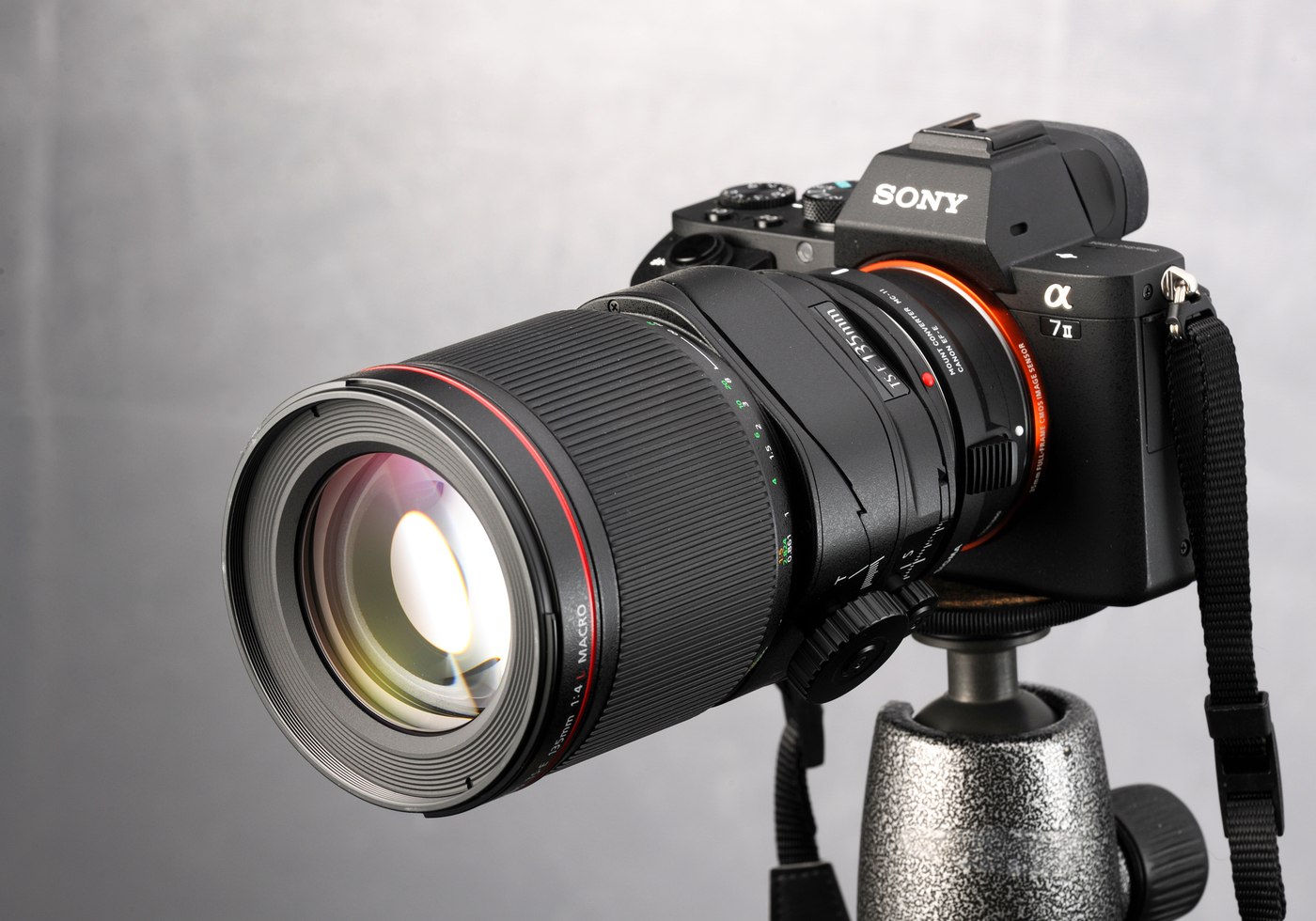
 Head over to the Alt forum where every brand, subject, and image-making technology is welcomed: that is the original charter. For some reason, the forum is currently called "Leica & Alternative Gear" but that's okay, too. Even the official "Nikon Z Images Thread" and "Sony FE Images Thread" are crosslinked over to Alt because full OEM rigs are welcome to post in Alt. Amazing!