Interesting when we shot Medium Format as I went up in Mpx backs like 33,42,60,80 from Phase diffraction hit earlier in aperture setting. Like the 80 mpx we got diffraction even at 5.6 with our tech cams . Now of course these are best lenses around . It was interesting to see when it would hit given the size of the back. More MPX backs have different pixel pitch
Interesting they went with cf express and sd card slot. Was kinda thinking they would do dual slot cf express cards. Well I guess in general a lot of things we keep seeing being released (lenses, cameras, phones ect) are all very incremental changes nothing big. Reaching point of diminishing returns it feels like. Have to innovate something new but with the way the world is lately not sure that's going to happen.
Also not surprised they didn't bump up the resolution. 61/63 is amazing already. Will be curious to see reviews once its released. Great times to be a sony shooter.
sismailian wrote:
Interesting they went with cf express and sd card slot. Was kinda thinking they would do dual slot cf express cards. Well I guess in general a lot of things we keep seeing being released (lenses, cameras, phones ect) are all very incremental changes nothing big. Reaching point of diminishing returns it feels like. Have to innovate something new but with the way the world is lately not sure that's going to happen.
CF Express Type B would be welcome (even without SD slots, too), but Type A slots continue to be most unwelcome by me due to the astronomical price of those cards.
I agree that we're at the stage in digital camera development where the big jumps in features and capabilities are long since over, probably because we've more or less reached the limits of basic physics when it comes to electronics, sensors etc. in small camera bodies. Incremental is the future, no doubt, but it would be nice if Sony incremented us some of the features other manufacturers have offered for years, like focus stacking!
aCuria wrote:
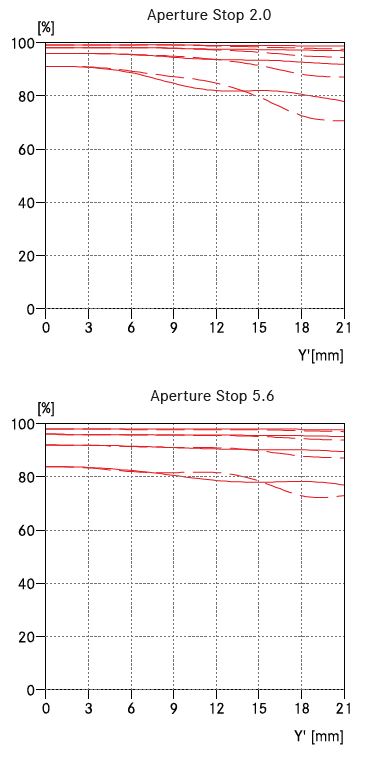
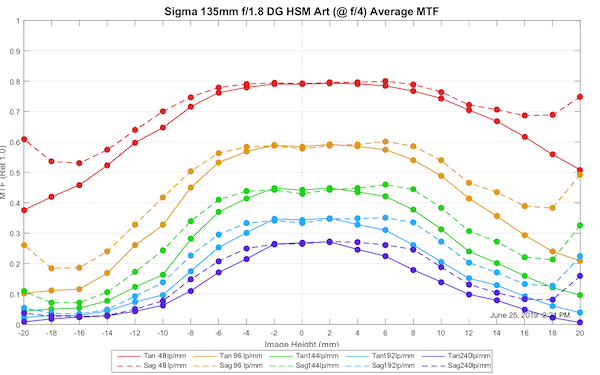
The 135GM resolves at ~60% contrast at 100lp/mm in the center (a7iv sensor = 100lp/mm max). At 100lp/mm the corner contrast has already gone to shit
Those numbers are for the lens wide open. It is sharpest at f5.6, where it is *much* sharper.
The 135GM is also our best case scenario, for other lenses the situation is just worse, probably not even 50% contrast at 100 lp/mm.
Obviously for highest system resolution, you also need the best glass. Apparently e.g. the 50GM is quite close in IQ to the 135GM.
At a certain point medium format digital is the correct choice - Fuji, phase one or Hasselblad H.
That depends on what you wana shoot. If your subject is moving, all those seem quite a step down. If it is not, then I'd still question whether e.g. the 100MP Fuji with the best glass available for it would significantly outperform the IQ of a theoretical 100MP FF Sony with the best glass. It would likely be more expensive, though. One area where those bigger sensors can shine is e.g. when they support capturing 16 bit data. Of course that only matters when you have abundant light, so the benefit is rather limited to long exposures or artificial lightning.
Thing is that ultimately for most applications the sensor size isn't near as relevant as marketing makes it seem to be. Typically you are limited by all sorts of practical considerations (DOF, AF speed, etc) and whether the combination of available cameras & lenses in a system matches your requirements is much more essential than the sensors size.
I for one would like to see some circular or 43x43mm+ curved sensors on a Sony R series body, since to cover 35mm a lens needs a 43mm image circle or larger.
Curved sensors are incompatible with existing glass. So for the time being such sensors are much more likely to pop up in fixed lens cameras.
GMPhotography wrote:
Interesting when we shot Medium Format as I went up in Mpx backs like 33,42,60,80 from Phase diffraction hit earlier in aperture setting. Like the 80 mpx we got diffraction even at 5.6 with our tech cams . Now of course these are best lenses around . It was interesting to see when it would hit given the size of the back. More MPX backs have different pixel pitch
Diffraction is essentially linear to aperture diameter. So as you double your Mpx, you need a stop faster aperture to keep the per pixel diffraction effects the same.
Adding to @Daran comment, the diameter of the diffraction limited spot in microns (the point spread function, PSF), is approximately f/# of the lens. That leads to Daran's comment that you need a faster lens (smaller f/#) to keep the PSF the same size relative to the size of a smaller pixel.
If you keep in mind that the PSF in microns is approximately the f/# of a diffraction limited lens, and also the f/# determines the photons per unit area per unit time on the sensor, you can debunk a lot of common misinformation.
Daran wrote:
Those numbers are for the lens wide open. It is sharpest at f5.6, where it is *much* sharper.
A perfect lens is at its sharpest wide open (Reileigh's Criterion).
Being sharper at f/5.6 is actually not useful because at 120MP you are diffraction limited around f/4
Such a camera would really have to be used at iso 100, f/4 with the 135GM or 50GM, and even then I dont think there will be much difference vs the Riv.
Daran wrote:
If your subject is moving, all those seem quite a step down.
I would pick the A1 for this, not a 120MP RV (unless it has a stacked sensor too)
Daran wrote:
Curved sensors are incompatible with existing glass. So for the time being such sensors are much more likely to pop up in fixed lens cameras.
You are right, I would expect some glass to be released at the same time if they go this route. I would be happy with a 43x43mm flat sensor too.
aCuria wrote:
A perfect lens is at its sharpest wide open (Reileigh's Criterion).
Photography lenses aren't perfect and none I ever heard of is sharpest wide open. Being sharper at f/5.6 is actually not useful because at 120MP you are diffraction limited around f/4
My favorite tool says that for a 120MP on FF diffraction "May Become Visible" at f5, which seems rather different from your "limited around f/4". Besides sharpest at f5.6 doesn't mean soft at f6.3 nor at f5.
Leica's SL 35/2 APO. f2.8 might just shade f2. Maybe, maybe not. In fact, CV's 50/2 APO f2 and f4 data are around 2% difference in detail, but f2 is stronger for 10 lpmm. Modern lenses! Aperture is for DOF now, and even then you will lose out for some low spatial frequencies.
wordfool wrote:
CF Express Type B would be welcome (even without SD slots, too), but Type A slots continue to be most unwelcome by me due to the astronomical price of those cards.
I agree that we're at the stage in digital camera development where the big jumps in features and capabilities are long since over, probably because we've more or less reached the limits of basic physics when it comes to electronics, sensors etc. in small camera bodies. Incremental is the future, no doubt, but it would be nice if Sony incremented us some of the features other manufacturers have offered for years, like focus stacking! ...Show more →
B cards are simply too big. You either end up with a monstrous and preposterous size like the z9 or one cfexpress and one non. I prefer 2 cfa any day with a small camera size.
And of course, we need Roger's always insightful take away:
Roger:
I say summary, because there are no practical or useful conclusions to be made. The only thing of interest, probably, is that only really good lenses can resolve ultra-high resolutions you’ll never need. However, even among these really good lenses, you can’t assume how a lens will perform at ultra-high resolutions based on its results at normal resolutions. You can also see that ultra-high-resolution performance is a bit easier to obtain in short telephoto focal lengths than in standard or wide-angle lengths.
I've seen a couple presentations by Peter Karbe and he consistently states their lens design philosophy wide open = best IQ. "Never stop down if you don't need depth of field, please!"
Sigma's CEO discusses a preference for rendering in their design of the DG DN
It seems reasonable that Sony and others might have different lens design goals
offtraildog wrote:
I've seen a couple presentations by Peter Karbe and he consistently states their lens design philosophy wide open = best IQ. "Never stop down if you don't need depth of field, please!"
Sigma's CEO discusses a preference for rendering in their design of the DG DN
It seems reasonable that Sony and others might have different lens design goals
Would you happen to have a link for the Sigma CEO discussing the DG DN lenses and rendering?
I thought that by an "R" naming they wanted to mean a PHOTO high resolution camera, not a video camera, not an action camera, just the best IQ capable camera, for high resolution, wide DR and low NR, together with aids such at least focus stacking, better viewfinder and LCD... and welcoming PSMS, life bulb, automatic DoF control, and on camera raw processing.
I won't be purchasing anything but this.
As simple as "S" for video, A for action, and "R" for IQ for photo.
Big respect for other people's desires.
System MTF is the Detector MTF multiplied by the Optics MTF. A smaller pixel will always have a better MTF. However, if the Optics are not good enough (due to a mixture of diffraction and/or aberrations) the detector MTF will have a smaller impact.
Think of it in terms of optics limited or detector limited.
Severely Optics Limited: A f/16 lens with 5-um pixel pitch will have a lower MTF than a f/16 lens with a 3-um pixel pitch, but only barely
Severely Detector Limited: A F/2.8 lens (assuming diffraction limited) with a 5-um pixel pitch will have a much lower MTF than the same lens with a 3-um pixel pitch.
luismanibarro wrote:
I thought that by an "R" naming they wanted to mean a PHOTO high resolution camera, not a video camera, not an action camera, just the best IQ capable camera, for high resolution, wide DR and low NR, together with aids such at least focus stacking, better viewfinder and LCD... and welcoming PSMS, life bulb, automatic DoF control, and on camera raw processing.
I won't be purchasing anything but this.
As simple as "S" for video, A for action, and "R" for IQ for photo.
Big respect for other people's desires.
I agree, not all photographs need video capabilities in their main photo camera. Actually I am sure that most Sony A7r-series users rarely shoot video usually have a specialized camera for that - Sony have plenty of options for that, starting with the compact (yet very capable) 1" compacts.
So it is worth looking why video has been so strongly pushed to all cameras? One explanations that while the features and performance related to photography have been improved very gradually - if at all, there has been substantive improvements in video capabilities. I also assume that it is much more easy to get positive reviews from typical mainstream YouTubers when camera is "hybrid" rather than hardcore photo-oriented. Conclusion? Pushing video to everything is mostly about marketing