This topic is in the 2021 archive. You can read it and like its posts here. It is read only.
Archive 2021New Voigtlander 50mm f/1 Nokton in January 2022
p.11 #1New Voigtlander 50mm f/1 Nokton in January 2022
Another way to think of this controversy is like this:
Sure you *could* design a slower lens that is as even wide open as a faster lens stopped down to the same aperture.
So a 50mm f2.5 that has as little optical vignetting as a really good 50mm f1.4 stopped down to f2.5. Maybe there are some - some get close - but if there are I haven't used one.
But to do so would make the slower lens about as big and expensive as the faster one!
In which case as a manufacturer you have two choices: try to sell a 50mm f2.5 as big and expensive as your equivalent quality 50mm f1.4 (good luck with that!) or redesign it a little so that it is a 50mm f14!
Dec 21, 2021 at 06:49 PM
p.11 #2New Voigtlander 50mm f/1 Nokton in January 2022
Maybe, but how do you explain the low optical vignetting of the 85/1.4 GM? If Sony can do it in a fast 85 that isn't overly huge for its category, then it should be doable in slower, smaller lenses too. Granted, not as small as traditional designs with higher vignetting.
rscheffler wrote:
You'll see that the shape of the bokeh ball in the corner stays the same wide open and f/1.7, pretty much confirming my impression that in the image periphery the lens is not f/1.7.
Oops, typo: should be: stays the same wide open and f/2.0.
BastianK wrote:
Your assumption is already completely wrong from the start, as no lens has the stated aperture value in the corner.
Claiming that this lens is not f/1.2 is just as wrong as claiming the Voigtlander VM 35mm 1.7 is not an f/1.7 lens.
Thank you for the informative post. I should have worded the above better to avoid misunderstandings. (note the smiley at the end of what I stated above).
The context in which I meant the VM35/1.7 is not an f/1.7 lens, for my needs, is in situations where I want more consistent background bokeh quality across the frame. From f/1.7 to f/2.0 there is no change in the outer zone and some change at f/2.5, except the corners, which would be my starting point. It's at f/2.8 where it's more or less consistent across most of the frame. My impression was that some lenses are better at even background rendering sooner than others. But the VM is probably just behaving normally here and I should try my other 35s to determine this (though all my other 35s are either old or based on old designs).
I shot the LED light bokeh ball test with the other 35s. Based on those results, all the 35s I have here benefit from stopping down between 1-2 stops to equalize bokeh ball size between center and periphery. As mentioned, the other 35s I have are all quite old f/2 designs, or based on old designs: Canon 35/2 LTM, 7A 35/2 and Lens Light Lab 35 Cron v1 replica.
I also did the LED bokeh ball test with the 28 and 21 Luxes. Both behaved similarly in that it took 2 stops for the center and corner bokeh balls to more closely match in size. Interestingly the 21 SEM is already pretty good at f/3.4
I admire the Sony 85/1.4 and 24/1.4 very much for how nicely they minimize cats eyes into the corners. I wish this would be a higher priority in general.
In any case, I agree with Michael's approach to fast lenses. I too often use them stopped down 1-1.5 stops for calmer, more even across-frame rendering
mapgraphs wrote:
Vignetting is not Field Curvature and Field Curvature is not Vignetting. You can't use one to define the other. Lens speed or maximum Aperture is the focal length divided by the effective aperture diameter. Aperture is not Light Transmission (T value). Light Transmission is not Aperture. You can't use one to define the other.
Bottom line is that manipulating one file and comparing it to an unmanipulated file is comparing apples to walnuts.
It's the ubiquitous "... all I did was ..."
Not sure if you're directing that at me because you quoted a snippet of what I wrote earlier? The point of what I wrote was to explain that exposure was roughly equalized between center and corner crops only for easier evaluation of bokeh/depth of field differences between center and corners.
rscheffler wrote:
You'll see that the shape of the bokeh ball in the corner stays the same wide open and f/1.7, pretty much confirming my impression that in the image periphery the lens is not f/1.7.
Oops, typo: should be: stays the same wide open and f/2.0.
BastianK wrote:
Your assumption is already completely wrong from the start, as no lens has the stated aperture value in the corner.
Claiming that this lens is not f/1.2 is just as wrong as claiming the Voigtlander VM 35mm 1.7 is not an f/1.7 lens.
Thank you for the informative post. I should have worded the above better to avoid misunderstandings. (note the smiley at the end of what I stated above).
The context in which I meant the VM35/1.7 is not an f/1.7 lens, for my needs, is in situations where I want more consistent background bokeh quality across the frame. From f/1.7 to f/2.0 there is no change in the outer zone and some change at f/2.5, except the corners, which would be my starting point. It's at f/2.8 where it's more or less consistent across most of the frame. My impression was that some lenses are better at even background rendering sooner than others. But the VM is probably just behaving normally here and I should try my other 35s to determine this (though all my other 35s are either old or based on old designs).
I shot the LED light bokeh ball test with the other 35s. Based on those results, all the 35s I have here benefit from stopping down between 1-2 stops to equalize bokeh ball size between center and periphery. As mentioned, the other 35s I have are all quite old f/2 designs, or based on old designs: Canon 35/2 LTM, 7A 35/2 and Lens Light Lab 35 Cron v1 replica.
I also did the LED bokeh ball test with the 28 and 21 Luxes. Both behaved similarly in that it took 2 stops for the center and corner bokeh balls to more closely match in size. Interestingly the 21 SEM is already pretty good at f/3.4
I admire the Sony 85/1.4 and 24/1.4 very much for how nicely they minimize cats eyes into the corners. I wish this would be a higher priority in general.
In any case, I agree with Michael's approach to fast lenses. I too often use them stopped down 1-1.5 stops for calmer, more even across-frame rendering
mapgraphs wrote:
Earlier quote
...and tweaked exposures so they're all fairly similar. The edge crops required more exposure boostBottom line is that manipulating one file and comparing it to an unmanipulated file is comparing apples to walnuts.
It's the ubiquitous "... all I did was ..."
Not sure if you're directing that at me because you quoted a snippet of what I wrote earlier? The point of what I wrote was to explain that exposure was roughly equalized between center and corner crops only for easier evaluation of bokeh/depth of field differences between center and corners.
Dec 21, 2021 at 11:30 PM

p.11 #3New Voigtlander 50mm f/1 Nokton in January 2022
I love Voigtlander glass. But the biggest issue with this lens isn't potential mechanical vignetting, but the extremely long minimum focus distance. I find the typical 0.7m MFD limiting on most Leica M lenses of 50mm and wider, and 0.9m is just, well, pretty darn far for a 50mm lens. I know one can shorten that with a helicoid adapter on mirrorless, but it likely is set to that because of very poor performance closer up.
Dec 21, 2021 at 11:31 PM
p.11 #4New Voigtlander 50mm f/1 Nokton in January 2022
Jman13 wrote:
I love Voigtlander glass. But the biggest issue with this lens isn't potential mechanical vignetting, but the extremely long minimum focus distance. I find the typical 0.7m MFD limiting on most Leica M lenses of 50mm and wider, and 0.9m is just, well, pretty darn far for a 50mm lens. I know one can shorten that with a helicoid adapter on mirrorless, but it likely is set to that because of very poor performance closer up.
I think M mount glass usually has a .7m MFD because of the way rangefinders work and problems with parallax for closer viewing. Some M mount 50s do not do well close up others do (e.g., Leica M 50 f/2 APO, Leica M 50 f/1.4 Asph). Not surprisingly some of those who do (like the two I just mentioned) have floating element designs.
Dec 21, 2021 at 11:52 PM
p.11 #5New Voigtlander 50mm f/1 Nokton in January 2022
DavidBM wrote:
Another way to think of this controversy is like this:
Sure you *could* design a slower lens that is as even wide open as a faster lens stopped down to the same aperture.
So a 50mm f2.5 that has as little optical vignetting as a really good 50mm f1.4 stopped down to f2.5. Maybe there are some - some get close - but if there are I haven't used one.
But to do so would make the slower lens about as big and expensive as the faster one!
In which case as a manufacturer you have two choices: try to sell a 50mm...Show more →
The truth is probably somewhere inbetween. I'm sure the lens could be better at f/2.5 and a bit smaller if the cost was the same. The existing lenses for digital medium format are sort of proof of that, because it's not the sensor size that make them "better" (subjective), it's the lens design. But of course it isn't attractive to photographers who prioritize speed, which for some reason seems to be majority among FF shooters.
It's kind of funny, because if you look around at images shot with large format cameras (I mean 4x5" and up), almost no one use the lens wide open. There you really have possibilities of shallow DOF and brutal sharpness at the same time, but instead they are commonly stopped down to f/22 or so.
---
I don't mean to derail the thread, just giving my opinion. IMO it's a bit strange to strive for shallowest possible DOF, especially if it comes at high cost, high vignetting, severe funkiness in the corners, and a pretty bulky lens that often isn't better stopped down than a slower lens. Anything faster than ~f/1.4 will be a huge compromise in performance because of the need for more lens elements to correct aberrations.
Another way to think of this controversy is like this:
Sure you *could* design a slower lens that is as even wide open as a faster lens stopped down to the same aperture.
So a 50mm f2.5 that has as little optical vignetting as a really good 50mm f1.4 stopped down to f2.5. Maybe there are some - some get close - but if there are I haven't used one.
But to do so would make the slower lens about as big and expensive as the faster one!
In which case as a manufacturer you have two choices: try to sell a 50mm...Show more →
The truth is probably somewhere inbetween.
I'm sure the lens could be better at f/2.5 and a bit smaller if the cost was the same. The existing lenses for digital medium format are sort of proof of that, because it's not the sensor size that make them "better" (subjective), it's the lens design. But of course it isn't attractive to photographers who prioritize speed, which for some reason seems to be majority among FF shooters. It's kind of funny, because if you look around at images shot with large format cameras (I mean 4x5" and up), almost no one use the lens wide open. There you really have possibilities of shallow DOF and brutal sharpness at the same time, but instead they are commonly stopped down to f/22 or so.
---
I don't mean to derail the thread, just giving my opinion. IMO it's a bit strange to strive for shallowest possible DOF, especially if it comes at high cost, high vignetting, severe funkiness in the corners, and a pretty bulky lens that often isn't better stopped down than a slower lens. Anything faster than ~f/1.4 will be a huge compromise in performance because of the need for more lens elements to correct aberrations.
Dec 22, 2021 at 02:19 AM
p.11 #6New Voigtlander 50mm f/1 Nokton in January 2022
Jman13 wrote:
I love Voigtlander glass. But the biggest issue with this lens isn't potential mechanical vignetting, but the extremely long minimum focus distance. I find the typical 0.7m MFD limiting on most Leica M lenses of 50mm and wider, and 0.9m is just, well, pretty darn far for a 50mm lens. I know one can shorten that with a helicoid adapter on mirrorless, but it likely is set to that because of very poor performance closer up.
Possible reasons:
#1: The lens is fairly heavy and needs extra supportive helicoid to not tilt at full extension. It would be even larger and heavier if the helicoid should provide shorter MFD.
#2: At f/1 DOF is very shallow and you need precision when focusing, which means lower pitch of the helicoid thread. Which for a reasonable lens size means that MFD must be longer.
#3: Performance might be worthless at closer range unless you stop down a lot, and most people are gonna buy such a lens for wide open shooting. So there might be no point in closer MFD if it yields extremely bad image quality.
I've tried using a Voigtländer helicoid adapter on the 7artisans 28/1.4 and it doesn't work very well. It tilts forward because of to much slop in the very short thread and the image plane is no longer 100% parallell to the sensor. I suppose this would happen here too.
Dec 22, 2021 at 02:27 AM
p.11 #7New Voigtlander 50mm f/1 Nokton in January 2022
Makten wrote:
Sure you *could* design a slower lens that is as even wide open as a faster lens stopped down to the same aperture.
So a 50mm f2.5 that has as little optical vignetting as a really good 50mm f1.4 stopped down to f2.5. Maybe there are some - some get close - but if there are I haven't used one.
But to do so would make the slower lens about as big and expensive as the faster one!
In which case as a manufacturer you have two choices: try to sell a 50mm f2.5 as big and expensive as your equivalent quality 50mm f1.4 (good luck with that!) or redesign it a little so that it is a 50mm f14!The truth is probably somewhere inbetween. I'm sure the lens could be better at f/2.5 and a bit smaller if the cost was the same. The existing lenses for digital medium format are sort of proof of that, because it's not the sensor size that make them "better" (subjective), it's the lens design. But of course it isn't attractive to photographers who prioritize speed, which for some reason seems to be majority among FF shooters.
It's kind of funny, because if you look around at images shot with large format cameras (I mean 4x5" and up), almost no one...Show more →
Of course in DOF terms f22 on an 8x10 is about equivalent to f2.8 on a FF camera, and in diffraction terms, so it's solidly away from the aberrations of large format lenses wide open (which are sometimes considerable) and not yet near diffraction, so for moderately shallow DOF images it's a good choice.
DavidBM wrote
Another way to think of this controversy is like this:Sure you *could* design a slower lens that is as even wide open as a faster lens stopped down to the same aperture.
So a 50mm f2.5 that has as little optical vignetting as a really good 50mm f1.4 stopped down to f2.5. Maybe there are some - some get close - but if there are I haven't used one.
But to do so would make the slower lens about as big and expensive as the faster one!
In which case as a manufacturer you have two choices: try to sell a 50mm f2.5 as big and expensive as your equivalent quality 50mm f1.4 (good luck with that!) or redesign it a little so that it is a 50mm f14!
I'm sure the lens could be better at f/2.5 and a bit smaller if the cost was the same. The existing lenses for digital medium format are sort of proof of that, because it's not the sensor size that make them "better" (subjective), it's the lens design. But of course it isn't attractive to photographers who prioritize speed, which for some reason seems to be majority among FF shooters. It's kind of funny, because if you look around at images shot with large format cameras (I mean 4x5" and up), almost no one...Show more →
Of course in DOF terms f22 on an 8x10 is about equivalent to f2.8 on a FF camera, and in diffraction terms, so it's solidly away from the aberrations of large format lenses wide open (which are sometimes considerable) and not yet near diffraction, so for moderately shallow DOF images it's a good choice.
Dec 22, 2021 at 04:51 AM
p.11 #8New Voigtlander 50mm f/1 Nokton in January 2022
Your thoughts reflect my initial reservations quite precisely. However, the 50mm Noctilux Asph which is much larger and heavier and also has floating lens element mechanism has a MFD of 1 meter. This suggests that the engineers at Cosina have stretched the MFD as far as they can while keeping image quality.
The Mitakon / Zhong Yi Speedmaster 50mm f0.95 lenses have a much shorter MFD, but also huge amounts of spherical aberration near MFD. Check out the reviews by Bastian Kratzke at phillipreeve.net.
BTW: Mechanical vignetting is caused by things like a lens hood or a too thick filter ring, while too small lens elements causes optical vignetting.
Jman13 wrote:
I love Voigtlander glass. But the biggest issue with this lens isn't potential mechanical vignetting, but the extremely long minimum focus distance. I find the typical 0.7m MFD limiting on most Leica M lenses of 50mm and wider, and 0.9m is just, well, pretty darn far for a 50mm lens. I know one can shorten that with a helicoid adapter on mirrorless, but it likely is set to that because of very poor performance closer up.
Dec 22, 2021 at 05:00 AM
p.11 #9New Voigtlander 50mm f/1 Nokton in January 2022
Steve Spencer wrote:
I think M mount glass usually has a .7m MFD because of the way rangefinders work and problems with parallax for closer viewing. Some M mount 50s do not do well close up others do (e.g., Leica M 50 f/2 APO, Leica M 50 f/1.4 Asph). Not surprisingly some of those who do (like the two I just mentioned) have floating element designs.
Yeah, I understand the rangefinder limitation. It is one of the reasons I typically do not get M mount glass. My only current M mount lens is the 7Artisans 28/1.4, which I do wish could focus closer up, but I use it mostly at further distances stopped down, so it's not a huge deal. 50mm, though, I use closer up very regularly, and 0.9m would be really, really limiting, unfortunately. I currently use the TTArtisan 50mm f/1.4, which is a lovely lens with a beautiful rendering and with reasonable sharpness that is native RF mount with a 0.5m MFD, and it renders very similarly to the 40mm f/1.2 Nokton I owned for Sony. (it's also a steal at $240).
I do wish Cosina would start making Voigtlander lenses for other mounts, though. Being all manual affairs anyway, it could be just a mount change. I'd appreciate if they added electronics for manual focus aids and EXIF like they do for E-mount, but I'd also be fine with just a mechanical mount only if I could get most of their lenses in native RF mount. Right now, adapting M mount is the only real avenue now that I've switched away from Sony.
Jman13 wrote
I love Voigtlander glass. But the biggest issue with this lens isn't potential mechanical vignetting, but the extremely long minimum focus distance. I find the typical 0.7m MFD limiting on most Leica M lenses of 50mm and wider, and 0.9m is just, well, pretty darn far for a 50mm lens. I know one can shorten that with a helicoid adapter on mirrorless, but it likely is set to that because of very poor performance closer up.Yeah, I understand the rangefinder limitation. It is one of the reasons I typically do not get M mount glass. My only current M mount lens is the 7Artisans 28/1.4, which I do wish could focus closer up, but I use it mostly at further distances stopped down, so it's not a huge deal. 50mm, though, I use closer up very regularly, and 0.9m would be really, really limiting, unfortunately. I currently use the TTArtisan 50mm f/1.4, which is a lovely lens with a beautiful rendering and with reasonable sharpness that is native RF mount with a 0.5m MFD, and it renders very similarly to the 40mm f/1.2 Nokton I owned for Sony. (it's also a steal at $240).
I do wish Cosina would start making Voigtlander lenses for other mounts, though. Being all manual affairs anyway, it could be just a mount change. I'd appreciate if they added electronics for manual focus aids and EXIF like they do for E-mount, but I'd also be fine with just a mechanical mount only if I could get most of their lenses in native RF mount. Right now, adapting M mount is the only real avenue now that I've switched away from Sony.
Dec 22, 2021 at 07:11 AM
p.11 #10New Voigtlander 50mm f/1 Nokton in January 2022
Regarding optical vignetting of the Nokton f/1, I just went back to the video by Ringfoto (linked at voigtlaender.de) and this actually settles it for me. Vignetting is as good as we could hope for, considering both the behavior in mid-frame and that this test is on a 44x33mm format camera.
Here's a screenshot from that video, which @rscheffler posted earlier in this thread:
Here's a screenshot from that video, which @rscheffler posted earlier in this thread:
 |
||
| https://i.postimg.cc/j5Q2mLmp/Screen-Shot-2021-12-10-at-5-05-15-PM.jpg | ||
|
Dec 22, 2021 at 08:15 AM
p.11 #11New Voigtlander 50mm f/1 Nokton in January 2022
DavidBM wrote:
Sure you *could* design a slower lens that is as even wide open as a faster lens stopped down to the same aperture.
So a 50mm f2.5 that has as little optical vignetting as a really good 50mm f1.4 stopped down to f2.5. Maybe there are some - some get close - but if there are I haven't used one.
But to do so would make the slower lens about as big and expensive as the faster one!
In which case as a manufacturer you have two choices: try to sell a 50mm f2.5 as big and expensive as your equivalent quality 50mm f1.4 (good luck with that!) or redesign it a little so that it is a 50mm f14!The truth is probably somewhere inbetween. I'm sure the lens could be better at f/2.5 and a bit smaller if the cost was the same. The existing lenses for digital medium format are sort of proof of that, because it's not the sensor size that make them "better" (subjective), it's the lens design. But of course it isn't attractive to photographers who prioritize speed, which for some reason seems to be majority among FF shooters.
It's kind of funny, because if you look around at images shot with large format cameras (I mean 4x5" and up), almost no one use the lens wide open. There you really have possibilities of shallow DOF and brutal sharpness at the same time, but instead they are commonly stopped down to f/22 or so.
---
I don't mean to derail the thread, just giving my opinion. IMO it's a bit strange to strive for shallowest possible DOF, especially if it comes at high cost, high vignetting, severe funkiness in the corners, and a pretty bulky lens that often isn't better stopped down than a slower lens. Anything faster than ~f/1.4 will be a huge compromise in performance because of the need for more lens elements to correct aberrations.Of course in DOF terms f22 on an 8x10 is about equivalent to f2.8 on a FF camera, and in diffraction terms, so it's solidly away from the aberrations of large format lenses wide open (which are sometimes considerable) and not yet near diffraction, so for moderately shallow DOF images it's a good choice.
The point was that most people shooting larger formats do not strive for shallowest possible DOF, but that's very common to do with 24x36 for some strange reason.
8x10" is a bit extreme though and f/22 on 4x5" is equivalent to ~f/6.4 on FF.
Makten wrote
DavidBM wrote
Another way to think of this controversy is like this:Sure you *could* design a slower lens that is as even wide open as a faster lens stopped down to the same aperture.
So a 50mm f2.5 that has as little optical vignetting as a really good 50mm f1.4 stopped down to f2.5. Maybe there are some - some get close - but if there are I haven't used one.
But to do so would make the slower lens about as big and expensive as the faster one!
In which case as a manufacturer you have two choices: try to sell a 50mm f2.5 as big and expensive as your equivalent quality 50mm f1.4 (good luck with that!) or redesign it a little so that it is a 50mm f14!
I'm sure the lens could be better at f/2.5 and a bit smaller if the cost was the same. The existing lenses for digital medium format are sort of proof of that, because it's not the sensor size that make them "better" (subjective), it's the lens design. But of course it isn't attractive to photographers who prioritize speed, which for some reason seems to be majority among FF shooters. It's kind of funny, because if you look around at images shot with large format cameras (I mean 4x5" and up), almost no one use the lens wide open. There you really have possibilities of shallow DOF and brutal sharpness at the same time, but instead they are commonly stopped down to f/22 or so.
---
I don't mean to derail the thread, just giving my opinion. IMO it's a bit strange to strive for shallowest possible DOF, especially if it comes at high cost, high vignetting, severe funkiness in the corners, and a pretty bulky lens that often isn't better stopped down than a slower lens. Anything faster than ~f/1.4 will be a huge compromise in performance because of the need for more lens elements to correct aberrations.
The point was that most people shooting larger formats do not strive for shallowest possible DOF, but that's very common to do with 24x36 for some strange reason.
8x10" is a bit extreme though and f/22 on 4x5" is equivalent to ~f/6.4 on FF.
Dec 22, 2021 at 10:19 AM
p.11 #12New Voigtlander 50mm f/1 Nokton in January 2022
LarsHP wrote:
Regarding optical vignetting of the Nokton f/1, I just went back to the video by Ringfoto (linked at voigtlaender.de) and this actually settles it for me. Vignetting is as good as we could hope for, considering both the behavior in mid-frame and that this test is on a 44x33mm format camera.
Here's a screenshot from that video, which @rscheffler@ posted earlier in this thread:
https://i.postimg.cc/j5Q2mLmp/Screen-Shot-2021-12-10-at-5-05-15-PM.jpg
At what focus distance?
Dec 22, 2021 at 10:20 AM
p.11 #13New Voigtlander 50mm f/1 Nokton in January 2022
I took the above screenshot, which is from a Fuji GFX camera, and made an approximate framing (in red) that a 24x36mm sensor will see. Looks sensible.
|
||
| https://cdn.l-camera-forum.com/uploads/monthly_2021_12/1867062344_Approximate24x36mmformat.jpg.092a44d83b506526cc8cda22393b88a6.jpg | ||
|
Dec 22, 2021 at 10:50 AM
p.11 #14New Voigtlander 50mm f/1 Nokton in January 2022
Makten wrote:
Here's a screenshot from that video, which @rscheffler@@ posted earlier in this thread:
https://i.postimg.cc/j5Q2mLmp/Screen-Shot-2021-12-10-at-5-05-15-PM.jpgAt what focus distance?
We don't know. Hopefully it is at infinity.
LarsHP wrote
Regarding optical vignetting of the Nokton f/1, I just went back to the video by Ringfoto (linked at voigtlaender.de) and this actually settles it for me. Vignetting is as good as we could hope for, considering both the behavior in mid-frame and that this test is on a 44x33mm format camera.Here's a screenshot from that video, which @rscheffler@@ posted earlier in this thread:
https://i.postimg.cc/j5Q2mLmp/Screen-Shot-2021-12-10-at-5-05-15-PM.jpg
We don't know. Hopefully it is at infinity.
Dec 22, 2021 at 10:51 AM
p.11 #15New Voigtlander 50mm f/1 Nokton in January 2022
LarsHP wrote:
I took the above screenshot, which is from a Fuji GFX camera, and made an approximate framing (in red) that a 24x36mm sensor will see. Looks sensible.
Full frame is 2:3 and will crop more off the top and bottom.
I doubt the test was done at infinity.
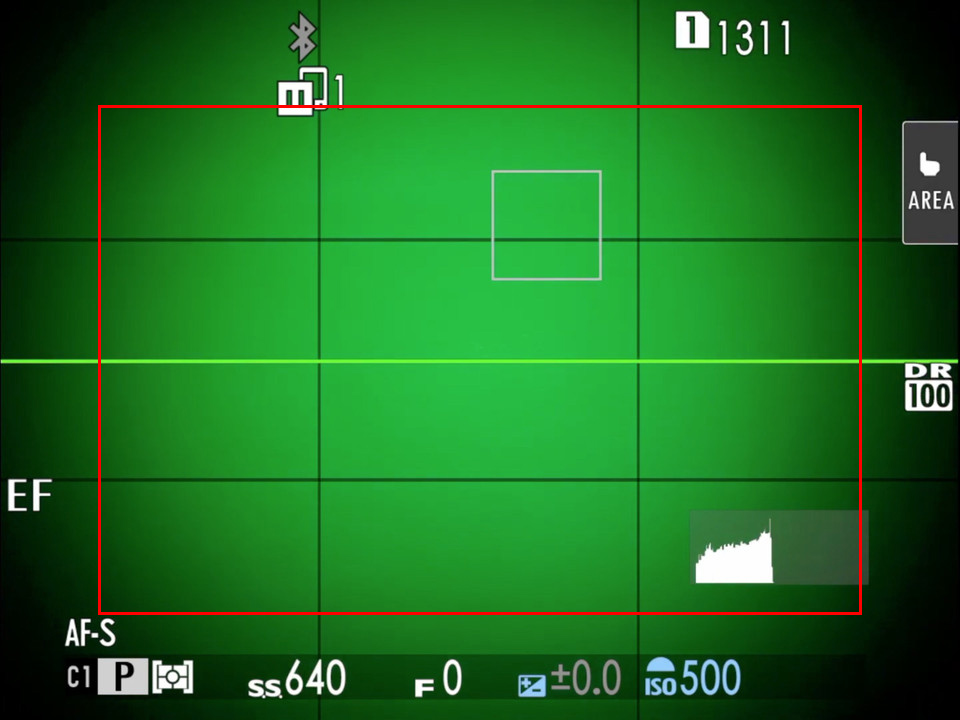
I took the above screenshot, which is from a Fuji GFX camera, and made an approximate framing (in red) that a 24x36mm sensor will see. Looks sensible.
Full frame is 2:3 and will crop more off the top and bottom.
I doubt the test was done at infinity.
Dec 22, 2021 at 11:13 AM
p.11 #16New Voigtlander 50mm f/1 Nokton in January 2022
highdesertmesa wrote:
Full frame is 2:3 and will crop more off the top and bottom.
I doubt the test was done at infinity.
The red line I drawed is 24x36mm which is 2:3 format.
LarsHP wrote
I took the above screenshot, which is from a Fuji GFX camera, and made an approximate framing (in red) that a 24x36mm sensor will see. Looks sensible.I doubt the test was done at infinity.
The red line I drawed is 24x36mm which is 2:3 format.
Dec 22, 2021 at 11:37 AM
p.11 #17New Voigtlander 50mm f/1 Nokton in January 2022
DavidBM wrote:
Sure you *could* design a slower lens that is as even wide open as a faster lens stopped down to the same aperture.
So a 50mm f2.5 that has as little optical vignetting as a really good 50mm f1.4 stopped down to f2.5. Maybe there are some - some get close - but if there are I haven't used one.
But to do so would make the slower lens about as big and expensive as the faster one!
In which case as a manufacturer you have two choices: try to sell a 50mm f2.5 as big and expensive as your equivalent quality 50mm f1.4 (good luck with that!) or redesign it a little so that it is a 50mm f14!The truth is probably somewhere inbetween. I'm sure the lens could be better at f/2.5 and a bit smaller if the cost was the same. The existing lenses for digital medium format are sort of proof of that, because it's not the sensor size that make them "better" (subjective), it's the lens design. But of course it isn't attractive to photographers who prioritize speed, which for some reason seems to be majority among FF shooters.
It's kind of funny, because if you look around at images shot with large format cameras (I mean 4x5" and up), almost no one use the lens wide open. There you really have possibilities of shallow DOF and brutal sharpness at the same time, but instead they are commonly stopped down to f/22 or so.
---
I don't mean to derail the thread, just giving my opinion. IMO it's a bit strange to strive for shallowest possible DOF, especially if it comes at high cost, high vignetting, severe funkiness in the corners, and a pretty bulky lens that often isn't better stopped down than a slower lens. Anything faster than ~f/1.4 will be a huge compromise in performance because of the need for more lens elements to correct aberrations.Of course in DOF terms f22 on an 8x10 is about equivalent to f2.8 on a FF camera, and in diffraction terms, so it's solidly away from the aberrations of large format lenses wide open (which are sometimes considerable) and not yet near diffraction, so for moderately shallow DOF images it's a good choice.
Sure.
I think there are all kinds of reasons why incredibly shallow DOF is/was not sought after by large format photographers.
One is that you go to all the massive work of setting up LF gear in order to get very high resolution, and taking images with on'y a tiny part of the frame showcasing that seems odd to some. I don’t know if it *should* seem odd, but it does to many and I see why.
Another, related, reason is that even portraitists (maybe not 100 years go) using LF became affected by the culture of deep DOF associated with large format landscape photography.
Yet another might be that LF lenses, even fancy APO ones, seem to perform poorly across the frame at their wider apertures. The purpose of those apertures was to focus with more light on the ground glass, not to take photographs. Again, why use LF and not squeeze the most IQ out of it.
Finally, good luck trying to focus a portrait at the widest aperture with LF. The slightest subject movement and all is lost. The current enthusiasm for very wide aperture 35mm FF photography is made possible by accurate autofocus, it was a bit of a niche before.
Makten wrote
DavidBM wrote
Another way to think of this controversy is like this:Sure you *could* design a slower lens that is as even wide open as a faster lens stopped down to the same aperture.
So a 50mm f2.5 that has as little optical vignetting as a really good 50mm f1.4 stopped down to f2.5. Maybe there are some - some get close - but if there are I haven't used one.
But to do so would make the slower lens about as big and expensive as the faster one!
In which case as a manufacturer you have two choices: try to sell a 50mm f2.5 as big and expensive as your equivalent quality 50mm f1.4 (good luck with that!) or redesign it a little so that it is a 50mm f14!
I'm sure the lens could be better at f/2.5 and a bit smaller if the cost was the same. The existing lenses for digital medium format are sort of proof of that, because it's not the sensor size that make them "better" (subjective), it's the lens design. But of course it isn't attractive to photographers who prioritize speed, which for some reason seems to be majority among FF shooters. It's kind of funny, because if you look around at images shot with large format cameras (I mean 4x5" and up), almost no one use the lens wide open. There you really have possibilities of shallow DOF and brutal sharpness at the same time, but instead they are commonly stopped down to f/22 or so.
---
I don't mean to derail the thread, just giving my opinion. IMO it's a bit strange to strive for shallowest possible DOF, especially if it comes at high cost, high vignetting, severe funkiness in the corners, and a pretty bulky lens that often isn't better stopped down than a slower lens. Anything faster than ~f/1.4 will be a huge compromise in performance because of the need for more lens elements to correct aberrations.
Sure.
I think there are all kinds of reasons why incredibly shallow DOF is/was not sought after by large format photographers.
One is that you go to all the massive work of setting up LF gear in order to get very high resolution, and taking images with on'y a tiny part of the frame showcasing that seems odd to some. I don’t know if it *should* seem odd, but it does to many and I see why.
Another, related, reason is that even portraitists (maybe not 100 years go) using LF became affected by the culture of deep DOF associated with large format landscape photography.
Yet another might be that LF lenses, even fancy APO ones, seem to perform poorly across the frame at their wider apertures. The purpose of those apertures was to focus with more light on the ground glass, not to take photographs. Again, why use LF and not squeeze the most IQ out of it.
Finally, good luck trying to focus a portrait at the widest aperture with LF. The slightest subject movement and all is lost. The current enthusiasm for very wide aperture 35mm FF photography is made possible by accurate autofocus, it was a bit of a niche before.
Dec 22, 2021 at 01:59 PM
p.11 #18New Voigtlander 50mm f/1 Nokton in January 2022
LarsHP wrote:
Full frame is 2:3 and will crop more off the top and bottom.
I doubt the test was done at infinity.The red line I drawed is 24x36mm which is 2:3 format.
My bad. Your red box is a bit higher than center, and the narrow space at the top threw me.
highdesertmesa wrote
LarsHP wrote
I took the above screenshot, which is from a Fuji GFX camera, and made an approximate framing (in red) that a 24x36mm sensor will see. Looks sensible.I doubt the test was done at infinity.
My bad. Your red box is a bit higher than center, and the narrow space at the top threw me.
Dec 22, 2021 at 03:28 PM
p.11 #19New Voigtlander 50mm f/1 Nokton in January 2022
At first I centered the box to the sensor, but then I discovered that the image circle isn't centered, so I adjusted the box to the center of the lens instead.
highdesertmesa wrote:
Full frame is 2:3 and will crop more off the top and bottom.
I doubt the test was done at infinity.The red line I drawed is 24x36mm which is 2:3 format.My bad. Your red box is a bit higher than center, and the narrow space at the top threw me.
highdesertmesa wrote:
LarsHP wrote
highdesertmesa wrote
LarsHP wrote
I took the above screenshot, which is from a Fuji GFX camera, and made an approximate framing (in red) that a 24x36mm sensor will see. Looks sensible.I doubt the test was done at infinity.
Dec 22, 2021 at 03:33 PM
p.11 #20New Voigtlander 50mm f/1 Nokton in January 2022
LarsHP wrote:
At first I centered the box to the sensor, but then I discovered that the image circle isn't centered, so I adjusted the box to the center of the lens instead.
Full frame is 2:3 and will crop more off the top and bottom.
I doubt the test was done at infinity.The red line I drawed is 24x36mm which is 2:3 format.My bad. Your red box is a bit higher than center, and the narrow space at the top threw me.
Ah. Does that mean the sample tested was likely decentered vertically?
At first I centered the box to the sensor, but then I discovered that the image circle isn't centered, so I adjusted the box to the center of the lens instead.
highdesertmesa wrote
LarsHP wrote
highdesertmesa wrote
LarsHP wrote
I took the above screenshot, which is from a Fuji GFX camera, and made an approximate framing (in red) that a 24x36mm sensor will see. Looks sensible.I doubt the test was done at infinity.
Ah. Does that mean the sample tested was likely decentered vertically?
Dec 22, 2021 at 03:51 PM