RoamingScott wrote:
Fuji is about to have a 30-34mp X-H2 too (but APSC)…will be curious to see if it becomes competitive in the same space. Their cams are always great for video.
Unfortunately, Fuji is no match for Sony or Canon in the lens department. Two years ago, I was using the XT3 and most of their highly regarded glass was not optimal for video—focus motor noise, breathing.
I’d love to see Fuji release their XH2 using a stacked sensor. How long has it been since the release of the XH1?
Atlasman2 wrote:
Unfortunately, Fuji is no match for Sony or Canon in the lens department. Two years ago, I was using the XT3 and most of their highly regarded glass was not optimal for video—focus motor noise, breathing.
I’d love to see Fuji release their XH2 using a stacked sensor. How long has it been since the release of the XH1?
It will be 4 years in February.
They have been very vocal in saying they wouldn't release the X-H2 until they had a "breakthrough" on the sensor tech. So far all that has been confirmed is the resolution bump.
For what it's worth, Fuji is starting to release MkII models of many popular lenses that solve the breathing/noise issues of the older lineup.
I was able to try the A7IV at a local photo event last weekend.
Sorry for repeating my rant, but once again I was reminded how much I hate that screen.
I understand why Sony put it on this camera. A lot of people use it for video.
The only reason such a screen exists is for those people that love filming their face.
What I don't understand is how photographers can like such bad design for stills.
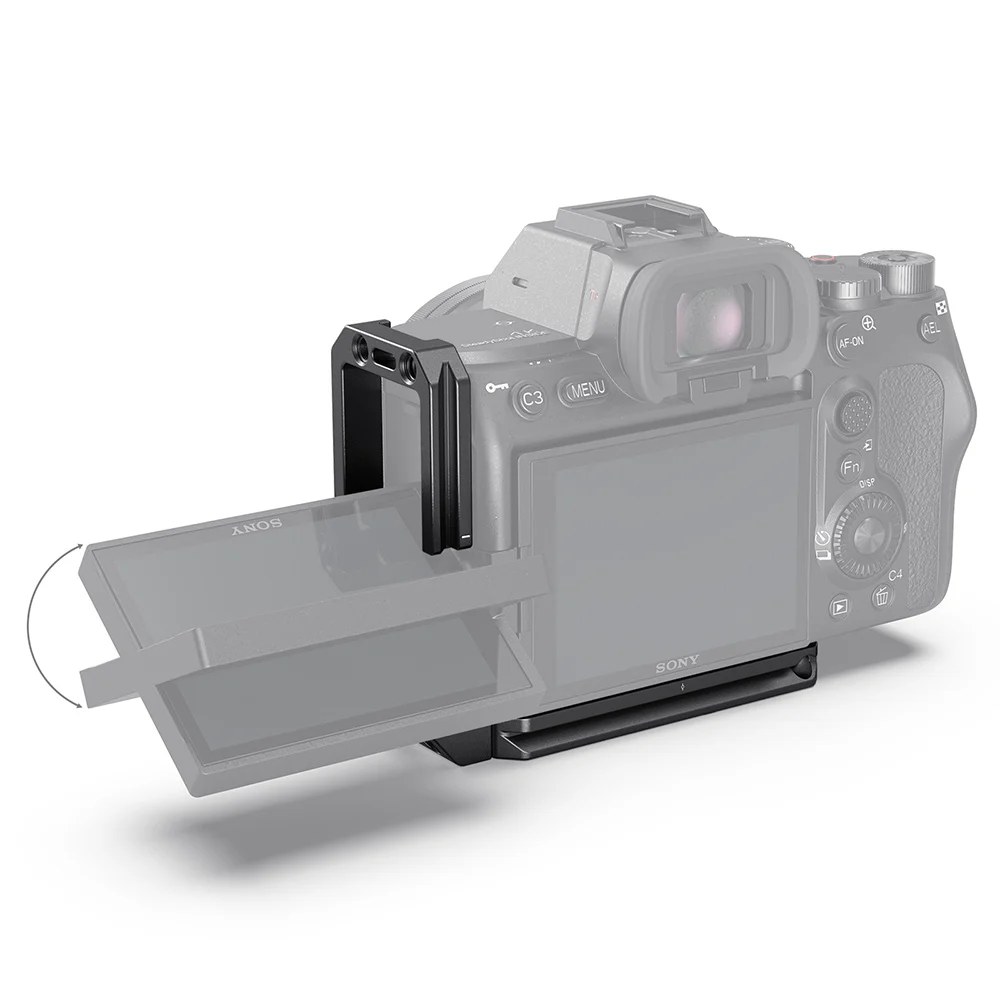
Why do you like the fact that the screen always needs to be flipped out before it can be tilted?
It has so many downsides compared to a dual tilting screen (like the Panasonic S1R has for example).
It's slower (always 2 steps for a simple tilt), makes the camera almost double as wide and it feels less robust.
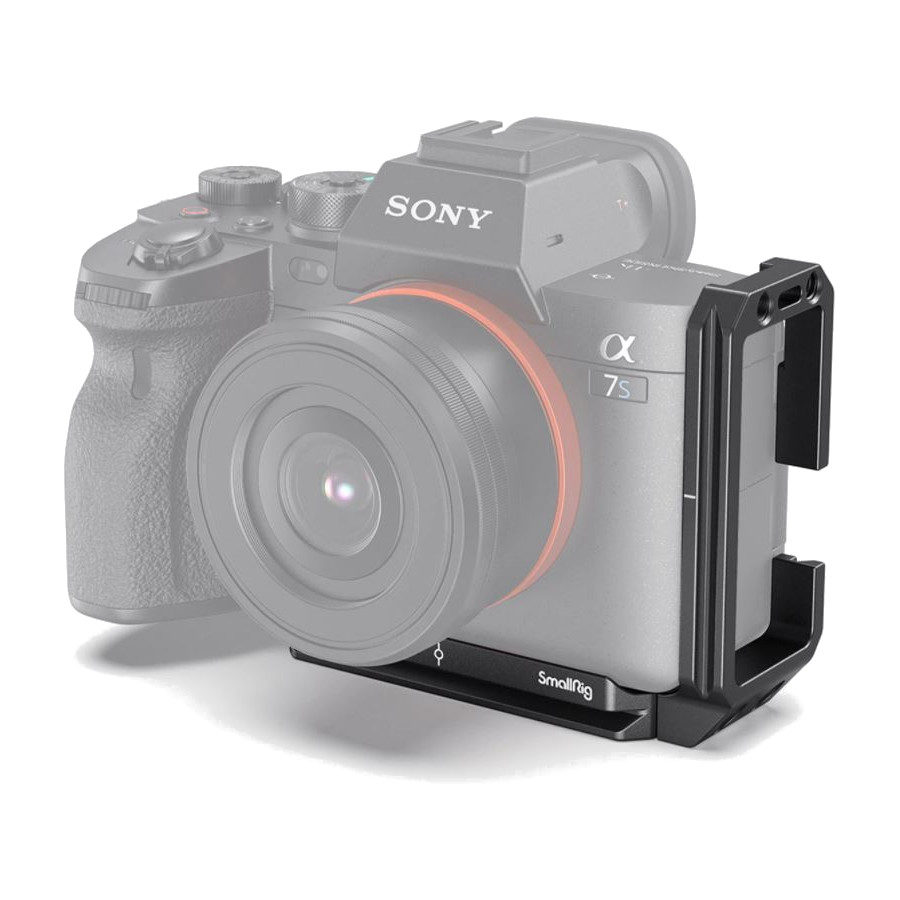
This is also a big issue when you use an L-bracket, even when it's one with a gap in it for the screen. You have minimal room to tilt it. Another issue is when using a rain/storm cover in difficult conditions. Good luck flipping and tilting it under your cover + keeping it that way.
Framing always feels more awkard and slower because it's not near the sensor at all.
In the end it's all fine though, because I understand the reason why they changed it to this on the A7IV.
However, I'd be so annoyed if Sony ever decides to put this on all of their cameras. When they released the A1 I read a Sony interview that said they didn't put a fully articulating screen on it because a lot of photographers were against it. So I still have hope for the future.
Atlasman2 wrote:
Clever of Sony to bump up the sensor resolution to 33MP—makes Canon's R6 with 20MP less attractive.
I don't think the 33 MP is an automatic advantage. The R6 resolution is a compromise that allows 20 FPS stills shooting and uncropped 4k 60. The A74 higher megapixel means it lacks those two things but has higher quality photo. Depending on how much video you shoot and what kind of video you shoot, either could be the better tool. Plus, the Sony is competing with an almost 18 month old camera. Both companies don't want to put too much features in these models to encroach on higher priced offerings.
Howie4life wrote:
I don't think the 33 MP is an automatic advantage. The R6 resolution is a compromise that allows 20 FPS stills shooting and uncropped 4k 60. The A74 higher megapixel means it lacks those two things but has higher quality photo. Depending on how much video you shoot and what kind of video you shoot, either could be the better tool. Plus, the Sony is competing with an almost 18 month old camera. Both companies don't want to put too much features in these models to encroach on higher priced offerings.
mawz wrote:
The most important bit of math is that a 50% increase in pixel count is necessary to get over the 20% linear resolution threshold for a resolution gain to be visible to the typical eye.
That margin is just over 32MP for most of the 24MP sensors.
Note this is why only Canon really did 30MP, it rode that threshold for their 20MP cameras, while everybody else was making 24MP stuff.
Don't get me wrong, I'm not complaining about it not being 36mp. Even the 33mp sensor, and a new sensor at that should be an improvement over the A7III's 24mp sensor since I tend to crop my wildlife photos. Getting close to wildlife just isn't an option a majority of times. That's why it's called wildlife! And I read somewhere that it's 40% more resouloution than the A7III?
AZHeaven wrote:
Don't get me wrong, I'm not complaining about it not being 36mp. Even the 33mp sensor, and a new sensor at that should be an improvement over the A7III's 24mp sensor since I tend to crop my wildlife photos. Getting close to wildlife just isn't an option a majority of times. That's why it's called wildlife! And I read somewhere that it's 40% more resouloution than the A7III?
It's 40% more pixels (I messed up my math in my original post), not 40% more resolution.
mawz wrote:
It's 40% more pixels (I messed up my math in my original post), not 40% more resolution.
Yeah, now that you mention it, you are correct. Been a week so sorry for the confusion!
I feel like the flip screen is neither make or break. I've only ever seen people using Canon cameras with a flip screen so Sony having it kind of makes sense. The a7IV just seems like a really solid upgrade from the a7III. The only things I have issue with is why Sony doesn't include a FF line skipped 4k60p and might as well include line skipped 24/30 as well for people who maybe want a little bit better rolling shutter and maybe smaller file sizes. I think if they had that there really wouldn't be any issue. The only thing that seems like a real cripple is pulling the a7IV shutter speed down to 10fps in compressed only when the a7III could do 10 fps in Uncompressed. I almost never use Hi+, but I don't see how removing that helps protect the other cameras.
I get that Sony is now in a weird position where the top of the line tech is not advancing fast enough to blow away the middle and lower range so you have to cripple it a bit. Overall though like I said I have my pre-order in and I can cancel if I change my mind. I'd love an a1, but financially and what I do it just doesn't make sense right now.
Atlasman2 wrote:
Unfortunately, Fuji is no match for Sony or Canon in the lens department. Two years ago, I was using the XT3 and most of their highly regarded glass was not optimal for video—focus motor noise, breathing.
I’d love to see Fuji release their XH2 using a stacked sensor. How long has it been since the release of the XH1?
Maybe not for video, but Fuji makes some very nice glass for their APC sensors ... for photography. The X-T3 (I also had one) is not a camcorder. It's a camera that has video capability. You need what you need, but if it were me,
I wouldn't characterize a camcorder that lacked some photography capability that I wantedneeded as "no match" for other camcorders. Just saying...
I know they makes some nice glass for stills. I’ve never used the word camcorder. The xt3 is a hybrid camera—for stills and motion. At the time of the xt3’s release, it had outstanding video specs.
patriot wrote:
Maybe not for video, but Fuji makes some very nice glass for their APC sensors ... for photography. The X-T3 (I also had one) is not a camcorder. It's a camera that has video capability. You need what you need, but if it were me,
I wouldn't characterize a camcorder that lacked some photography capability that I wantedneeded as "no match" for other camcorders. Just saying...
Atlasman2 wrote:
I know they makes some nice glass for stills. I’ve never used the word camcorder. The xt3 is a hybrid camera—for stills and motion. At the time of the xt3’s release, it had outstanding video specs.
Well, maybe I misunderstood you? You said "Unfortunately, Fuji is no match for Sony or Canon in the lens department" followed by "most of their highly regarded glass was not optimal for video...".
What immediately occurred to me was these two statements were connected: Fuji premium lenses are "no match" for Sony and Canon because they are not optimized for video. Which lead to the immediate conclusion: why would they be?
The X-T's are cameras, so their premium lenses would of course be optimized for photography. Right?
Expecting Fuji's premium camera lenses to be optimized for video is like expecting a manufacturer of camcorders to design their camcorder lenses to be optimized for photography instead of video. Videographers would immediately scoff at such a notion, and rightfully so.
You mention the X-T3 is a "hybrid", which by definition implies compromise. Do you think Fuji intended to compromise the X-T3's photography functions and capabilities to accommodate video? If so, how much? I'd say no, and none. On the X-T4, I'd say yes, and very little. I've owned both.
"Hybrid" is one of those words we use that's original meaning is old and very different to how we use it today. And today we are not very consistent in how we use it. Does it mean equally good at too different functions? Or does it mean a product designed for one function, has some limited functionality of another added in?
In cars, "hybrid" brings to mind a Prius. It is a clear compromise between a gas and electric car. No one would say it is equally as good in either mode as a car designed - and optimized - for gas or electric. Except for miles per gallon.
Is the X-T3 a Prius? I'd say no. I have now a Sony a7R III. It also has video capability. It's not a Prius either. It out performs my X-T4 in just about everything.
So, IMHO, cameras like X-TX's and a7 series are hybrids in the sense that are cameras first and foremost, designed for photography, with some video functionality added in. Just as camcorders are first and foremost for video, with some photography functionality.
Now that I think of this, maybe what you meant was, you would like to see Fuji offer a few lens options optimized, i.e. as good as some of their premium photography lenses, for video?
Edit: I see you are in Niagara on the Lake? Beautiful town and area! Have been there many times, as well as Queenston Heights, Lewiston, etc. I lived in Kenmore, just outside Buffalo, for 3+ years when my wife and I first got married in 1987. Our first house. We used to always take friends and family to that area when they visited, always did the Canadian side of the falls too. Very fond memories!
In a car, hybrid simply means it can utilise two fuels, there are a wide variety of hybrid vehicles, one is the Toyota method, which I find inefficient, but was 'right' for the time the first prius was launched.
The other is the BMW method, which I think is significantly smarter.
To me, a hybrid camera is one that combines the two stills and video functions and like cars they are all compromised in some way, all of them subjective to a degree.
patriot wrote:
Well, maybe I misunderstood you? You said "Unfortunately, Fuji is no match for Sony or Canon in the lens department" followed by "most of their highly regarded glass was not optimal for video...".
What immediately occurred to me was these two statements were connected: Fuji premium lenses are "no match" for Sony and Canon because they are not optimized for video. Which lead to the immediate conclusion: why would they be?
The X-T's are cameras, so their premium lenses would of course be optimized for photography. Right?
Expecting Fuji's premium camera lenses to be optimized for video is like expecting a manufacturer of camcorders to design their camcorder lenses to be optimized for photography instead of video. Videographers would immediately scoff at such a notion, and rightfully so.
You mention the X-T3 is a "hybrid", which by definition implies compromise. Do you think Fuji intended to compromise the X-T3's photography functions and capabilities to accommodate video? If so, how much? I'd say no, and none. On the X-T4, I'd say yes, and very little. I've owned both.
"Hybrid" is one of those words we use that's original meaning is old and very different to how we use it today. And today we are not very consistent in how we use it. Does it mean equally good at too different functions? Or does it mean a product designed for one function, has some limited functionality of another added in?
In cars, "hybrid" brings to mind a Prius. It is a clear compromise between a gas and electric car. No one would say it is equally as good in either mode as a car designed - and optimized - for gas or electric. Except for miles per gallon.
Is the X-T3 a Prius? I'd say no. I have now a Sony a7R III. It also has video capability. It's not a Prius either. It out performs my X-T4 in just about everything.
So, IMHO, cameras like X-TX's and a7 series are hybrids in the sense that are cameras first and foremost, designed for photography, with some video functionality added in. Just as camcorders are first and foremost for video, with some photography functionality.
Now that I think of this, maybe what you meant was, you would like to see Fuji offer a few lens options optimized, i.e. as good as some of their premium photography lenses, for video?
Edit: I see you are in Niagara on the Lake? Beautiful town and area! Have been there many times, as well as Queenston Heights, Lewiston, etc. I lived in Kenmore, just outside Buffalo, for 3+ years when my wife and I first got married in 1987. Our first house. We used to always take friends and family to that area when they visited, always did the Canadian side of the falls too. Very fond memories! ...Show more →
Hybrid by definition—and in the context of photography—means a multi-functional system that can capture stills and motion. There's no provision in this definition for compromise. When I think of hybrid, I don't associate compromise—this is your perception. The notion that hybrids are designed for photography is wishful thinking on your part: Canon back in the late 90's introduced the Optura mini digital video camera and labeled it as a "hybrid"—it was mostly a video cam with the ability to capture basic photos. I know this because I purchased one back in the day (and still own it).
Video, whether you like it or not—is just as important—if not more so!