This topic is in the 2021 archive. You can read it and like its posts here. It is read only.
Archive 2021Official: Tamron 35-150mm F/2-2.8 Di III VXD (Model A058)
p.48 #1Official: Tamron 35-150mm F/2-2.8 Di III VXD (Model A058)
hevaKmaI wrote:
I can see myself only using the 16-35/4 and 35-150 and being very happy with what I typically shoot on family vacations (solo sunrises, shots of kids during day/activities and at sunset).
Now if Tamron would only come out with a 150-300/2.8 I would have all of my football needs covered and would likely sell the 100-400...Much to heavy for me as a travel lens. I can see it used for events.I was worried about the weight too (I really like the Sony 24-105mm f/4 as a travel lens for it's size/weight/IQ). This one is definitely bigger, but it's pretty nicely balanced. Heavier lenses have been less of any issue for me though since ditching any sort of neck band and using the peak design Clutch hand strap.I travel with primes as I can’t stand lugging a heavy lens attached to my camera. I have no problems with weight in my pack on my back, but hanging off my wrist, not a chance.
There is also the issues a big lens pointing at people brings with it.Ah, yeah, you're probably better off with primes then, as long as you're okay with changing lenses 
I might change a lens once a day...maybe twice at the most. I just focus on images that are captured with the lens currently on my camera and disregard other possibilities.
I typically start off with either an 85 or 25 lens...then switch part way through the day. The different focal lengths requires me to approach my photography totally differently, which provides a mixture of images.
chez wrote
hevaKmaI wrote
chez wrote
eyal wrote
I'm sure it has been mentioned in this 47-page thread but man, this really does seem like a perfect travel lens. I usually travel with my 16-35/4, 35/1.8, 85/1.8, 70-180/2.8 and, depending on situation, 100-400.I can see myself only using the 16-35/4 and 35-150 and being very happy with what I typically shoot on family vacations (solo sunrises, shots of kids during day/activities and at sunset).
Now if Tamron would only come out with a 150-300/2.8 I would have all of my football needs covered and would likely sell the 100-400...
There is also the issues a big lens pointing at people brings with it.
I might change a lens once a day...maybe twice at the most. I just focus on images that are captured with the lens currently on my camera and disregard other possibilities.
I typically start off with either an 85 or 25 lens...then switch part way through the day. The different focal lengths requires me to approach my photography totally differently, which provides a mixture of images.
Nov 24, 2021 at 07:08 PM
p.48 #2Official: Tamron 35-150mm F/2-2.8 Di III VXD (Model A058)
ruthenium wrote:
photosbyjaron: PolarPro makes Neutral density + polarization filters, or ND/PL filters. For details, see https://www.polarprofilters.com/collections/filters/products/ndpl-filters
I own several PolarPro Quartzline filters - their quality is exceptional. I often have a PolarPro Quartzline CPL filter on the 16-35GM during the daytime. At 16 mm, the added vignetting is almost unnoticeable in the images auto-corrected for the lens distortion in DxO Photolab. Here is an example (no vignetting correction has been applied).
Thanks for the recommendation! I'll check it out! I must admit that I completely overlooked the possibility of using an ND/CPL combo filter. That may save the day.
Using a combo would definitely take care of the vignette concern. Looks like Kase has an ND64/CPL magnetic filter, and I think the Kase and K&F have the same magnetic polarity. No running waterfalls in the Tetons currently, but I hope to have the filter situation solved before spring. I'm loving the magnetic lens cap. Well, until my wife saw it and wanted to use it. Guess I'm going to have to get another one.
The mountains hid in the clouds for most of the day, but they peaked out here and there until the sky cleared up just before sunset.



stitched pano
photosbyjaron: PolarPro makes Neutral density + polarization filters, or ND/PL filters. For details, see https://www.polarprofilters.com/collections/filters/products/ndpl-filters
I own several PolarPro Quartzline filters - their quality is exceptional. I often have a PolarPro Quartzline CPL filter on the 16-35GM during the daytime. At 16 mm, the added vignetting is almost unnoticeable in the images auto-corrected for the lens distortion in DxO Photolab. Here is an example (no vignetting correction has been applied).
Thanks for the recommendation! I'll check it out! I must admit that I completely overlooked the possibility of using an ND/CPL combo filter. That may save the day.
Using a combo would definitely take care of the vignette concern. Looks like Kase has an ND64/CPL magnetic filter, and I think the Kase and K&F have the same magnetic polarity. No running waterfalls in the Tetons currently, but I hope to have the filter situation solved before spring. I'm loving the magnetic lens cap. Well, until my wife saw it and wanted to use it. Guess I'm going to have to get another one.
The mountains hid in the clouds for most of the day, but they peaked out here and there until the sky cleared up just before sunset.
stitched pano
Nov 24, 2021 at 09:27 PM
p.48 #3Official: Tamron 35-150mm F/2-2.8 Di III VXD (Model A058)
photosbyjaron wrote:
I own several PolarPro Quartzline filters - their quality is exceptional. I often have a PolarPro Quartzline CPL filter on the 16-35GM during the daytime. At 16 mm, the added vignetting is almost unnoticeable in the images auto-corrected for the lens distortion in DxO Photolab. Here is an example (no vignetting correction has been applied).Thanks for the recommendation! I'll check it out! I must admit that I completely overlooked the possibility of using an ND/CPL combo filter. That may save the day.
Using a combo would definitely take care of the vignette concern. Looks like Kase has an ND64/CPL magnetic filter, and I think the Kase and K&F have the same magnetic polarity. No running waterfalls in the Tetons currently, but I hope to have the filter situation solved before spring. I'm loving the magnetic lens cap. Well, until my wife saw it and wanted to use it. Guess I'm going to have to get...Show more →
amazing shots
ruthenium wrote
photosbyjaron: PolarPro makes Neutral density + polarization filters, or ND/PL filters. For details, see https://www.polarprofilters.com/collections/filters/products/ndpl-filtersI own several PolarPro Quartzline filters - their quality is exceptional. I often have a PolarPro Quartzline CPL filter on the 16-35GM during the daytime. At 16 mm, the added vignetting is almost unnoticeable in the images auto-corrected for the lens distortion in DxO Photolab. Here is an example (no vignetting correction has been applied).
Using a combo would definitely take care of the vignette concern. Looks like Kase has an ND64/CPL magnetic filter, and I think the Kase and K&F have the same magnetic polarity. No running waterfalls in the Tetons currently, but I hope to have the filter situation solved before spring. I'm loving the magnetic lens cap. Well, until my wife saw it and wanted to use it. Guess I'm going to have to get...Show more →
amazing shots
Nov 24, 2021 at 11:30 PM
p.48 #4Official: Tamron 35-150mm F/2-2.8 Di III VXD (Model A058)
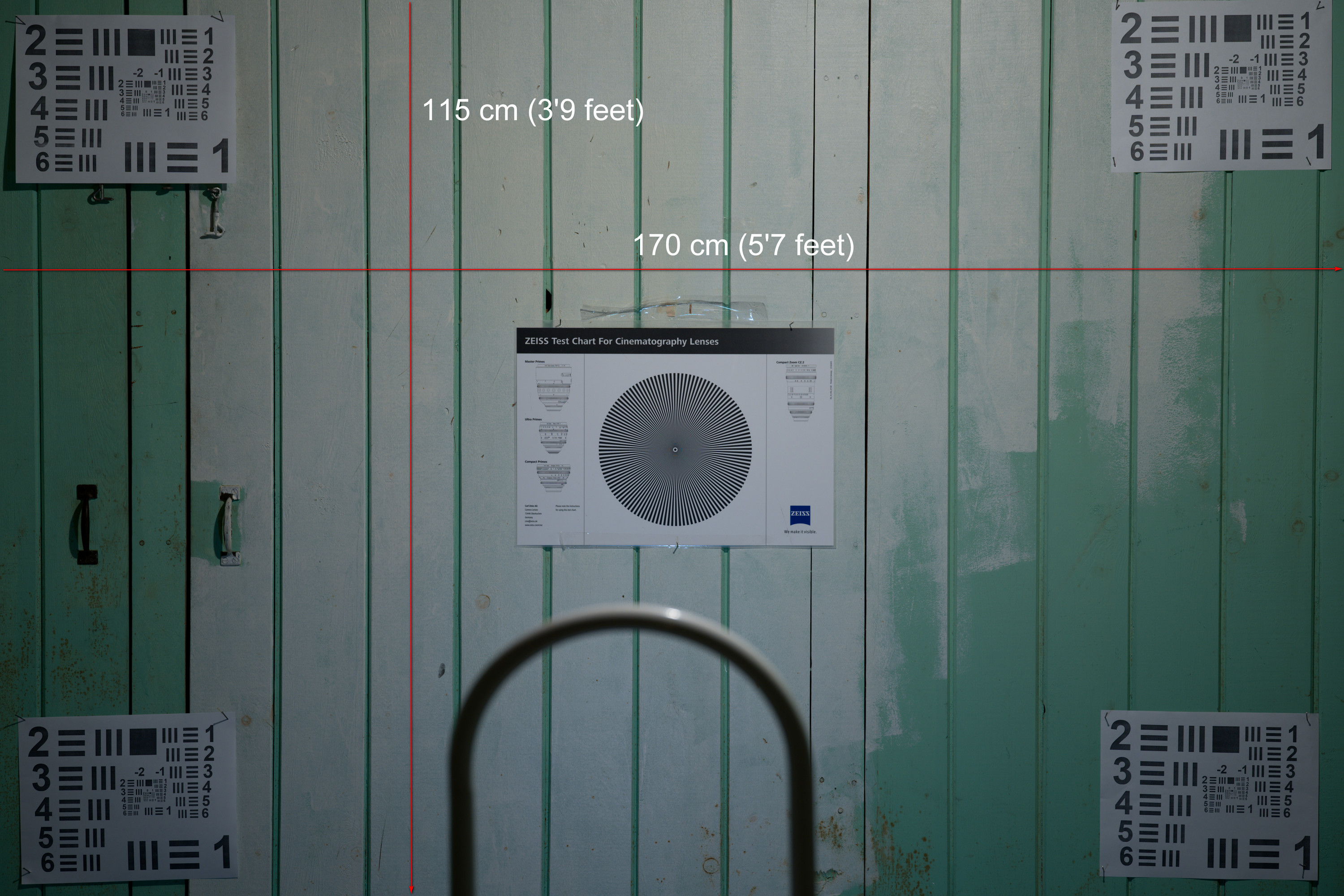
Sorry, this is going to be a rather lengthy post. I spent some time looking at my copy of Tamron 35-150 against the Sony 35 GM, 16-35 GM, 24-105 G, 100-400 GM, and Sigma 105 mm F2.8 DG DN Macro. Three series of images were collected at 35 mm, 100 – 105 mm, and 150 mm; all with 100 ISO, wide-open except the 35 GM at F2. All in-camera corrections and DRO were turned off. The camera (A1) was on a tripod. A remote shutter control was used, with a 10 s delay for the image acquisition. For each focal length, a total of 8 images were collected; of these, 4 were with the camera stabilization turned off. The best of the eight images was selected and used for the following comparisons.
The target was somewhat primitive (see the image below), but it served its purpose for what I wanted to learn. The camera was ca. 2 m away from the target at 35 mm, near 5 m at 100 mm, and near 7 m at 150 mm. Thus, all images of the target filled the frame of the sensor similarly.
The objective of this testing was three-fold: (1) to learn how the Tamron fared in comparison to the Sony lenses, (2) to see whether there could be some pronounced decentering, strong filed curvature, or some other quality problem with my copy of the Tamron, and (3) separately, to compare the Tamron wide-open to one-stop closed (F2 vs 2.8 and 2.8 vs 4) at 35, 100, and 150 mm.
In all cases, the images for comparisons were generated from the RAW files in DxO Photolab using Cobalt Standard color profile with no corrections applied, except some WB adjustments. Note that these should look quite different from the out-of-camera JPGs, or images post-processed by other means, with the sharpening, contrast, vignetting corrections, etc. applied.
Here are my findings for question 1. The lenses are listed below in the order of apparent loss of quality in the corners of the images, starting from the best one. “>” means better, “~” means hard to distinguish. The central chart looked indistinguishable in all images; thus, the lenses used here produce practically the same quality in the center. For the corners:
At 35 mm:
Top left: Tamron ~ 35 GM > 24-105 G > 16-35 GM
Top right: 35 GM ~ Tamron > 24-105 G > 16-35 GM
Bottom right: 35 GM > Tamron > 24-105 G > 16-35 GM
Bottom left: 35 GM > Tamron > 24-105 G > 16-35 GM.
Summary: The Tamron comes shockingly close to Sony 35 GM (both at F2) in the corners. Tamron is better than the 24-105 G at 35 mm despite the 2-stop F difference. The 16-35 GM is softer at F2.8 than the 24-105 G at F4, but only marginally so – this difference is most likely of no practical concern.
At 100 mm (Tamron and 100-400 GM) – 105 mm (24-105 and the Sigma):
Top left: Tamron > 100-400 GM > 105 DG DN > 24-105 G
Top right: Tamron ~ 105 DG DN > 100-400 GM > 24-105 G
Bottom right: Tamron > 105 DG DN > 100-400 GM > 24-105 G
Bottom left: 105 DG DN > 100-400 > Tamron > 24-105
Summary: Overall, Tamron is excellent at 100 mm F2.8; there is some drop in IQ in one corner, of no practical concern. Tamron seems overall better than the other two zooms, however, I don’t mean to exaggerate the differences. In real life, all four lenses can be expected to produce good image quality.
At 150 mm:
The 100-400 GM at F5 seems marginally better than the Tamron at F2.8 in three corners, except the bottom left where the Tamron is better. The differences are probably insignificant in practice.
Conclusion: (a) If the 35-150 mm lens had been produced by Sony, I believe it would have merited the GMaster designation, (b) Replacing the 24-105 mm F4 G lens by Tamron 35-150 F2-2.8 paired with the 16-35 F2.8 GM seems right to me, however this is certainly one of those personal choices where opinions might differ.
Here are the findings for questions 2 and 3, asked earlier in this post. For 2, I seem to have a good copy of the Tamron lens – no reason to complain whatsoever. For 3, when comparing the images at 35 mm F2 vs F2.8, also at 100 and 150 mm at F2.8 vs F4, the major effect of stopping is the significantly reduced vignette. The image quality is marginally improved as well, but the improvement is very minor. Other than the pronounced vignetting, shooting the Tamron wide open is of no practical concern. This indeed suggest that Tamron might be a lens of choice for event shooting indoors, as has been already noted by others.
the overall setup of the target

at 35 mm, from the upper left corner

at 35 mm, from the upper right corner

at 35 mm, from the bottom right corner

at 35 mm, from the bottom left corner

at 100-105 mm, from the upper left corner

at 100-105 mm, from the upper right corner

at 100-105 mm, from the bottom right corner

at 100-105 mm, from the bottom left corner

at 150 mm, from the upper left corner

at 150 mm, from the upper right corner

at 150 mm, from the bottom right corner
The target was somewhat primitive (see the image below), but it served its purpose for what I wanted to learn. The camera was ca. 2 m away from the target at 35 mm, near 5 m at 100 mm, and near 7 m at 150 mm. Thus, all images of the target filled the frame of the sensor similarly.
The objective of this testing was three-fold: (1) to learn how the Tamron fared in comparison to the Sony lenses, (2) to see whether there could be some pronounced decentering, strong filed curvature, or some other quality problem with my copy of the Tamron, and (3) separately, to compare the Tamron wide-open to one-stop closed (F2 vs 2.8 and 2.8 vs 4) at 35, 100, and 150 mm.
In all cases, the images for comparisons were generated from the RAW files in DxO Photolab using Cobalt Standard color profile with no corrections applied, except some WB adjustments. Note that these should look quite different from the out-of-camera JPGs, or images post-processed by other means, with the sharpening, contrast, vignetting corrections, etc. applied.
Here are my findings for question 1. The lenses are listed below in the order of apparent loss of quality in the corners of the images, starting from the best one. “>” means better, “~” means hard to distinguish. The central chart looked indistinguishable in all images; thus, the lenses used here produce practically the same quality in the center. For the corners:
At 35 mm:
Top left: Tamron ~ 35 GM > 24-105 G > 16-35 GM
Top right: 35 GM ~ Tamron > 24-105 G > 16-35 GM
Bottom right: 35 GM > Tamron > 24-105 G > 16-35 GM
Bottom left: 35 GM > Tamron > 24-105 G > 16-35 GM.
Summary: The Tamron comes shockingly close to Sony 35 GM (both at F2) in the corners. Tamron is better than the 24-105 G at 35 mm despite the 2-stop F difference. The 16-35 GM is softer at F2.8 than the 24-105 G at F4, but only marginally so – this difference is most likely of no practical concern.
At 100 mm (Tamron and 100-400 GM) – 105 mm (24-105 and the Sigma):
Top left: Tamron > 100-400 GM > 105 DG DN > 24-105 G
Top right: Tamron ~ 105 DG DN > 100-400 GM > 24-105 G
Bottom right: Tamron > 105 DG DN > 100-400 GM > 24-105 G
Bottom left: 105 DG DN > 100-400 > Tamron > 24-105
Summary: Overall, Tamron is excellent at 100 mm F2.8; there is some drop in IQ in one corner, of no practical concern. Tamron seems overall better than the other two zooms, however, I don’t mean to exaggerate the differences. In real life, all four lenses can be expected to produce good image quality.
At 150 mm:
The 100-400 GM at F5 seems marginally better than the Tamron at F2.8 in three corners, except the bottom left where the Tamron is better. The differences are probably insignificant in practice.
Conclusion: (a) If the 35-150 mm lens had been produced by Sony, I believe it would have merited the GMaster designation, (b) Replacing the 24-105 mm F4 G lens by Tamron 35-150 F2-2.8 paired with the 16-35 F2.8 GM seems right to me, however this is certainly one of those personal choices where opinions might differ.
Here are the findings for questions 2 and 3, asked earlier in this post. For 2, I seem to have a good copy of the Tamron lens – no reason to complain whatsoever. For 3, when comparing the images at 35 mm F2 vs F2.8, also at 100 and 150 mm at F2.8 vs F4, the major effect of stopping is the significantly reduced vignette. The image quality is marginally improved as well, but the improvement is very minor. Other than the pronounced vignetting, shooting the Tamron wide open is of no practical concern. This indeed suggest that Tamron might be a lens of choice for event shooting indoors, as has been already noted by others.
 |
||
 |
||
|
the overall setup of the target
at 35 mm, from the upper left corner
at 35 mm, from the upper right corner
at 35 mm, from the bottom right corner
at 35 mm, from the bottom left corner
at 100-105 mm, from the upper left corner
at 100-105 mm, from the upper right corner
at 100-105 mm, from the bottom right corner
at 100-105 mm, from the bottom left corner
at 150 mm, from the upper left corner
at 150 mm, from the upper right corner
at 150 mm, from the bottom right corner
Nov 27, 2021 at 05:33 PM
p.48 #5Official: Tamron 35-150mm F/2-2.8 Di III VXD (Model A058)
Thanks for the thorough test, @ruthenium!
I don't think my copy is as good as yours, but I managed to convinced myself it's acceptable .
Now, the more I shoot with this lens, the more I get the impression that it leans towards smooth rendering (rather than clinically sharp as most GMs for example), especially for a zoom. Maybe it's because I'm mostly shooting in very muted/overcast light, which adds to that impression, but it really seems to show nice SA at closer distances. Like in this 100% crop, the focus falloff is so smooth :

I don't think my copy is as good as yours, but I managed to convinced myself it's acceptable
.Now, the more I shoot with this lens, the more I get the impression that it leans towards smooth rendering (rather than clinically sharp as most GMs for example), especially for a zoom. Maybe it's because I'm mostly shooting in very muted/overcast light, which adds to that impression, but it really seems to show nice SA at closer distances. Like in this 100% crop, the focus falloff is so smooth
:Nov 27, 2021 at 06:37 PM
p.48 #6Official: Tamron 35-150mm F/2-2.8 Di III VXD (Model A058)
ruthenium wrote:
Conclusion: (a) If the 35-150 mm lens had been produced by Sony, I believe it would have merited the GMaster designation, (b) Replacing the 24-105 mm F4 G lens by Tamron 35-150 F2-2.8 paired with the 16-35 F2.8 GM seems right to me, however this is certainly one of those personal choices where opinions might differ.
Here are the findings for questions 2 and 3, asked earlier in this post. For 2, I seem to have a good copy of the Tamron lens – no reason to complain whatsoever. For 3, when comparing the images at 35 mm F2 vs F2.8,...Show more →
I agree with this assessment...the IQ on this lens across the focal range (for me so far) has been GM-level, and the contrast and look just out of the camera has rivaled some good primes. It has been consistently excellent for me with portrait-style shots.
With this lens, I'm reassessing what I'm going to keep versus sell. I'm pretty sure I'm selling my Sony 24-70mm f/2.8 GM, I might cancel the preorder I had for the new Sony 70-200 f/2.8 II as well. I'm still not sure I want to ever sell my 24-105mm though, I love the size/weight/compactness of that lens for the range offered.
Nov 27, 2021 at 06:58 PM
p.48 #7Official: Tamron 35-150mm F/2-2.8 Di III VXD (Model A058)
photosbyjaron wrote:
I own several PolarPro Quartzline filters - their quality is exceptional. I often have a PolarPro Quartzline CPL filter on the 16-35GM during the daytime. At 16 mm, the added vignetting is almost unnoticeable in the images auto-corrected for the lens distortion in DxO Photolab. Here is an example (no vignetting correction has been applied).Thanks for the recommendation! I'll check it out! I must admit that I completely overlooked the possibility of using an ND/CPL combo filter. That may save the day.
Using a combo would definitely take care of the vignette concern. Looks like Kase has an ND64/CPL magnetic filter, and I think the Kase and K&F have the same magnetic polarity. No running waterfalls in the Tetons currently, but I hope to have the filter situation solved before spring. I'm loving the magnetic lens cap. Well, until my wife saw it and wanted to use it. Guess I'm going to have to get...Show more →
Looks great , really nice shots
Ronny
ruthenium wrote
photosbyjaron: PolarPro makes Neutral density + polarization filters, or ND/PL filters. For details, see https://www.polarprofilters.com/collections/filters/products/ndpl-filtersI own several PolarPro Quartzline filters - their quality is exceptional. I often have a PolarPro Quartzline CPL filter on the 16-35GM during the daytime. At 16 mm, the added vignetting is almost unnoticeable in the images auto-corrected for the lens distortion in DxO Photolab. Here is an example (no vignetting correction has been applied).
Using a combo would definitely take care of the vignette concern. Looks like Kase has an ND64/CPL magnetic filter, and I think the Kase and K&F have the same magnetic polarity. No running waterfalls in the Tetons currently, but I hope to have the filter situation solved before spring. I'm loving the magnetic lens cap. Well, until my wife saw it and wanted to use it. Guess I'm going to have to get...Show more →
Looks great , really nice shots
Ronny
Nov 28, 2021 at 12:47 AM
p.48 #8Official: Tamron 35-150mm F/2-2.8 Di III VXD (Model A058)
ruthenium wrote:
Sorry, this is going to be a rather lengthy post. I spent some time looking at my copy of Tamron 35-150 against the Sony 35 GM, 16-35 GM, 24-105 G, 100-400 GM, and Sigma 105 mm F2.8 DG DN Macro. Three series of images were collected at 35 mm, 100 – 105 mm, and 150 mm; all with 100 ISO, wide-open except the 35 GM at F2. All in-camera corrections and DRO were turned off. The camera (A1) was on a tripod. A remote shutter control was used, with a 10 s delay for the image acquisition. For each focal...Show more →
Great post!
Thanks for taking the time to this test.
I don’t know how representative your copy is, but your results are pretty impressive.
I had convinced myself I didn’t really need this lens. But your test and the other examples I’m seeing in this thread are starting to give me GAS. 😀
Robert
Nov 28, 2021 at 01:53 AM
p.48 #9Official: Tamron 35-150mm F/2-2.8 Di III VXD (Model A058)
robert614 wrote:
The target was somewhat primitive (see the image below), but it served its purpose for what I wanted to learn. The camera was ca. 2 m away from the target at 35 mm, near 5 m at 100 mm, and near 7 m at 150 mm. Thus, all images of the target filled the frame of the sensor similarly.
The objective of this testing was three-fold: (1) to learn how the Tamron fared in comparison to the Sony lenses, (2) to see whether there could be some pronounced decentering, strong filed curvature, or some other quality problem with my copy of the Tamron, and (3) separately, to compare the Tamron wide-open to one-stop closed (F2 vs 2.8 and 2.8 vs 4) at 35, 100, and 150 mm.
In all cases, the images for comparisons were generated from the RAW files in DxO Photolab using Cobalt Standard color profile with no corrections applied, except some WB adjustments. Note that these should look quite different from the out-of-camera JPGs, or images post-processed by other means, with the sharpening, contrast, vignetting corrections, etc. applied.
Here are my findings for question 1. The lenses are listed below in the order of apparent loss of quality in the corners of the images, starting from the best one. “>” means better, “~” means hard to distinguish. The central chart looked indistinguishable in all images; thus, the lenses used here produce practically the same quality in the center. For the corners:
At 35 mm:
Top left: Tamron ~ 35 GM > 24-105 G > 16-35 GM
Top right: 35 GM ~ Tamron > 24-105 G > 16-35 GM
Bottom right: 35 GM > Tamron > 24-105 G > 16-35 GM
Bottom left: 35 GM > Tamron > 24-105 G > 16-35 GM.
Summary: The Tamron comes shockingly close to Sony 35 GM (both at F2) in the corners. Tamron is better than the 24-105 G at 35 mm despite the 2-stop F difference. The 16-35 GM is softer at F2.8 than the 24-105 G at F4, but only marginally so – this difference is most likely of no practical concern.
At 100 mm (Tamron and 100-400 GM) – 105 mm (24-105 and the Sigma):
Top left: Tamron > 100-400 GM > 105 DG DN > 24-105 G
Top right: Tamron ~ 105 DG DN > 100-400 GM > 24-105 G
Bottom right: Tamron > 105 DG DN > 100-400 GM > 24-105 G
Bottom left: 105 DG DN > 100-400 > Tamron > 24-105
Summary: Overall, Tamron is excellent at 100 mm F2.8; there is some drop in IQ in one corner, of no practical concern. Tamron seems overall better than the other two zooms, however, I don’t mean to exaggerate the differences. In real life, all four lenses can be expected to produce good image quality.
At 150 mm:
The 100-400 GM at F5 seems marginally better than the Tamron at F2.8 in three corners, except the bottom left where the Tamron is better. The differences are probably insignificant in practice.
Conclusion: (a) If the 35-150 mm lens had been produced by Sony, I believe it would have merited the GMaster designation, (b) Replacing the 24-105 mm F4 G lens by Tamron 35-150 F2-2.8 paired with the 16-35 F2.8 GM seems right to me, however this is certainly one of those personal choices where opinions might differ.
Here are the findings for questions 2 and 3, asked earlier in this post. For 2, I seem to have a good copy of the Tamron lens – no reason to complain whatsoever. For 3, when comparing the images at 35 mm F2 vs F2.8, also at 100 and 150 mm at F2.8 vs F4, the major effect of stopping is the significantly reduced vignette. The image quality is marginally improved as well, but the improvement is very minor. Other than the pronounced vignetting, shooting the Tamron wide open is of no practical concern. This indeed suggest that Tamron might be a lens of choice for event shooting indoors, as has been already noted by others.Great post!
Thanks for taking the time to this test.
I don’t know how representative your copy is, but your results are pretty impressive.
I had convinced myself I didn’t really need this lens. But your test and the other examples I’m seeing in this thread are starting to give me GAS. 😀
Robert
I know how it feels. When I started looking at Tamron 35-150, this was because I was not happily "married" to the Sony 24-105 G. The latter is sharp, versatile, etc. - so much can be said in favor of this lens, and there are many fans of the 24-105G on this forum. Yet, I just could not fall in love with the 24-105G. Postprocessing the RAW files often made me feel a bit frustrated, but this is a different subject. Thus, if Sony had an existing 35-150 F2-2.8 GM lens, I would have almost certainly replaced the 24-105 F4 G by the 35-150 F2-2.8 GM. Well, Sony does not make such lens, but the good news is that the Tamron 35-150 seems to be a GMaster lens in disguise.
Of course, one can say that comparing the 24-105 F4 G with the Tamron 35-150 F2-2.8 is like comparing oranges and apples - they are dramatically different in several ways. Yet, arguably, these are the two lenses one might consider grabbing when facing the extreme "travel with one zoom" scenario. My immediate experience makes me feel that I would pick the Tamron without hesitation. In fact, at the moment I feel like I may never need the 24-105 again, and should strongly consider selling it. The Tamron very comfortably fills the gap between the other two zooms I use on a regular basis: the 16-35GM and 200-800 (100-400 GM x2 TC). This may sound strange, but I kind of like it that the Tamron goes to 35 mm at the widest, but not wider. If it had been wider, it might have tempted me to shoot wider somewhat indiscriminately, which is not always wise. The 35 mm end helps me to be more disciplined and stay focused on the subject instead of trying to "capture it all" wide. For those special moments when a wide lens is genuinely needed, I am going to have the 16-35 GM in the backpack.
The Tamron 35-150 has its own weaknesses. Above all, to me is the ghosting - this can be a real concern in some situations. I think I should know more on how much this might be an issue soon, as I am going to travel Nov 30 - Dec 7 and will be using the Tamron extensively during the trip. The other weakness, for some users, can be the size and weight of the Tamron. I am used to hiking for hours with the 100-400 GM, thus the size and weight of the Tamron do not scare me. By the way, I really like Manfrotto Advanced Holster L (https://www.manfrotto.com/ca-en/advanced-holster-l-iii-mb-ma3-h-l/) for carrying A1+100-400GM, and the same bag can be strongly recommended for carrying the camera with the Tamron 35-150 attached.
ruthenium wrote
Sorry, this is going to be a rather lengthy post. I spent some time looking at my copy of Tamron 35-150 against the Sony 35 GM, 16-35 GM, 24-105 G, 100-400 GM, and Sigma 105 mm F2.8 DG DN Macro. Three series of images were collected at 35 mm, 100 – 105 mm, and 150 mm; all with 100 ISO, wide-open except the 35 GM at F2. All in-camera corrections and DRO were turned off. The camera (A1) was on a tripod. A remote shutter control was used, with a 10 s delay for the image acquisition. For each focal length, a total of 8 images were collected; of these, 4 were with the camera stabilization turned off. The best of the eight images was selected and used for the following comparisons.The target was somewhat primitive (see the image below), but it served its purpose for what I wanted to learn. The camera was ca. 2 m away from the target at 35 mm, near 5 m at 100 mm, and near 7 m at 150 mm. Thus, all images of the target filled the frame of the sensor similarly.
The objective of this testing was three-fold: (1) to learn how the Tamron fared in comparison to the Sony lenses, (2) to see whether there could be some pronounced decentering, strong filed curvature, or some other quality problem with my copy of the Tamron, and (3) separately, to compare the Tamron wide-open to one-stop closed (F2 vs 2.8 and 2.8 vs 4) at 35, 100, and 150 mm.
In all cases, the images for comparisons were generated from the RAW files in DxO Photolab using Cobalt Standard color profile with no corrections applied, except some WB adjustments. Note that these should look quite different from the out-of-camera JPGs, or images post-processed by other means, with the sharpening, contrast, vignetting corrections, etc. applied.
Here are my findings for question 1. The lenses are listed below in the order of apparent loss of quality in the corners of the images, starting from the best one. “>” means better, “~” means hard to distinguish. The central chart looked indistinguishable in all images; thus, the lenses used here produce practically the same quality in the center. For the corners:
At 35 mm:
Top left: Tamron ~ 35 GM > 24-105 G > 16-35 GM
Top right: 35 GM ~ Tamron > 24-105 G > 16-35 GM
Bottom right: 35 GM > Tamron > 24-105 G > 16-35 GM
Bottom left: 35 GM > Tamron > 24-105 G > 16-35 GM.
Summary: The Tamron comes shockingly close to Sony 35 GM (both at F2) in the corners. Tamron is better than the 24-105 G at 35 mm despite the 2-stop F difference. The 16-35 GM is softer at F2.8 than the 24-105 G at F4, but only marginally so – this difference is most likely of no practical concern.
At 100 mm (Tamron and 100-400 GM) – 105 mm (24-105 and the Sigma):
Top left: Tamron > 100-400 GM > 105 DG DN > 24-105 G
Top right: Tamron ~ 105 DG DN > 100-400 GM > 24-105 G
Bottom right: Tamron > 105 DG DN > 100-400 GM > 24-105 G
Bottom left: 105 DG DN > 100-400 > Tamron > 24-105
Summary: Overall, Tamron is excellent at 100 mm F2.8; there is some drop in IQ in one corner, of no practical concern. Tamron seems overall better than the other two zooms, however, I don’t mean to exaggerate the differences. In real life, all four lenses can be expected to produce good image quality.
At 150 mm:
The 100-400 GM at F5 seems marginally better than the Tamron at F2.8 in three corners, except the bottom left where the Tamron is better. The differences are probably insignificant in practice.
Conclusion: (a) If the 35-150 mm lens had been produced by Sony, I believe it would have merited the GMaster designation, (b) Replacing the 24-105 mm F4 G lens by Tamron 35-150 F2-2.8 paired with the 16-35 F2.8 GM seems right to me, however this is certainly one of those personal choices where opinions might differ.
Here are the findings for questions 2 and 3, asked earlier in this post. For 2, I seem to have a good copy of the Tamron lens – no reason to complain whatsoever. For 3, when comparing the images at 35 mm F2 vs F2.8, also at 100 and 150 mm at F2.8 vs F4, the major effect of stopping is the significantly reduced vignette. The image quality is marginally improved as well, but the improvement is very minor. Other than the pronounced vignetting, shooting the Tamron wide open is of no practical concern. This indeed suggest that Tamron might be a lens of choice for event shooting indoors, as has been already noted by others.
Thanks for taking the time to this test.
I don’t know how representative your copy is, but your results are pretty impressive.
I had convinced myself I didn’t really need this lens. But your test and the other examples I’m seeing in this thread are starting to give me GAS. 😀
Robert
I know how it feels. When I started looking at Tamron 35-150, this was because I was not happily "married" to the Sony 24-105 G. The latter is sharp, versatile, etc. - so much can be said in favor of this lens, and there are many fans of the 24-105G on this forum. Yet, I just could not fall in love with the 24-105G. Postprocessing the RAW files often made me feel a bit frustrated, but this is a different subject. Thus, if Sony had an existing 35-150 F2-2.8 GM lens, I would have almost certainly replaced the 24-105 F4 G by the 35-150 F2-2.8 GM. Well, Sony does not make such lens, but the good news is that the Tamron 35-150 seems to be a GMaster lens in disguise.
Of course, one can say that comparing the 24-105 F4 G with the Tamron 35-150 F2-2.8 is like comparing oranges and apples - they are dramatically different in several ways. Yet, arguably, these are the two lenses one might consider grabbing when facing the extreme "travel with one zoom" scenario. My immediate experience makes me feel that I would pick the Tamron without hesitation. In fact, at the moment I feel like I may never need the 24-105 again, and should strongly consider selling it. The Tamron very comfortably fills the gap between the other two zooms I use on a regular basis: the 16-35GM and 200-800 (100-400 GM x2 TC). This may sound strange, but I kind of like it that the Tamron goes to 35 mm at the widest, but not wider. If it had been wider, it might have tempted me to shoot wider somewhat indiscriminately, which is not always wise. The 35 mm end helps me to be more disciplined and stay focused on the subject instead of trying to "capture it all" wide. For those special moments when a wide lens is genuinely needed, I am going to have the 16-35 GM in the backpack.
The Tamron 35-150 has its own weaknesses. Above all, to me is the ghosting - this can be a real concern in some situations. I think I should know more on how much this might be an issue soon, as I am going to travel Nov 30 - Dec 7 and will be using the Tamron extensively during the trip. The other weakness, for some users, can be the size and weight of the Tamron. I am used to hiking for hours with the 100-400 GM, thus the size and weight of the Tamron do not scare me. By the way, I really like Manfrotto Advanced Holster L (https://www.manfrotto.com/ca-en/advanced-holster-l-iii-mb-ma3-h-l/) for carrying A1+100-400GM, and the same bag can be strongly recommended for carrying the camera with the Tamron 35-150 attached.
Nov 28, 2021 at 10:34 AM
p.48 #10Official: Tamron 35-150mm F/2-2.8 Di III VXD (Model A058)
Great job! Thank you!
ruthenium wrote:
Sorry, this is going to be a rather lengthy post. I spent some time looking at my copy of Tamron 35-150 against the Sony 35 GM, 16-35 GM, 24-105 G, 100-400 GM, and Sigma 105 mm F2.8 DG DN Macro. Three series of images were collected at 35 mm, 100 – 105 mm, and 150 mm; all with 100 ISO, wide-open except the 35 GM at F2. All in-camera corrections and DRO were turned off. The camera (A1) was on a tripod. A remote shutter control was used, with a 10 s delay for the image acquisition. For each focal...Show more →
Nov 28, 2021 at 11:50 AM
p.48 #11Official: Tamron 35-150mm F/2-2.8 Di III VXD (Model A058)
ruthenium wrote:
The target was somewhat primitive (see the image below), but it served its purpose for what I wanted to learn. The camera was ca. 2 m away from the target at 35 mm, near 5 m at 100 mm, and near 7 m at 150 mm. Thus, all images of the target filled the frame of the sensor similarly.
The objective of this testing was three-fold: (1) to learn how the Tamron fared in comparison to the Sony lenses, (2) to see whether there could be some pronounced decentering, strong filed curvature, or some other quality problem with my copy of the Tamron, and (3) separately, to compare the Tamron wide-open to one-stop closed (F2 vs 2.8 and 2.8 vs 4) at 35, 100, and 150 mm.
In all cases, the images for comparisons were generated from the RAW files in DxO Photolab using Cobalt Standard color profile with no corrections applied, except some WB adjustments. Note that these should look quite different from the out-of-camera JPGs, or images post-processed by other means, with the sharpening, contrast, vignetting corrections, etc. applied.
Here are my findings for question 1. The lenses are listed below in the order of apparent loss of quality in the corners of the images, starting from the best one. “>” means better, “~” means hard to distinguish. The central chart looked indistinguishable in all images; thus, the lenses used here produce practically the same quality in the center. For the corners:
At 35 mm:
Top left: Tamron ~ 35 GM > 24-105 G > 16-35 GM
Top right: 35 GM ~ Tamron > 24-105 G > 16-35 GM
Bottom right: 35 GM > Tamron > 24-105 G > 16-35 GM
Bottom left: 35 GM > Tamron > 24-105 G > 16-35 GM.
Summary: The Tamron comes shockingly close to Sony 35 GM (both at F2) in the corners. Tamron is better than the 24-105 G at 35 mm despite the 2-stop F difference. The 16-35 GM is softer at F2.8 than the 24-105 G at F4, but only marginally so – this difference is most likely of no practical concern.
At 100 mm (Tamron and 100-400 GM) – 105 mm (24-105 and the Sigma):
Top left: Tamron > 100-400 GM > 105 DG DN > 24-105 G
Top right: Tamron ~ 105 DG DN > 100-400 GM > 24-105 G
Bottom right: Tamron > 105 DG DN > 100-400 GM > 24-105 G
Bottom left: 105 DG DN > 100-400 > Tamron > 24-105
Summary: Overall, Tamron is excellent at 100 mm F2.8; there is some drop in IQ in one corner, of no practical concern. Tamron seems overall better than the other two zooms, however, I don’t mean to exaggerate the differences. In real life, all four lenses can be expected to produce good image quality.
At 150 mm:
The 100-400 GM at F5 seems marginally better than the Tamron at F2.8 in three corners, except the bottom left where the Tamron is better. The differences are probably insignificant in practice.
Conclusion: (a) If the 35-150 mm lens had been produced by Sony, I believe it would have merited the GMaster designation, (b) Replacing the 24-105 mm F4 G lens by Tamron 35-150 F2-2.8 paired with the 16-35 F2.8 GM seems right to me, however this is certainly one of those personal choices where opinions might differ.
Here are the findings for questions 2 and 3, asked earlier in this post. For 2, I seem to have a good copy of the Tamron lens – no reason to complain whatsoever. For 3, when comparing the images at 35 mm F2 vs F2.8, also at 100 and 150 mm at F2.8 vs F4, the major effect of stopping is the significantly reduced vignette. The image quality is marginally improved as well, but the improvement is very minor. Other than the pronounced vignetting, shooting the Tamron wide open is of no practical concern. This indeed suggest that Tamron might be a lens of choice for event shooting indoors, as has been already noted by others.Great post!
Thanks for taking the time to this test.
I don’t know how representative your copy is, but your results are pretty impressive.
I had convinced myself I didn’t really need this lens. But your test and the other examples I’m seeing in this thread are starting to give me GAS. 😀
RobertI know how it feels. When I started looking at Tamron 35-150, this was because I was not happily "married" to the Sony 24-105 G. The latter is sharp, versatile, etc. - so much can be said in favor of this lens, and there are many fans of the 24-105G on this forum. Yet, I just could not fall in love with the 24-105G. Postprocessing the RAW files often made me feel a bit frustrated, but this is a different subject. Thus, if Sony had an existing 35-150 F2-2.8 GM lens, I would have almost certainly replaced the 24-105 F4...Show more →
I have had the lens since last Wednesday, but will be returning it. The photos I have seen are excellent and so is the build quality. I find the lens quite heavy, which it has to be for the optics and large aperture. But truth be told, I usually shoot more on the telephoto end. For travel, I prefer something more compact and already have the Tamron 28-200mm f2.8-5.6. I also have the new Sony 70-200 on pre-order and for me that will be a better fit. Best wishes to you all with this new Tamron and I look forward to seeing your photos.
robert614 wrote
ruthenium wrote
Sorry, this is going to be a rather lengthy post. I spent some time looking at my copy of Tamron 35-150 against the Sony 35 GM, 16-35 GM, 24-105 G, 100-400 GM, and Sigma 105 mm F2.8 DG DN Macro. Three series of images were collected at 35 mm, 100 – 105 mm, and 150 mm; all with 100 ISO, wide-open except the 35 GM at F2. All in-camera corrections and DRO were turned off. The camera (A1) was on a tripod. A remote shutter control was used, with a 10 s delay for the image acquisition. For each focal length, a total of 8 images were collected; of these, 4 were with the camera stabilization turned off. The best of the eight images was selected and used for the following comparisons.The target was somewhat primitive (see the image below), but it served its purpose for what I wanted to learn. The camera was ca. 2 m away from the target at 35 mm, near 5 m at 100 mm, and near 7 m at 150 mm. Thus, all images of the target filled the frame of the sensor similarly.
The objective of this testing was three-fold: (1) to learn how the Tamron fared in comparison to the Sony lenses, (2) to see whether there could be some pronounced decentering, strong filed curvature, or some other quality problem with my copy of the Tamron, and (3) separately, to compare the Tamron wide-open to one-stop closed (F2 vs 2.8 and 2.8 vs 4) at 35, 100, and 150 mm.
In all cases, the images for comparisons were generated from the RAW files in DxO Photolab using Cobalt Standard color profile with no corrections applied, except some WB adjustments. Note that these should look quite different from the out-of-camera JPGs, or images post-processed by other means, with the sharpening, contrast, vignetting corrections, etc. applied.
Here are my findings for question 1. The lenses are listed below in the order of apparent loss of quality in the corners of the images, starting from the best one. “>” means better, “~” means hard to distinguish. The central chart looked indistinguishable in all images; thus, the lenses used here produce practically the same quality in the center. For the corners:
At 35 mm:
Top left: Tamron ~ 35 GM > 24-105 G > 16-35 GM
Top right: 35 GM ~ Tamron > 24-105 G > 16-35 GM
Bottom right: 35 GM > Tamron > 24-105 G > 16-35 GM
Bottom left: 35 GM > Tamron > 24-105 G > 16-35 GM.
Summary: The Tamron comes shockingly close to Sony 35 GM (both at F2) in the corners. Tamron is better than the 24-105 G at 35 mm despite the 2-stop F difference. The 16-35 GM is softer at F2.8 than the 24-105 G at F4, but only marginally so – this difference is most likely of no practical concern.
At 100 mm (Tamron and 100-400 GM) – 105 mm (24-105 and the Sigma):
Top left: Tamron > 100-400 GM > 105 DG DN > 24-105 G
Top right: Tamron ~ 105 DG DN > 100-400 GM > 24-105 G
Bottom right: Tamron > 105 DG DN > 100-400 GM > 24-105 G
Bottom left: 105 DG DN > 100-400 > Tamron > 24-105
Summary: Overall, Tamron is excellent at 100 mm F2.8; there is some drop in IQ in one corner, of no practical concern. Tamron seems overall better than the other two zooms, however, I don’t mean to exaggerate the differences. In real life, all four lenses can be expected to produce good image quality.
At 150 mm:
The 100-400 GM at F5 seems marginally better than the Tamron at F2.8 in three corners, except the bottom left where the Tamron is better. The differences are probably insignificant in practice.
Conclusion: (a) If the 35-150 mm lens had been produced by Sony, I believe it would have merited the GMaster designation, (b) Replacing the 24-105 mm F4 G lens by Tamron 35-150 F2-2.8 paired with the 16-35 F2.8 GM seems right to me, however this is certainly one of those personal choices where opinions might differ.
Here are the findings for questions 2 and 3, asked earlier in this post. For 2, I seem to have a good copy of the Tamron lens – no reason to complain whatsoever. For 3, when comparing the images at 35 mm F2 vs F2.8, also at 100 and 150 mm at F2.8 vs F4, the major effect of stopping is the significantly reduced vignette. The image quality is marginally improved as well, but the improvement is very minor. Other than the pronounced vignetting, shooting the Tamron wide open is of no practical concern. This indeed suggest that Tamron might be a lens of choice for event shooting indoors, as has been already noted by others.
Thanks for taking the time to this test.
I don’t know how representative your copy is, but your results are pretty impressive.
I had convinced myself I didn’t really need this lens. But your test and the other examples I’m seeing in this thread are starting to give me GAS. 😀
Robert
I have had the lens since last Wednesday, but will be returning it. The photos I have seen are excellent and so is the build quality. I find the lens quite heavy, which it has to be for the optics and large aperture. But truth be told, I usually shoot more on the telephoto end. For travel, I prefer something more compact and already have the Tamron 28-200mm f2.8-5.6. I also have the new Sony 70-200 on pre-order and for me that will be a better fit. Best wishes to you all with this new Tamron and I look forward to seeing your photos.
Nov 28, 2021 at 12:31 PM
p.48 #12Official: Tamron 35-150mm F/2-2.8 Di III VXD (Model A058)
Laslo Varadi wrote:
I have had the lens since last Wednesday, but will be returning it. The photos I have seen are excellent and so is the build quality. I find the lens quite heavy, which it has to be for the optics and large aperture. But truth be told, I usually shoot more on the telephoto end. For travel, I prefer something more compact and already have the Tamron 28-200mm f2.8-5.6. I also have the new Sony 70-200 on pre-order and for me that will be a better fit. Best wishes to you all with this new Tamron and I look...Show more →
Interesting, the new Sony 70-200 f/2.8 is supposedly similar in size/weight (though is a little lighter, 1045g vs 1165g). Maybe that 100g will make the difference for you?
Nov 28, 2021 at 01:33 PM
p.48 #13Official: Tamron 35-150mm F/2-2.8 Di III VXD (Model A058)
hevaKmaI wrote:
Interesting, the new Sony 70-200 f/2.8 is supposedly similar in size/weight (though is a little lighter, 1045g vs 1165g). Maybe that 100g will make the difference for you?
Or the 50mm more on the telephoto end given he prefers shooting telephoto.
Laslo Varadi wrote
I have had the lens since last Wednesday, but will be returning it. The photos I have seen are excellent and so is the build quality. I find the lens quite heavy, which it has to be for the optics and large aperture. But truth be told, I usually shoot more on the telephoto end. For travel, I prefer something more compact and already have the Tamron 28-200mm f2.8-5.6. I also have the new Sony 70-200 on pre-order and for me that will be a better fit. Best wishes to you all with this new Tamron and I look forward to seeing your photos.Or the 50mm more on the telephoto end given he prefers shooting telephoto.
Nov 28, 2021 at 01:48 PM
p.48 #14Official: Tamron 35-150mm F/2-2.8 Di III VXD (Model A058)
ruthenium wrote:
The target was somewhat primitive (see the image below), but it served its purpose for what I wanted to learn. The camera was ca. 2 m away from the target at 35 mm, near 5 m at 100 mm, and near 7 m at 150 mm. Thus, all images of the target filled the frame of the sensor similarly.
The objective of this testing was three-fold: (1) to learn how the Tamron fared in comparison to the Sony lenses, (2) to see whether there could be some pronounced decentering, strong filed curvature, or some other quality problem with my copy of the Tamron, and (3) separately, to compare the Tamron wide-open to one-stop closed (F2 vs 2.8 and 2.8 vs 4) at 35, 100, and 150 mm.
In all cases, the images for comparisons were generated from the RAW files in DxO Photolab using Cobalt Standard color profile with no corrections applied, except some WB adjustments. Note that these should look quite different from the out-of-camera JPGs, or images post-processed by other means, with the sharpening, contrast, vignetting corrections, etc. applied.
Here are my findings for question 1. The lenses are listed below in the order of apparent loss of quality in the corners of the images, starting from the best one. “>” means better, “~” means hard to distinguish. The central chart looked indistinguishable in all images; thus, the lenses used here produce practically the same quality in the center. For the corners:
At 35 mm:
Top left: Tamron ~ 35 GM > 24-105 G > 16-35 GM
Top right: 35 GM ~ Tamron > 24-105 G > 16-35 GM
Bottom right: 35 GM > Tamron > 24-105 G > 16-35 GM
Bottom left: 35 GM > Tamron > 24-105 G > 16-35 GM.
Summary: The Tamron comes shockingly close to Sony 35 GM (both at F2) in the corners. Tamron is better than the 24-105 G at 35 mm despite the 2-stop F difference. The 16-35 GM is softer at F2.8 than the 24-105 G at F4, but only marginally so – this difference is most likely of no practical concern.
At 100 mm (Tamron and 100-400 GM) – 105 mm (24-105 and the Sigma):
Top left: Tamron > 100-400 GM > 105 DG DN > 24-105 G
Top right: Tamron ~ 105 DG DN > 100-400 GM > 24-105 G
Bottom right: Tamron > 105 DG DN > 100-400 GM > 24-105 G
Bottom left: 105 DG DN > 100-400 > Tamron > 24-105
Summary: Overall, Tamron is excellent at 100 mm F2.8; there is some drop in IQ in one corner, of no practical concern. Tamron seems overall better than the other two zooms, however, I don’t mean to exaggerate the differences. In real life, all four lenses can be expected to produce good image quality.
At 150 mm:
The 100-400 GM at F5 seems marginally better than the Tamron at F2.8 in three corners, except the bottom left where the Tamron is better. The differences are probably insignificant in practice.
Conclusion: (a) If the 35-150 mm lens had been produced by Sony, I believe it would have merited the GMaster designation, (b) Replacing the 24-105 mm F4 G lens by Tamron 35-150 F2-2.8 paired with the 16-35 F2.8 GM seems right to me, however this is certainly one of those personal choices where opinions might differ.
Here are the findings for questions 2 and 3, asked earlier in this post. For 2, I seem to have a good copy of the Tamron lens – no reason to complain whatsoever. For 3, when comparing the images at 35 mm F2 vs F2.8, also at 100 and 150 mm at F2.8 vs F4, the major effect of stopping is the significantly reduced vignette. The image quality is marginally improved as well, but the improvement is very minor. Other than the pronounced vignetting, shooting the Tamron wide open is of no practical concern. This indeed suggest that Tamron might be a lens of choice for event shooting indoors, as has been already noted by others.Great post!
Thanks for taking the time to this test.
I don’t know how representative your copy is, but your results are pretty impressive.
I had convinced myself I didn’t really need this lens. But your test and the other examples I’m seeing in this thread are starting to give me GAS. 😀
RobertI know how it feels. When I started looking at Tamron 35-150, this was because I was not happily "married" to the Sony 24-105 G. The latter is sharp, versatile, etc. - so much can be said in favor of this lens, and there are many fans of the 24-105G on this forum. Yet, I just could not fall in love with the 24-105G. Postprocessing the RAW files often made me feel a bit frustrated, but this is a different subject. Thus, if Sony had an existing 35-150 F2-2.8 GM lens, I would have almost certainly replaced the 24-105 F4...Show more →
If we're being picky about negatives, I'd add to that a bit more (than I'm used to) loss of contrast at MFD wide open.
As for the size/weight/handling, today I tried it for the first time without the grip on my camera and I think the balance is great. The lens does not feel front heavy at all (even zoomed out), which makes you not feel the weight that much (well, in the realm of ~1kg lenses at least ). I don't know why but it feels like night and day going between 100-400GM and the Tamron (even though it's supposedly only 230g difference).
As for the 70-200GMII, I'm prety sure the AF will be better (perfect?) at tracking dynamic moving targets...
robert614 wrote
ruthenium wrote
Sorry, this is going to be a rather lengthy post. I spent some time looking at my copy of Tamron 35-150 against the Sony 35 GM, 16-35 GM, 24-105 G, 100-400 GM, and Sigma 105 mm F2.8 DG DN Macro. Three series of images were collected at 35 mm, 100 – 105 mm, and 150 mm; all with 100 ISO, wide-open except the 35 GM at F2. All in-camera corrections and DRO were turned off. The camera (A1) was on a tripod. A remote shutter control was used, with a 10 s delay for the image acquisition. For each focal length, a total of 8 images were collected; of these, 4 were with the camera stabilization turned off. The best of the eight images was selected and used for the following comparisons.The target was somewhat primitive (see the image below), but it served its purpose for what I wanted to learn. The camera was ca. 2 m away from the target at 35 mm, near 5 m at 100 mm, and near 7 m at 150 mm. Thus, all images of the target filled the frame of the sensor similarly.
The objective of this testing was three-fold: (1) to learn how the Tamron fared in comparison to the Sony lenses, (2) to see whether there could be some pronounced decentering, strong filed curvature, or some other quality problem with my copy of the Tamron, and (3) separately, to compare the Tamron wide-open to one-stop closed (F2 vs 2.8 and 2.8 vs 4) at 35, 100, and 150 mm.
In all cases, the images for comparisons were generated from the RAW files in DxO Photolab using Cobalt Standard color profile with no corrections applied, except some WB adjustments. Note that these should look quite different from the out-of-camera JPGs, or images post-processed by other means, with the sharpening, contrast, vignetting corrections, etc. applied.
Here are my findings for question 1. The lenses are listed below in the order of apparent loss of quality in the corners of the images, starting from the best one. “>” means better, “~” means hard to distinguish. The central chart looked indistinguishable in all images; thus, the lenses used here produce practically the same quality in the center. For the corners:
At 35 mm:
Top left: Tamron ~ 35 GM > 24-105 G > 16-35 GM
Top right: 35 GM ~ Tamron > 24-105 G > 16-35 GM
Bottom right: 35 GM > Tamron > 24-105 G > 16-35 GM
Bottom left: 35 GM > Tamron > 24-105 G > 16-35 GM.
Summary: The Tamron comes shockingly close to Sony 35 GM (both at F2) in the corners. Tamron is better than the 24-105 G at 35 mm despite the 2-stop F difference. The 16-35 GM is softer at F2.8 than the 24-105 G at F4, but only marginally so – this difference is most likely of no practical concern.
At 100 mm (Tamron and 100-400 GM) – 105 mm (24-105 and the Sigma):
Top left: Tamron > 100-400 GM > 105 DG DN > 24-105 G
Top right: Tamron ~ 105 DG DN > 100-400 GM > 24-105 G
Bottom right: Tamron > 105 DG DN > 100-400 GM > 24-105 G
Bottom left: 105 DG DN > 100-400 > Tamron > 24-105
Summary: Overall, Tamron is excellent at 100 mm F2.8; there is some drop in IQ in one corner, of no practical concern. Tamron seems overall better than the other two zooms, however, I don’t mean to exaggerate the differences. In real life, all four lenses can be expected to produce good image quality.
At 150 mm:
The 100-400 GM at F5 seems marginally better than the Tamron at F2.8 in three corners, except the bottom left where the Tamron is better. The differences are probably insignificant in practice.
Conclusion: (a) If the 35-150 mm lens had been produced by Sony, I believe it would have merited the GMaster designation, (b) Replacing the 24-105 mm F4 G lens by Tamron 35-150 F2-2.8 paired with the 16-35 F2.8 GM seems right to me, however this is certainly one of those personal choices where opinions might differ.
Here are the findings for questions 2 and 3, asked earlier in this post. For 2, I seem to have a good copy of the Tamron lens – no reason to complain whatsoever. For 3, when comparing the images at 35 mm F2 vs F2.8, also at 100 and 150 mm at F2.8 vs F4, the major effect of stopping is the significantly reduced vignette. The image quality is marginally improved as well, but the improvement is very minor. Other than the pronounced vignetting, shooting the Tamron wide open is of no practical concern. This indeed suggest that Tamron might be a lens of choice for event shooting indoors, as has been already noted by others.
Thanks for taking the time to this test.
I don’t know how representative your copy is, but your results are pretty impressive.
I had convinced myself I didn’t really need this lens. But your test and the other examples I’m seeing in this thread are starting to give me GAS. 😀
Robert
If we're being picky about negatives, I'd add to that a bit more (than I'm used to) loss of contrast at MFD wide open.
As for the size/weight/handling, today I tried it for the first time without the grip on my camera and I think the balance is great. The lens does not feel front heavy at all (even zoomed out), which makes you not feel the weight that much (well, in the realm of ~1kg lenses at least
). I don't know why but it feels like night and day going between 100-400GM and the Tamron (even though it's supposedly only 230g difference).As for the 70-200GMII, I'm prety sure the AF will be better (perfect?) at tracking dynamic moving targets...
Nov 28, 2021 at 02:07 PM
p.48 #15Official: Tamron 35-150mm F/2-2.8 Di III VXD (Model A058)
hevaKmaI wrote:
Laslo Varadi wrote
I have had the lens since last Wednesday, but will be returning it. The photos I have seen are excellent and so is the build quality. I find the lens quite heavy, which it has to be for the optics and large aperture. But truth be told, I usually shoot more on the telephoto end. For travel, I prefer something more compact and already have the Tamron 28-200mm f2.8-5.6. I also have the new Sony 70-200 on pre-order and for me that will be a better fit. Best wishes to you all with this new Tamron and I look forward to seeing your photos.TC compatibility makes the difference.
While Tamron is trully nice lens, the new 70-200 GM ii is too good to miss.
Nov 28, 2021 at 02:43 PM
p.48 #16Official: Tamron 35-150mm F/2-2.8 Di III VXD (Model A058)
IslandMed wrote:
Interesting, the new Sony 70-200 f/2.8 is supposedly similar in size/weight (though is a little lighter, 1045g vs 1165g). Maybe that 100g will make the difference for you?TC compatibility makes the difference.
While Tamron is trully nice lens, the new 70-200 GM ii is too good to miss.
This is true. I'm looking forward to seeing the results of this lens with a TC. The first version didn't do that well with them.
hevaKmaI wrote
Laslo Varadi wrote
I have had the lens since last Wednesday, but will be returning it. The photos I have seen are excellent and so is the build quality. I find the lens quite heavy, which it has to be for the optics and large aperture. But truth be told, I usually shoot more on the telephoto end. For travel, I prefer something more compact and already have the Tamron 28-200mm f2.8-5.6. I also have the new Sony 70-200 on pre-order and for me that will be a better fit. Best wishes to you all with this new Tamron and I look forward to seeing your photos.While Tamron is trully nice lens, the new 70-200 GM ii is too good to miss.
This is true. I'm looking forward to seeing the results of this lens with a TC. The first version didn't do that well with them.
Nov 28, 2021 at 02:58 PM
p.48 #17Official: Tamron 35-150mm F/2-2.8 Di III VXD (Model A058)
IslandMed wrote:
Interesting, the new Sony 70-200 f/2.8 is supposedly similar in size/weight (though is a little lighter, 1045g vs 1165g). Maybe that 100g will make the difference for you?TC compatibility makes the difference.
While Tamron is trully nice lens, the new 70-200 GM ii is too good to miss.
This is a bit of fun GAS. Really happy with the Tamron 70-180. Also happy with the 28-200 as a light one lens walkaround.
The 35-150 looks awesome but I'd have to get rid of some overlap.
The 70-200 with OIS *and* TC compatibility is compelling as well.
hevaKmaI wrote
Laslo Varadi wrote
I have had the lens since last Wednesday, but will be returning it. The photos I have seen are excellent and so is the build quality. I find the lens quite heavy, which it has to be for the optics and large aperture. But truth be told, I usually shoot more on the telephoto end. For travel, I prefer something more compact and already have the Tamron 28-200mm f2.8-5.6. I also have the new Sony 70-200 on pre-order and for me that will be a better fit. Best wishes to you all with this new Tamron and I look forward to seeing your photos.While Tamron is trully nice lens, the new 70-200 GM ii is too good to miss.
This is a bit of fun GAS. Really happy with the Tamron 70-180. Also happy with the 28-200 as a light one lens walkaround.
The 35-150 looks awesome but I'd have to get rid of some overlap.
The 70-200 with OIS *and* TC compatibility is compelling as well.
Nov 28, 2021 at 03:07 PM
p.48 #18Official: Tamron 35-150mm F/2-2.8 Di III VXD (Model A058)
hevaKmaI wrote:
Interesting, the new Sony 70-200 f/2.8 is supposedly similar in size/weight (though is a little lighter, 1045g vs 1165g). Maybe that 100g will make the difference for you?
I shoot mostly wildlife so the longer the better. I have the 100-400, 200-600 lenses and I can shoot the 70-200 with the 1.4tc (maybe). I also have a few primes that I don’t use much. For travel, I prefer going light since the photography is not the main reason I go with my group.
Laslo Varadi wrote
I have had the lens since last Wednesday, but will be returning it. The photos I have seen are excellent and so is the build quality. I find the lens quite heavy, which it has to be for the optics and large aperture. But truth be told, I usually shoot more on the telephoto end. For travel, I prefer something more compact and already have the Tamron 28-200mm f2.8-5.6. I also have the new Sony 70-200 on pre-order and for me that will be a better fit. Best wishes to you all with this new Tamron and I look forward to seeing your photos.I shoot mostly wildlife so the longer the better. I have the 100-400, 200-600 lenses and I can shoot the 70-200 with the 1.4tc (maybe). I also have a few primes that I don’t use much. For travel, I prefer going light since the photography is not the main reason I go with my group.
Nov 28, 2021 at 05:58 PM
p.48 #19Official: Tamron 35-150mm F/2-2.8 Di III VXD (Model A058)
chez wrote:
There is also the issues a big lens pointing at people brings with it.
I solve this issue by not pointing lenses at people, they are an annoyance I avoid.
There is also the issues a big lens pointing at people brings with it.
I solve this issue by not pointing lenses at people, they are an annoyance I avoid.
Nov 28, 2021 at 06:06 PM
p.48 #20Official: Tamron 35-150mm F/2-2.8 Di III VXD (Model A058)
Pixel Perfect wrote:
I solve this issue by not pointing lenses at people, they are an annoyance I avoid.
I find capturing people’s emotions into images one of the most satisfying parts of photography.
chez wrote
There is also the issues a big lens pointing at people brings with it.I find capturing people’s emotions into images one of the most satisfying parts of photography.
Nov 28, 2021 at 08:57 PM