Steve Spencer wrote:
While the Loxia 35 f/2 is a very nice option stopped down, I personally find it to have even harsher rendering than this Voigtlander 35 f/2 APO. It did not fare well at all for rendering in Nehemiahphoto's blind test of 35mm lenses on the the alt forum.
The Loxia 35's rendering is harsher for sure and axial CA is very out of control. I don't see the Loxia competing well here unless one stops it down to f/11 for landscapes and deals with some lateral CA in post.
Fred Miranda wrote:
I can already tell ghosting flare control is superior for the Voigtlander (will post soon) and of course the 12-point defined sunstars at any aperture other than f/2, f/2.8, f/5.6 and f/16 are top reasons to choose the Voigtlander. It looks like it has the best axial CA control from any 35mm I've seen to date. The Sigma is also good but not quite as spectacular in this regard.
I am assuming it is great as pretty much all modern CV’s are. I never like the sun stars, but that is preferential. The sigma is definitely not APO, but it has some of the best axial CA correction of any 35 mm I’ve seen without being APO.
Fred Miranda wrote: Rendering compared to Sigma 35mm f/2 DG DN:
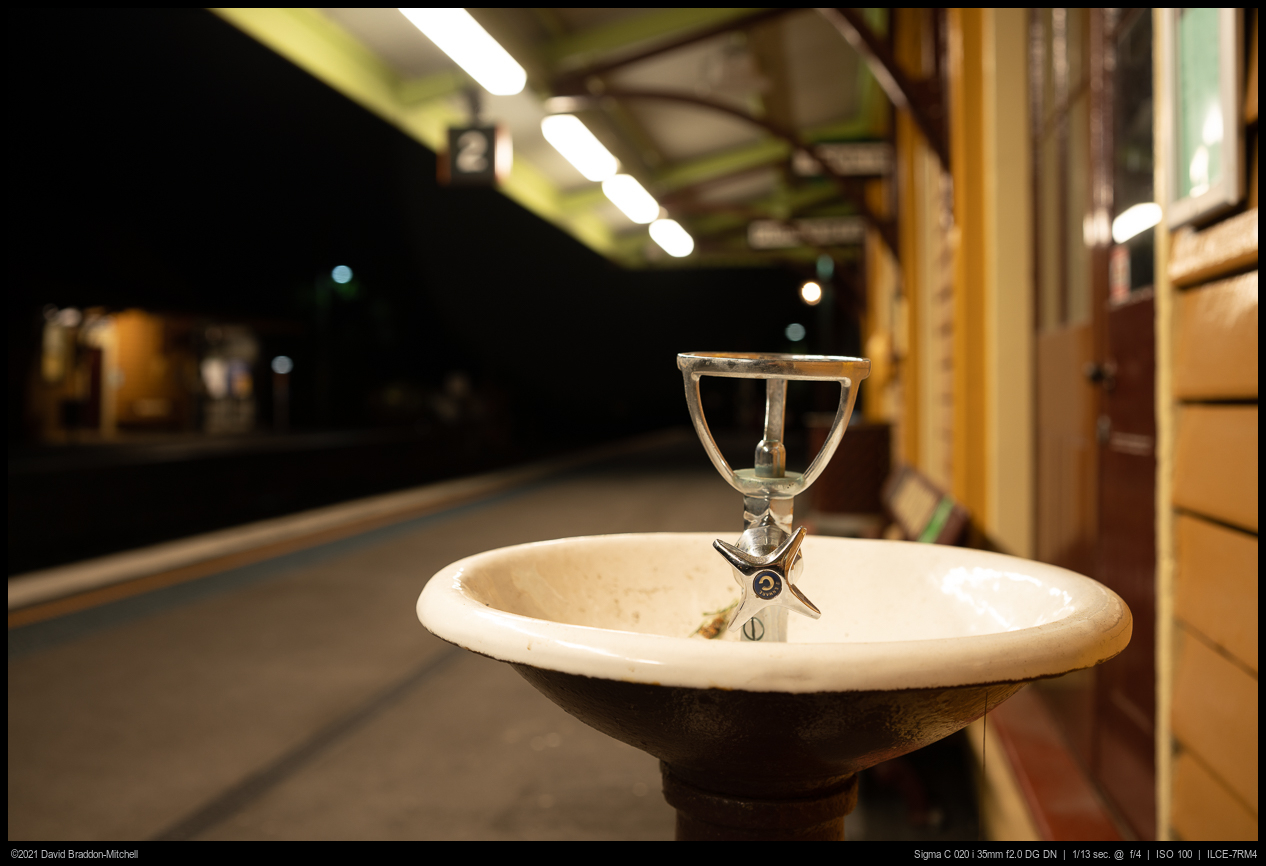
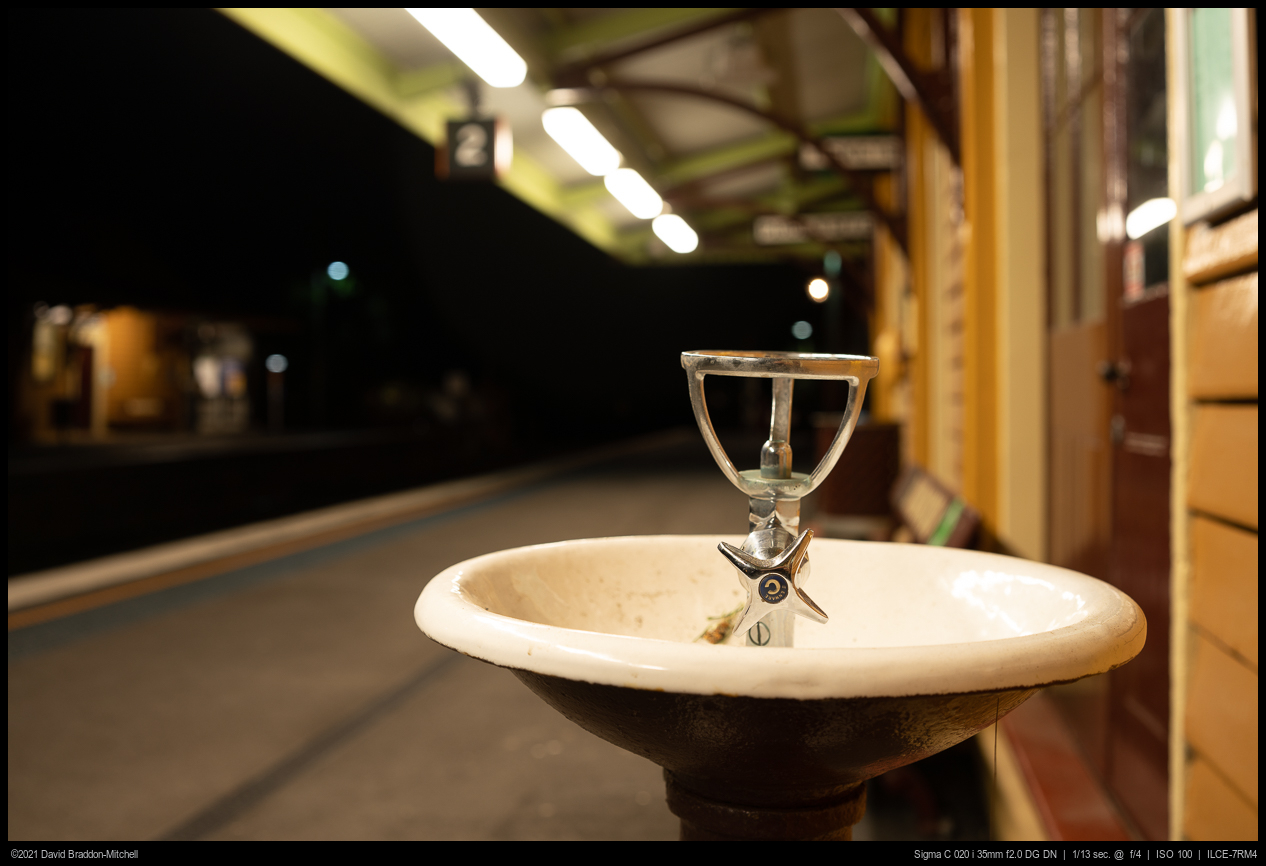
Not easy to compare these lenses side by side since the Sigma 35mm f/2 DG DN is noticeable wider than 35mm.
For this rendering comparison, I did my best to have similar framing which required the camera to be about 10 inches closer when shooting with the Sigma.
Rendering Comparison at 0.75m:
Fred is the Sigma being tested with distortion correction turned on? That narrows its FOV a bit (sorry if you said somewhere I didn’t see it)
DavidBM wrote:
Fred is the Sigma being tested with distortion correction turned on? That narrows its FOV a bit (sorry if you said somewhere I didn’t see it)
Nope. No corrections. (distortion, CA or vignetting)
Fred Miranda wrote:
However, because it is well corrected for axial CA and spherical aberration, rendering can look a bit structured, especially at mid-distance, where specular highlights show visible outlining. With the subject at close distance, rendering is smooth and pleasant while when focusing at mid-distance (3-5m) it's less so.
Interesting that the specular highlights showing visible outlining in the samples I posted from the M-mount version prompted shock and horror but don’t seem to elicit the same extreme response with the E-mount version. Go figure.
Perhaps, better bokeh is expected from anything Leica?
Seriously, both look hideous. Yours, shot (as you said deliberately) in harsher light did not help.
genji wrote:
Interesting that the specular highlights showing visible outlining in the samples I posted from the M-mount version prompted shock and horror but don’t seem to elicit the same extreme response with the E-mount version. Go figure.
I think that explains the width, then. It's a lot closer to 35mm with distortion profiles applied. I haven't done careful tests yet, but I plan to find out how much resolution loss there is with it turned on. Doesn't seem too bad.
Lenses with distortion left in, even though it's often a good idea, are a nuisance for testers. On the one hand you might think that you should test with distortion correction applied, because that in a way is the design intent, and you certainly need to see how it performs then. But on the other hand, for many purposes photographers may prefer to have it turned off, so as to get maybe slightly better peripheral resolution and a bit of extra angle of view. So you end up tempted to test it both ways.
Testing, I believe, should use the corrections always. Not only will the maker's design intent be honoured but readers will see what the outcome is in detail loss and effects on peripheral bokeh. Most users will just use corrections; I mean, they are called 'corrections' for a reason.
Makers publish AOV to the tenth of a decimal point without owning up to the binary choice they have made. And it gets carried through to the major sellers, like B&H - whose AOV indicates this Sigma as a very neat 35.027mm. For those unaware, the E 35/2 APO is a stated equivalent AOV of 35.9mm and the M vsn is a stated AOV equivalent of 34.9mm.
While on testing, it might be worth posting standardised images at near MFD (say the MFD of the longer MFD lens) and infinity in comparisons, to show extent of breathing. Video is getting bigger. Someone will start doing this at some stage. Here, the DPR guys show the 'zoom breathing' of this Sigma lens, at 3.50 into the video (title below):
If you look at the very corners the subject looks further away (houses look smaller) just like having a shorter focal lens than 35mm.
DavidBM wrote:
I think that explains the width, then. It's a lot closer to 35mm with distortion profiles applied. I haven't done careful tests yet, but I plan to find out how much resolution loss there is with it turned on. Doesn't seem too bad.
Lenses with distortion left in, even though it's often a good idea, are a nuisance for testers. On the one hand you might think that you should test with distortion correction applied, because that in a way is the design intent, and you certainly need to see how it performs then. But on the other hand, for many purposes photographers may prefer to have it turned off, so as to get maybe slightly better peripheral resolution and a bit of extra angle of view. So you end up tempted to test it both ways. ...Show more →
APO lenses can and do show lateral CA because it is often (not always and perhaps not completely) removable in profiles or post work. The Leicas are the same, they aim for eradication of LoCA. They basically aim for very low LaCA plus no LoCA.
I wonder how far the far hills are and how UV might affect images as a result. It's the same for both lenses but might it drag down the better lens at times? Maybe not here though - the Sigma diffraction MTF is very accurate:
If you look at the very corners the subject looks further away (houses look smaller) just like having a shorter focal lens than 35mm.
It's not a big difference, many lenses have much more for sure, but it's enough to take note of, and I guess probably contributes to the overall FL difference.