This topic is in the 2021 archive. You can read it and like its posts here. It is read only.
Archive 2021Sony 35 GM vs Sigma 35 f2 DG DN
p.5 #1Sony 35 GM vs Sigma 35 f2 DG DN
Phil:
Thank you so much for doing this. It's really helpful. Any chance you could do a little more controlled test on the t-stop on the Sigma 1.2 vs the GM? I do a lot of astro and that would be helpful!
Thanks,
Chris
Thank you so much for doing this. It's really helpful. Any chance you could do a little more controlled test on the t-stop on the Sigma 1.2 vs the GM? I do a lot of astro and that would be helpful!
Thanks,
Chris
Feb 23, 2021 at 10:56 AM
p.5 #2Sony 35 GM vs Sigma 35 f2 DG DN
I think this is a testament to the Sigma 35i. For $639, it admirably meets the challenge the $1,399 35 GM puts up. Still getting the GM, though. 
Feb 23, 2021 at 11:30 AM
p.5 #3Sony 35 GM vs Sigma 35 f2 DG DN
Hodie wrote:
I think this is a testament to the Sigma 35i. For $639, it admirably meets the challenge the $1,399 35 GM puts up. Still getting the GM, though.
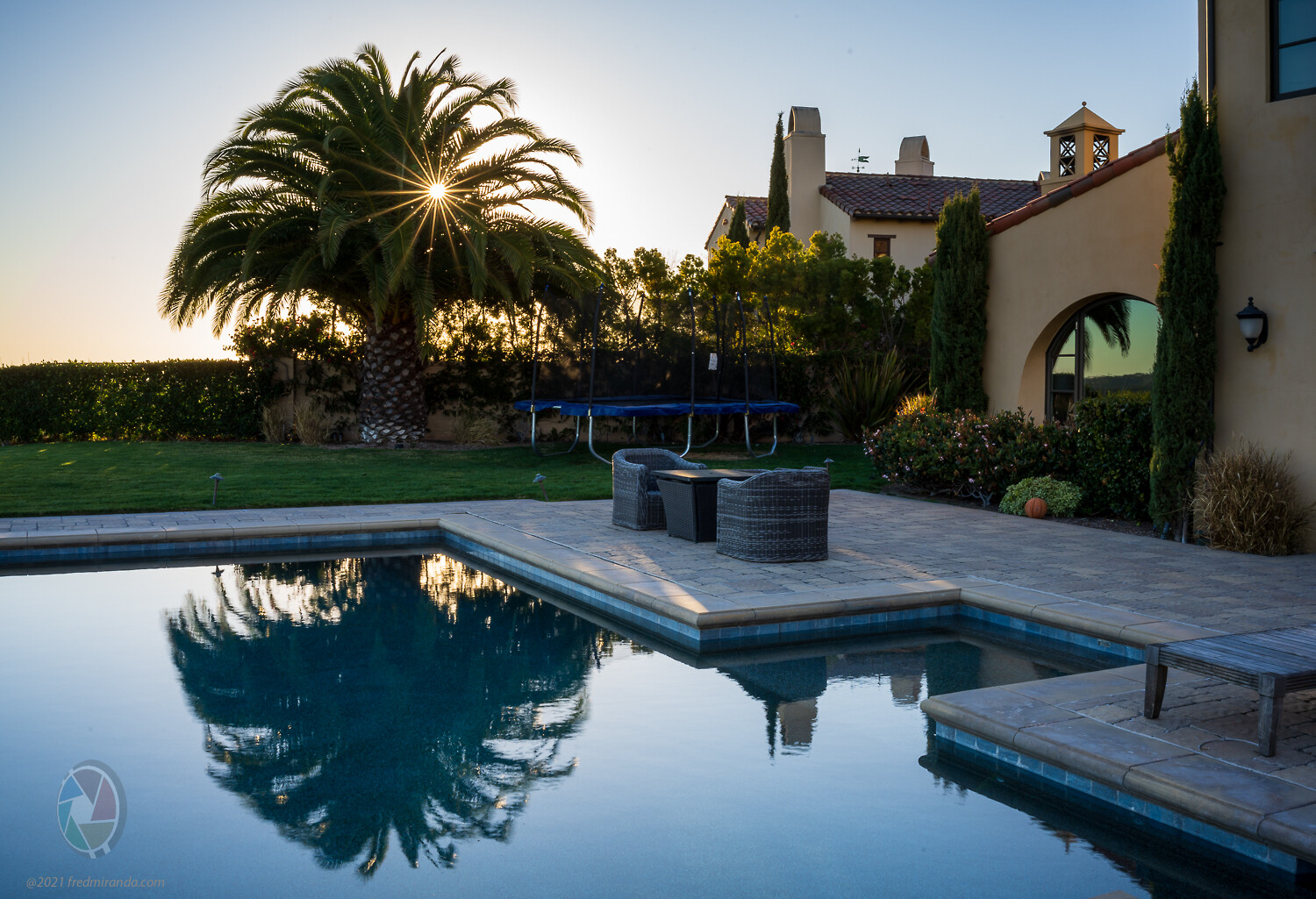
The Sigma has a very nice sunstar (18-point). Not sure how it will compare to the GM's 22-point.
I think this is a testament to the Sigma 35i. For $639, it admirably meets the challenge the $1,399 35 GM puts up. Still getting the GM, though.
The Sigma has a very nice sunstar (18-point). Not sure how it will compare to the GM's 22-point.
 |
||
 |
||
|
Feb 23, 2021 at 11:34 AM
p.5 #4Sony 35 GM vs Sigma 35 f2 DG DN
Schlotkins wrote:
Phil:
Thank you so much for doing this. It's really helpful. Any chance you could do a little more controlled test on the t-stop on the Sigma 1.2 vs the GM? I do a lot of astro and that would be helpful!
Thanks,
Chris
Thank you Chris, I'll try but I'm running out of time these days (having a curfew starting at 6 pm is not easy to manage !)
Feb 23, 2021 at 12:01 PM
p.5 #5Sony 35 GM vs Sigma 35 f2 DG DN
I got that "special" deal from Amazon for the 35i, for $539. I cancelled that order yesterday..... Not saying I don't like what I'm seeing. But I also want the CV 35, and already have the Tamron 35/2.8. The GM samples in this thread make me take a pause. It would seem as though the GM 35 may make more sense down the road, as it offers more speed.
But I still may pick up the 35i later given it seems like it offers great compromises as an AF lens in my kit.
Hodie wrote:
I think this is a testament to the Sigma 35i. For $639, it admirably meets the challenge the $1,399 35 GM puts up. Still getting the GM, though.
Feb 23, 2021 at 12:10 PM
p.5 #6Sony 35 GM vs Sigma 35 f2 DG DN
Fred Miranda wrote:
The Sigma has a very nice sunstar (18-point). Not sure how it will compare to the GM's 22-point.
The Sigma seems to be controlling flare better in this image than in the OP's sunstar sample.
The Sigma has a very nice sunstar (18-point). Not sure how it will compare to the GM's 22-point.
The Sigma seems to be controlling flare better in this image than in the OP's sunstar sample.
Feb 23, 2021 at 12:18 PM
p.5 #7Sony 35 GM vs Sigma 35 f2 DG DN
Chris Crevasse wrote:
The Sigma seems to be controlling flare better in this image than in the OP's sunstar sample.
The Sigma is prone to ghosting flare:
https://www.fredmiranda.com/forum/topic/1686080/0#15498231
On the image above, I was able to avoid ghosting blobs by adjusting my position and angle BUT if one is not careful when composing the shot, here is what can happen:
both at f/22
Fred Miranda wrote
The Sigma has a very nice sunstar (18-point). Not sure how it will compare to the GM's 22-point.The Sigma is prone to ghosting flare:
https://www.fredmiranda.com/forum/topic/1686080/0#15498231
On the image above, I was able to avoid ghosting blobs by adjusting my position and angle BUT if one is not careful when composing the shot, here is what can happen:
 |
||
 |
||
|
both at f/22
Feb 23, 2021 at 12:55 PM
p.5 #8Sony 35 GM vs Sigma 35 f2 DG DN
Fred Miranda wrote:
Chris Crevasse wrote
Fred Miranda wrote
The Sigma has a very nice sunstar (18-point). Not sure how it will compare to the GM's 22-point.https://www.fredmiranda.com/forum/topic/1686080/0#15498231
On the image above, I was able to avoid ghosting blobs by adjusting my position and angle BUT if one is not careful when composing the shot, here is what can happen:
From what I saw in YouTube reviews, the GM should greatly outperform all the other 35s in terms of ghosting and flaring performance.
Feb 23, 2021 at 02:07 PM
p.5 #9Sony 35 GM vs Sigma 35 f2 DG DN
Teo Rey wrote:
The Sigma seems to be controlling flare better in this image than in the OP's sunstar sample.The Sigma is prone to ghosting flare:
https://www.fredmiranda.com/forum/topic/1686080/0#15498231
On the image above, I was able to avoid ghosting blobs by adjusting my position and angle BUT if one is not careful when composing the shot, here is what can happen:From what I saw in YouTube reviews, the GM should greatly outperform all the other 35s in terms of ghosting and flaring performance.
Have any specific links? I do like videos for comparing ghosting/flaring showing how it interacts with slight changes. Images for everything else, of course.
Fred Miranda wrote
Chris Crevasse wrote
Fred Miranda wrote
The Sigma has a very nice sunstar (18-point). Not sure how it will compare to the GM's 22-point.https://www.fredmiranda.com/forum/topic/1686080/0#15498231
On the image above, I was able to avoid ghosting blobs by adjusting my position and angle BUT if one is not careful when composing the shot, here is what can happen:
Have any specific links? I do like videos for comparing ghosting/flaring showing how it interacts with slight changes. Images for everything else, of course.
Feb 23, 2021 at 02:25 PM
p.5 #10Sony 35 GM vs Sigma 35 f2 DG DN
KarmaKramer wrote:
Why would this be of importance? For those of is who don’t scrutinize in this way.
I have so much to learn about optics....thanks Fred.
For example, I think my CV 65 sharpens up in the corners at wider apertures compared to my Sigma 65. I also see more optical vignetting in the CV compared to the Sigma....is that just pure coincidence?At infinity, the Sigma 35/2 DG DN is indeed flat-field but at closer distance (2-5m), there is rearward FC which may cause the further away OOF corners to be "more in focus" compared to the center area.
I believe that optical vignetting mainly affects the shape of the specular highlights but also causes DOF changes.But optical vignetting does cause an increase in DOF in the corners, with a resultant effect on bokeh...---------------------------------------------
I have so much to learn about optics....thanks Fred.
I believe that optical vignetting mainly affects the shape of the specular highlights but also causes DOF changes.But optical vignetting does cause an increase in DOF in the corners, with a resultant effect on bokeh...Here is an example showing changes in DOF towards the the corners compared to the out of focus center when the subject if focused at mid-distance:
It's just something else to watch for: Rendering uniformity
With some lenses, it may be noticeable to a point of being distracting.
In the case of the Sigma 35/2, I find it to be just average for a 35mm lens but if you look at some Sony 35/1.8 samples, this is more pronounced.
Why would this be of importance? For those of is who don’t scrutinize in this way.
Fred Miranda wrote
DavidBM wrote
tsdevine wrote
Forgetting the Sigma's field curvature, talking lenses in general, it would seem optical vignetting in the corners is a restriction of the projected image on the sensor, not completely different than when you partially close aperture blades. So I find it interesting that one increases depth of field, and the other doesn't.I have so much to learn about optics....thanks Fred.
Fred Miranda wrote
tsdevine wrote
If both lenses are flat field (big assumption), is the same property that causes cat's eye (optical vignetting) also apt to cause the same lenses to sharpen up in the corners more, as you describe? In other words can you predict the apparent sharpening of corners by looking at how much optical vignetting is exhibited by a lens? Is there any correlation, and if so, are there other factors that can make it better or worse?For example, I think my CV 65 sharpens up in the corners at wider apertures compared to my Sigma 65. I also see more optical vignetting in the CV compared to the Sigma....is that just pure coincidence?
I believe that optical vignetting mainly affects the shape of the specular highlights but also causes DOF changes.
tsdevine wrote
Ah, so I was right (maybe not in this specific case, but in general)?DavidBM wrote
tsdevine wrote
Forgetting the Sigma's field curvature, talking lenses in general, it would seem optical vignetting in the corners is a restriction of the projected image on the sensor, not completely different than when you partially close aperture blades. So I find it interesting that one increases depth of field, and the other doesn't.I have so much to learn about optics....thanks Fred.
Fred Miranda wrote
At infinity, the Sigma 35/2 DG DN is indeed flat-field but at closer distance (2-5m), there is rearward FC which may cause the further away OOF corners to be "more in focus" compared to the center area.I believe that optical vignetting mainly affects the shape of the specular highlights but also causes DOF changes.
It's just something else to watch for: Rendering uniformity
With some lenses, it may be noticeable to a point of being distracting.
In the case of the Sigma 35/2, I find it to be just average for a 35mm lens but if you look at some Sony 35/1.8 samples, this is more pronounced.
Feb 23, 2021 at 03:14 PM